
Review · GERMANY
Dortmund: German Football Museum
The German Football Museum turns football history into something you can hear, see, and play. You move from the Miracle of Bern to Germany’s 2014 World Cup triumph, then step into a reporter’s booth or take a ball onto the small playing field.
I like the mix of serious history and hands-on fun, especially the Sky Reporter Room and the 3D cinema. I also like that the displays bring together women’s and men’s football, professionals and amateurs, players and referees. The main drawback is simple: if football does not interest you, $23 can feel like a lot for a museum built around one sport.
Key Points Before You Go
- Relive the Miracle of Bern: Travel back to Germany’s 1954 World Cup win through the museum’s historical displays.
- Call the action yourself: The Sky Reporter Room lets you try the work of a football commentator.
- Meet the 2014 champions in 3D: The cinema gives Germany’s most recent men’s World Cup win a more personal feel.
- Bring children to the small pitch: The multifunctional arena gives younger visitors a chance to kick a ball and test their skills.
- See the whole football world: The exhibition includes women’s and men’s football, referees, amateurs, and professionals.
- Plan a food break: Dining options are available when you need a pause from the galleries.
Dortmund’s German Football Museum Puts the Game at Center Stage
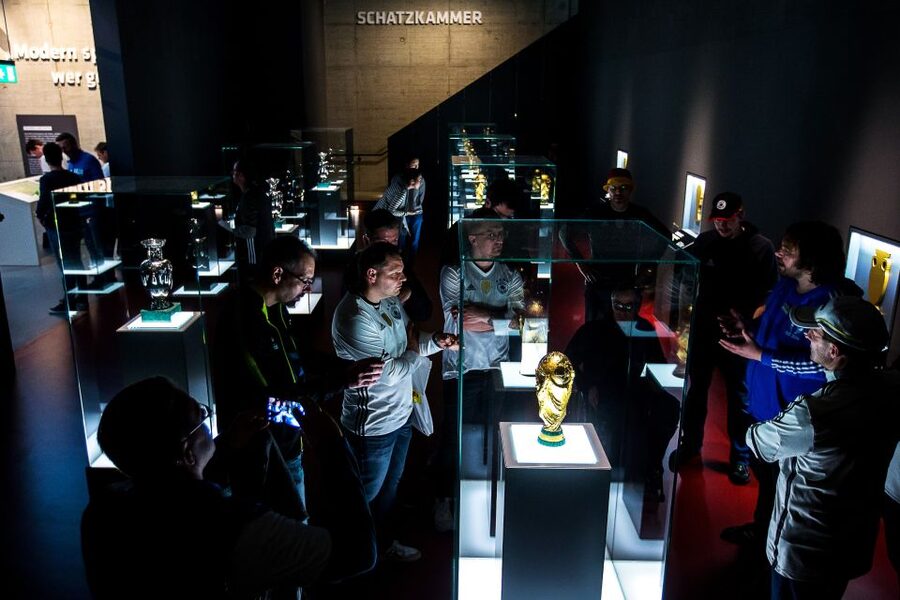
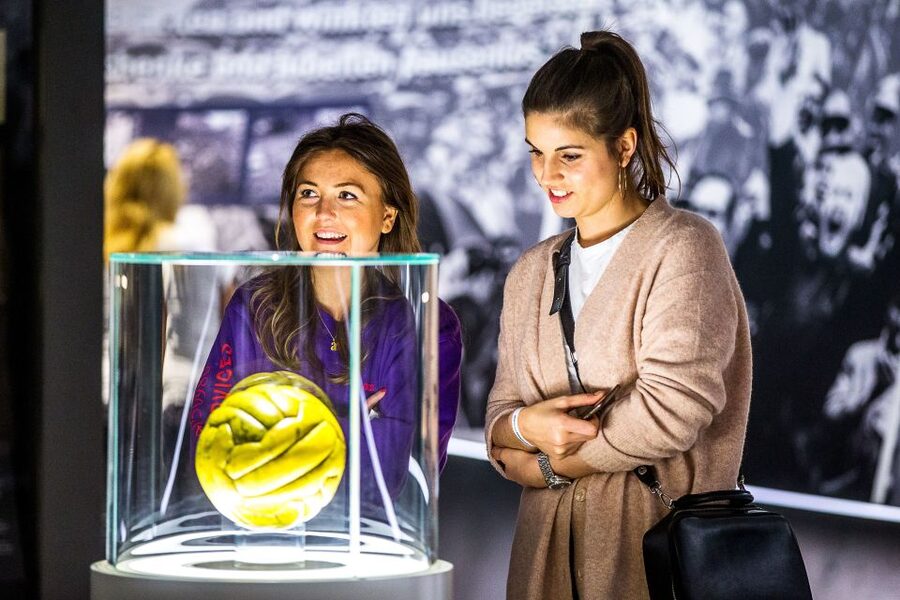
At Platz der Deutschen Einheit 1 in Dortmund, the German Football Museum presents about 1,600 exhibits across a modern exhibition space. This is not just a room of old shirts and framed photographs. The museum uses film, sound, interactive stations, and sports challenges to show how football works on the field and in the imagination.
That approach matters because football is more than a list of scores. It is national memory, local pride, family ritual, and a very serious reason for friends to argue over lunch. The museum tries to cover all of those sides.
You can follow the sport through famous victories, major players, referees, reporting, and everyday participation. The result is an experience that works for the dedicated supporter, but also gives newcomers a way into the subject without requiring a lifetime of match knowledge.
The museum is in Dortmund, a city with a powerful football identity. The location makes sense: you are not visiting a random sports display placed in a distant hall. You are in one of Germany’s best-known football cities, surrounded by a culture where the game is part of ordinary life.
A few more museum visits around Germany worth comparing
- Berlin: Jewish Museum Berlin Entrance Ticket
★ 4.5 · 8,393 reviews - Berlin: DDR Museum Tickets
★ 4.3 · 3,443 reviews - Berlin: Natural History Museum Entrance Ticket
★ 4.6 · 3,382 reviews
From the Miracle of Bern to Modern World Champions
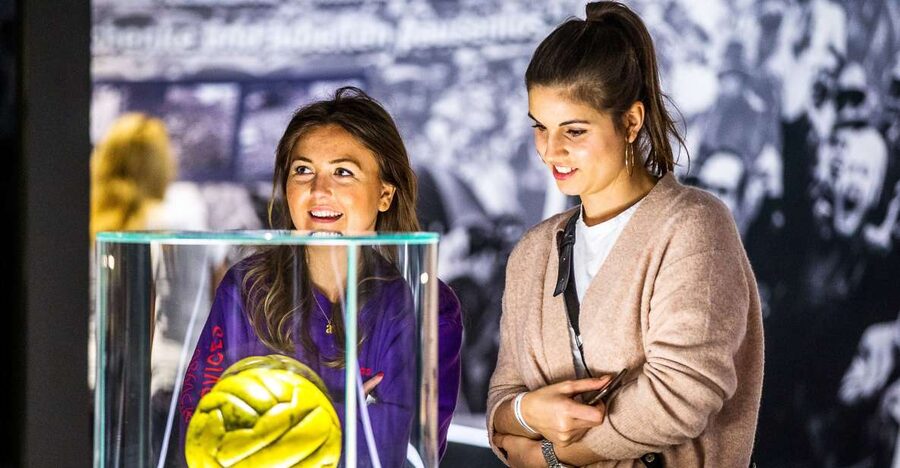
One of the most important historical moments presented here is the Miracle of Bern, Germany’s unexpected 1954 World Cup victory. For German football, this was more than a final score. The win became a powerful symbol of national recovery and confidence after the difficult postwar years.
You do not need to know every player or match detail to understand why this moment matters. A good museum display gives you the setting, the pressure, and the emotional weight behind the event. The Miracle of Bern is a useful starting point because it shows how football can carry meaning far beyond the ninety minutes on the pitch.
The museum then takes you through later stages of German football. Its exhibits connect national teams, club football, refereeing, media coverage, and the changing role of supporters. You get a broader picture than a simple parade of trophies.
The exhibition also includes women’s and men’s football. That is important for anyone who wants a fuller account of the sport in Germany. The museum presents football as a shared field with different routes into it, from professional competition to amateur play.
You should expect a lot of visual material and interactive storytelling rather than one long, quiet historical corridor. The presentation is designed to keep you moving and give younger visitors something to do, while still offering enough context for adults who want to pause over the major moments.
Meet the 2014 Team in the 3D Cinema
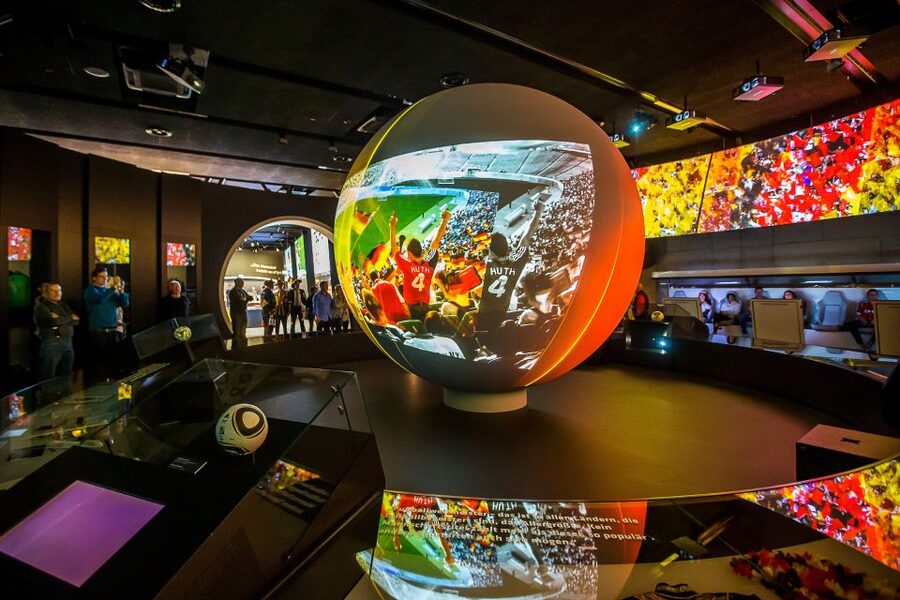
The 2014 World Cup is another major point in the museum. Germany’s national team won the tournament in Brazil, and the museum lets you meet the world champions through a 3D cinema experience.
This gives the victory a different feel from a standard photograph or display case. You see the players presented as a group, with the cinema format adding motion and presence. For German football fans, it is a chance to revisit a recent triumph. For children, it offers a clear link between the museum’s historical displays and the football they may already know.
The 2014 section also helps balance the older material. A museum focused only on famous past victories can feel distant, especially to younger visitors. The 3D presentation brings the story closer to the present and makes the national team easier to connect with.
I would give this part your attention even if you are more interested in the older history. The contrast between the Miracle of Bern and the 2014 champions shows how football presentation has changed, from historic memory to modern media spectacle.
Take the Microphone in the Sky Reporter Room
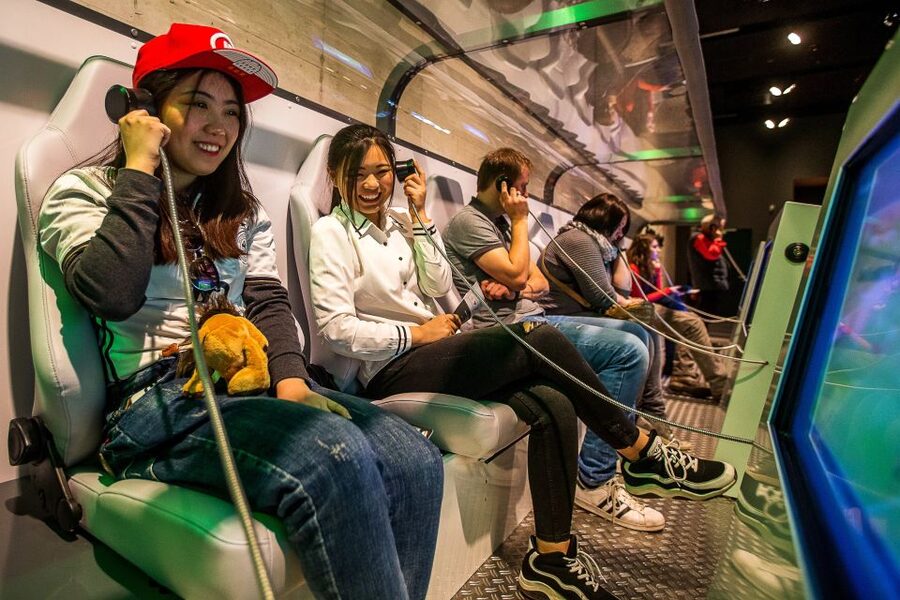
The Sky Reporter Room is one of the museum’s best interactive ideas. Instead of only watching football coverage, you can try becoming the commentator.
Calling a match sounds easy until you imagine having to describe movement, keep up with play, and make the moment sound important. This station lets you test that role for yourself. It shows how much work goes into the familiar voice that accompanies a televised match.
The activity is useful for children because it turns a passive display into a performance. Adults can enjoy it too, especially if they have ever sat at home and insisted that they could describe the action better than the person on television.
You will not simply be reading about sports media. You are asked to take part, which helps explain the connection between football and broadcasting. The game reaches far beyond the pitch, and the reporter’s booth shows how a match becomes a shared event for people watching from different places.
If your group includes people with different levels of football interest, this is a good meeting point. A committed fan can think about tactics and match drama, while a less devoted companion can focus on the fun of speaking into the booth.
Same city, a completely different collection:
- Berlin: Neues Museum Entry Ticket
★ 4.6 · 3,261 reviews - Berlin: Museum Island Multiple Museum Entry Ticket
★ 4.4 · 2,861 reviews - Cologne: Chocolate Museum Entrance Ticket
★ 4.4 · 2,790 reviews - Dresden: Church of Our Lady Guided Tour of Gallery
★ 4.7 · 2,421 reviews
Test Your Skills on the Small Playing Field
The multifunctional arena includes a small playing field where children can grab a ball and test their football skills. This is the clearest hands-on part of the museum and a strong reason to include the visit in a family day in Dortmund.
The pitch gives younger visitors a break from looking at exhibits. They can move, kick, and play while adults take in the surrounding material. That change of pace helps the museum avoid becoming tiring for children.
The wording of the experience points especially to younger participants, so adults should not expect a full football match or a major sporting facility. Think of it as a short skills activity inside the museum. It adds play to the visit without changing the museum into a stadium tour.
For parents, this is practical. A child who has reached the end of their attention span can do something active, then return to the exhibition with a fresh start. For football-loving children, it also makes the museum feel personal. They are not only looking at professionals. They are trying the game themselves.
A Modern Exhibition for More Than Professional Fans
The museum’s scenography links several groups that are often treated separately: fans and referees, amateurs and professionals, and women’s and men’s football. That broad view is one of the most useful parts of the visit.
You can think of the experience as a series of different doors into football. One visitor may come for World Cup history. Another may care about commentary and television. A child may only want to kick a ball. The museum gives each person a place to start.
This also helps explain the value of the 1,600 exhibits. The number alone does not guarantee a good visit, but it suggests a wide range of material. You are not limited to one team, one era, or one kind of football story.
The exhibition is interactive, but it is not only for children. Adults who care about German football can use the displays to connect famous matches with the social role of the sport. Someone new to the subject can focus on the big moments and the sensory presentations without feeling lost in specialist detail.
I would not expect the museum to offer the quiet, object-by-object atmosphere of a traditional art collection. Its strength is movement and participation. If you prefer labels, artifacts, and long stretches of silence, the energetic style may feel busy.
How Much Time Should You Allow?
The admission is valid for one day, and the experience is presented as a full museum visit rather than a short guided stop. The exact time you need depends on how closely you watch the historical material and how much time your group spends with the interactive features.
You might move through quickly if you only want the headline moments: the Miracle of Bern, the 2014 3D cinema, the reporter’s booth, and the playing field. You will need more time if you stop to examine the wider story of German football and try the hands-on stations at an unhurried pace.
A full day is not required simply because the ticket is valid for one day. The one-day validity gives you flexibility, especially if you want to fit the museum around other plans in Dortmund. It also means you can build in a food break instead of rushing through every gallery.
Dining options are available for a half-time pause. That is helpful with children and useful for anyone who wants to treat the museum as a substantial part of the day rather than a quick stop between sights.
Since no guided tour is included, you set the pace. You can linger at the parts that interest you and move on from sections that do not. The tradeoff is that you will not have a guide explaining the exhibits or adding personal stories.
Is the $23 Admission Worth It?
At $23 per person, this is not a bargain museum ticket for a quick look. The value depends heavily on your interest in football and on how much use you make of the interactive features.
For a committed fan, the price is easier to justify. You are getting access to a large exhibition with about 1,600 exhibits, historic World Cup material, a 3D cinema, a commentary station, and a football activity area. That is a broader experience than simply viewing a collection of memorabilia.
Families may also find the price reasonable if children use the playing field and adults take time with the history. A museum that offers both serious material and physical activity can keep a mixed-age group together better than a display-only attraction.
For a casual visitor, I would ask one question before booking: do you want to understand Germany through football? If yes, the museum can give you a useful cultural experience. If you are only mildly curious about the sport, you may prefer to spend $23 on a different Dortmund attraction.
The ticket includes museum access only. Food, drinks, and a guide are not included, so plan to pay separately for your break and do not expect a hosted tour. The benefit is freedom. You are not tied to a guide’s schedule.
Planning Your Visit at Platz der Deutschen Einheit 1
The meeting point is Platz der Deutschen Einheit 1, 44137 Dortmund. Check the available starting times when you book, since the activity uses scheduled entry information even though the admission is valid for one day.
Skip-the-line access is included, which can save time when the museum is busy. It does not mean you should ignore your chosen entry details. Keep the booking information available and allow enough time to reach the address.
You can reserve now and pay later, and cancellation is free up to 24 hours in advance for a full refund. Those terms are useful if your Dortmund plans may change. They also let you secure a place without paying at the time of booking.
No guide is included, and the supplied information does not name a guide or list a guided language service. Plan on exploring the exhibition independently. The displays and interactive stations provide the structure.
The information supplied under languages is unclear, so I would check the current booking details if language support matters to you. Do not assume a particular spoken tour or translation service without confirming it.
Who Will Enjoy It Most?
I would recommend the museum first to football fans, families with children, and anyone interested in how sport shapes German identity. The combination of historical moments, media, and play gives you several ways to enjoy the visit.
It also suits groups with mixed interests. One person can focus on the World Cup stories, another can try the Sky Reporter Room, and children can head for the small field. That flexibility is a real strength.
I would be more cautious if you are not interested in sport, modern interactive displays, or national football history. The museum is focused by design. It does not pretend to be a general history museum, and $23 may feel high if the subject does not hold your attention.
The high rating of 4.6 from 484 reviews fits the museum’s strongest qualities: it is informative, staff are described as friendly and helpful, and the experience gives people plenty to do. Recent comments also include praise in German and Chinese, which suggests the attraction reaches an international audience.
Should You Book the German Football Museum?
Book it if you want more than a trophy room. The Miracle of Bern, 2014 World Cup cinema, Sky Reporter Room, and small playing field create a visit with real variety.
I would make this a priority for football fans visiting Dortmund and a strong family option if your children enjoy active exhibits. Allow enough time to use the interactive features, take a break at the dining options, and let each person choose their favorite part.
Skip it if your interest in football is low and you are looking for a broad city museum. The $23 price is worthwhile when you engage with the history and activities, not when you simply walk through for a few photographs.
FAQ
Where is the German Football Museum located?
The museum is at Platz der Deutschen Einheit 1, 44137 Dortmund, Germany.
How much does admission cost?
The listed price is $23 per person.
How long is the ticket valid?
Admission is valid for one day. Check availability for the available starting times.
Is a guide included?
No. The ticket includes access to the German Football Museum, but a guide is not included.
What can I see at the museum?
You can see around 1,600 exhibits covering football history, the Miracle of Bern, Germany’s 2014 world champions, women’s and men’s football, referees, fans, amateurs, and professionals.
Can I take part in interactive activities?
Yes. You can commentate in the Sky Reporter Room, visit the 3D cinema, and use the small playing field in the multifunctional arena.
Are food and drinks included?
No. Food and drinks are not included, but dining options are available for a break.
Can I cancel my booking?
Yes. You can cancel up to 24 hours in advance for a full refund. You can also reserve now and pay later.
Just added around Germany
- Stuttgart: Stuttgart Wine Museum Wine Tasting★ 4.7 · 55 reviews
- Stuttgart: Museum of Illusions Entry Ticket★ 4.2 · 507 reviews
- Stein: Public guided tour of the “Old Mine” museum★ 4.5 · 18 reviews
- Speyer: Technik Museum Speyer Ticket with an IMAX Dome Film★ 4.7 · 360 reviews
- Berlin: Bode Museum Ticket★ 4.5 · 214 reviews
- Munich Private Walking Tour with BMW Museum & Welt Entry★ 4.2 · 19 reviews
- Munich: Residenz Palace, Museum and Treasury Private Tour★ 4.9 · 15 reviews
- Munich: WOW Museum – Room for Illusions Ticket★ 3.5 · 14 reviews
Museum Tours in Germany, compared.

Dresden: Church of Our Lady Guided Tour of Gallery
Read our review →
Skip-the-Line: Berlin Wall Museum at Checkpoint Charlie
Read our review →Browse the lists this tour appears in