
Review · CANADA
Calgary: Gasoline Alley Museum Admission
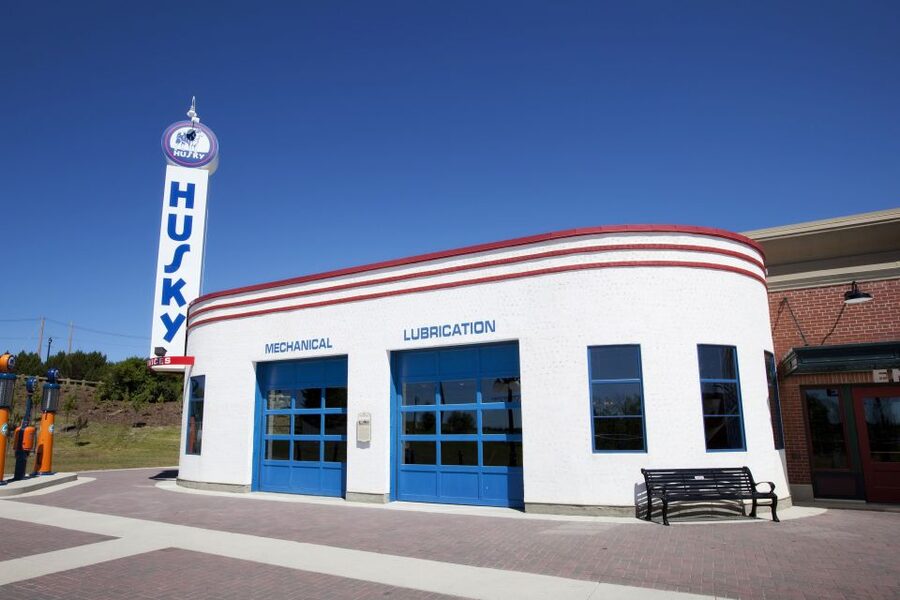
The real draw here is not only the polished row of classic cars. It is the chance to see the whole early motoring world in one place, from rare automobiles and working vehicles to old gasoline pumps, petroleum signs, and everyday objects that helped turn driving into a way of life. I like the mix of machines and social history, and I like that the collection reaches below the main floor into a second showroom.
I also like the price. At $10, this is an easy Calgary stop to add to your day, especially if you care about cars, design, business history, or family-friendly museums. The main drawback is that this admission covers Gasoline Alley Museum only, not the wider Heritage Park Historical Village, and the museum can feel less like a full-day destination if old vehicles are not your thing.
Key points to know before you go
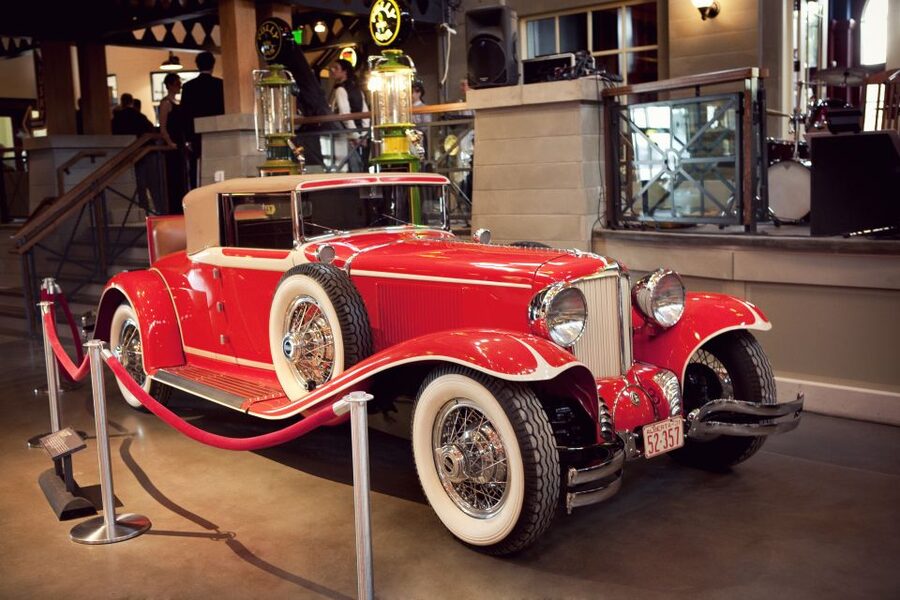
- Rare pre-World War II artifacts: See some of the oldest automobile-related objects in the collection, along with cars and trucks from the early 1900s through the 1950s.
- A remarkable pump collection: Antique gasoline pumps and signs from many petroleum companies show how filling stations once advertised themselves.
- Two showroom levels: The lower showroom adds more vehicles and artifacts, so do not stop after seeing the main display.
- On-site interpreters: Staff and volunteers can help explain the machines, companies, and social changes behind the exhibits.
- Good value at $10: The museum is a practical choice in the quieter months, when many other Heritage Park attractions are closed.
- Easy access: You can reach 1900 Heritage Drive SW by car or take the shuttle bus from Heritage LRT Station.
Why Gasoline Alley is more than a car collection
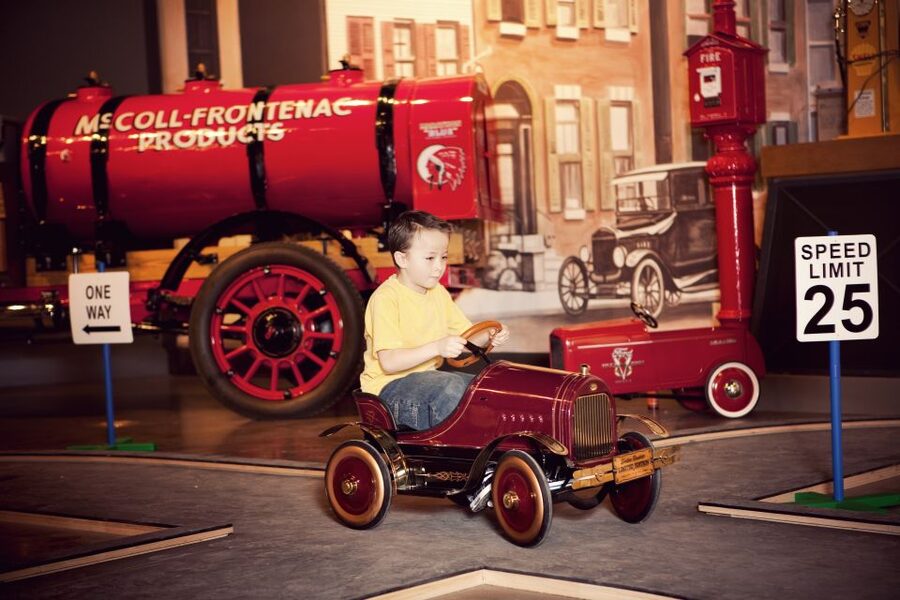
Gasoline Alley Museum tells the story of a major change in ordinary life. Before the automobile became common, people and goods depended largely on horses and carriages. The motor car altered how people traveled, where businesses operated, and how towns connected with one another.
That wider story gives the exhibits a purpose. You are not simply looking at a line of shiny vehicles. You are seeing the tools of a new age, along with the pumps, signs, and commercial objects that made that age possible.
I find this approach useful because it gives the old cars context. A vehicle from the early 1900s can look like a curious machine until you consider what it meant to families, farmers, businesses, and road builders. The museum helps connect the machinery to the social changes that followed.
The collection covers cars, trucks, and working vehicles from the 1900s through the 1950s. That range lets you compare the earliest forms of motor travel with the more familiar postwar styles that followed.
A few more museum visits around Canada worth comparing
- Toronto: Royal Ontario Museum Admission Ticket
★ 4.6 · 1,237 reviews - Royal Ontario Museum Admission
★ 4.5 · 411 reviews - Toronto: Art Gallery of Ontario General Admission Ticket
★ 4.6 · 251 reviews
The main showroom, from early cars to 1950s vehicles
Start in the main showroom and give yourself time to look closely. The displays include restored classic automobiles, trucks, and working vehicles, with some of the collection reaching back to the years before World War II.
The restored condition is part of the appeal. You can study the shapes, finishes, and details of vehicles from several decades without having to imagine what they once looked like. At the same time, the age of the objects remains clear, particularly in the earliest examples.
I would not rush through this section simply to photograph the most attractive cars. The less glamorous working vehicles help explain how motoring developed beyond private automobiles. They show that the story includes transport, trade, service work, and practical use.
The museum also gives you a chance to notice how quickly design changed. Early automobiles and later 1950s vehicles belong to the same broad story, but they reflect very different ideas about comfort, appearance, and the role of the car.
If you are visiting with children, this variety helps. Younger visitors may be drawn to the size and shape of the vehicles, while adults can use the displays to discuss how travel and work changed over time. The museum is family-friendly, but it still offers enough historical detail for adults who want more than a quick look at old cars.
Antique pumps and petroleum signs tell the commercial story
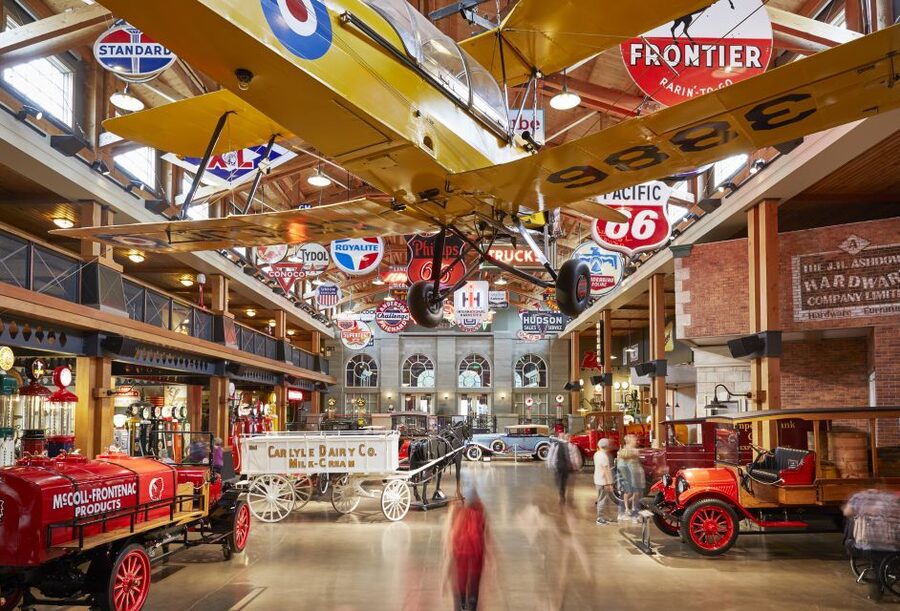
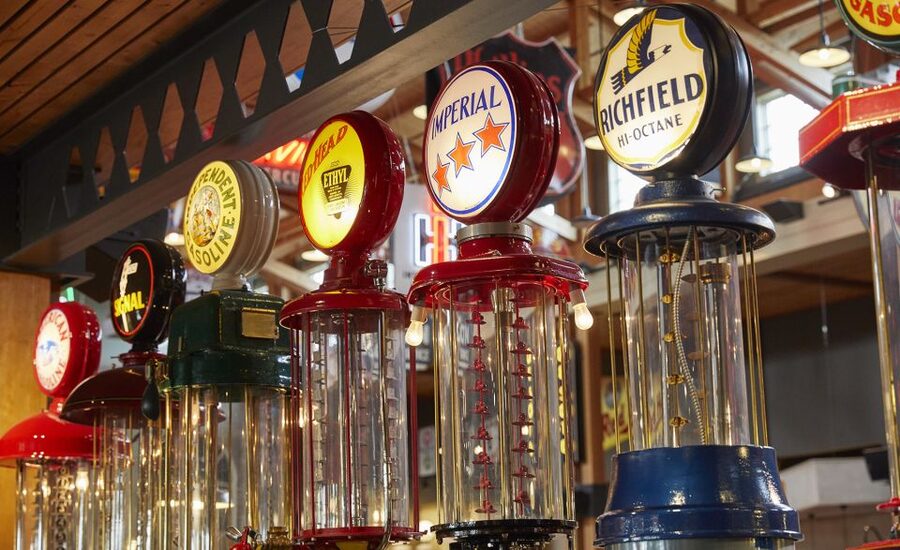
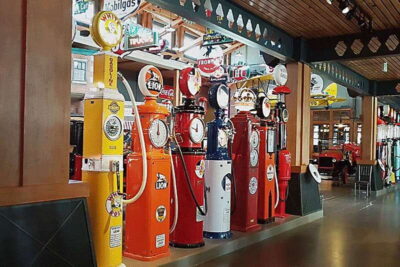
The gasoline pumps are one of the strongest parts of the museum. The collection includes an impressive range of antique pumps, including some especially rare examples, and they give the museum a visual link between automobiles and the petroleum business.
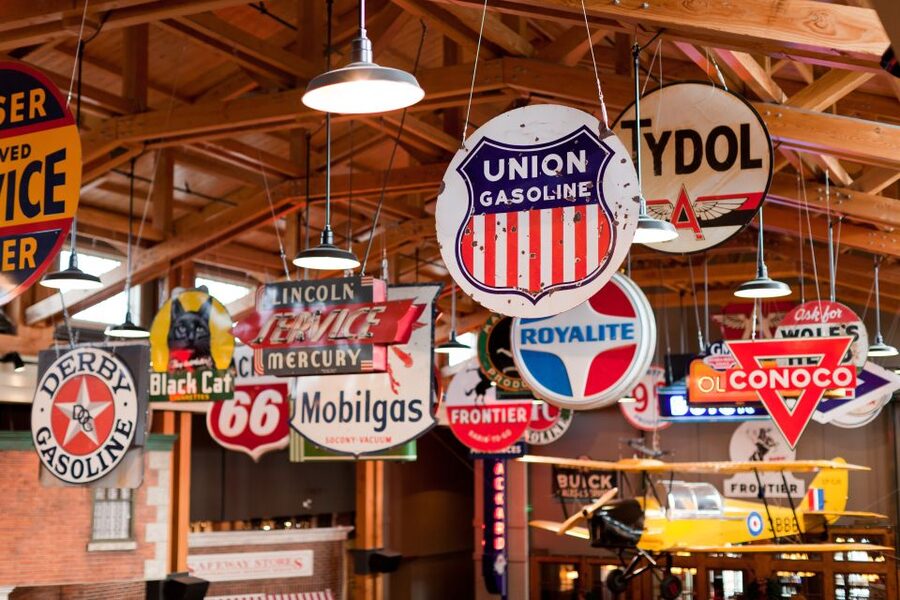
These pumps were not just functional equipment. Their shapes, colors, and markings helped companies attract drivers and identify their stations. Alongside them, you will see signs connected with a wide range of historical petroleum companies.
I like this part because it fills in a gap that car museums often leave out. A car needs fuel, a place to stop, and a business willing to sell both fuel and service. The pumps and signs show how the supporting network around the automobile took shape.
Take a little time to compare the signs rather than treating them as background decoration. They reveal how companies presented themselves in the early motoring era. Even if you are not an enthusiast, you can see how much work went into making a filling station visible from the road.
The collection also adds a sense of place. Automobiles may look similar across regions, but petroleum signs and pumps connect them to the businesses and roads that motorists actually encountered. This makes the exhibit useful for anyone interested in advertising, industrial design, or North American business history.
Do not miss the lower showroom
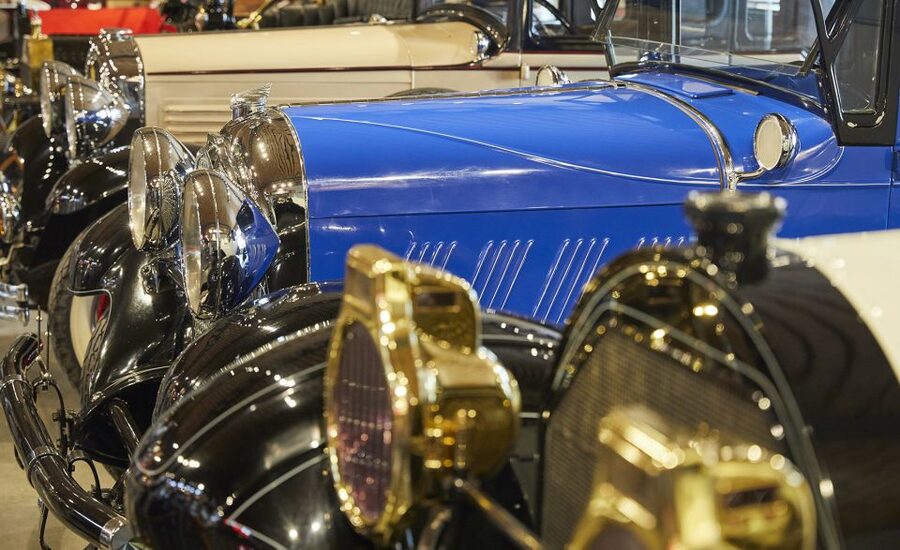
The lower showroom is easy to underestimate if you assume the main room contains everything. It offers more artifacts and more vehicles, so I recommend treating it as a required part of the visit rather than an optional extra.
You might find that the lower level changes the pace of the experience. After the large, polished displays upstairs, the additional objects give you another chance to focus on details and less familiar pieces of motoring history.
The available information does not assign a separate theme to every section of the lower showroom, so I would approach it as an extension of the main collection. Look for further examples of early vehicles, working equipment, pumps, signs, and objects tied to the growth of the automobile.
This is also a good place to slow down if the first showroom feels busy. A full visit does not have to be rushed, and the one-day validity gives you flexibility to return to displays you passed too quickly.
Same city, a completely different collection:
- Britannia Mine Museum General Admission
★ 5.0 · 233 reviews - Ottawa: Canadian War Museum Admission
★ 4.7 · 232 reviews - Gatineau: Canadian Museum of History Admission
★ 4.8 · 230 reviews - Ottawa: Canadian Museum of Nature Admission
★ 4.6 · 226 reviews
How the museum explains the automobile’s impact
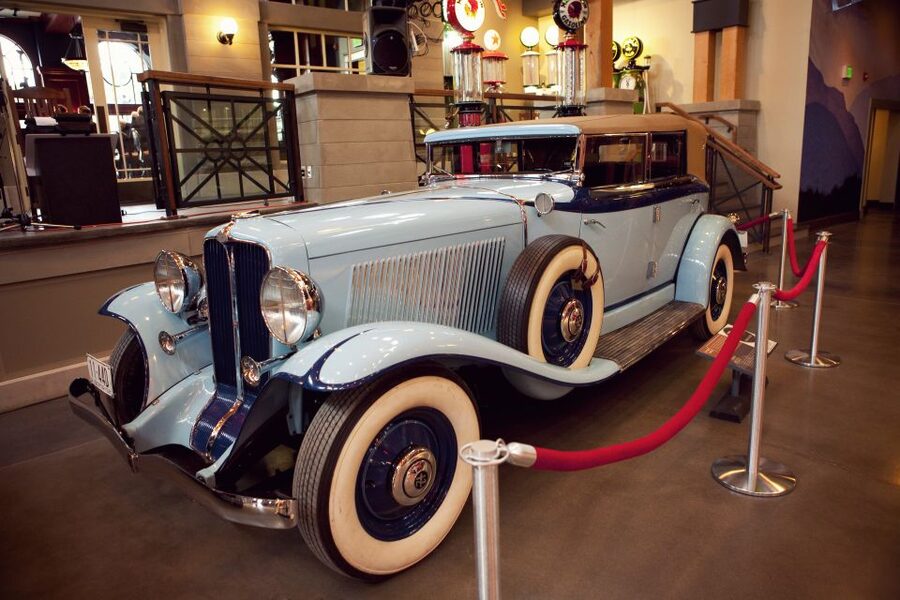
The museum’s subject is the introduction and popularization of the automobile in North America. That wording matters because the collection is about more than invention. It is about how cars moved from being unusual machines to becoming part of regular life.
The change from horse and carriage to motor car affected far more than speed. It reshaped travel patterns and helped create new businesses, including fuel stations and vehicle services. It also changed how people thought about distance and access.
As you move among the exhibits, ask yourself what each object made possible. A truck suggests the movement of goods. A pump points to the network of fuel stops required for longer trips. A sign shows how companies competed for the attention of passing drivers.
I appreciate museums that let objects carry part of the explanation. Here, the cars and equipment are the main evidence, while the on-site interpreters can add useful background. If you have a question about a particular vehicle, company, or object, make time to speak with them.
The interpreters are especially helpful for people who do not already know car history. You do not need to identify makes, models, or engine types to enjoy the visit. The larger story is accessible, and the collection gives you plenty to discuss with family members.
What your $10 admission actually covers
At $10 per person, the museum offers good value for a focused stop in Calgary. Your ticket includes admission to Gasoline Alley Museum and access to on-site interpreters, but it does not include the other attractions at Heritage Park Historical Village.
That distinction is important. Heritage Park is a larger destination, while this ticket is specifically for the museum. If you expect a full village experience, historic rides, or access to every part of the park, you will need to check the separate admission arrangements.
The value is strongest for a museum visit in the cooler months. Gasoline Alley Museum is open year-round, while the other Heritage Park attractions close from mid-October to mid-May. The Railway Café is also open year-round, though food and drinks are not part of this museum admission.
In summer, the museum is included with general admission to Heritage Park Historical Village. If you already plan to spend a full day at the park, buying a separate museum ticket would not make sense. If you are visiting outside the summer operating period for the wider park, the $10 museum admission becomes a simple way to see one of the year-round attractions.
Planning the visit at Heritage Drive
The meeting point is 1900 Heritage Drive SW, Calgary, Alberta, T2V 1R1. If you use public transportation, a shuttle bus is available from Heritage LRT Station, which makes the museum easier to reach without a car.
The experience is valid for one day from first activation. I would plan enough time to see both showrooms and pause at the pumps and signs, rather than treating it as a quick photo stop.
There is no fixed tour schedule described for the admission. That gives you freedom to move at your own pace, but it also means you should take responsibility for asking interpreters questions when they are available.
The museum is wheelchair accessible. Pets are not allowed, and alcohol and drugs are prohibited. Since food and drinks are not included, plan separately if you expect to spend much of the day at the site. The Railway Café operates year-round, which may be useful when the wider village is closed, but the admission itself does not include a meal.
Free cancellation is available up to 24 hours in advance for a full refund, and you can reserve now and pay later. Those terms are useful if your Calgary plans depend on weather or changing transport arrangements.
Who will get the most from Gasoline Alley
I would recommend this museum to anyone who enjoys classic cars, trucks, mechanical design, old signs, or the business story behind transportation. It is also a strong choice for families because the vehicles give children something concrete to look at while the social history gives adults more to discuss.
You do not have to be a serious car collector. The museum’s subject is broad enough for anyone curious about how North America changed when automobiles became common.
It is a particularly practical choice for a winter or shoulder-season Calgary itinerary. When other Heritage Park attractions are closed, Gasoline Alley Museum and the Railway Café remain open year-round.
I would be more cautious if you want an active attraction rather than a display-based museum. The experience centers on looking, reading, and asking questions. There is no indication that the admission includes rides, demonstrations, or access to the full historical village.
The rating of 4.5 from 28 reviews fits the experience’s main strengths: the unusual pump collection, rare cars and trucks, careful display, and helpful interpretation. The repeated praise for the collection suggests that the exhibits themselves are the reason to come, while the friendly guides and volunteers make the visit easier to understand.
Should you book Gasoline Alley Museum?
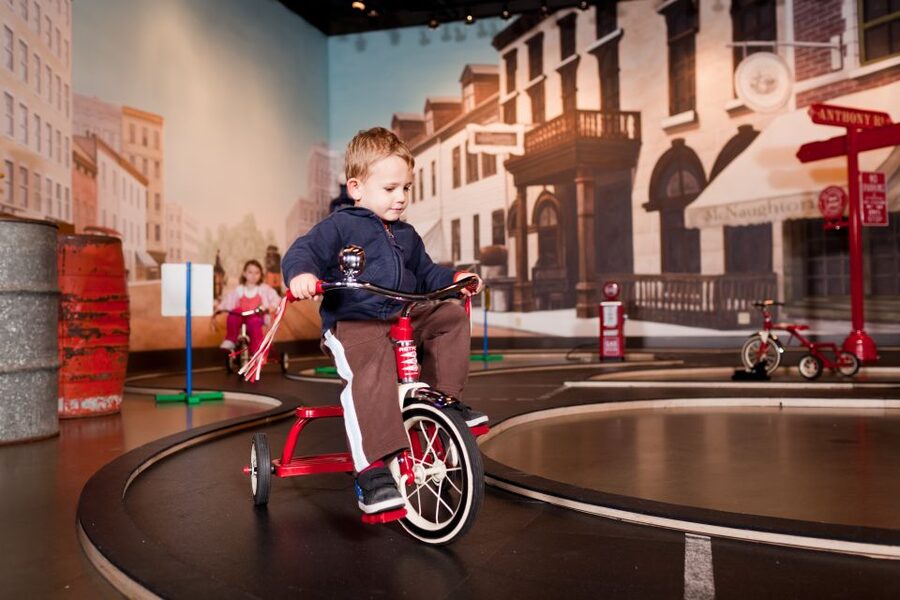
Book it if you want a focused, affordable museum visit with rare pumps, petroleum signs, restored vehicles, and a clear look at how the automobile changed North American life. At $10, it is an easy addition to a Calgary day and an especially sensible choice from mid-October to mid-May, when the wider Heritage Park attractions are closed.
Skip it if you are looking for the complete Heritage Park experience and do not want to pay separately for the village. In summer, compare the museum ticket with general park admission first, since Gasoline Alley is included with the wider admission then.
My practical advice is simple: allow time for both showrooms, speak with the interpreters, and do not miss the pumps and signs. Those details turn a collection of old cars into a fuller story about fuel, business, travel, and the arrival of the motor age.
FAQ
Where is Gasoline Alley Museum located?
Gasoline Alley Museum is at 1900 Heritage Drive SW, Calgary, Alberta, T2V 1R1, Canada.
How much does admission cost?
Admission costs $10 per person.
How long is the admission valid?
The admission is valid for one day from the time you first activate it.
Is Gasoline Alley Museum open year-round?
Yes. Gasoline Alley Museum is open year-round, as is the Railway Café. Other Heritage Park Historical Village attractions are closed from mid-October to mid-May.
Is access to Heritage Park included?
No. This admission covers Gasoline Alley Museum only. Access to the other Heritage Park Historical Village attractions is not included.
Is the museum included with summer park admission?
Yes. During the summer months, Gasoline Alley Museum is included with general admission to Heritage Park Historical Village.
Is the museum wheelchair accessible?
Yes. Gasoline Alley Museum is wheelchair accessible.
Can I cancel my booking?
Yes. You can cancel up to 24 hours in advance for a full refund. You can also reserve now and pay later.
Just added around Canada
- Toronto: Bata Shoe Museum Entrance Ticket★ 4.7 · 133 reviews
- Toronto: Museum of Illusions Entry Ticket★ 4.0 · 31 reviews
- Toronto: Royal Ontario Museum Special Exhibits Voucher★ 4.7 · 65 reviews
- Sydney: Highland Village & Bell Museum Cruise Excursion★ 4.7 · 20 reviews
- Royal B.C. Museum in Victoria: Full-Day Admission Ticket★ 4.3 · 17 reviews
- Quebec City: MNBAQ National Fine Arts Museum Entry Ticket★ 4.6 · 63 reviews
- Ottawa: Canadian War Museum Admission★ 4.7 · 232 reviews
- Ottawa: Canadian Museum of Nature Admission★ 4.6 · 226 reviews
Museum Tours in Canada, compared.


Art Gallery of Ontario General Admission Ticket
Read our review →


Calgary: 3.5-Hour Bus City Tour with Gasoline Alley Museum
Read our review →Browse the lists this tour appears in