
Review · BUDAPEST
Budapest: Time Machine Immersive Historical Exhibition
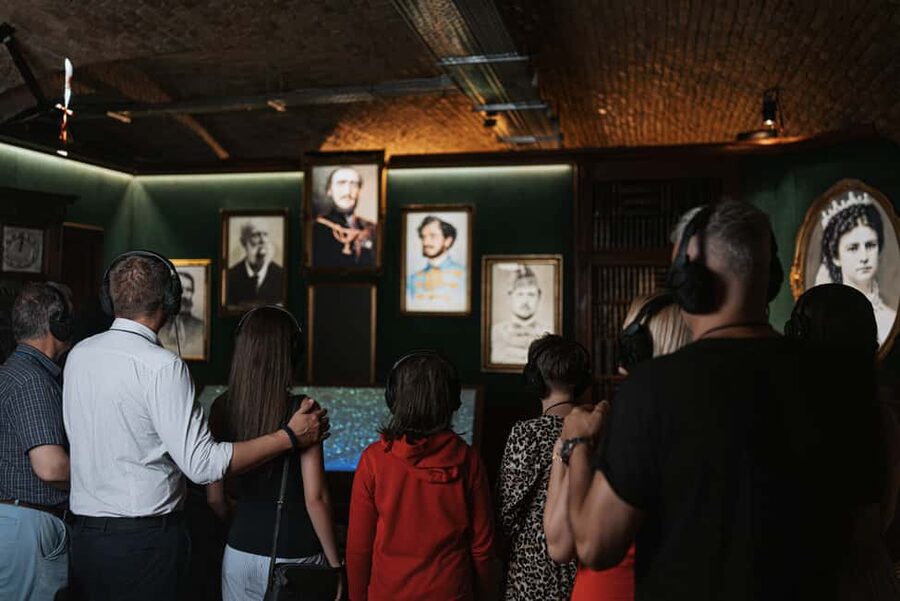
Budapest’s past comes alive beneath a restaurant on Király Street, where VR, holograms, mist screens, and a holopyramid turn a history lesson into a 90-minute stage show. I like the clear sweep from the city’s unification to modern times, and I like the attention given to ordinary people caught in revolutions, wars, and political change.
I also like that professional actors deliver original audio scenes, so you are not left reading wall panels in a dark room. The main consideration is the amount of information: one visitor found the explanations a little too much, and the experience may feel more like a fast historical production than a quiet museum visit.
Key points to know before you book
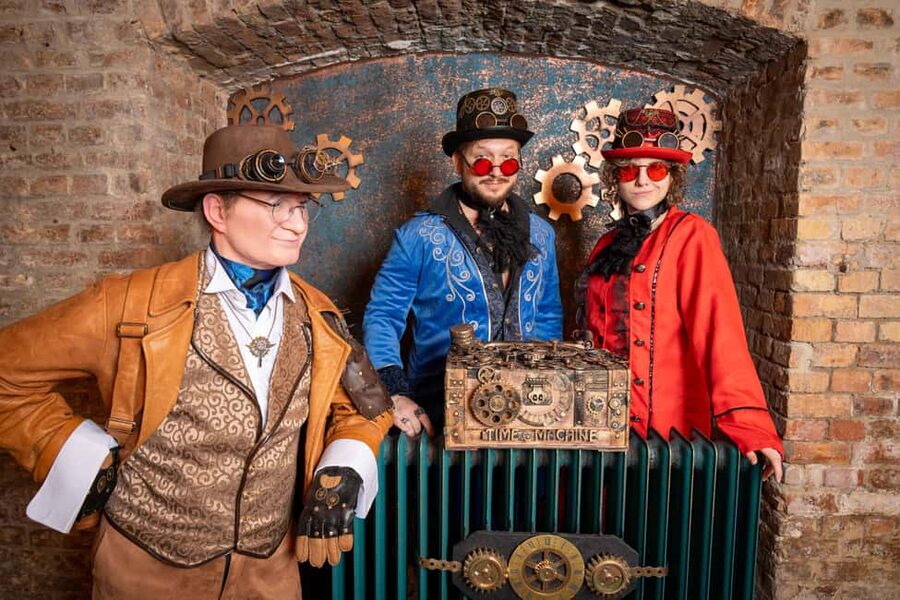
- A 1,000-square-meter underground venue: The exhibition sits below Twentysix restaurant at 26 Király Street, with the entrance down the stairs to the left.
- Budapest history in chronological order: You move from the plan to unite Buda, Pest, and Óbuda through Habsburg rule, revolutions, war, the Ghetto, socialism, and the present.
- Technology with a purpose: VR, holographic projection, mist screens, and a holopyramid show events in ways that ordinary displays cannot.
- Actor-recorded audio plays: Professional performers give the historical scenes a human voice and make the material easier to follow.
- Best for adults and children over 12: Younger children are not permitted, and the serious wartime sections may suit older children better.
- Allow extra time around the start: Tours begin every 30 minutes, so arrive 10 to 15 minutes early and expect the program to take about 90 minutes.
A time machine beneath Király Street
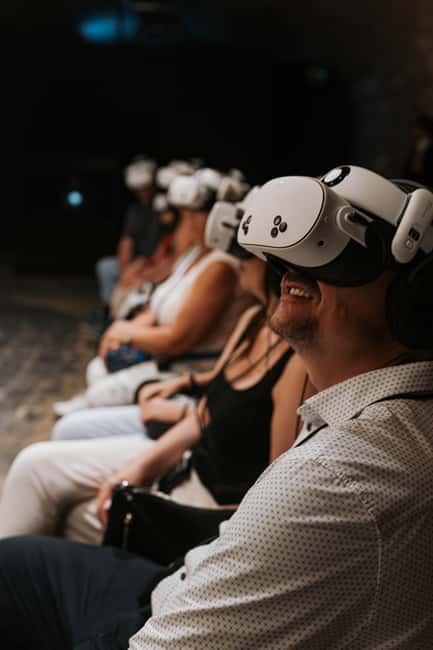
Time Machine Budapest is one of those city attractions that makes sense when you want context before sightseeing. Instead of beginning with a single building or ruler, it presents Budapest as a place shaped by political decisions, street-level upheaval, war, and long periods of change.
The setting helps. You enter at Király u. 26, find the Twentysix restaurant, and go down to the lower ground floor. The exhibition occupies about 1,000 square meters, giving the production room to move from one period to the next rather than cram everything into a small gallery.
I would not treat this as a substitute for Budapest’s museums or historic sites. It is a primer, a dramatic introduction that helps you understand what you are seeing later at the Parliament, Buda Castle, the Jewish Quarter, or the House of Terror. If you already know Budapest history well, the technology may be the main attraction.
More Museum Tours in Budapest
- Budapest: Cat Museum Budapest Entry Ticket
★ 4.4 · 2,210 reviews - Budapest: Light Art Museum Skip-the-Line Entry Ticket
★ 3.9 · 1,531 reviews - Budapest: Budapest Retro Interactive Museum Ticket
★ 4.4 · 569 reviews
Following the city from its unification to the present
The broad storyline begins with the idea of joining Buda, Pest, and Óbuda into one city. That opening gives you a useful frame: Budapest was not simply an old settlement that grew by accident. Its identity developed through decisions about power, urban life, and the relationship between the two sides of the Danube.
From there, the program moves through major chapters rather than treating history as a list of dates. You will encounter the Habsburg period and the revolutions that challenged political authority. These subjects can be difficult to grasp from a standard guidebook, especially if you are new to Central European history. A chronological presentation gives you a basic map before you explore the city on foot.
The exhibition also pays attention to forgotten destinies and everyday heroes. That matters because grand political history can make a city seem as if only rulers and generals shaped it. Here, the human scale is part of the story. You get a sense of how ordinary people were affected by decisions made far above them.
The format is not designed for leisurely reading. You move through a prepared sequence with sound, images, and projected effects. I would expect the experience to keep your attention, but I would not expect every historical point to receive equal detail.
What the VR and projections add
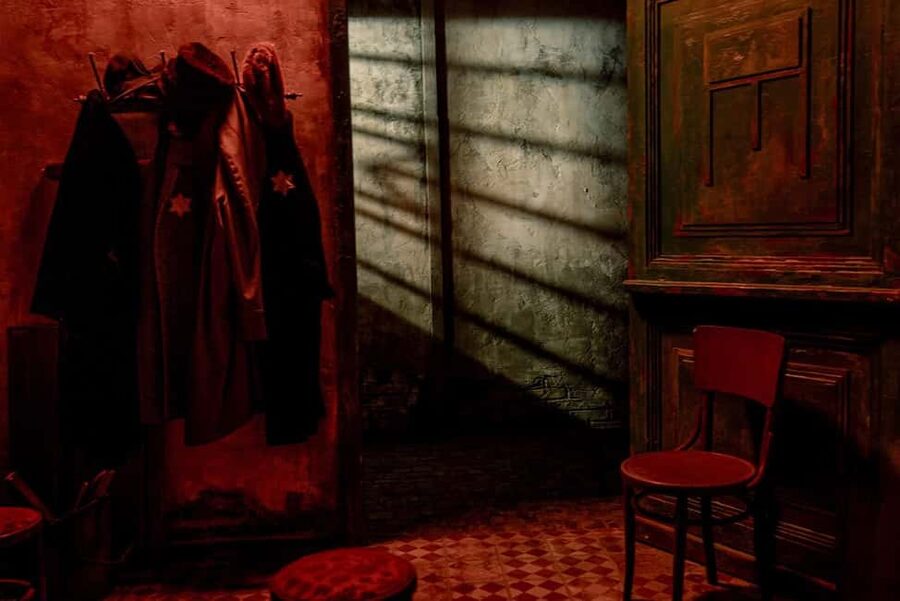
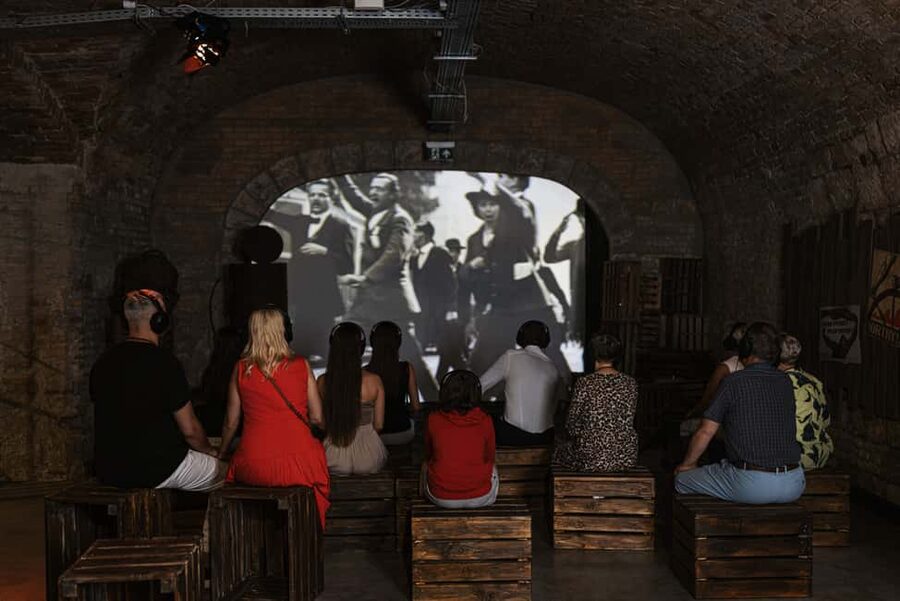
The technology is the main reason to choose Time Machine instead of a conventional introductory museum. VR can place you inside a past setting, while holographic projection creates the feeling of historical figures or scenes appearing in the room. Mist screen projection gives images a shifting surface, and the holopyramid adds another three-dimensional visual effect.
These tools are not just decoration. They can show change over time more directly than a printed panel. A city can be rebuilt before your eyes, a political era can take on a recognizable mood, and a past event can feel less remote. For a family with older children, this may make difficult material easier to hold onto.
Still, the effects are part of a theatrical show. If you prefer original buildings, archaeological remains, or quiet galleries, you may find the presentation too polished. The attraction asks you to accept its pace and visual language. You are there to follow a story, not to inspect artifacts at your own speed.
The combination will appeal most to people who like history with a strong visual element. I would especially consider it on a first visit to Budapest, when you want a broad introduction without spending half a day in a traditional museum.
The serious chapters: war, the Ghetto, and socialism
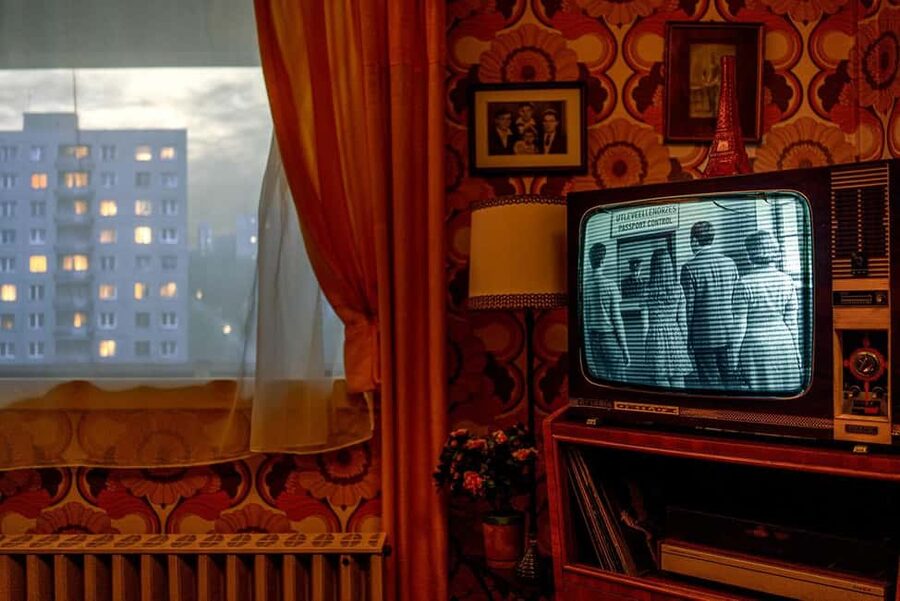
The program does not stop at imperial Budapest or the city’s grand development. It also covers the devastation of World War, the Budapest Ghetto, and the socialist era. These sections give the exhibition more weight than a simple old-city attraction.
The Ghetto section is particularly important in the overall sequence because it places Budapest’s Jewish history within the city’s wider political story. The subject is serious, and the audiovisual format may make it emotionally direct. You should be prepared for a change in tone as the show moves from urban growth and revolution to persecution and wartime destruction.
The socialist era adds another layer. Many visitors know Budapest mainly through its cafés, bridges, thermal baths, and Austro-Hungarian architecture. This chapter reminds you that the city’s recent past is just as important as its imperial image. It also helps explain why Budapest can feel architecturally and politically layered, with different periods sharing the same streets.
I appreciate that the experience includes these harder subjects instead of offering only a cheerful postcard version of the city. At the same time, a 90-minute program cannot give full detail to every period. Use it to establish a framework, then visit a museum or historic site if you want a closer look at one chapter.
A few more museum visits around the world worth comparing
- New York City: American Museum of Natural History Ticket
★ 4.5 · 15,447 reviews - Venice: St. Mark Basilica Ticket, Audioguide+History Gallery
★ 3.9 · 4,780 reviews - Berlin: Natural History Museum Entrance Ticket
★ 4.6 · 3,382 reviews - Paris: Louvre Museum Entry with History of Mona Lisa
★ 3.9 · 2,823 reviews
Audio plays that keep the history moving
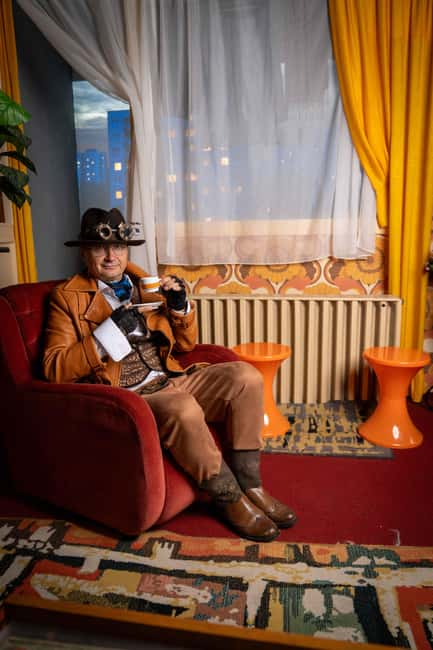
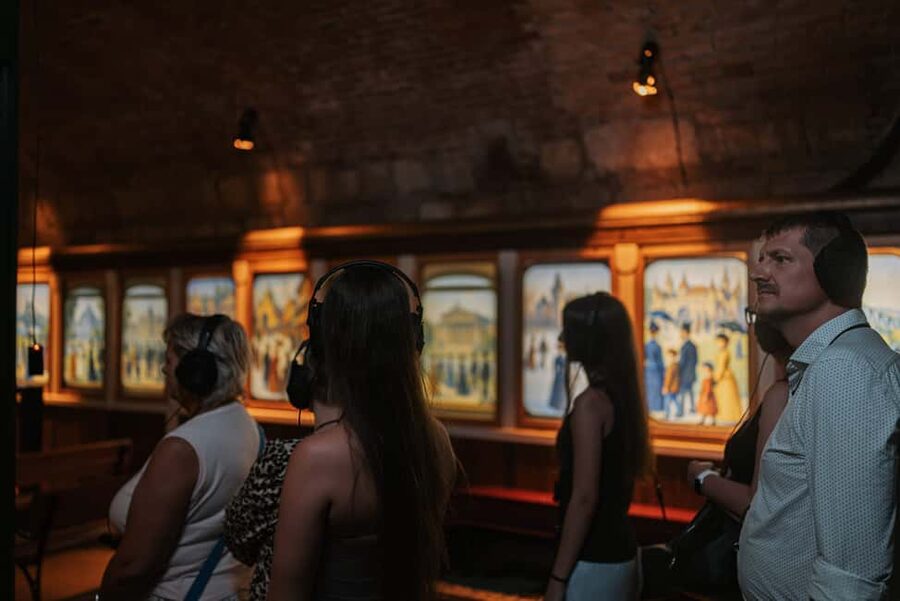
Original audio plays, performed by professional actors, accompany the exhibition. This is one of the strongest practical features for visitors who do not want to read a large amount of text in a second language.
Actor-led audio can make the difference between following a sequence and losing the thread. Voices give the historical scenes a sense of place and help you understand whose perspective you are hearing. The approach also suits the visual effects, since you are listening and watching at the same time.
The attraction is available in English, German, Spanish, and Hungarian. English speakers should have no trouble following the main story, while German and Spanish options make it useful for a wider range of visitors. The available information identifies live guide languages as English, German, and Spanish, while the exhibition itself is also offered in Hungarian.
Because the audio is built into the show, you may not be able to pause whenever you want. If you like to read every caption or stop for photos, the pace could feel quick. One person’s reaction was that there were many interesting historical explanations but perhaps too much material. I would take that as a useful warning: arrive ready to listen, and do not expect a short casual stop.
How the 90 minutes are likely to feel
The advertised duration is 90 minutes, while the schedule also describes a guided tour lasting 100 minutes. I would plan around an hour and a half, with a little flexibility if the exact format runs longer.
The time should pass quickly if you enjoy film, theater, and visual effects. One local visitor found that roughly 100 minutes went by quickly and wanted to continue. That makes sense for a tightly arranged show covering several centuries.
For a visitor who wants a quick orientation, the length is reasonable. You get more than a short projection show but less of a commitment than a major museum. For a child over 12, the amount of information may be near the upper end of their attention span, especially during the more serious sections.
Tours begin every 30 minutes, so I recommend booking a time in advance. Arrive 10 to 15 minutes early. The venue is on the lower ground floor, and you need to find the street-front entrance or go directly to the exhibition through Twentysix. Allow a few minutes to locate it rather than arriving at the last second.
Price, value, and the right kind of visitor
At $26 per person, Time Machine Budapest is not the cheapest way to spend 90 minutes in the city. Its value depends on what you want from a history attraction.
I think the price is reasonable if you like technology-based shows and want a structured introduction to Budapest. You are paying for a purpose-built production with several visual systems, actor-recorded audio, and a large underground venue. The combination is more substantial than a simple audio guide.
The value is weaker if your priority is original art, historic objects, or a low-cost walking tour. You could learn some of the same broad facts elsewhere, and the exhibition cannot offer the depth of a specialist museum. It is also not the best match for children under 12, who are not permitted.
Families with older children may find it a useful first activity because the technology gives the city’s past a clear shape. Couples and solo visitors who want a rainy-day plan should also consider it. I would be less enthusiastic for visitors who already have a detailed Budapest itinerary filled with museums and history tours unless the VR and projection elements are a specific draw.
The friendly staff can add to the welcome. One visitor described the team as helpful and even mentioned being invited for a coffee. I would not book solely for that extra, but it suggests the venue pays attention to the basic visitor experience.
How to fit it into a Budapest day
The Király Street location makes this easy to pair with time in central Budapest. You can schedule the show before or after a meal at Twentysix, since the exhibition is located beneath the restaurant. The information provided does not give a full neighborhood itinerary, so I would keep the surrounding plan flexible rather than promise exact walking times.
A morning visit can give you background before seeing major sights. An afternoon time slot works well when weather is poor or when you need a break from walking. An evening booking may suit a day spent exploring central streets, but remember that the program is not a light comedy. The wartime and Ghetto sections call for a little attention and respect.
I would avoid squeezing it between two fixed activities with no margin. The 30-minute start pattern makes advance planning simple, but arriving late could mean missing the beginning of the historical sequence.
Access, language, and practical limits
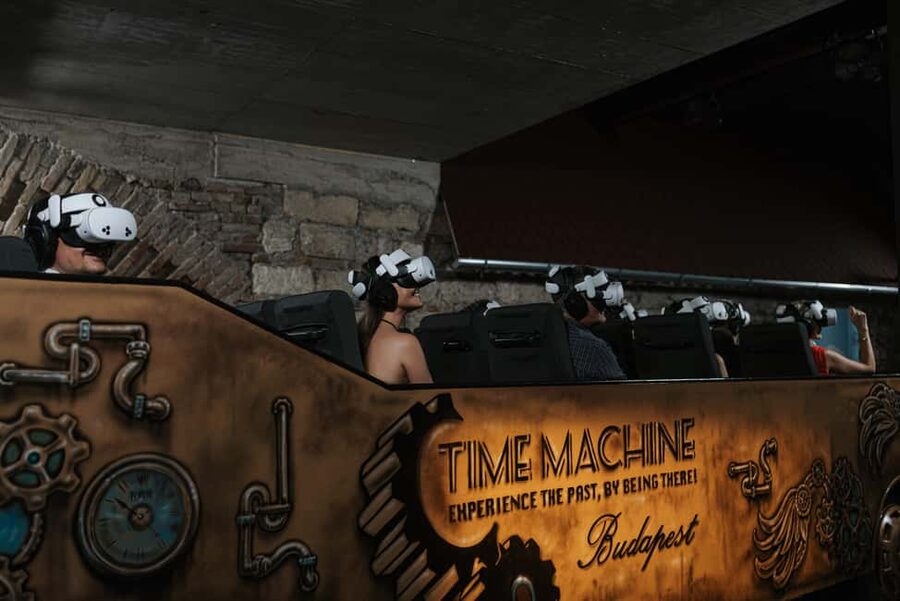
The exhibition is wheelchair accessible, which is useful information for planning. The entrance and venue are on the lower ground floor, with the exhibition reached down stairs to the left of the restaurant, so confirm the best route with staff if you need step-free access.
You can choose English, German, Spanish, or Hungarian for the exhibition. The live guide information lists English, German, and Spanish. If language matters for your group, select the preferred option while booking rather than assuming every departure uses the same language.
Children under 12 are not suitable for the program and are specifically excluded. Older children can attend, but I would explain in advance that the show covers war, persecution, and the Ghetto as well as city building and political change.
Cancellation is flexible: you can cancel up to 24 hours before the scheduled time for a full refund. A reserve-now, pay-later option is also available, which helps if your Budapest plans are still shifting.
My verdict on Time Machine Budapest
Time Machine Budapest is a smart choice when you want a clear introduction to the forces that shaped the city, delivered through theater and modern visual effects. I like its full timeline, its use of actor-recorded audio, and its willingness to include difficult subjects rather than stopping at imperial architecture.
Book it if you are visiting Budapest for the first time, enjoy VR and projection shows, or want a family activity for children over 12. The $26 price makes sense when you value a polished 90-minute production.
Skip it if you prefer artifacts, ruins, or slow museum visits. Also think twice if you dislike fixed pacing or large amounts of historical explanation. For the right audience, though, this is a useful way to get your bearings before exploring Budapest above ground.
FAQ
Where is Time Machine Budapest located?
It is at Király u. 26 in central Budapest, beneath the Twentysix restaurant. Look for the street-front Time Machine entrance, or go to the restaurant and take the stairs to the left down to the lower ground floor.
How long does the experience last?
The advertised exhibition lasts 90 minutes. The schedule also describes a guided format lasting 100 minutes, so plan for about an hour and a half, with some flexibility.
What languages are available?
The exhibition is available in English, German, Spanish, and Hungarian. Live tour guide languages are listed as English, German, and Spanish.
Is the exhibition suitable for children?
It is recommended for adults and families with children over 12. Children under 12 are not suitable for this activity.
What technology is used?
The experience uses VR, holographic projection, mist screen projection, and a holopyramid. Original audio plays performed by professional actors accompany the historical scenes.
Can I cancel or pay later?
You can cancel up to 24 hours before the scheduled time for a full refund. A reserve-now, pay-later option is available, and you should arrive 10 to 15 minutes before your booked start time.
Just added around the world
- Girona, Figueres, Dalí Museum and Cadaqués Tour from Barcelona★ 4.5 · 36 reviews
- Football Club Barcelona Museum Immersive Tour Guided Visit★ 3.5 · 52 reviews
- Erotic Museum Admission Ticket with Audioguide★ 5.0 · 527 reviews
- Dali Museum and Costa Brava Small Group Day Trip from Barcelona★ 5.0 · 77 reviews
- Madrid by High-Speed Train with Prado Museum Private Tour★ 4.0 · 33 reviews
- Guitar Legends Hall: Entrance to the Immersive Rock Museum★ 5.0 · 25 reviews
- White Rabbit Museum: The Best Immersive Experience in Catalonia★ 5.0 · 538 reviews
- Private Dali Museum, Besalú & Girona Tour from Barcelona★ 5.0 · 15 reviews
Museum Tours in Budapest, compared.


Travelling Galaxy Star Wars Interactive Exhibition
Read our review →

Browse the lists this tour appears in