
Review · BUDAPEST
Budapest: Light Art Museum Skip-the-Line Entry Ticket
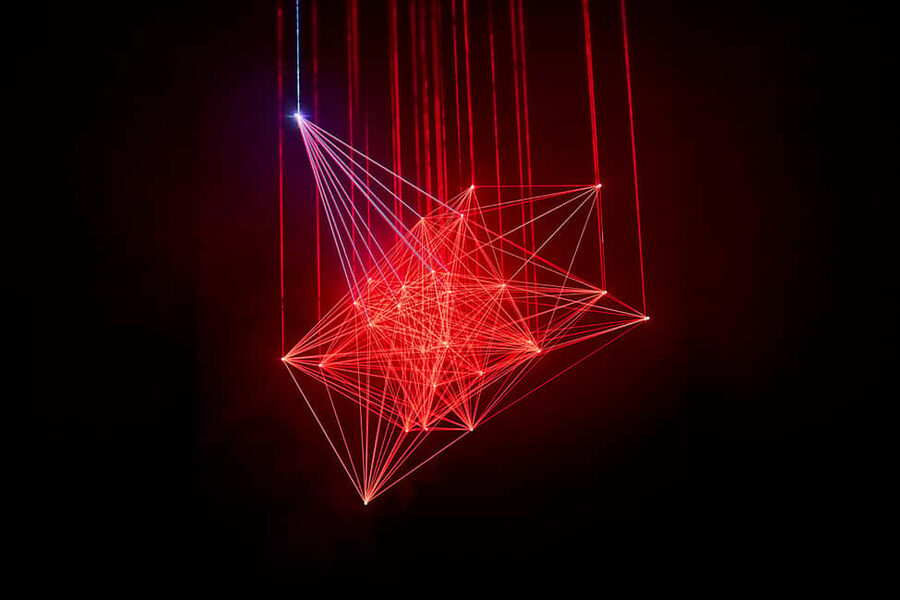
The best part of Budapest’s Light Art Museum is that it turns a former farmers’ market into a playful art space filled with glowing rooms, projections, optical tricks, and odd shapes that change as you move around them. You are not following a guide or fixed route. You set your own pace and decide which works deserve a second look.
I like the mix of serious modern art and hands-on fun, especially pieces connected with László Moholy-Nagy and Victor Vasarely. I also like the freedom to linger, take photos, and read about each installation without being pushed along. The main caution is size: many people finish in about an hour, though two hours is reasonable if you read the information panels and spend time inside the larger works.
Key points to know before you go
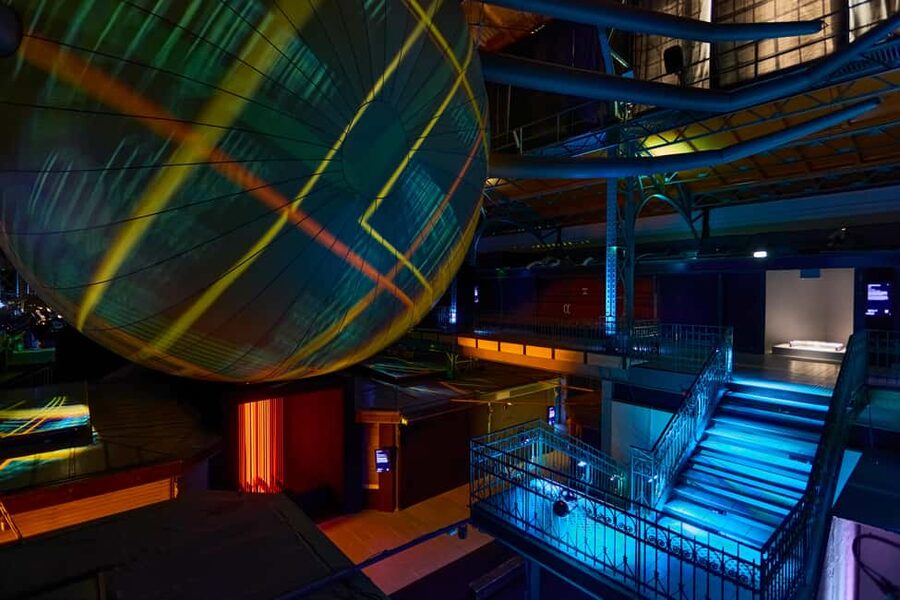
- A former farmers’ market becomes an art gallery: The historic hall gives the museum a setting far removed from a standard white-walled gallery.
- The airlocked dome and sphere are major highlights: Lie down inside the dome or sphere-like installation to get the fullest visual effect.
- Start upstairs, then work downward: Several people found the lower level more impressive, so this route saves the strongest rooms for later.
- The visit is self-guided: English and Hungarian information is available, but there is no tour guide.
- Plan on one to two hours: The museum is compact, and your timing depends on how much you read and how long you wait for interactive pieces.
- Some content is marked for adults: One section is specifically labeled 18+, so families with young children should pay attention to the signs.
A former market with a very different purpose
The Light Art Museum occupies a hall that once served as a popular farmers’ market. That setting matters. Instead of entering a polished modern building designed only for art, you walk into a repurposed urban space where old architecture and new media meet.
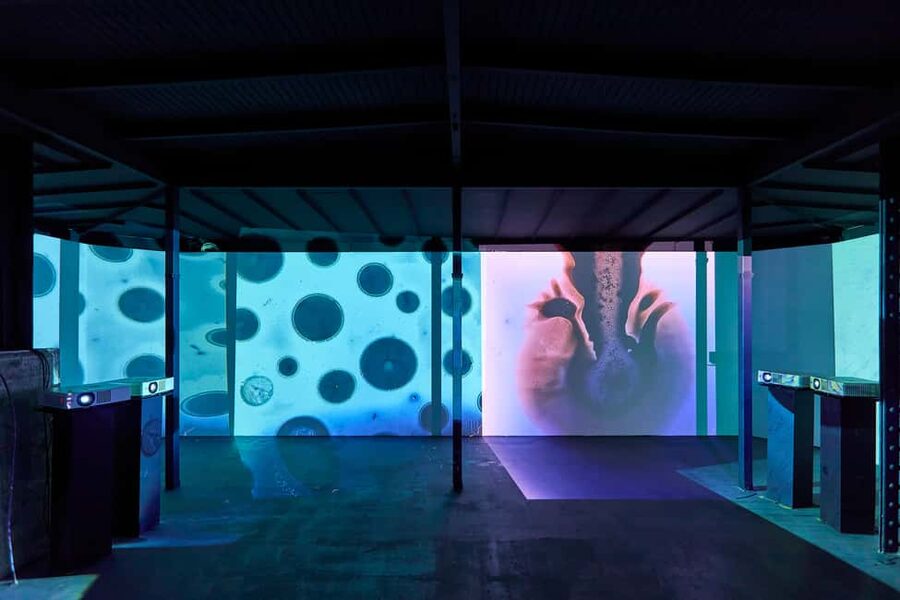
The result is not a traditional museum in the usual sense. You will find no long chain of historical rooms or carefully ordered art movements. The collection is closer to a gallery of light, projection, color, shadow, science, and optical effect. Some pieces are easy to enjoy at once. Others make more sense after you read the explanation beside them.
That range is part of the appeal. You might move from a piece with clear geometric patterns to an installation that uses light and shadow to suggest a much larger idea. If modern art sometimes leaves you cold, this museum gives you something physical to watch and interact with, rather than asking you to stand quietly in front of a painting.
The atmosphere is especially good for a mixed group. One person can study the artistic idea, while another simply enjoys the changing colors and unusual forms. Children may focus on the visual tricks, teenagers usually find plenty of photo opportunities, and adults can spend more time with the background notes.
More Museum Tours in Budapest
- Budapest: Cat Museum Budapest Entry Ticket
★ 4.4 · 2,210 reviews - Budapest: Budapest Retro Interactive Museum Ticket
★ 4.4 · 569 reviews - Budapest: Van Gogh Immersive Exhibition Ticket
★ 4.2 · 399 reviews
How the visit unfolds
Your ticket is valid for one day, with availability and starting times shown when you book. At the entrance, tell the hosts that you want to use the skip-the-line option. English and Hungarian hosts are available, though this is not a guided tour.
Once inside, you explore independently. The museum does not require you to move in a strict sequence, but starting with the smaller rooms upstairs can work well. From there, make your way down and save the larger, more dramatic installations for the end.
This order is useful because the lower level tends to contain some of the works that make the strongest impression. The exact display can change, and not every installation will appeal equally, but the museum becomes more rewarding when you give each room a little time instead of rushing from one photo opportunity to the next.
Allow at least an hour if you want a proper look. The official visit time is about two hours, and that is realistic if you read the English information panels, pause inside the larger works, and return to installations that catch your eye. If you move briskly and skip most of the explanations, you may finish in 45 minutes to an hour.
The museum can also work well early in the day. A quieter visit gives you more room to stand inside the installations and take photographs without feeling hurried. One practical point: information screens may change between languages, so you might not always have enough time to read every section in English.
The airlocked dome, sphere, and floating tent
Several installations receive particular attention, and the airlocked dome is one of the most memorable. It is not just something to photograph from the outside. To get the best effect, lie down inside it and look around you. The position changes the way the light and space feel, turning a quick stop into a more absorbing visual moment.
A large sphere is another major draw. It creates the kind of room that is easy to enjoy even if you do not normally visit contemporary art galleries. The enclosed shape, changing light, and sense of stepping away from the main hall make it one of the clearest examples of how this museum uses space, not just objects.
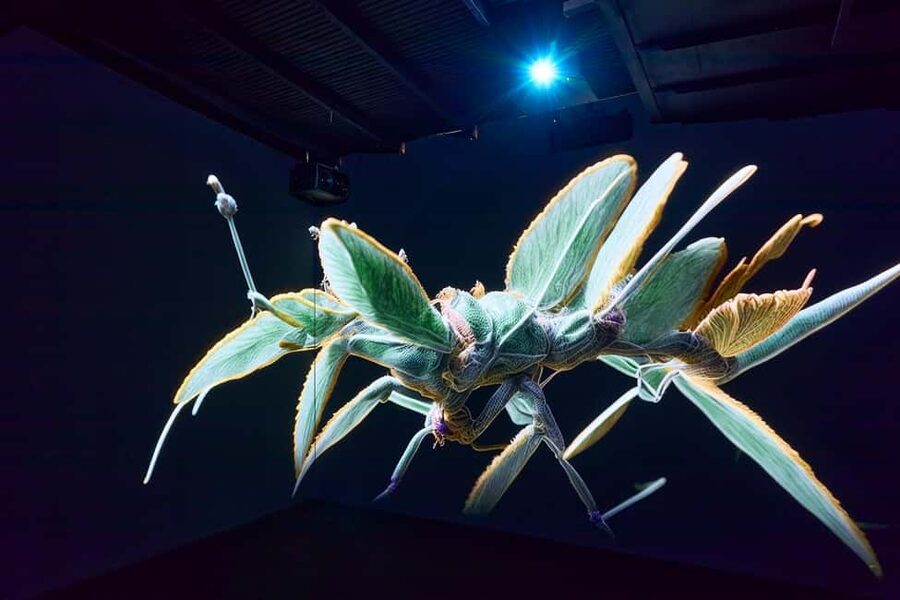
The floating tent, also described as an airship or blimp in some reactions to the displays, is another crowd favorite. Its scale gives the museum a playful center, and it is one of the installations likely to hold a child’s attention. It is also a good reminder that the collection is not limited to small lamps or wall projections.
Take your time with these larger works. The effect often depends on where you stand, whether you look up or down, and how long you allow your eyes to adjust. A quick photograph may not capture what makes them interesting.
Light, shadow, and optical art
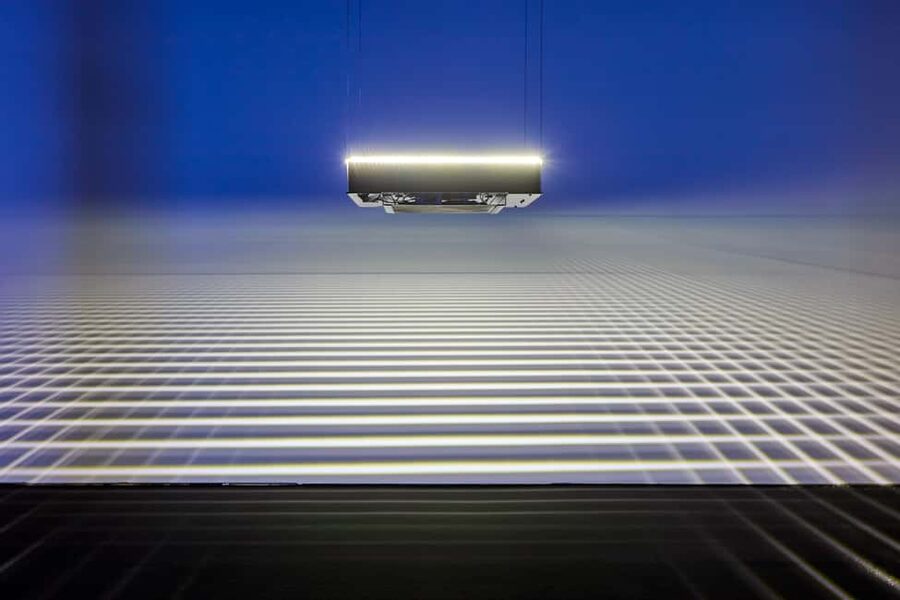
The museum brings together several kinds of work rather than presenting one single style. You will see projection mapping, light sculptures, interactive pieces, optical illusions, and site-specific installations made for the building.
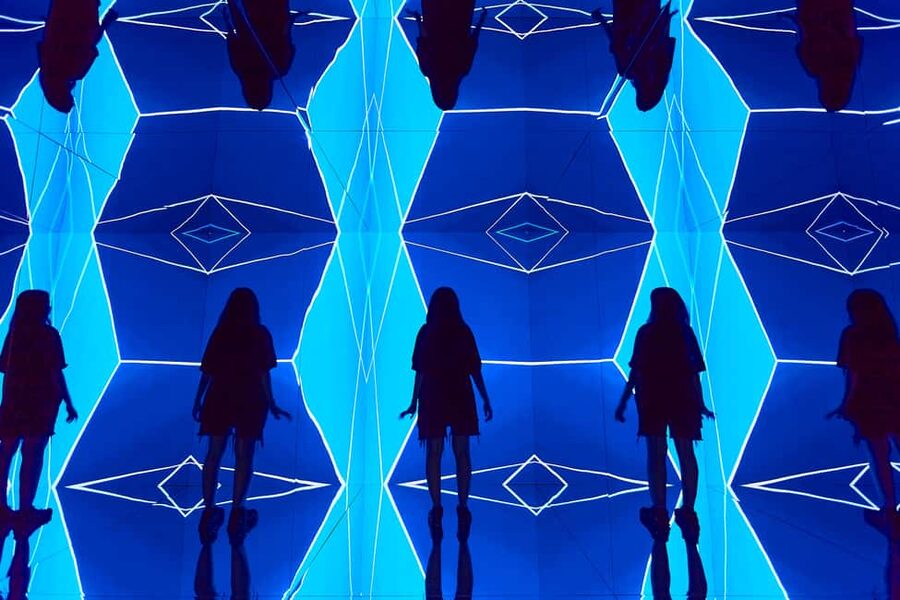
The strongest works are those that make you aware of your own movement. A pattern may seem flat from one angle and change as you walk past it. A room may feel open at first, then enclosed once the lighting shifts. These pieces make the visit active without requiring complicated instructions.
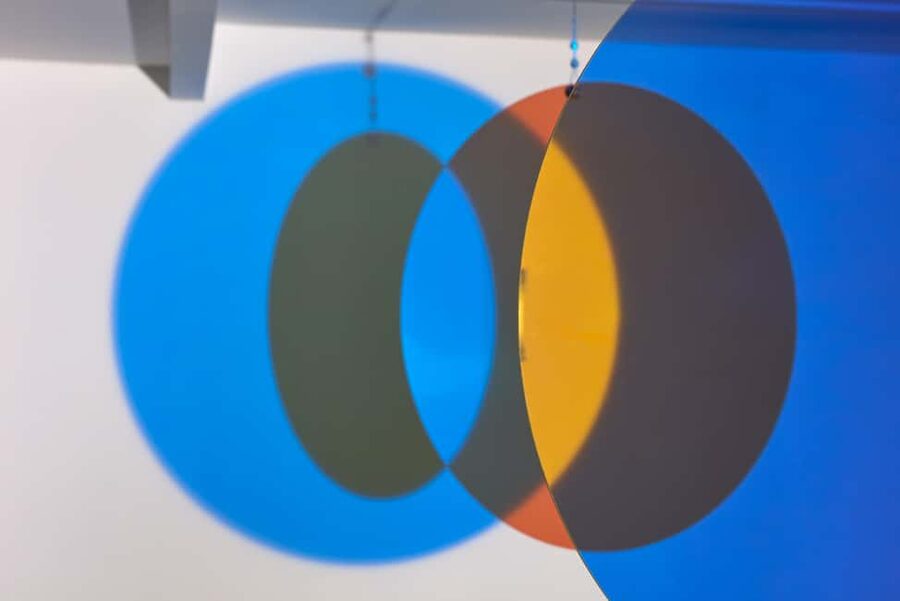
The collection also gives you a chance to connect current digital art with earlier experiments in light and perception. Works linked to László Moholy-Nagy provide a historical anchor, while pieces associated with Victor Vasarely bring in the geometry and visual tension of op art. You do not need a background in either artist to appreciate the displays, but the names add useful context.
Not every installation will be equally convincing. Some are immediately clear through color, motion, or scale. Others rely on an explanation that may feel abstract. You might encounter a work whose meaning seems vague, even after reading the description. That unevenness is normal in a show built around contemporary art, and it is one reason to treat the museum as a gallery rather than a conventional museum with a fixed educational route.
More skip-the-line museum tickets in the world:
- Florence: Skip-The-Line Uffizi Gallery Timed Entry Ticket
★ 4.5 · 27,832 reviews - Vatican Museums & Sistine Chapel Skip-the-Line Entry Ticket
★ 4.4 · 13,838 reviews - Rome: Vatican Museums & Sistine Chapel Skip-The-Line Ticket
★ 4.2 · 11,708 reviews - Rome: Vatican Museums & Sistine Chapel Skip-the-Line Ticket
★ 4.3 · 8,103 reviews
Why the lower level may be your highlight
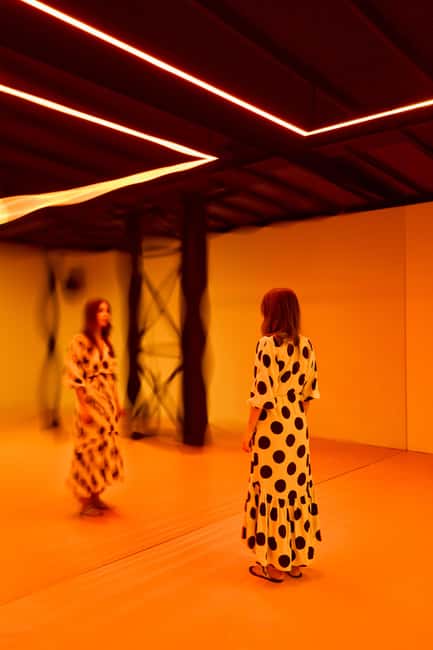
The upstairs rooms provide a useful introduction, with smaller works and displays that help you understand the broad idea of light-based art. They can be quieter and more information-focused.
The lower level generally delivers more of the visual impact. This is where you are more likely to find the large-scale installations, enclosed spaces, and dramatic pieces that make the visit feel special. For that reason, I would not judge the museum too quickly during the first few rooms.
A good plan is to start upstairs, read enough to understand the basic concepts, then work downward. If you find a small piece fascinating, stop and study it. If another feels too vague, move on without guilt. The museum is designed for personal reaction, and you are not expected to admire every object equally.
Some displays may be closed at times. This can shorten the visit and may be disappointing if you arrive expecting every room to be open. Since the exhibits can vary, I would build the museum into a day in Budapest rather than make it the only major activity on your schedule.
Is it good for children?
Yes, but age makes a difference. Young children can enjoy the colors, enclosed spaces, and large floating installation, even if they do not understand the ideas behind each work. A two-year-old may get just as much pleasure from the visual effects as an adult.
Older children and teenagers can get more from the museum if they read the panels and think about how the works are made. The interactive nature gives them something to do, rather than asking them to stand still and listen to a long explanation.
There is one important limit. A section is marked 18+, so this is not a completely child-focused attraction. Families should watch the signs and avoid assuming that every room is suitable for younger children.
For a family visit, I would keep the pace flexible. Let children choose the pieces that interest them, then use the larger rooms as natural stopping points. You can enjoy the museum without understanding every artistic reference.
How much value do you get for $21?
At $21 per person, the ticket is fairly priced if you want a compact, unusual indoor activity and expect to spend around one to two hours inside. The skip-the-line option adds convenience, especially if you are visiting at a busy time and do not want to spend part of your morning waiting at the entrance.
The value is strongest for people who enjoy visual art, photography, interactive rooms, or experiences that feel different from Budapest’s churches, thermal baths, and grand historic buildings. It also makes sense on a rainy day, when a short indoor attraction can fill a gap between larger plans.
The value is weaker if you expect a large museum with a full day of galleries. This is a relatively small site. If you walk quickly, ignore the text, or find abstract contemporary art frustrating, you may be finished in under an hour.
I would think of the admission as paying for a focused visual experience, not for an extensive collection. The ticket includes the museum entry and skip-the-line access, but not a guide. You control the length of the visit, which makes the price easier to justify if you take time with the installations.
Practical advice for a smoother visit
Book a time that leaves room before or after another central Budapest activity. The museum is valid for one day, but the available starting times can vary, so check them before finalizing your plans.
Tell the hosts at the entrance that you want to skip the ticket line. The staff can also answer further questions during opening hours by phone if you need clarification before arriving.
Wear something comfortable enough for standing and moving between rooms. The airlocked dome and similar pieces are best enjoyed when you can change position, and some installations reward a slower look.
Keep your phone ready for photos, but do not let photography replace the visit. Several pieces are most interesting when you watch them change from different positions. If you are with children, explain that some rooms are for looking only and that the 18+ sign matters.
Most of all, give the museum permission to be strange. You will probably enjoy some works instantly and find others hard to understand. That uneven mix is not a flaw for everyone, but it does mean this attraction works best when you approach it with curiosity rather than a fixed expectation of what a museum should be.
Who should book the Light Art Museum?
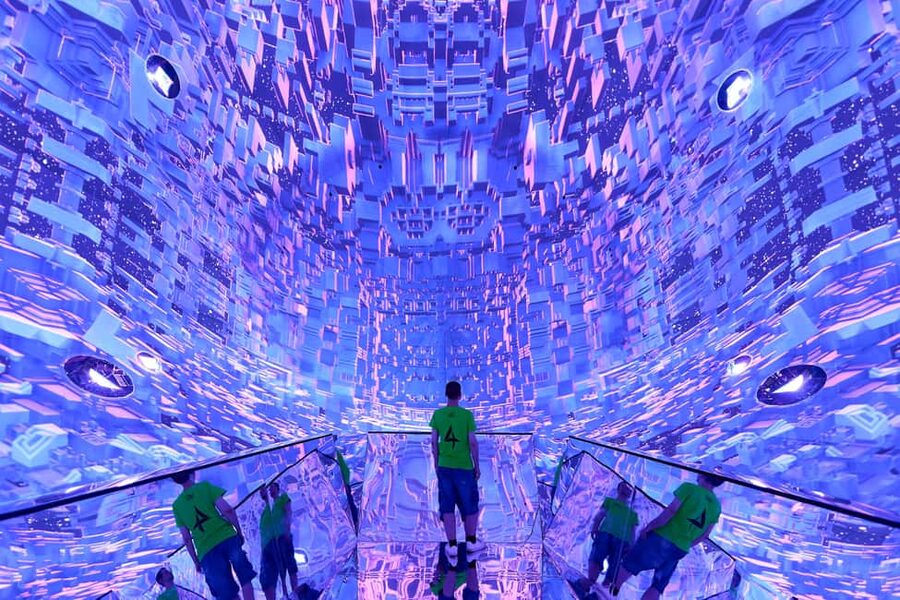
I would book this ticket if you want an easy, self-guided attraction with strong photo opportunities and a different take on contemporary art. It is a good fit for couples, families with older children, teenagers, and anyone who likes optical illusions, projection art, or rooms that respond to light and movement.
I would be more cautious if you want a large collection, a detailed historical tour, or a guide explaining every work. The museum is compact, some explanations are abstract, and a few exhibits may be closed. Still, the dome, sphere, floating tent, and lower-level displays give the visit enough memorable moments to make it worthwhile for many Budapest itineraries.
At $21, the best approach is to schedule it as a one to two-hour stop. Start upstairs, work down, lie inside the dome, allow time for the biggest installations, and keep your expectations focused on visual discovery rather than a traditional museum collection.
FAQ
How long does the Light Art Museum visit take?
The planned exploration time is about two hours. You might finish in one hour, or even 45 minutes, if you move quickly and read little of the information. Allow up to two hours if you want to study the installations and background panels.
Is this a guided tour?
No. The ticket provides admission and skip-the-line access, but there is no tour guide. English and Hungarian hosts or greeters are available at the museum.
What languages are available?
English and Hungarian are available for the hosts and museum information. Some information screens may change between languages, so you might not have time to read every panel in English.
Is the museum suitable for children?
The colorful and interactive displays can work well for children, including very young children. One section is marked 18+, so families should follow the signs and note that not every part is intended for young visitors.
What are the main installations to look for?
Look for the airlocked dome, the sphere-like installation, and the large floating tent or airship. Works connected with László Moholy-Nagy and Victor Vasarely are also part of the collection.
Can I cancel the ticket?
You can cancel up to 24 hours in advance for a full refund. The reserve-now-and-pay-later option lets you book without paying at the time of reservation.
Just added around the world
- Girona, Figueres, Dalí Museum and Cadaqués Tour from Barcelona★ 4.5 · 36 reviews
- Football Club Barcelona Museum Immersive Tour Guided Visit★ 3.5 · 52 reviews
- Erotic Museum Admission Ticket with Audioguide★ 5.0 · 527 reviews
- Dali Museum and Costa Brava Small Group Day Trip from Barcelona★ 5.0 · 77 reviews
- Madrid by High-Speed Train with Prado Museum Private Tour★ 4.0 · 33 reviews
- Guitar Legends Hall: Entrance to the Immersive Rock Museum★ 5.0 · 25 reviews
- White Rabbit Museum: The Best Immersive Experience in Catalonia★ 5.0 · 538 reviews
- Private Dali Museum, Besalú & Girona Tour from Barcelona★ 5.0 · 15 reviews
Museum Tours in Budapest, compared.



Travelling Galaxy Star Wars Interactive Exhibition
Read our review →

Browse the lists this tour appears in