

Review · THE USA
Boston: Boston Tea Party Ships and Museum Interactive Tour
The best part of this Boston attraction is simple: you do not just hear about the Boston Tea Party, you take part in it. A costumed guide gives you a colonist’s role, leads the group to Griffin’s Wharf, and lets you throw a covered tea crate into the harbor. The actors, including characters such as Mrs. Grant, Chase, and Ebenezer McIntosh, carry the story with humor and energy.
I like the strong live performances and the clever mix of old-fashioned acting with 3D holograms and a wraparound film. I also like that the two ship replicas turn a famous textbook event into something you can see and touch. The main drawback is pace: one hour goes quickly, and large groups may not have enough time to examine every museum artifact.
Key points to know before you go

- You get a role in the story: A handbill and character assignment help you join the meeting, march, and protest.
- The tea toss is hands-on: You throw a covered crate overboard, not loose tea bags.
- Two replica ships are part of the tour: They give you a feel for the vessels used in the 1773 protest.
- Actors guide the full experience: Performers stay in character and explain the political conflict through live scenes.
- Technology adds context: 3D holograms and a giant wraparound theater show the argument between Britain and the colonies.
- The one-hour format is brisk: It works well with a busy Boston schedule, but museum browsing time can be limited.
The Boston Tea Party in one lively hour
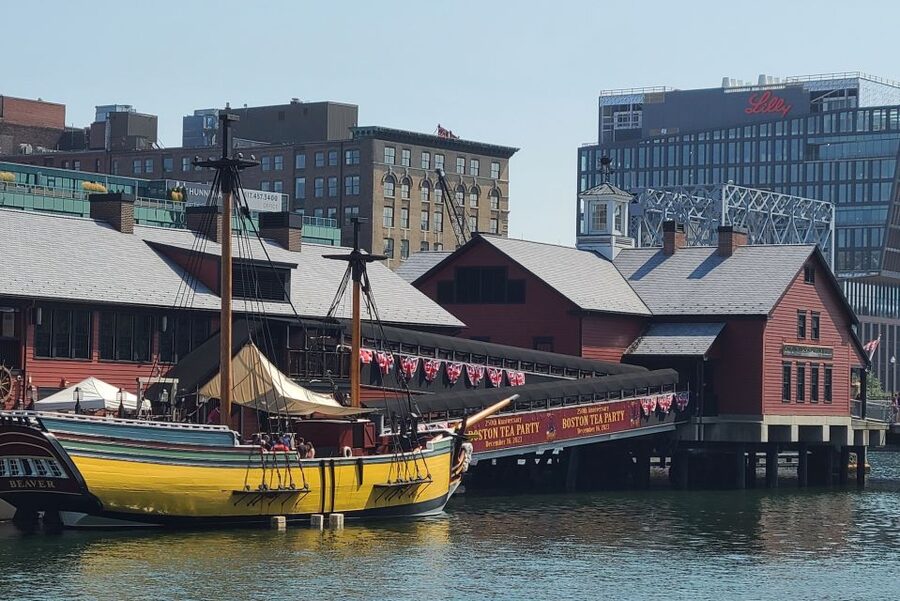
The Boston Tea Party Ships and Museum is on the Congress Street Bridge, close to the waterfront and easy to add to a day of sightseeing in central Boston. The timed admission keeps the visit organized, but you should book ahead, especially for weekend visits, since popular departures can sell out.
At $35 per person, this is not a quick museum stop. It is a guided performance, a ship visit, a hands-on activity, and a short film rolled into one. I think the price makes sense if you want history presented in an active way rather than through display cases alone.
The format suits families, first-time visitors, and anyone following Boston’s revolutionary story. It also works well after walking the Freedom Trail, since the tour gives more detail about the tensions that led to open rebellion. You will hear the familiar names and events, but the role-playing helps explain how an angry crowd could move from protest to action.
The tone is theatrical. That is a strength if you like audience participation. If you prefer quiet galleries and long labels, the acting may feel a little much.
A few more museum visits around the USA worth comparing
- NYC: 9/11 Memorial & Museum Timed-Entry Ticket
★ 4.8 · 31,428 reviews - NYC: Empire State Building Tickets – Observatory & Museum
★ 4.7 · 25,757 reviews - New York City: American Museum of Natural History Ticket
★ 4.5 · 15,447 reviews
Receiving your handbill and colonist role
The tour starts in a meeting house, where a live character introduces the political situation in British America. You receive a handbill from one of the colonists and learn what part you will play in the coming events.
This opening matters because it gives you a reason to pay attention. Instead of hearing a detached lecture, you are placed on one side of a conflict involving taxation, representation, trade, and British authority. The guides use period speech and direct audience interaction, so you are expected to respond rather than simply stand back.
You may also receive a mohawk disguise before the march. It is a playful detail, but it connects to the way the protestors tried to conceal their identities while making a very public statement. The disguise helps younger children understand that this was both a political protest and a dangerous act of defiance.
The actors are the engine of the experience. Their success depends on staying in character while keeping the group moving, and that seems to be where the attraction earns much of its praise. Performers playing Mrs. Grant, Chase, and Ebenezer McIntosh have been singled out for their commitment, humor, and ability to draw the audience into the action.
The meeting house and the events of December 16, 1773
Inside the meeting house, the guide explains the night of December 16, 1773, when colonists gathered to decide what to do about tea shipments. You hear the story through speeches, staged discussion, and audience participation.
The presentation does not treat the Boston Tea Party as an isolated prank. It places the event within a larger resistance movement in British America. That context is useful because the tea protest was tied to years of disagreement over British taxation and political control.
The live format gives the episode some tension. You can see how a meeting becomes a march, and how a crowd moves toward a decision that could bring severe punishment. The program also keeps the language accessible, so children and adults can follow the main story without needing much background.
This is a performance, not a scholarly seminar. The story is shaped for a broad audience, and the language is sometimes dramatic or humorous. You will get the basic political and human story, but visitors looking for a detailed examination of every historical debate will need a separate museum or book.
Marching to Griffin’s Wharf
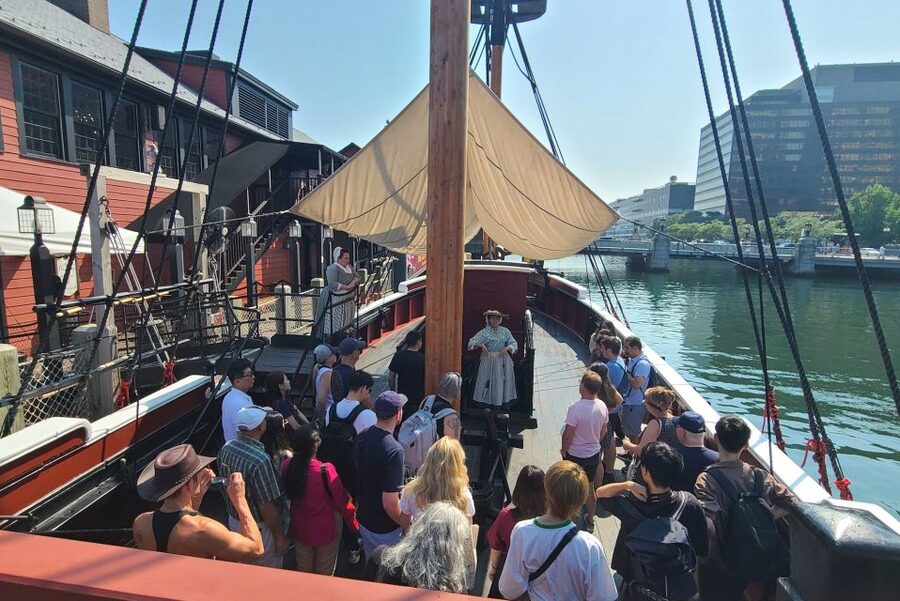
The group then moves toward Griffin’s Wharf, following the path of the protest. This transition is one of the most effective parts of the visit because the setting changes from discussion to action.
You are not simply told that colonists boarded ships and destroyed tea. You walk with the group, hear the characters build momentum, and take part in the collective mood. The guides encourage the audience to join in, which can feel slightly theatrical at first, but most people quickly understand the spirit of the activity.
The mohawk disguise and assigned role make the march more memorable for children. Adults may enjoy the absurdity of being handed a part in an event they have known since school. Either way, the activity gives the story a physical shape.
Large groups can affect this portion of the tour. The experience is carefully structured, but a crowded departure may mean less room to pause or look closely at each detail. If you want a quieter visit, an off-peak timed entry may be more comfortable, though no specific quiet period is guaranteed.
Same city, a completely different collection:
- NYC: Museum of Modern Art (MoMA) Entry Ticket
★ 4.6 · 12,540 reviews - 9/11 Memorial, Ground Zero Tour with Optional 9/11 Museum Ticket
★ 5.0 · 6,381 reviews - 9/11 Memorial Museum Admission Ticket
★ 4.5 · 6,376 reviews - All-Access 9/11: Ground Zero Tour, Memorial and Museum, One World Observatory
★ 5.0 · 4,886 reviews
Throwing the tea crate overboard

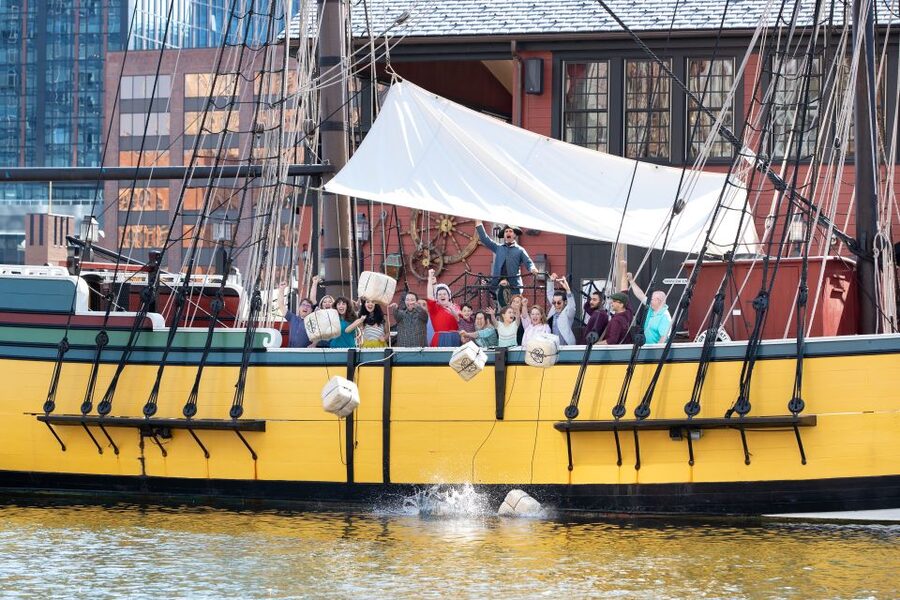
At the replica ship, you get the moment most people remember: throwing a tea crate overboard. The crate is covered and represents the packed tea cargo that protestors destroyed. You are not tossing loose tea into the water, despite the casual way this attraction is often described.
The action is quick, but it gives the story a physical punch. You feel the weight of the decision in a small, harmless way: take the crate, lift it, and send it over the side. Children tend to enjoy this most, but adults are not left out. The program makes room for everyone in the group to participate.
This is also where the attraction’s theatrical style works best. The guides keep the energy high and encourage the crowd to respond with a final Huzzah. It is a little corny, but it fits the setting and helps the group leave the ship with a shared memory.
The ship visit is not a long period of independent exploration. You follow the guide’s direction and take part in the activity before moving on. If you want detailed maritime information, you may find the ship replicas more useful as visual aids than as a full shipbuilding exhibit.
Two faithful ship replicas
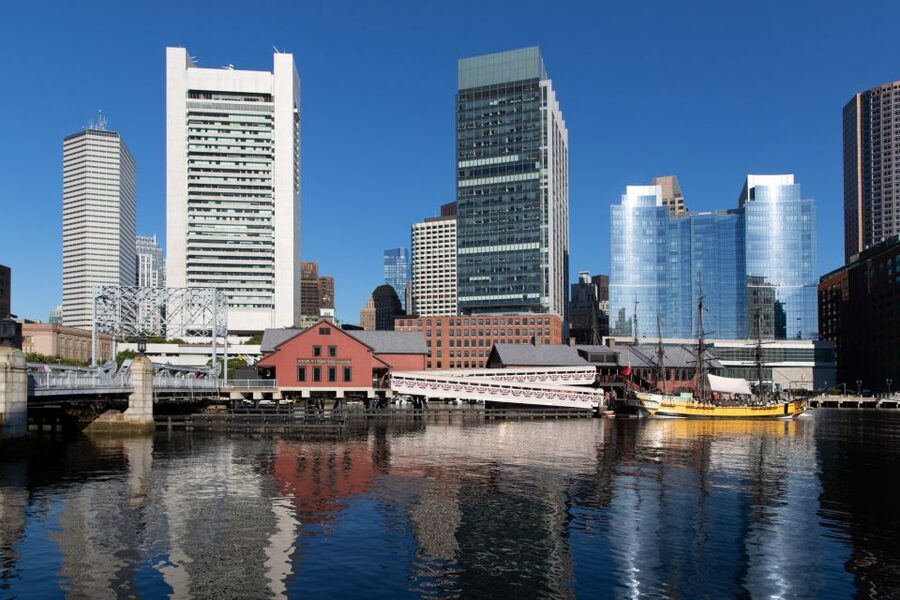
The attraction includes impressive replicas of two of the vessels connected with the Boston Tea Party. Walking aboard them helps you picture the cramped working spaces and the practical setting of the protest.
The ships are especially useful for families. A child who may lose interest during a political explanation can understand the event through the decks, crates, railings, and harbor setting. Adults also gain a better sense of the physical job involved in bringing tea aboard and throwing it into the water.
The replicas are not simply background scenery. They form the bridge between the live performance and the museum portion. You have just heard the characters make their decision, and now you see where the action took place.
You should keep your expectations in check. The whole visit lasts about an hour, and the ships are part of a guided route. You will not have unlimited time to inspect every corner or read every piece of information at your own pace.
Holograms, artifacts, and the museum visit

After the ship portion, the museum uses 3D holographic characters to show British soldiers and colonial patriots arguing. The figures appear in front of you and speak as if the conflict is unfolding in the room.
This technology is a useful change of pace. The live actors give you the emotional story, while the holograms show competing viewpoints without requiring a large stage set. The argument between the British side and colonial patriots makes clear that the protest was not a simple story of good people against bad people.
The museum also contains artifacts and displays connected with the event. You may see a tea crate and other objects that help explain how the protest worked. Some parts are easy to pass quickly, so pay attention when the guide points out a special item.
One important practical point: the guided schedule can leave little time for close museum browsing. A large group may move through the exhibits before you have read every label. The attraction works best if you treat the museum as part of the timed story, not as a quiet gallery that you can explore for several hours.
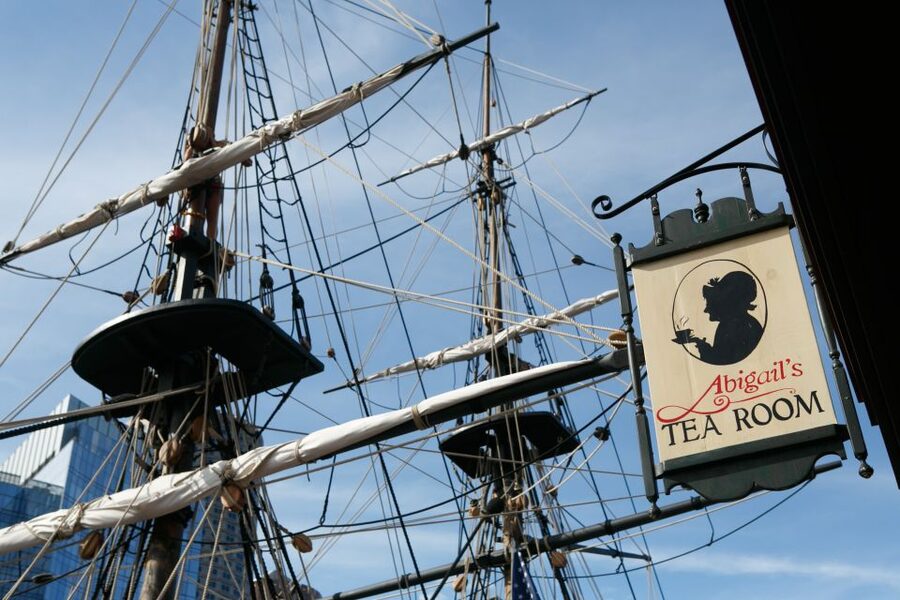
There is also a tea room called Abigail’s Tea Room. Tea connected with the event may be available there for an additional cost, giving you a chance to try the drink that helped trigger the protest. Food and beverages are not included in the $35 admission.
The wraparound film and the road to revolution

The final presentation uses a giant wraparound theater to show the battle and the wider course of the American Revolution. It gives the visit a clear ending by connecting the destruction of the tea with the conflict that followed.
This film is useful because the Boston Tea Party itself lasted only a short time. Its importance came from the response. British punishment, colonial anger, and growing resistance helped push the colonies toward open war.
The large screen gives the ending a sense of scale. After spending time with individual characters and a single ship, you see the consequences spread far beyond Boston Harbor. The format is more cinematic than a museum label, but it makes the final lesson easy to remember.
You may appreciate this section most if you already know the basic story. The film pulls the earlier scenes together and explains why the tea protest is treated as a turning point. If you have young children, the action may hold their attention better than a long historical explanation.
Is $35 good value for one hour?
At $35, the admission costs more than a standard small museum visit, but you receive several kinds of programming in one ticket. The price includes timed museum admission, the interactive tour, the live characters, the replica ships, the holograms, and the wraparound theater.
I consider it fair value for families and first-time Boston visitors who want a structured experience. You are paying for performers and production, not just access to objects behind glass. The chance to throw the tea crate also gives the visit a clear activity rather than a passive museum stop.
The value is less obvious if you mainly want to study artifacts. The one-hour schedule can feel short, particularly when the story is moving quickly and you want to inspect the museum displays. In that case, the attraction may be best paired with a separate historical museum or a longer Freedom Trail visit.
Printed museum guides are available in 14 foreign languages. The live tour itself is in English, but the translated guides can help non-English speakers follow the museum sections. You can request a guide at the museum or print one before arriving using the link provided with your voucher.
Who will enjoy this Boston attraction?
I would recommend it most strongly to:
- Families with school-age children
- First-time Boston visitors
- People who enjoy live theater and audience participation
- History students who want a visual way to understand the event
- Anyone already walking the Freedom Trail
- Adults who prefer stories with humor and movement
The attraction is not only for children. Several parts are written for adults too, and the political background gives the performance more substance than a simple reenactment. Still, you should be comfortable with actors speaking directly to the audience and assigning you a small role.
Wheelchair users should note that the experience is not suitable for them. Anyone with mobility concerns should confirm arrangements before booking.
The host and greeter speak English. The printed museum guides help with the exhibit content, but they do not turn the live performance into a fully translated tour.
Booking and timing advice
Reserve in advance, particularly for weekends. You receive a timed entry, and popular starting times can sell out. The attraction is located at the Boston Tea Party Ships and Museum on the Congress Street Bridge, where you present your ticket on arrival.
The one-hour duration makes it easy to fit between other Boston sights. I would not schedule it so tightly that you have to rush away afterward, especially if you want to visit Abigail’s Tea Room, browse the gift shop, or look at the museum objects after the main presentation.
Free cancellation is available up to 24 hours before the scheduled time, and you can reserve now while paying later. Those terms are useful if your Boston plans may change, but the main reason to book early is securing the time you want.
Should you book the Boston Tea Party Ships and Museum?
Book it if you want history with actors, movement, and a hands-on moment. The performances are the strongest part, and the combination of role-playing, replica ships, holograms, and film gives the Boston Tea Party more life than a conventional display.
Skip it if you want a quiet, self-guided museum with plenty of time for reading. The pace is brisk, large groups can limit your time with artifacts, and the theatrical style will not suit every mood.
For most first visits to Boston, I think it is a worthwhile one-hour stop, especially after the Freedom Trail. Bring your curiosity, expect to play along, and remember that your tea toss involves a covered crate, not a loose bag of tea.
FAQ
How long does the Boston Tea Party Ships and Museum tour last?
The experience lasts one hour. Check the available starting times when booking.
How much does the experience cost?
The listed price is $35 per person.
Where does the tour begin?
It begins at the Boston Tea Party Ships and Museum on the Congress Street Bridge. Present your timed ticket when you arrive.
Is the tour conducted in English?
Yes. The host or greeter and the live tour are in English.
Are translated guides available?
Printed museum guides are available in 14 foreign languages. You can request one at the museum or print one before arrival using the link on your voucher.
Do you really throw tea into the harbor?
You throw a covered tea crate overboard during the interactive portion. The activity represents the tea cargo destroyed during the Boston Tea Party.
Is food included in the ticket?
No. Food and beverages are not included. Tea may be available at Abigail’s Tea Room for an additional cost.
Is the experience suitable for wheelchair users?
The experience is listed as not suitable for wheelchair users.
Just added around the USA
- Museum of Ice Cream Austin★ 3.5 · 85 reviews
- Admission to Richard Nixon Presidential Library and Museum Ticket★ 5.0 · 123 reviews
- The Turquoise Museum Curator’s Tour★ 5.0 · 12 reviews
- Turquoise Museum Visit★ 4.5 · 194 reviews
- Orlando: Titanic Artifact Exhibition Ticket★ 4.5 · 246 reviews
- The St. Augustine Old Jail Museum Guided Tour★ 4.6 · 68 reviews
- San Diego: San Diego Natural History Museum Ticket★ 4.7 · 33 reviews
- The Museum of Fine Arts, Houston Entry Ticket★ 4.6 · 82 reviews
Museum Tours in the USA, compared.
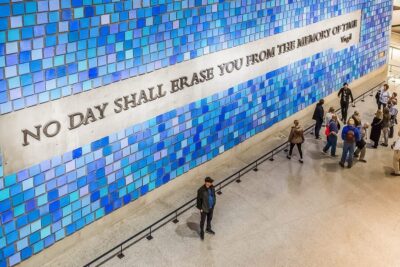



9/11 Memorial, Ground Zero Tour with Optional 9/11 Museum Ticket
Read our review →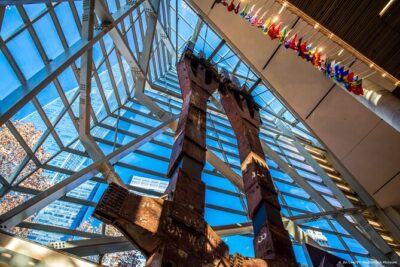

All-Access 9/11: Ground Zero Tour, Memorial and Museum, One World Observatory
Read our review →

Browse the lists this tour appears in