
Review · BERLIN
Berlin: Samurai Museum – EMYA 2026 Nominated
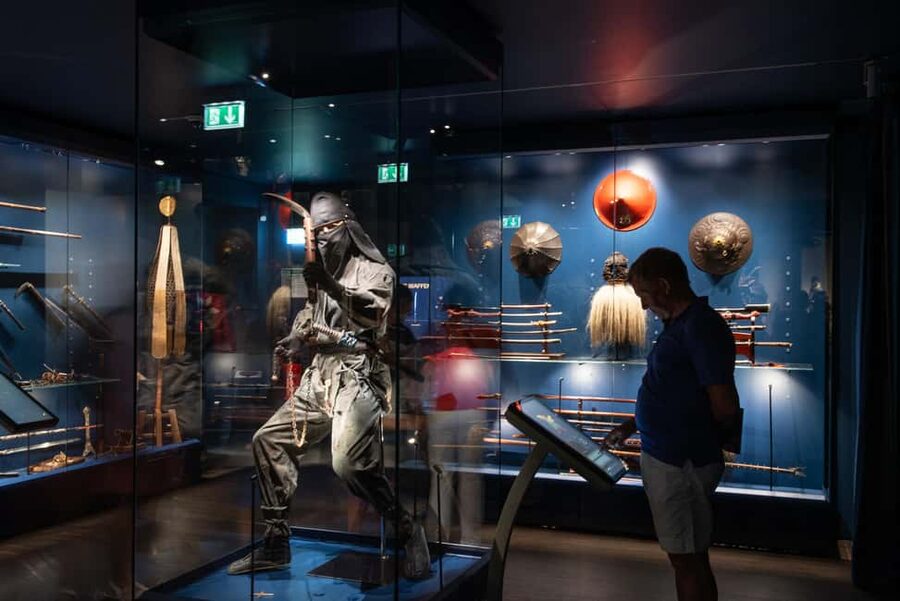
The Samurai Museum Berlin turns a private collection of more than 1,000 Japanese artifacts into a lively history lesson. Original armor, swords, helmets, masks, and art trace samurai culture from the early Middle Ages into modern times, while projections and interactive displays keep the visit moving. I like the clear German and English information, and I like that the museum explains more than warfare, including tea, aesthetics, myths, and discipline. The main drawback is simple: the technology can sometimes compete with the objects themselves, and visitors who prefer quiet, traditional galleries may find the presentation busy.
The museum is a strong choice for families, first-time visitors to Japanese culture, and anyone curious about the link between samurai, film, design, and anime. Allow around two hours, possibly longer if you stop at every screen and activity. The $16 ticket is fair for a central Berlin museum with a large collection and direct entry, though the experience is less suited to anyone seeking a small, silent display of artifacts.
Key points at a glance
- More than 1,000 original objects: See Japanese armor, katana, helmets, masks, ornaments, brooches, and art from a private collection.
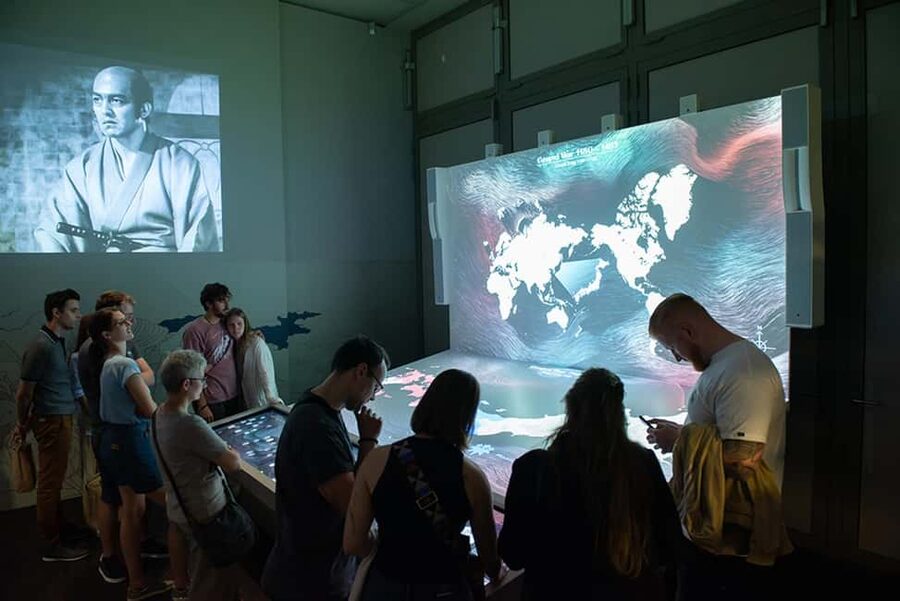
- High-tech history lesson: Projections, interactive stations, holographic performances, and an AI fox guide add movement and sound.
- Easy Mitte location: The museum sits on Auguststraße, close to Alexanderplatz and Museum Island.
- Useful opening orientation: An eight-minute video about Japan can help you understand the displays before you begin.
- Good for mixed interests: The exhibits cover weapons and warriors, but also tea ceremonies, aesthetics, cultural myths, and modern pop culture.
- Flexible ticket: Your smartphone ticket is valid for one to 14 days, with direct entry and no ticket-line wait.
Why the Samurai Museum works beyond the swords
A museum devoted to samurai could easily become a long row of blades and helmets. This one aims for a wider view. You see the warrior class, but you also get reminders that samurai culture included ceremony, design, religion, craftsmanship, and strict social ideals.
That wider focus matters. If you arrive knowing little about Japan, you can follow the basic story without needing a history book first. If you already enjoy Japanese culture, the range of objects gives you more to study than the usual pop-culture image of a sword-wielding warrior.
The nomination for the European Museum of the Year Award 2026 points to the museum’s modern approach, though a nomination is not the same as a prize. The real test is whether the presentation helps you understand the collection. From the available details, the answer is generally yes, especially if you use the video introduction and take time with the explanatory screens.
More Museum Tours in Berlin
- Berlin: Natural History Museum Entrance Ticket
★ 4.6 · 3,382 reviews - Berlin: Museum Island Multiple Museum Entry Ticket
★ 4.4 · 2,861 reviews - Skip-the-Line: Berlin Wall Museum at Checkpoint Charlie
★ 4.1 · 2,041 reviews
Start with the eight-minute Japan introduction
Before heading through the main displays, I would begin with the eight-minute video lecture about Japan. It gives you a basic frame for the country, its culture, and the world behind the objects.
That small step can make a noticeable difference. Armor and swords are easy to admire, but context helps you understand why they were made, how they were used, and why appearance mattered so much. You do not need to memorize dates. Just use the film to get your bearings before looking at individual pieces.
The introduction is also useful for families. Children may want to rush toward the largest helmet or most dramatic sword, while the short film gives everyone a shared starting point. It is brief enough not to test young attention spans.
The armor and weapons are the main draw
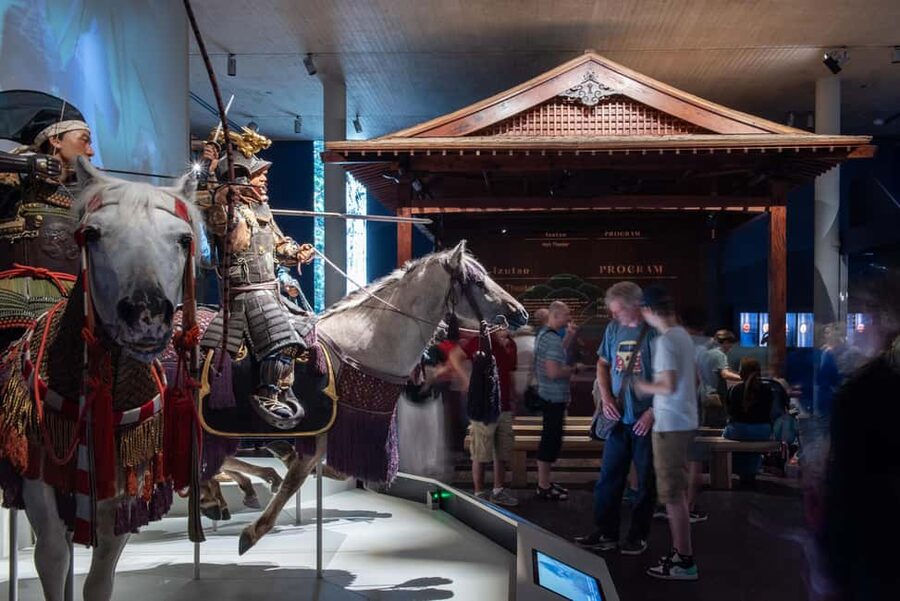
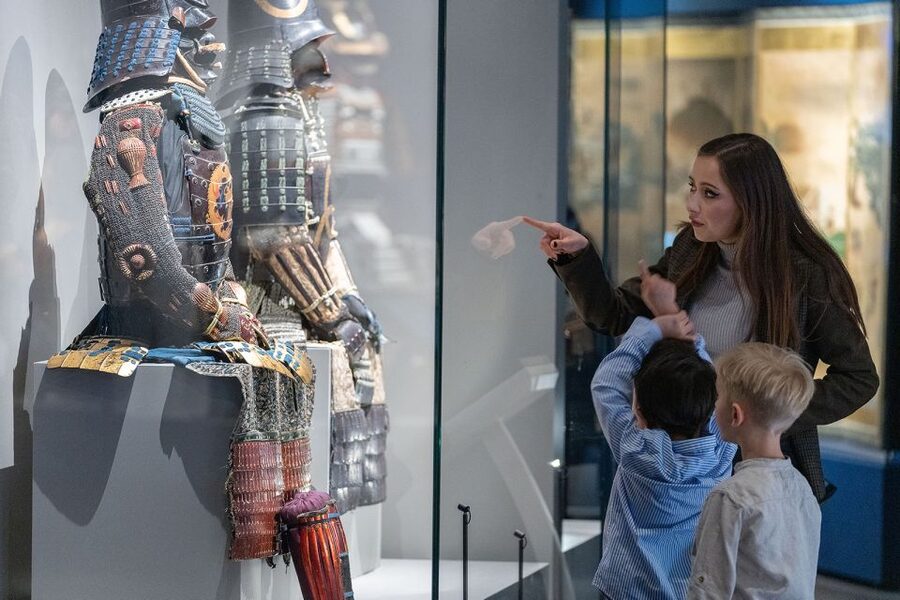
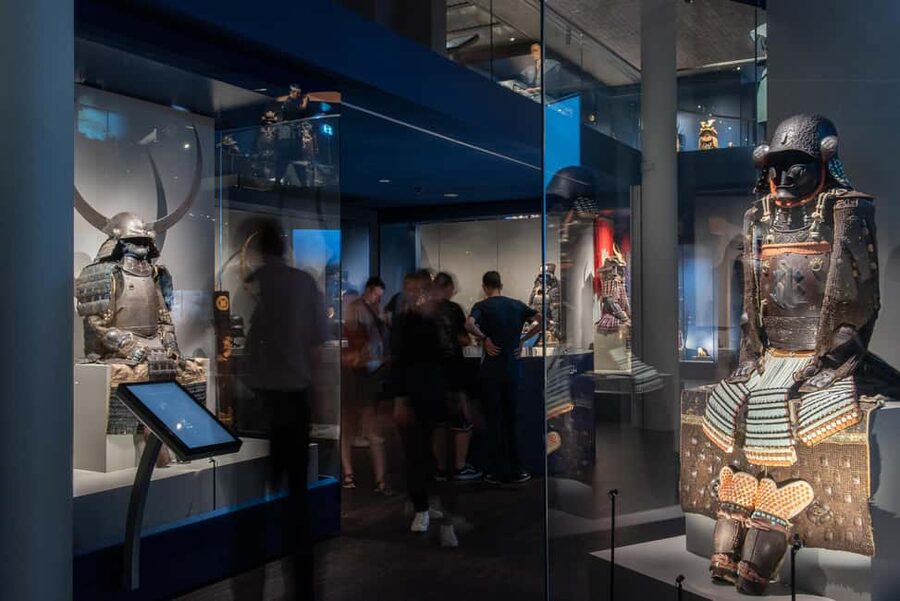
The strongest part of the visit is the collection itself. You can expect historic armor, finely made katana, helmets, masks, ornaments, brooches, and other pieces from Japan.
The armor deserves close attention. Its shapes, surfaces, and decorative details show that protection was only part of the goal. A helmet or mask could also project status, character, and fear. The examples are described as well conserved, which helps you see the workmanship instead of looking at worn fragments.
The swords are likely to attract the most attention, but do not hurry past the smaller objects. Ornaments and brooches can reveal just as much about taste and daily life as a weapon reveals about combat. The collection gives you a chance to compare practical equipment with items made for ceremony, display, or personal style.
You may find the quantity both impressive and tiring. There is a lot to see, and the museum can feel full of visual information. I suggest choosing a few objects to study closely rather than trying to remember everything.
Interactive displays make the history easier to follow

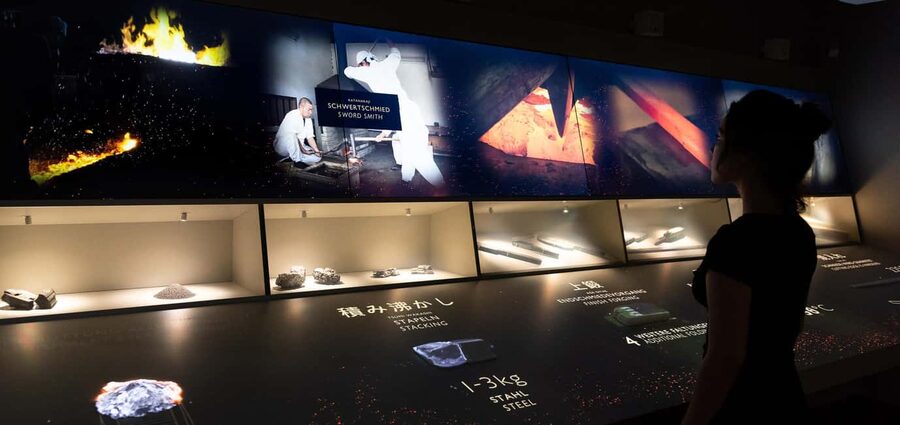
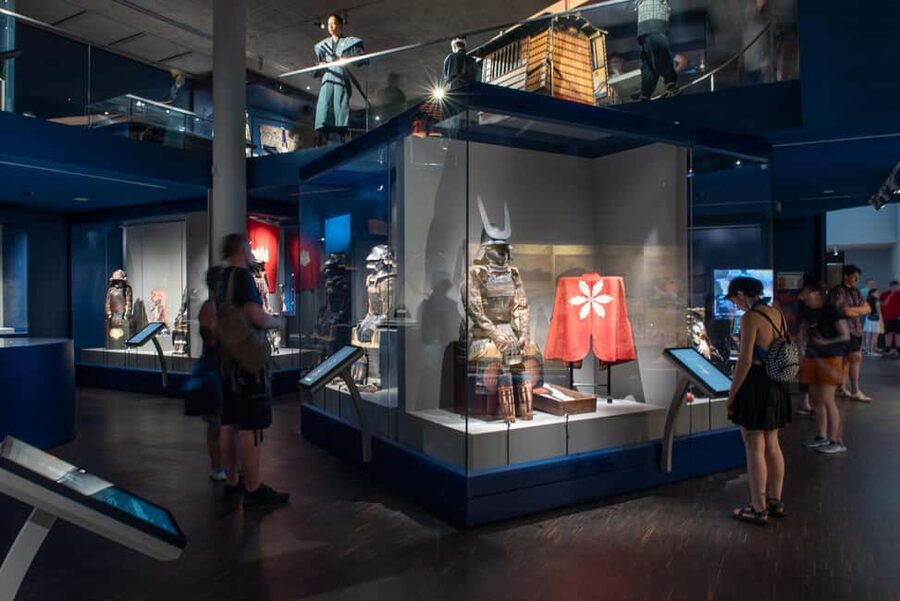
The museum uses touchpoints, screens, projections, and other media to explain the objects. This is particularly helpful when a label alone would not tell you why a helmet, sword, or mask matters.
The interactive system is also one of the museum’s best features for children. Young visitors can take an active role instead of simply walking from case to case. Families have found the interactive elements engaging, and the displays are available in both German and English.
An AI fox guide adds a playful touch. Its appearance recalls the nine-tailed fox Kurama from the anime Naruto, which may appeal to younger visitors and anime fans. It is a clever bridge between historic Japanese culture and the way Japan is understood through modern entertainment.
Still, keep your expectations in check. This is not a live guide-led tour, and no individual guide is named for the experience. The technology delivers much of the explanation, so you control the pace but do not have a specialist beside you to answer follow-up questions.
A few more museum visits around Berlin worth comparing
- Berlin: Interactive DeJa Vu Museum Entrance Ticket
★ 4.1 · 1,338 reviews - Berlin: “Pergamonmuseum. The Panorama” Exhibition Tickets
★ 4.6 · 1,245 reviews - Berlin: East Side Gallery Spree Cruise in a Solar Catamaran
★ 4.1 · 1,086 reviews - Cold War, Berlin Wall, Spies and the East Side Gallery
★ 5.0 · 1,024 reviews
Projections and holographic performances add atmosphere
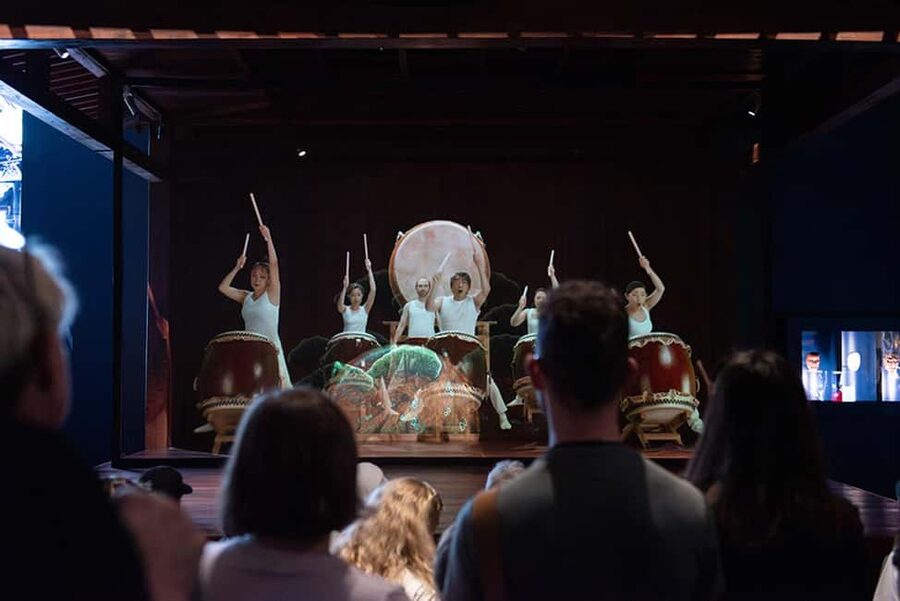
The museum does not rely only on touchscreens. Large projections and holographic music performances give the visit a more theatrical feel.
This approach can make an unfamiliar subject easier to remember. Instead of treating samurai culture as a series of dates and objects, the museum connects it with sound, movement, images, and stories. You get a sense of how ideas about honor, discipline, beauty, and myth still appear in film, design, and popular culture.
The tradeoff is that the presentation may be less restful than a classic museum gallery. If you want to stand quietly in front of a single artifact, you may need to step away from the larger media features and give yourself time with the cases. The museum is at its best when you accept both sides: the real objects deserve attention, and the technology helps explain them.
Samurai culture means more than warfare
The displays reach into tea ceremonies, aesthetics, honor, discipline, and cultural myths. This is important because the familiar samurai image often stops at armor and swordplay.
Tea culture, for example, points to a world of controlled movement, objects made with care, and social rules. Aesthetic details in armor and personal items show that utility and beauty could exist together. Myths explain how the samurai image continued long after the original warrior society changed.
You may also notice how the museum connects older traditions to modern media. The link to anime is not a replacement for history. Instead, it gives younger visitors a familiar doorway into a subject they might otherwise ignore.
I appreciate this broad approach because it gives adults more to discuss and prevents the visit from becoming a weapons display. It also makes the museum suitable for someone who likes Japanese art or culture but has little interest in military history.
Plan on two hours, or more if you read everything
A practical visit takes about two hours, based on the amount of material and the number of interactive features. One visitor spent two and a half hours and still ran out of energy before running out of things to see.
That is a useful warning. The museum may look compact on a Berlin sightseeing plan, but you should not treat it as a quick 30-minute stop. If you rush, you will see the large objects and miss the smaller details, explanations, and media stations.
Families may need more time because children will want to try the interactive features. Adults who read every label could also stay longer. Build in a pause if possible, since the mix of screens, projections, and displays can become tiring.
The flexible ticket helps here. It is valid for one to 14 days, and you can choose the day and time spontaneously with the ticket on your smartphone. Check the available starting times before you go, but the format is useful if your Berlin plans change.
The Mitte location fits neatly into a Berlin day
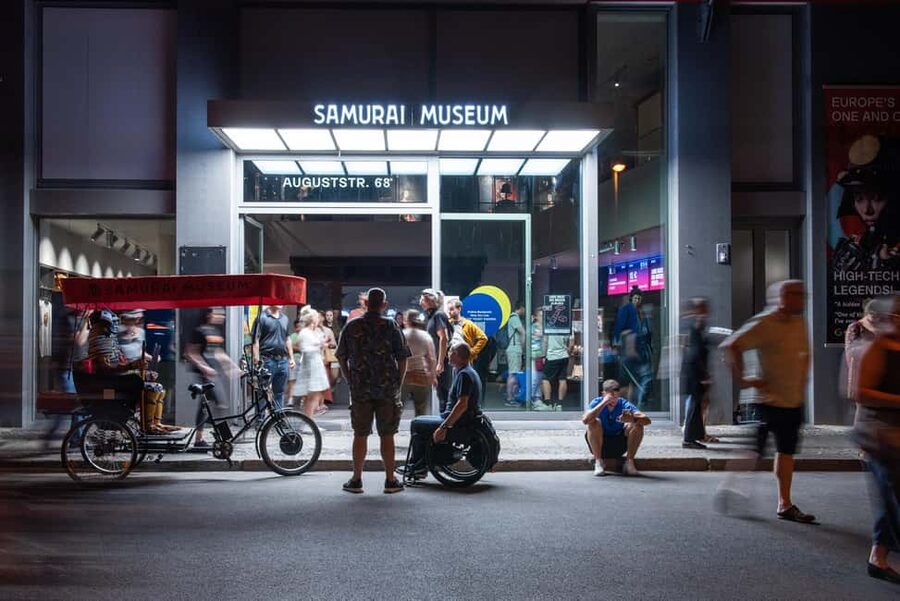
The Samurai Museum is on Auguststraße in Berlin-Mitte, near Alexanderplatz and Museum Island. That makes it easy to pair with other central sights, although you should allow enough time for the museum itself.
Public transport choices are broad:
- U6 to Oranienburger Tor
- U8 to Rosenthaler Platz
- S1, S2, S25, or S26 to Oranienburger Straße
- M1 or M5 to Oranienburger Straße
- M8 to Rosenthaler Platz
- Bus 142 to Tucholskystraße
- Bus M41 to Abgeordnetenhaus
You receive direct entry with the skip-the-line ticket, so you do not need to wait at the ticket desk. That is most useful on weekends and during busy seasons, when a central museum can become an awkward unscheduled delay.
The surrounding area also gives you places to eat and drink after the visit. That matters because a museum of this size and intensity can leave you ready for a break.
Is $16 good value?
At $16 per person, the museum is not Berlin’s cheapest short stop, but the price is reasonable if you use the visit well. You are paying for access to a collection of more than 1,000 original Japanese objects, a central location, direct entry, and a presentation that includes several forms of media.
The value improves if you stay for two hours or more. A quick glance at the armor would make the ticket feel expensive. A careful visit with the introductory video, object labels, interactive stations, and performances gives you a fuller return.
The included item is the entry ticket only. An exhibition catalog is not included, so plan to buy one separately if you want a printed reference. The museum also has a gift shop, which may interest you if you want a souvenir connected to the collection.
The flexible validity is another practical benefit. You are not locked into one narrow visit date in the same way as a timed attraction. That can be useful during a packed Berlin stay.
Who will enjoy this museum most?
I would recommend the Samurai Museum to:
- Families looking for a hands-on museum in central Berlin
- Adults interested in Japanese culture, art, or history
- Visitors who enjoy swords, armor, and fine craftsmanship
- Anime fans who may connect with the AI fox guide
- People who prefer exhibits with screens, sound, and movement
- First-time visitors who want an accessible introduction to samurai culture
I would be more cautious if you prefer traditional museums with very little technology. You may also feel rushed if you have only 30 minutes available. The collection deserves more time, and the media features are part of the experience rather than a minor extra.
The museum is wheelchair accessible. Pets, food, drinks, luggage, and large bags are not allowed, so plan accordingly before you arrive.
Booking, cancellation, and arrival tips
The ticket costs $16 per person and offers direct entry without waiting in the ticket line. Since the museum can be popular on weekends and during peak periods, booking ahead is sensible if your schedule is fixed.
You can reserve now and pay later, which keeps your plans flexible. Cancellation is free up to 24 hours in advance for a full refund.
Keep the ticket on your smartphone. The Samurai Flex Ticket lets you choose your visit day and time spontaneously within its one to 14 day validity period, subject to availability.
I would arrive with only what you need for the visit. Large bags and luggage are not allowed, and food and drinks cannot be taken inside.
Should you book the Samurai Museum Berlin?
Book it if you want more than a display of swords. The museum gives you authentic armor and art, then adds enough explanation and technology to make the subject approachable. The eight-minute introduction, bilingual information, interactive stations, holographic performances, and AI fox guide make it particularly useful for families and first-time learners.
Think twice if your Berlin schedule is already overloaded or if you prefer quiet, object-first galleries. You need roughly two hours to get full value from the $16 ticket, and the presentation can feel busy.
For most visitors, I would include it in a Mitte day, especially when you want an indoor activity with a clear Japanese focus. Start with the short video, slow down at the armor and smaller decorative pieces, and leave time for the displays that connect samurai culture with modern Japan.
FAQ
Where is the Samurai Museum Berlin?
The museum is on Auguststraße in Berlin-Mitte, near Alexanderplatz and Museum Island.
How much does admission cost?
The listed price is $16 per person.
How long should I allow for a visit?
Plan on about two hours. You may want longer if you read the information and use the interactive displays.
What can I see inside the museum?
The collection includes more than 1,000 original Japanese artifacts, including armor, katana, helmets, masks, ornaments, brooches, and art.
Is the museum suitable for children?
Yes. Interactive features, projections, and the AI fox guide make it suitable for families, and children have responded well to the hands-on elements.
Is the museum wheelchair accessible?
Yes, the museum is wheelchair accessible.
Which public transport stops are closest?
You can use U6 to Oranienburger Tor, U8 to Rosenthaler Platz, S-Bahn lines S1, S2, S25, or S26 to Oranienburger Straße, or several trams and buses serving the area.
Can I cancel my ticket?
Yes. You can cancel up to 24 hours in advance for a full refund.
Just added around Berlin
- From Berlin: Sachsenhausen Concentration Camp Museum Tour★ 4.8 · 514 reviews
- Cold War, Berlin Wall, Spies and the East Side Gallery★ 4.8 · 254 reviews
- Bubble Planet Berlin: An Experience Museum for All Your Senses★ 4.1 · 38 reviews
- Berlin: The Wall Museum East Side Gallery Ticket★ 4.1 · 292 reviews
- Berlin: Tickets to the Computer Games Museum★ 4.5 · 363 reviews
- Berlin Trabi Museum: Day Ticket★ 4.1 · 63 reviews
- Berlin: Stasi Museum Private Guided Tour with Entry Ticket★ 4.8 · 13 reviews
- Berlin: Ticket for Photography Exhibitions at C/O Berlin★ 4.5 · 39 reviews
Museum Tours in Berlin, compared.

Skip-the-Line: Berlin Wall Museum at Checkpoint Charlie
Read our review →
“Pergamonmuseum. The Panorama” Exhibition Tickets
Read our review →
East Side Gallery Spree Cruise in a Solar Catamaran
Read our review →
Cold War, Berlin Wall, Spies and the East Side Gallery
Read our review →
Berlin WelcomeCard: Museum Island & Public Transport
Read our review →Browse the lists this tour appears in