
Review · WASHINGTON DC
Smithsonian Museum of Natural History – Exclusive Guided Tour
The Smithsonian National Museum of Natural History is so huge that a first visit can feel like opening ten books at once. This two-hour guided tour gives you a clear route through the highlights, from the 46-carat Hope Diamond and ancient mummies to Henry the elephant, dinosaurs, and the Ocean Hall’s 45-ton whale replica, Phoenix.
I like the way the guide turns a crowded museum into a story instead of a series of glass cases. I also like the personal format, which lets the guide adjust the pace and answer questions. The tradeoff is the price: $89.67 per person for roughly two hours is a serious spend, especially since museum admission itself is free.
Key points
- A fast route through a very large museum: The building covers an area equal to about 18 football fields.
- Big-name highlights: See the Hope Diamond, Dom Pedro Aquamarine, Egyptian mummies, Henry the elephant, dinosaurs, and Phoenix the whale replica.
- Strong guide-led storytelling: Guides such as Leigh, Meghan, Christopher, Rebecca, Amanda, Tim, and Donna have been praised for humor, detail, and keeping children engaged.
- Private or semi-private choices: The standard option is for your group alone, while the savings option changes the format and does not include a guide exclusively for you.
- Flexible timing: You can choose a morning or afternoon start, but allow extra time if you want to explore after the tour.
- Simple cancellation terms: Cancel at least 24 hours before the start time for a full refund.
Why a guide helps inside an 18-football-field museum
The Natural History Museum is free to enter, but free does not mean easy to handle. With 126.5 million artifacts in the collection, you could spend all day wandering and still miss the objects that give the museum its shape.
I find a guide most useful here because the experience is not really about checking off rooms. It is about connecting very different subjects. A good route can move from minerals to burial customs, then to mammals, marine life, and dinosaurs without making the museum feel like a pile of unrelated displays.
The tour lasts about two hours. That is long enough to see major sections but short enough for most adults and older children to stay focused. It is also a useful first pass. You can return afterward to the displays that caught your attention, rather than trying to understand the entire building in one go.
The private format matters. Only your group participates in the standard private tour, so you can ask questions without feeling that you are holding up a large group. The guide can also respond to your interests. A family fascinated by dinosaurs may spend more time there, while another group may prefer gems, Egypt, or mammals.
There is also a SAVE! BOOK SEMI-PRIVATE option. Check the exact choice before paying, since the exclusive guide and wheelchair-friendly features do not apply to that option.
More Museum Tours in Washington DC
- Guided African American History Tour with Reserved Museum Entry
★ 4.5 · 1,180 reviews - Washington DC: Museum of the Bible General Admission
★ 4.8 · 494 reviews - African American History Tour with Museum of African American History Ticket
★ 4.5 · 390 reviews
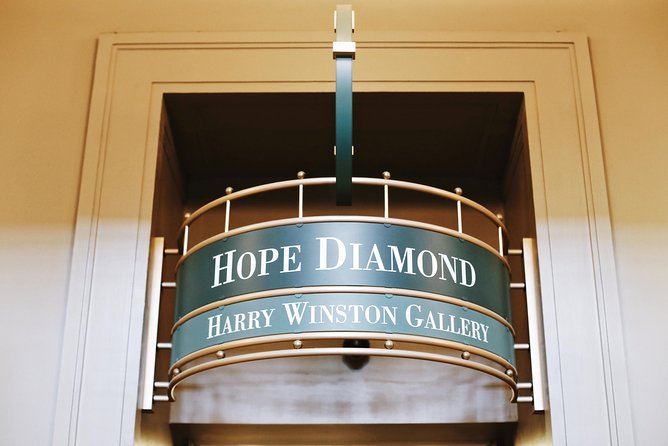
Starting with the Hope Diamond and glittering minerals
The gems and minerals section offers a strong opening because it grabs your attention at once. The best-known object is the Hope Diamond, a brilliant blue stone weighing 46 carats. Its size and color are impressive, and its connection to former owner Marie Antoinette gives the guide an easy doorway into the human stories behind famous objects.
The Dom Pedro Aquamarine provides a different kind of spectacle. It is described as the largest gem of its type in the world, with a blue glow that seems to come from inside the stone. You will not simply be looking at pretty rocks. The guide can explain why particular specimens matter and how their size, color, or formation makes them unusual.
This section works well for mixed groups. Children can respond to the scale and color, while adults may enjoy the stories of ownership and collecting. It is also a good place to ask questions, since a guide can point out objects you might otherwise pass without noticing.
One practical point: do not assume the guided route gives you enough time for every case. The collection is much larger than the tour. If minerals are your main interest, plan to return after the two-hour walk. One family used the end of the tour to circle back to the gems, which is a sensible way to handle this section.
Ancient Egypt, mummies, and the meaning of preservation
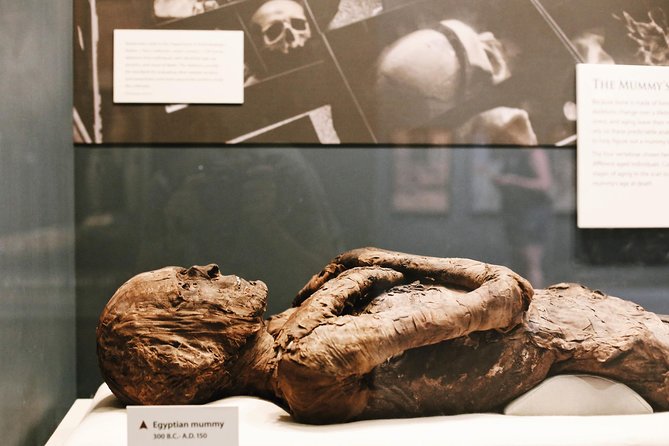
The Egyptian displays shift the mood. Instead of looking at polished stones and famous jewels, you are asked to think about death, burial, and the afterlife.
The tour includes real mummies from Ancient Egypt. A good explanation helps you see them as part of a civilization that lasted more than 3,000 years, not as isolated curiosities. Egyptian burial practices were tied to the belief that the soul’s journey depended on preserving the physical body. That idea gives the cases greater meaning than a quick glance at a wrapped figure.
This part can be especially useful for children and teenagers because it answers the questions they are likely to ask. Why were bodies preserved? Why were objects placed with the dead? What did Egyptians believe happened after death? The guide’s storytelling can make the displays easier to remember without turning the visit into a dry history lesson.
The museum warns that some rooms have quiet or restricted speaking rules. In those areas, your guide may explain the material before you enter or ask you to listen quietly inside. That is worth knowing if you expect a running talk in every gallery.
Mammals, Henry the elephant, and familiar animals at huge scale
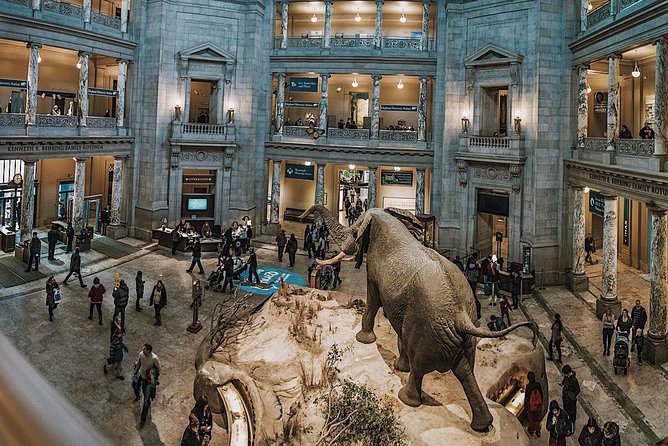
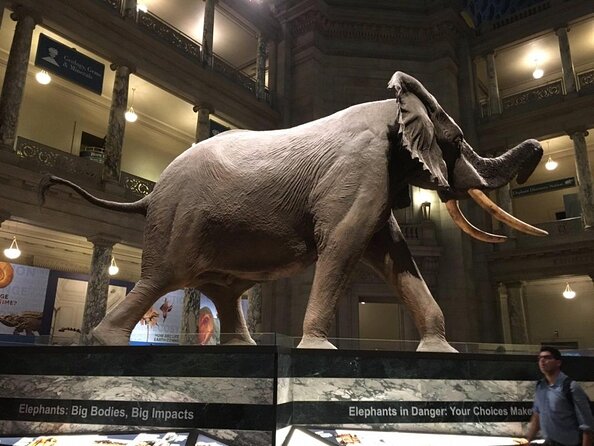
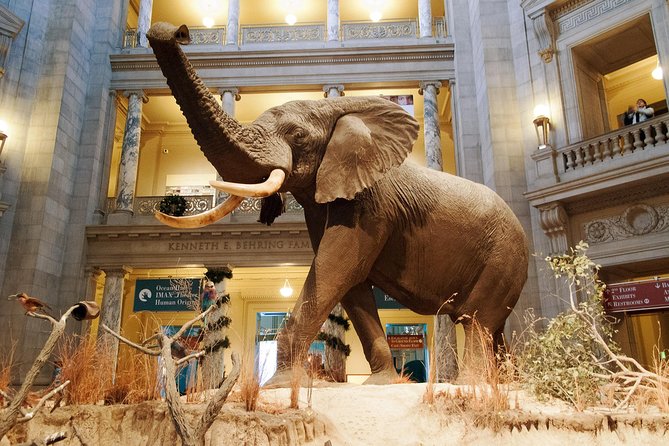
After the ancient displays, the route moves into the animal halls. Polar bears, elephants, and giraffes make this section easy to enjoy even if you are not a museum specialist.
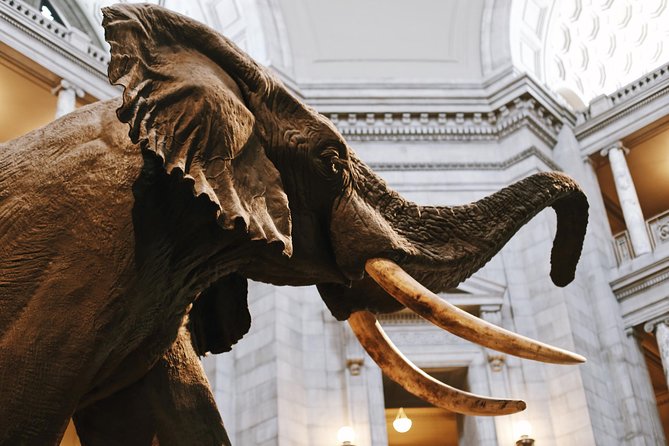
Henry the elephant is a particular favorite on the route. The appeal is simple: an elephant displayed at full scale gives you an immediate sense of the animal’s size. The same is true of the polar bears and giraffes. You gain a better idea of their proportions than you would from photographs or small models.
This section also gives the guide room to explain how specimens are arranged and what they can teach us about animals. Families often benefit from this kind of pacing because the museum shifts from one visual surprise to another.
The main challenge is crowd movement. The museum can be busy, and large displays attract clusters of people. Guides such as Rebecca and Brenda have been praised for helping groups navigate crowded areas while still covering the major exhibits. That practical skill matters as much as knowing facts. A guide who can position your group well makes it easier for everyone to hear and see.
More natural history museums in Washington DC:
- Smithsonian National Museum of Natural History Guided Tour
★ 4.1 · 159 reviews - Smithsonian Natural History Museum Tour Semi-Private 8ppl
★ 4.9 · 34 reviews - Smithsonian Natural History + Air & Space Museum Tour 8ppl
★ 5.0 · 17 reviews - New York City: American Museum of Natural History Ticket
★ 4.5 · 15,447 reviews
Ocean Hall, living coral, and Phoenix the whale
The Ocean Hall provides one of the tour’s biggest changes of scene. You move from land animals and human history into marine life, with a live coral reef exhibit and Phoenix, a 45-ton whale replica based on a real living whale tracked by the museum.
Phoenix is not simply a decorative model. The display connects the scale of a whale with ongoing scientific work. You can look up at the enormous body while learning that the museum tracks the real animal represented by the replica. That link between a gallery object and living research makes the display more memorable.
The coral reef exhibit adds color and movement. It is a useful counterpoint to the preserved specimens elsewhere in the building. If you are visiting with children, the change in setting can help renew attention near the middle or end of the tour.
The route may vary during the year, and some collections can change. The museum can also close rooms or delay opening without much warning. If a closure affects the start by more than an hour, an alternative may be offered, but the stated policy does not promise a refund or discount. Keep that possibility in mind when building a tight Washington schedule.
Dinosaurs, the Megalodon, and the final story of extinction
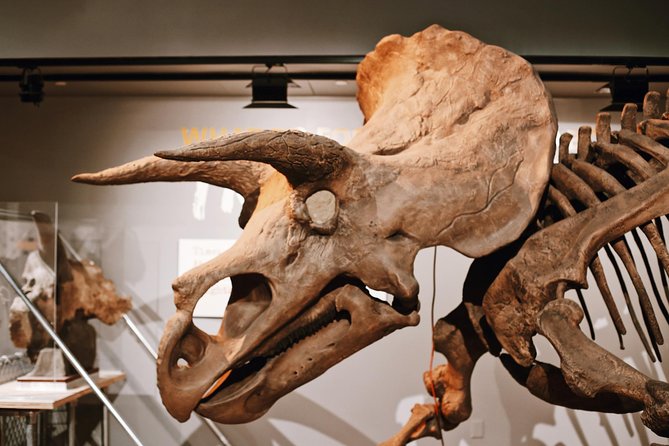
The dinosaur displays bring the tour toward a strong finish. Guides have used the Tyrannosaurus rex to correct a common misunderstanding: T. rex lived during the late Cretaceous period, much closer to our own time than to the Jurassic dinosaurs often shown beside it in popular culture.
You may also hear the modern scientific view that birds are living descendants of dinosaurs. That idea changes the old image of dinosaurs as a completely separate group that vanished without a trace.
The Megalodon is another memorable stop. Its size gives the guide a chance to explain the difference between seeing a fossil or reconstruction and imagining the living animal that once occupied the oceans.
The final theme is extinction. The asteroid impact 66 million years ago is linked to the loss of about 75 percent of life on Earth within three weeks. That fact gives the dinosaur section weight. The tour is not only about spectacular bones. It is also about how quickly life can change and how fragile the natural world can be.
Not every tour will spend exactly the same amount of time in every room. Guides adjust for crowd levels, group interests, and museum conditions. If dinosaurs are your main reason for booking, tell your guide early so the route can reflect that interest.
The guides make the biggest difference
The strongest part of this experience is the guide’s ability to turn facts into a connected story. Names associated with especially strong tours include Leigh, Meghan, Christopher, Rebecca, Amanda, Tim, Donna, Brenda, Lynn, Ryan, and Meaghan.
Leigh has been praised for linking gemstones, Egypt, caterpillar biology, dinosaurs, and extinction into one continuous narrative. Meghan is known for humor, creative explanations, and giving her group close attention even when other people ask questions. Christopher has been especially effective with families, using stories and questions to keep adults and children involved.
Amanda and Donna have also worked well with children. They ask what younger members of the group care about and adjust the visit so that teenagers do not lose interest. That makes a private tour a better fit for a family than a fixed, one-size route.
You cannot normally choose a specific guide at booking, so treat these names as examples of the range of guide styles rather than a guarantee. What you can do is arrive ready to say what interests you. A private guide can make more useful choices when you explain your priorities at the start.
Is $89.67 a fair price?
At $89.67 per person, this is not the cheap way to enter the museum. Admission to the museum is free, so you are paying for planning, interpretation, navigation, and the convenience of a private guide.
I think the price makes the most sense in three situations. First, it works for a short Washington visit when you cannot spare a full day to find your way through the museum. Second, it suits families that want a guide to keep children moving and interested. Third, it is useful for anyone who feels overwhelmed by very large museums.
The value is weaker if you love wandering slowly, reading every label, or returning to the same display several times. In that case, use the free admission and spend the money on extra time inside.
A smart compromise is to take the two-hour tour, then stay on your own. The guided portion gives you structure, and the extra time lets you return to the gems, dinosaurs, or ocean displays that deserve a closer look.
Timing, meeting point, and what to bring
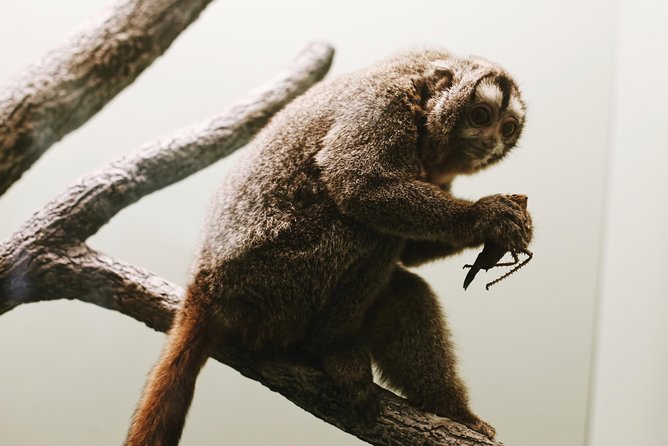
The meeting point is 1010 Madison Drive NW, Washington, DC 20004. The tour ends back at the meeting point, and it is near public transportation.
You can choose a morning or afternoon departure. Morning may suit you if you want to continue to another museum later. An afternoon start can work well if you prefer a slower morning, but remember that two hours in the museum may leave little time before another fixed booking.
Wear comfortable clothes and shoes. The stated expectation is a moderate level of physical fitness, which means you should be ready to walk through a large building for two hours.
Security rules limit what you can bring. Large bags and suitcases are not allowed inside. Bring only a handbag or a small, thin backpack. You must also provide a mobile phone number with country code when booking, so the operator can contact you.
The standard private tour is wheelchair friendly. That benefit does not apply to the semi-private savings option, so select carefully if accessibility is important.
Who should book this Smithsonian tour?
I would choose this tour for a first visit, a family trip, or a short stay in Washington. It is also a good choice if you enjoy museums but dislike spending the first hour figuring out the map.
Children can benefit from the guide’s stories, especially in the mammal, dinosaur, and ocean sections. Adults who already know the museum may prefer a self-guided return visit, using the tour only if they want deeper context or a quick orientation.
The tour is less suitable for people who want a quiet, unhurried examination of every exhibit. Two hours moves quickly. It is also expensive for solo visitors compared with free admission, though the private attention can still make sense if your time is limited.
Should you book the Exclusive Guided Tour?
Book it if you want to see the museum’s major sights in a clear order and learn the stories behind them. The Hope Diamond, Dom Pedro Aquamarine, mummies, Henry the elephant, Phoenix, dinosaurs, and Megalodon make a strong two-hour route, and the guide can help you handle crowds and keep children engaged.
Skip it if you have plenty of time, enjoy exploring alone, and are happy to return for a second visit. For most first-time visitors with a tight schedule, I think the tour is a useful orientation, provided you treat the price as payment for expert guidance rather than museum entry. Cancel at least 24 hours before the start for a full refund.
FAQ
How long is the Smithsonian Natural History Museum tour?
The tour lasts approximately two hours.
How much does the tour cost?
The listed price is $89.67 per person.
Is museum admission included?
The tour information lists admission as free. The paid part is the guided experience.
Is the tour private?
The standard activity is a private tour for your group only. The semi-private savings option does not include a guide exclusively for your group.
Where does the tour meet?
The meeting point is 1010 Madison Drive NW, Washington, DC 20004. The activity ends back at the meeting point.
Can I cancel for a refund?
Yes. You can receive a full refund if you cancel at least 24 hours before the experience start time. Changes or cancellations made less than 24 hours before the start are not accepted for a refund.
More Historical Tours in Washington DC
- Washington, DC: African American History Tour & Museum Entry
★ 4.9 · 312 reviews - Washington DC: African American History Museum Private Tour
★ 4.7 · 54 reviews - Venice: St. Mark Basilica Ticket, Audioguide+History Gallery
★ 3.9 · 4,780 reviews - Berlin: Natural History Museum Entrance Ticket
★ 4.6 · 3,382 reviews
Just added around Washington DC
- Smithsonian Air & Space Museum Guided Tour 8ppl Max★ 4.8 · 89 reviews
- Smithsonian Natural History + Air & Space Museum Tour 8ppl★ 5.0 · 17 reviews
- Smithsonian Natural History Museum Tour Semi-Private 8ppl★ 4.9 · 34 reviews
- Smithsonian National Museum of Natural History Guided Tour★ 4.1 · 159 reviews
- DC: All Creation Sings- Museum of the Bible Exhibition Entry★ 4.8 · 26 reviews
- Washington DC: African American History Museum Private Tour★ 4.7 · 54 reviews
- DC National Gallery of Art Guided Tour with 8ppl Max★ 5.0 · 16 reviews
- Washington, DC: African American History Tour & Museum Entry★ 4.9 · 312 reviews
Museum Tours in Washington DC, compared.

Guided African American History Tour with Reserved Museum Entry
Read our review →
African American History Tour with Museum of African American History Ticket
Read our review →
Washington, DC: African American History Tour & Museum Entry
Read our review →
The National Gallery of Art DC – Exclusive Guided Museum Tour
Read our review →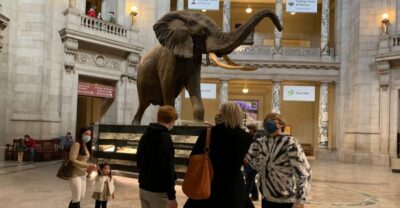
Smithsonian National Museum of Natural History Guided Tour
Read our review →
Smithsonian Air & Space Museum Guided Tour 8ppl Max
Read our review →
Browse the lists this tour appears in