
Review · WASHINGTON DC
Smithsonian Air & Space Museum Guided Tour 8ppl Max
The most memorable part of this Smithsonian Air and Space Museum tour is the jump from fragile early aircraft to the Apollo 11 Command Module and real moon rock. In 150 minutes, your guide gives the objects a clear story instead of leaving you to decode a huge museum on your own. I like the small group limit of eight, and I like that guides such as Paul, Rebecca, Amanda, and Leigh bring personal stories, humor, and visual material to the visit. The catch is important: major construction means some promised exhibits may be closed or moved.
I especially like this tour for travelers with limited time. The museum covers more than 760,000 square feet, and a good guide helps you focus on the turning points: the Wright Brothers, Charles Lindbergh, the Space Race, and modern life in orbit. You can choose a private visit or a small group, which gives families and curious adults more room to ask questions.
The $95 price is not the cheapest way to enter a museum, and it does not include food, drinks, or temporary exhibitions. Still, it can make sense if you have only a few hours in Washington, DC, or if your group wants context rather than a long walk past aircraft with no explanation.
Key points at a glance
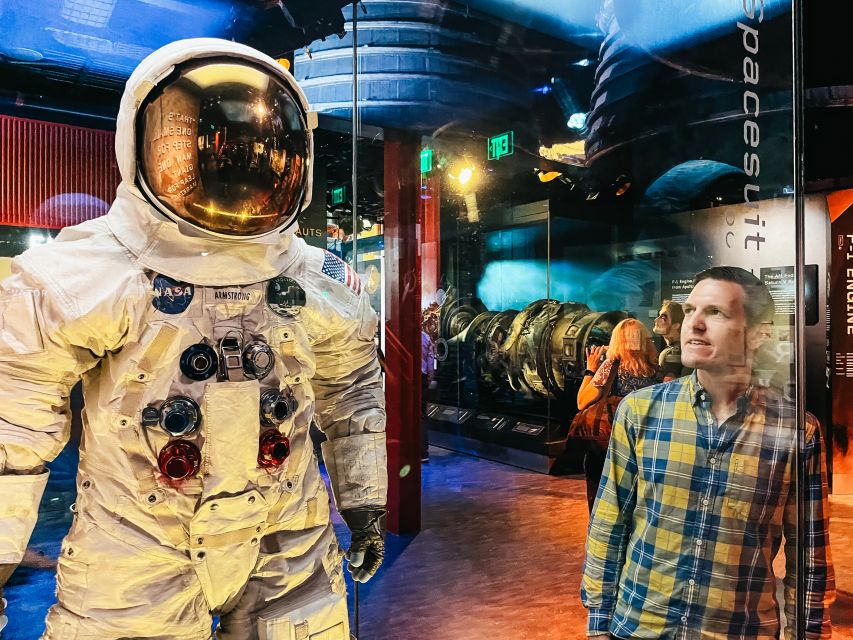
- Apollo 11 and moon rock: See the Command Module and touch a real piece of lunar material when those displays are available.
- Eight people maximum: Small groups make it easier to hear the guide and ask questions.
- Strong storytelling: Guides including Paul, Rebecca, Leigh, Amanda, and Tim have been praised for making technical subjects clear and lively.
- Early flight to the Space Race: The route links the Wright Brothers’ 1903 aircraft, the Spirit of St. Louis, space hardware, and astronaut life.
- Renovation warning: The museum remains under major construction for years, so the exact selection of exhibits can change.
- Useful for a short visit: The guided route helps you cover major highlights in two and a half hours, with time to continue alone afterward.
Why a guide helps inside this enormous museum
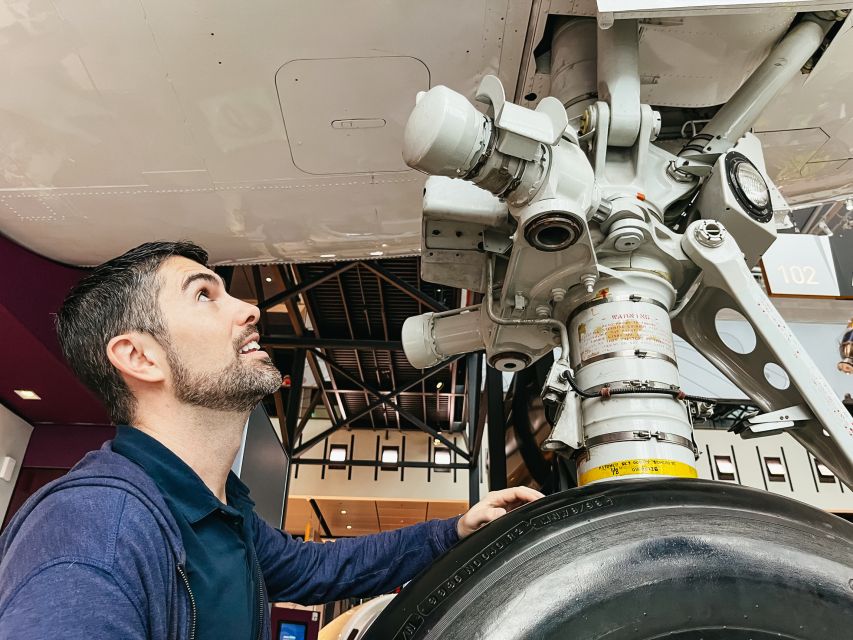
The Air and Space Museum is the kind of place where you can see something famous without understanding why it matters. A plane may look small, plain, or even delicate, while the decision to build it changed aviation. A guide provides the missing thread.
That matters here because the collection moves across several very different subjects. You are not simply looking at airplanes. You are following the development of powered flight, long-distance aviation, military and civilian technology, rocketry, human spaceflight, and the systems needed to keep astronauts alive.
A guide can also adjust the pace. If your child wants to know how astronauts eat, your parent is interested in wartime aviation, or you are focused on the Apollo program, you can ask and steer the conversation. Past guides have been praised for handling mixed-age groups well. One guide kept two 12-year-olds engaged while still giving adults useful background. Another was singled out for answering questions from a child, a teenager, and adults without losing the group.
That personal approach is the main reason to pay for this experience. Without it, you may spend your time reading labels and trying to decide which objects deserve attention. With it, the museum becomes a connected story.
More Museum Tours in Washington DC
- Guided African American History Tour with Reserved Museum Entry
★ 4.5 · 1,180 reviews - Washington DC: Museum of the Bible General Admission
★ 4.8 · 494 reviews - Smithsonian Museum of Natural History – Exclusive Guided Tour
★ 5.0 · 446 reviews
Meeting at the National Mall entrance
Your guide meets you 10 minutes before the start at the base of the sculpture in front of the Air and Space building entrance, on the side facing the DC Mall lawn. That detail matters because a large museum entrance can be an awkward place to find one person, especially when several groups are arriving at once.
Bring a valid photo ID or passport. Security allows only handbags or small, thin backpacks, so do not arrive with a suitcase or large day bag. Hotel pickup and drop-off are not included, so plan your own way to the National Mall.
The supplier sends the guide’s contact details by the morning of the tour under Babylon Tours. Check your spam folder if the message is missing, and save the number before leaving for the museum. For an urgent problem, you are instructed to call or text the guide.
The tour skips the ticket line, which can save time on a busy sightseeing day. It does not guarantee access to every part of the building, since museum closures, security rules, renovation, and temporary exhibitions can affect what is open.
The Wright Brothers and the first leap into flight
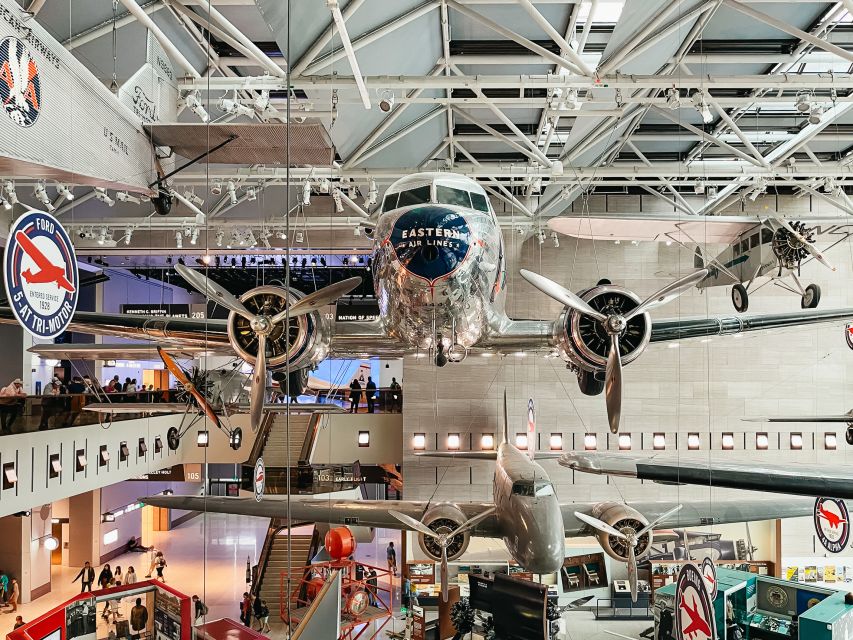
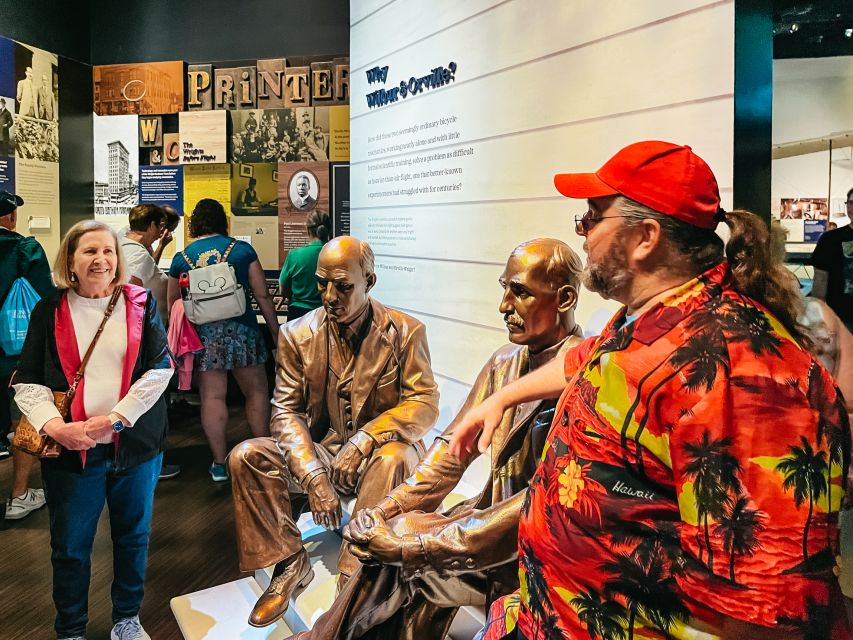
The tour begins with the early history of powered flight, including the Wright Brothers’ 1903 aircraft. This is a useful first stop because it gives the rest of the visit a human scale.
The famous machine is not a sleek modern aircraft. Its importance comes from the problem it solved: controlled, powered flight. Your guide can explain the experiments, the design choices, and the practical challenges behind that breakthrough. Paul, one of the guides praised for this experience, has shared reenactment videos on a tablet to help make the Wright Brothers’ flight easier to picture.
That sort of extra explanation is valuable. A small aircraft can be easy to glance at and pass by. A story about testing, failure, and persistence makes you stop and look at the details.
The early aviation portion also helps you understand how quickly flight changed. The museum does not present the Wright Brothers as an isolated miracle. It connects their work to later aircraft and the expanding ambitions of aviation.
The Spirit of St. Louis and the age of long-distance flight
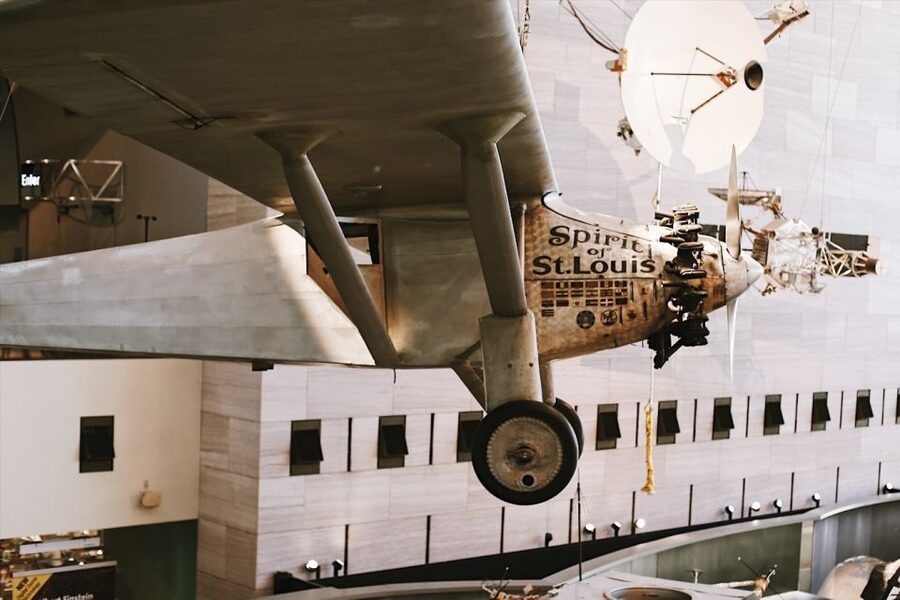
The Spirit of St. Louis gives the tour another memorable aircraft to work with. Its place in aviation comes from Charles Lindbergh’s solo transatlantic flight, an event that helped turn long-distance air travel into a public fascination.
Here, the guide can move the discussion from basic flight to endurance, navigation, risk, and public attention. The aircraft also shows how different early aviation was from modern flying. You are looking at a machine built around weight, fuel, distance, and survival, not passenger comfort.
This is one of the places where a guided visit is more useful than a quick self-directed look. The aircraft itself cannot explain the pressure of a solo flight across the Atlantic or the limits of early navigation. A good guide supplies that frame without turning the visit into a dry list of dates.
You should also expect the exact route to change. Construction may affect which historic aircraft are visible, and the guide will adjust the visit to the exhibits open that day.
A few more museum visits around Washington Dc worth comparing
- The National Gallery of Art DC – Exclusive Guided Museum Tour
★ 5.0 · 166 reviews - Smithsonian National Museum of Natural History Guided Tour
★ 4.1 · 159 reviews - DC National Gallery of Art Guided Tour with 8ppl Max
★ 5.0 · 16 reviews - Vatican Museums, Sistine Chapel & St Peter’s Basilica Guided Tour
★ 4.5 · 39,149 reviews
Apollo 11, moon boots, and real lunar material
The Apollo section is likely to be the emotional center of the tour. The Apollo 11 Command Module is a compact object with an enormous story behind it. This is the spacecraft associated with the first crewed lunar landing, and seeing it in person gives scale to a mission often reduced to a few famous photographs.
Your guide is expected to explain the technology and the human side of the mission. That can include Buzz Aldrin’s spacesuit and moon boots, the equipment astronauts needed, and the practical demands of working far from Earth.
The chance to touch real moon rock adds a physical connection. It is a small moment, but it helps separate lunar exploration from ordinary museum display. You are not only looking at a picture of the Moon or a model of a spacecraft. You are encountering material that came from another world.
This part may be especially effective for families. Children can ask direct questions about the boots, food, clothing, and movement on the Moon, while adults can focus on engineering and mission planning. The experience also includes the chance to buy freeze-dried ice cream, a fitting souvenir for anyone who wants a small taste of spaceflight.
Keep in mind that these features are not guaranteed on every date. The museum is under major construction, and exhibits described for the tour may be closed, relocated, or unavailable.
The International Space Station and astronaut life today
The visit is not limited to famous milestones. You also explore a model of the International Space Station when available and learn what life is like for astronauts today.
The station is useful because it shifts attention from a single historic mission to long-term work in orbit. A model can help you understand the cramped working environment, the need for careful routines, and the international nature of space research. Your guide can connect the station to the broader development of space technology rather than treating Apollo as the end of the story.
This section also gives the tour a modern finish. You move from the first powered aircraft to a world where people live and work in space for extended periods. That progression is one of the strongest reasons to take the guided route: the objects make more sense when someone explains how each period led to the next.
The collection also contains scientific and technological material beyond the best-known spacecraft. Because the building is so large, you should not expect to see everything in two and a half hours. The value of the tour is in selecting major stops and explaining them well.
What makes the guides effective
The strongest praise has been directed at the guides’ storytelling, clear explanations, and enthusiasm for aviation. Paul has been described as funny and highly informative, with personal video material about the Wright Brothers. Rebecca has been praised for making the museum come alive with stories and for leading visitors through the highlights with ease.
Leigh has been singled out for tying the museum together around a clear theme. Amanda has been appreciated for making the visit memorable and for sharing extra information. Tim has been praised for helpful discussion and thoughtful background. Other guides, including Christopher, Maureen, Brenda, Aaron, and Jeff, have also been noted for strong communication and passion for the subject.
Your guide is assigned rather than selected, so you should not book expecting one specific person unless the provider confirms it. The consistent advantage is the format: a live English-speaking guide who can answer questions, change the emphasis, and add background beyond the display labels.
Some rooms may require quiet or limit speaking. In those spaces, your guide explains the contents before you enter. That means the tour may occasionally pause outside a gallery, but the rule protects the atmosphere of the museum and keeps the group within its requirements.
Is $95 a fair price?
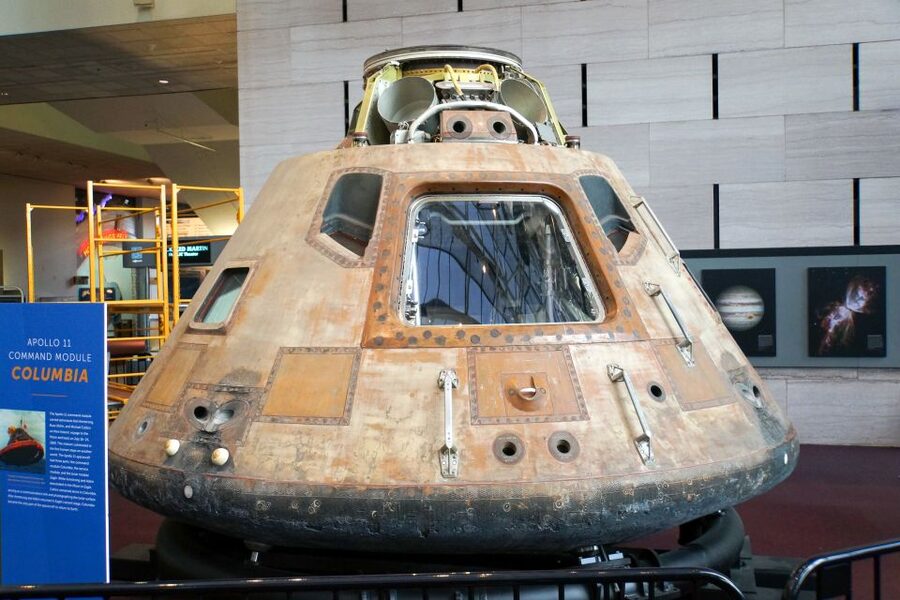
At $95 per person, this is a premium museum visit rather than a simple admission. The price is easiest to justify when you have limited time, are visiting with children, or want a focused explanation of aviation and space technology.
A two-and-a-half-hour visit can prevent you from spending half a day wandering through a large building without a plan. A guide also reduces the work of deciding which objects deserve your attention. One past visitor described the tour as a little pricey but worthwhile when time was limited, which is a fair way to judge it.
The value is lower if you already know the museum well, prefer reading at your own pace, or plan to spend many hours returning to individual galleries. You may also find some value reduced during construction if several advertised highlights are closed.
Private tours cost more in many sightseeing settings, but the supplied information does not state a separate private-tour price. You can choose between a private option and a small group, with no more than eight people per tour. A private visit should suit families or groups that want more control over questions and pace, while a small group should offer the better value for solo visitors and couples.
Food and drinks are not included, and temporary exhibits are extra. Build those costs into your day rather than assuming the tour covers them.
Construction changes the experience
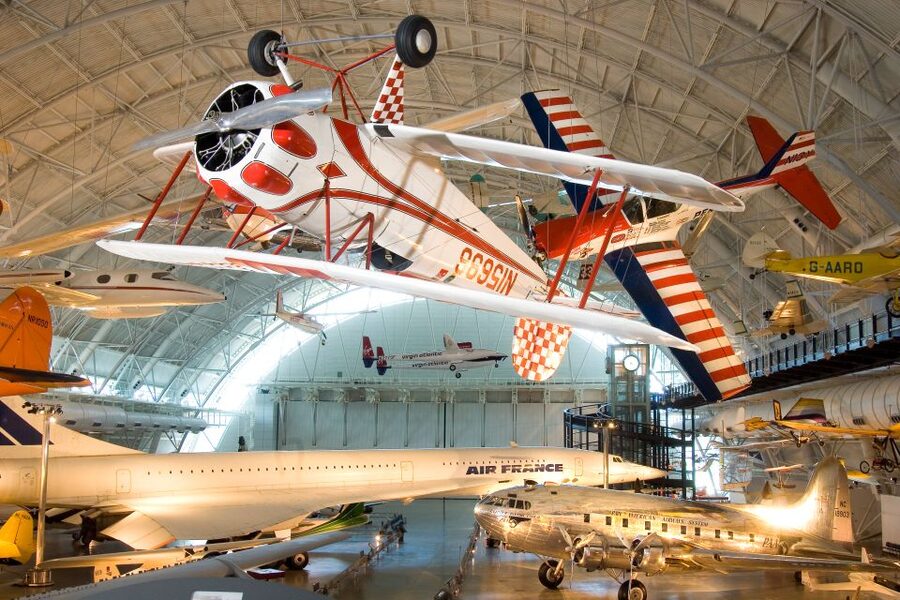
The museum is currently under massive construction, and the work is expected to continue for years. This is the one issue you should take seriously before booking.
The Wright Flyer, Spirit of St. Louis, Apollo 11 Command Module, moon rock, International Space Station model, and other highlights may not all be on display during your visit. The route will be adapted to the galleries and objects available at that stage of the renovation.
Check the museum’s current now-on-view information before you go. Do not book with the assumption that every item in the tour description will be accessible. The guide can still provide a useful visit, but the exact balance between early aviation, modern aircraft, and space exploration may change.
The museum can also close without advance warning. If the opening is delayed by more than one hour, an alternative is provided, but the supplier states that refunds or discounts are not available in those circumstances. That policy makes it wise to avoid scheduling a crucial flight or timed attraction immediately afterward.
Who should book this tour?
I would choose this tour if you are visiting Washington for a short stay and want the museum’s major stories without spending hours planning a route. It also suits families, especially when children need a guide who can answer practical questions and keep the pace moving.
It is a strong choice for aviation fans, space enthusiasts, and anyone who wants more than object labels. The tour also works well for mixed groups because the subject can shift between engineering, history, personal stories, and astronaut life.
You should think twice if you need guaranteed access to a specific exhibit, since construction changes the collection. Wheelchair access also needs careful attention. Wheelchair tours are available by request, but the activity is listed as not suitable for wheelchair users, so contact the provider before booking rather than relying on the standard tour.
Bring photo ID, wear appropriate clothing for museum entry, and leave large bags behind. You can cancel up to 24 hours before the tour for a full refund, and the reserve-now, pay-later option keeps your plans flexible.
FAQ
How long does the Smithsonian Air and Space Museum tour last?
The tour lasts 150 minutes, or two and a half hours.
How many people can join each tour?
A maximum of eight people is permitted on each tour. You can choose a small group or private option.
What language is the tour conducted in?
The live tour guide speaks English.
Where do I meet the guide?
Meet 10 minutes before the start at the base of the sculpture in front of the Air and Space building entrance facing the DC Mall lawn.
Can I bring a large backpack or suitcase?
No. Luggage and large bags are not allowed. Security permits handbags or small, thin backpacks.
Will every advertised exhibit be open?
Not necessarily. The museum is under major construction, so exhibits can be closed, moved, or unavailable. The tour route changes based on the galleries open that day.
Should you book it?
Book this tour if you want the story behind the famous machines, not just a quick look at them. The small group size, strong guide-led storytelling, and focused route are especially useful when your Washington schedule is tight.
The main reason to hesitate is the renovation. If seeing one exact object is the whole purpose of your visit, check the current museum display list first. If you can accept some changes and value clear explanations from guides such as Paul, Rebecca, Amanda, or Leigh, the $95 can be a sensible trade for a better-organized and more meaningful two-and-a-half hours.
Just added around Washington Dc
- Smithsonian Natural History + Air & Space Museum Tour 8ppl★ 5.0 · 17 reviews
- Smithsonian Natural History Museum Tour Semi-Private 8ppl★ 4.9 · 34 reviews
- Smithsonian National Museum of Natural History Guided Tour★ 4.1 · 159 reviews
- DC: All Creation Sings- Museum of the Bible Exhibition Entry★ 4.8 · 26 reviews
- Washington DC: African American History Museum Private Tour★ 4.7 · 54 reviews
- DC National Gallery of Art Guided Tour with 8ppl Max★ 5.0 · 16 reviews
- Washington, DC: African American History Tour & Museum Entry★ 4.9 · 312 reviews
- The National Gallery of Art DC – Exclusive Guided Museum Tour★ 5.0 · 166 reviews
Museum Tours in Washington DC, compared.

Guided African American History Tour with Reserved Museum Entry
Read our review →

Smithsonian Museum of Natural History – Exclusive Guided Tour
Read our review →
African American History Tour with Museum of African American History Ticket
Read our review →
Washington, DC: African American History Tour & Museum Entry
Read our review →
The National Gallery of Art DC – Exclusive Guided Museum Tour
Read our review →
Smithsonian National Museum of Natural History Guided Tour
Read our review →
Browse the lists this tour appears in