
Review · THE USA
Old Jail Museum Tour in St. Augustine
The most striking thing about St. Augustine’s Old Jail is how close everyday family life once was to prison life. The sheriff, his wife, and children lived upstairs, just steps from the cells, while the family kitchen helped prepare meals for the inmates below.
I like the compact 30-minute tour, which fits neatly into a day of sightseeing, and I like the mix of grim facts and playful presentation. Guides such as Benny, Patrick, Clarence T., and Bobalew have made this tour especially lively for families.
The main caution is that the quality depends on your guide. Most guides play a strong character, but one may use teasing humor that feels childish or too sharp for some visitors. The building is also a quick stop, not a full afternoon attraction.
Key points about the Old Jail Museum
- Eight executions took place here, including the 1908 hanging of Sim Jackson, who killed his wife with a straight razor.
- Sheriff Perry ruled by reputation, measuring 6 feet 6 inches and weighing about 300 pounds.
- The sheriff’s family lived upstairs, with their kitchen used to prepare food for prisoners.
- Guides turn the tour into a small piece of theater, often involving children and selected visitors.
- The visit lasts about 30 minutes, making it easy to pair with other St. Augustine sights.
- Free parking is available on site, and tours leave every 20 minutes from 9:00 a.m.
A jail where the sheriff lived upstairs
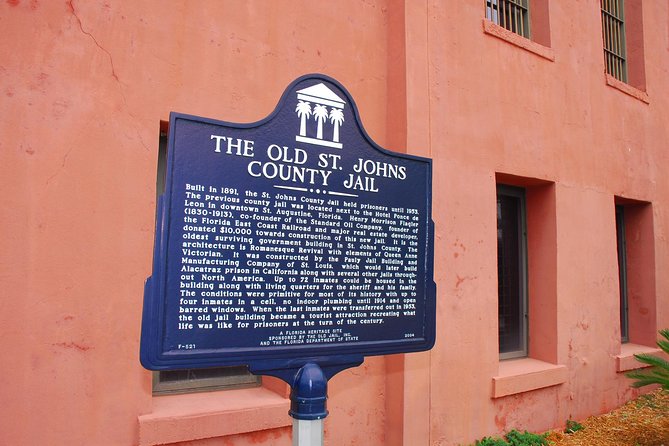
At 167 San Marco Avenue, the Old Jail looks easy to miss if you are moving quickly through St. Augustine. Give it half an hour, though, and you get a close look at a county jail that held prisoners until 1953.
The jail served St. Johns County for nearly 60 years. Its inmates included petty thieves as well as hardened criminals, so the tour is not limited to one type of prisoner or one kind of crime.
What makes the building memorable is its cramped arrangement. The cell blocks, sheriff’s quarters, and gallows all occupy the same small complex. The sheriff and his family lived upstairs, close enough to the prisoners that work and home life were impossible to separate.
The family kitchen also prepared meals for inmates. That detail gives you a better feel for the jail as a working institution rather than a bare historic shell. Food, punishment, family life, and law enforcement all operated within a few steps of one another.
A few more museum visits around the USA worth comparing
- NYC: 9/11 Memorial & Museum Timed-Entry Ticket
★ 4.8 · 31,428 reviews - NYC: Empire State Building Tickets – Observatory & Museum
★ 4.7 · 25,757 reviews - New York City: American Museum of Natural History Ticket
★ 4.5 · 15,447 reviews
What happens during the 30-minute tour

The tour is guided and offered in English. Departures run every 20 minutes beginning at 9:00 a.m., so you do not need to build your entire day around one fixed departure.
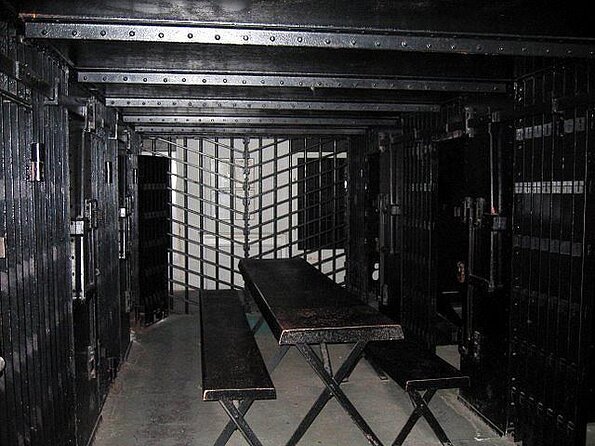
Expect a brisk walk through the main areas of the jail. You will see ordinary cells, a maximum security area, the gallows, and the sheriff’s living quarters. The stop is short, but the guide keeps the pace moving and uses stories to connect each room to St. Augustine’s past.
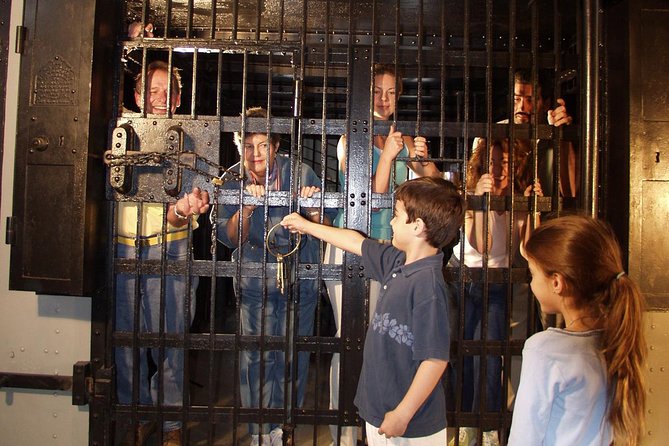
The format is part museum visit and part performance. Guides often stay in character, speak directly to the group, and pull selected visitors into the story. One child may be given a small role, or an adult may be placed in the birdcage for a moment of playful theater.
That approach works well for families. It gives children something to watch and do instead of asking them to absorb a long talk in a dim room. Adults who prefer a quiet, strictly academic museum may find the style a little loud or theatrical.
The best guides balance the jokes with the hard facts. Patrick has been praised for his energy and sense of timing, while Benny is known for combining humor with stories about prison life. Clarence T. has used details such as the 239 beans joke and the origin of the term jail bird to make the history stick.
Guide assignments can change, so you should not buy a ticket expecting a particular person. The names visitors often remember include Benny, Patrick, Bobalew, Walter, Louis, and Clarence T. The common thread is a performance style that aims to keep the group involved.
The cell blocks and maximum security area
The cell blocks are the heart of the visit. You get a direct sense of how little privacy prisoners had and how tightly the facility was arranged.
The tour covers both regular cells and a maximum security area. That comparison helps you see that the jail was not one uniform room filled with prisoners. Different inmates faced different conditions inside the same small building.
The stories can be funny in the telling, but the subject itself is often bleak. Prisoners were held in a period when punishment could be harsh, legal protections were limited, and county jails were tied closely to local power.
The jail also used a prisoner leasing system. Sheriff Perry had a reputation for renting inmates to local farmers. That fact is one of the most unsettling parts of the tour because it shows how imprisonment could become a source of labor and profit.
Perry served as sheriff from 1889 to 1897 and again from 1901 to 1919. He was described as a large, intimidating man, about 6 feet 6 inches tall and 300 pounds. His size alone would have made an impression, but his authority inside the jail mattered even more.
The stories about Perry help place the building in its local setting. This was not an anonymous prison run by distant officials. It was a county facility shaped by the personality and power of the sheriff in charge.
The gallows and eight recorded executions

The gallows give the tour its darkest focus. Eight executions were recorded at the jail, including two people accused of murder.
One of the named prisoners is Sim Jackson, who was hanged in 1908 after murdering his wife with a straight razor. A detail like this can sound sensational if presented without care, but it also shows why the jail is more than a collection of old walls. Serious crimes, punishment, and public memory are all tied to this place.
The tour explains how executions were held at the gallows. You do not need to spend long there to understand the weight of the site. The quick stop works because the guide supplies the context, then moves you through the rest of the building.
This is a good place to think about the tone you want from a historic attraction. The tour uses jokes and audience participation, yet it also deals with death, violence, and the misery of confinement. Most of the time, the contrast makes the history easier to absorb. Still, parents may want to decide in advance how much of the darker material suits younger children.
One parent described the history as sad and questioned bringing children inside, while other families enjoyed the playful approach. Both reactions make sense. The subject matter is real and sometimes grim, even when the presentation is light.
Same city, a completely different collection:
- NYC: Museum of Modern Art (MoMA) Entry Ticket
★ 4.6 · 12,540 reviews - 9/11 Memorial, Ground Zero Tour with Optional 9/11 Museum Ticket
★ 5.0 · 6,381 reviews - 9/11 Memorial Museum Admission Ticket
★ 4.5 · 6,376 reviews - All-Access 9/11: Ground Zero Tour, Memorial and Museum, One World Observatory
★ 5.0 · 4,886 reviews
The sheriff’s quarters and daily life

The upstairs quarters may be the most unusual part of the jail because they show how closely the sheriff’s household lived with the prisoners.
You can see where the sheriff, his wife, and children lived. Their home was not across town or in a separate administrative building. It was directly above the jail, creating a strange overlap between domestic life and incarceration.
The kitchen is important for the same reason. It was used to prepare meals for inmates, so ordinary household work was connected to the jail’s daily operation.
I like this part because it shifts the tour away from famous criminals and toward routine. A jail needs food, supervision, cleaning, and family labor. Those details help you picture how the institution functioned day after day.
The quarters also make the building feel less like a distant monument. You are looking at a place where people slept, cooked, worked, and watched over prisoners. That close arrangement is one reason the Old Jail is a worthwhile niche stop in St. Augustine.
A lively guide can make or break the visit

The strongest praise for this tour goes to the guides. Benny is repeatedly singled out for his comic timing, storytelling, and ability to make the group feel involved. Patrick is also praised for being funny, energetic, and well informed about the jail.
Bobalew has a particularly playful style, including what one family described as pretty goofy stories that held children’s attention. Louis has been praised for staying in character, while Clarence T. uses small details and jokes to make the tour easier to remember.
This style is not for everyone. One guide was described as too aggressive with insults aimed at people wearing glasses or having little hair. That is a useful warning: playing a jail character can include teasing, and not every guide reads the room in the same way.
If you prefer a calm museum talk, the performance may feel overdone. If you want your children to take part, laugh, and remember what they saw, the approach is likely to work better.
The historical content remains worthwhile even when the guide is not your favorite. The building, gallows, cells, and quarters provide the substance. The guide controls how much of that substance reaches you and how enjoyable the half hour feels.
Is $18.09 a fair price?
At $18.09 per person, the Old Jail is priced as a short specialty attraction rather than a full museum day. Admission covers the guided visit, and the tour lasts about 30 minutes.
That is fair value if you are already exploring the northern end of the historic district and want a focused stop. You get access to a building you cannot understand from the street, plus a guide who explains the jail’s crimes, punishments, routines, and local characters.
The value is weaker if you expect a long self-guided museum with many rooms and extensive time to read displays. This is a compact, guided experience. You are paying for the building and the storytelling, not hours of independent exploration.
Because departures run every 20 minutes, you can fit the jail between other attractions. Free parking on site also helps, although one visitor had trouble finding parking without paying. The supplied information confirms that free parking is available, so check the current arrangement when you arrive rather than assuming every nearby space is free.
The mobile ticket provides direct entry without a ticket exchange. Tours operate on a first come, first served basis, and reservations are not accepted. That means you should allow a little flexibility, especially if you are visiting at a busy time.
Who will enjoy this St. Augustine stop?

The Old Jail suits families who enjoy history with a bit of theater. Children often respond well to the role-playing, birdcage scene, jokes, and costumed or character-based delivery.
It also works for adults interested in the less polished side of St. Augustine. The city is famous for its colonial buildings and old streets, but this tour deals with crime, punishment, local authority, and the ordinary mechanics of imprisonment.
You should consider another attraction if you dislike audience participation or jokes about fellow visitors. The guide may invite people into the action, and the tone can shift quickly from comic to serious.
The tour is also a reasonable choice for a short break in a packed sightseeing day. At 30 minutes, it will not consume your morning or afternoon. Most people can participate, service animals are allowed, and the site is near public transportation.
Children 5 and younger are free. The attraction is closed on Christmas Day.
How to plan your visit
The Old Jail Museum is at 167 San Marco Avenue in St. Augustine. It opens daily from 9:00 a.m. to 4:30 p.m., with guided tours leaving every 20 minutes from 9:00 a.m.
I would arrive with enough time to join the next departure rather than planning around a precise minute. Since tours are first come, first served, flexibility is more useful than a tightly packed schedule.
Keep your mobile ticket ready. Admission includes the Old Jail, but transportation and food are not included. You finish where you started, so the stop is simple to add to a walking day or a route using nearby public transportation.
The attraction is generally suitable for most people, but the subject matter deserves some thought for young children. The tour includes executions, murder, forced labor, and prison conditions. The guide may make the material easier to handle, but the facts remain dark.
Free cancellation is available if you cancel at least 24 hours before the start time. Changes or cancellations within 24 hours are not refunded.
Should you book the Old Jail Museum?
Book it if you want a short, unusual St. Augustine attraction with a strong local connection. The jail gives you access to cells, gallows, and family quarters, while stories about Sheriff Perry and the prisoners add detail you would miss from the sidewalk.
It is especially good for families and for anyone who likes history delivered with humor and audience participation. Try to keep your expectations realistic: this is a 30-minute guided stop, not a large museum complex.
I would skip it if you want a quiet, self-guided experience or if dark crime stories are not a good fit for your group. Otherwise, the modest price, frequent departures, and free on-site parking make it an easy addition to a St. Augustine day.
FAQ
Where is the Old Jail Museum located?
The Old Jail Museum is at 167 San Marco Avenue, St. Augustine, Florida 32084.
How long does the Old Jail tour last?
The guided tour lasts about 30 minutes.
What time does the museum open?
The Old Jail Museum is open daily from 9:00 a.m. to 4:30 p.m.
How often do tours depart?
Guided tours depart every 20 minutes beginning at 9:00 a.m.
Is parking available?
Yes. Free parking is available on site.
Are reservations accepted?
No. Tours operate on a first come, first served basis on the day of the visit.
Is the tour offered in English?
Yes. The experience is offered in English.
Are young children admitted free?
Children age 5 and younger are free.
What does the ticket include?
The ticket includes admission to the Old Jail. Transportation to and from the attraction, food, and drinks are not included.
Just added around the USA
- Museum of Ice Cream Austin★ 3.5 · 85 reviews
- Admission to Richard Nixon Presidential Library and Museum Ticket★ 5.0 · 123 reviews
- The Turquoise Museum Curator’s Tour★ 5.0 · 12 reviews
- Turquoise Museum Visit★ 4.5 · 194 reviews
- Orlando: Titanic Artifact Exhibition Ticket★ 4.5 · 246 reviews
- The St. Augustine Old Jail Museum Guided Tour★ 4.6 · 68 reviews
- San Diego: San Diego Natural History Museum Ticket★ 4.7 · 33 reviews
- The Museum of Fine Arts, Houston Entry Ticket★ 4.6 · 82 reviews
Museum Tours in the USA, compared.




9/11 Memorial, Ground Zero Tour with Optional 9/11 Museum Ticket
Read our review →

All-Access 9/11: Ground Zero Tour, Memorial and Museum, One World Observatory
Read our review →

Browse the lists this tour appears in