
Review · PARIS
Paris: Musée d’Orsay Skip-the-Line Tour with Expert Guide
The best thing about this Musée d’Orsay tour is that it gives the museum a clear storyline instead of sending you loose among thousands of paintings. Your guide connects the old academic style to the bold work of Monet, Manet, Renoir, Degas, and Van Gogh, so you see not only the art but also why it caused such a stir.
I like the reserved entry and the relaxed 1 hour 45 minute format. I also like the free time afterward, because you can return to a favorite painting or visit rooms the guide skipped. The main caution is that the tour moves at a steady pace, and the museum can become crowded, so you should plan to arrive early and leave extra time for your own visit.
Key points to know before booking
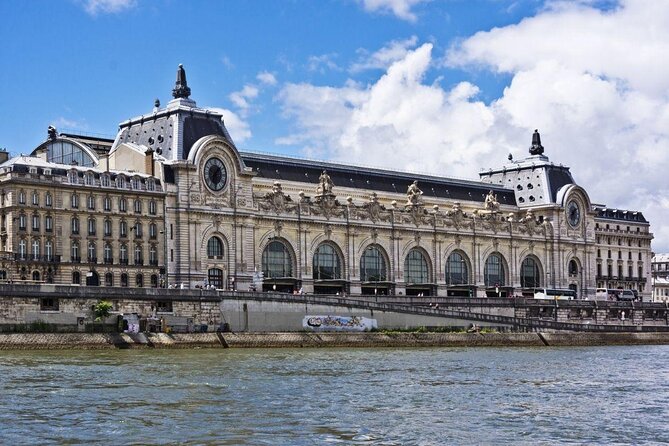
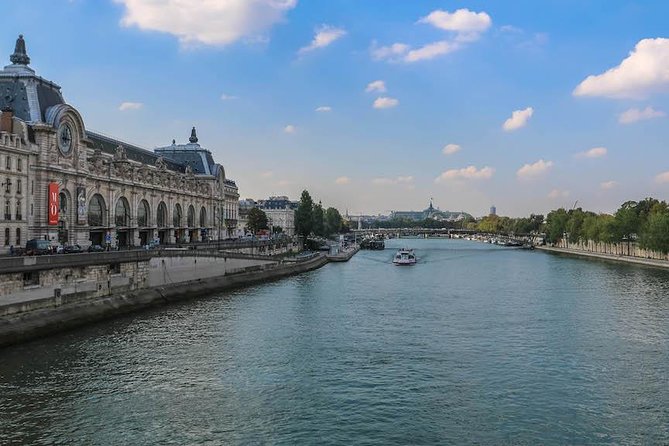
- The former railway station is part of the experience: Musée d’Orsay’s grand Beaux-Arts structure, giant clock, and open central hall give the visit a setting as memorable as the collection.
- The tour follows an art-history story: You learn how nineteenth-century painting shifted from formal academic work toward Impressionism and Post-Impressionism.
- Reserved entry saves useful time: A special entrance and included admission help you get to the galleries without wasting part of your morning or afternoon in an entry queue.
- Guides focus on major works: Expect paintings by Monet, Manet, Renoir, Degas, Van Gogh, and others, along with lesser-known works that help explain the movement.
- You stay inside after the guided portion: The tour ends at Musée d’Orsay, giving you a chance to keep exploring independently.
- The subject matter is adult in places: Nude figures, prostitution, and sexual exploitation of minors may come up as part of the period’s art and social history.
Why Musée d’Orsay works so well with a guide
The Orsay is easier to handle than the Louvre, but that does not mean it is simple. It displays thousands of works across several levels, and the famous names are only part of the story. Without a plan, you can spend a lot of time walking, looking, and wondering what you should not miss.
This tour gives you a useful filter. Instead of trying to see everything, you follow the development of nineteenth-century art through selected examples. That approach helps you notice changes in color, brushwork, subject matter, and attitude.
A good guide also answers the question many museum visitors quietly have: why is this painting important? The answer is rarely just the name of the artist. It may involve a new way of showing modern life, a break with academic rules, or a subject that critics considered improper.
The strongest part of this experience is the storytelling. Guides such as Celia, Claire, Julie, Caroline, Stephanie, Ivan, Anthony, and Sylviane have been praised for explaining the artists clearly, keeping the group moving, and adding humor when appropriate. The guide assigned to your tour may be different, but the format depends on a trained art specialist who can put the collection in order for you.
More Museum Tours in Paris
- Paris: Louvre Museum Timed-Entrance Ticket
★ 4.6 · 71,977 reviews - Paris: Orsay Museum Entry Ticket
★ 4.7 · 25,647 reviews - Louvre Museum Masterpieces Guided Tour with Access
★ 4.5 · 12,023 reviews
Meeting at the elegant old station
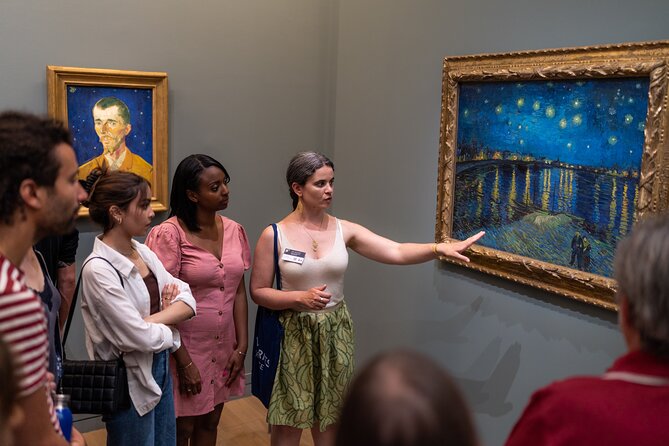
You meet outside Musée d’Orsay at 2 Rue de la Légion d’Honneur. The location is near public transportation, and the group size can reach 20 people. That is small enough for a guided museum visit to work well, though it is not a private tour.
Give yourself plenty of time to get there. The directions warn that finding a taxi in Paris can take longer than expected, and a late arrival can be costly because missed tours are not refunded. I would use public transportation or leave a generous cushion if you are coming by taxi.
The meeting point matters because the museum entrance area can be busy. Look for the guide outside rather than assuming you can simply walk in and find the group. Confirmation arrives when you book, and your mobile ticket makes the arrangement easy to carry on your phone.
Once the group is together, you enter with pre-reserved admission through a special entrance. This is not a private door into an empty museum, so crowds can still appear inside, but avoiding the main entry line is a real benefit.
The building deserves your attention
Before you focus on the paintings, look around. Musée d’Orsay occupies a former railway station, and its huge central hall still gives the building a sense of scale and drama. The clock is one of the museum’s familiar photo spots, and the architecture helps explain why this is more than a box filled with art.
Your guide includes the building in the visit rather than treating it as a simple container. That makes sense. The station was designed for a modern Paris eager to connect people, goods, and ideas, while the artworks inside record another kind of change, the shift toward modern painting.
The old station also gives the museum a more manageable feel than the Louvre. You are not crossing a former palace with seemingly endless wings. Still, the collection is large enough that a guide saves you from wandering without direction.
One hour of guided art and context
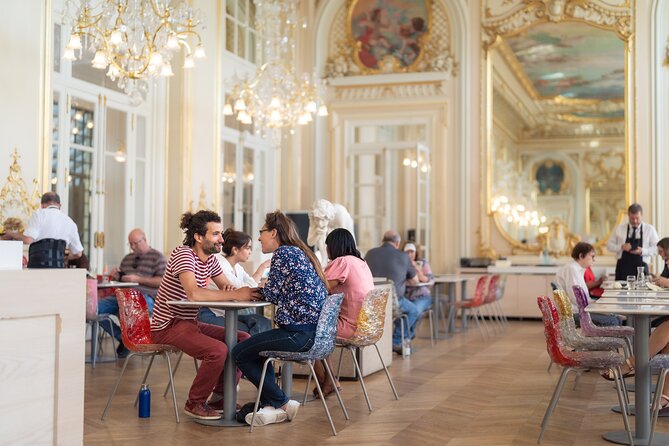
The first part of the visit lasts about one hour. Your guide leads you through selected highlights rather than attempting to cover every gallery. The aim is to show how nineteenth-century art moved from formal traditions toward the freer, more immediate style associated with the Impressionists.
You may begin with the artistic rules that Impressionist painters challenged. Academic painting favored polished surfaces, approved subjects, and careful composition. The newer artists brought visible brushstrokes, brighter color, scenes of ordinary life, and an interest in changing light.
That change was not welcomed by everyone. The guide explains why early Impressionist work could look unfinished or even offensive to critics who expected paintings to appear smooth and controlled. The point is not simply that these artists were different. It is that they knowingly pushed against the system that decided what serious art should look like.
Manet’s Olympia is a useful example. The painting’s direct gaze and modern subject unsettled its audience, and the work still asks you to think about power, presentation, and the way a woman is viewed. Discussions around the period can include prostitution, nude figures, and sexual exploitation of minors, so parents should decide in advance how suitable the subject matter is for their children.
Monet offers another path into the movement. His work helps you consider light, atmosphere, and repeated observation. The guide may use his Water Lilies to show how a familiar subject can become an experiment in color and perception.
Renoir’s scenes bring a different mood, with social life, movement, and pleasure. Degas gives you another view of modern Paris through dancers and performers, while Van Gogh’s paintings show how Post-Impressionism pushed color and brushwork into still more personal territory.
You will not spend equal time on every artist. That is a strength, not a flaw. A 1 hour 45 minute visit cannot explain the entire museum, and the guide’s job is to choose works that make the larger story understandable.
A few more museum visits around Paris worth comparing
- Paris: Orsay Museum Entry Ticket and Digital Audio Guide App
★ 4.4 · 3,170 reviews - The Musée d’Orsay Guided Tour Orsay Museum Semi-Private 6ppl Max
★ 5.0 · 904 reviews - Louvre & Musée d’Orsay Guided Museum Tour Semi-Private 6ppl Max
★ 5.0 · 619 reviews - Paris: Orsay Museum and Rodin Museum Combo Entry Ticket
★ 4.4 · 470 reviews
The final 45 minutes are yours
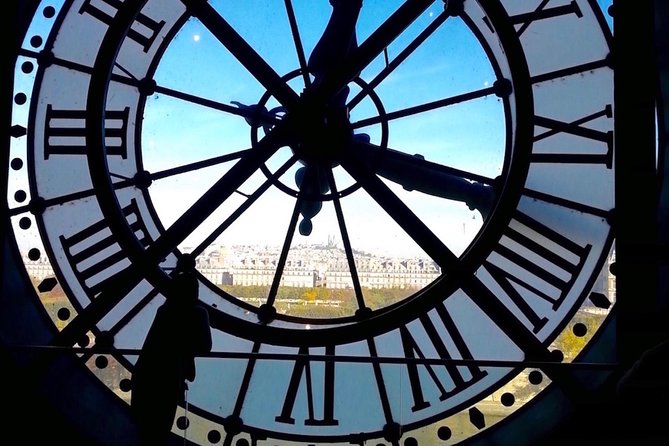
After the guided hour, you have about 45 minutes to continue inside the museum on your own. The tour ends at Musée d’Orsay, so you do not need to leave and re-enter or make your way back to a separate meeting point.
This free time is important. A guide can point out the essential works, but you may want to look again without listening, take in the architecture, or find paintings that match your own interests. If you enjoyed Monet, Renoir, or Van Gogh, use this period to return to their rooms at your own speed.
You can also use the extra time to see works that were not part of the main route. The guided portion gives you the framework; the independent portion lets you personalize the visit.
Keep your expectations sensible. Forty-five minutes is enough for a second look and some extra rooms, not enough for a full survey of the museum. If you want a long, slow museum day, treat this tour as the beginning of your visit and plan additional time if possible.
What the pace feels like inside
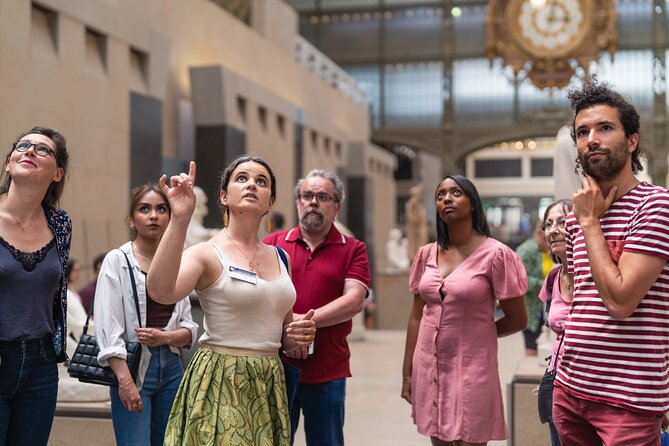
The tour is described as relaxed, but the route still moves steadily. That balance is necessary. The guide needs to keep a group together, cover the main story, and allow enough time for the paintings to register.
One useful tip is to listen first and photograph later. If you stop for every picture, you can lose the thread of the explanation or hold up the group. The large clock is worth a photo, and the museum has many memorable views, but the best value comes from paying attention to the guide while you are with the group.
The museum may be crowded, especially later in the day. Crowds can make it harder to stand directly in front of a painting or hear every word. The included headsets help with communication, but they cannot create space around a famous work.
For that reason, an early start is wise when your schedule allows it. You will still share the museum with others, but arriving early can make the first part of the visit more comfortable.
Is $67.60 a fair price?
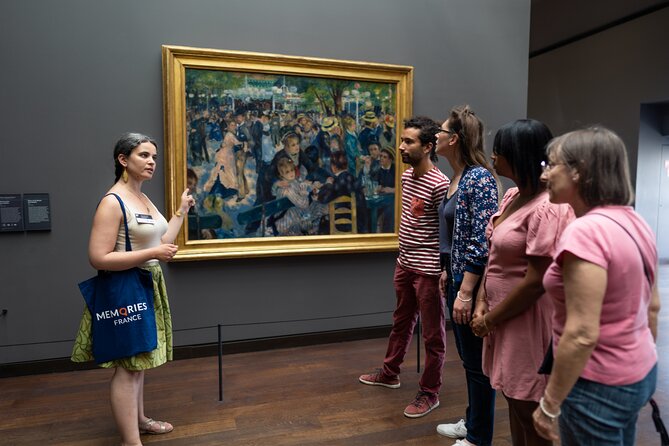
At $67.60 per person, this is not the cheapest way to enter Musée d’Orsay. You are paying for more than admission, though. The price includes reserved entry, an English-speaking art guide, a small-group format of up to 20 people, headsets, and the guided interpretation.
The value depends on how you use the museum. If you already know the collection well and prefer to wander alone, a basic admission ticket may suit you better. If this is your first visit, or if paintings tend to blur together without context, the added cost can be worthwhile.
I especially like the combination of a guided route and independent time. Some museum tours rush you out as soon as the explanation ends. Here, you stay inside and use the remaining time according to your own interests.
The price also buys convenience. Reserved entry reduces the risk of losing a large part of your day in a line, while the guide removes the need to plan a route through a large collection. That is useful on a short Paris visit, when every hour matters.
Who will get the most from this visit?
This tour fits first-time visitors who want a strong introduction to Impressionism without committing to a full-day art course. It also suits couples, families with older children, and anyone who wants help connecting paintings to the social changes of nineteenth-century France.
It is a good choice if you have heard of Monet, Manet, Renoir, Degas, or Van Gogh but want a clearer sense of how their work relates. The guide explains the movement as a progression, showing what the artists inherited and what they challenged.
Families should think about the subject matter before booking. The collection includes nudity and difficult discussions of prostitution and exploitation. The guides can adjust their explanations for younger listeners, but the art itself is not screened to remove adult themes.
The tour may be less suitable for someone who wants a private, slow examination of every painting. With a group of up to 20, you will follow a set route and keep moving. You can regain some freedom during the final 45 minutes, but the guided section is designed as a focused overview.
Cancellation and practical details
You can cancel for a full refund up to 24 hours before the start time. Changes or cancellations made inside that window are not refunded, and missed tours do not qualify for a refund.
The experience is offered in English and uses a mobile ticket. It is near public transportation, and most people can take part. Hotel pickup and drop-off are not included, and gratuities are optional.
The tour is often booked well in advance, with an average booking lead time of about 36 days. That suggests you should reserve early if your Paris dates are fixed, especially if you want a particular time of day.
Should you book the Musée d’Orsay tour?
Book it if you want the museum’s major Impressionist works placed in a clear story, and if skipping the main entry line matters to you. The strongest reasons are the guides’ art expertise, the focused route, and the chance to remain inside after the tour.
Skip it if you prefer complete freedom, already understand the collection, or want to spend hours studying individual paintings in silence. For most first visits, though, $67.60 is a sensible price for a well-organized introduction to one of Paris’s finest museums, especially when you take advantage of the extra time afterward.
FAQ
How long does the Musée d’Orsay tour last?
The experience lasts approximately 1 hour and 45 minutes. About one hour is guided, followed by roughly 45 minutes of free time inside the museum.
Is museum admission included?
Yes. Admission and pre-reserved entry through a special entrance are included in the tour price.
Is the tour offered in English?
Yes. The experience is offered in English and includes headsets for the small-group visit.
Where does the tour begin?
You meet outside Musée d’Orsay at 2 Rue de la Légion d’Honneur, 75007 Paris, France.
Where does the tour end?
The tour ends inside Musée d’Orsay at the Esplanade Valéry Giscard d’Estaing.
How many people can join the tour?
The group can include a maximum of 20 people.
Can I cancel for a refund?
Yes. You can cancel at least 24 hours before the start time for a full refund. Cancellations or changes made less than 24 hours before the experience are not refunded, and missed tours do not qualify for a refund.
More Skip-the-Line Tickets in Paris
- Louvre Museum: Skip-the-Line Small Group Guided Tour
★ 4.6 · 4,268 reviews - Paris: Skip-the-Line Louvre Museum & Mona Lisa Guided Tour
★ 4.6 · 1,442 reviews - Louvre Museum Skip the Line Entry with Introduction to Mona Lisa
★ 3.0 · 576 reviews - Paris: Rodin Museum Skip-the-line Entry Ticket with Audio
★ 4.0 · 102 reviews
Just added around Paris
- Rodin Museum Masterpieces – Guided Tour up to 8 guests★ 4.9 · 13 reviews
- Invalides Museum – WWI & WWII – Guided Tour up to 8 guests★ 5.0 · 32 reviews
- Skip the Line Guided Tour of Louvre Museum Highlights★ 5.0 · 49 reviews
- Paris: Louvre Museum Highlights Small-Group Guided Tour★ 4.8 · 157 reviews
- From Paris: Private Trip to Giverny, Monet’s House & Museum★ 4.5 · 13 reviews
- Paris: Street Art Open-Air Museum Bike Tour★ 4.8 · 51 reviews
- Paris: The Rodin Museum and Seine River Cruise★ 4.6 · 45 reviews
- Paris: Rodin Museum Ticket & Optional Digital AudioGuide App★ 4.7 · 56 reviews
Museum Tours in Paris, compared.

Louvre Museum Masterpieces Guided Tour with Access
Read our review →
Louvre Museum Entry Ticket With Host and River Cruise
Read our review →
Les Invalides: Napoleon’s Tomb & Army Museum Entry
Read our review →
Mona Lisa & Louvre Masterpieces Tour with Reserved Access
Read our review →
Louvre Museum – Exclusive Guided Tour (Entry Included)
Read our review →
Louvre Museum Hosted Entry and Mona Lisa Audioguide
Read our review →Browse the lists this tour appears in