
Review · THE USA
Savannah: American Prohibition Museum Ticket
The American Prohibition Museum turns a dry schoolbook subject into a lively walk through American politics, vice, fashion, and crime. You move from temperance rallies and fire-and-brimstone preaching to moonshine stills, flappers, and a tucked-away 1920s speakeasy. I like the full-size dioramas, especially the 1918 street scene and the bar wrecked by Carry Nation’s hatchet. I also like the guided option, which gives the displays a clearer story and adds a drink or cocktail-making session. The main drawback is size: at $19 for basic admission, some people may find the museum a little small for the price.
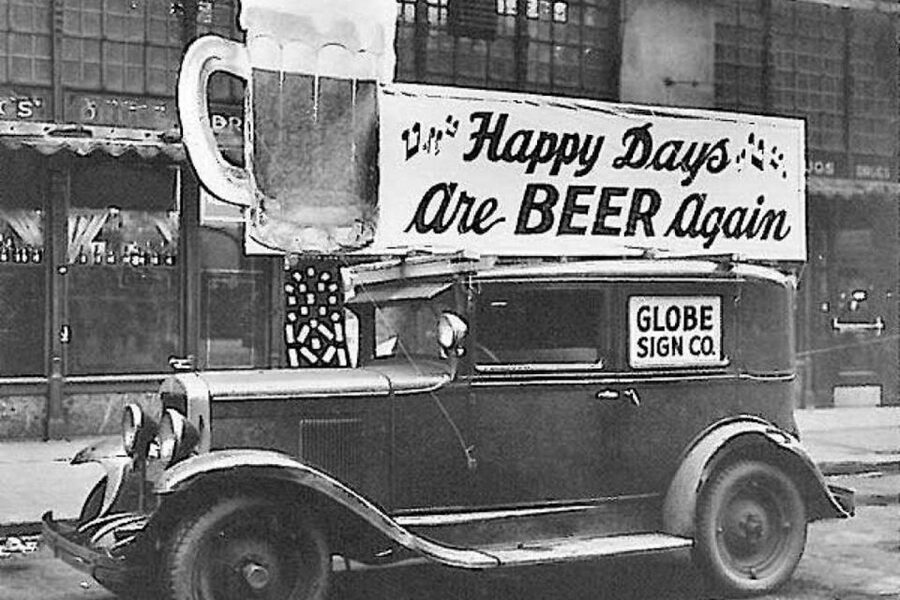
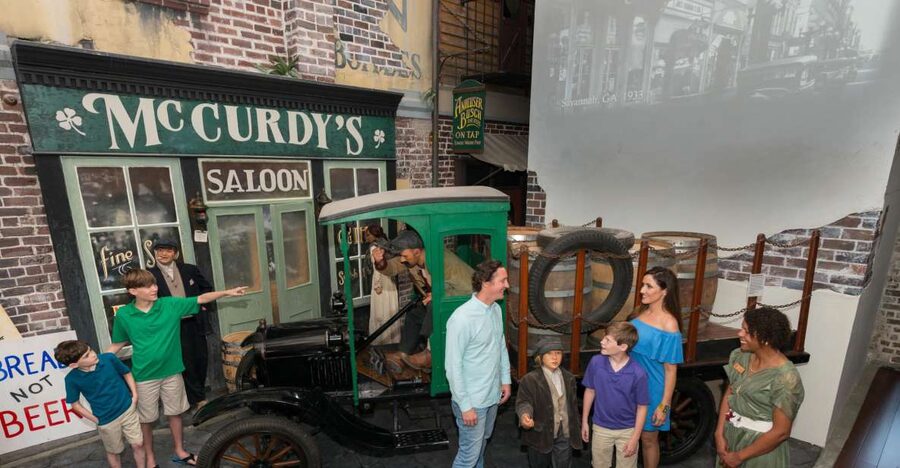
- See a 1921 Model T touring car in a display that connects Prohibition with changing American travel and daily life.
- Walk through a recreated 1918 street scene before the 18th Amendment changes the national conversation.
- Meet the era’s loudest voices, including Reverend Billy Sunday, Carry Nation, Lillian M. N. Stephens, and Adolphus Busch.
- Study one of the largest collections of moonshine stills while learning how illegal liquor was made and moved.
- Finish in a period-style speakeasy, with a cocktail or mocktail included only with certain guided options.
- Add the cocktail experience to make two cocktails in the speakeasy, subject to age and Sunday restrictions.
A museum that makes Prohibition feel close to home
Savannah’s American Prohibition Museum is the first and only museum in the United States devoted entirely to Prohibition. It sits beside Ellis Square in City Market, so it is easy to add between Savannah’s squares, shops, restaurants, and other downtown sights.
I would allow about an hour for a relaxed visit, though the exact pace depends on how closely you read the displays and whether you join a guided tour. The ticket is valid for one day, and the museum operates from 10:00 AM to 5:00 PM, with final admission at 4:15 PM. It is closed on St. Patrick’s Day, but otherwise operates 364 days a year.
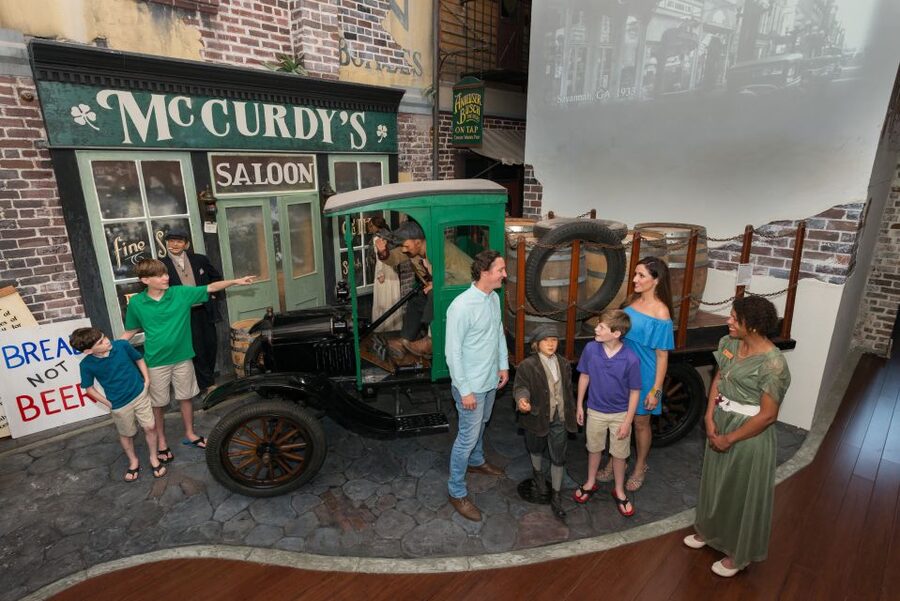
The museum’s real strength is presentation. This is not a room filled with glass cases and long labels. It uses costumed figures, life-size scenes, audio, dioramas, and theatrical settings to show how the liquor question moved from church meetings into Congress, back alleys, family kitchens, and popular culture.
That approach works well if you want history in manageable pieces. You do not need a strong background in American politics to follow the story. The route gives you a sense of cause and effect: temperance campaigns helped shape public opinion, the 18th Amendment made alcohol illegal, and the law created a new set of problems that its supporters did not fully control.
Starting in 1918, before the dry years begin
The recreated 1918 street scene sets the tone. It places you in an ordinary American town at the point when anti-alcohol campaigns were pushing the issue into public life. The setting is called Anywhere, USA, which is useful because Prohibition was not just a story from New York, Chicago, or Washington. It affected communities across the country.
I like this opening because it gives the subject a human scale. You are not starting with a constitutional amendment in isolation. You first see the social pressure behind it, then follow the argument into public rallies, political debate, and the law itself.
The displays explain the liquor question as a conflict between competing ideas of public good. Temperance supporters linked alcohol with family trouble, poverty, crime, and unsafe work. Opponents defended personal choice, business interests, and the social role of breweries and saloons.
The museum does not treat the period as a simple contest between good people and bad people. That balance matters. It helps you understand why Prohibition attracted serious support, while also showing why the ban produced illegal markets and new forms of organized crime.
A few more museum visits around the USA worth comparing
- NYC: 9/11 Memorial & Museum Timed-Entry Ticket
★ 4.8 · 31,428 reviews - NYC: Empire State Building Tickets – Observatory & Museum
★ 4.7 · 25,757 reviews - New York City: American Museum of Natural History Ticket
★ 4.5 · 15,447 reviews
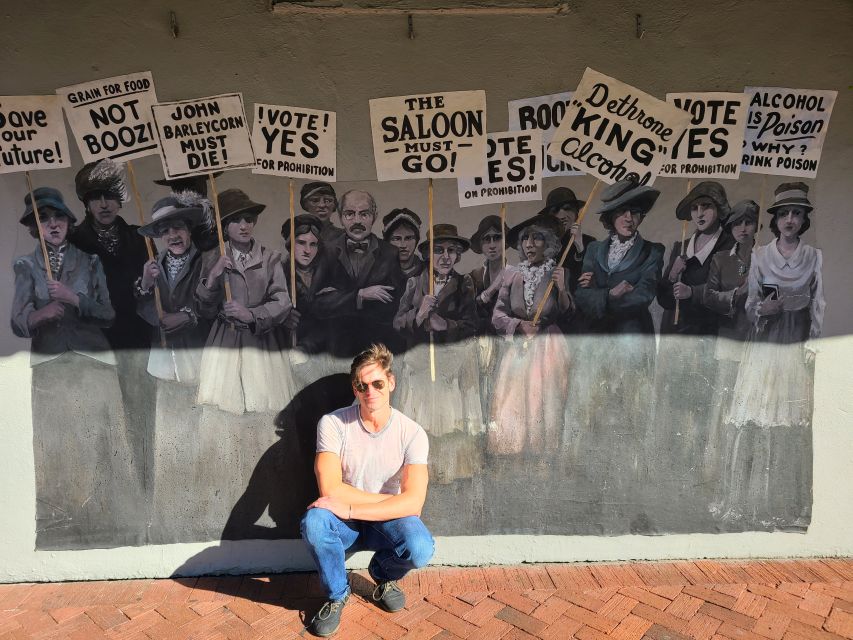
Reverend Billy Sunday and the force of temperance preaching
One of the more theatrical stops is a tent revival featuring Reverend Billy Sunday, a fire-and-brimstone preacher who became one of the best-known voices of the temperance movement. The setup gives the argument energy and volume rather than presenting it as a quiet political campaign.
This section is especially useful if you want to understand why the 18th Amendment could gain enough public support to pass. Prohibition was tied to religion, reform, family life, and fears about social disorder. The museum shows how those concerns were presented to large audiences in emotional, memorable terms.
You may find the presentation a little showy if you prefer traditional museum interpretation. That is part of the attraction here, though. The displays are designed to keep you moving and listening, not to make you stand still in front of a paragraph for ten minutes.
I would pay attention to the way the museum presents both the message and the method. The temperance movement was not only about alcohol. It was also about who should control public behavior and how far government should go to enforce a moral standard.
Carry Nation, hatchets, and the rough edge of reform
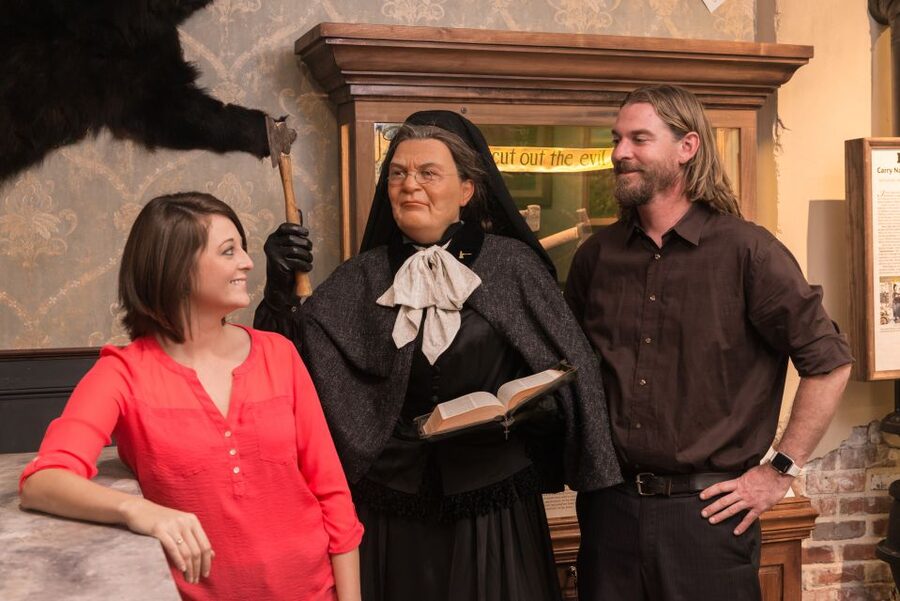
Carry Nation gets her own memorable scene, complete with her famous hatchet and a bar demolished during one of her attacks. Her actions make clear that the temperance movement included more than speeches and petitions.
The display is a good reminder that reform could be confrontational. Nation became known for smashing saloons, and the hatchet became a symbol of her campaign. You can see why the image stuck in the public mind: it is easy to understand, easy to photograph, and hard to forget.
I like this stop because it cuts through the idea that Prohibition arrived through neat, polite debate. The movement had passionate activists who believed alcohol sales were damaging communities and that direct action was justified.
At the same time, the scene is more of a dramatic snapshot than a full biography. If Carry Nation interests you, treat this as an introduction rather than a complete account of her life and work.
Lillian Stephens and Adolphus Busch make the argument personal
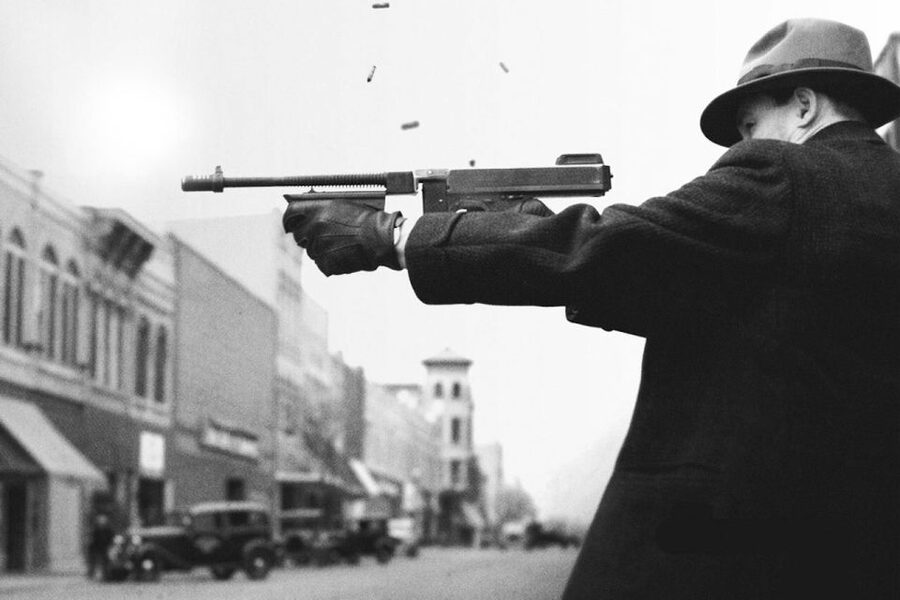
Another display places Lillian M. N. Stephens and Adolphus Busch on opposite sides of the liquor debate. Their disagreement helps put recognizable human voices on a national argument that can otherwise feel abstract.
This is one of the museum’s more effective choices. Instead of presenting only laws and dates, it lets you see how different people framed the same issue. One side could point to alcohol’s social costs. The other could point to established businesses, jobs, consumer choice, and the place of beer in American life.
The contrast also helps explain why Prohibition had such broad consequences. It did not affect only drinkers. It reached breweries, workers, families, law enforcement, politicians, and businesses that depended on legal alcohol sales.
I would not rush through this section. Listen for the competing claims, then keep them in mind as you move toward the illegal liquor trade. The museum’s later displays make more sense when you understand what the law was trying to fix.
Same city, a completely different collection:
- NYC: Museum of Modern Art (MoMA) Entry Ticket
★ 4.6 · 12,540 reviews - 9/11 Memorial, Ground Zero Tour with Optional 9/11 Museum Ticket
★ 5.0 · 6,381 reviews - 9/11 Memorial Museum Admission Ticket
★ 4.5 · 6,376 reviews - All-Access 9/11: Ground Zero Tour, Memorial and Museum, One World Observatory
★ 5.0 · 4,886 reviews
Moonshine stills show how prohibition created new work
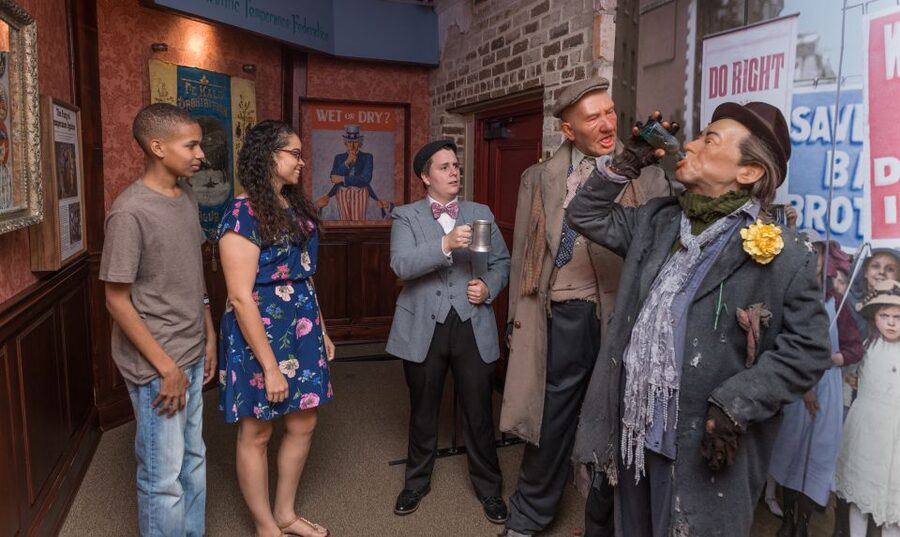
The moonshine section moves the story away from public speeches and into the woods. It includes one of the largest collections of moonshine stills and presents the practical side of illegal distilling.
The displays show why homemade liquor became part of the Prohibition story. When legal supply was cut off but demand remained, people found ways to produce and distribute alcohol outside the law. The stills make that shift tangible.
I find this section valuable because it avoids treating moonshine as mere folklore. The equipment points to skill, risk, and an underground economy. It also shows how a national ban could produce very different results in different places, especially where rural distilling already had a foothold.
The museum includes a dimly lit wilderness scene, which adds atmosphere without needing much explanation. You might find the lighting dramatic, but it serves a purpose: the illegal trade had to stay hidden, and the setting makes that danger easier to picture.
This is also where the museum’s focus on famous troublemakers comes through. The era produced bootleggers, smugglers, and other lawbreakers who became part of American popular culture. The displays explain how they fit into the larger system rather than presenting them only as colorful villains.
Flappers, Charleston steps, and the culture of the 1920s
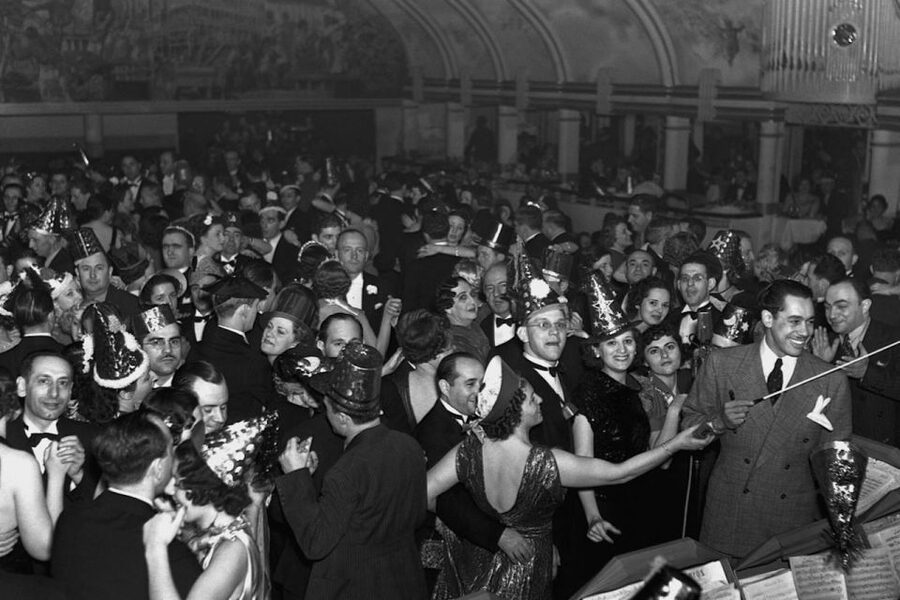
Prohibition did not make the 1920s a quiet decade. The museum connects the liquor ban with flapper culture, changing social rules, and new forms of entertainment.
You can learn about the Charleston and get a feel for why the dance became so popular. This section adds needed context to the familiar image of the 1920s. Flappers were not simply fashionable young women in short dresses. They represented a wider shift in behavior, independence, nightlife, and public identity.
I like having this cultural material in the museum because it shows that Prohibition was part of a broader period of change. The law and the nightlife existed side by side, creating a tension that helped define the decade.
The experience is playful here, but it still serves the main subject. The party culture of the period helps explain why speakeasies became such powerful symbols. People wanted places to socialize, dance, drink, and test the limits of accepted behavior.
The 1921 Model T puts the period on wheels
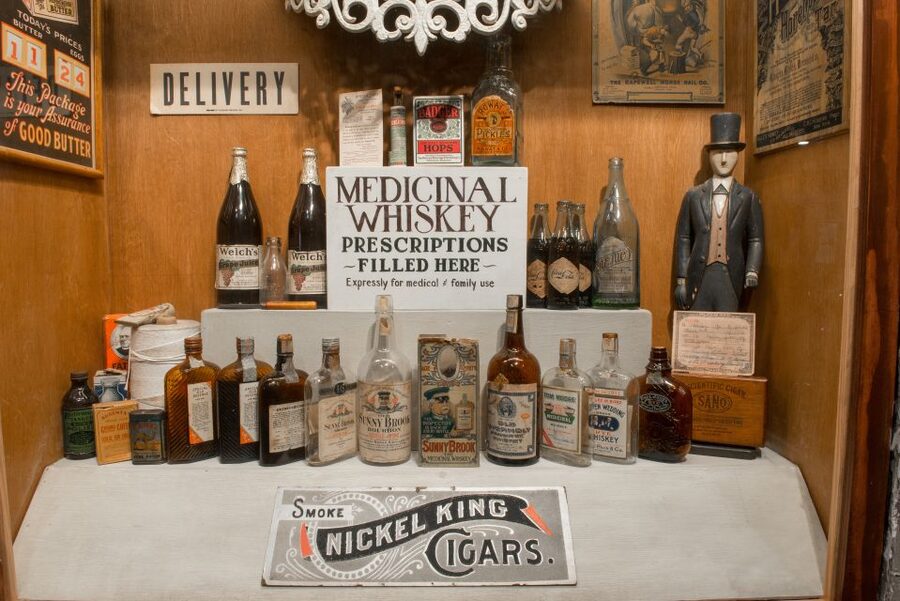
The Model T display includes an actual 1921 touring car. It is a small but useful change of pace from the political and social scenes.
The car helps date the story and places Prohibition in the world of early mass motoring. A 1921 touring car belonged to a country changing quickly, with more people moving between towns and cities and new ways to transport both legal and illegal goods.
I would not expect a full automobile museum display. The car is one part of the larger story, not the central attraction. Still, it gives you a strong photo stop and helps connect the period’s social changes to everyday technology.
The speakeasy is the museum’s best finishing move
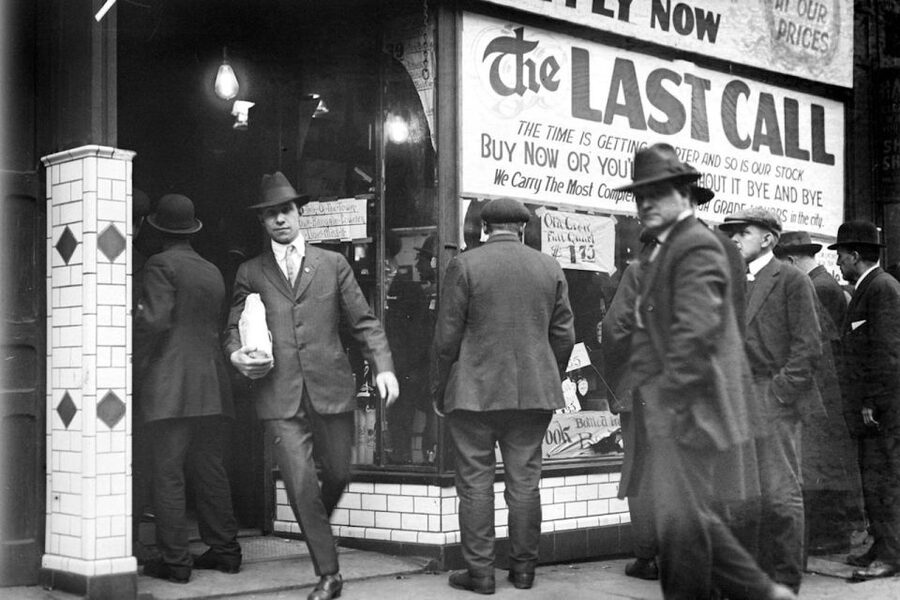
Near the end, you find a recreated 1920s speakeasy. The concealed, dimly lit setting gives the final section a clear payoff. After following the law, the reformers, and the illegal producers, you see where people went to drink and socialize despite the ban.
The speakeasy is available only to people aged 21 and over. You need photo identification at the door to receive a wristband, and anyone under 21 is not permitted inside. All ages can enter the museum itself during regular operating hours, so families can still visit, but the final bar setting is an adults-only portion.
Basic admission does not include a cocktail. You can purchase a drink ticket at the museum with valid identification, or choose a guided option that includes a cocktail or mocktail. The guided and cocktail experience option includes making two cocktails in the speakeasy. You must be 21 or older to drink alcohol.
There is one important Sunday restriction. Georgia law means the speakeasy does not provide alcohol service on Sundays, though mocktails are available. If the drink is a key reason for booking, check the day before you commit.
The drinks are not just an afterthought. The cocktail session gives the history a practical finish and lets you see how the bar fits into the museum’s story. The cocktail-making option is the better pick if you enjoy hands-on activities. It takes the visit beyond looking at displays and gives you something specific to do.
Why the guided tour is worth considering
You can explore the museum on your own, but I would choose the guided option if the price difference is reasonable for your date. The museum packs a lot of names, events, and arguments into a fairly compact route, and a guide can point out the connections that are easy to miss.
The strongest guide experiences have included Alex, Emi, Tierney, Anysia, Rodney, Victoria, and others who kept the story moving and answered questions. Guides have also helped with photos, which is handy because the full-size scenes and period costumes create some of the museum’s best picture opportunities.
A guide is especially useful in the opening sections, where the political story can become dense. You can understand the basic displays alone, but a good explanation clarifies why temperance supporters gained power, why the amendment passed, and how the consequences spread beyond alcohol itself.
The guided tour also makes the speakeasy feel like part of the planned visit rather than an optional add-on. Depending on the package, you receive a cocktail or mocktail, or take part in making two cocktails. If you want the most complete version of the visit, this is the package I would compare first.
Price, timing, and practical details
Admission is listed at $19 per person for the museum. I consider that a fair price if you enjoy staged history, interactive displays, and a visit that takes about an hour or so. I would be more cautious if you expect a large national museum with several hours of material.
The guided option can improve the value because you receive interpretation and, in the appropriate package, a drink or cocktail activity. The best choice depends on whether you are mainly interested in the exhibits or want the social side of the speakeasy too.
The location is convenient. The museum is next to Ellis Square in City Market and only a few blocks from Robinson Parking Garage. Since you do not need separate transportation or a long trip outside downtown, it fits well into a walking day in Savannah.
Large bags and luggage are not allowed, and pets and smoking are not allowed inside. The building is wheelchair accessible and has an elevator, which is important for anyone who needs step-free movement between displays.
Free cancellation is available up to 24 hours before the scheduled visit, and you can reserve now and pay later. Check the available starting times when booking, since the ticket is valid for one day but still depends on admission availability.
Who will enjoy this museum most
I recommend it to anyone who likes American social history, unusual museums, or attractions that mix facts with theatrical displays. It works particularly well for couples and friends who want an evening plan with a cocktail component, though you need to account for the Sunday rule.
Families can visit during all museum hours, and children three and younger receive free admission. The speakeasy is the dividing line: anyone under 21 must skip that part.
You will get the most from the museum if you are curious about how laws affect ordinary life. The subject is not only drinking. It covers religion, business, politics, popular culture, law enforcement, transportation, and the unintended effects of trying to regulate personal behavior.
If you prefer original artifacts, quiet galleries, and minimal staging, the theatrical approach may feel light. If you like full-size scenes, costumed figures, sound, and a clear timeline, the format should suit you.
Should you book the American Prohibition Museum?
I would book it if you have a spare hour in downtown Savannah and want something different from the city’s usual historic homes and squares. The $19 admission is easiest to justify when you value presentation and subject matter more than sheer size.
My strongest advice is to choose the guided tour if you want the story to stick. The museum is more enjoyable when someone explains the arguments and people behind the displays, and the included cocktail or mocktail adds a pleasant finish. Choose the cocktail-making option if you want two hands-on drinks and are visiting on a day when alcohol service is available.
Skip the drink package if you are under 21, visiting on Sunday, or mainly want the exhibits. Either way, the museum offers a clear, entertaining look at a period when America tried to ban alcohol and ended up changing politics, nightlife, crime, and popular culture in the process.
FAQ
Where is the American Prohibition Museum located?
It is located next to Ellis Square in Savannah’s City Market, a few blocks from Robinson Parking Garage.
How much does admission cost?
The listed museum ticket costs $19 per person. Guided tours and cocktail options may use different booking prices.
How long is the ticket valid?
The ticket is valid for one day. You should check availability for the available starting times.
What are the museum’s opening hours?
The museum operates from 10:00 AM to 5:00 PM, with last admission at 4:15 PM.
Is the museum open every day?
It operates 364 days a year and is closed on St. Patrick’s Day.
Can children enter the museum?
Yes. All ages may enter the museum during operating hours, and children three years old and younger receive free admission.
Can anyone enter the speakeasy?
No. The speakeasy is restricted to people aged 21 and over. You need photo identification at the door to receive a wristband.
Is a cocktail included with admission?
A cocktail is not included with basic museum admission. A drink ticket can be purchased at the museum with valid identification, while certain guided options include a cocktail or mocktail.
What happens on Sundays?
Georgia law prevents speakeasy service on Sundays. Mocktails are available, but alcohol service is not.
Is the museum wheelchair accessible?
Yes. The museum is wheelchair accessible and has an elevator.
Just added around the USA
- Museum of Ice Cream Austin★ 3.5 · 85 reviews
- Admission to Richard Nixon Presidential Library and Museum Ticket★ 5.0 · 123 reviews
- The Turquoise Museum Curator’s Tour★ 5.0 · 12 reviews
- Turquoise Museum Visit★ 4.5 · 194 reviews
- Orlando: Titanic Artifact Exhibition Ticket★ 4.5 · 246 reviews
- The St. Augustine Old Jail Museum Guided Tour★ 4.6 · 68 reviews
- San Diego: San Diego Natural History Museum Ticket★ 4.7 · 33 reviews
- The Museum of Fine Arts, Houston Entry Ticket★ 4.6 · 82 reviews
Museum Tours in the USA, compared.

9/11 Memorial, Ground Zero Tour with Optional 9/11 Museum Ticket
Read our review →

All-Access 9/11: Ground Zero Tour, Memorial and Museum, One World Observatory
Read our review →
Browse the lists this tour appears in