
Review · THE USA
The National WWII Museum Admission Ticket New Orleans
The National WWII Museum is not a quick stop between beignets and a streetcar ride. It is a large, serious museum that takes you from the Home Front to D-Day, the Pacific, the liberation of Europe, and the war’s lasting cost. The strongest sections put you close to individual soldiers and families, not just dates and battle names.
I like the personal stories, which give the war a human scale, and the mix of aircraft, original objects, film, sound, and hands-on displays. The main drawback is simple: the advertised two to three hours is enough for a brisk look, but not enough for the whole museum. Plan at least four hours, and a full day if you read every panel.
Key things to know before you go
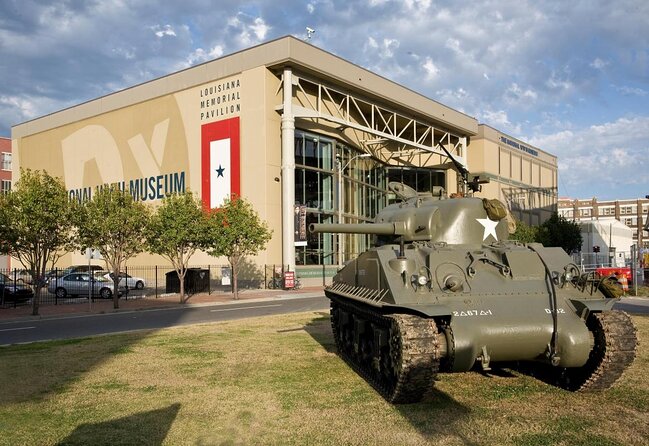
- Several major exhibition areas: You can move through the Louisiana Memorial Pavilion, Campaigns of Courage, and US Freedom Pavilion, with enough material for more than one visit.
- A strong American viewpoint: The museum explains why the war was fought, how it was won, and what freedom cost the people who served.
- Real aircraft and wartime objects: Displays include an authentic C-47, preserved military machines, personal belongings, and original artifacts.
- Extra experiences cost more: Beyond All Boundaries, a 4D film produced by Tom Hanks, and Final Mission: USS Tang are not part of general admission.
- Allow time for emotional weight: Liberation, casualty displays, and wartime footage can be painful to view, especially for younger children or anyone sensitive to loud effects.
- Easy to visit at your own pace: The museum is open daily from 9 a.m. to 5 p.m., and you make your own way to its central New Orleans location.
Why this museum deserves a full morning or day
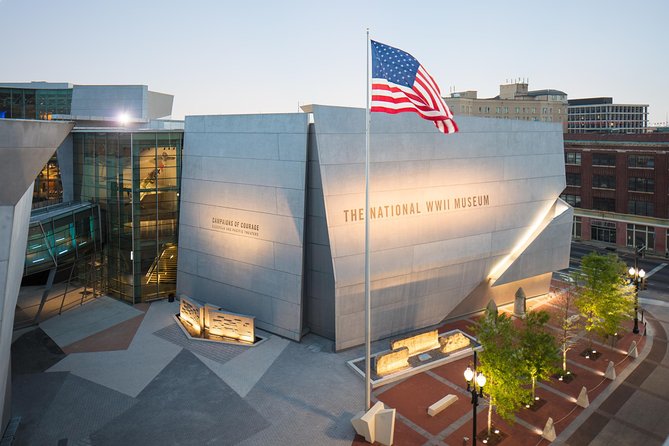
New Orleans is famous for music, food, architecture, and easygoing street life. The National WWII Museum shows another side of the city: its role in preserving and explaining one of the defining events of the 20th century.
The museum tells the story of the American experience in World War II. That means you see military campaigns, but also factory work, training, transport, family separation, propaganda, technology, and the return home. The result is broader than a display of weapons and uniforms.
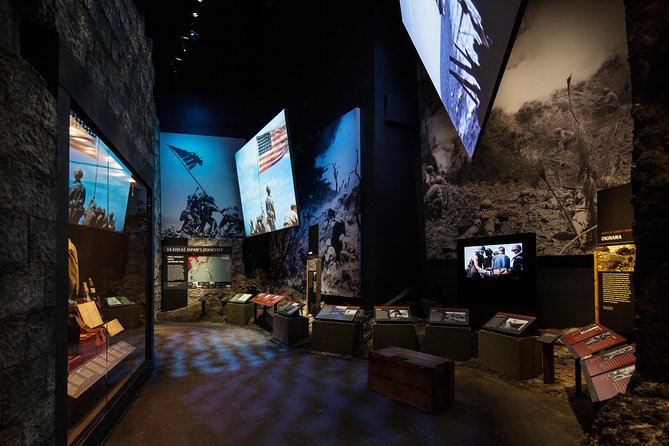
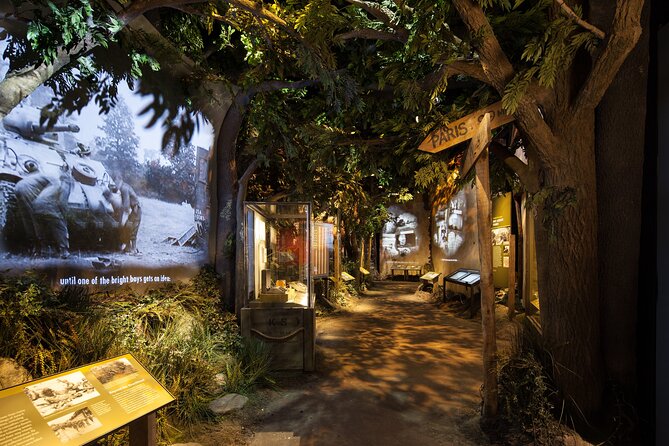
I would not treat this as a standard historical museum where you stroll past glass cases and leave after an hour. The exhibitions use large scenes, recorded voices, newsreels, digital displays, and interactive stations. Many areas have several short films playing at once, along with lighting and sound effects. That makes the setting vivid, but it can also tire you out.
The museum has earned a 4.8 rating from more than 2,200 reviews, with 96 percent of visitors recommending it. More useful than the numbers is what they suggest about the experience: people regularly spend four, six, or even seven hours inside and still do not see everything. If you are a serious World War II reader, that is not a warning. It is your planning guide.
A few more museum visits around the USA worth comparing
- NYC: 9/11 Memorial & Museum Timed-Entry Ticket
★ 4.8 · 31,428 reviews - NYC: Empire State Building Tickets – Observatory & Museum
★ 4.7 · 25,757 reviews - New York City: American Museum of Natural History Ticket
★ 4.5 · 15,447 reviews
Start in the Louisiana Memorial Pavilion
Your visit begins in the Louisiana Memorial Pavilion, where the museum introduces the war and the American response. This is a good place to get your bearings before choosing how much time to give each section.
One of the first major attractions is an authentic C-47 aircraft. The plane helps make the scale of wartime transport real. Instead of thinking only in terms of maps and arrows, you begin to picture the machines that carried men, supplies, and equipment toward the fighting.
You can also take part in the train car experience. The miniature train recalls the wartime movement of soldiers and gives you a dog tag connected to story points throughout the museum. The train is more than a decorative feature. It provides a physical link to the huge military transport effort behind the fighting.
The pavilion includes exhibits on D-Day and the Home Front. That pairing matters. D-Day is the famous military story, but the Home Front explains how ordinary Americans supported the war through work, production, sacrifice, and family life. I like seeing those two sides together because the war was not won only on beaches and battlefields.
Give yourself time here before rushing upstairs. The displays are designed to pull you into the story in stages, and it is easy to spend longer than expected at the first few stations.
See the war through Campaigns of Courage
Campaigns of Courage is the central part of the museum experience. It covers both the European and Pacific theaters, with two major sections called Road to Berlin and Road to Tokyo.
The European galleries guide you through the American soldier’s experience from the early stages of the campaign toward Germany. The Pacific galleries do the same for the long, difficult movement toward Japan. Both use large environmental displays, narrated videos, period newsreels, oral history stations, digital objects, and scenes built to place you in the setting.
The American viewpoint is clear. That is useful if you want to understand how the United States presented and fought the war, but it also means you should not expect a complete global history from every national perspective. The museum explains the causes, military campaigns, American participation, and consequences with particular attention to the men and women of the United States.
Dog tag stations add a personal thread. You can stop at story points and follow individual experiences rather than taking in only the broad military sequence. This is one of the museum’s best choices. A huge war can become a blur of generals, dates, and arrows on maps. One person’s account brings the human cost back into view.
The Pacific section can be especially demanding because of the distance, conditions, and style of fighting. The exhibits do not let you reduce that campaign to a simple march across a map. You may find yourself pausing often, both to read and to process what you are seeing.
If you have only two or three hours, focus on one theater and the Louisiana Memorial Pavilion rather than trying to skim everything. You will get more from a careful visit to fewer galleries than a rushed walk through the entire facility.
Walk through the US Freedom Pavilion

The US Freedom Pavilion focuses on preserved war machines and the people who served. It gives you a chance to step back from the chronological story and look closely at the hardware that made the conflict possible.
Aircraft and military vehicles are displayed at a scale that photographs cannot match. Even if you are not a military enthusiast, the machines help explain the practical side of the war: movement, firepower, engineering, and supply.
The pavilion also carries a more memorial-like tone. Displays honor American servicemen, and casualty sections make the price of victory difficult to ignore. One visitor described feeling depressed by the repeated references to deaths and the displays devoted to fallen soldiers. That reaction is understandable. This is not a light attraction, and you should not plan it as a casual rainy-day diversion if your group wants only entertainment.
At the same time, the museum does not present the war as only a list of losses. It also shows ingenuity, courage, cooperation, and the determination of people facing an enormous threat. That balance gives the museum its force. You leave with admiration, but also with a sharper sense of what war takes away.
Same city, a completely different collection:
- NYC: Museum of Modern Art (MoMA) Entry Ticket
★ 4.6 · 12,540 reviews - 9/11 Memorial, Ground Zero Tour with Optional 9/11 Museum Ticket
★ 5.0 · 6,381 reviews - 9/11 Memorial Museum Admission Ticket
★ 4.5 · 6,376 reviews - All-Access 9/11: Ground Zero Tour, Memorial and Museum, One World Observatory
★ 5.0 · 4,886 reviews
Consider the two paid add-ons
General admission covers the main museum, but two popular experiences cost extra. The price information lists an additional fee of $7 for these activities, so check the current amount when booking.
Final Mission: USS Tang Submarine Experience is an interactive presentation about one of the most successful submarines of World War II. The submarine setting promises a more focused, action-oriented experience than the main galleries. It may suit you if you enjoy military technology and want a specific mission story rather than another broad exhibition.
Beyond All Boundaries is a roughly 50-minute 4D film produced by Tom Hanks. It uses first-hand accounts, wartime scenes, and effects to tell the story of the conflict from battlefields and the Home Front. The film is a substantial time commitment, so do not add it without checking your schedule.
If your museum time is limited, I would see the main galleries first. The film and submarine experience can add drama, but neither replaces the material included with admission. If you have a full day, adding one or both can give your visit another layer.
Expect film, sound, and emotional intensity
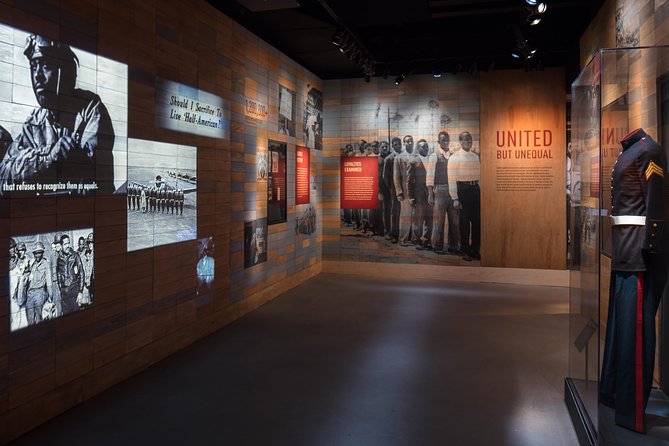
The museum’s technology helps bring the story to life, but it also affects how comfortable the visit feels. Short films may play in several areas at the same time. Lighting changes, environmental effects, and background noise are part of the presentation.
For some people, this is a major strength. The war feels less distant, and the mix of voices and images makes the displays memorable. For others, the sensory load can become tiring. If you are easily overwhelmed, plan regular breaks and do not feel obliged to watch every film.
The content itself is also heavy. Casualty displays, liberation material, and accounts of battle can bring tears. Younger children may find both the subject matter and the sound effects too much. I would prepare children in advance and use your judgment, especially for children around ten and under.
This is also why a full-day visit does not mean eight hours of nonstop reading. Take breaks. Sit when you can. Eat something. A thoughtful museum visit works better when you have enough energy to pay attention.
Eat and reset without leaving the museum
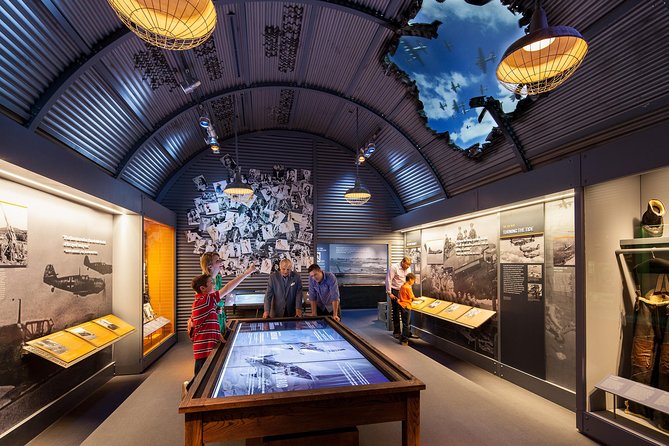
When you need a pause, the museum has the American Sector Restaurant and Bar, plus BB’s Stage Door Canteen, a 1940s-style entertainment space associated with wartime music and performers. Food and drinks cost extra.
These options matter because the museum is large and located in several connected exhibition areas. Leaving for lunch can break your rhythm, while staying inside lets you return to the galleries without starting over.
I would still plan your day around your attention span. Eat when you need to, not only when you have completed a particular building. The museum is too large for a rigid checklist to work well.
How much time should you allow?
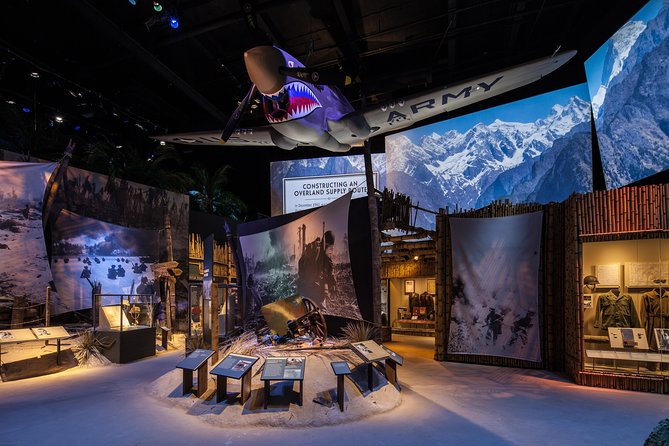
The official estimate is two to three hours, but that is best understood as a minimum for a quick visit. You can see important sections in that time, but you will need to make choices.
Use this rough plan:
- Two to three hours: See the Louisiana Memorial Pavilion and selected parts of Campaigns of Courage. Keep moving and limit film stops.
- Four hours: Add more of the European and Pacific galleries, plus the US Freedom Pavilion. This is a sensible target for most first visits.
- Six to seven hours: Read carefully, follow personal stories, watch more films, take breaks, and add a paid experience if desired.
- More than one visit: Best for serious World War II readers, families with different interests, or anyone who wants to see every major area without rushing.
The museum is open daily from 9 a.m. to 5 p.m. Going early gives you the best chance of using the day well. Since the ticket lets you explore at your own pace, you can build in breaks rather than racing from exhibit to exhibit.
Is the $37.80 admission good value?
At $37.80 per person, this is not a cheap museum stop. It is also not priced like a small local collection. The value depends almost entirely on how long you stay.
For two hours, the price may feel high, especially if you skip most of the displays. For four or more hours, it becomes easier to justify. You are paying for several large exhibition areas, aircraft, military machines, recorded history, interactive stations, and personal accounts, not just one gallery.
I especially like that general admission lets you choose your own pace. You are not tied to a guide or fixed group schedule. That suits a museum of this size, where one person may want to read every panel while another wants to focus on aircraft and battles.
The paid film and submarine experience should be treated as extras, not requirements. If your budget is tight, the main admission provides plenty to see. If you are a dedicated World War II enthusiast, the add-ons may be worth considering after you understand how much time remains.
Getting there and handling the practical details
You make your own way to the museum, which is in central New Orleans. The ticket is mobile, and confirmation is provided at booking.
The attraction is offered in English. A moderate level of physical fitness is recommended, sensible for a large museum with multiple exhibition spaces and extended time on your feet.
Free cancellation is available if you cancel at least 24 hours before the scheduled start time. Changes or cancellations inside that window are not refunded. The experience also lists a weather requirement, with a different date or full refund offered if it is canceled because of poor weather.
The museum is an indoor attraction, but keep that policy in mind when making plans around a wider New Orleans trip.
Who will enjoy this most?
This is an excellent choice for World War II enthusiasts, students, families with older children, and anyone who likes museums that ask for time and attention. It is also a strong rainy-day plan, provided your group is ready for serious subject matter.
You do not need to arrive already knowing the difference between every campaign. The museum supplies the basic story and adds detail as you go. Still, people who enjoy military history, memoirs, documentaries, or historical artifacts will get the most from a long visit.
I would be cautious about bringing very young children. There are no age restrictions listed, but the footage, casualty material, noise, and emotional scenes can be overwhelming. Older children and teenagers may learn a great deal, especially if you talk with them before and after the visit.
This is not the right pick if you want a quick, cheerful attraction or a guided tour with constant explanation. It is also not ideal if you dislike multimedia displays. But if you want to understand what the war meant to American soldiers, families, workers, and communities, the museum gives you plenty to think about.
Should you book the National WWII Museum?
Book it if you can spare at least half a day, and book it without hesitation if World War II is a major interest. The museum is large, moving, and unusually good at connecting military events with individual lives.
For a short New Orleans stay, I would still make room for it, but I would choose one clear focus rather than promise myself the entire museum in two hours. Start early, take breaks, and save the extra film or submarine experience for after you see how much energy and time you have.
The best reason to go is not the number of aircraft or the size of the buildings. It is the way the museum turns a distant war into a series of human decisions, sacrifices, fears, and acts of courage. You may leave needing a quiet meal and a little time to think. That is part of what makes this museum worth your day.
FAQ
How long does the National WWII Museum visit take?
The listed duration is about two to three hours, but the museum can easily take four hours or more. Several people spend six or seven hours and still do not see every section.
What does the $37.80 ticket include?
The ticket includes general admission to the National WWII Museum. Food, drinks, Beyond All Boundaries, and Final Mission: USS Tang are not included.
Are the 4D film and submarine experience included?
No. Beyond All Boundaries and Final Mission: USS Tang require an additional fee. The supplied price information lists that extra cost as $7.
What are the museum’s opening hours?
The museum is open Monday through Sunday from 9 a.m. to 5 p.m. for the stated operating period.
Is the ticket available on a mobile device?
Yes. The admission ticket is mobile, and confirmation is provided when you book.
Can I cancel for a refund?
Yes, if you cancel at least 24 hours before the experience start time. Cancellations or changes made less than 24 hours in advance are not refunded. If the experience is canceled because of poor weather, you are offered another date or a full refund.
Just added around the USA
- Museum of Ice Cream Austin★ 3.5 · 85 reviews
- Admission to Richard Nixon Presidential Library and Museum Ticket★ 5.0 · 123 reviews
- The Turquoise Museum Curator’s Tour★ 5.0 · 12 reviews
- Turquoise Museum Visit★ 4.5 · 194 reviews
- Orlando: Titanic Artifact Exhibition Ticket★ 4.5 · 246 reviews
- The St. Augustine Old Jail Museum Guided Tour★ 4.6 · 68 reviews
- San Diego: San Diego Natural History Museum Ticket★ 4.7 · 33 reviews
- The Museum of Fine Arts, Houston Entry Ticket★ 4.6 · 82 reviews
Museum Tours in the USA, compared.



9/11 Memorial, Ground Zero Tour with Optional 9/11 Museum Ticket
Read our review →

All-Access 9/11: Ground Zero Tour, Memorial and Museum, One World Observatory
Read our review →
Browse the lists this tour appears in