

Review · THE USA
Country Music Hall of Fame and Museum Admission
Nashville’s Country Music Hall of Fame and Museum puts the whole story of country music under one roof, from folk roots and early radio stars to Johnny Cash, Dolly Parton, Garth Brooks, and Taylor Swift. The two main gallery floors are packed with costumes, instruments, cars, films, recordings, and personal objects.
I like the way Sing Me Back Home links the music to American history instead of presenting a random wall of famous names. I also like the mix of old and new, with Jimmie Rodgers and Hank Williams sharing space with Carrie Underwood, Luke Bryan, Keith Urban, and other current artists.
The main drawback is simple: this is a large self-guided museum, not a live concert or a tightly led tour. Some sections rely more on reading and looking than on hands-on activities, and parking near downtown Nashville can add a surprising cost.
Key points before you go

- Two floors tell one long story: Follow country music from folk roots through the 1960s, then from the 1960s to the present.
- The collection is enormous: More than 2.5 million artifacts support the museum’s displays, though only a portion can be shown at once.
- Allow at least two hours: You can move through in about 90 minutes, but 2 to 4 hours gives you time for films, recordings, and interactive stations.
- The museum reaches beyond costumes: Look for cars, gold records, handwritten material, instruments, video clips, and recording and songwriting areas.
- Arrive early for a calmer visit: The museum opens at 9:00 a.m., and the first part of the day is usually the easiest time to see the galleries at your own pace.
- Admission is not the whole Nashville music experience: Special programs, live music, Hatch Show Print, extra tours, shops, and restaurants are available on site, but some activities may involve an additional charge.
Why this museum matters in Nashville
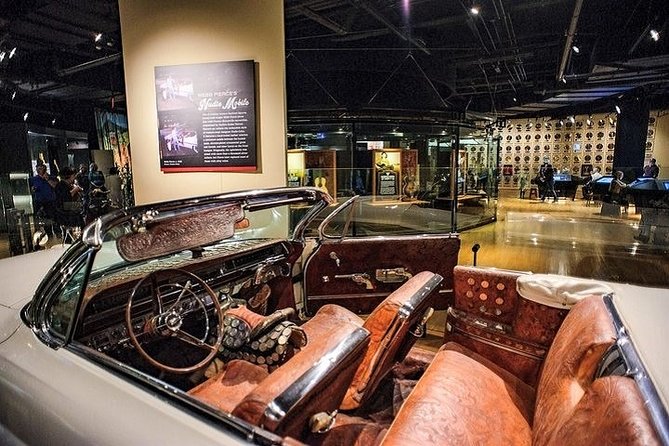
The Country Music Hall of Fame and Museum is more than a display of celebrity clothing. It treats country music as an American art form shaped by rural traditions, radio, recording technology, migration, business, fashion, and changing social tastes.
That broader approach gives you useful context. You see how early performers helped define the sound, how songwriting became central to the business, and how later artists changed the look and reach of country music. The result is a walk through American culture told through music.
The building itself is large, with about 350,000 square feet devoted to galleries, storage, classrooms, shops, restaurants, and event space. You will not see all of that as part of the standard museum walk, but the scale explains why the place feels more like a serious national institution than a small local collection.
The museum protects more than 2.5 million objects. That number matters because it gives the staff a deep pool of material to draw from for permanent displays and temporary exhibitions. You may see a stage costume in one case, a familiar car in another, and a short film that explains the person behind both.
A few more museum visits around the USA worth comparing
- NYC: 9/11 Memorial & Museum Timed-Entry Ticket
★ 4.8 · 31,428 reviews - NYC: Empire State Building Tickets – Observatory & Museum
★ 4.7 · 25,757 reviews - New York City: American Museum of Natural History Ticket
★ 4.5 · 15,447 reviews
Starting with Sing Me Back Home
Begin with Sing Me Back Home: The Journey Begins, Folk Roots to the 1960s. This section traces the music’s early development and shows how country music grew from several folk traditions rather than appearing fully formed.
The displays are arranged as a story, so you can follow the shift from early performers to radio, records, touring acts, and the growing importance of Nashville. Biographical panels help put names and dates in place, while sound recordings and film clips give the material a human voice.
This is where the museum works best for someone who knows only the biggest stars. Instead of asking you to recognize every name, it gives you a path through the music. You can see why Jimmie Rodgers mattered, how Hank Williams changed songwriting and performance, and how earlier styles fed into later ones.
Give yourself time here. It is tempting to hurry toward the famous costumes, but the early galleries explain the connections that make the later displays more meaningful. If you are traveling with a teenager or a family member who is not a country music expert, this section supplies the background they need.
Following the story from the 1960s to today
The second major section is Dreaming My Dreams: The Journey Continues, 1960s to the Present. It picks up the story as country music enters a period of major change.
Here you encounter the artists and sounds that carried the genre through the late twentieth century and into the current era. Johnny Cash, Dolly Parton, Garth Brooks, and Reba McEntire appear within a larger account of changing audiences, styles, technology, and performance.
The contemporary gallery adds objects connected with artists such as Taylor Swift, Luke Bryan, Carrie Underwood, and Keith Urban. This is a useful choice because it keeps the museum from becoming a shrine to one older version of country music. You can compare the stage image, working methods, and public reach of different generations.
Temporary exhibitions add another reason to return. Recent displays have included material connected with Lainey Wilson and the Muscle Shoals music scene. The exact temporary content can change, so do not plan your visit around one particular exhibition unless you confirm it first.
The artifacts that make the past feel real
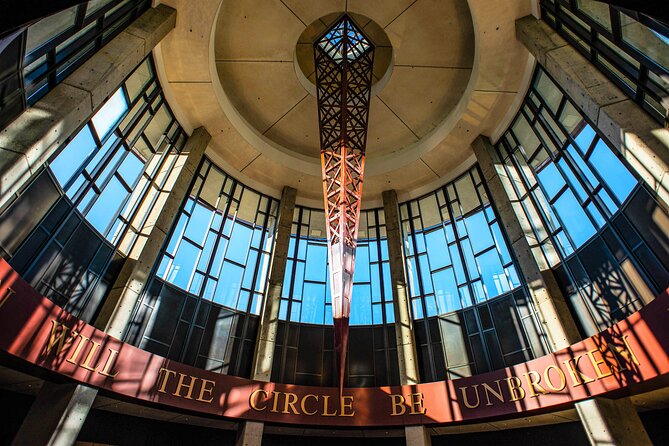
I find the personal objects more effective than a long list of names. A costume shows how an artist wanted to be seen. A handwritten item hints at the work behind a finished song. An instrument can suggest a performer’s sound before you hear a single note.
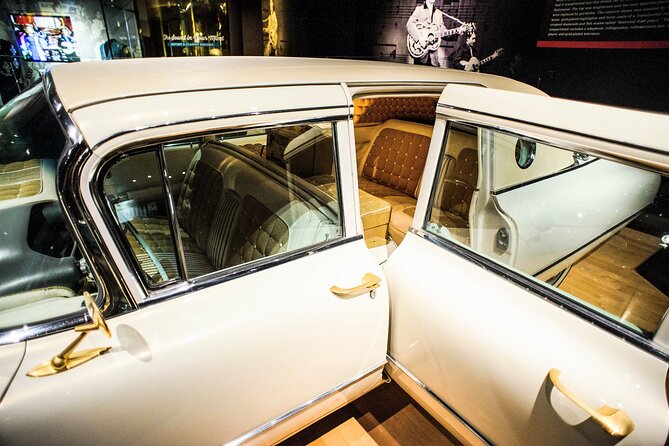
The museum also displays classic cars, gold records, stage clothing, and unusual pieces of music memorabilia. Elvis Presley’s gold-plated Cadillac is one memorable example, even though the museum’s focus is country music. These objects help show how music, celebrity, design, and performance became linked.
You will also see instruments and artifacts connected with many decades of performers. The displays are carefully arranged, so you do not need to be a specialist to understand why an object is there.
Some displays are visually striking, but you should expect a good amount of reading. If you want only constant sound and moving screens, parts of the museum may feel quiet. I see that as a fair trade for the amount of historical detail, but it is worth knowing before you pay admission.
Same city, a completely different collection:
- NYC: Museum of Modern Art (MoMA) Entry Ticket
★ 4.6 · 12,540 reviews - 9/11 Memorial, Ground Zero Tour with Optional 9/11 Museum Ticket
★ 5.0 · 6,381 reviews - 9/11 Memorial Museum Admission Ticket
★ 4.5 · 6,376 reviews - All-Access 9/11: Ground Zero Tour, Memorial and Museum, One World Observatory
★ 5.0 · 4,886 reviews
Interactive stations, films, and live programs
The museum includes interactive stations, recording and songwriting areas, trivia, and a large forty-foot guitar. These features break up the reading and offer a way to connect the history with the act of making music.
The level of interaction varies. You might find an area where you can play an instrument, listen to archival material, or watch a film. The main galleries are still built around objects, text, and carefully chosen media, so do not expect every room to operate like an interactive science center.
The museum also presents more than 250 programs and activities each year. These can include live music from established country performers and songwriters, archived films, and special events. A live performance inside the museum can turn a museum visit into a small concert experience, but program availability and any additional cost are separate from ordinary admission.
One useful tip is to ask at the information desk what is happening during your visit. A short performance or film can add real value, especially if you have already seen the main galleries.
How much time should you allow?

The advertised visit length is about 2 to 4 hours. That is a sensible range if you want to read the panels, watch some films, and spend time with the temporary exhibitions.
You can move faster. A focused visit may take around 90 minutes, especially if you know the artists you want to see and skip much of the text. That shorter visit still gives you the major displays, but you will have less time for context and media.
For a relaxed visit, I would plan two hours as a minimum and three hours if you are a serious fan. Four hours is possible if you add a program, browse the shops, eat on site, or take your time with every section.
Wear comfortable shoes. The museum covers two expansive gallery floors, and the amount of walking adds up. Clean restrooms are available, and service animals are allowed. Most people can participate, and the museum is near public transportation.
Is the $31.95 admission good value?
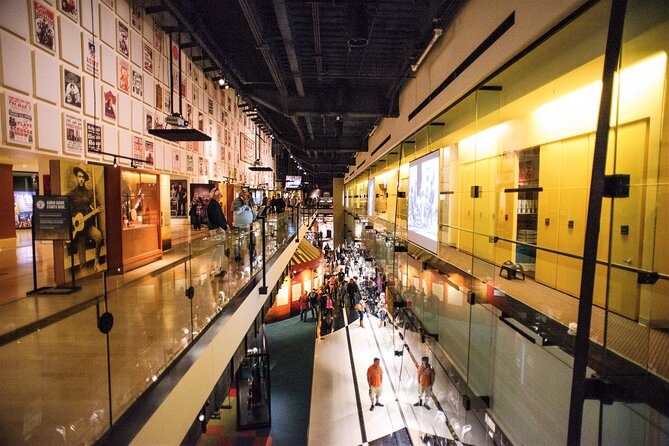
At $31.95 per person, this is not a bargain attraction for someone who has little interest in country music. You are paying for a substantial institution with a huge collection, polished galleries, temporary exhibitions, films, recordings, and a central Nashville location.
For a country music fan, the price is easier to justify. The museum gives you several hours of material rather than one short display, and it covers both classic and current performers. The value improves if you spend two or more hours inside and take advantage of a film, interactive station, or included exhibition.
The calculation changes if you are paying for a large family. Younger children may tire of the reading, and not every display is hands-on. A music-loving teenager, however, may find the modern artists and interactive areas more appealing than expected.
Remember to budget separately for parking. Downtown parking can be costly, and one of the common frustrations is paying a high rate for a nearby lot after already buying admission. If you can use public transportation, that may make the total visit feel more reasonable.
The four on-site shops also add temptation. The Museum Store carries books, recordings, souvenirs, and country clothing. Circa, Hatch Show Print, and the Haley Gallery offer different types of artwork, locally made gifts, posters, and design pieces. You do not need to buy anything, but the shops are part of the attraction for anyone who likes music-related objects.
Three restaurants, 2|22, Red Onion, and Bajo Sexto Taco, provide places to eat on the property. That makes it easier to build a longer downtown stop without leaving the building.
Planning your arrival and museum route
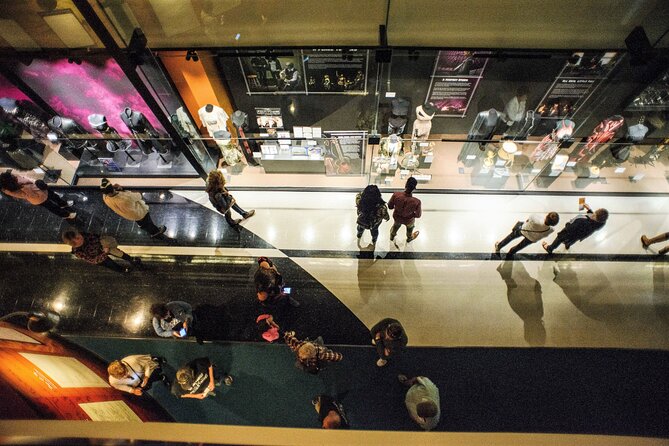
The museum is open daily from 9:00 a.m. to 5:00 p.m. Arriving close to opening is the best practical choice if you want quiet galleries and a simpler start. By late morning, the museum can feel much fuller.
If you have a voucher, go to the information desk first to receive or confirm your admission before joining the entry line. That small step can save time. You should also ask about current programs before you begin, since it is easy to miss a short film or live performance if you do not check.
The experience is self-guided and offered in English. That gives you freedom to set your own pace, stop for favorite artists, and move quickly through sections that matter less to you. It also means you will not have a guide organizing the story or answering questions as you walk.
The experience listing allows a maximum of 10 people, but the museum itself is a public attraction with large gallery spaces. The practical point is that your admission is not a private guided tour. You explore independently within the museum’s opening hours.
Who will enjoy this most?
You should book this if country music is a meaningful part of your trip, even if you are more familiar with modern artists than early performers. The displays connect the generations well, and you can learn enough about the early figures without doing homework first.
It also suits first-time visitors to Nashville who want a clear introduction to the city’s music identity. You will not hear live music on every corner inside the museum, but you will gain the background that helps you understand what you encounter elsewhere in town.
Families can make it work, especially with older children and teenagers. The gold records, cars, costumes, large guitar, and modern artist displays provide visual variety. Younger children may need a shorter visit or a break at one of the restaurants.
I would be less likely to recommend it to someone who dislikes museums, reading, or country music. The interactive elements are helpful, but they do not replace the main experience of looking at artifacts and following historical displays.
Cancellation and practical details
You can cancel free of charge up to 24 hours before the experience start time for a full refund. Changes or cancellations made within 24 hours are not accepted for a refund.
The stated conditions also say that the experience requires good weather. If it is canceled because of poor weather, you can receive a different date or a full refund. That policy is worth checking when you make your plans, even though the museum itself is indoors.
Confirmation is provided at booking. The museum is near public transportation, service animals are allowed, and most people can take part.
Should you book the Country Music Hall of Fame?
Book it if you want the full Nashville music story, not just a room of celebrity costumes. The strongest parts are the clear timeline, the huge range of artifacts, the balance between historic figures and current stars, and the chance to add a film or live program to your visit.
Plan for at least two hours, arrive early, and ask about the day’s activities at the information desk. If you are watching your budget, account for downtown parking and skip the shops unless you genuinely want a book, print, recording, or souvenir.
For a serious country music fan, the admission is a fair investment. For a casual visitor, it is still worthwhile if you focus on the main galleries and keep your visit to about 90 minutes or two hours. The museum gives you a thoughtful look at how the music grew, changed, and reached the artists heard today.
FAQ
How much does admission cost?
Admission costs $31.95 per person.
How long does a visit take?
The suggested visit lasts approximately 2 to 4 hours. A shorter visit of about 90 minutes is possible if you move quickly through the galleries.
Is the museum self-guided?
Yes. The standard experience is self-guided, with displays, panels, video footage, sound recordings, and interactive stations.
What are the museum’s opening hours?
The museum is open Monday through Sunday from 9:00 a.m. to 5:00 p.m.
Is the experience offered in English?
Yes. The experience is offered in English.
Is the museum accessible by public transportation?
Yes. The museum is near public transportation.
What is the cancellation policy?
You can cancel at least 24 hours before the experience start time for a full refund. Cancellations or changes made less than 24 hours before the start time are not accepted for a refund. If poor weather causes a cancellation, you can receive another date or a full refund.
Just added around the USA
- Museum of Ice Cream Austin★ 3.5 · 85 reviews
- Admission to Richard Nixon Presidential Library and Museum Ticket★ 5.0 · 123 reviews
- The Turquoise Museum Curator’s Tour★ 5.0 · 12 reviews
- Turquoise Museum Visit★ 4.5 · 194 reviews
- Orlando: Titanic Artifact Exhibition Ticket★ 4.5 · 246 reviews
- The St. Augustine Old Jail Museum Guided Tour★ 4.6 · 68 reviews
- San Diego: San Diego Natural History Museum Ticket★ 4.7 · 33 reviews
- The Museum of Fine Arts, Houston Entry Ticket★ 4.6 · 82 reviews
Museum Tours in the USA, compared.


9/11 Memorial, Ground Zero Tour with Optional 9/11 Museum Ticket
Read our review →

All-Access 9/11: Ground Zero Tour, Memorial and Museum, One World Observatory
Read our review →

Browse the lists this tour appears in