
Review · FRANCE
Caen: Memorial Museum Entry Ticket & Optional Audio App
Caen Memorial Museum tackles the 20th century at full scale, from the unrest after World War I to the fall of the Berlin Wall. Its strongest sections explain the road to World War II, the occupation of Normandy, D-Day, and the Battle of Normandy with objects, documents, films, and recorded testimony.
I like the clear link between global events and Caen itself, a city badly damaged during the war. I also like the 19-minute film that lays out the century’s key dates before you tackle the larger galleries. The main drawback is simple: this is a large museum, so a quick visit will leave important sections unseen. Allow several hours, and ideally most of a day.
Key points
- The museum covers 1918 to the fall of the Berlin Wall, giving World War II a wider political and social setting.
- D-Day and the 100 days after the landings receive special attention through films and displays.
- A 19-minute overview film helps you grasp the main events before entering the detailed galleries.
- The Holocaust area requires time and quiet attention, rather than a rushed pass-through.
- Three memorial gardens honor the Allied forces involved in liberating France.
- The optional multilingual audio app must be booked with the museum ticket, not separately.
Why Caen Memorial works best as a full-day history visit
The Caen Memorial is not a small military museum that focuses only on tanks, uniforms, and battle maps. It asks you to look at the forces that shaped the entire 20th century, then shows how those forces affected Normandy.
That wider view matters. You begin before the Second World War, with the political tensions and instability that followed the First World War. You then move through the rise of totalitarian regimes, the war itself, the occupation, the liberation, and the postwar division of Europe.
I find this approach useful because D-Day makes more sense when you know what led to it. The Normandy landings were not an isolated heroic episode. They were part of a long and brutal conflict, and the museum gives you that setting before placing you in the middle of June 1944.
You can also connect world events to Caen. Much of the city was destroyed during the war, and the museum explains the hardship of occupation as well as the relief that came with liberation. That local focus keeps the story from becoming a parade of dates and famous names.
Plan on at least several hours. One visitor spent close to four hours and still did not see everything. If you want to read the documents, watch the films, and stop in the Holocaust section without rushing, a full day is sensible.
More war and memorial museums in France:
- Caen: Guided D-Day Sites Tour & Caen Memorial Museum Ticket
★ 4.8 · 498 reviews - 9/11 Memorial Museum Admission Ticket
★ 4.5 · 6,376 reviews - Amsterdam: National Holocaust Museum Entry Ticket
★ 4.7 · 413 reviews
Start with the 19-minute film
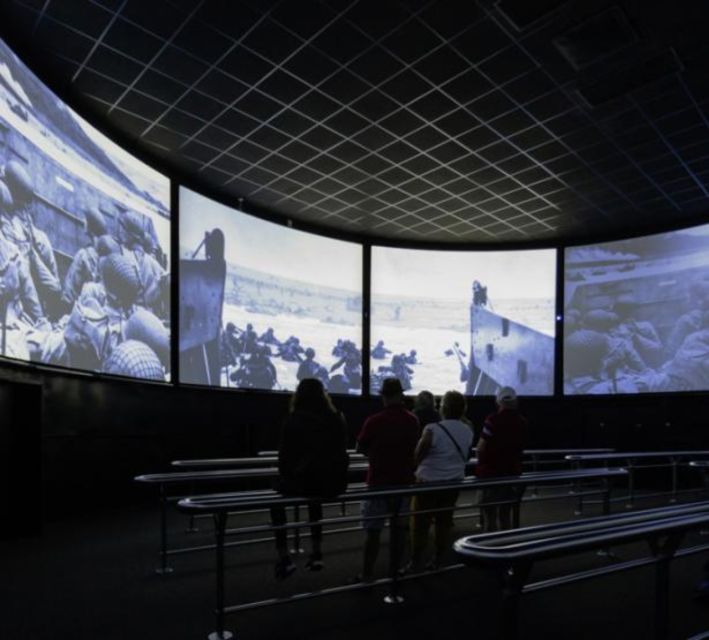
I recommend beginning with the museum’s 19-minute film about the key events of the 20th century. It gives you a working timeline before the more detailed exhibits begin.
That short introduction is especially useful if your knowledge of the period is uneven. You do not need to arrive with a firm grasp of every alliance, political movement, or campaign. The film helps put the museum’s sections in order, so later displays feel connected rather than scattered.
The museum contains many films, and this opening presentation is a good way to set your pace. You will encounter a great deal of material afterward, so the film helps you decide where to slow down and where a quick look will do.
Do not treat the 19 minutes as a substitute for the museum. Think of it as a map. The real value comes when you use that map to understand the objects, testimony, and documents in the galleries.
From the First World War to the road to 1939
The first part of the visit reaches back to the end of World War I. This section gives you the political background needed to understand why Europe remained unstable and why another war became possible.
The displays trace the transformation of the period rather than presenting World War II as a sudden event. You will find historical documents, films, and original objects that help show how societies changed and how political pressure built.
This is one of the museum’s most useful features for younger visitors or anyone who knows the D-Day story mainly through popular films. The museum places military events beside the ideas and decisions that shaped them.
I would not rush through this opening section simply because the Normandy landings are your main interest. The later galleries depend on it. If you arrive late in the day, you may be tempted to head straight for D-Day, but you will get more from that section if you first understand the political road to war.
Occupation, destruction, and liberation in Normandy
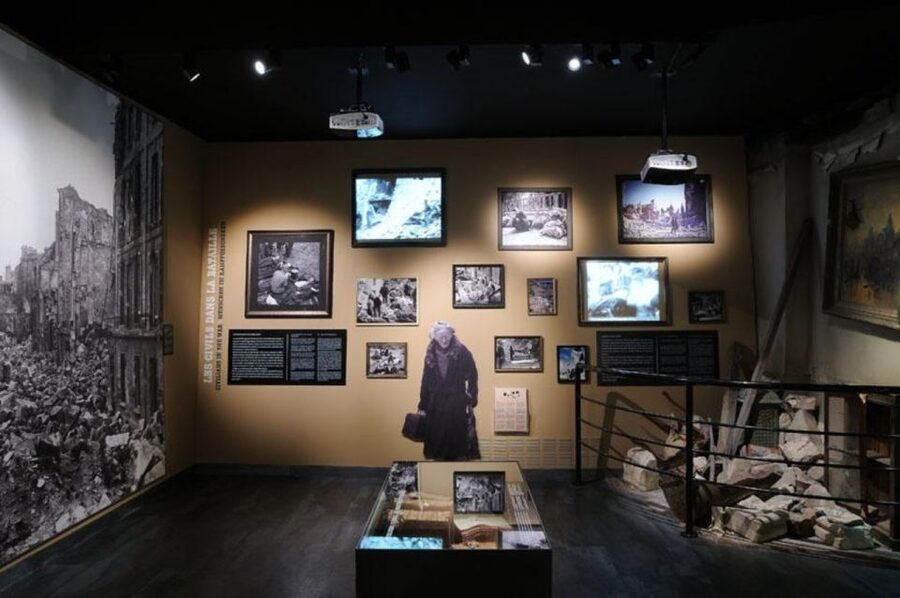
The museum’s Normandy focus becomes especially strong when it turns to occupation and the destruction of Caen. Here, the war is no longer an abstract conflict on a map. You are looking at what it meant for a city and its residents.
The exhibits explain the tribulation of occupation and the joy of liberation, giving both experiences space. That balance matters. It avoids presenting liberation as a clean, simple ending, because the damage to Caen and the surrounding area was severe.
You can expect original battle artefacts alongside documents, film, and audio testimony. These different forms of evidence work well together. A weapon or uniform shows the physical side of war, while testimony and documents help explain what people endured.
This section also prepares you for the D-Day galleries. The landings were a military operation, but they also led to weeks of fighting and hardship. The museum keeps that larger human cost in view.
A few more museum visits around France worth comparing
- Paris: Orsay Museum Entry Ticket and Digital Audio Guide App
★ 4.4 · 3,170 reviews - Louvre Museum Timed Entrance Ticket with Audio Guide
★ 3.0 · 453 reviews - Paris: Louvre Museum Hosted Entry & Masterpieces Audio Guide
★ 4.2 · 281 reviews - Paris: Museum of Decorative Arts Ticket and City Audio Tour
★ 3.3 · 146 reviews
D-Day and the 100 days after the landings
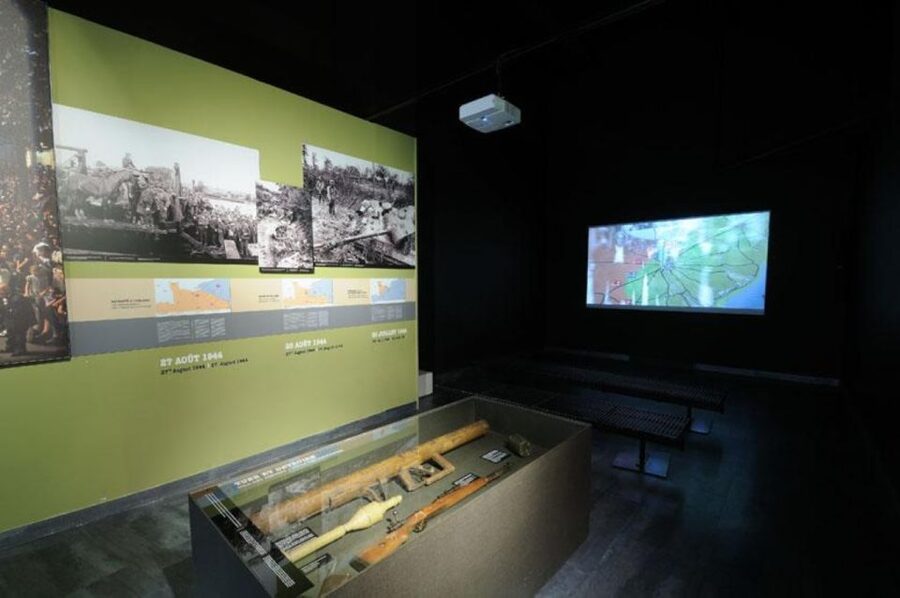
D-Day receives a major share of attention, as it should in a museum located in Normandy. Films and displays explain the invasion and the events that followed, including the 100 days after the landings.
I like that the museum does not stop at the famous first day. The invasion was only the beginning of the campaign to move across Normandy. By showing the fighting that followed, the museum gives you a better sense of the scale and difficulty of liberation.
You will find this section most helpful if you are also visiting the Normandy beaches or other wartime sites. At those locations, you may stand on a beach, look across a field, or see a bunker. At Caen Memorial, you receive the wider framework that connects those places.
The film about D-Day adds movement and sequence to the story. It helps explain how the operation unfolded and how Normandy affected the course of the war. I would watch the film before spending too long with the smaller objects, since it gives the displays a clear purpose.
Do not expect a light or purely celebratory presentation. The museum deals with destruction, death, occupation, and the difficult process of liberation. That seriousness is one of its strengths, but it may be intense for younger children.
The Holocaust section needs time and care
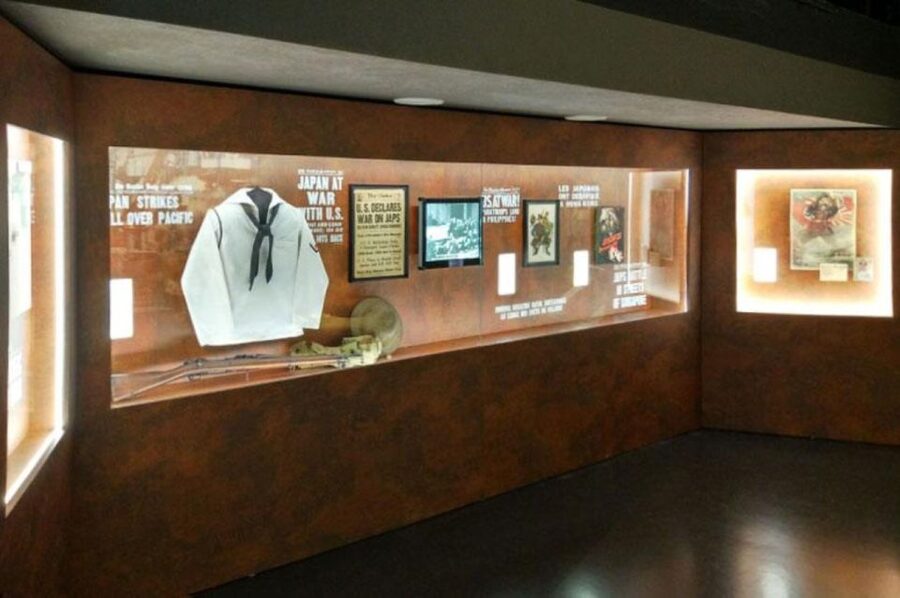
The Holocaust area is one of the sections I would set aside time for. It deals with the persecution, displacement, and murder of people under Nazi rule, so it deserves more than a quick glance while moving toward the next gallery.
The museum’s broader format helps place the Holocaust within the political and wartime story, but this section also demands its own attention. Historical documents, testimony, and other material ask you to stop and consider the human consequences of ideology and state violence.
If you are visiting with children, use your judgment. Children under ten must be accompanied by an adult, and that is a practical rule for the entire museum, not just this section. The subject matter can be difficult, and you may want to explain parts of it in your own words.
I would not schedule the museum as a hurried stop between other appointments. The Holocaust displays, D-Day films, and occupation galleries all reward quiet attention. A rushed visit can leave you with many images but little understanding.
From the Cold War to the Berlin Wall
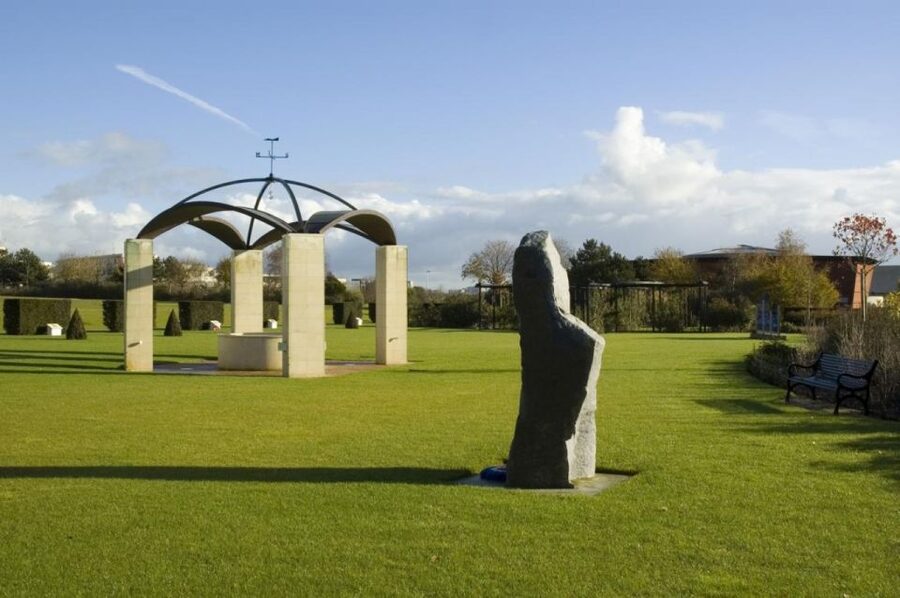
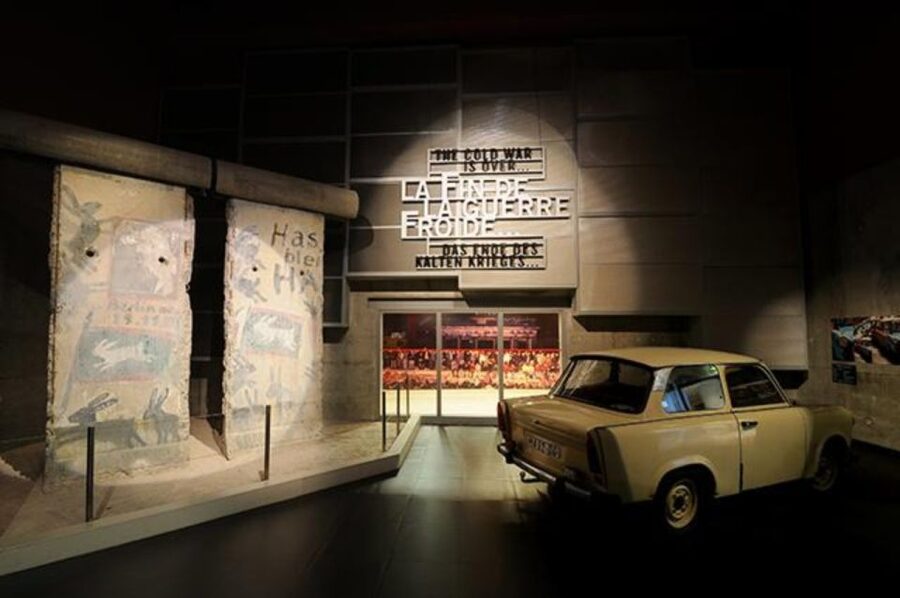
Caen Memorial continues beyond 1945 and follows the century toward the fall of the Berlin Wall. This gives the museum a useful final chapter: the end of World War II did not end tension in Europe.
The postwar material helps explain how the Allied victory led into a divided Europe and a new political struggle. The museum’s time span, from the end of World War I to the Berlin Wall, lets you see the century as a connected chain rather than a series of separate events.
This section may be less familiar to visitors who come mainly for D-Day. I would still make time for it. The museum is asking you to think about what peace looked like after the war and how quickly new divisions formed.
The title of the institution may suggest a narrow war memorial, but the content is wider. You leave with more than a list of battles. You get a framework for understanding the political changes that shaped Europe across several generations.
The three memorial gardens outside
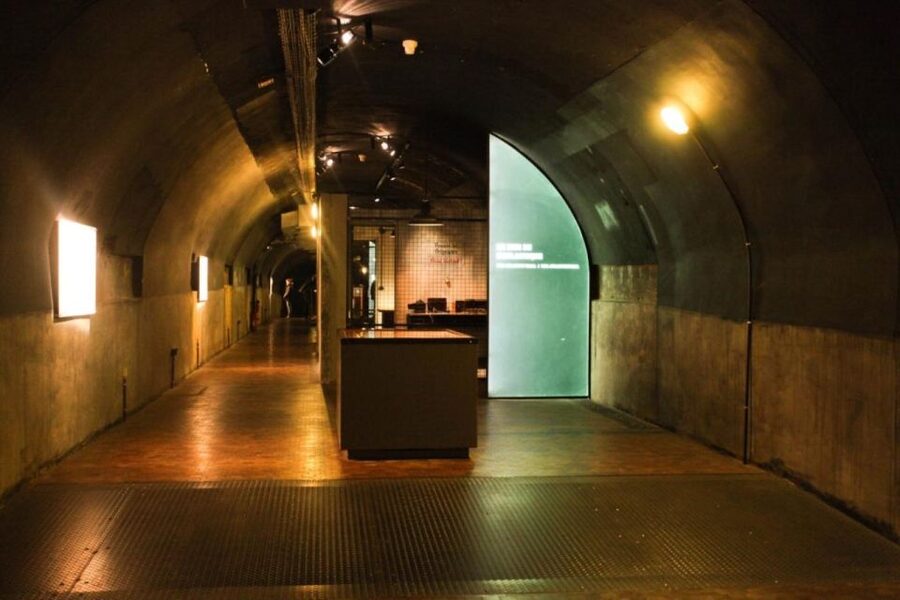
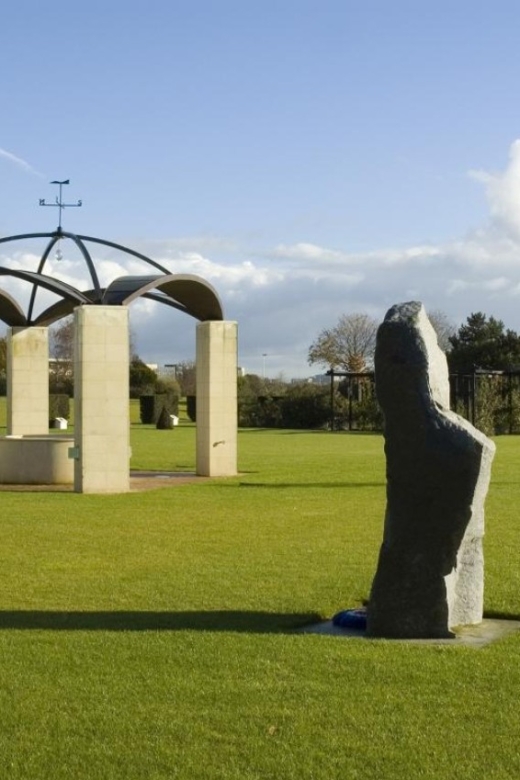
When you need a break from the galleries, head outside to the three memorial gardens. They are dedicated to the three Allied forces that helped liberate France.
The gardens give the visit a quieter ending. After the films, documents, and battlefield material, outdoor space lets you pause and reflect on the human cost of the conflict and the meaning of liberation.
You can also use this part of the grounds to slow down before returning inside. The museum has two on-site restaurants, and you can also bring a picnic to enjoy on the lawn. That makes a long visit easier, especially if you want to stay most of the day rather than leave for lunch.
I would treat the gardens as part of the museum experience, not just a place to stretch your legs. The memorial purpose becomes clearer there. The visit moves from information toward remembrance.
Choosing the optional audio app
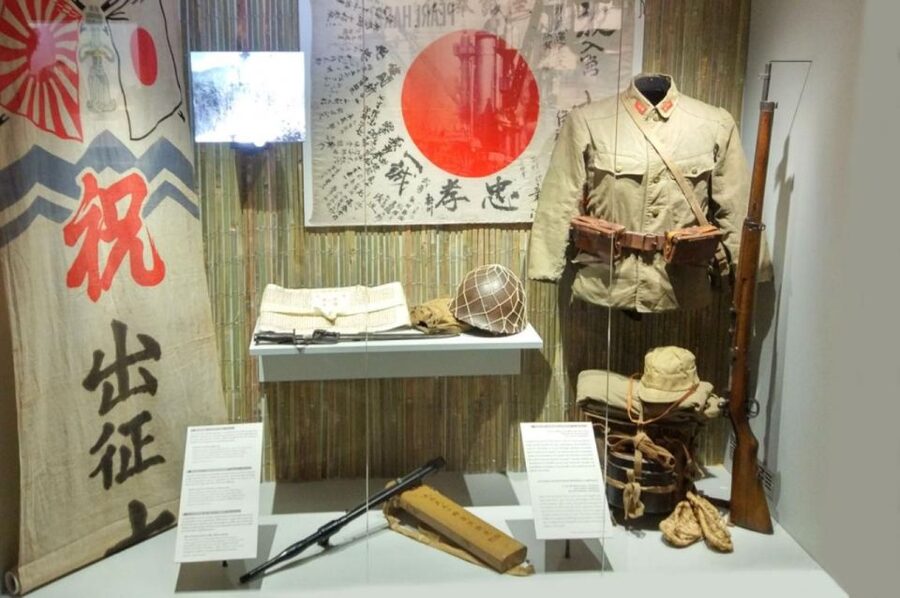
The official web-app audio guide is an add-on to the entrance ticket. It is multilingual and designed to help you navigate the museum on your phone.
This can be useful in a museum with many sections and a large amount of material. You can move through the galleries at your own pace while receiving extra explanation, rather than relying only on labels or trying to read every panel.
Pay close attention when booking. The audio app cannot be purchased by itself. You must select the entrance ticket and the audio guide option together. It is easy to assume that an audio guide is automatically included, so check the selections before paying.
The app is not a guided group tour. The ticket itself provides entry to the permanent exhibitions, while the app gives you extra help on your phone. If you prefer to read labels and make your own route, the basic admission may be enough. If you want more direction in a large museum, the add-on is worth considering.
A separate guided experience may use a human guide, and Pascal has been praised for being organized, gracious, and highly informed. Do not assume that a named guide is included with this admission ticket, however. This product is museum entry with an optional web app, not a guided tour.
Is $24 good value?
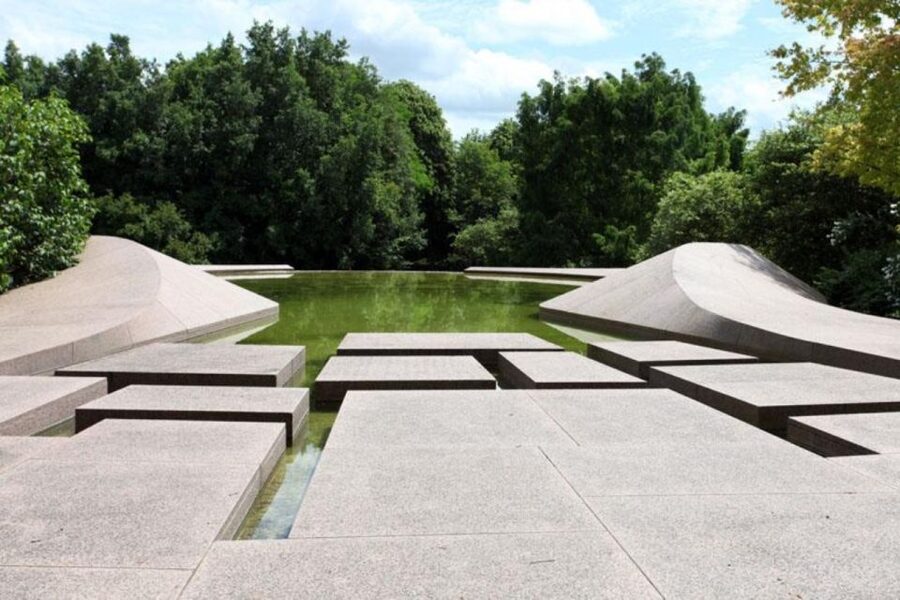
At $24 per person, the ticket is good value if you use the full day. The museum covers a large span of history, includes many films, and offers permanent exhibitions, outdoor memorial gardens, and on-site places to eat.
The value drops if you only have an hour or two. You can still see important sections, but the museum’s strength is its scale and context. Paying for a large museum and then rushing through it is not the best use of your money.
The ticket also includes skip-the-ticket-line access, which can save useful time. That matters on a busy day, although the museum notes that excessive crowds can lead to partial or full closure or altered opening hours for safety reasons.
Free cancellation up to 24 hours before the visit and the reserve-now, pay-later option add flexibility. Those terms are helpful if your Normandy schedule depends on weather, transport, or a changing road plan.
Getting there and planning your day
By car, approach from Paris on the A13 or from Rennes on the A84, then take the northbound ring road and exit 7. By bus, take route 2 from Caen city center.
Present your ticket at the museum entrance. The ticket is valid for one day, and you should check the available starting times when booking. Last entry is 1.5 hours before closing, which is too late for a proper visit if you want to see the main galleries.
The museum is closed on Wednesdays in November and December, on December 25 and January 1, and for three weeks in January. Check dates carefully if you are visiting in winter.
The building is wheelchair accessible. Pets are not allowed, except for assistance dogs. Children under ten need to be accompanied by an adult.
Who should book the Caen Memorial?
I recommend this museum to anyone visiting Normandy who wants more than a beach visit or a collection of military objects. It is especially useful for first-time visitors because it explains the larger story before you visit other wartime sites.
It also suits history-minded families, though parents should prepare younger children for serious material. The films and objects can help hold attention, but the Holocaust and occupation sections are not casual entertainment.
You should book it if you can give it several hours, enjoy learning through film and documents, and want to understand how D-Day fit into the wider 20th century. If your schedule allows only a brief stop, choose your sections in advance and skip the audio app unless you know you will use it.
Should you book this museum ticket?
Yes, if you want a thoughtful, well-organized account of World War II, D-Day, Normandy, and the political changes before and after the war. The combination of films, original material, local history, and memorial gardens makes the $24 price fair for a long visit.
Book the audio app only if you want extra guidance on your phone, and select it at the same time as the entrance ticket. Most important, protect enough time for the museum. Its greatest strength is also its main challenge: there is far more to see than you can absorb in a quick visit.
FAQ
How long is the Caen Memorial Museum ticket valid?
The ticket is valid for one day. You can check availability and starting times when booking.
What does the museum cover?
The museum covers the period from the end of World War I to the fall of the Berlin Wall. It includes World War II, the occupation of Normandy, D-Day, the Battle of Normandy, the Holocaust, liberation, and the postwar period.
Is the audio guide included with admission?
No. The multilingual audio guide is an optional web app and must be selected with the entrance ticket. It cannot be purchased on its own.
Is there a film about D-Day?
Yes. The museum includes films about D-Day and the events that followed the Normandy invasion. A separate 19-minute film presents key events from the 20th century.
Can I eat at the museum?
Yes. The museum has two on-site restaurants, and you can also enjoy a picnic on the museum lawn.
How do I reach the museum by public transport?
Take bus number 2 from Caen city center. By car, use the northbound ring road and exit 7 when approaching from the A13 or A84.
Is the museum wheelchair accessible?
Yes, the museum is wheelchair accessible. Pets are not allowed, although assistance dogs are permitted. Children under ten must be accompanied by an adult.
More Audio-Guided Visits in France
- Paris: Rodin Museum Skip-the-line Entry Ticket with Audio
★ 4.0 · 102 reviews - Paris: Louvre Museum Ticket with Audio guide
★ 3.7 · 99 reviews - Istanbul: Topkapi Palace & Harem Museum Ticket & Audio Guide
★ 4.1 · 3,977 reviews - Florence: Uffizi Gallery Timed Entry Ticket & Audio Guide
★ 4.2 · 2,794 reviews
Just added around France
- Ticket to Musée National du Sport★ 4.4 · 32 reviews
- Rodin Museum Masterpieces – Guided Tour up to 8 guests★ 4.9 · 13 reviews
- Louvre Museum: Skip-the-Line Guided Tour★ 4.6 · 98 reviews
- Invalides Museum – WWI & WWII – Guided Tour up to 8 guests★ 5.0 · 32 reviews
- Skip the Line Guided Tour of Louvre Museum Highlights★ 5.0 · 49 reviews
- Rouen : Museum Immersive Viking Experience★ 4.2 · 47 reviews
- Paris: Louvre Museum Highlights Small-Group Guided Tour★ 4.8 · 157 reviews
- From Paris: Private Trip to Giverny, Monet’s House & Museum★ 4.5 · 13 reviews
Museum Tours in France, compared.


Louvre Museum Masterpieces Guided Tour with Access
Read our review →
Louvre Museum Entry Ticket With Host and River Cruise
Read our review →
Les Invalides: Napoleon’s Tomb & Army Museum Entry
Read our review →
Mona Lisa & Louvre Masterpieces Tour with Reserved Access
Read our review →
Musée de l’Orangerie Reserved Entrance Ticket
Read our review →
Louvre Museum – Exclusive Guided Tour (Entry Included)
Read our review →Browse the lists this tour appears in