
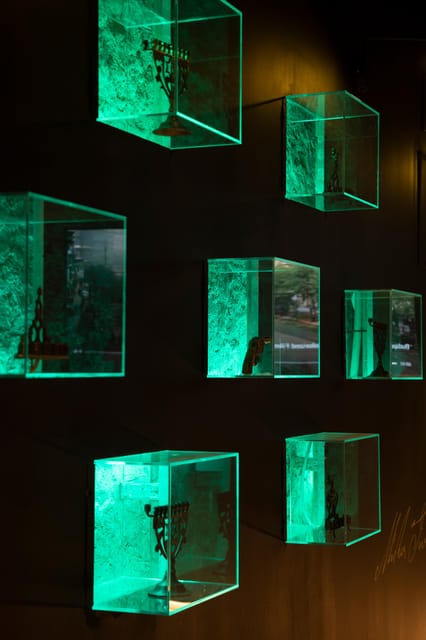
Review · BUDAPEST
Budapest: Mika Tivadar Secret Museum Entry Ticket
The most surprising thing here is how much Budapest history fits inside a 140-square-meter museum. One small site on Kazinczy Street connects a former hotel, a famous cabaret, Hungary’s first cinema, wartime Budapest, and the city’s old party district. The story even reaches from Michael Curtiz to Sylvester Stallone and Arnold Schwarzenegger.
I like the low $5 price and the freedom to explore at your own pace. I also like the phone-based audio in eight languages, with music and sound effects that give the old photographs and displays a little atmosphere. The main drawback is the lack of a live guide, so you need a charged smartphone and must read, scan, and listen for yourself.
Key points at a glance
- A hotel with several past lives: The museum explains the building’s hotel years and the surrounding Kazinczy Street properties.
- A short but packed visit: The advertised duration is 30 minutes, though you can spend longer if you want to follow every audio chapter.
- History with a local address: Learn about the Blue Cat cabaret, Hungary’s first cinema, the Budapest Ghetto, and a former copper shop.
- Eight-language audio: Scan the QR code and listen on your own phone using free Wi-Fi.
- A cocktail bar on site: You can pair the museum visit with a drink, brunch, or restaurant stop.
- A few practical limits: There is no museum guide, and the experience is not suitable for wheelchair users.
Why Kazinczy Street makes this little museum worth your time
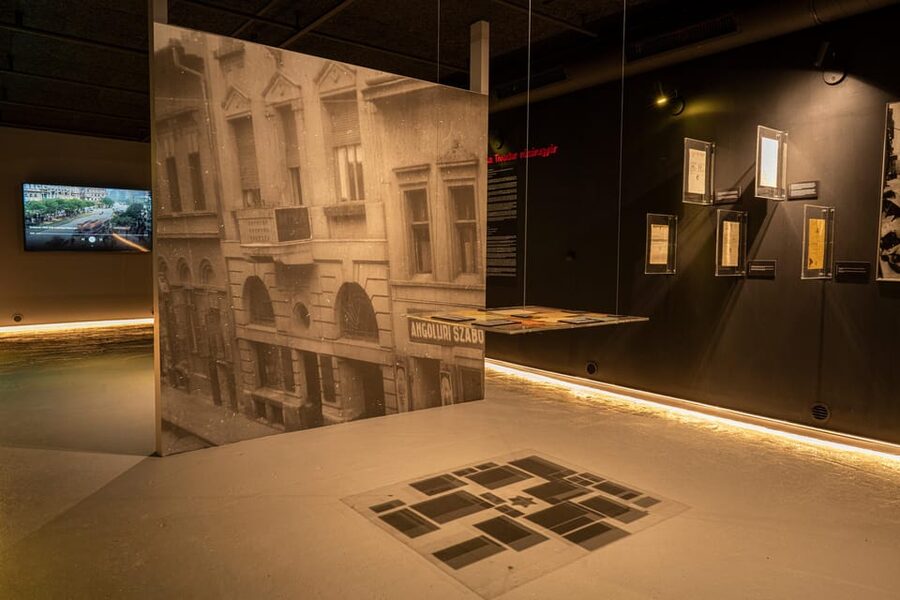
District 7 is now known for bars, restaurants, and late-night crowds. The Mika Tivadar Secret Museum gives you a quieter way to understand what came before the nightlife. Instead of presenting Budapest as a collection of grand monuments, it focuses on one address and the buildings around it.
That local scale is the attraction. You are not moving through a huge national museum with hundreds of rooms. You are following the life of a street, its businesses, its residents, and the many communities that shaped Budapest from the late 19th century through the years between the two world wars.
I find that approach useful because it gives the neighborhood a face. The museum links Hungarian events to the wider European world and pays attention to the ethnic communities that lived in Hungary. That means the displays are not limited to a single national story. You might find a connection that speaks to your own family or cultural background.
More Museum Tours in Budapest
- Budapest: Cat Museum Budapest Entry Ticket
★ 4.4 · 2,210 reviews - Budapest: Light Art Museum Skip-the-Line Entry Ticket
★ 3.9 · 1,531 reviews - Budapest: Budapest Retro Interactive Museum Ticket
★ 4.4 · 569 reviews
Entering through Hotel Mika Downtown
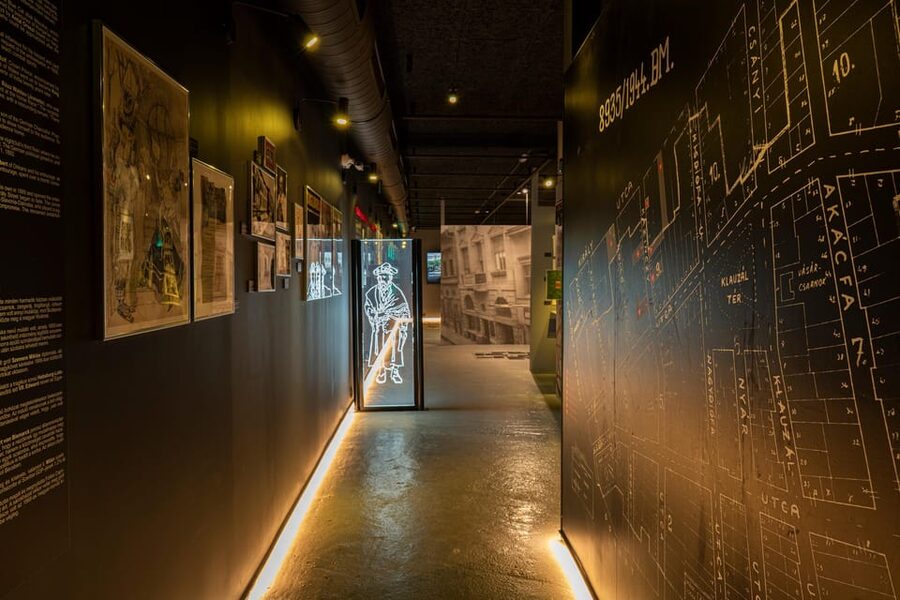
The meeting point is the reception of Hotel Mika Downtown. You check in there, where staff greet you, hand over a printed flyer, and briefly explain what you can see. There is no formal tour group or guide leading you from room to room.
This arrangement keeps the visit simple. You do not need to wait for a scheduled walking tour, and the ticket lets you skip the ticket line. At the same time, you should know what you are buying: this is a self-guided museum visit, not a personal history talk.
The museum is part of a local heritage hotel, which adds to the sense that you are exploring a real building rather than entering a purpose-built exhibition hall. The setting is part of the story. The hotel, the bar, and the museum share the same address and connect present-day Budapest with the building’s earlier uses.
The first chapters: hotels, steam baths, and famous names
The early displays set the scene by explaining how the property and nearby buildings changed over time. One notable detail concerns Hungary’s first steam bath, which once stood directly opposite the museum site. That earlier bath has since given way to a hotel, a small example of how quickly Budapest’s streets have changed.
The building also has an impressive list of former visitors. King Edward VII of the United Kingdom, German statesman Otto von Bismarck, and Milan I of Serbia are connected with the hotel’s past. These names give the place a more international character than its compact size might suggest.
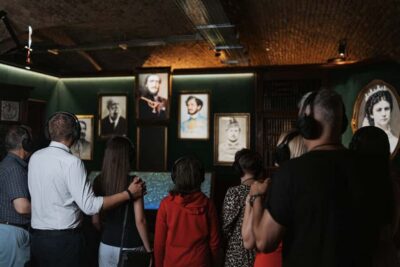
I would not expect a grand palace interior or a large collection of priceless objects. The interest is in the connections. Photographs, written panels, antique objects, and audio chapters help explain how an ordinary address could touch politics, entertainment, travel, and commerce.
The printed flyer is useful for getting your bearings, but the phone audio adds more detail. Bring a charged smartphone, scan the QR code, and use the free Wi-Fi if needed. The audio is available in eight languages, which makes this a practical stop for international visitors.
Blue Cat, cabaret culture, and the old entertainment district
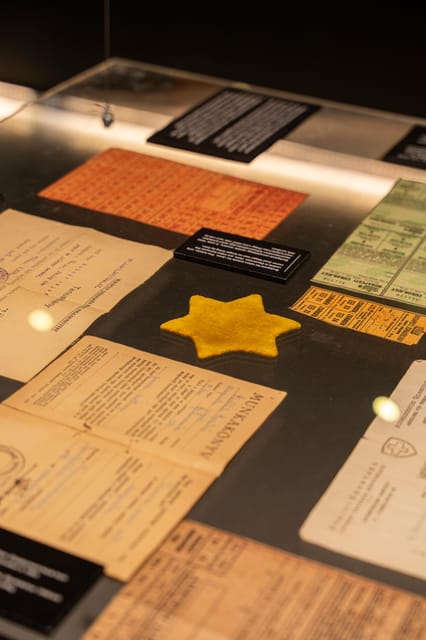
One of the strongest sections looks at the Blue Cat, described as Europe’s most famous cabaret. This helps explain why Kazinczy Street was more than a residential or commercial address. It was also a place for nightlife, performance, and social exchange.
The subject fits District 7 particularly well. The area’s present-day party reputation did not appear from nowhere. The museum shows an older entertainment culture behind the bars and restaurants you see today.
The background music and sound effects are a nice touch here. They do not replace a guide, but they help set the mood while you study the photographs and text. I would give yourself more than a quick glance if this period interests you, because the material is dense for such a small space.
The museum also covers Budapest’s brothel scene. That topic may not suit every child or every visitor, but it is part of the district’s social past and is handled as a historical subject. If you want a sanitized view of Budapest, this is not that. If you want to understand how entertainment, commerce, and urban life overlapped, it adds useful context.
A few more museum visits around the world worth comparing
- Vatican: Museums & Sistine Chapel Entrance Ticket
★ 4.5 · 144,003 reviews - Paris: Louvre Museum Timed-Entrance Ticket
★ 4.6 · 71,977 reviews - Amsterdam: Van Gogh Museum Ticket
★ 4.7 · 52,054 reviews - NYC: 9/11 Memorial & Museum Timed-Entry Ticket
★ 4.8 · 31,428 reviews
Hungary’s first cinema and Michael Curtiz
Another memorable connection is the cinema that opened on this very spot. It is identified as Hungary’s first cinema, and the museum links the site to Michael Curtiz, the Oscar-winning director of Casablanca, who began his film career here.
For film fans, this may be the museum’s best surprise. The connection gives the building a place in international cinema, not just local Budapest history. It also shows how a small entertainment venue could lead to a career with global reach.
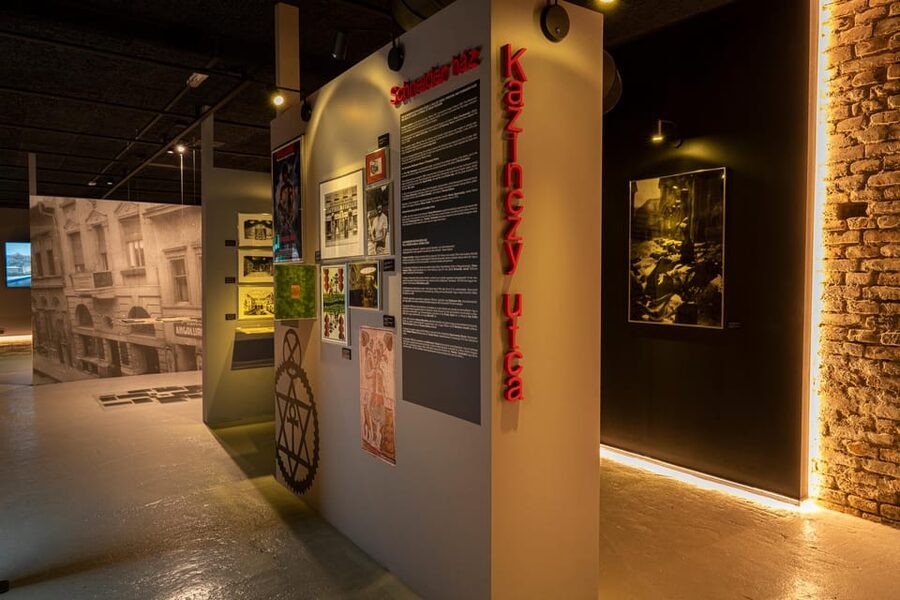
The displays use photographs, objects, and short written narratives rather than a long lecture. That format works well for a quick visit, but you will need to pay attention. The museum offers a large amount of content in a compressed space, so rushing through it would mean missing many of the connections.
Wartime Budapest and the Budapest Ghetto
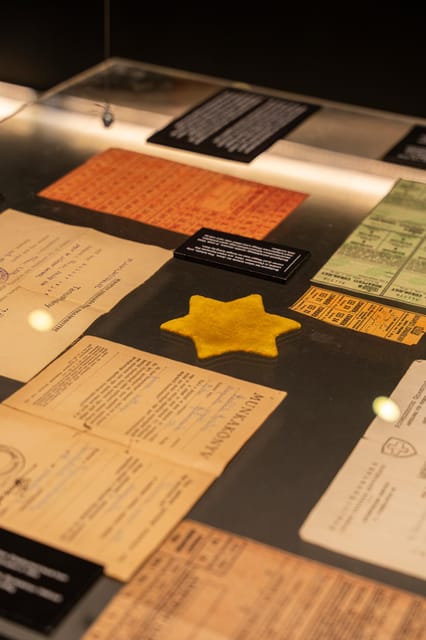
The museum also addresses the Budapest Ghetto and shows how the property looked during World War II. This is the most serious part of the visit, and it changes the tone from entertainment and hotel stories to persecution, war, and survival.
That shift matters. Kazinczy Street can be easy to treat as a nightlife zone, especially when you see it during an evening out. The museum reminds you that this same part of Budapest carries painful memories and that its buildings have witnessed far more than their current businesses suggest.
The material is presented within the broader story of the building and neighborhood. You are not getting a full museum on the Holocaust or World War II, so anyone seeking an extensive treatment of those subjects should plan a separate visit elsewhere. Still, this section gives the street a necessary historical frame.
I appreciate that the museum does not separate Budapest from the rest of Europe. Its displays show how Hungarian events were tied to the decisions, tensions, and movements of larger European powers. That wider setting helps you understand why a single city block could experience such dramatic changes.
The unusual links to Stallone, Schwarzenegger, and Mexico
The museum saves room for some unexpected stories. You learn about a connection between Sylvester Stallone and Arnold Schwarzenegger and a tiny house on Kazinczy Street. The information is one of those odd details that can make a short museum visit stick in your memory.
You also hear how veterans of the 1848 to 1849 Hungarian Revolution became involved in the Mexican Civil War. That link reaches far beyond Budapest and shows how political upheaval could send people and ideas across borders.
These stories are useful because they break up the more familiar hotel and wartime material. I like museums that give you a few facts you can retell over dinner, and this place has plenty of them. The caution is that the museum’s small size means some stories are introduced briefly rather than explained at book length.
A self-guided visit with sound instead of a tour guide
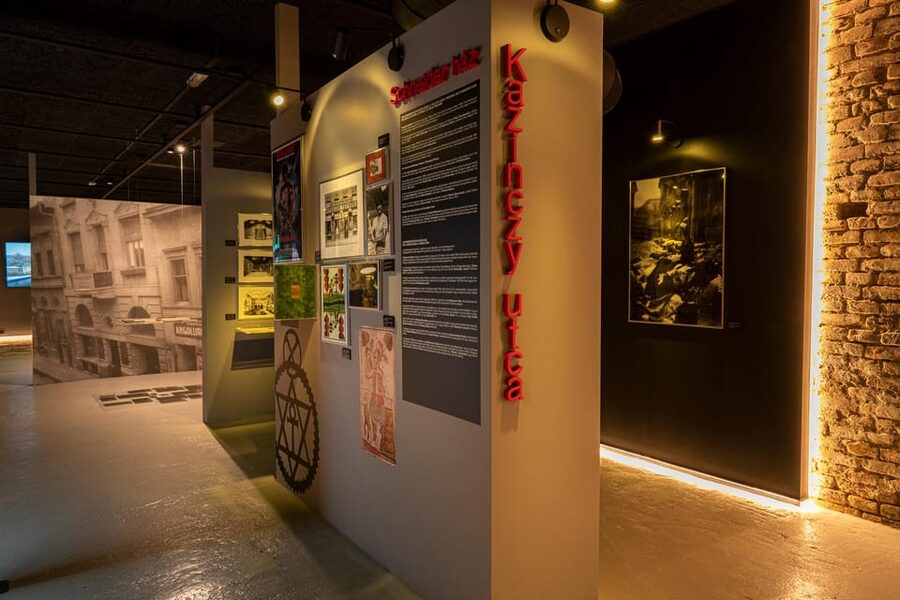
The audio system is central to the experience. You listen through your own mobile device, with chapters covering the museum’s subjects in eight languages. Voiceovers and sound effects are included, and free Wi-Fi is available on site.
This works best if you prefer independence. You can pause, replay, or skip a chapter without holding up a group. You can also take your time with the photographs and objects that interest you most.
The tradeoff is clear. A live guide could answer questions, explain obscure details, or help you connect one display to the next. Here, you need to make those links yourself. The staff provide a short explanation and a flyer, but they do not lead the full museum visit.
Before arriving, charge your phone and make sure you are comfortable scanning a QR code. That small bit of preparation will make the visit much smoother.
Why the cocktail bar changes the mood
The on-site cocktail bar and restaurant are more than a convenient place to sit. The bar occupies a space that was once a copper shop during World War II, giving the present-day room another layer of history.
You can have a cocktail while exploring the museum area, and brunch or restaurant service is also available. This is unusual for a small museum, and it lets you combine a short cultural stop with a drink or meal without changing locations.
I would keep the food and drink separate from the ticket value. The $5 admission already makes the museum inexpensive, while anything ordered at the bar or restaurant is an additional choice. The benefit is convenience and atmosphere, not an all-inclusive package.
The setting may appeal especially to you if you like museums that feel informal. It is not a silent gallery. You can learn about the building, then sit down for a drink in the same place and think over what you have seen.
How long should you allow?
The official duration is 30 minutes. That is enough for a brisk look at the displays and the main audio chapters, especially if you are fitting the museum between other District 7 stops.
I would allow extra time if you like photographs, historical objects, or audio detail. The space is small, but the amount of information is high. One section may lead you to another, and the audio gives you more to process than the room’s size suggests.
The museum does not require a full morning or half-day commitment. That makes it easy to combine with a walk through Kazinczy Street, a meal, or another Budapest sight. Its short format is one of its practical strengths.
Is the $5 ticket good value?
At $5 per person, this is an easy purchase to justify if you are already in central Budapest. You get access to a specialty museum, a printed flyer, eight-language audio, voice effects, and the chance to use the hotel’s cocktail bar and restaurant.
The value comes from the range of subjects. You are not paying for a large collection or a long guided tour. You are paying for a compact, carefully focused look at one address and its surrounding district.
I would not book it as your only history experience in Budapest. It cannot provide the depth of a major national museum or a dedicated memorial site. But as a short stop that adds meaning to District 7, it offers a lot for little money.
Free cancellation up to 24 hours before the visit and a reserve-now, pay-later option also make it easy to fit into a changing schedule. Check the available start times when booking, since the visit has set availability.
Who will enjoy this museum most?
I recommend it to you if you like:
- Small specialty museums with a strong local focus
- Budapest’s hotel, cinema, cabaret, and nightlife past
- Self-guided visits rather than fixed group tours
- Audio content in languages other than Hungarian or English
- Unusual links between local buildings and international figures
- A museum that can be paired with a cocktail, brunch, or meal
Families should consider the subjects before booking. The museum includes brothel history, wartime material, and the Budapest Ghetto, so some sections may require explanation for younger children.
It is less suitable if you need step-free wheelchair access. The experience is specifically listed as unsuitable for wheelchair users. You should also avoid it if you dislike using your own phone for audio.
My practical verdict
I would book the Mika Tivadar Secret Museum if you are staying in central Budapest and want a short, inexpensive stop with more substance than its size suggests. The strongest reasons are the building’s many past lives, the eight-language audio, and the way the museum connects today’s party district with its hotel, cinema, cabaret, and wartime past.
Skip it if you want a live guide, a large collection, or a museum devoted to just one subject in great depth. For everyone else, the $5 ticket, flexible self-guided format, and on-site bar make this an easy addition to a District 7 day. Bring a charged phone, allow at least 30 minutes, and stay longer if the stories catch your attention.
FAQ
Where is the Mika Tivadar Secret Museum?
The meeting point is the Hotel Mika Downtown reception in central Budapest, in District 7 on Kazinczy Street.
How long does the museum visit take?
The listed duration is 30 minutes. You may spend longer exploring the displays and listening to the audio chapters.
Is a tour guide included?
No. Staff greet you, provide a museum flyer, and give a brief explanation. The main content is self-guided through audio on your own mobile device.
What languages are available?
The audio guides are available in eight languages. You access them by scanning a QR code with your smartphone.
Do I need to bring anything?
Bring a charged smartphone. Free Wi-Fi is available at the museum for accessing the audio content.
Is there food or drink at the museum?
Yes. An on-site cocktail bar and restaurant are available. Drinks and food are not listed as part of the museum admission.
Can wheelchair users visit?
The experience is listed as unsuitable for wheelchair users.
Just added around the world
- Girona, Figueres, Dalí Museum and Cadaqués Tour from Barcelona★ 4.5 · 36 reviews
- Football Club Barcelona Museum Immersive Tour Guided Visit★ 3.5 · 52 reviews
- Erotic Museum Admission Ticket with Audioguide★ 5.0 · 527 reviews
- Dali Museum and Costa Brava Small Group Day Trip from Barcelona★ 5.0 · 77 reviews
- Madrid by High-Speed Train with Prado Museum Private Tour★ 4.0 · 33 reviews
- Guitar Legends Hall: Entrance to the Immersive Rock Museum★ 5.0 · 25 reviews
- White Rabbit Museum: The Best Immersive Experience in Catalonia★ 5.0 · 538 reviews
- Private Dali Museum, Besalú & Girona Tour from Barcelona★ 5.0 · 15 reviews
Museum Tours in Budapest, compared.

Travelling Galaxy Star Wars Interactive Exhibition
Read our review →
Browse the lists this tour appears in