
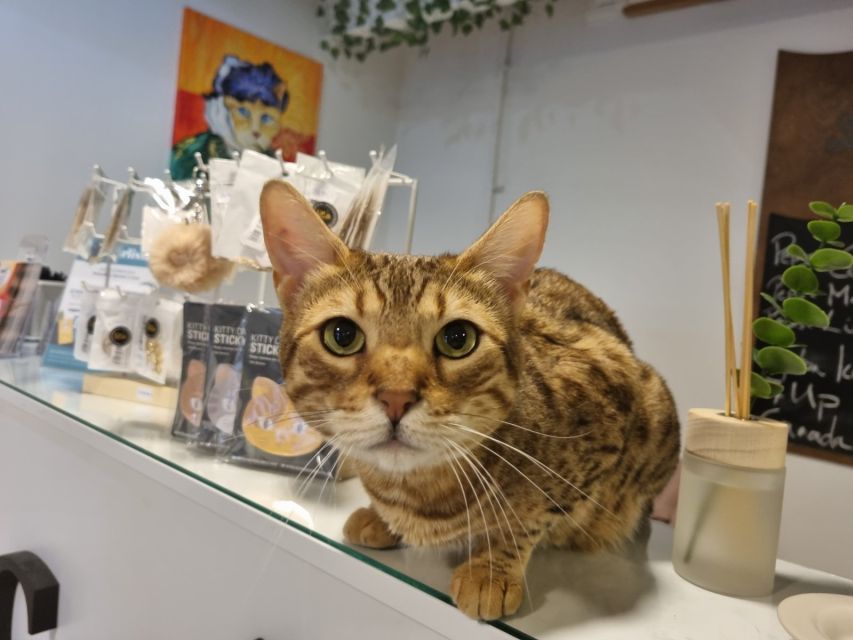
Review · BUDAPEST
Budapest: Cat Museum Budapest Entry Ticket
Budapest’s Cat Museum is part art exhibit, part calm indoor cat lounge. You wander through rooms filled with feline paintings, porcelain, biology displays, and photo spots, then sit quietly with the resident cats. A hot coffee, tea, or hot chocolate is included, which makes the $14 ticket feel more like a small activity than a quick photo stop.
I like the limited visitor numbers, since the rooms stay peaceful and the cats are not surrounded by a noisy crowd. I also like the museum’s clear respect for animal welfare: cats can sleep, hide, or approach you on their own terms. The main drawback is simple: cats nap, and you cannot count on a cuddle or a playful session during your visit.
Key points to know
- Cats come first: You may pet the resident cats, but they decide when they want attention.
- A hot drink is included: Choose a coffee, tea, or hot chocolate while you look around.
- The art is more than decoration: See cat-themed paintings, antique pieces, international works, and porcelain by Zsolnay, Herendi, and Hollóházy.
- The experience lasts about 90 minutes: Some people leave sooner, but the scheduled time gives you room to explore and wait for a sleepy cat to wake up.
- Children must be at least 8: The museum is not suitable for younger children, wheelchair users, or anyone bringing a stroller or dog.
- Bring calm behavior: You remove your shoes, wear indoor slippers, disinfect your hands, and avoid flash photography and noise.
A cat lounge with a museum wrapped around it
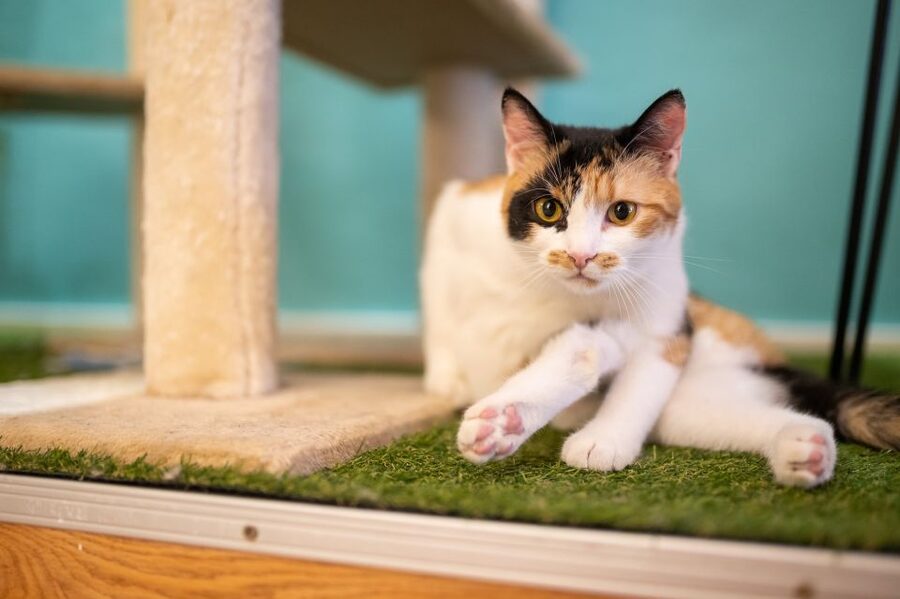
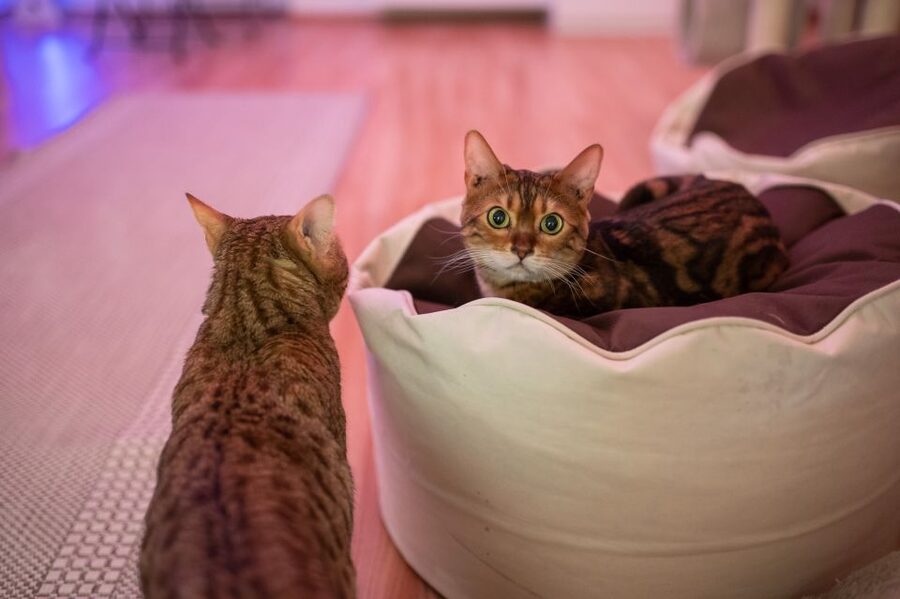
The Cat Museum Budapest works best if you think of it as a peaceful cat home with an art collection, not as a conventional museum. The resident cats are the main attraction. The paintings, displays, quiz, and photo walls give you something to do while the cats sleep.
That balance matters. You are not simply standing in a room hoping a cat will perform. You can study an old artwork, sip a drink, listen to the audio guide, or sit and watch the cats move around. If one of them wakes up and wants attention, you can enjoy that moment without having to rush to the next stop.
The atmosphere is deliberately quiet. Soft music, clean rooms, seating, and controlled entry help keep the place calm. Several visitors have found that the museum feels more relaxing than a standard cat cafe, where tables, food, and a steady flow of people can make the animals less central.
Still, keep your expectations sensible. A cat may curl up beside you, sit on your lap, or play for a while. Another may spend the whole visit asleep or tucked away. That is not a failure of the experience. It is part of visiting a place where the animals are allowed to behave like cats.
More Museum Tours in Budapest
- Budapest: Light Art Museum Skip-the-Line Entry Ticket
★ 3.9 · 1,531 reviews - Budapest: Budapest Retro Interactive Museum Ticket
★ 4.4 · 569 reviews - Budapest: Van Gogh Immersive Exhibition Ticket
★ 4.2 · 399 reviews
Starting downstairs with Cats in the World
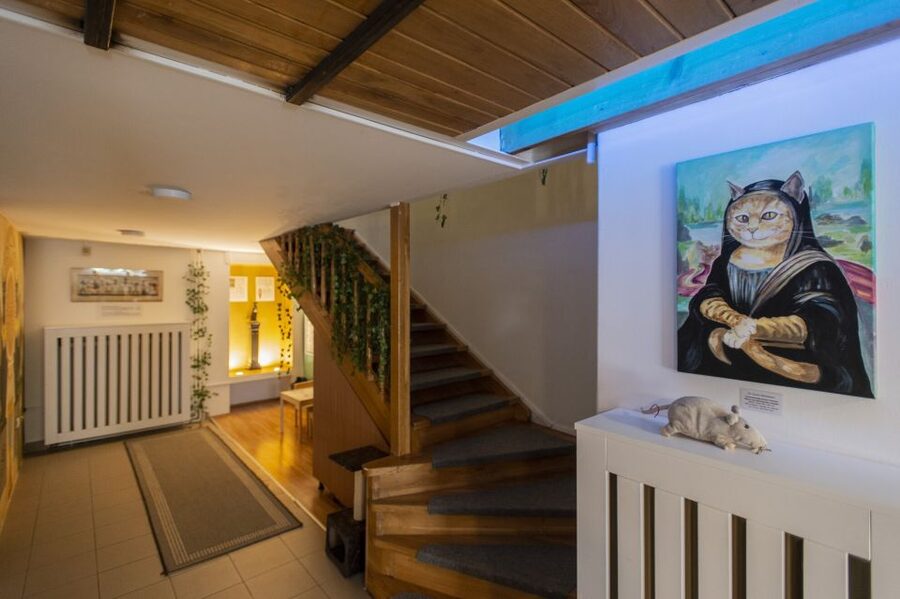
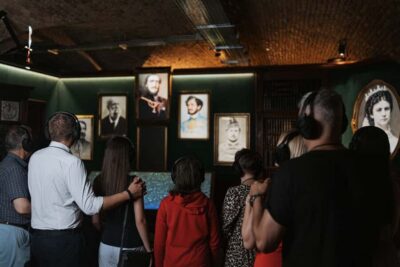
After you enter, you can collect your drink and begin downstairs in the section called Cats in the World. This area gives the museum its art-gallery side, with antique and modern images of cats and playful versions of famous paintings that put felines in the starring role.
The artwork is varied enough to hold your attention for a while, but this is not a major national museum. You should expect a compact, quirky exhibition rather than a large collection requiring several hours. The appeal comes from the lighthearted theme and the way the displays work alongside the living cats upstairs and around the museum.
I would begin with the audio guide if you want context. It is available in English and Hungarian, and it helps explain the exhibition and the information about cats. If you are mainly there for the animals, you can listen selectively and spend more time seated near the cats.
The lower level also makes a useful first stop for families with children aged 8 and older. It gives younger visitors something to explore before they settle down in the cat areas. Just remember that the museum asks everyone to keep noise under control, so this is not a place for running, shouting, or energetic games.
Upstairs porcelain from Zsolnay, Herendi, and Hollóházy
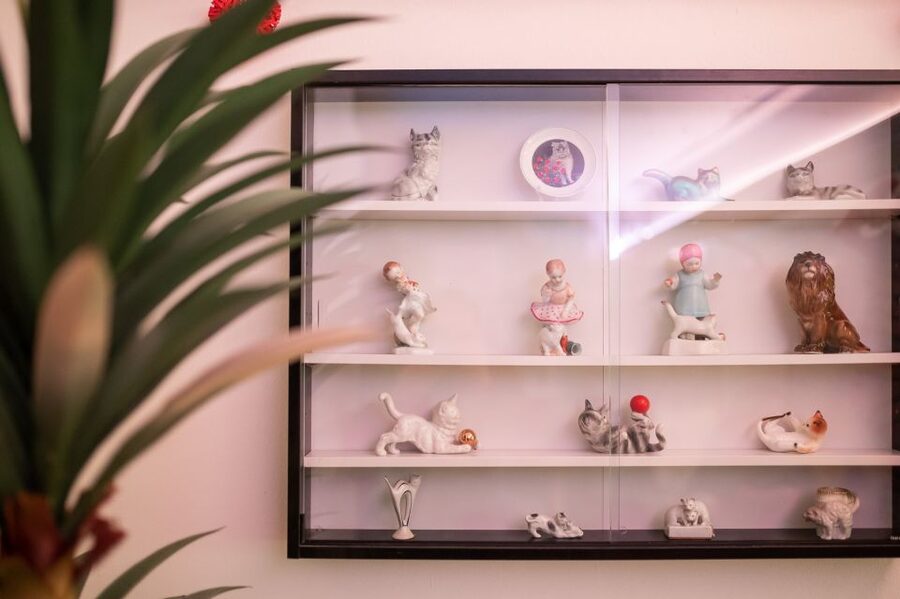
Upstairs, the museum shifts from painted cats to porcelain. You will see works by Hungarian makers including Zsolnay, Herendi, and Hollóházy, along with some international pieces.
This section gives the visit a stronger Budapest connection. These names are important in Hungarian decorative arts, and the cat theme lets you see familiar porcelain traditions through a playful subject. The collection is not likely to satisfy someone looking for a full survey of Hungarian ceramics, but it adds substance to what could otherwise feel like a simple petting room.
Take your time here, especially if the cats are asleep. Look at the shapes, glaze, and poses of the porcelain animals, then compare them with the living cats nearby. The contrast between carefully made objects and unpredictable real animals is one of the museum’s quiet pleasures.
You will need to remove your shoes for the museum’s cat areas. Indoor slippers are available at the entrance. Hand disinfection is mandatory before you pet the cats, and the disinfectant is provided at the counter. These rules are practical rather than fussy, since they protect both the animals and the people sharing the space.
The Jungle Room explains how cats work
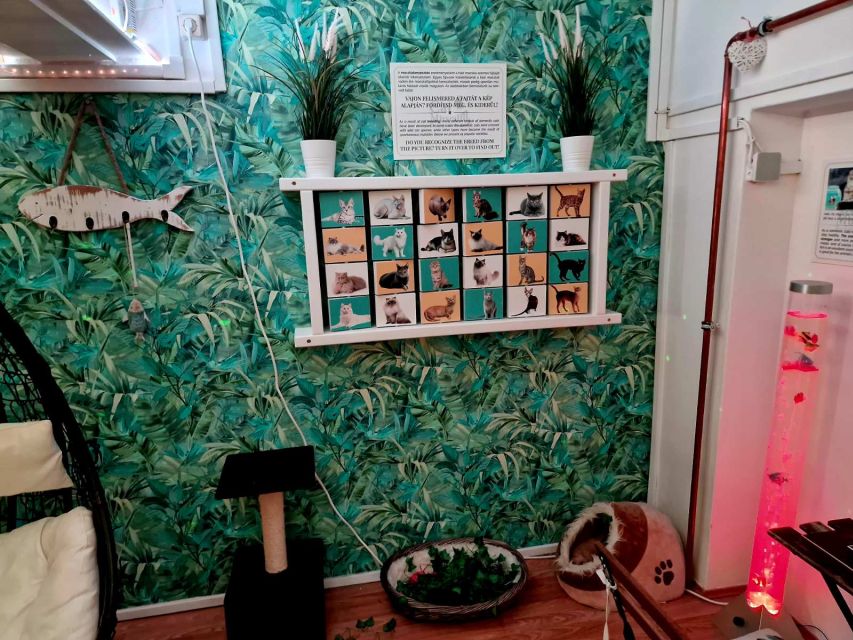
The Jungle Room focuses on feline biology and breeds. This part is useful for anyone who enjoys cats but wants more than photographs and cuddles. You can learn about physical traits, different breeds, and the features that make cats such adaptable animals.
The information is presented as part of an accessible, interactive visit rather than a formal science lesson. The museum suits a casual afternoon better than a serious zoology study session. If your main aim is detailed scientific learning, the displays may feel limited. If you want a few facts to go with your cat time, they add just enough structure.
I like this room because it gives you a reason to look closely at the resident cats. After reading about breeds and physical traits, you may notice differences in coats, size, faces, and behavior. It turns passive petting into a little observation exercise.
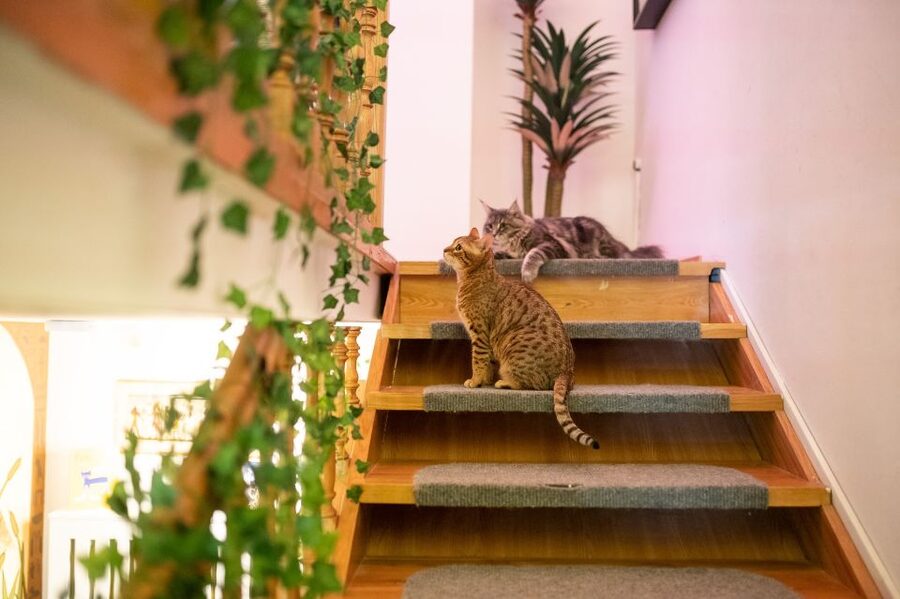
The cats have room to move around, sleeping spots, and private areas where they can get away from people. That setup is important. You may see a cat wandering through the exhibit, but you should also expect some animals to choose a quiet bed or hidden corner. The museum’s design allows both choices.
A few more museum visits around the world worth comparing
- Vatican: Museums & Sistine Chapel Entrance Ticket
★ 4.5 · 144,003 reviews - Paris: Louvre Museum Timed-Entrance Ticket
★ 4.6 · 71,977 reviews - Amsterdam: Van Gogh Museum Ticket
★ 4.7 · 52,054 reviews - NYC: 9/11 Memorial & Museum Timed-Entry Ticket
★ 4.8 · 31,428 reviews
Egyptian and Japanese walls make easy souvenirs
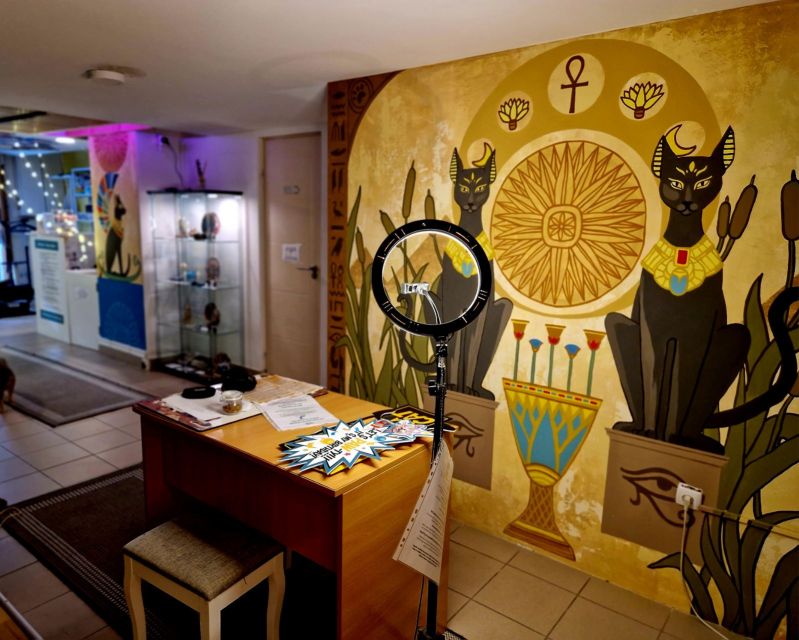
The Egyptian Photo Wall is one of the most playful stops. Props and a selfie stand let you create a picture of yourself in the cat-themed setting. It is a simple feature, but it works well for couples, families with older children, and anyone who wants a souvenir beyond a shop purchase.
There is also a Japanese Photo Wall, adding another visual theme to the visit. These photo areas give you something active to do without disturbing the cats. Use them between quieter moments with the animals, rather than treating the museum as one long photo session.
Flash photography is not allowed. That rule protects the cats from sudden bursts of light and helps preserve the calm mood. You can take creative pictures, but you need to do so without flashlights, flash photography, loud behavior, or crowding an animal that is trying to rest.
The quiz and Children’s Corner add a little structure
The Children’s Corner includes coloring equipment for cat-inspired drawings. Despite the name, remember that children under 8 are not allowed inside. For older children, the coloring area offers a quiet activity if they need a break from looking at exhibits or waiting for a cat to wake up.
Short movie screenings are also available. These give the visit a change of pace and may appeal to anyone who wants more information without reading every display. The museum uses several small activities to keep the 90-minute visit varied.
You can test your cat knowledge on a tablet quiz. If you score high enough, you can choose a souvenir from the gift shop. This is a nice touch because it turns the educational material into a small challenge rather than leaving it as background information.
Do not plan your whole visit around winning a prize. The quiz is an extra, not the main reason to buy the ticket. The real value comes from the combination of art, animals, a drink, and time in a quiet setting.
Meeting the resident cats without forcing the moment
The museum staff explain how to interact with the cats, and you will need to disinfect your hands before petting them. The basic rule is easy: let the cat approach, watch its body language, and stop when it wants to move away.
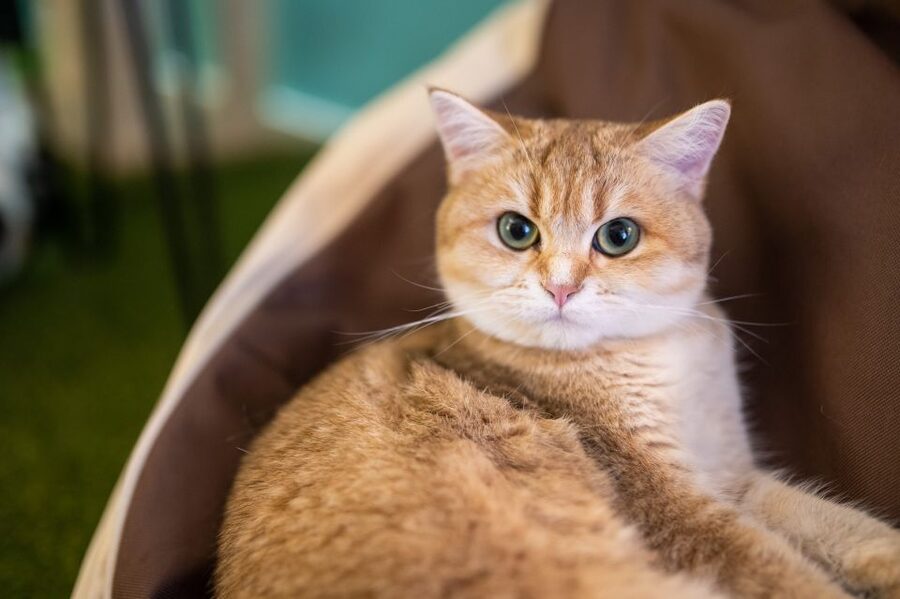
Some cats may be social and come over for attention. Others may sleep through much of your visit. A few might suddenly become playful, especially the younger cats. The mood can change from quiet observation to a burst of activity, then settle down again.
You may be able to stroke a cat sitting nearby, but you should not assume that every animal wants to be picked up or cuddled. One visitor specifically found it disappointing not to be able to cuddle the cats, while still appreciating the limited attendance and the calm setting. That is a fair description of the tradeoff: fewer people and more comfort for the cats, but less guaranteed hands-on contact for you.
The adoption program also shows that the museum has an animal-care role beyond entertainment. Cats can be offered for adoption only to residents of Hungary. If you live elsewhere, you can enjoy meeting them, but you cannot arrange an adoption through this program.
Why the $14 ticket can be good value
At $14 per person, the ticket is not the cheapest way to spend an hour in Budapest. It becomes better value when you use the full package: entry, audio guide, hot drink, art, interactive displays, and time with the cats.
A coffee, tea, or hot chocolate is included, and that small detail changes the pace. You can sit with your drink rather than feeling pushed through a short exhibit. Several people have spent only 30 to 45 minutes inside, while others used close to the full 90 minutes. The value depends on whether you enjoy sitting quietly with animals.
The limited entry system is another reason to reserve ahead. The rooms are not designed for a large crowd, and keeping numbers down helps both the cats and the people inside. It also means you should not assume you can simply arrive whenever you feel like it, especially during a busy Budapest day.
Free cancellation up to 24 hours before the visit and a reserve-now, pay-later option make the booking less rigid. These policies are useful when your sightseeing schedule may change, but the main practical point is to choose a time slot that lets you stay for the whole experience.
Who will enjoy it, and who should skip it
I would recommend the museum to:
- Cat lovers who want a calm indoor activity
- Couples looking for something different from Budapest’s major sights
- Families with children aged 8 and older
- People who enjoy small art collections and unusual themed museums
- Anyone missing their own pets during a trip
- Visitors wanting a quiet break from busy city streets
I would think twice if you dislike cats, expect a large traditional museum, or want guaranteed animal interaction. The displays are compact, and the cats control the schedule.
The museum is not suitable for wheelchair users. Baby strollers and baby carriages are not allowed, and children under 8 cannot enter. Dogs are also prohibited. Smoking, alcohol, drugs, littering, flash photography, flashlights, and loud behavior are not permitted indoors.
A practical 90-minute plan
Give yourself about an hour and a half, even if you think you will only stop briefly. Start with your drink, look through Cats in the World downstairs, and then move upstairs to the porcelain and Jungle Room displays.
Next, try the Egyptian and Japanese photo areas, watch a short film, and take the tablet quiz if you enjoy that kind of extra challenge. Leave the final part of your visit for sitting with the cats. This gives you time to wait patiently instead of spending the entire visit chasing interaction.
Wear socks or be ready to use the indoor slippers provided after removing your shoes. Keep your phone ready for non-flash photos, but put it away if a cat settles beside you. A quiet hour with a sleeping cat can be more pleasant than a rushed attempt to get the perfect picture.
Should you book the Cat Museum Budapest?
Book it if you see the museum as a relaxed cat experience with art and educational extras. The clean rooms, kind staff, included hot drink, limited attendance, and well-cared-for animals make the $14 price reasonable for the right audience.
Do not book it expecting a full-scale museum or guaranteed cuddles. Cats may be asleep, and you cannot predict which ones will want to play. If you can accept that the animals set the pace, this is a sweet and unusual Budapest stop, especially for a rainy afternoon or a quiet break between larger sights.
FAQ
How long does the Cat Museum Budapest visit last?
The stated duration is 1.5 hours. Some people may leave after 30 to 45 minutes, but the full time allows you to explore the exhibits, enjoy your drink, take photos, try the quiz, and spend time with the cats.
What is included in the ticket?
Your ticket includes entry to the Cat Museum Budapest and an audio-guided visit. A hot drink, such as coffee, tea, or hot chocolate, is also offered during the visit.
Are children allowed inside?
Children must be at least 8 years old to enter. The museum includes a Children’s Corner with coloring equipment, but younger children cannot be admitted.
Can I adopt one of the resident cats?
The museum’s adoption program is available only to residents of Hungary. Visitors who live elsewhere can meet and pet the cats but cannot adopt through the program.
Are the cats always active?
No. Cats naturally sleep during the day, and the museum cannot predict when each cat will want to play or interact. Some may approach you, while others may rest or stay in a private area.
Do I need to remove my shoes?
Yes. For the cats’ health, you must remove your outdoor shoes before entering the relevant areas. Indoor slippers are available at the entrance, and hand disinfection is required before petting the cats.
Is the museum accessible for wheelchair users?
No. The experience is not suitable for wheelchair users. Baby strollers and baby carriages are also not allowed, and dogs cannot enter.
Just added around the world
- Girona, Figueres, Dalí Museum and Cadaqués Tour from Barcelona★ 4.5 · 36 reviews
- Football Club Barcelona Museum Immersive Tour Guided Visit★ 3.5 · 52 reviews
- Erotic Museum Admission Ticket with Audioguide★ 5.0 · 527 reviews
- Dali Museum and Costa Brava Small Group Day Trip from Barcelona★ 5.0 · 77 reviews
- Madrid by High-Speed Train with Prado Museum Private Tour★ 4.0 · 33 reviews
- Guitar Legends Hall: Entrance to the Immersive Rock Museum★ 5.0 · 25 reviews
- White Rabbit Museum: The Best Immersive Experience in Catalonia★ 5.0 · 538 reviews
- Private Dali Museum, Besalú & Girona Tour from Barcelona★ 5.0 · 15 reviews
Museum Tours in Budapest, compared.


Travelling Galaxy Star Wars Interactive Exhibition
Read our review →

Browse the lists this tour appears in