
Review · GERMANY
Berlin: Tickets for the BODY WORLDS Museum in Berlin
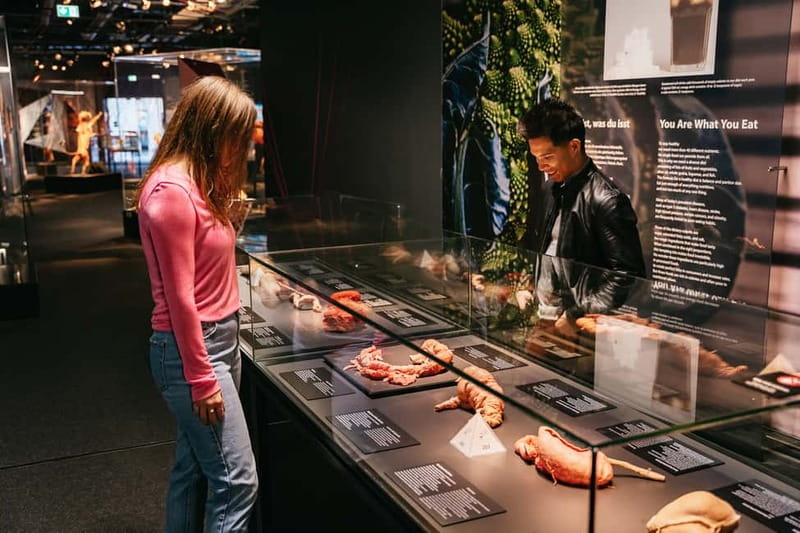
BODY WORLDS Berlin puts real human bodies at the center of the visit. Dr. Gunther von Hagens’ plastination process preserves whole bodies and organs, letting you see how the skeleton, muscles, lungs, heart, digestive organs, and nervous system fit together. It is part science museum, part anatomy lesson, and part quiet reminder that your own body is a complicated piece of work.
I like the clear, short display texts, which explain difficult subjects without burying you in medical terms. I also like the way the exhibition moves from body structure to larger questions about happiness, stress, excess, and healthy living. The main consideration is simple: these are real human remains, so the subject can feel confronting, and the exhibition may not hold the attention of very young children.
Key points to know before you go
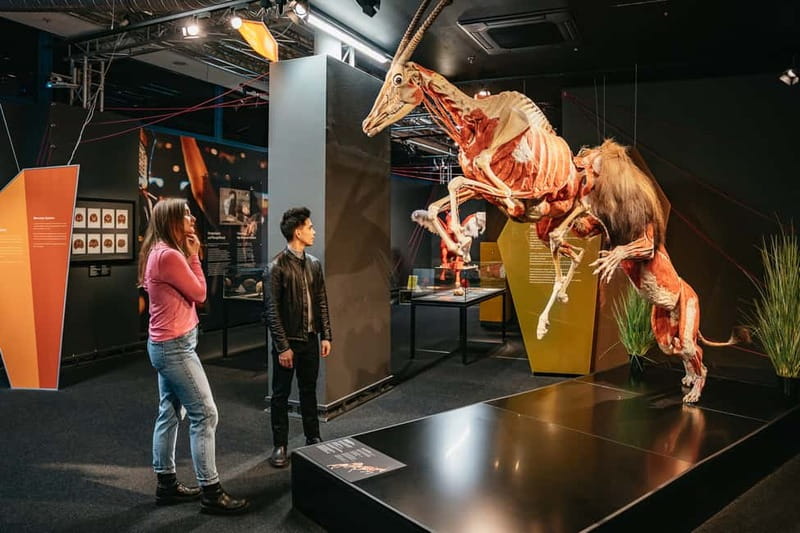
- Real human plastinates: See whole bodies, organs, skeletons, and body systems prepared for close study.
- A natural route through anatomy: The displays cover muscles, digestion, pregnancy, the heart, lungs, and nervous system.
- Plan around two hours: You can move faster, but a thoughtful visit takes time for the labels and audio or interactive material.
- Central Berlin location: The museum is at Panoramastraße 1a, 10178 Berlin.
- Useful rainy-day plan: The indoor exhibition gives you a substantial activity when Berlin’s weather turns damp.
- Not a conventional art museum: Expect anatomy, disease, mortality, and health advice rather than paintings or historic objects.
What makes BODY WORLDS different
Many museums show models of the human body. BODY WORLDS shows actual human specimens, preserved through plastination. That distinction shapes the entire visit.
A plastinate has had bodily fluids and fat replaced with durable materials, allowing the specimen to keep its form. Here, that process is used to show the body in positions and arrangements that make its structure easier to understand. You may see a whole body, then a set of organs, then a closer look at a muscle group or blood vessel.
The effect is direct. A textbook can tell you that the lungs sit beside the heart, or that muscles attach to bones. A plastinate lets you see the relationship at once. You begin to understand the body as a working system rather than a set of separate diagrams.
This is also why you should decide in advance how comfortable you are with real human remains. The displays are educational, but they are not softened into plastic replicas. If you want a light museum stop, choose something else. If you are interested in anatomy, medicine, biology, or the basic mechanics of being alive, this is a rare chance to see those subjects in physical form.
A few more museum visits around Germany worth comparing
- Berlin: Jewish Museum Berlin Entrance Ticket
★ 4.5 · 8,393 reviews - Berlin: DDR Museum Tickets
★ 4.3 · 3,443 reviews - Berlin: Natural History Museum Entrance Ticket
★ 4.6 · 3,382 reviews
Starting with the skeleton and muscular system
The early sections establish the body’s framework. The skeleton gives you the basic structure, while the muscular displays show how movement depends on muscles working with bones and joints.
I find this part useful because it corrects the flat view most of us carry from school diagrams. Bones do not simply form a white frame. They support, protect, and guide movement. Muscles are not isolated red shapes. Their placement and attachment explain why the body can bend, walk, grip, and hold itself upright.
The whole-body plastinates help you connect these lessons. You can look at a body as a complete person, then examine what lies beneath the skin. The contrast may feel stark, but it makes the arrangement easier to grasp.
The written information is broken into small pieces rather than long blocks. That helps you choose your own pace. You can read closely when a topic catches your attention, then move on without feeling you have missed a long lecture.
Organs, disease, and the body’s fragile balance
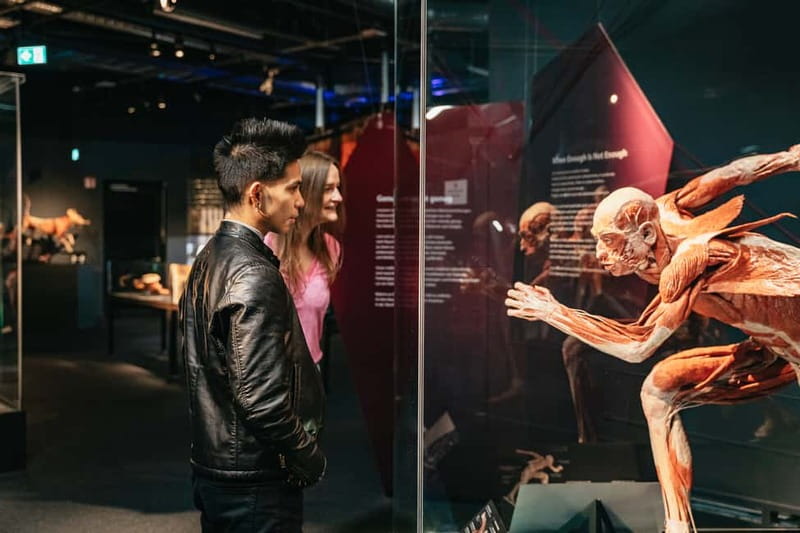
The exhibition then turns toward the organs and the problems that can affect them. You will see examples designed to show normal function as well as common diseases.
This is one of the more useful parts for a general audience. You do not need medical training to understand the basic message: organs depend on one another, and a small change can affect an entire system. The displays make disease less abstract by showing physical changes in the body.
The material is presented in an accessible way, but it is not always comfortable. Some specimens may prompt you to think about illness and mortality more directly than a standard museum display would. That is part of the point, yet it is worth keeping in mind if you are visiting with children or anyone sensitive to medical subjects.
The exhibition does not treat the body as a perfect machine. It shows how much depends on balance, maintenance, and ordinary habits. That gives the visit a practical edge without turning it into a health clinic.
The digestive system and everyday living
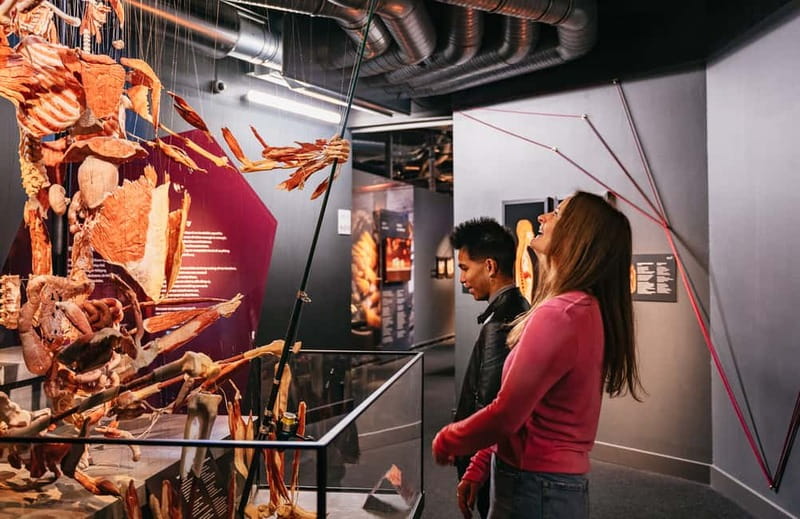
The digestive section explains how the body processes what you eat. Seeing the organs together can make a familiar process feel surprisingly complex.
This section is especially helpful because digestion is something you experience every day but rarely picture clearly. The exhibition gives you a visual route through the organs and helps explain how food moves through the body and supports other systems.
BODY WORLDS also connects anatomy with daily choices. The broader displays ask you to think about excess, moderation, and what the body needs to remain healthy over time. You should not expect personalized medical advice, but you will get a plain reminder that the body’s systems are linked to the way you live.
For me, this is where the museum moves beyond a collection of specimens. It uses anatomy to ask practical questions: How does stress affect you? What contributes to happiness? How do habits shape long-term health? The answers are presented as general ideas, not as a substitute for a doctor, but they give the visit a human scale.
Same city, a completely different collection:
- Berlin: Neues Museum Entry Ticket
★ 4.6 · 3,261 reviews - Berlin: Museum Island Multiple Museum Entry Ticket
★ 4.4 · 2,861 reviews - Cologne: Chocolate Museum Entrance Ticket
★ 4.4 · 2,790 reviews - Dresden: Church of Our Lady Guided Tour of Gallery
★ 4.7 · 2,421 reviews
Pregnancy and the development of an embryo
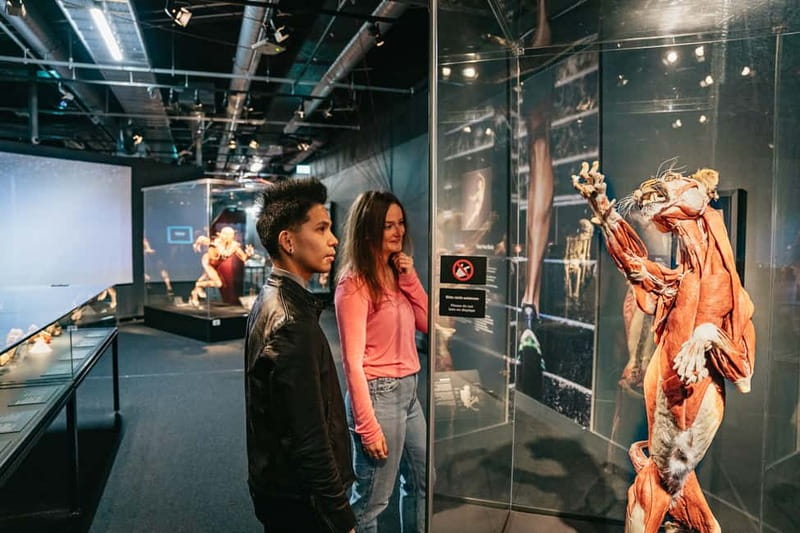
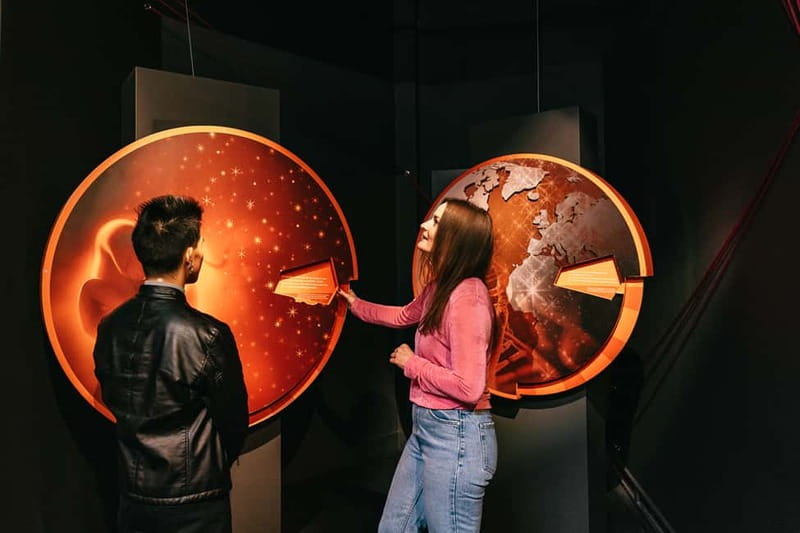
The exhibition includes the development of an embryo in the womb. This section gives you a visual sense of how a human body develops before birth.
It is a powerful part of the route because it shifts your attention from the adult body to the stages that come before it. Instead of seeing the body only as a finished structure, you see growth as a process.
The subject can raise personal and emotional reactions, so take your time. The museum’s short text panels help explain what you are seeing without requiring a long science lesson. Families with older children or teenagers may find this section useful for learning, while parents of very young children should decide if the material suits them.
Heart, blood vessels, lungs, and breathing
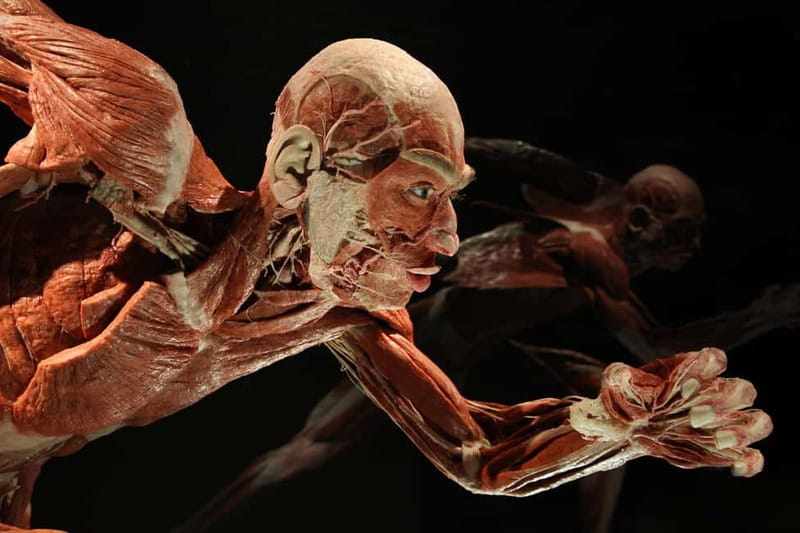
The cardiovascular section focuses on the heart and the network of vessels that carries blood around the body. This is one of the places where the three-dimensional specimens can make a complicated system easier to picture.
A diagram usually shows blood vessels as lines on a page. Here, the network has physical form. That can give you a clearer sense of how extensive the system is and why the heart’s work matters to every other organ.
The respiratory section looks at the organs involved in breathing. You will see how the lungs fit into the chest and how breathing connects with the body’s demand for oxygen. The subject feels familiar, yet the physical displays can make it newly strange. Each breath depends on structures you normally never see or think about.
These sections are good examples of the exhibition’s main strength: it links a body system to the whole person. You are not just looking at a heart or a pair of lungs. You are considering the work that keeps you moving, thinking, and alive.
The nervous system and the mind-body connection
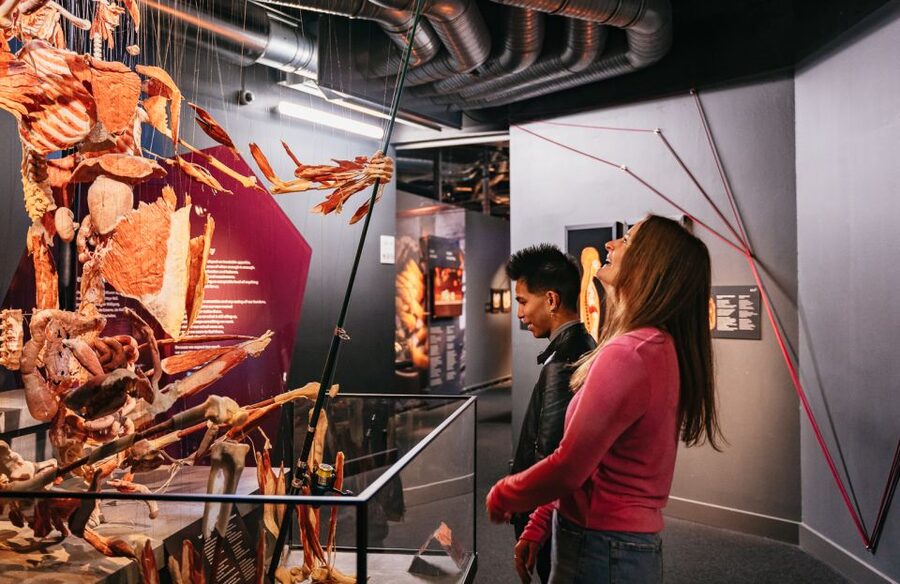
The nervous system gives the exhibition another change of scale. The displays show the physical structures that carry signals through the body and connect the brain with the rest of you.
The subject can be hard to understand from text alone. Physical examples help you see that the nervous system is not just the brain. It extends through the body and helps control movement, sensation, and basic functions.
This area also fits with the exhibition’s wider questions about stress and happiness. BODY WORLDS does not separate physical health from emotional life. It asks you to consider how the body responds to pressure and how daily choices may affect well-being.
That connection gives the museum more staying power than a quick anatomy display. You can enter because you want to see organs, then leave thinking about sleep, stress, moderation, and how little you usually notice the body doing its work.
How long to spend inside
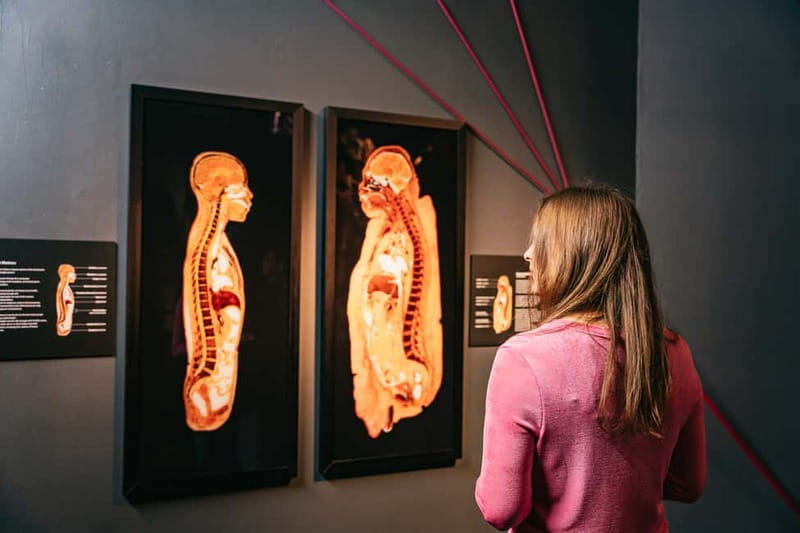
Allow about two hours for a proper visit. You can walk through more quickly, but that would mean skipping much of the explanatory material.
The route is easy to adjust to your interests. Someone focused on anatomy may spend extra time with the skeleton, muscles, organs, and nervous system. Someone visiting with a school-age child may move faster and pause only at the clearest displays.
The exhibition has enough written information to reward a slow pace. The English translations are generally clear, and an audio or phone-based interactive guide may add another layer when available. Audio material has not always been fully reliable, so I would not plan the visit around it alone. The printed panels remain important.
Because the experience lasts one day on the ticket, you have a flexible indoor stop rather than a timed, all-day tour. Opening hours are 10 a.m. to 7 p.m. daily, with last admission at 6 p.m. It is closed on December 24. A late afternoon visit is possible, but give yourself enough time before the final entry.
Who will enjoy it, and who may not
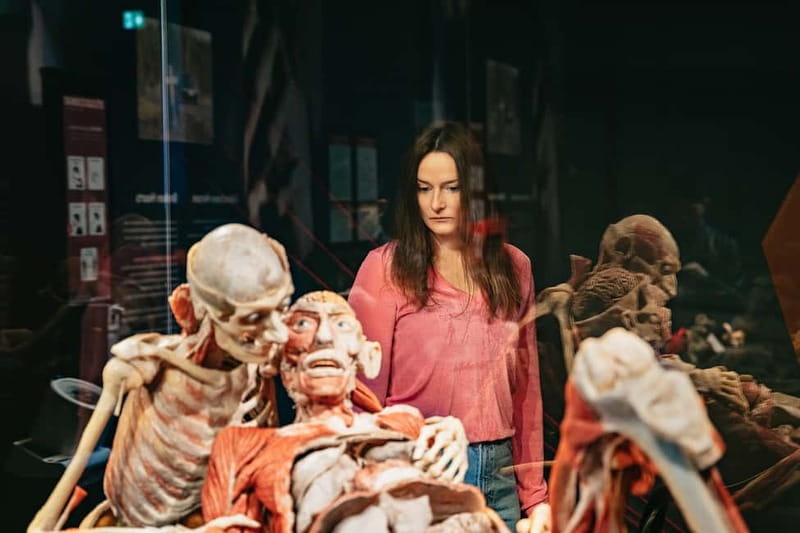
BODY WORLDS suits adults, older children, teenagers, students, and anyone curious about how the body works. It is particularly useful if you are studying biology, medicine, nursing, sports, or health, though you do not need a science background to follow it.
I would be cautious about taking very young children. They may find the displays too serious, or simply lose interest before reaching the end. Older children can get more from the clear explanations, especially if you talk through what they are seeing.
The exhibition also works well for a rainy Berlin afternoon. You get an indoor activity with enough substance to fill a couple of hours, and the central location makes it easy to fit into a day of sightseeing.
This is not the best choice if you want a cheerful family attraction, a conventional art museum, or a quiet place to admire beautiful objects. It is also not ideal if real bodies or medical displays are likely to upset you. The museum makes the subject accessible, but it does not remove its gravity.
Location, access, and practical details
You will find BODY WORLDS at Panoramastraße 1a, 10178 Berlin. The central setting makes it a practical addition to a day in Berlin, especially when you want to stay indoors.
The museum is wheelchair accessible. Cloakroom service is not included, and lockers may cost extra, so do not assume that storage is part of the $24 ticket.
The ticket includes admission to the BODY WORLDS exhibition. An audio guide is not included, and extra guide services should be treated as optional rather than part of the basic experience.
The activity is valid for one day, and the booking terms allow free cancellation up to 24 hours before the visit. A reserve now, pay later option may also be available, which is useful if you are still arranging your Berlin schedule.
Is $24 good value?
At $24 per person, the ticket is not the cheapest short museum visit in Berlin. The value depends on whether the subject interests you.
You are paying for a specialized exhibition with real human plastinates, a substantial route through anatomy, and enough information to occupy around two hours. If you read the panels and take time with the specimens, the price feels fair for a focused educational experience.
The value is weaker if you plan to rush through in 30 minutes. The museum is not built around a long list of interactive games or entertainment. Some parts may feel more static than you expect, and a few displays can look tired or dusty. The experience depends mainly on the specimens and explanations, not on constant novelty.
For students, families with older children, and people who already have an interest in the human body, $24 can be reasonable. For a casual visitor hoping for a light diversion, the price may feel high if the subject does not hold your attention.
My recommendation
Book BODY WORLDS Berlin if you want a clear, unusual look at the human body and you are comfortable seeing genuine human remains. The exhibition is strongest when you slow down, read the short explanations, and connect the organs to the wider questions about health, stress, and human life.
I would choose it for a rainy day, a science-focused outing, or a visit with older children and teenagers. I would skip it for very young children, anyone seeking a relaxed art museum, or anyone uneasy with anatomical specimens.
The main reason to go is simple: you leave with a more concrete sense of what is inside you. That is an unusual souvenir from Berlin, and one that may make you pay closer attention to your own body long after you leave.
FAQ
Where is BODY WORLDS Berlin located?
The museum is at Panoramastraße 1a, 10178 Berlin.
How much does admission cost?
The listed price is $24 per person.
What are the opening hours?
BODY WORLDS is open daily from 10 a.m. to 7 p.m. Last admission is at 6 p.m. The museum is closed on December 24.
How long should I allow for the visit?
Allow about two hours to see the exhibition at a comfortable pace and read the information.
Are the exhibits made from real human bodies?
Yes. The exhibition includes real human preparations, including whole-body plastinates and individual organs.
Is the museum wheelchair accessible?
Yes, the activity is wheelchair accessible.
Is an audio guide included?
No. Admission includes entry to the BODY WORLDS exhibition, but the audio guide is not included.
Just added around Germany
- Stuttgart: Stuttgart Wine Museum Wine Tasting★ 4.7 · 55 reviews
- Stuttgart: Museum of Illusions Entry Ticket★ 4.2 · 507 reviews
- Stein: Public guided tour of the “Old Mine” museum★ 4.5 · 18 reviews
- Speyer: Technik Museum Speyer Ticket with an IMAX Dome Film★ 4.7 · 360 reviews
- Berlin: Bode Museum Ticket★ 4.5 · 214 reviews
- Munich Private Walking Tour with BMW Museum & Welt Entry★ 4.2 · 19 reviews
- Munich: Residenz Palace, Museum and Treasury Private Tour★ 4.9 · 15 reviews
- Munich: WOW Museum – Room for Illusions Ticket★ 3.5 · 14 reviews
Museum Tours in Germany, compared.



Dresden: Church of Our Lady Guided Tour of Gallery
Read our review →
Skip-the-Line: Berlin Wall Museum at Checkpoint Charlie
Read our review →Browse the lists this tour appears in