
Review · BERLIN
Cold War, Berlin Wall, Spies and the East Side Gallery
Berlin’s Cold War story becomes clearest when you follow the physical line of the former border. This tour takes you from Friedrichstrasse Station and the Palace of Tears through East Berlin’s political center to the Berlin Wall and East Side Gallery, where a deadly barrier became an outdoor art gallery.
I like the way the tour connects big-power tension with ordinary life: train stations, family separations, escape attempts, surveillance, and the design of communist boulevards. I also like the personal angle offered by guides such as Klaus, Paul, Tobi, and Nikolai, several of whom bring firsthand family or East Berlin experience to the story.
The main drawback is the pace and logistics. You cover a lot of ground and use public transportation, so clear directions, good shoes, and a Berlin AB ticket matter. A small number of visitors have also found some guides hard to hear or the presentation less structured than expected.
Key points about this Cold War Berlin walk
- Start at Friedrichstrasse Station: Begin at one of the city’s most important former border crossings, with a short introduction to divided Berlin.
- Visit the Palace of Tears: See the former crossing where families said goodbye under the watch of East German border officials.
- Look across the former death strip: At Berlin Wall sites, you learn how barriers, watchtowers, patrol roads, and open ground worked together.
- Read East Berlin through its buildings: Alexanderplatz and Karl-Marx-Allee show how the GDR used public space to project political power.
- End at the East Side Gallery: The longest remaining section of the Berlin Wall now carries murals about freedom, unity, and resistance.
- Plan for transit: The tour costs $18.04, but you also need a Berlin AB transport ticket, listed at €10 per person.
Why this tour works for understanding divided Berlin
Cold War Berlin can feel scattered. One museum explains the Wall. Another covers the Stasi. A memorial marks an escape tunnel. A surviving section of concrete carries famous paintings. Without a guide, you may see the pieces without understanding how they fit together.
This walking tour gives you a thread to follow. You begin with the separation of Berlin, move through East Berlin’s civic center, and finish at a remaining section of the Wall. Along the way, the guide explains the conflict between the United States and its NATO partners and the Soviet Union and its allies, then brings the story down to the level of daily life.
That shift in scale is the tour’s strength. You hear about military tension, CIA and KGB operations, and Stasi surveillance, but you also learn what it meant to cross a station, visit family, apply for permission to travel, or live with the knowledge that neighbors and colleagues might report on you.
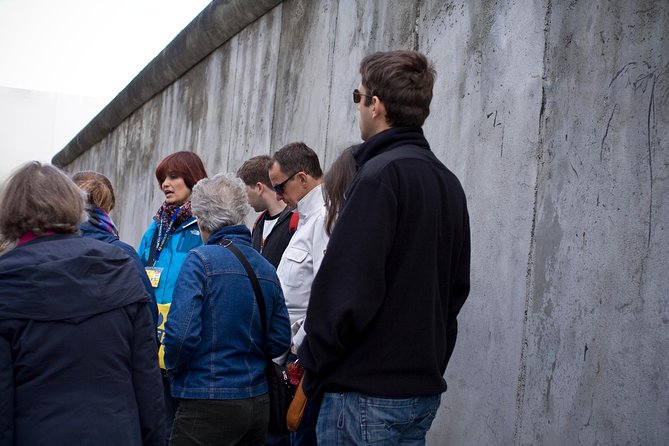
The tour is offered in English and lasts about three hours. It has a maximum group size of 22 people, which is small enough for questions but large enough that you should stay close to the guide, especially during the train ride and street crossings.
More Museum Tours in Berlin
- Berlin: Natural History Museum Entrance Ticket
★ 4.6 · 3,382 reviews - Berlin: Museum Island Multiple Museum Entry Ticket
★ 4.4 · 2,861 reviews - Skip-the-Line: Berlin Wall Museum at Checkpoint Charlie
★ 4.1 · 2,041 reviews
Friedrichstrasse Station and the first look at the border
The meeting point is given as Reichstagufer 17, near Friedrichstrasse Station, with a 10:00 a.m. start. Arrive at least 15 minutes early. This is not the place to cut things close, especially since one unhappy booking experience involved a ride-share driver dropping someone well away from the meeting point.
Friedrichstrasse Station is an excellent place to begin. During the division of Berlin, it was a major crossing point between East and West. The station handled trains moving through a city split by checkpoints and political suspicion. The station itself became part of the machinery of separation.
The opening section lasts about 15 minutes. Your guide sets out the basic story: after World War II, Berlin was divided among the victorious powers, and the city became the main front line in the struggle between the Soviet bloc and the West.
The itinerary also refers to an underground route nicknamed the ghost train. This gives you a sense of how Berlin’s transit system continued to function despite the political divide. Some lines crossed through East Berlin without allowing passengers to leave, while stations were closed and guarded. You may find this one of the tour’s more memorable details because it shows how division affected a routine act such as taking the subway.
Keep your ticket ready. Public transportation is part of the experience, but the AB Zone transport ticket is not included. The listed price is €10 per person. That extra cost is reasonable for a tour that covers distant parts of the city, but it means the advertised tour price is not the full out-of-pocket cost.
The Palace of Tears and the human cost of the Wall
The Palace of Tears, or Tränenpalast, is one of the most affecting stops. It was a border crossing at Friedrichstrasse Station, where people from East and West Berlin often had to say goodbye after short visits.
The name is not poetic decoration. It came from the tears shed by families separated at the checkpoint. The building now contains a museum that explains how the crossing worked and how the Wall shaped escape plans, family life, and reunification.
You spend about 20 minutes here. That is enough for an introduction and a focused look, but not enough for a slow museum visit. If this subject matters greatly to you, return later for more time.
I like this stop because it keeps the story from becoming a collection of military facts. You see the Wall not only as a concrete barrier but also as a system that controlled visits, paperwork, movement, and contact between relatives. The emotional force comes from the ordinary nature of the setting. This was a station, not a battlefield, yet it could divide a family in minutes.
Guides are often praised for answering questions and adding personal detail here. Klaus is described as especially strong at explaining the period in an easy-to-follow way, while Nikolai has shared how the Iron Curtain affected his own family. Your assigned guide will vary, but the tour clearly depends heavily on the person leading it.
Admiralspalast and the birth of East Germany’s ruling system
A brief stop at Admiralspalast points to the founding of the Socialist Unity Party of Germany, known as the SED, in 1946. The stop lasts only about five minutes, so do not expect a full building visit or a long lecture.
Still, it matters because the SED became the ruling political force in East Germany. The party shaped government, workplaces, media, education, and the security system. This short pause helps explain why the GDR was not simply a city behind a wall. It was a state with its own political structure, ideology, and rules.
This is also a good example of how the tour works best as a connected story. The stop itself is brief, but it gives the guide a chance to explain how Soviet occupation developed into a separate East German government and how party control affected daily choices.
A few more museum visits around Berlin worth comparing
- Berlin: Interactive DeJa Vu Museum Entrance Ticket
★ 4.1 · 1,338 reviews - Berlin: “Pergamonmuseum. The Panorama” Exhibition Tickets
★ 4.6 · 1,245 reviews - Berlin: East Side Gallery Spree Cruise in a Solar Catamaran
★ 4.1 · 1,086 reviews - Berlin WelcomeCard: Museum Island & Public Transport
★ 4.3 · 999 reviews
Alexanderplatz and the public face of East Berlin
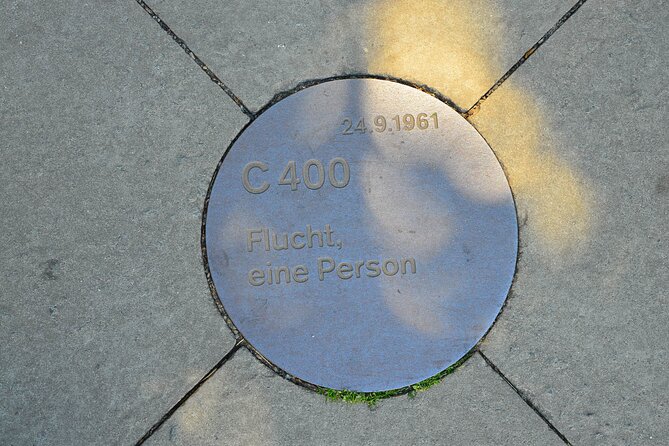
Alexanderplatz was East Berlin’s main public square and one of the clearest places to see the GDR’s public image. The area hosted political rallies, official ceremonies, shopping, transportation, and everyday errands.
The square’s broad scale and stark architecture suited the state’s message. Public space was used to project order, strength, and socialist progress. But it also revealed the gap between official claims and real life. A grand boulevard or public plaza could suggest success while shortages, surveillance, and limits on travel shaped ordinary experience.
You spend about 15 minutes here. The value is not in seeing a single famous object. It is in learning how architecture and public gatherings worked together. The guide can point out how East Germany used buildings and open spaces to communicate power, while explaining what life felt like behind that official image.
If you have already visited Alexanderplatz, do not assume this stop will be repetitive. The tour gives the square a political meaning that is easy to miss when you are focused on shops, the television tower, or getting to the next train.
Karl-Marx-Allee and the GDR’s showcase boulevard
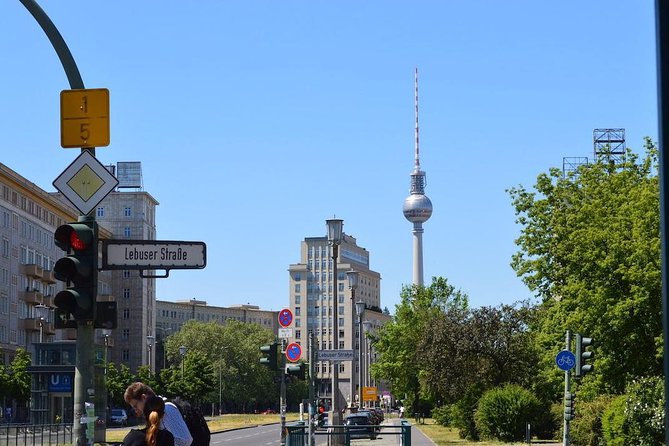
Karl-Marx-Allee is one of the most revealing outdoor stops. Its huge scale and monumental apartment blocks were designed to show the strength and order of East Germany. The boulevard was a showcase of socialist architecture, but it was also housing for ordinary residents.
The tour allows about 20 minutes here. Your guide explains how the avenue represented ideology and how its buildings were meant to impress both citizens and foreign visitors. The setting helps you see the difference between political display and private life.
Pay attention to the architecture rather than expecting a conventional attraction. Karl-Marx-Allee is not a museum with a single entrance and a collection of objects. Its value is in reading the street itself: the scale, symmetry, decoration, and relationship between public space and housing.
This stop also helps clarify the difference between East German socialism and the grim image many people carry of the GDR. The state did attempt to provide modern housing and present a vision of social progress. At the same time, political control and surveillance remained part of the system. A good guide holds both ideas together instead of reducing the period to a simple story of villains and victims.
The Wall, the death strip, and escape attempts
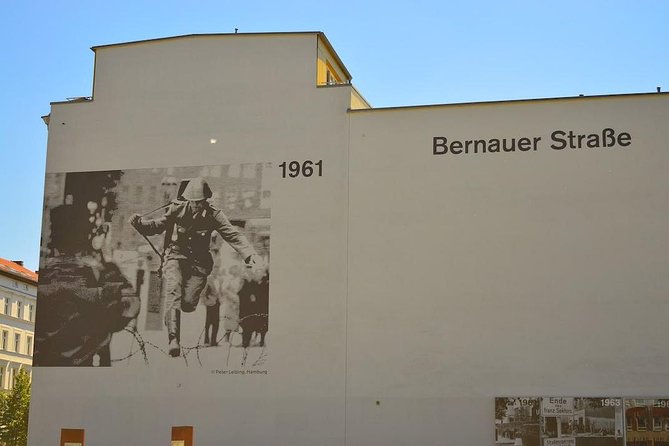
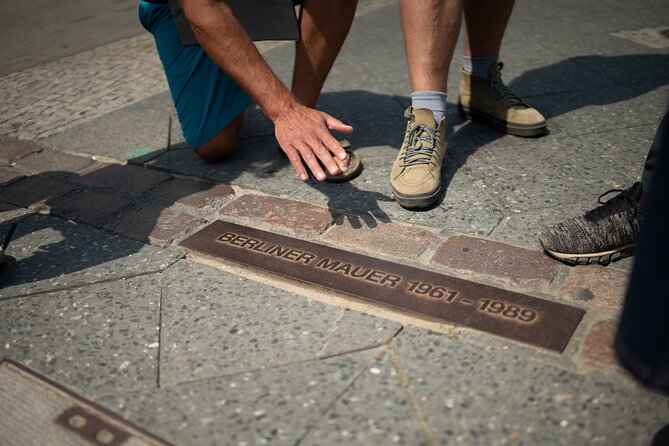
The Wall section gives the tour its strongest physical connection to the past. You visit remaining Wall sites and parts of the former death strip, including areas tied to escape attempts and the Berlin Wall Memorial.
The term death strip refers to the controlled zone between sections of the border system. It could include fences, walls, open ground, patrol roads, lighting, watchtowers, and other barriers. The purpose was to expose and stop anyone trying to cross from East to West.
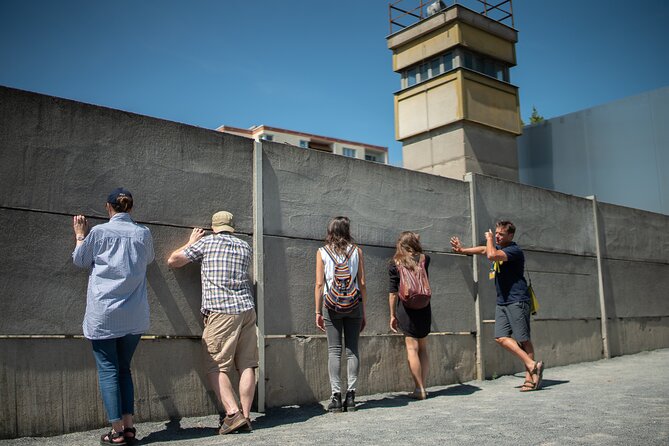
One especially sobering viewpoint lets you look toward the western side of the Wall through an opening from the eastern side, across the former border zone. The concrete is not the whole story. The empty space between barriers is what makes the system easier to grasp.
Bernauer Strasse is important because escapes happened here and because the Wall cut directly through homes, streets, and communities. The Berlin Wall Memorial preserves sections of the border and explains how people tried to get through, over, under, or around it.
This is where the guide’s storytelling matters most. You hear about escape plans, surveillance methods, and the risks involved. CIA and KGB activity forms part of the wider spy story, while the Stasi shows how surveillance reached into ordinary East German life.
The tour description also refers to a former Stasi site. Expect context about the East German secret police rather than a full Stasi museum visit. If you want a more extensive look at Stasi files, offices, and methods, add the Stasi Museum on another day.
Brandenburg Gate and the meaning of reunification
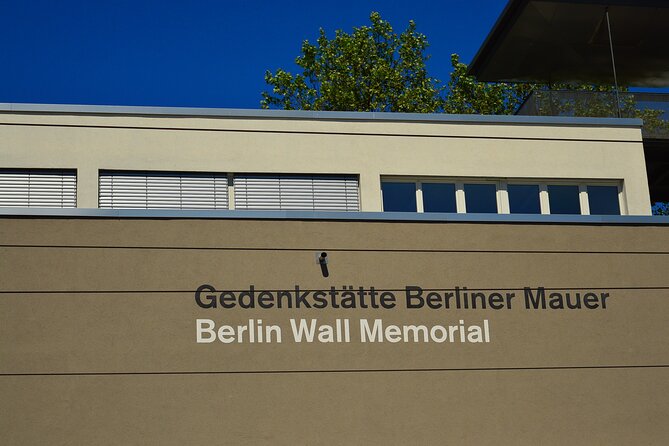
The Brandenburg Gate is one of Berlin’s essential monuments, but its meaning changed dramatically over time. During the Cold War, it stood in the restricted zone near the Wall and became a symbol of a divided Berlin and Germany.
Today it represents peace and unity. That change gives the guide a chance to explain how the same monument can carry different meanings depending on who controls the city and what the border does.
The gate may not receive a long standalone stop in the listed timing, so think of it as part of the broader route rather than a museum-style visit. You will want your camera ready, but the historical explanation is more important than a long photo break.
East Side Gallery, where concrete becomes public art
The tour finishes at the East Side Gallery on Mühlenstrasse. This is the longest permanent open-air gallery on the Berlin Wall and the largest remaining section of the Wall.
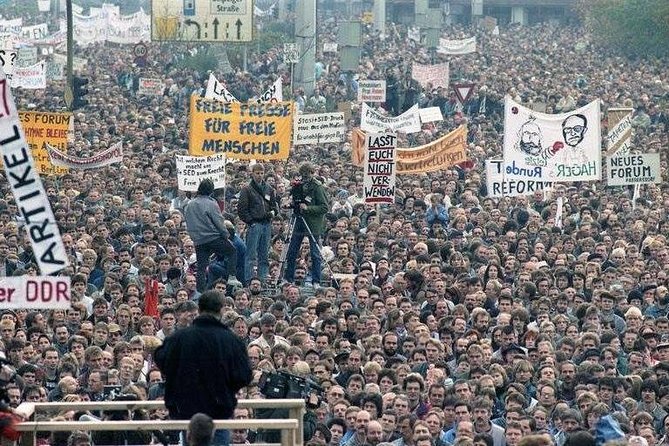
The murals were painted after the Wall fell. Their themes include freedom, resistance, hope, and unity. That contrast gives the ending its force: a barrier built to stop people has become a public canvas that invites people to gather, look, and move freely.
You spend about 25 minutes here. That is enough to see several major murals and understand the site, though you may want to return later if you want to study the artwork without a group schedule.
The East Side Gallery is visually lighter than the Wall Memorial, but it should not be treated as a cheerful ending that erases the past. The art works because the concrete once carried such a grim purpose. A guide can help you connect the murals to the events of 1989 and the collapse of the border.
The tour ends in a useful location with many transport choices nearby. That makes it easy to continue sightseeing or return to your hotel.
Guides, group size, and the quality of the storytelling
Your guide is the biggest variable. The company uses several English-speaking guides, including Klaus, Maria, Ariel, Nickolai, Xavier, Paul, Grayson, James, Jasper, Tobi, Tina, Rohan, Lewis, Jamie, Aran, Cameron, Glen, and Eran.
The strongest pattern is clear: guides are praised for historical command, enthusiasm, personal stories, and willingness to answer questions. Paul has used photographs on an iPad to add visual context. Tobi has offered a firsthand account of growing up in communist East Germany. Cameron is described as a historian with strong subject knowledge, and Nikolai has connected the Cold War to his family’s experience.
Several guides have also allowed extra questions and information, so the tour may run beyond three hours. That can be a bonus if you want more detail, but it may affect afternoon plans.
There is one important caution. One poor experience described weak organization, unclear historical structure, missed sites, excessive use of guessing games, difficulty hearing the guide, and a tour that ran long without enough added substance. A group of up to 22 people can also make sound a problem on busy streets.
Stay near the guide, ask for repetition if needed, and do not hesitate to request a clearer explanation. The tour is at its best when the guide tells a structured story rather than simply pointing at places.
Price, pace, and who should book
At $18.04 per person, this is a strong value for about three hours with a local guide. The price becomes even better if you want a broad orientation before visiting museums on your own.
Remember to add the €10 AB transport ticket. Food, drinks, hotel pickup, and drop-off are not included. You should also budget for walking, outdoor weather, and the time needed to move through stations and city streets.
The tour suits you best if:
- You want a clear introduction to Cold War Berlin.
- You are interested in both political events and daily life.
- You like asking questions during a guided walk.
- You want to connect the Palace of Tears, Alexanderplatz, the Wall Memorial, and East Side Gallery in one morning.
- You are comfortable walking and using public transportation.
- You are visiting with older children who can follow a serious historical subject.
It may not suit you if you want a slow museum visit, a private guide, or a tightly timed experience with no extra walking. The Palace of Tears and Wall Memorial deserve more time than this route can provide, so treat the tour as a framework rather than the final word on the subject.
Free cancellation is available if you cancel at least 24 hours before the start time. Since the tour is often booked about 31 days ahead, reserving early is sensible if your Berlin dates are fixed.
Should you book this Cold War Berlin tour?
I would book it if you want the city’s Cold War story explained in one connected route. The combination of the Palace of Tears, East Berlin’s political spaces, Wall escape sites, and East Side Gallery gives you more context than visiting the Wall for photographs alone.
The tour is especially worthwhile with a strong guide such as Klaus, Paul, Nikolai, Cameron, or one of the other guides praised for clear storytelling and personal insight. Since the assigned guide can vary, go in expecting the route and subject matter to be the constants, while presentation style may differ.
Book it as a first step, then add the Stasi Museum or a longer visit to the Palace of Tears if the subject catches your interest. Arrive early, bring the correct transport ticket, wear comfortable shoes, and stay close to the group. For the price, it offers a useful and often moving introduction to the city that once sat at the center of the Cold War.
FAQ
How long does the Cold War Berlin tour last?
The tour lasts approximately three hours, though the exact finish time can vary if the guide takes extra questions or adds information.
Where does the tour begin?
The meeting point is Reichstagufer 17 in Berlin, near Friedrichstrasse Station. You should arrive 15 minutes before the 10:00 a.m. start.
Where does the tour end?
The tour ends at the East Side Gallery on Mühlenstrasse, 10243 Berlin. The area has several transportation options for continuing your day.
Is public transportation included?
No. You need a Berlin AB Zone transport ticket, listed at €10 per person. The tour uses public transportation during the route.
What language is the tour offered in?
The tour is offered in English and includes a local expert guide.
Is the Palace of Tears included?
Yes. The route includes about 20 minutes at the Palace of Tears, also called Tränenpalast. Admission is listed as free.
How large is the group?
The tour has a maximum of 22 participants.
Just added around Berlin
- From Berlin: Sachsenhausen Concentration Camp Museum Tour★ 4.8 · 514 reviews
- Cold War, Berlin Wall, Spies and the East Side Gallery★ 4.8 · 254 reviews
- Bubble Planet Berlin: An Experience Museum for All Your Senses★ 4.1 · 38 reviews
- Berlin: The Wall Museum East Side Gallery Ticket★ 4.1 · 292 reviews
- Berlin: Tickets to the Computer Games Museum★ 4.5 · 363 reviews
- Berlin Trabi Museum: Day Ticket★ 4.1 · 63 reviews
- Berlin: Stasi Museum Private Guided Tour with Entry Ticket★ 4.8 · 13 reviews
- Berlin: Ticket for Photography Exhibitions at C/O Berlin★ 4.5 · 39 reviews
Museum Tours in Berlin, compared.
Skip-the-Line: Berlin Wall Museum at Checkpoint Charlie
Read our review →
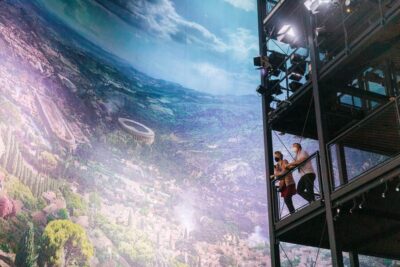
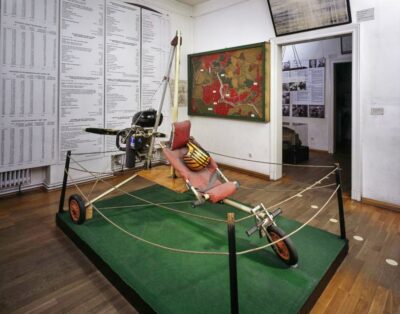
“Pergamonmuseum. The Panorama” Exhibition Tickets
Read our review →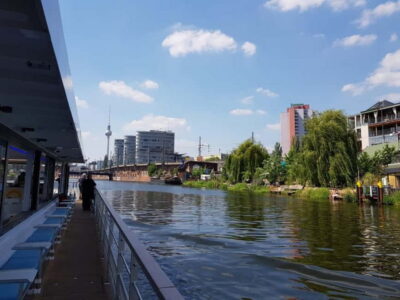
East Side Gallery Spree Cruise in a Solar Catamaran
Read our review →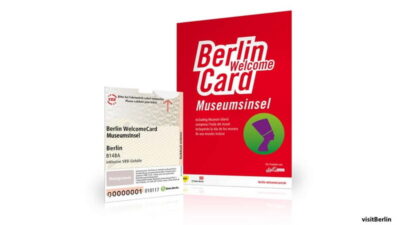
Berlin WelcomeCard: Museum Island & Public Transport
Read our review →
Browse the lists this tour appears in