
Review · CANADA
Toronto: Museum of Illusions Entry Ticket
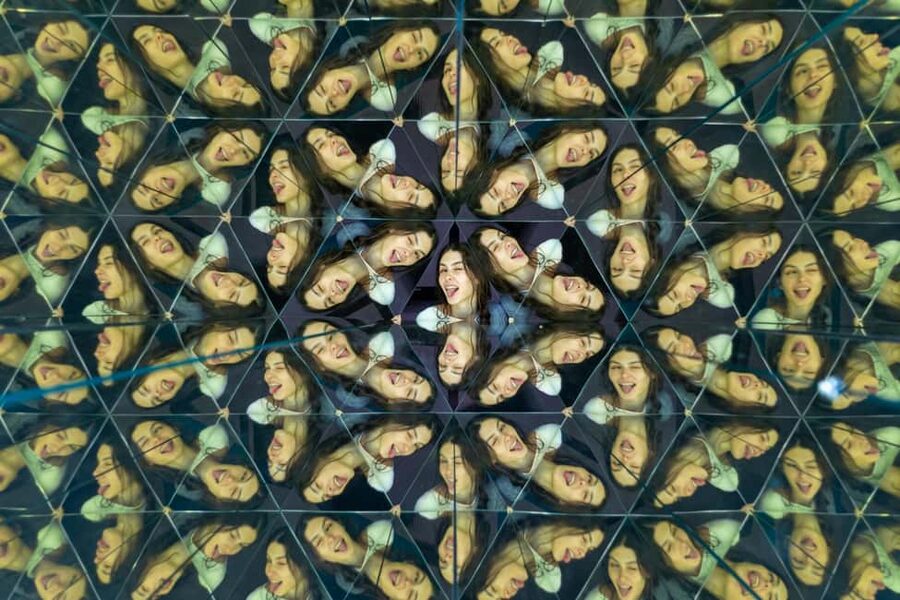
Toronto’s Museum of Illusions turns simple physics into a hands-on indoor outing. The best moments come when your eyes insist something is happening, while your brain slowly catches up: the floor seems to roll in the vortex tunnel, reflections distort your shape, and holograms shift as you move.
I like the large number of interactive exhibits and the freedom to move at your own pace. I also like the photo-friendly design, since many displays give you something to do rather than simply something to look at. The main caution is value: at $25 per person, a quick visitor may feel the hour passes too fast.
The museum works best as a short family activity, a rainy-day stop, or an easy downtown break. It is less appealing if you dislike puzzles made for children, crowded photo spots, or sensations linked to vertigo.
Key points at a glance

- More than 100 exhibits cover holograms, optical illusions, distorted reflections, puzzles, and perspective tricks.
- The vortex tunnel creates the feeling that the floor is shifting while you remain in place.
- The infinity room uses mirrors and space to create the impression of endless depth.
- The game room adds 3D puzzles and brain teasers, giving the visit a hands-on finish.
- One hour is the planned duration, though a quick visit may take only about 20 minutes.
- The venue is wheelchair accessible, with English-speaking hosting or greeting and groups limited to eight participants.
What the Museum of Illusions Toronto actually offers

This is not a traditional museum built around quiet galleries and long labels. It is a compact, interactive attraction where the point is to test your senses, pose for photos, and work out why a display behaves in such a strange way.
You will find more than 100 exhibits spread across several types of visual tricks. Some play with light. Others use mirrors, scale, angles, or motion. The appeal is immediate: you do not need specialist knowledge, and children can take part without waiting for a long explanation.
I would approach this as an entertainment stop with a science lesson tucked inside, not as a full morning museum visit. The exhibits are designed to produce quick moments of surprise. You look, step closer, change your position, and often understand the trick only after the effect has done its job.
The visit is self-guided in practice. An English-speaking host or greeter is available, but you are not tied to a narrated tour or a fixed group route. That gives you control, though it also means the quality of your visit depends on how much time you spend at each station.
More Museum of Illusions tickets:
- Montreal: Museum of Illusions Entry Ticket
★ 4.6 · 25 reviews - Prague: Museum of Fantastic Illusions Entry Ticket
★ 4.3 · 4,337 reviews - Madrid: Museum of Illusions Ticket
★ 4.1 · 1,909 reviews
Starting with holograms and optical illusions
The opening displays focus on holograms and visual illusions. These exhibits play with light and perspective, so the image can appear to change as you move around it. They make a good introduction because they show the basic rule of the museum: what you see is not always what is physically there.
Give these displays more than a passing glance. Move from side to side, change your viewing angle, and look for the point where the image shifts. You will get more from them by experimenting than by simply walking past and taking one photograph.
This section is also a useful warm-up for families. Younger children can enjoy the surprise without needing to understand the science, while older children and adults can think about how the illusion works. If your group includes people who prefer looking over climbing or balancing, these displays offer an easier start.
The photo opportunities are a real part of the attraction. Bring a phone with enough storage and be ready to take several shots, since perspective-based images often depend on where the photographer stands. The museum encourages interaction, but your best picture may require a little patience and cooperation from the people you came with.
The vortex tunnel and the problem of vertigo
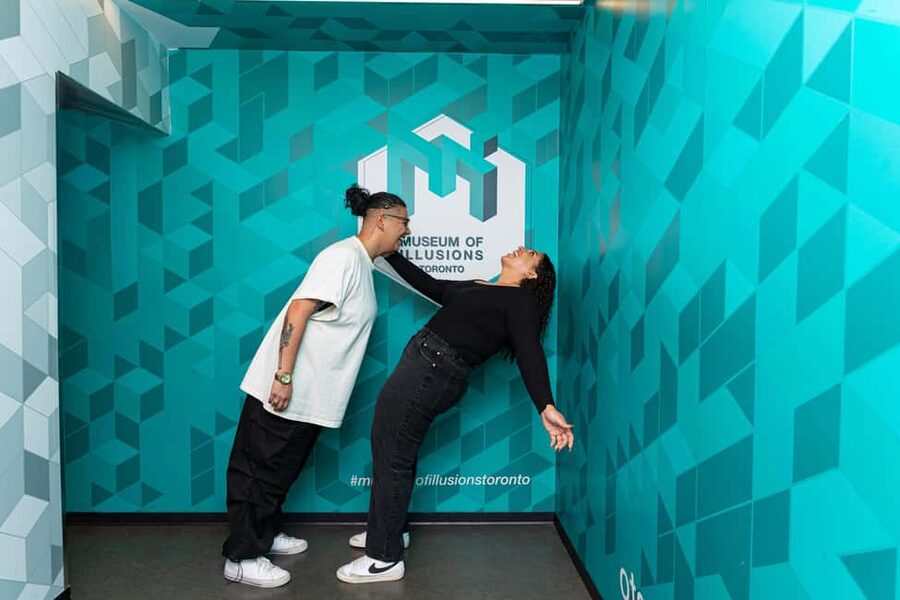
The vortex tunnel is likely to be the most physically disorienting exhibit. You walk through a space that gives the impression of rotating or shifting, even though the walkway itself is not carrying you anywhere. Your eyes report movement, while your body knows you are standing on a fixed surface.
That mismatch is funny for many people and uncomfortable for others. If you are prone to vertigo, this attraction is specifically not suitable for you. Even if you normally enjoy optical illusions, you should feel free to skip this part rather than force yourself through it.
For everyone else, the tunnel provides one of the clearest examples of how the museum turns an abstract idea into a physical sensation. You do not just read that perception can be misleading. You feel the conflict between sight and balance.
Take your time when leaving the tunnel. The official visit lasts about an hour, so there is no need to hurry from one exhibit to the next. The museum is best enjoyed at a steady pace, with a pause when an effect leaves you slightly off balance.
The infinity room and distorted reflections
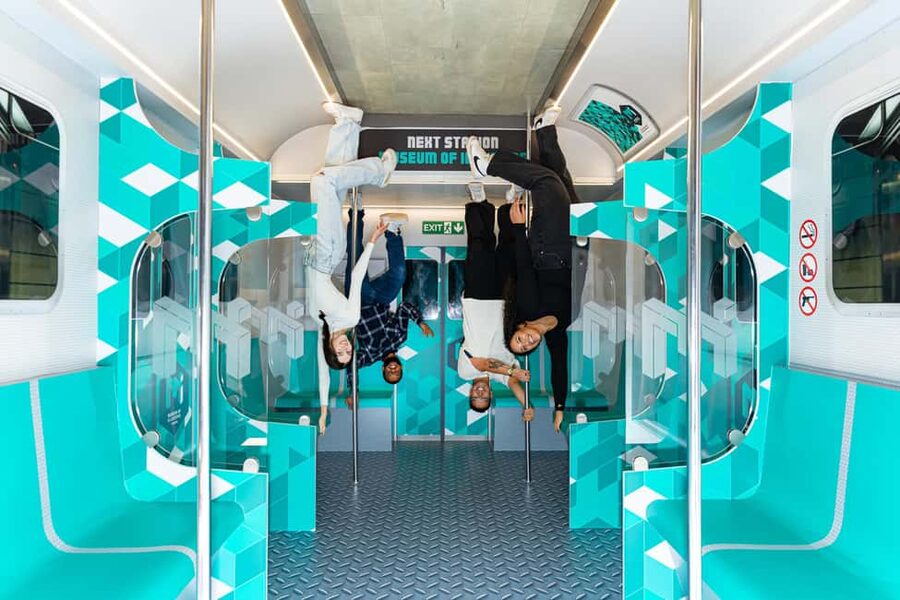
The infinity room uses repeated reflections to make the space appear to stretch far beyond its actual size. It is the sort of exhibit that can look simple at first, then become more interesting when you notice how mirrors alter your sense of distance and shape.
This is a good place for photographs, but it can also become a bottleneck if several people want the same shot. One booking account described the attraction as too crowded during a busy period, and another noted that taking photos and reaching the activities can be harder when the museum is full.
That matters because much of the fun comes from interacting with the exhibits, not merely seeing them. If you arrive during a busy spell, you may need to wait, share a station, or accept fewer chances to set up a carefully framed photograph.
The infinity room is also a useful reminder that this is a visual attraction first. You are paying for a series of designed effects, not a large collection of historical objects or detailed scientific displays. If you enjoy taking playful photos and testing perspective, the room earns its place. If you want long explanations or serious museum collections, the visit may feel light.
A few more museum visits around Canada worth comparing
- Toronto: Royal Ontario Museum Admission Ticket
★ 4.6 · 1,237 reviews - Toronto: Art Gallery of Ontario General Admission Ticket
★ 4.6 · 251 reviews - Toronto: Bata Shoe Museum Entrance Ticket
★ 4.7 · 133 reviews - Quebec City: MNBAQ National Fine Arts Museum Entry Ticket
★ 4.6 · 63 reviews
The game room’s 3D puzzles and brain teasers
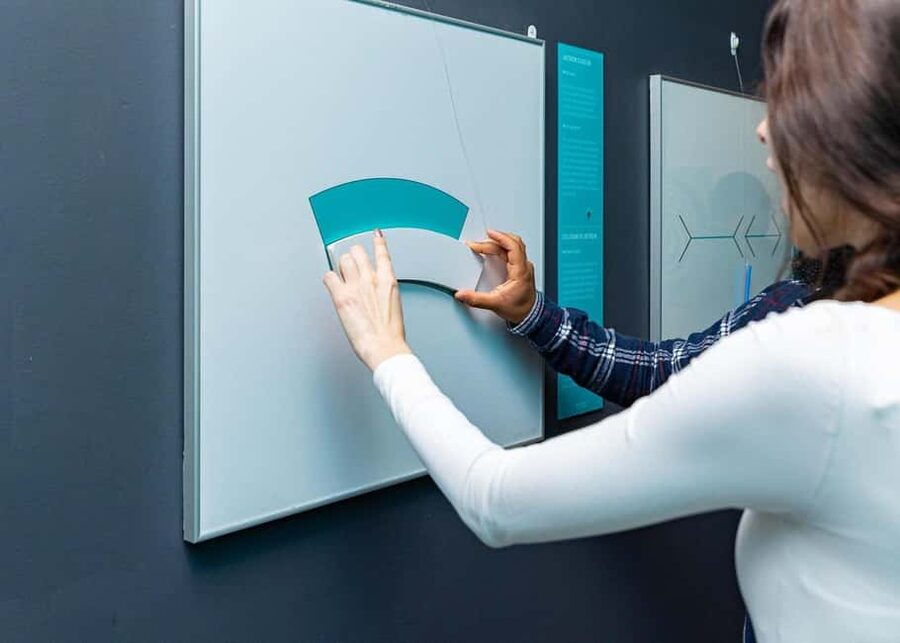
The game room changes the rhythm. Instead of posing in front of an optical trick, you use your hands and your problem-solving skills. The displays include 3D puzzles and brain teasers, giving you a chance to work things out rather than simply react.
I like this section because it gives the visit a purpose beyond photography. A group can compare solutions, take turns, and see who spots the trick first. It is especially useful if one person in your party is less interested in taking pictures but enjoys puzzles.
The puzzles are also where age expectations matter. The attraction is suitable for all ages, but at least one direct account found the activities too child-oriented. That criticism is fair to keep in mind. Adults who expect difficult challenges may find some displays fairly simple, while children will often appreciate the clear rules and quick rewards.
Think of the game room as casual play, not an advanced puzzle center. You might solve a challenge quickly, or you might spend longer trying to understand how the pieces fit. Since the museum has more than 100 exhibits overall, a simple puzzle does not have to define the whole visit.
How long should you plan to stay?
The stated duration is one hour. That is a sensible target if you want to try several displays, pause for photos, and spend some time with the puzzles.
Your actual visit may be shorter. One direct account said the entire attraction was finished in about 20 minutes, while another described the venue as very small. I would not assume that every visitor will need the full hour. Your pace, the number of people inside, and your interest in repeating photographs will make a difference.
This is why I would pair the museum with another downtown plan rather than make it the only activity of the day. It can fill a gap before lunch, provide an indoor stop during poor weather, or give a family a change of pace after more conventional sightseeing.
At the same time, do not rush simply because the venue is compact. The exhibits reward small adjustments. Change your angle, try the puzzle again, and let someone else take a photograph. A hurried walk-through will make the $25 price feel less convincing.
Is the $25 ticket good value?
At $25 per person, the ticket is reasonable for an interactive attraction if you use it as a social activity and stay close to the planned hour. You are paying for more than a set of static displays: you can walk through the vortex tunnel, enter the infinity room, work on puzzles, and take part in the illusions.
The value becomes weaker if you finish in 20 minutes. That is the central question to ask before booking. Do you enjoy stopping for photographs, trying several versions of a puzzle, and laughing at visual tricks? If yes, the price may work. If you prefer a large museum with hours of exhibits, it probably will not.
The attraction also has a strong group value. Two or more people can take turns photographing one another and compare how each illusion feels. A solo visitor can still enjoy the exhibits, but some displays are more amusing when you have someone else to pose, guide, or challenge.
Crowding can affect the value as well. If the rooms are busy, you may spend part of your visit waiting for access to the most popular displays. Since the experience depends on participation, this is more than a minor inconvenience. Try to visit when you can move between exhibits without much delay, though no specific quiet period is provided.
Who will enjoy it most?
I would recommend the Museum of Illusions Toronto to families, friends, and couples who want a playful indoor stop. It suits people who enjoy visual puzzles, unusual photographs, and attractions that do not demand much preparation.
It is also a good match for mixed-age groups. Children can react to the surprising effects, while adults can look for the optical or physical reason behind them. The game room gives younger visitors something active to do, and the holograms and infinity room provide easy photo stops.
You may want to skip it if you have vertigo. The vortex tunnel is designed to disturb your sense of balance, and you should not feel obliged to enter it. The attraction may also disappoint you if you want a large, quiet, academic museum or if a $25 ticket must provide several hours of entertainment.
Wheelchair accessibility is listed, which makes the venue a practical choice for visitors who need an accessible attraction. English is the stated language, and the group size is limited to eight participants. The self-paced format may make it easier to spend more time at the exhibits that work best for you.
Planning a smoother visit
Reserve a time that fits into a wider Toronto plan. With a one-hour listed duration and the possibility of a much faster visit, the museum works well as one stop among several rather than as a full-day commitment.
Bring a phone for photographs, but do not let the camera become the whole visit. First look at each display, then work out where you need to stand for a good image. This is particularly useful in the hologram and infinity room areas.
If you are visiting with children, set expectations before entering. The museum is playful and interactive, but some activities may feel simple to adults. Give everyone permission to skip an exhibit, especially the vortex tunnel, and focus on the displays that suit your group.
The venue has a small-group format limited to eight participants, but a busy period can still make photo stations feel crowded. If a display is occupied, move on and return later. That simple approach helps you avoid spending the whole visit waiting for one popular illusion.
Smoking, alcohol, and drugs are not allowed. The experience is conducted in English, and free cancellation is available up to 24 hours in advance. You can also reserve now and pay later, which is useful if your Toronto schedule is still changing.
Should you book the Museum of Illusions Toronto?
Book it if you want a short, hands-on attraction with clever photo opportunities, simple puzzles, and a few strong sensory effects. I especially like it for families and small groups who will enjoy taking turns and laughing at the results.
Think twice if you need a long visit for your $25, dislike crowded photo areas, or expect serious museum content. The biggest risk is not that the exhibits fail to entertain. It is that you finish quickly and feel you paid too much for the time spent inside.
My practical call: book when you can fit it into a larger downtown day and your group enjoys playful visual tricks. Skip it when vertigo is a concern or when you want a substantial museum visit rather than a compact hour of hands-on amusement.
FAQ
How long does the Museum of Illusions Toronto visit last?
The stated duration is one hour. Your visit may be shorter if you move quickly, with one direct account describing a visit completed in about 20 minutes.
How much does entry cost?
The listed price is $25 per person.
What can I see inside the museum?
You can see more than 100 exhibits, including holograms, optical illusions, the vortex tunnel, the infinity room, distorted reflections, 3D puzzles, and brain teasers.
Is the Museum of Illusions suitable for children?
Yes. The experience is described as suitable for all ages, although some adults may find certain games and activities child-oriented.
Is the museum wheelchair accessible?
Yes. The experience is listed as wheelchair accessible.
Is the Museum of Illusions suitable for people with vertigo?
No. People with vertigo are specifically advised not to take part.
Can I cancel or change my booking?
You can cancel up to 24 hours in advance for a full refund. A reserve-now-and-pay-later option is also available.
Just added around Canada
- Toronto: Bata Shoe Museum Entrance Ticket★ 4.7 · 133 reviews
- Toronto: Royal Ontario Museum Special Exhibits Voucher★ 4.7 · 65 reviews
- Sydney: Highland Village & Bell Museum Cruise Excursion★ 4.7 · 20 reviews
- Royal B.C. Museum in Victoria: Full-Day Admission Ticket★ 4.3 · 17 reviews
- Quebec City: MNBAQ National Fine Arts Museum Entry Ticket★ 4.6 · 63 reviews
- Ottawa: Canadian War Museum Admission★ 4.7 · 232 reviews
- Ottawa: Canadian Museum of Nature Admission★ 4.6 · 226 reviews
- Montreal: Museum of Illusions Entry Ticket★ 4.6 · 25 reviews
Museum Tours in Canada, compared.

Art Gallery of Ontario General Admission Ticket
Read our review →

Calgary: 3.5-Hour Bus City Tour with Gasoline Alley Museum
Read our review →Browse the lists this tour appears in