
Review · THE USA
St. Augustine Pirate and Treasure Museum Tickets
One of the world’s few surviving original Jolly Roger flags is the star of this museum, but it is only the beginning. Inside, you’ll find more than 800 pirate artifacts, a real gold bar from the wrecked Santa Margarita, and exhibits built to feel like the cramped decks and rough docks of the piracy era.
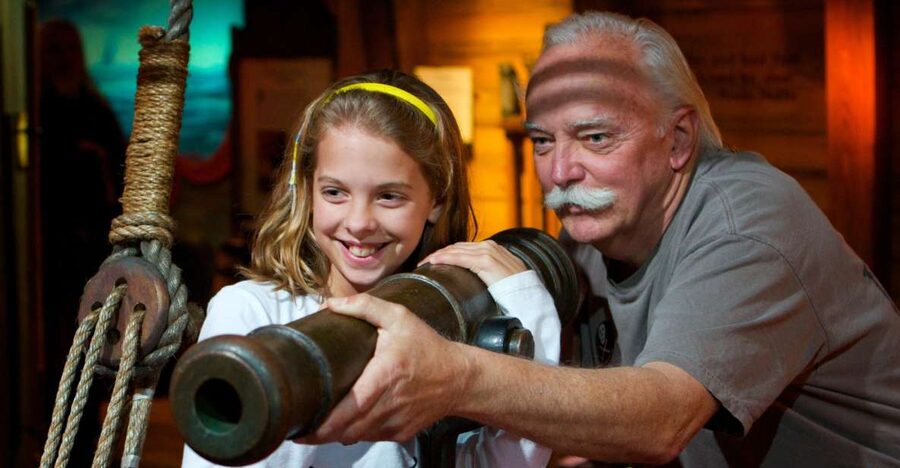
I like the hands-on details, especially firing a real cannon, touching a 400-year-old chest, and opening the Discovery Drawers to find genuine objects. I also like the treasure hunt, which gives children a job to do while adults read about weapons, ships, and famous pirates.
The main drawback is its short length. The visit is planned for about one hour, so readers who want a large museum with extensive shipwreck displays may finish quickly. The many panels and audio features can also take longer than an hour if you stop for everything.
Key points to know before you go
- See a rare original Jolly Roger: One of the museum’s most important objects is an authentic pirate flag, not a modern decoration.
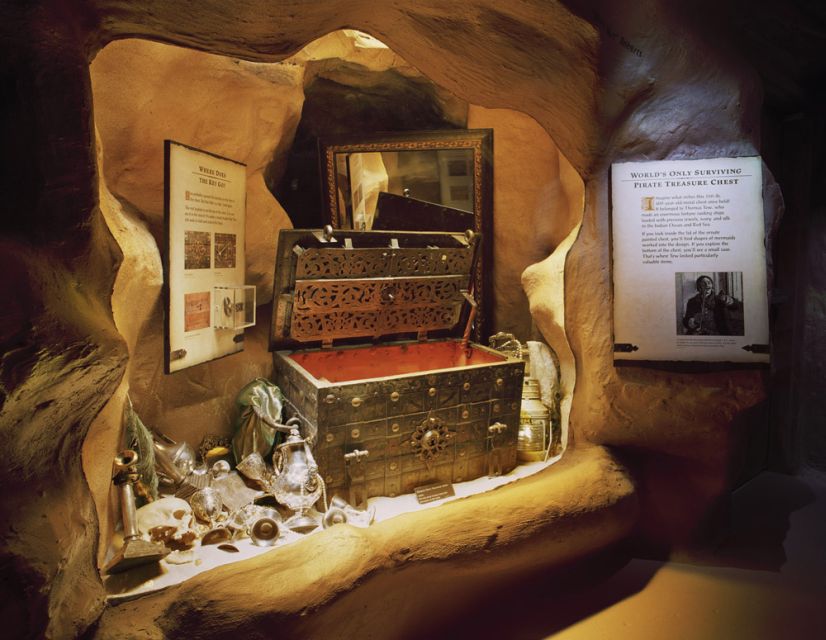
- Handle history: You can touch a 400-year-old chest and lift a real gold bar recovered from the Santa Margarita, which sank around 1622.
- Keep children involved: A treasure map leads to Discovery Drawers filled with real artifacts hidden around the museum.
- Expect an interactive visit: You can fire a real cannon, raise the Jolly Roger, and listen to computer-generated material about pirates.
- Look below deck: A Disney Imagineers-created scene presents the grim final moments of Blackbeard.
- Plan for downtown parking: The main parking option is the St. Augustine Downtown Parking Facility at 10 West Castillo Drive, close to the museum.
Entering St. Augustine’s Pirate Museum
The St. Augustine Pirate and Treasure Museum is at 12 South Castillo Drive, directly across from the Castillo de San Marcos area. That location makes it easy to add to a day of exploring the old city, though you should think about parking before arriving.
The Downtown Parking Facility at 10 West Castillo Drive is the clearest option. Limited parking is available at the Castillo de San Marcos, but it may not be open when you need it. I would park once, then visit the museum and nearby sights on foot rather than trying to move your car between stops.
The museum is open every day except Christmas Day. Your ticket covers a self-guided visit, so you can move at your own speed. That matters here because the displays appeal to different ages in different ways. A child may spend time hunting for a drawer or raising the flag, while you may want to read the background on a shipwreck or pirate captain.
The experience is wheelchair accessible. Guided tours are available only for groups of 20 or more, so most individual visitors and smaller parties should expect to explore on their own.
A few more museum visits around the USA worth comparing
- NYC: 9/11 Memorial & Museum Timed-Entry Ticket
★ 4.8 · 31,428 reviews - NYC: Empire State Building Tickets – Observatory & Museum
★ 4.7 · 25,757 reviews - New York City: American Museum of Natural History Ticket
★ 4.5 · 15,447 reviews
A shipboard setting with real objects
The museum is designed to feel like a ship as much as a gallery. The layout, sound effects, and below-deck areas help turn a collection of objects into a story about life at sea. A recent family outing found the setup especially effective for young children, while another visitor returned for a second visit because the place was both fun and informative.
That balance is the museum’s strongest feature. It does not ask you to read a long block of text before anything happens. You can fire a cannon, raise the Jolly Roger, listen to recorded material, then stop at a display when a particular object catches your attention.
The collection contains more than 800 authentic pirate artifacts, described as one of the largest collections of its kind in the world. The word authentic matters here. This is not only a room full of pirate-themed props. You will see original flags, weapons, chests, and objects connected with real voyages and shipwrecks.
The collection also includes rarely seen treasures from state shipwreck resources connected with the Florida Division of Historical Resources. That gives the museum a stronger connection to Florida’s own past instead of treating piracy as a story that happened only in distant waters.
The Jolly Roger and the visual heart of the visit
The original Jolly Roger flag is likely to be the object you remember most. Many pirate flags seen in films, shops, and attractions are modern reproductions. Here, you can look at one that actually flew at sea during the violent period associated with piracy.
The flag also helps explain why the museum works better than a standard display of old objects. A flag is easy to understand at a glance, but its age and use give it weight. You can picture it flapping from a ship as a warning, not simply hanging on a wall as a symbol.
You can also raise a Jolly Roger yourself. It is a small action, but it gives children and adults a physical connection to the exhibit. If you are lucky, you may meet a costumed pirate during your visit. That is not guaranteed, but school groups and children may encounter one as part of the museum’s atmosphere.
The audio and computer-generated features add another layer. They allow you to hear more about pirate figures and events without requiring a scheduled guide. The approach works well for independent visitors, though it can make the museum feel busy if you try to listen to every item.
The Discovery Drawers treasure hunt
Bring your curiosity, and ask for a treasure map. It leads you to Discovery Drawers placed around the museum, where real artifacts are hidden. This is one of the best features for families because it changes the visit from simply looking at cases into a small search.
The hunt gives children a reason to move through the exhibits instead of racing straight to the loudest feature. Parents can read more of the written material while children look for the next clue. A family with a four-year-old found the museum particularly enjoyable because the staff member handling the visit connected well with shy young children.
That point is worth keeping in mind. The museum is not only for children, but the treasure hunt gives younger visitors a clear purpose. The subject matter can be dark, including executions and violent sea battles, so adults may want to guide the pace and explain parts in an age-appropriate way.
Older children can also learn from the hunt. The objects hidden in the drawers are real artifacts, not only plastic tokens. That lets the activity serve as a simple introduction to archaeology, shipwreck recovery, and the way museums preserve small pieces of the past.
Same city, a completely different collection:
- NYC: Museum of Modern Art (MoMA) Entry Ticket
★ 4.6 · 12,540 reviews - 9/11 Memorial, Ground Zero Tour with Optional 9/11 Museum Ticket
★ 5.0 · 6,381 reviews - 9/11 Memorial Museum Admission Ticket
★ 4.5 · 6,376 reviews - All-Access 9/11: Ground Zero Tour, Memorial and Museum, One World Observatory
★ 5.0 · 4,886 reviews
Gold, shipwrecks, and the Santa Margarita
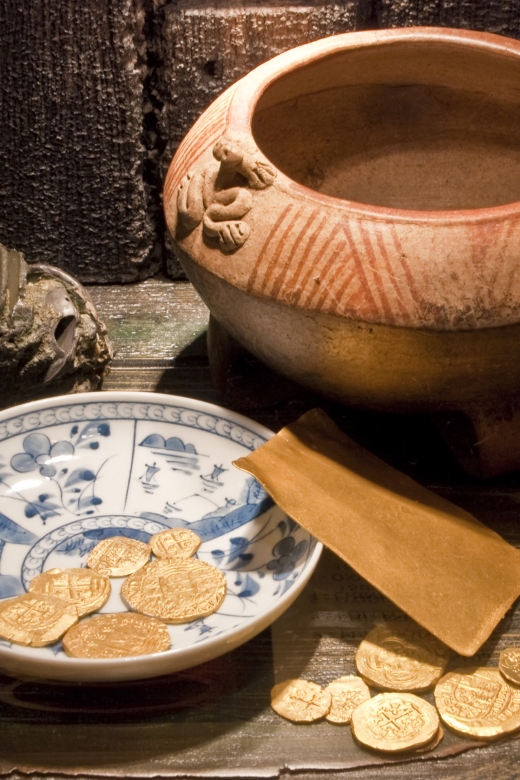
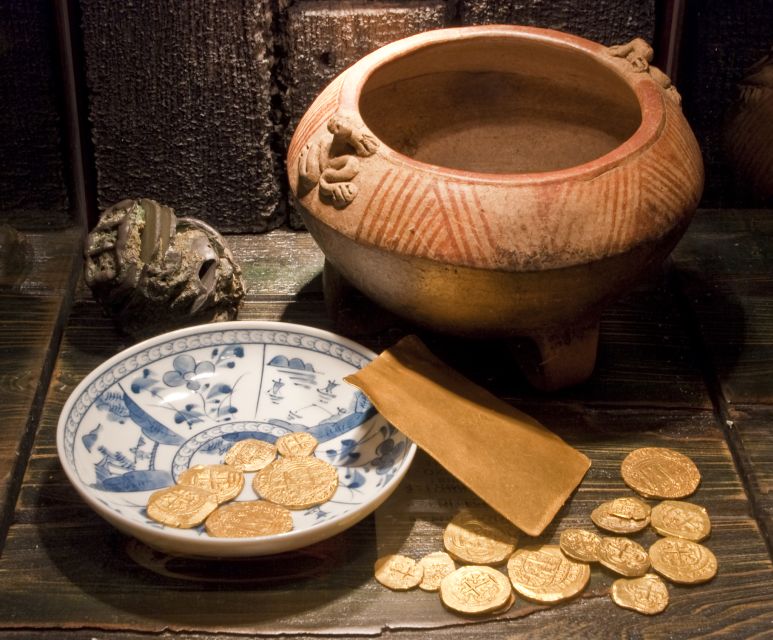
One of the museum’s most memorable objects is a real gold bar recovered from the Spanish galleon Santa Margarita. The ship sank around 1622, and you can lift the bar yourself.
That physical contact changes your sense of scale. Gold in a glass case can seem abstract. Lifting it shows you its weight and makes the story of a lost cargo more immediate. It is a good example of the museum’s general method: take a subject that might feel distant, then give you something concrete to see, hear, or handle.
The shipwreck material also adds a Florida connection. The museum includes state shipwreck treasures that are rarely seen, linking the pirate story to the waters around the state and to the practical work of recovering and preserving underwater objects.
You should not expect a full lesson in maritime archaeology during a one-hour visit. Instead, these exhibits offer strong starting points. If a shipwreck catches your interest, note the name and story, then use the museum as a reason to learn more later.
Cannons, chests, and the execution dock
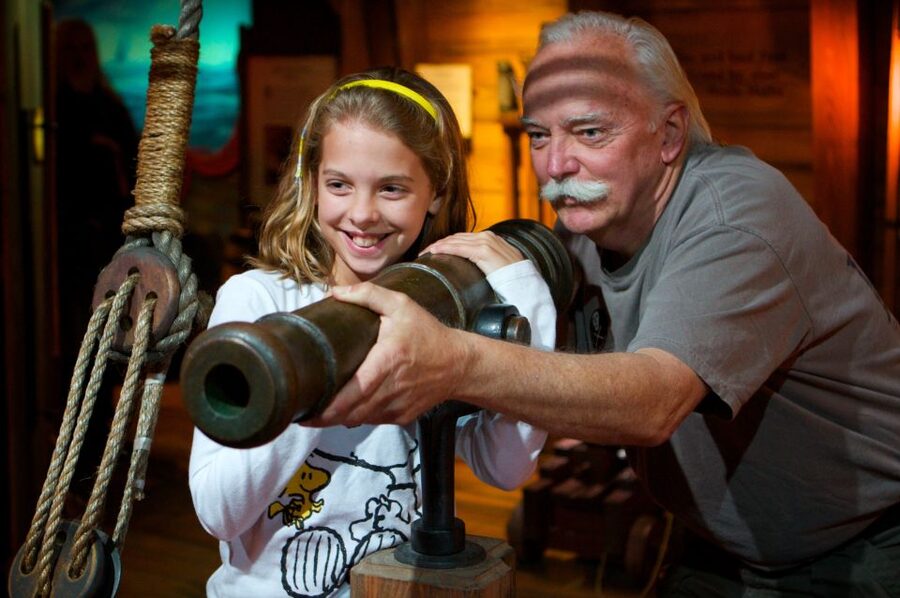
The museum’s interactive displays are not all quiet reading stations. You can fire a real cannon, touch a 400-year-old treasure chest, and explore an execution dock. These moments provide variety, especially for children who may not want to stand at cases for long.
The cannon is the obvious crowd pleaser. It helps explain the noise and force of a pirate attack better than a written description alone. The chest offers a different kind of connection. Its age is the point, and touching it gives you a sense of the everyday equipment that crossed the sea with sailors and captains.
The execution dock shifts the mood. Piracy was not a harmless adventure, and the museum does not present it only as costume play. The dock and related displays show the danger, punishment, and violence behind the popular image of treasure maps and skull flags.
That contrast is useful. You can enjoy the theatrical elements while still remembering that real people faced injury, prison, and death. Families with very young children may want to spend more time with the treasure hunt and less time with the darker displays.
Blackbeard’s final moments below deck
The Blackbeard exhibit is presented below deck in a scene created by Disney Imagineers. It focuses on the pirate’s demise and uses the enclosed setting to create a spine-tingling moment.
This part of the museum is more theatrical than the flag or shipwreck pieces. If you like staged historical displays, it adds drama and helps break up the reading. If you prefer quiet museums, it may feel a little intense, especially for small children.
Blackbeard is one of the best-known names in pirate lore, so the exhibit gives the visit a familiar figure. You do not need to arrive with detailed knowledge of his career to understand what is happening. The setting does much of the work.
I would treat this as one scene within the larger visit, not the whole reason to buy a ticket. The strongest value comes from the combination of real objects and dramatic presentation. The museum is at its best when the theatrical parts lead you back to the genuine artifacts.
How long the visit takes
The stated duration is one hour, and that is a sensible plan for most people. You can see the main displays, try the interactive features, and follow the treasure map without turning the visit into a half-day commitment.
Still, your pace will make a difference. If you read every panel, listen to the computer-generated material, and spend time with the artifacts, you may want more than an hour. Families may take longer because children pause at each activity, while adults traveling on a tight schedule can see the central objects more quickly.
That short duration makes the museum easy to fit into a day in St. Augustine. You can visit before or after the Castillo de San Marcos, then continue through the historic center. It also makes the ticket less of a gamble. Even if pirate history is not your main interest, you are unlikely to lose an entire afternoon.
The museum receives a 4.5 rating from 70 reviews, and the most consistent praise focuses on the engaging displays, authentic objects, children’s treasure hunt, and helpful staff. Those strengths match what the visit is designed to do: give you a compact, active history experience instead of a long formal tour.
Who will get the most from the $14 ticket
At $14 per person, the price is reasonable if you enjoy hands-on museums or are visiting with children. The gold bar, original flag, cannon, shipboard design, and large collection give you more substance than a simple themed attraction.
Children’s tickets cost half price, with the adjustment shown when you select a child ticket at checkout. That makes the museum especially easy to justify for a family outing. The treasure hunt gives children something to solve, while adults can focus on the written material and historical objects.
I would also recommend it to adults who like maritime history, shipwrecks, or pirate lore. The museum offers enough real material to reward that interest, though its dramatic presentation means it is not a silent research collection.
You may want to skip it if you dislike interactive exhibits, staged scenes, or sound effects. You may also feel the visit is too short if you expect a large museum that requires several hours. In that case, combine it with other sights in central St. Augustine rather than treating it as your only activity.
Practical tips for a smoother visit
- Allow about an hour: Add extra time if you plan to read most of the displays or listen to the audio material.
- Bring children into the hunt: Ask for the treasure map and make the Discovery Drawers part of the plan.
- Park before you arrive: Use the Downtown Parking Facility at 10 West Castillo Drive, since parking at the Castillo area is limited.
- Plan around the historic center: The museum is at 12 South Castillo Drive, making it easy to combine with nearby attractions.
- Remember the darker scenes: The execution dock and Blackbeard display may need a little explanation for young children.
- Check the ticket type: Children pay half price, and the reduced amount appears during checkout.
- Use the flexible booking terms: You can cancel up to 24 hours ahead for a full refund, and reserve now while paying later.
Should you book the St. Augustine Pirate and Treasure Museum?
Book it if you want a short, active museum with real pirate objects, family-friendly challenges, and plenty to see without committing half a day. The original Jolly Roger, Santa Margarita gold bar, shipwreck treasures, and 400-year-old chest give the visit genuine historical weight.
For families, the half-price children’s ticket and treasure hunt improve the value. For adults, the museum is worth the stop if you enjoy the subject or want a break from walking through St. Augustine’s historic streets.
I would not book it expecting a formal guided tour. Most visitors explore independently, and guided tours are limited to groups of 20 or more. But if you want to fire a cannon, search for real artifacts, hear pirate stories, and see history presented with a bit of theatrical fun, the $14 ticket is a sensible addition to your St. Augustine plans.
FAQ
How much does admission cost?
The listed price is $14 per person. Children’s tickets cost half price, with the adjustment shown when you select a child ticket during checkout.
How long does the museum visit take?
The stated duration is one hour. You may need additional time if you stop to read the displays or listen to the computer-generated material.
Where is the museum located?
The meeting point is 12 South Castillo Drive, St. Augustine, Florida 32084.
Is the museum wheelchair accessible?
Yes, the museum is wheelchair accessible.
Is parking available nearby?
Parking is available at the St. Augustine Downtown Parking Facility at 10 West Castillo Drive. Limited parking is also available at the Castillo de San Marcos across the street.
Is this a guided tour?
The ticket includes a self-guided tour. Guided tours are available only for groups of 20 or more.
What days is the museum open?
The museum is open every day except Christmas Day.
Can I cancel my booking?
Yes. You can cancel up to 24 hours in advance for a full refund. You can also reserve now and pay later.
Just added around the USA
- Museum of Ice Cream Austin★ 3.5 · 85 reviews
- Admission to Richard Nixon Presidential Library and Museum Ticket★ 5.0 · 123 reviews
- Turquoise Museum Visit★ 4.5 · 194 reviews
- The Turquoise Museum Curator’s Tour★ 5.0 · 12 reviews
- Orlando: Titanic Artifact Exhibition Ticket★ 4.5 · 246 reviews
- The St. Augustine Old Jail Museum Guided Tour★ 4.6 · 68 reviews
- San Diego: San Diego Natural History Museum Ticket★ 4.7 · 33 reviews
- The Museum of Fine Arts, Houston Entry Ticket★ 4.6 · 82 reviews
Museum Tours in the USA, compared.




9/11 Memorial, Ground Zero Tour with Optional 9/11 Museum Ticket
Read our review →

All-Access 9/11: Ground Zero Tour, Memorial and Museum, One World Observatory
Read our review →

Browse the lists this tour appears in