
Review · BERLIN
Skip-the-Line: Berlin Wall Museum at Checkpoint Charlie
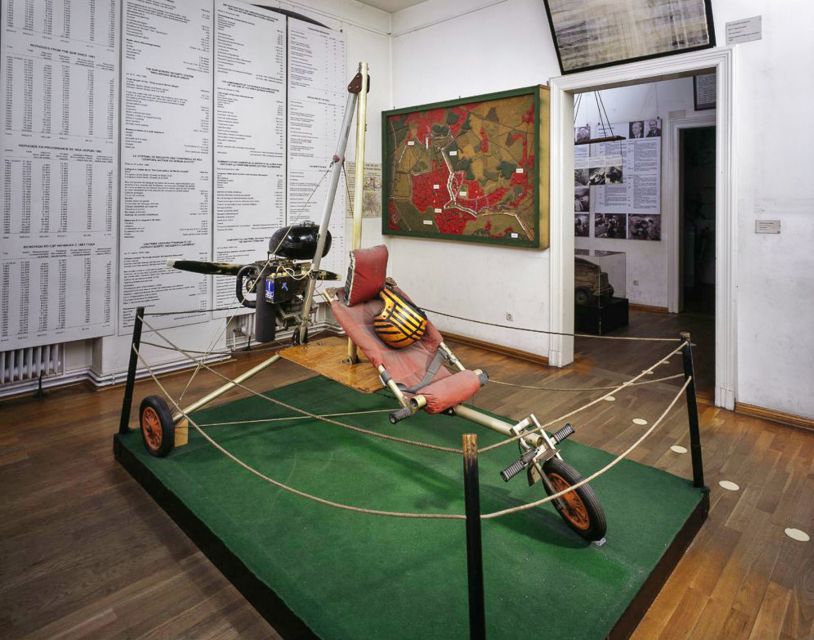
The most striking part of this museum is its collection of real escape devices. You can see the kinds of cars, aircraft, hot-air balloon, and mini-submarine used by people trying to get out of East Germany, then connect those objects to the human stories behind them. I like that the museum began in 1962 as an act of protest, not decades later as a polished history project.
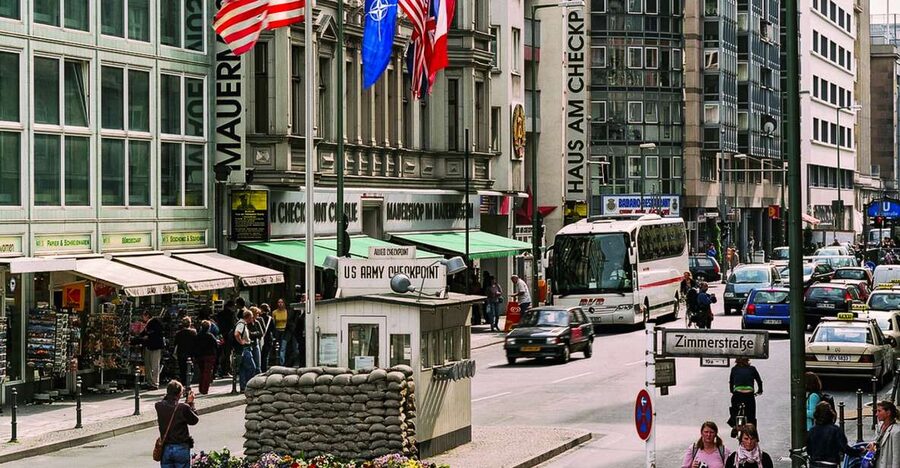
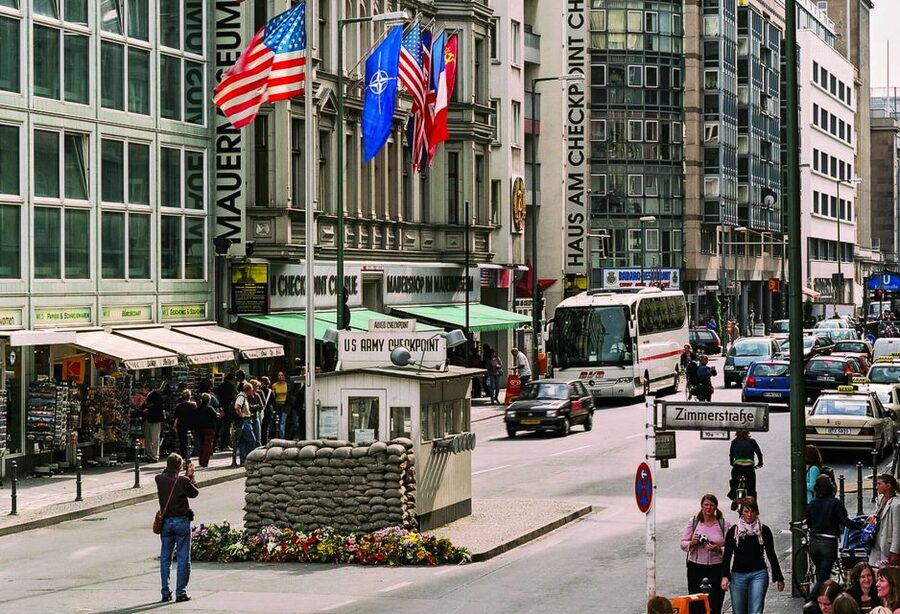
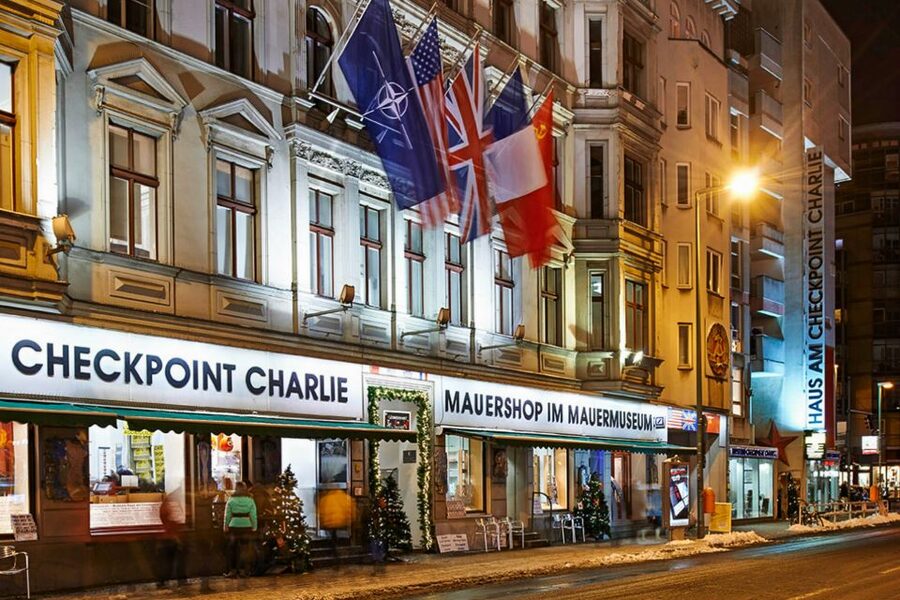
I also like the museum’s location at Checkpoint Charlie, where the Cold War is not an abstract chapter in a textbook. You are standing beside one of Berlin’s best-known former crossing points. The main drawback is presentation: much of the museum is made up of long blocks of text, and the route can feel loosely organized. Give yourself time, or you may leave with only part of the story.
Key points to know before you go
- Original escape artifacts: See a hot-air balloon, cars, aircraft, and a mini-submarine linked to successful escapes from East Germany.
- More than a Wall exhibit: The museum covers the rise and fall of the Berlin Wall, life in divided Berlin, Cold War politics, human rights, and later conflicts.
- Plan for two hours or more: The museum is larger than it looks, and careful reading can take around two and a half hours.
- Text-heavy presentation: Explanations appear in several languages, but the amount of reading can tire younger children and rushed visitors.
- Skip-the-line entry: The ticket lets you bypass the ticket queue, though the entry ticket does not include a guide or audioguide.
- A central Berlin stop: The museum is at Friedrichstraße 43-45, 10969 Berlin, directly beside Checkpoint Charlie.
Why this museum matters at Checkpoint Charlie
The Berlin Wall Museum, also known as Mauermuseum Haus am Checkpoint Charlie, opened on October 19, 1962. That was soon after the Wall went up, when the division of Berlin was a raw and dangerous reality. Its first purpose was to protest the Wall and help people who needed assistance.
That beginning shapes the museum. This is not only a display about concrete, guard towers, and border crossings. It is also about the people who tried to escape, the helpers who planned those attempts, and the human rights violations created by the GDR regime.
I find that context especially useful if you are seeing several Berlin sights in one day. At the surviving sections of the Wall, you see the physical barrier. Here, you learn what the barrier meant to ordinary people. Families were divided, movement was restricted, and escape required remarkable planning and nerve.
The museum also connects the local story to broader questions about freedom, protest, and political power. Its upper-floor material reaches beyond the Wall itself, with attention to peaceful protest and movements for human rights. That wider focus will appeal to you if you want a museum that asks what the Cold War still means, rather than stopping neatly at the Wall’s fall.
More Museum Tours in Berlin
- Berlin: Natural History Museum Entrance Ticket
★ 4.6 · 3,382 reviews - Berlin: Museum Island Multiple Museum Entry Ticket
★ 4.4 · 2,861 reviews - Berlin: Interactive DeJa Vu Museum Entrance Ticket
★ 4.1 · 1,338 reviews
Entering a museum that is bigger than it looks
The entrance is at Friedrichstraße 43-45, right by Checkpoint Charlie. The museum can appear modest from outside, but several visitors have found the interior much larger than expected. That matters because a quick one-hour visit may leave you skimming rather than understanding.
The skip-the-line ticket is useful during busy periods. You scan or present your ticket at the entrance instead of waiting to buy one there. The practical benefit is modest if the museum is quiet, but it becomes more worthwhile when tour groups or school groups fill the entrance.
The museum is wheelchair accessible. The supplied information does not specify every route detail or restroom arrangement, so you may want to confirm any particular access need before arrival.
Once inside, expect a self-guided visit. Your $21 ticket covers admission only. A guided tour and audioguide are not included. The museum has extensive written explanations, with translations available for much of the material, which makes it possible to follow the main story without a guide.
The escape stories are the museum’s strongest room
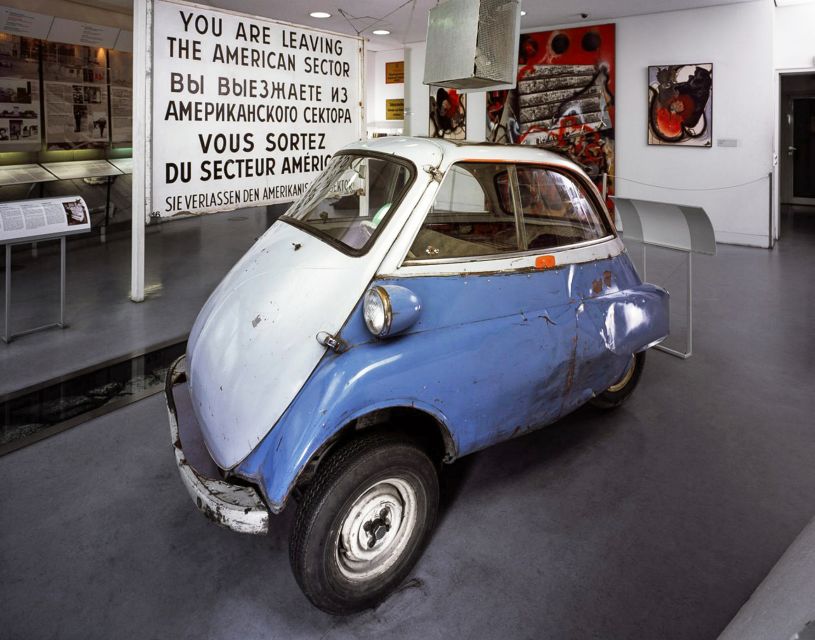
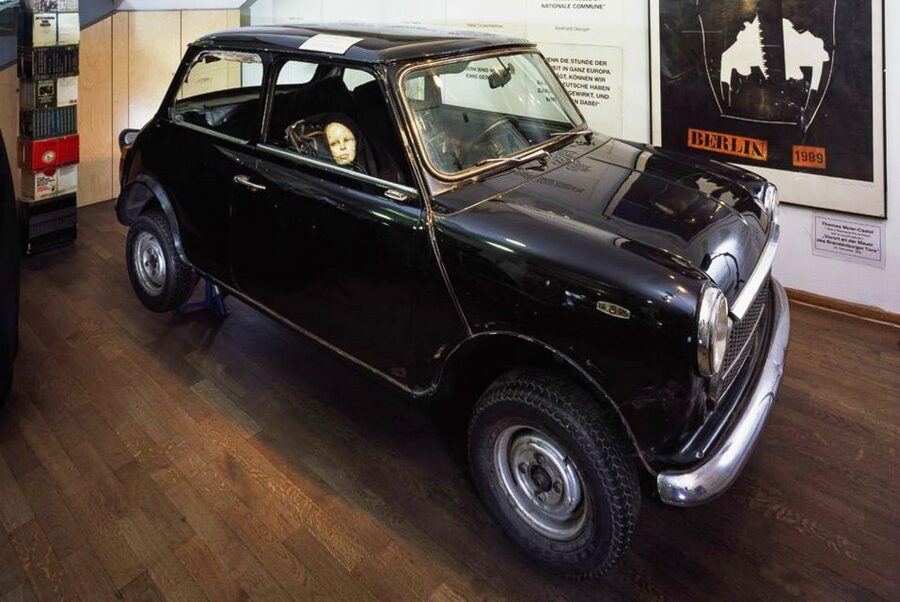
The most memorable displays focus on the many ways people tried to leave East Germany. The objects are not just symbolic props. They were donated by refugees and helpers after successful escapes, giving the museum a direct physical link to those events.
You may see cars adapted for concealment, aircraft connected to escape attempts, a mini-submarine, and a hot-air balloon. Each object makes the same point in a different way: the Wall could be crossed, but doing so required careful preparation and enormous risk.
Cars are especially effective because they show how an everyday object could become an escape tool. The aircraft and balloon widen the story beyond roads and checkpoints. The mini-submarine is a reminder that escape planning could involve unusual routes and technical skill.
I would not rush this section. Read the account connected to each object before moving on. The displays are most powerful when you understand who built or used them, what problem they were trying to solve, and what failure could cost.
Some of the museum’s most compelling material concerns the helpers. People on both sides of the border used the museum as a base for planning escapes and organizing resistance. After an escape, refugees and their supporters donated vehicles and other equipment. The collection therefore records both the ingenuity of those fleeing and the cooperation that made some attempts possible.
From the Wall’s construction to its fall
The museum explains how Berlin became divided and how the Wall affected life on both sides. You will find political background, photographs, written accounts, and displays about East and West Berlin.
This part is valuable if your knowledge of the Cold War is patchy. The museum does not limit itself to the famous images of the Wall coming down. It gives space to the political system behind the border and to the day-to-day restrictions faced by people living under the GDR government.
The amount of information can also be the museum’s weakness. Some visitors find the story hard to follow because the displays do not always lead you in a clear entrance-to-exit order. Other sections contain so much writing that you may need to choose what to read rather than attempt every panel.
That is not a reason to skip the museum, but it changes how you should approach it. I would first walk through to understand the layout. Then return to the escape exhibits and the sections that interest you most. If you try to read every line in order, you could become tired before reaching the upper floors.
More skip-the-line museum tickets in Berlin:
- Florence: Skip-The-Line Uffizi Gallery Timed Entry Ticket
★ 4.5 · 27,832 reviews - Vatican Museums & Sistine Chapel Skip-the-Line Entry Ticket
★ 4.4 · 13,838 reviews - Rome: Vatican Museums & Sistine Chapel Skip-The-Line Ticket
★ 4.2 · 11,708 reviews - Rome: Vatican Museums & Sistine Chapel Skip-the-Line Ticket
★ 4.3 · 8,103 reviews
The upper floor links Berlin to wider struggles
One of the museum’s less expected features is its attention to international conflicts, peace movements, and human rights. The upper floor includes a strong presentation of protests and nonviolent movements seeking peace.
This broader material can feel less focused if you came only to see the Berlin Wall. The museum extends beyond the original subject, and some displays go well beyond the Wall’s timeline. If you want a tightly edited museum about 1961 to 1989, that extra material may seem distracting.
I think it works best as a reminder that the Wall was part of a larger political story. The museum suggests that the end of the Wall did not end every issue connected to state power, borders, repression, or displacement. That is also why some current material appears in the exhibition, including objects connected to more recent conflicts.
Allow extra time if this section matters to you. It is easy to spend your first hour on the Cold War displays and then discover that the later rooms deserve attention too.
How long should you allow?
The official duration is listed as one day, meaning your admission is valid for a full day rather than a fixed guided departure. In practice, the museum works as a one to three-hour visit.
If you read selectively and focus on the main exhibits, allow about two hours. If you want to study the photographs, escape accounts, political explanations, and upper-floor displays, plan on two and a half hours or more.
One visitor spent nearly two and a half hours inside during January and still found plenty to absorb. Another found that the museum could easily fill an entire day. I would not schedule a tight appointment immediately afterward.
The museum suits a flexible afternoon better than a rushed stop between timed attractions. It is also a useful rainy-day choice because the experience is largely indoors and does not depend on weather.
Is the text-heavy style right for you?
You should know what kind of museum this is before buying a ticket. It is built around information, original objects, photographs, and written accounts. It is not mainly an interactive attraction.
Some interactive elements may not work perfectly, and much of the presentation asks you to read. Younger teenagers may lose interest quickly, especially if they are not already curious about the Cold War. Adults and older children who enjoy history can spend far longer with the displays.
The translations are a real help. Explanations are available in several languages for much of the exhibition, although coverage may vary by section. If you need a particular language, do not assume every panel will be translated.
An audioguide is not included. One visitor who asked about one was told it was not worth taking because there was already so much to read. I would treat that as personal advice, not a rule. If you prefer listening to wall panels, an audioguide may still help, but you will need to pay separately.
A guided tour is also not part of this ticket. Some separate tours have used guides named Peter, Louisa, and Steve, but you should not expect one of them, or any guide, with the standard admission. Buy this experience if you are comfortable setting your own pace.
The value of a $21 ticket
At $21 per person, this is a fair price if you give the museum enough time. You are paying for a substantial collection, a historic location, and a large amount of material rather than a short photo stop.
The value is strongest for first-time visitors to Berlin, anyone with a serious interest in the Cold War, and people who want personal escape stories rather than only famous Wall photographs. The original vehicles and equipment give the visit a physical quality that a standard text display cannot match.
The value drops if you have only 45 minutes, dislike reading, or plan to see the museum mainly because it is beside Checkpoint Charlie. In that case, the ticket may feel expensive for a quick walk-through.
Buying online provides skip-the-line entry and lets you reserve now while paying later, if that option is available at booking. One family found that the online price included an extra charge of roughly £3 to £4 per ticket compared with buying directly, so compare the total cost before confirming. The convenience may still be worthwhile on a busy day.
Free cancellation is available up to 24 hours before the visit for a full refund. That gives you useful flexibility when building a Berlin schedule.
Pairing the museum with Checkpoint Charlie
The museum’s location is one of its biggest advantages. You can see Checkpoint Charlie outside, then immediately learn why this crossing became such a powerful Cold War symbol.
Do not expect the museum alone to recreate the original border crossing. The value comes from the combination of place and interpretation. You are at the site, but the displays supply the personal accounts, escape equipment, photographs, and political explanation that the street view cannot provide.
If you are already visiting other Berlin Wall sites, this museum adds a different layer. Outdoor sections give you scale and atmosphere. This museum gives you the plans, failed attempts, successful escapes, and human stories behind the barrier.
I would place it on a day when you are exploring central Berlin. Its location makes it easy to combine with other historical stops, but avoid stacking too many timed activities afterward. The museum rewards a slower visit.
Who should book this experience?
I would choose this museum for you if you:
- Want a serious look at East German escape attempts
- Enjoy reading historical displays
- Are interested in Cold War politics and human rights
- Want to see original escape equipment
- Prefer exploring at your own pace
- Have at least two hours available
- Are visiting Checkpoint Charlie for the first time
I would be more cautious if you are traveling with children who need frequent hands-on activity. The museum contains plenty to see, but the presentation is reading-heavy and some interactive displays may not be working.
It is also not the right choice if you want a short, tightly guided experience. The admission ticket does not include a guide, and the exhibition’s route can feel confusing. For a self-directed history visit, though, that independence is useful.
Should you book the Berlin Wall Museum?
Yes, if you want more than a quick photograph at Checkpoint Charlie. The escape vehicles, balloon, aircraft, and mini-submarine give the museum a strong physical connection to the people who risked everything to leave East Germany. The location adds meaning, and the museum’s human rights focus gives the story relevance beyond Berlin.
Go in prepared for long panels, a large exhibition, and a route that may not always feel perfectly ordered. Allow at least two hours, consider an audioguide only if you prefer listening, and compare the online total with the direct price.
For history-minded visitors, this is one of the better uses of an afternoon in Berlin. For rushed visitors or families seeking a highly interactive attraction, it may feel like too much reading. The choice comes down to time and interest, not the importance of the subject.
FAQ
Where is the Berlin Wall Museum located?
The museum is at Friedrichstraße 43-45, 10969 Berlin, beside Checkpoint Charlie.
What does the $21 ticket include?
The ticket includes entrance to the Berlin Wall Museum.
Is a guided tour included?
No. A guided tour is not included with the entrance ticket.
Is an audioguide included?
No. An audioguide is not included and must be arranged separately.
How long is the experience?
The admission is valid for one day. Most visitors should allow at least one to two hours, while a careful visit can take around two and a half hours or longer.
Can I skip the ticket line?
Yes. This ticket includes skip-the-line entry for the ticket queue.
Is the museum wheelchair accessible?
Yes. The activity is listed as wheelchair accessible.
Can I cancel for a refund?
Yes. You can cancel up to 24 hours in advance for a full refund.
Can I reserve now and pay later?
Yes. The reserve-now-and-pay-later option lets you hold your place without paying at the time of booking.
Just added around Berlin
- From Berlin: Sachsenhausen Concentration Camp Museum Tour★ 4.8 · 514 reviews
- Cold War, Berlin Wall, Spies and the East Side Gallery★ 4.8 · 254 reviews
- Bubble Planet Berlin: An Experience Museum for All Your Senses★ 4.1 · 38 reviews
- Berlin: The Wall Museum East Side Gallery Ticket★ 4.1 · 292 reviews
- Berlin: Tickets to the Computer Games Museum★ 4.5 · 363 reviews
- Berlin Trabi Museum: Day Ticket★ 4.1 · 63 reviews
- Berlin: Stasi Museum Private Guided Tour with Entry Ticket★ 4.8 · 13 reviews
- Berlin: Ticket for Photography Exhibitions at C/O Berlin★ 4.5 · 39 reviews
Museum Tours in Berlin, compared.


“Pergamonmuseum. The Panorama” Exhibition Tickets
Read our review →
East Side Gallery Spree Cruise in a Solar Catamaran
Read our review →
Cold War, Berlin Wall, Spies and the East Side Gallery
Read our review →
Berlin WelcomeCard: Museum Island & Public Transport
Read our review →
Browse the lists this tour appears in