
Review · THE USA
Seattle: The Museum of Flight Entry Ticket
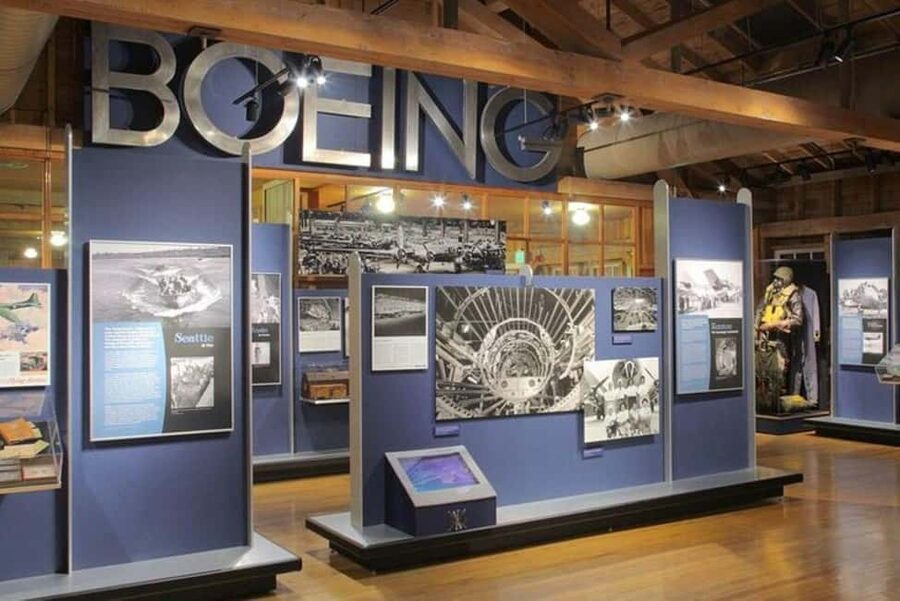
The Museum of Flight puts a full-sized NASA Space Shuttle Trainer, a Boeing 747 cockpit, and more than 150 aircraft under one roof. I especially like the rare M-21 Blackbird spy plane and the Personal Courage Wing, where wartime aviation becomes a human story. The main drawback is size: five galleries spread across a two-sided campus can easily take three hours or more.
At $29 per person, admission is good value if you enjoy aircraft, space travel, engineering, or hands-on family attractions. I also like the multilingual audio guide and the chance to buy simulator tickets separately, though the 3D movie and flight rides add to the cost.
Key points to know before you go
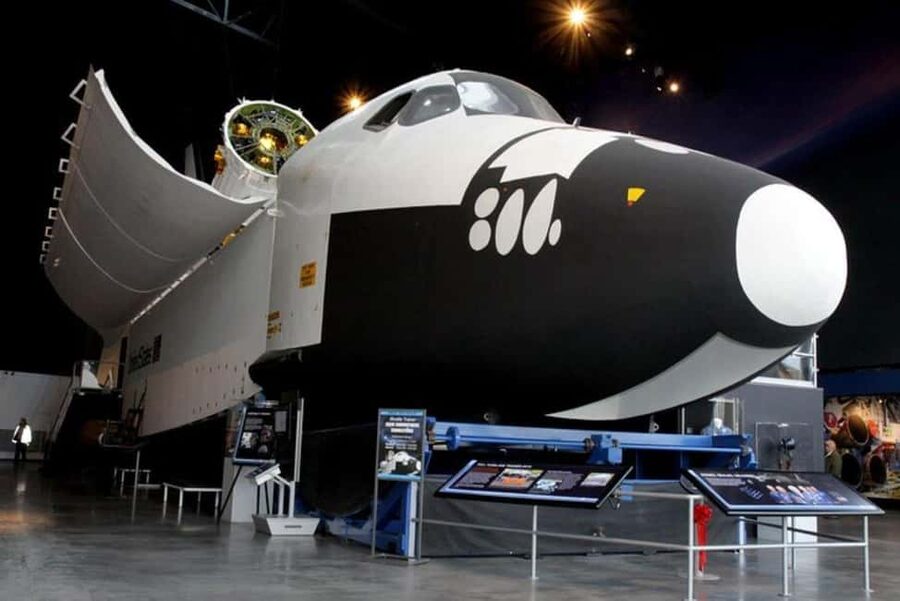
- A full-sized Space Shuttle Trainer gives you a close look at the vehicle astronauts used for practice.
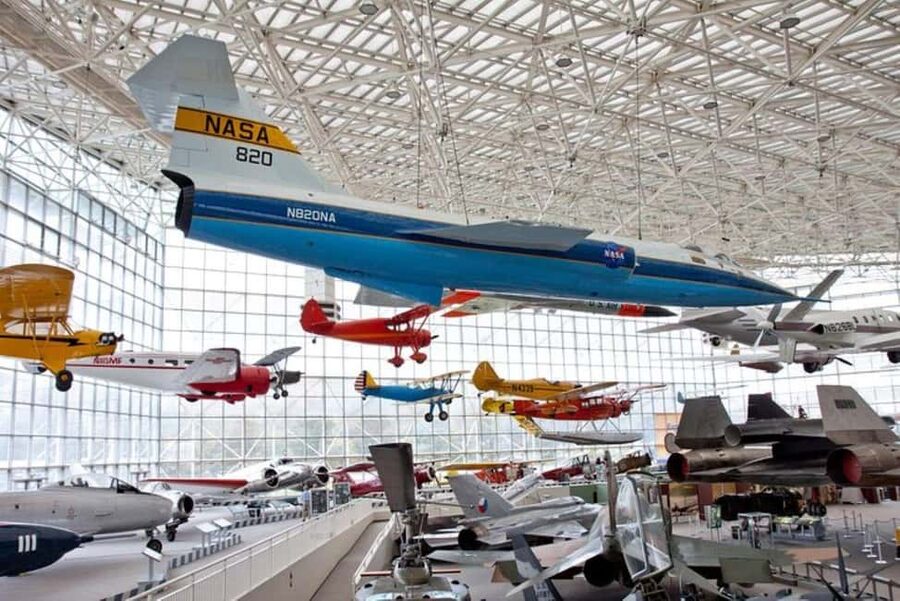
- More than 150 aircraft range from early aviation machines to Korean and Vietnam War jets.
- The M-21 Blackbird is a rare spy aircraft and one of the museum’s most striking displays.
- Five galleries cover a broad campus, so allow at least three hours for a proper visit.
- A Boeing 747 cockpit, flight simulators, and hands-on exhibits keep the visit active rather than purely observational.
- The T. Evans Wyckoff Memorial Bridge offers views toward Seattle-Tacoma International Airport and Mount Rainier on clear days.
Why Seattle’s Museum of Flight deserves a full day
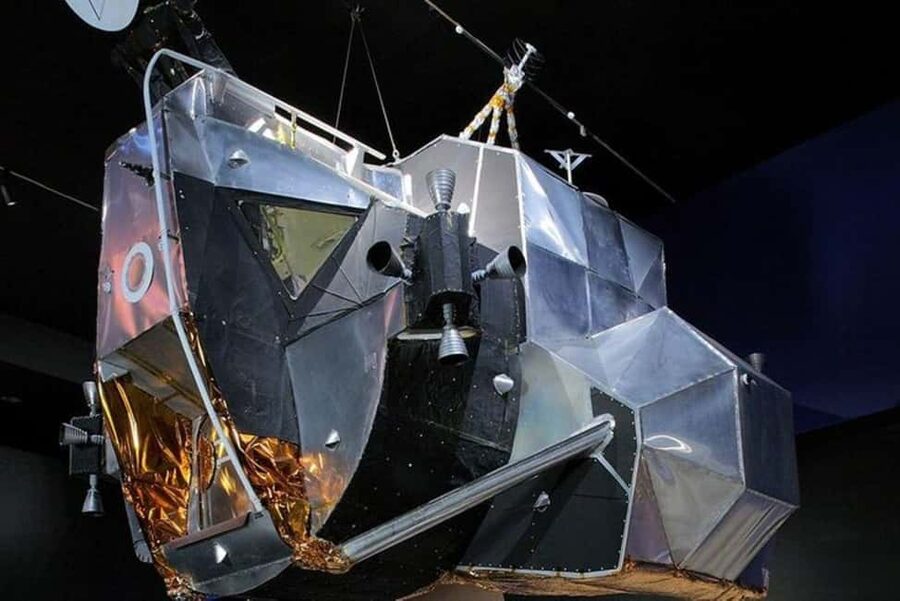
This is not a small room of polished airplanes. It is a large air and space museum spread through five separate galleries on a two-sided campus. You can look at sleek military jets, study early aircraft, walk through war-era stories, and then move into space technology without leaving the site.
I would plan for at least three hours, and I would use most of the day if you want to read the displays, try activities, and stop for a break. The museum works for serious aviation fans, but it is not limited to them. The scale of the aircraft helps newcomers understand what they are seeing, while interactive exhibits give children something to do besides follow adults from one case to the next.
The $29 ticket covers entry for one day. That matters because rushing through this museum would miss much of its value. Advanced purchase also lets you skip the line, a useful advantage when you are visiting on a busy day.
A few more museum visits around the USA worth comparing
- NYC: 9/11 Memorial & Museum Timed-Entry Ticket
★ 4.8 · 31,428 reviews - NYC: Empire State Building Tickets – Observatory & Museum
★ 4.7 · 25,757 reviews - New York City: American Museum of Natural History Ticket
★ 4.5 · 15,447 reviews
Start with the early aircraft and Boeing icons
The Aviation Pavilion is a natural place to begin. It contains large aircraft that are difficult to appreciate from photographs alone, including the first flight-worthy Boeing 747. The aircraft’s size gives you a clear sense of the leap from early aviation to modern passenger flight.
You will also find a human-powered MacCready Gossamer Albatross II in a large glass gallery. It is a wonderful reminder that flight does not always depend on engines, fuel, or military power. The aircraft’s delicate design makes a sharp contrast with the heavy jets nearby.
Another display presents a replica of Amelia Earhart’s ill-fated aircraft. This adds a personal thread to the early years of aviation, when long-distance flight was still dangerous and uncertain. You are not just looking at machines here. You are seeing how ambition, experimentation, and risk shaped the way people learned to fly.
The pavilion is especially useful for families because the aircraft are easy to compare. A child may notice size and shape first, while an adult can follow the technical changes from one display to the next. I would not hurry this section, even if your main goal is the Space Shuttle Trainer.
Walk beneath the Great Gallery’s suspended aircraft
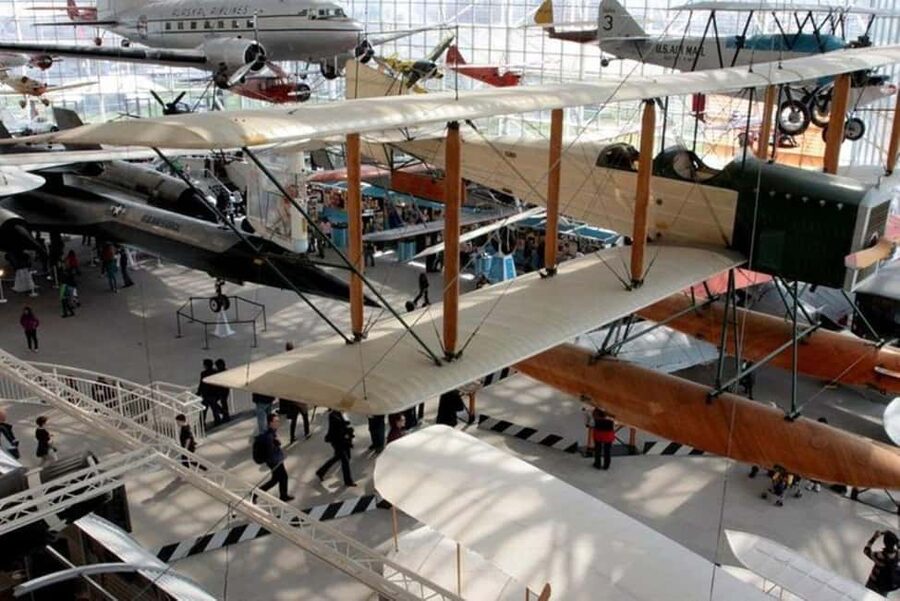
The Great Gallery gives the museum its wow factor. Aircraft hang above you in the open space, creating a view that is hard to get from ground level. You can see the planes from different angles as you move around the gallery, which makes their construction easier to understand.
This is also one of the best places to appreciate the difference between aircraft built for speed, distance, combat, and transport. The arrangement turns the gallery into a three-dimensional lesson. Instead of seeing a plane only from the side, you can look up at its wings, engines, landing gear, and underside.
I find this section valuable even if you are not an aviation enthusiast. Large machines can seem abstract when they appear on a screen. Here, their actual scale is unavoidable. The downside is that the open gallery can feel a little overwhelming at first. If you arrive with children, set a simple plan: choose a few aircraft to inspect closely instead of trying to cover every display.
See the Space Gallery and the NASA trainer
The Space Gallery shifts the focus from air to space. Its centerpiece is a full-sized NASA Space Shuttle Orbiter mockup used for astronaut training. It is not a flight vehicle, but its size and interior training purpose make it a useful way to understand how astronauts prepared for missions.
The shuttle display gives you a close look at a craft designed for a very different kind of journey. You can consider the cramped working areas, the complicated machinery, and the practical demands placed on the people inside. The museum’s space exhibits are at their best when they connect technology with the human work needed to use it.
This gallery also provides a good change of pace after the aircraft halls. If your group includes someone who is more interested in space than airplanes, this may become the favorite section. Families should allow extra time here, since the displays are not simply quick photo stops.
The Space Gallery uses sound, visuals, and hands-on elements to make the subject easier to follow. The exact amount of time you spend will depend on how closely you read the exhibits, but I would not treat it as a short corridor between larger aircraft.
Same city, a completely different collection:
- NYC: Museum of Modern Art (MoMA) Entry Ticket
★ 4.6 · 12,540 reviews - 9/11 Memorial, Ground Zero Tour with Optional 9/11 Museum Ticket
★ 5.0 · 6,381 reviews - 9/11 Memorial Museum Admission Ticket
★ 4.5 · 6,376 reviews - All-Access 9/11: Ground Zero Tour, Memorial and Museum, One World Observatory
★ 5.0 · 4,886 reviews
Step into a Boeing 747 cockpit
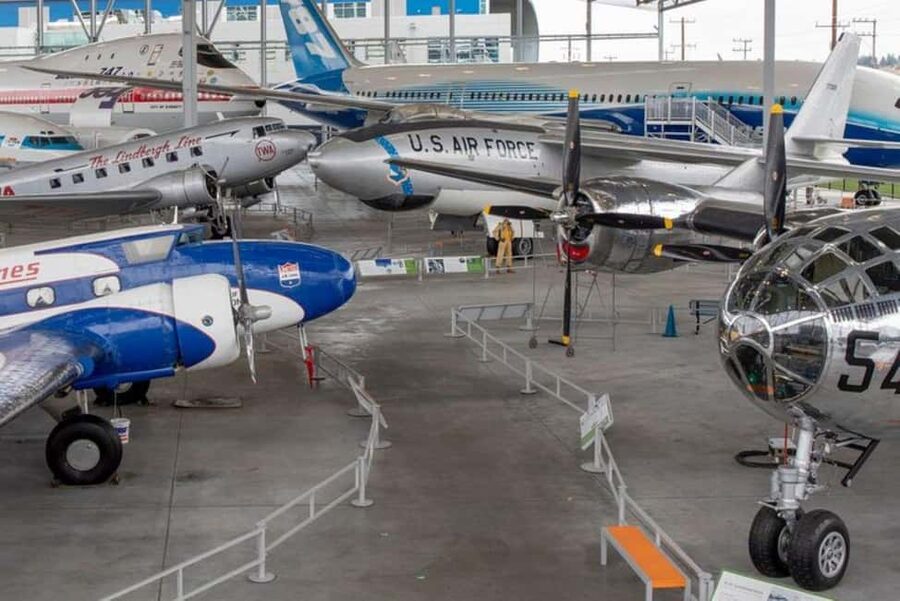
The Boeing 747 cockpit is one of the most approachable parts of the museum. You can sit where pilots worked and get a closer look at the controls, windows, and layout. That physical access changes the visit from looking at a plane to imagining the work involved in operating one.
For children, the cockpit is an obvious hit. For adults, it offers a practical view of how much information pilots had to manage before modern screens simplified some tasks. It also helps explain why large aircraft need carefully organized systems and trained crews.
Do not expect every aircraft to offer this same level of access. The museum combines walk-through areas, cockpit displays, aircraft viewed from the outside, and interactive exhibits. That variety is useful, but it means you should check the signs rather than assume you can climb aboard every plane.
Meet the aircraft of war in the Personal Courage Wing
The Personal Courage Wing covers aviation during the First and Second World Wars through the experiences of pilots, nurses, photographers, and support crews. This is one of the museum’s strongest sections because it moves beyond aircraft specifications.
The displays connect flying with the people who maintained planes, treated the wounded, documented events, and supported military operations. That broader view is important. A fighter jet may look impressive, but it was part of a much larger system involving people on the ground and in the air.
The wing also presents the Korean and Vietnam Wars through aircraft and related displays. You can see jet fighters from both conflicts and consider how quickly aviation changed between generations of war. The aircraft are impressive, but the personal accounts and support roles help keep the subject grounded.
I would give this wing more time than a quick walk-through. It may be less flashy than the Great Gallery, yet it offers some of the museum’s most thoughtful material. Families with younger children may want to judge how much detail suits them, while older children and teenagers can gain a clearer sense of what military aviation required.
Find the rare M-21 Blackbird
The M-21 Blackbird spy plane is a major draw for anyone interested in Cold War aircraft. Its long, dark form and unusual design make it immediately recognizable, even if you know little about aviation.
The M-21 is worth seeing slowly. Look at its shape and think about the engineering choices required for high-speed reconnaissance. The aircraft represents a period when speed and altitude were central to gathering information, before satellite technology took on more of that work.
This is a good example of why the museum is more than a collection of familiar passenger planes. Some displays introduce aircraft you may already know, while others reveal specialized machines built for narrow and demanding purposes. The M-21 adds a strong military and technological dimension to the visit.
Use the hands-on features, but budget for extras
The entry ticket includes the museum itself, but not the flight simulators or the optional 3D movie. If your group wants every activity, the final cost will be higher than $29 per person.
I like the separate pricing because it gives you control. You can pay for admission and decide on the day whether a simulator fits your budget and schedule. A family can focus on the permanent galleries, while aviation fans can add a more active experience.
The 3D movie is an optional way to begin the visit with a flight-themed presentation. It can set the subject for the day, but it is not necessary to understand the museum. If time or money is tight, I would put the permanent galleries first.
The simulators may appeal most to visitors who want participation rather than display cases. Since their tickets are separate, check the price and availability before setting expectations with children. The museum already offers plenty to see without them, but they can add energy to a long visit.
Use the audio guide to make the large museum manageable
An audio guide is included with admission and is available in English, German, Chinese, Russian, Japanese, French, and Spanish. That is useful in a museum with so many aircraft and stories competing for your attention.
I would use it selectively rather than listen to every entry. Choose the aircraft and sections that interest you most, then move at your own pace. This approach helps prevent information fatigue, especially during a visit of several hours.
The audio guide is also useful for mixed groups. One person can focus on technical details while another moves through the gallery more quickly. Since the museum is large, having the option to hear explanations in your preferred language can make the visit easier to follow.
Save time for the bridge and airport views
On a clear day, walk to the T. Evans Wyckoff Memorial Bridge. From there, you can look toward Seattle-Tacoma International Airport and Mount Rainier.
The bridge adds an outdoor pause after the indoor galleries. The airport view connects the museum’s aircraft to the working world of modern flight, while Mount Rainier gives the scene a memorable Washington backdrop when visibility is good.
Do not treat this as a guaranteed highlight in poor weather. The mountain view depends on clear conditions, and the museum itself remains the main attraction. Still, if the sky cooperates, the bridge is an easy addition that costs no extra time beyond the walk.
Timing, access, and practical planning
The museum is wheelchair accessible. Because the campus is large and split into five galleries, comfortable pacing matters more than trying to force the visit into a short window.
Last admission is at 4:00 PM, one hour before the museum closes at 5:00 PM. I would arrive earlier rather than aim for the final entry, especially if you want the Great Gallery, Space Gallery, Personal Courage Wing, and Aviation Pavilion.
The experience is valid for one day, and availability should be checked for starting times. A ticket can be canceled up to 24 hours in advance for a full refund, and the reserve-now, pay-later option allows you to hold your plans without paying immediately.
Weapons and sharp objects are not allowed. Keep that restriction in mind before you arrive, since it can affect what you carry into the museum.
Is $29 a fair price?
For a full day of access to more than 150 aircraft, interactive exhibits, five galleries, and a Space Shuttle Trainer, I consider $29 a reasonable price. The value improves if you plan to stay at least three hours.
The price is less attractive if you only have an hour or two. This is a place where the size creates much of the value, so a short visit means paying for more than you can properly see. The extra charges for simulators and the 3D movie are not a problem as long as you include them in your budget.
The high points are the restored aircraft, the broad range of periods and purposes, and the museum staff’s helpful approach. One booking began an hour late because of a transportation problem, and the scheduled guidance was extended by an hour. That kind of flexibility may not be part of every visit, but it suggests that staff can respond sensibly when plans go wrong.
Who should book the Museum of Flight?
I would recommend this ticket to aviation fans, families with curious children, space enthusiasts, and anyone who enjoys large technical museums. It also suits visitors who want a self-guided day rather than a fixed tour led from room to room.
You should think twice if you dislike aircraft, have very limited time, or want a small museum you can finish quickly. The size is the attraction, but it is also the main challenge.
Book it if you can give the museum at least three hours, and arrive early enough to use the galleries without racing the 4:00 PM admission cutoff. Add a simulator or the 3D movie only if those extras fit your interests and budget. For most people with a full day available, this is one of Seattle’s better-value indoor attractions.
FAQ
How much does admission to Seattle’s Museum of Flight cost?
The entry ticket costs $29 per person.
How long is the ticket valid?
The ticket is valid for one day.
What does the admission ticket include?
It includes entrance to the Museum of Flight and an audio guide.
Are the flight simulators included?
No. Tickets for the simulators are not included and must be purchased separately.
Is the 3D movie included?
No. The flight-themed 3D movie is optional and costs extra.
What time is the last admission?
Last admission is at 4:00 PM. The museum closes at 5:00 PM.
How much time should I allow for the museum?
Allow at least three hours to see most of the exhibits. The museum has five galleries spread across a large two-sided campus.
Is the museum wheelchair accessible?
Yes. The Museum of Flight is wheelchair accessible.
Is an audio guide available in languages other than English?
Yes. Audio guides are available in English, German, Chinese, Russian, Japanese, French, and Spanish.
Can I cancel the ticket if my plans change?
Yes. You can cancel up to 24 hours in advance for a full refund.
Just added around the USA
- Museum of Ice Cream Austin★ 3.5 · 85 reviews
- Admission to Richard Nixon Presidential Library and Museum Ticket★ 5.0 · 123 reviews
- The Turquoise Museum Curator’s Tour★ 5.0 · 12 reviews
- Turquoise Museum Visit★ 4.5 · 194 reviews
- Orlando: Titanic Artifact Exhibition Ticket★ 4.5 · 246 reviews
- The St. Augustine Old Jail Museum Guided Tour★ 4.6 · 68 reviews
- San Diego: San Diego Natural History Museum Ticket★ 4.7 · 33 reviews
- The Museum of Fine Arts, Houston Entry Ticket★ 4.6 · 82 reviews
Museum Tours in the USA, compared.



9/11 Memorial, Ground Zero Tour with Optional 9/11 Museum Ticket
Read our review →

All-Access 9/11: Ground Zero Tour, Memorial and Museum, One World Observatory
Read our review →
Browse the lists this tour appears in