
Review · LISBON
Paint your tile and create your unique piece in an art gallery in Lisbon
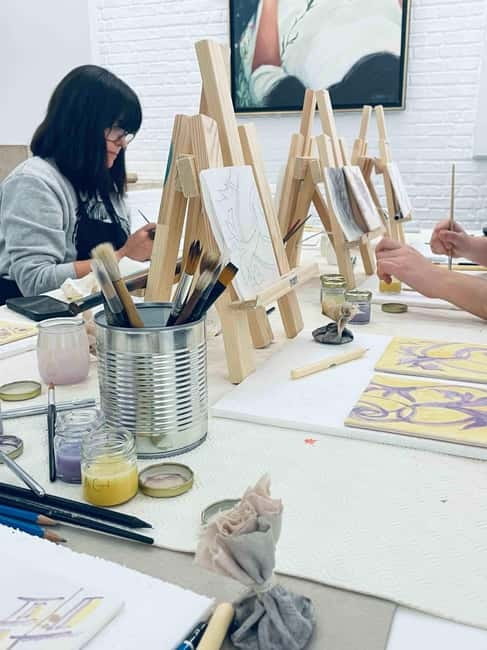
Portuguese tiles are more than pretty blue squares on Lisbon buildings. At Galeria 1758, you learn how the tradition works, then create two tiles of your own with help from Cristina. I like the clear mix of local culture and hands-on making, and I like that the finished piece is a useful souvenir rather than a trinket from a shop. The relaxed studio setting, patient guidance, and choice between copying a pattern or inventing your own design make this a good fit for both confident artists and nervous beginners.
The main thing to plan around is the kiln-firing delay. Traditional tiles need at least 24 hours to dry and fire, and collection may take about three days depending on the schedule. You pick them up later at Galeria 1758, arrange shipping at your own cost, or choose the faster unfired method if you need to leave Lisbon soon.
Key points to know before booking
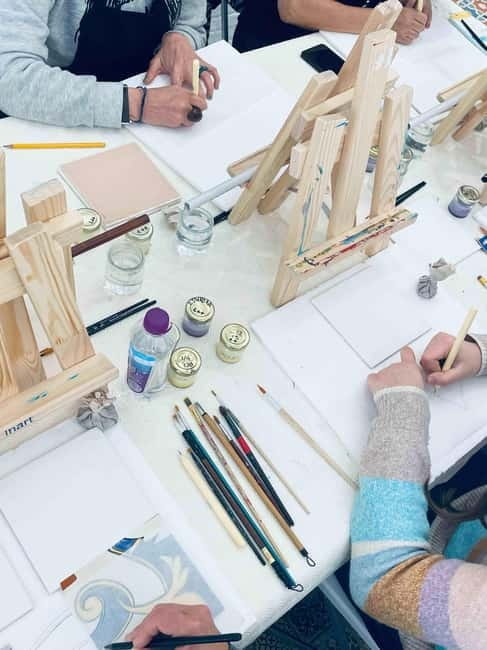
- Two 15-by-15-centimeter tiles are included: You have enough time to make a matched pair or two different designs.
- Cristina provides personal help: She explains the process clearly and offers as much guidance as you want.
- You learn the traditional majolica method: Painting takes place on a glazed ceramic surface with tile-safe pigments.
- The work is fired in a ceramic kiln: This gives the tile its final finish, but you will not take the traditional version home the same day.
- The class runs in Portuguese, English, or Spanish: You can follow the demonstration and ask questions in the language that suits you.
- You need no artistic background: Tracing paper, pencils, sample designs, and basic techniques help take the fear out of the blank tile.
What makes this Lisbon tile workshop different
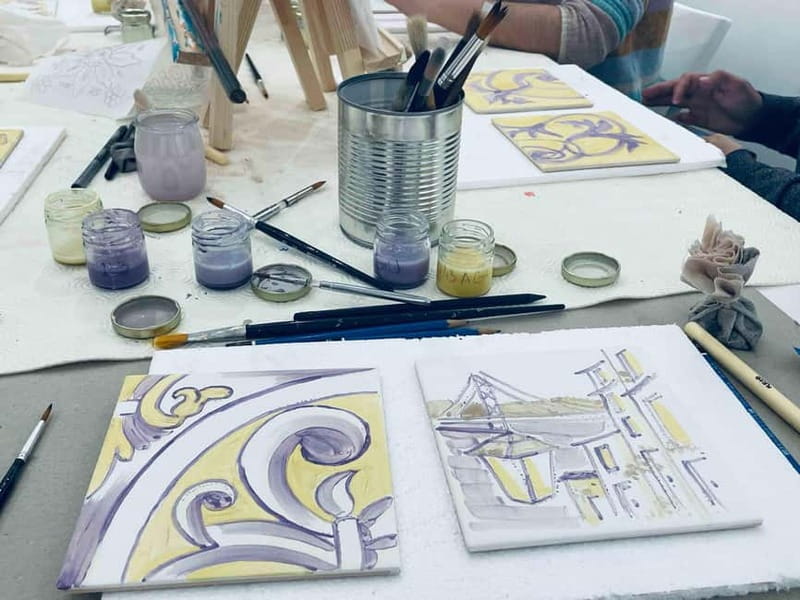
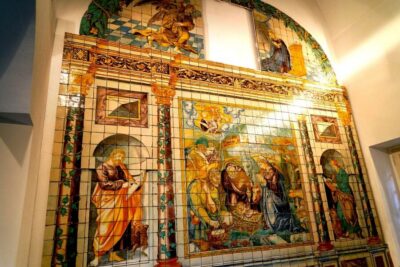
Lisbon is filled with azulejos, from modest geometric panels to grand scenes covering churches and railway stations. It is easy to admire them while walking around the city without understanding how they were made. This workshop gives you a small, practical look at that process.
You begin with a short introduction to Portuguese tile culture. Cristina explains patterns, materials, and the role of tile painting in Portugal. This is not a long lecture. It is enough background to help you notice the difference between a simple decorative pattern and a painted scene with more careful composition.
Then you move from looking to making. You work with ceramic pigments, brushes, tracing paper, pencils, and 15-by-15-centimeter tiles. The surface is already glazed, so the task is painting rather than shaping clay. That distinction matters. This is not a pottery class, and there is no molding, throwing, or sculpting.
I like this focus. Two and a half hours can pass quickly when you are learning a new craft, and limiting the class to tile painting gives you time to create something finished without trying to cover an entire ceramic curriculum.
More Museum Tours in Lisbon
- Lisbon: Luz Stadium Tour & SL Benfica Museum Entry
★ 4.7 · 4,102 reviews - Lisbon: National Tile Museum Entry Ticket
★ 4.6 · 868 reviews - Lisbon: MAAT Gallery and MAAT Central Entry Tickets
★ 4.0 · 559 reviews
The first 20 minutes: a short lesson in azulejos
The workshop opens with introductions and a look at example pieces. You see both traditional and modern designs, which helps explain the range of possibilities. You are not locked into a single historical pattern.
Cristina discusses the connection between tiles and Portuguese culture, along with the materials used in the process. This part gives your work some context. You are not simply decorating a blank square. You are using a method that has been practiced in Portugal for centuries.
The timing is sensible. If you already know a little about azulejos, the introduction will not take over the class. If the subject is new to you, it gives you enough information to make better choices when selecting colors and patterns.
The technical demonstration: glaze, pigments, lines, and filling
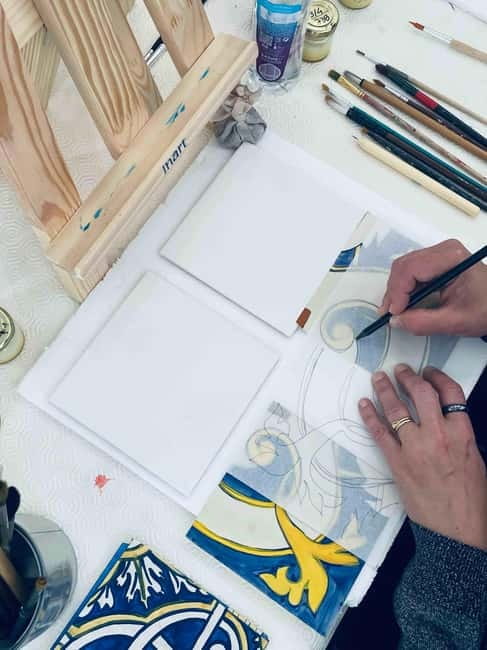
Next comes a practical demonstration. You learn how to paint on the glazed surface, how the pigments behave, and how to manage lines, patterns, and filled areas.
Painting on glaze is different from working on paper. The surface can feel less forgiving, and details need a steady hand. Cristina shows the basic motions before you begin, which is especially helpful if your last serious art project happened at school.
You can use a tracing paper and pencil if you want to transfer an existing drawing. This is a useful option for beginners. It lets you spend your time painting instead of worrying about drawing a perfect outline.
You can also work without a template. Some people choose a prepared design, while others create a personal motif or pair of tiles. I would recommend deciding in advance how much freedom you want. A simple pattern is easier to finish neatly. A detailed scene may look wonderful, but it can take longer than expected.
The main hour: creating two personal tiles
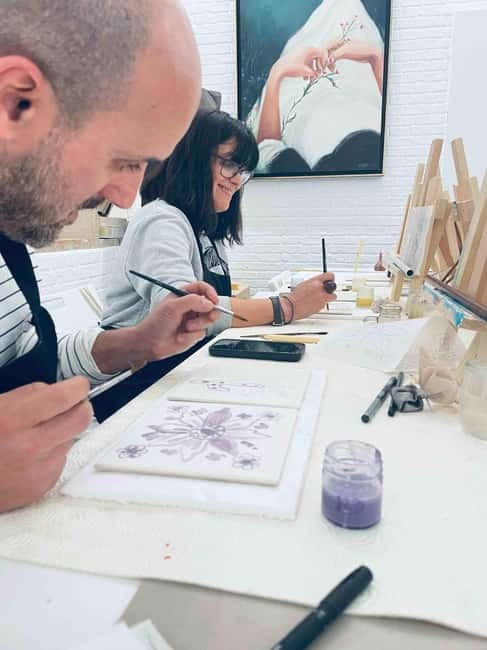
Most of the workshop is devoted to your own work. You sketch, trace, and paint while Cristina moves around the room to answer questions and offer advice.
The class is structured enough to keep you moving, but not so strict that every tile looks alike. You can ask for help with color, technique, or composition, then return to your own idea. This balance is one of the strongest parts of the activity.
You receive two tiles per person. You might paint a pair that belongs together, such as matching geometric designs, or use each tile as a separate experiment. The size is manageable. It is large enough for a clear design, but small enough that you can make progress during one session.
The pigments and brushes are supplied, as are support utensils and aprons. An apron is optional but sensible. Painting can be calm and careful, yet accidents happen when you are focused on a tiny line.
The creative work is also a pleasant change from sightseeing. Lisbon can involve plenty of walking, hills, noise, and constant decisions about where to go next. Here, you sit down and concentrate on one small object. The activity is social without requiring constant conversation, so it works well for couples, families, and friends.
A few more museum visits around Portugal worth comparing
- Porto: Cálem Cellar Tour, Interactive Museum & Wine Tasting
★ 4.5 · 4,113 reviews - FC Porto: Museum & Tour
★ 4.6 · 3,807 reviews - Porto: The Wine Experience, Best Wine Museum in the World
★ 4.7 · 621 reviews - Lisbon: Banksy Museum Permanent Exhibition Entry Ticket
★ 4.7 · 506 reviews
Why beginners and families can handle it
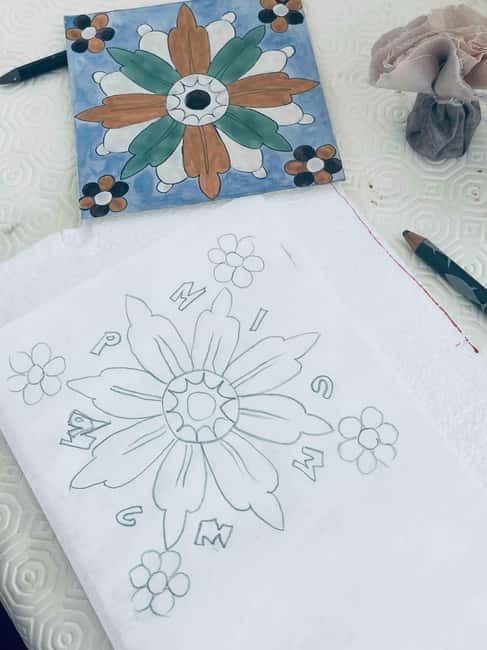
You do not need drawing or painting experience. The demonstration covers the basic techniques, and Cristina gives individual support throughout the session.
That support matters more than the tools. A brush, pigment, and tile do not explain themselves. You may wonder how much paint to use, how to keep a line clean, or how a color will look after firing. Having an instructor nearby keeps small mistakes from becoming a reason to give up.
The class has also worked well for mixed-ability groups. One person can follow a stencil closely while another creates a freehand design. Adults and teenagers can work at their own level, and younger children can take part with patient help.
I would still keep the age and attention span of your group in mind. The class lasts 2.5 hours, and painting two tiles requires concentration. It is a better choice for children who enjoy quiet creative work than for children who need constant movement.
The final 15 minutes: understanding the kiln process
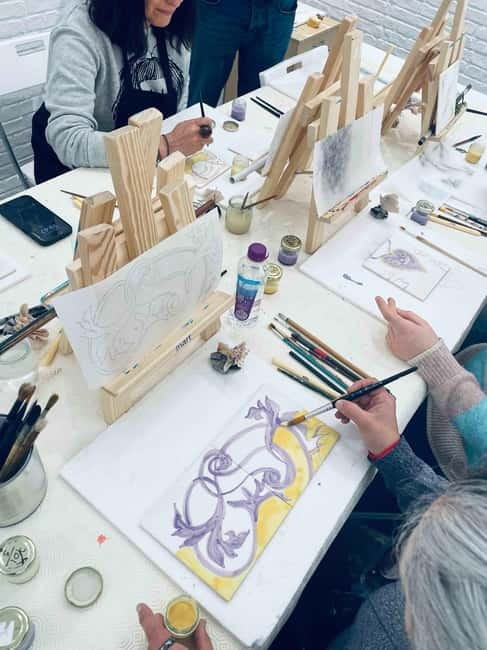
At the end, you look at the finished wet pieces and discuss what happens next. The traditional method requires drying and firing in a high-temperature ceramic oven.
The firing is included in the $58 price, which is an important part of the value. You are not paying only for a class and two pieces of unfired ceramic. You are paying for instruction, materials, two tiles, and the final kiln work.
The wait is the trade-off. The traditional process takes at least 24 hours, and the finished tiles may be ready about three days after the workshop. You arrange a pickup date with Galeria 1758. If you cannot return, the studio can send the tiles by mail, but shipping costs extra.
Plan this early in your Lisbon stay. If you schedule the workshop on your final morning, the souvenir may not be ready before you leave. Several people have found this timing easy to overlook. Put the class near the start or middle of your visit if you want to collect the fired pieces in person.
A faster painting option may allow you to take the tile home the same day, but it does not use the traditional firing process. Ask about this choice before you begin if your departure schedule is tight. The unfired version may solve the timing problem, but it changes the final result.
What the $58 price gets you
At first glance, $58 may seem high for painting two tiles. The price makes more sense when you count what is included: a 2.5-hour guided class, a cultural introduction, technical instruction, two ceramic tiles, pigments, brushes, tracing materials, personal help, and kiln firing.
You are also paying for access to a working art setting rather than buying a mass-produced souvenir. Your final tiles may not be perfect, but they will carry your choices, including the uneven line or color decision that shows they were made by hand.
The price is strongest for someone who values an activity as part of a trip. If you want the cheapest possible souvenir, Lisbon has plenty of other options. If you want time with an artist, a better understanding of azulejos, and a piece you made yourself, the cost is reasonable.
Extra pieces, such as sardines or swallows, are not included. Additional firing also costs extra. Ask about these options before adding them to your project so the final price does not surprise you.
Depending on the venue’s offering, you may enjoy tea, coffee, or wine during the session. These drinks are not the main reason to book, and availability can vary, but they fit the slow, social pace of the workshop.
The instructor and language options
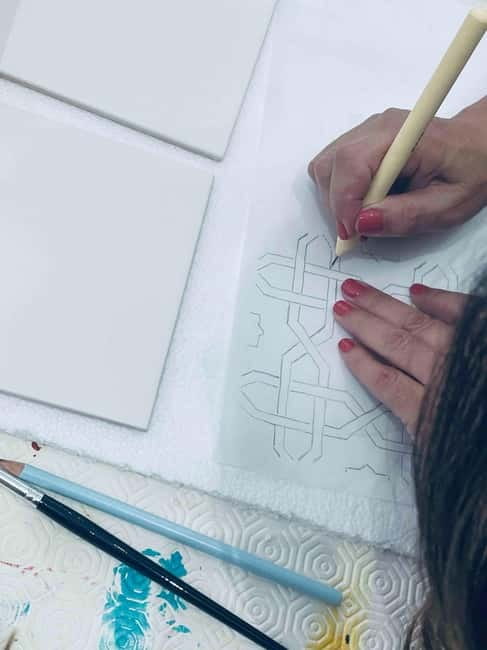
Cristina is the main guide described for this activity. Her teaching style is warm and patient, with clear explanations and hands-on advice. She helps with technique and color, but she does not take over your design.
That is a good arrangement. You get enough structure to learn the method, while the finished work remains yours. If you are unsure about your idea, she can help you simplify it or improve the layout.
The workshop is offered in Portuguese, English, and Spanish. That makes it practical for international visitors, especially during the technical demonstration when small details matter. Some materials or content may appear in the original language, but the main instruction is available in all three languages.
Best for couples, families, and creative souvenirs
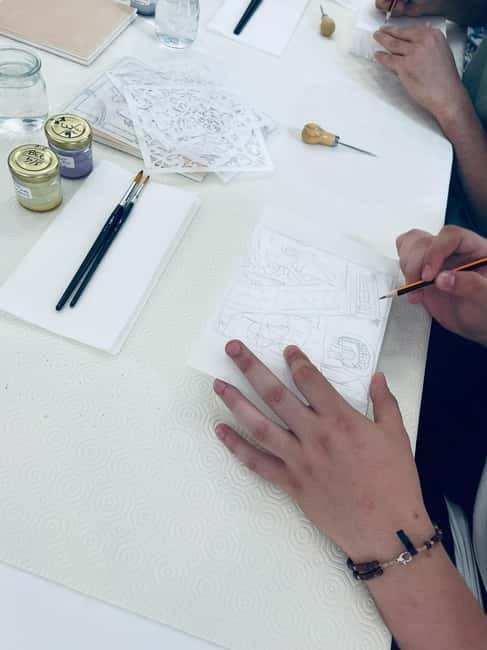
I would recommend this class to couples who want an activity beyond sightseeing. Two tiles give you a simple shared project without forcing you to make identical designs.
It also suits families with older children and teenagers. Everyone can work at a different level, and the result gives the group something tangible to remember Lisbon by.
Solo participants can enjoy it too. The activity provides a natural focus, and the instructor’s support keeps the session from feeling awkward or isolating.
This may not suit you if you want a fast activity with no follow-up. The traditional process creates a delay, and collecting or shipping the tiles takes planning. It is also not the right choice if you specifically want to sculpt or throw clay. This workshop is about painting flat ceramic tiles.
Practical details that affect your plans
The class takes place at Galeria 1758 in the Lisbon District and lasts about 2.5 hours. Starting times vary, so check the available slot when booking.
Wear something you can work in comfortably. Aprons are available, but a little care with sleeves and clothing is still wise. You will be using ceramic pigments, brushes, and a glazed surface for an extended period.
The activity has free cancellation up to 24 hours in advance, and you can reserve now and pay later. Because materials are prepared ahead of time and places are limited, the organizer asks you to make changes or cancellations at least 48 hours before the class. Last-minute cancellations are not eligible for refunds.
The workshop is not a transport tour, so arrange your own way to the gallery. Postal delivery is also separate from the activity price.
Should you book this tile-painting class?
Book it if you want a calm, creative break from Lisbon sightseeing and a souvenir with your own fingerprints on it. The strongest reasons are the patient instruction from Cristina, the useful introduction to azulejo culture, and the chance to create two tiles without needing prior art skills.
Schedule it early enough to collect the fired pieces. If you leave Lisbon soon, ask about the same-day unfired option or budget for postage. With that one timing issue handled, this is a thoughtful activity for couples, families, solo visitors, and anyone who prefers making a memory to simply buying one.
FAQ
Where does the tile-painting workshop take place?
The workshop takes place at Galeria 1758 in the Lisbon District of Portugal.
How long does the workshop last?
The activity lasts approximately 2.5 hours.
How many tiles do I receive?
Each participant receives two ceramic tiles measuring 15 by 15 centimeters.
Do I need painting experience?
No. The workshop is open to all levels, including complete beginners. You receive a demonstration and personal guidance during the painting session.
Which languages are available?
The workshop is offered in Portuguese, English, and Spanish.
Is kiln firing included in the price?
Yes. Traditional kiln firing is included for the two supplied tiles.
Can I take the fired tiles home the same day?
No. Traditional firing requires at least 24 hours, and the tiles may take about three days to be ready. You arrange a later pickup at Galeria 1758 or pay extra for mailing. A faster unfired method may be available for same-day collection.
Are extra ceramic pieces included?
No. Pieces such as sardines or swallows cost extra, and firing additional pieces is also not included.
Can I cancel the booking?
You can cancel up to 24 hours in advance for a full refund. The organizer asks you to communicate changes or cancellations at least 48 hours ahead because materials and spaces are prepared in advance.
Just added around Portugal
- Museum Heist Escape Game★ 5.0 · 28 reviews
- Tavira Total Tuk Tuk Tour: Tavira Tour & Tuna Museum Visit★ 4.9 · 21 reviews
- Lisbon: Benfica Museum Tour with Souvenir Scarf★ 4.8 · 27 reviews
- Madeira: Signature Wine Tasting, Skywalk & Nature Expedition★ 4.7 · 49 reviews
- Porto: Cork Museum: Immersive and Perfect for Families★ 4.2 · 54 reviews
- Porto: Taylor’s Port Cellar Tour & WOW Museum Pack★ 4.7 · 24 reviews
- Porto: National Museum Soares dos Reis E-Ticket & City Tour★ 4.0 · 18 reviews
- Portimao: 3D Fun Art Museum Entry Ticket★ 4.7 · 106 reviews
Museum Tours in Lisbon, compared.


Banksy Museum Permanent Exhibition Entry Ticket
Read our review →
Belem, Jeronimos Monastery, and Coach Museum Tour
Read our review →
Browse the lists this tour appears in