
Review · PARIS
Paris: Orsay Museum Entry Ticket and Digital Audio Guide App
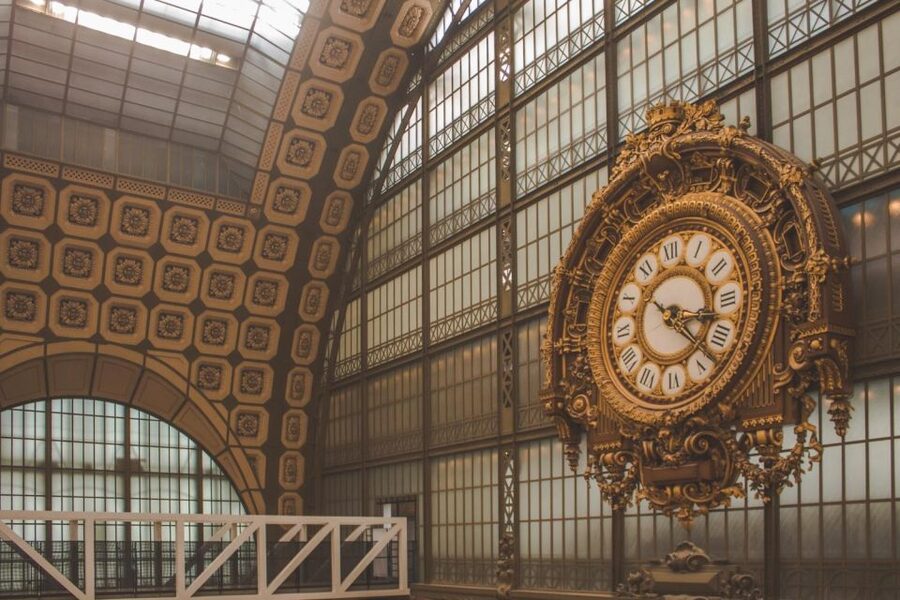
The best thing about this Musée d’Orsay ticket is flexibility. You choose when to arrive on the booked date, then explore one of Paris’s finest collections without joining the line to buy a ticket. The former railway station is part of the experience, with its grand clock, open galleries, and elegant views over the Seine.
I like the chance to focus on the Impressionist and Post-Impressionist rooms at my own pace, and I like having commentary on more than 300 works in several languages. The catch is important: this is not guaranteed priority entry, and the separate audio app can be awkward or incomplete for some famous works.
Key points to know before you book
- Flexible arrival on one booked date: You are not tied to a specific entry hour, which helps if your Paris day includes other plans.
- A former railway station filled with art: The building itself is one of the museum’s great sights, not just a container for paintings.
- More than 300 audio entries: The app covers artists, artworks, and the museum’s architecture, but it does not cover every painting or temporary exhibition.
- The Impressionist rooms are the main draw: Look for Monet, Renoir, Degas, Manet, Cezanne, Van Gogh, and other French masters.
- Use entrance C1: This is the entry point for admission tickets without designated time slots.
- Plan around crowds: Security lines can be long, especially at midday and in high season, and the ticket does not guarantee priority access.
Why the Musée d’Orsay earns a full morning
The Musée d’Orsay is one of those Paris museums where the building and the collection work together. You enter a grand old railway station on the Left Bank, then move through galleries filled with French art from 1848 to 1915.
That date range gives the museum a clear identity. You are not facing the endless sweep of world art found at the Louvre. Instead, you get a focused look at the years when painting, sculpture, decorative arts, photography, and modern city life were changing quickly.
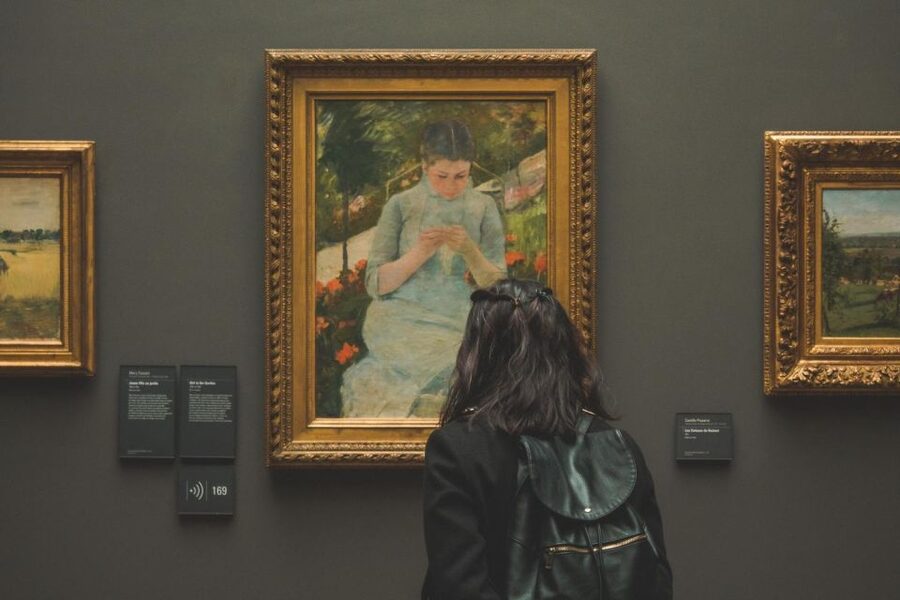
I especially like the way the museum lets you move from academic painting and sculpture toward the loose brushwork of Impressionism and the stronger colors of Post-Impressionism. The change feels easier to understand when the works are in the same building and arranged across several levels.
Give yourself at least two hours for a brisk visit. If you stop often, read labels, use the audio guide, and spend time with the major galleries, you can fill half a day or more. A full day is possible for serious art lovers, though you may want a break at one of the museum’s eating places.
More Museum Tours in Paris
- Paris: Louvre Museum Timed-Entrance Ticket
★ 4.6 · 71,977 reviews - Paris: Orsay Museum Entry Ticket
★ 4.7 · 25,647 reviews - Louvre Museum Masterpieces Guided Tour with Access
★ 4.5 · 12,023 reviews
Entering through C1 with a flexible ticket
This ticket is designed for the person who does not want to commit to a precise arrival time. You book a date, then go to the Musée d’Orsay on that date and use the C1 entrance for admission tickets without designated time slots.
That arrangement can be useful if you are arriving in Paris that morning, fitting the museum between other sights, or simply dislike building your day around a strict appointment. It also helps when the museum’s timed tickets are unavailable.
Do not read flexible entry as the same thing as skip-the-line access. There is no guaranteed priority entry. You still pass through security and ticket scanning, and queues can build during busy periods. At 10 a.m., waits have reached about two hours during crowded periods, while early arrivals have sometimes gone through with only a short wait.
My practical advice is simple: arrive near opening time or later in the day, rather than at midday. If you are visiting in high season, arrive at least two hours before closing, and preferably three hours before closing. That gives you time for security, ticket checks, and the galleries themselves.
You need your voucher, a reachable email address, and a passport or identity card. Large bags and luggage are not allowed, so pack lightly. Download the ticket application and the audio guide before you arrive, not while standing outside the museum.
The station hall and the museum’s first galleries
The main building was created as a railway station, and its scale is immediately striking. The long central space, high roof, stone details, and enormous clock give the museum a sense of place that many galleries lack.
Before you hurry toward the famous paintings, take a few minutes to look at the architecture. The station was designed for a modern form of transport, then saved and repurposed as an art museum. That change is part of the building’s appeal.
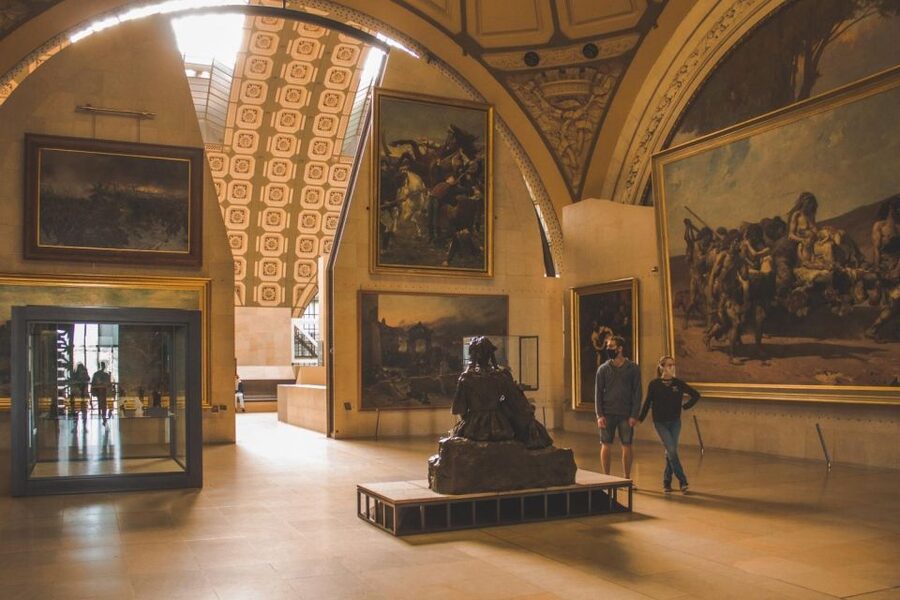
The ground floor covers several sections and includes French paintings, sculpture, furniture, decorative objects, and accessories. This mix helps you see how art connected with daily life. You are not looking only at framed canvases. You are also seeing the interiors, objects, and design tastes of the period.
The ground floor can feel less urgent than the Impressionist galleries upstairs, but it rewards a slower start. It gives you context before you reach the rooms that draw the largest crowds.
The digital guide includes commentary on the museum’s history and architecture, along with selected objects. That is useful if you want more than the short wall labels, though the guide is not a live tour and cannot answer questions or adjust its route to your interests.
The Impressionist collection on the upper floors
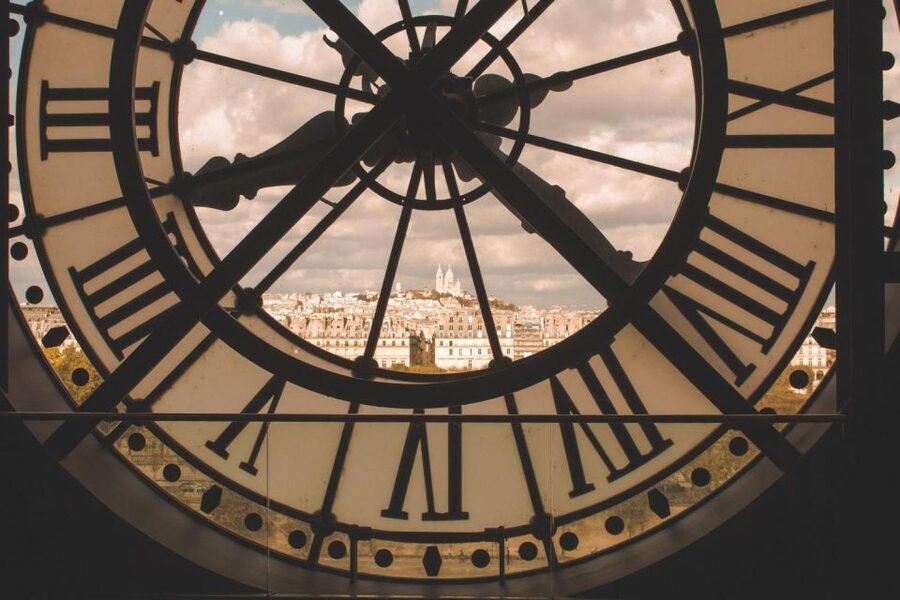
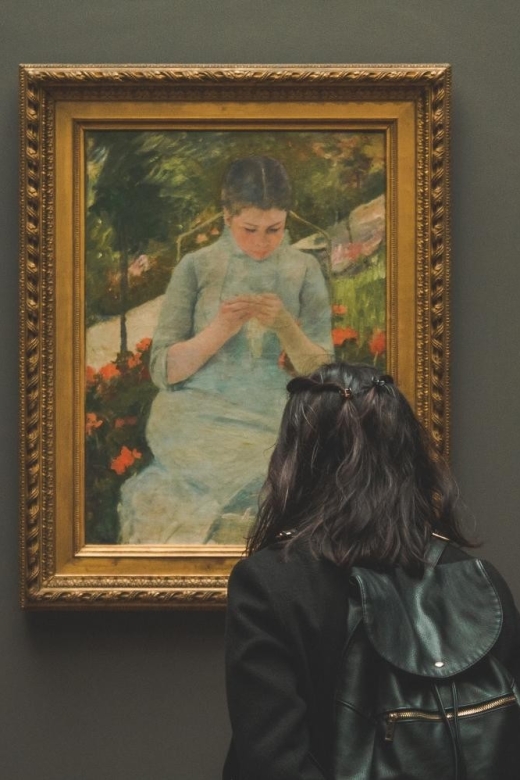
The museum’s biggest magnet is its Impressionist collection. This is where you find major works associated with Monet, Renoir, Degas, Manet, Cezanne, and other painters who changed the way modern life was shown.
The upper galleries can become crowded, especially around the best-known paintings. The fifth floor is often the busiest area, so your route matters. One useful approach is to go upstairs first, see the most important Impressionist rooms before the crowds build, and then work downward.
Another option is to visit late in the day, provided you leave enough time for entry and security. Midday tends to be the hardest period for quiet viewing.
The collection is more rewarding if you resist the urge to photograph everything and instead choose a few works to study. Look at how light is handled, how figures are cropped, and how scenes that once seemed ordinary became worthy of a museum wall.
Your audio guide can help here. It offers explanations of selected works and artists in languages including English, French, Spanish, Italian, German, Portuguese, Chinese, Japanese, Korean, Arabic, Dutch, Hindi, and Russian. Not every language is available for every artwork, and the guide does not cover the temporary exhibitions.
The app is separate from the museum’s own paid audio guide. You receive its link by email, usually one day before your booked date. Install it in advance, charge your phone, and bring your own headphones. The ticket does not include earphones.
A few more museum visits around Paris worth comparing
- Paris: Musée d’Orsay Skip-the-Line Tour with Expert Guide
★ 4.5 · 1,145 reviews - The Musée d’Orsay Guided Tour Orsay Museum Semi-Private 6ppl Max
★ 5.0 · 904 reviews - Louvre & Musée d’Orsay Guided Museum Tour Semi-Private 6ppl Max
★ 5.0 · 619 reviews - Paris: Orsay Museum and Rodin Museum Combo Entry Ticket
★ 4.4 · 470 reviews
Post-Impressionism, Van Gogh, and Sargent
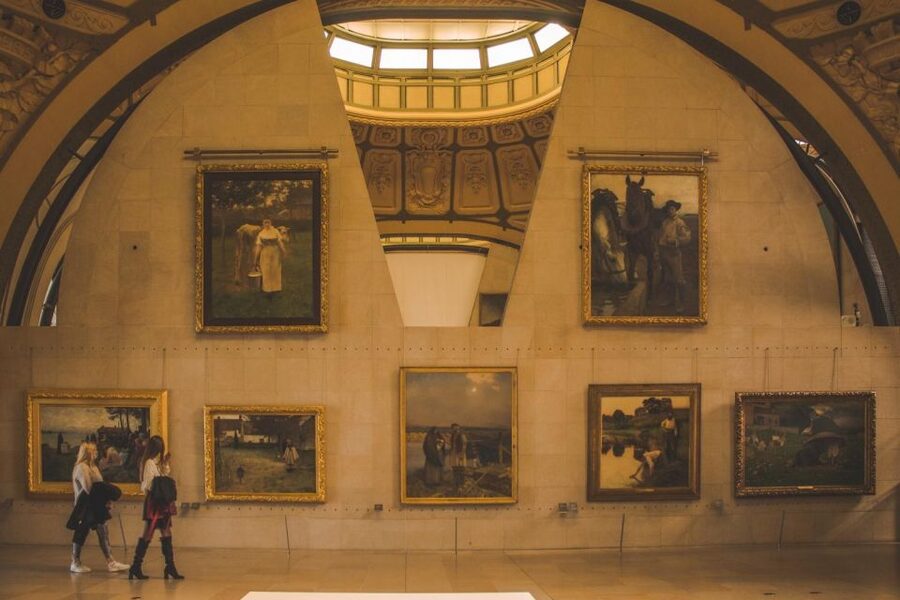
The museum’s appeal does not end with Monet and Renoir. You can also see Post-Impressionist works, including paintings by Van Gogh, along with important works by other artists such as Sargent and Courbet.
This part of the visit helps explain why Impressionism was not an endpoint. The loose handling of light and color led to stronger personal styles, more expressive brushwork, and new ways of organizing a painted surface.
Van Gogh’s works can attract a crowd, so be prepared to wait for a clear view at popular spots. The same is true of other famous paintings. The museum is manageable compared with the Louvre, but the best-known rooms are not always calm.
The audio commentary can make a difference when it works well. It gives you a reason to look closely at the artist’s choices rather than simply moving from name to name. Still, do not depend on it for every major painting. Some well-known works are not included, and the app’s artwork matching may not always line up perfectly with the current display.
The museum’s own signs and labels remain useful. If the app fails, you can still have a strong visit using the printed information and your own route.
How useful is the digital audio guide?
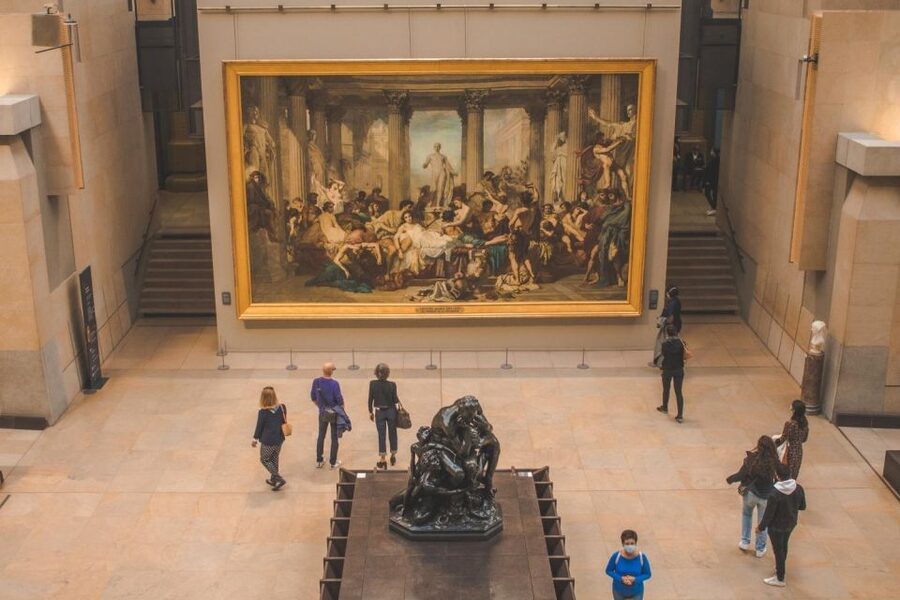
The guide is a helpful extra, but it should not be the sole reason you buy this ticket. Its best feature is range: commentary is available for more than 300 artworks, artists, and parts of the building.
I would use it selectively. Before entering, identify the painters or rooms you care about most. Then use the app for a few key works rather than trying to listen to everything. That keeps your attention on the art and prevents a long museum visit from turning into a series of phone stops.
The setup requires more planning than a standard museum headset. You receive a link through email, download a separate app, and use your own phone and headphones. Some people have found the app easy to install, while others have struggled to make it work or match the commentary to the current displays.
That is why I would treat the guide as a bonus, not a guarantee. Download it before your visit, test it with Wi-Fi or mobile data, and keep the museum’s labels as your backup. If you want a formal, staff-operated audio tour with full coverage of the current displays, the museum’s own audio guide may be a better fit, though it costs extra.
Food, rest, and the famous clock
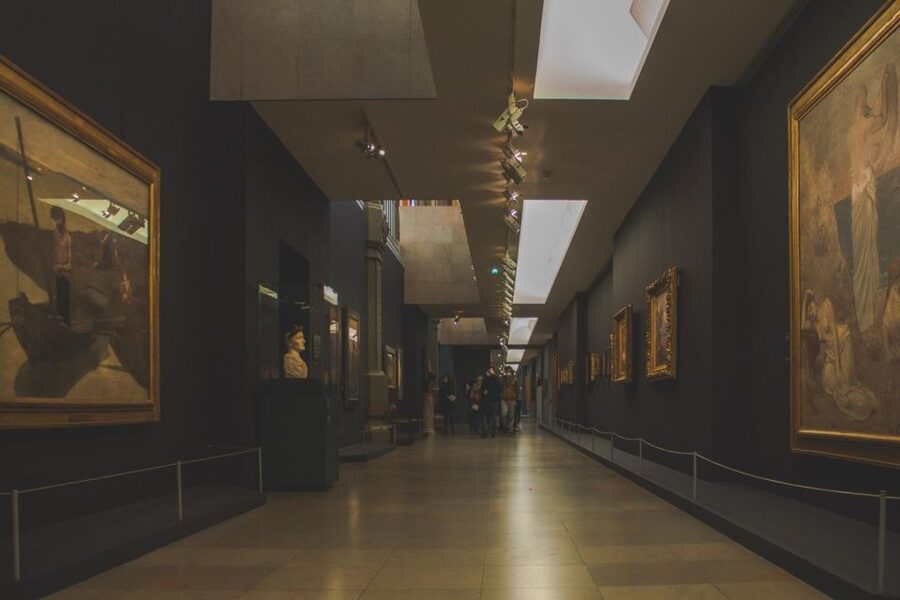
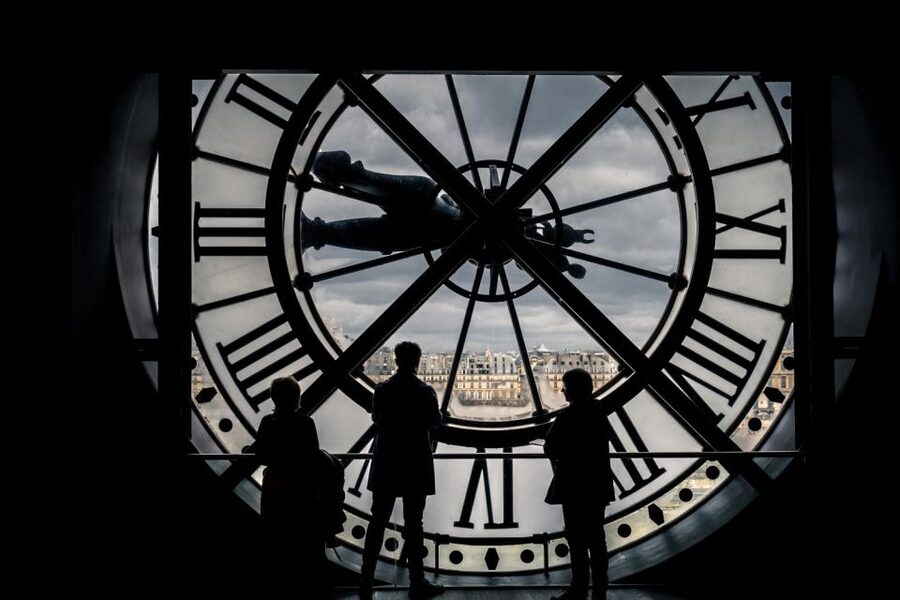
You can spend several hours here without leaving the building. There are places to eat and rest, including a café near the large clock on the fifth level.
The clock area is more than a practical landmark. It offers one of the museum’s most memorable interior views, and the café’s setting is part of its appeal. At busy times, eating places can have queues, so do not build a tight lunch schedule around them.
Use the clock and the central hall as meeting points if your group separates. The museum is spread across levels, and different people may want different amounts of time in the painting, sculpture, or decorative arts rooms.
You can also use the museum as a flexible stop in a broader Left Bank day. The ticket’s untimed entry is valuable if you do not know exactly when lunch, another museum, or a river walk will finish.
Price and value at $31
At $31 per person, this is not the cheapest way into a Paris museum. The value depends mainly on how useful flexible entry is for you.
I think the price makes sense in three situations. First, official timed slots are sold out or do not fit your schedule. Second, you expect to arrive at an uncertain time. Third, you want to avoid buying a ticket at the museum and prefer having admission arranged before the day.
The audio guide adds some value, especially if you want background on Impressionist works and do not want to read every label. But the guide is not a live tour, does not cover temporary exhibitions, and may not include the exact works you most want to hear about.
If you know your arrival time and can buy a suitable official ticket, compare prices before booking. This product is strongest as a flexible-entry solution, not necessarily as the lowest-cost admission.
The ticket allows one entry on the scheduled date. It does not provide a free pass for repeated exits and reentries, so plan to see the museum in one visit.
Who should choose this experience?
I would choose this ticket for a first-time Paris visitor who wants the Musée d’Orsay’s famous paintings but does not want a strict meeting time. It also suits anyone arriving from another city, planning several sights in one day, or booking close to the visit date.
It works well for independent museumgoers. You can pause, skip rooms, return to a favorite painting within the visit, and move at your own speed without keeping up with a group.
Families should note that people under 18 can enter free with valid identification, and EU residents under 26 may also enter free with valid ID. Compare that option with the paid ticket before booking.
This is less suitable if you want a live expert who explains the collection in person. It is also not ideal if you need guaranteed fast entry at a peak hour. The flexible ticket helps with planning, but security queues remain possible.
The museum is wheelchair accessible. Large luggage is not allowed, so make arrangements before you arrive.
Final verdict: book it for flexibility, not promises of instant entry
I recommend this Musée d’Orsay ticket when schedule freedom matters more than getting the absolute lowest price. The museum itself is superb, the former station is memorable, and the Impressionist collection deserves a generous block of time.
Use C1, arrive early or late rather than midday, download the audio guide before leaving your hotel, and bring headphones. If you follow those steps, the ticket can make a complicated Paris day much easier.
Skip it if you already have a timed museum ticket that fits perfectly, or if your main goal is a live guide. Book it if you want to see Monet, Renoir, Degas, Van Gogh, and the building’s grand interior on your own terms.
FAQ
Is the Musée d’Orsay ticket timed?
No. This ticket provides flexible entry on the booked date rather than a designated arrival time. You still need to use it on the scheduled date.
Which entrance should I use?
Use entrance C1 for admission tickets without designated time slots.
Does the ticket guarantee skip-the-line entry?
No. It does not provide priority access. You may still wait at security and ticket scanning, especially during high season.
How long should I allow for the museum?
Allow at least two hours for a brisk visit. Three or more hours is better if you want time for the major galleries, audio commentary, architecture, and breaks.
Is the audio guide included?
Yes. A complimentary digital audio guide app is included, with commentary on more than 300 artworks and museum features.
Do I need to download the audio guide before arriving?
Yes. The audio guide comes through a separate app link sent by email, usually one day before your booked date. Download it before visiting.
Are headphones included?
No. Bring your own headphones or earphones.
Does the audio guide cover temporary exhibitions?
No. Information about temporary exhibitions is not included in this digital audio guide.
In which languages is the audio guide available?
The listed language options include Arabic, English, Dutch, French, Hindi, Japanese, Korean, Portuguese, Spanish, Chinese, Italian, Russian, and German. Some languages may not be available for every artwork.
Can children enter for free?
People under 18 may enter free with valid identification. EU residents under 26 may also enter free with valid ID.
Can I bring luggage into the museum?
No. Luggage and large bags are not allowed.
Is the museum wheelchair accessible?
Yes. The Musée d’Orsay is wheelchair accessible.
Can I leave and return with the same ticket?
The ticket is valid for one entry on the booked date. Plan to complete your visit in one entry.
More Audio-Guided Visits in Paris
- Paris: Louvre Museum Ticket with Audio guide
★ 3.7 · 99 reviews - Istanbul: Topkapi Palace & Harem Museum Ticket & Audio Guide
★ 4.1 · 3,977 reviews - Florence: Uffizi Gallery Timed Entry Ticket & Audio Guide
★ 4.2 · 2,794 reviews - Athens: Acropolis Museum Ticket with optional Audio Guide
★ 4.4 · 2,652 reviews
More Self-Guided Tours in Paris
- Louvre Museum Timed Entrance Ticket with Audio Guide
★ 3.0 · 453 reviews - Paris: Louvre Museum Hosted Entry & Masterpieces Audio Guide
★ 4.2 · 281 reviews - Paris: Museum of Decorative Arts Ticket and City Audio Tour
★ 3.3 · 146 reviews - Paris: Rodin Museum Skip-the-line Entry Ticket with Audio
★ 4.0 · 102 reviews
Just added around Paris
- Rodin Museum Masterpieces – Guided Tour up to 8 guests★ 4.9 · 13 reviews
- Invalides Museum – WWI & WWII – Guided Tour up to 8 guests★ 5.0 · 32 reviews
- Skip the Line Guided Tour of Louvre Museum Highlights★ 5.0 · 49 reviews
- Paris: Louvre Museum Highlights Small-Group Guided Tour★ 4.8 · 157 reviews
- From Paris: Private Trip to Giverny, Monet’s House & Museum★ 4.5 · 13 reviews
- Paris: Street Art Open-Air Museum Bike Tour★ 4.8 · 51 reviews
- Paris: The Rodin Museum and Seine River Cruise★ 4.6 · 45 reviews
- Paris: Rodin Museum Ticket & Optional Digital AudioGuide App★ 4.7 · 56 reviews
Museum Tours in Paris, compared.


Louvre Museum Masterpieces Guided Tour with Access
Read our review →
Louvre Museum Entry Ticket With Host and River Cruise
Read our review →
Les Invalides: Napoleon’s Tomb & Army Museum Entry
Read our review →
Mona Lisa & Louvre Masterpieces Tour with Reserved Access
Read our review →
Louvre Museum – Exclusive Guided Tour (Entry Included)
Read our review →
Louvre Museum Hosted Entry and Mona Lisa Audioguide
Read our review →Browse the lists this tour appears in