
Review · NEW YORK CITY
NYC: Mercer Labs Museum of Art and Technology
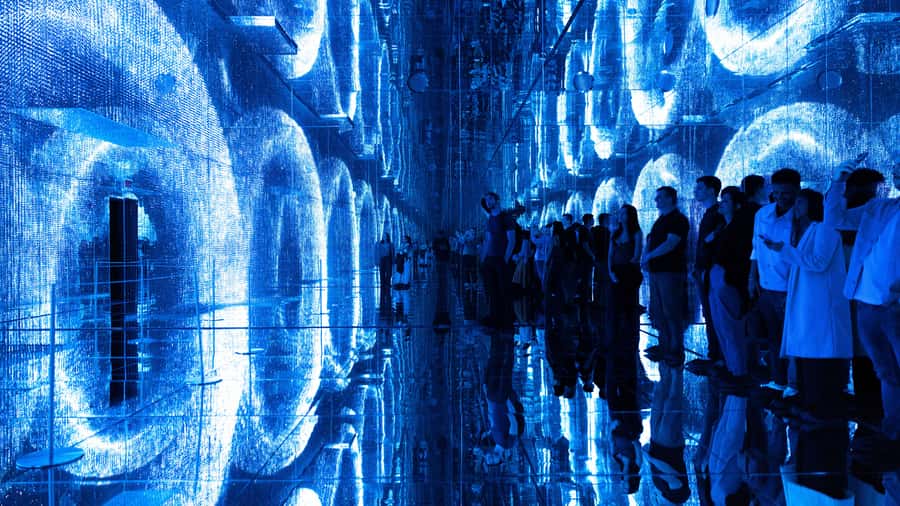
The most striking part of Mercer Labs is the way it turns you from a spectator into part of the artwork. One room surrounds you with omni-directional 4D sound, while another can turn your own animal drawing into a moving 3D video. The 507,000-LED infinity room gives the visit its biggest visual punch.
I like the mix of hands-on play and serious design, which works for children and adults alike. I also like the range: Roy Nachum’s art, hypnotic sound, video, mirrors, and light all appear within a single downtown visit. The main drawback is value. At $56 per person, an hour to 75 minutes can feel expensive, especially if a room is closed or crowds make it harder to enjoy.
Key points to know before you go
- Fifteen interactive rooms: Expect a multi-level route through sound, light, video, mirrors, drawing, and physical sensation.
- A rare 4D sound room: Omni-directional audio makes sound feel like it is moving around you, not simply coming from speakers.
- Your drawing becomes part of the show: Create an animal and watch it appear in an interactive 3D video.
- 507,000 LEDs in the infinity room: This is the biggest visual moment and a strong reason to bring a camera.
- Downtown location: The entrance is at Church and Dey Streets, close to Cortlandt Street subway station.
- Plan for 60 to 75 minutes: It is easy to fit into a day of sightseeing, but a crowded visit may feel shorter.
Entering Mercer Labs at Church and Dey Streets
Mercer Labs sits in downtown New York, with its main entrance on the corner of Church and Dey Streets. Cortlandt Street Station is the closest subway stop, so you can pair the museum with other Lower Manhattan sights without setting aside a full day.
The building contains several levels and 15 exhibition rooms. You are not signing up for a guided tour with a long talk at each stop. Instead, an English-speaking host or greeter helps with entry and the route, while the installations do most of the explaining through sound, light, images, and movement.
That format is useful if you prefer to set your own pace. You can pause when a room catches your attention, take photographs where permitted, and move on when you have had enough. The downside is that some pieces may leave you wanting more context. One visitor found the art fascinating but wished each room offered more background about its ideas and creators.
Give yourself the full 60 to 75 minutes. You might pass through more quickly if the museum is quiet, but the experience loses some of its value if you rush from one effect to the next.
More Museum Tours in New York City
- NYC: Empire State Building Tickets – Observatory & Museum
★ 4.7 · 25,757 reviews - New York City: American Museum of Natural History Ticket
★ 4.5 · 15,447 reviews - NYC: Museum of Modern Art (MoMA) Entry Ticket
★ 4.6 · 12,540 reviews
Fifteen rooms that ask you to take part
Mercer Labs is not a traditional museum where you walk past framed works in silence. The 15 rooms are designed to make your senses part of the visit. You may look at a wall, but you may also listen closely, stand inside a changing image, interact with a screen, or feel vibrations through the room.
The order and availability of individual rooms can vary. That matters because one visitor arrived especially interested in the chess room and found it closed. If a particular installation is the main reason you want to visit, check its current availability before you pay.
The variety helps keep the hour moving. A room built around sound feels different from one built around a large video projection, and both feel different again from the mirrored LED display. Families tend to benefit from this change of pace because children can engage with the technology while adults consider the design and artistic choices behind it.
Still, this is best treated as a focused entertainment and art experience, not as a conventional museum with detailed labels and long curatorial essays. You will get more from it if you judge each room by what it makes you see, hear, or feel rather than waiting for a full explanation of every technical detail.
The 4D Sound gallery and the vibration room
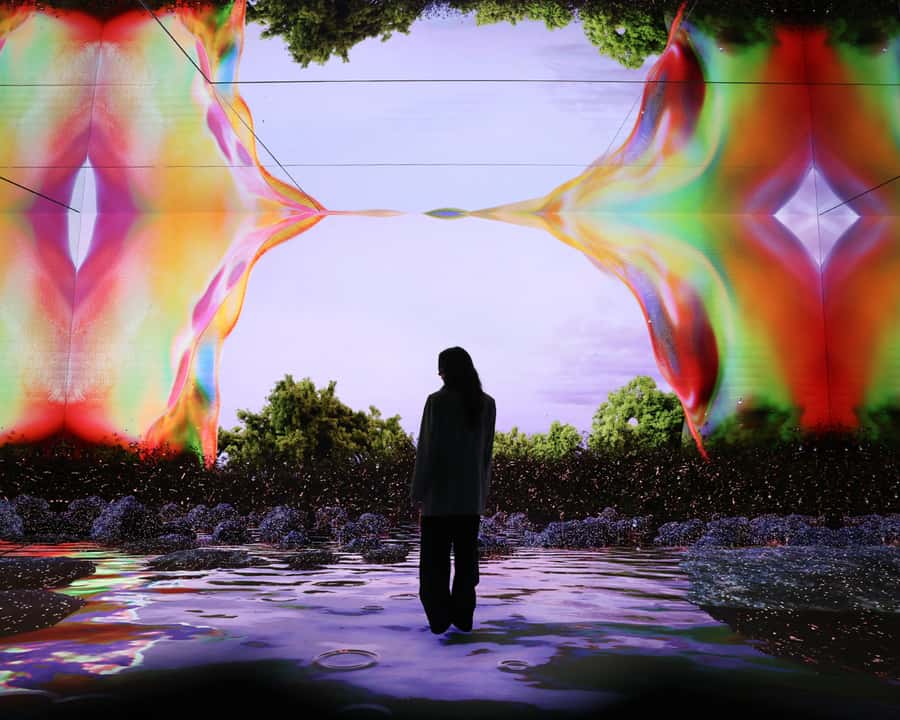
The 4D Sound gallery is one of Mercer Labs’ most unusual features. Omni-directional audio surrounds you from different directions, giving the room a sense of movement and depth. Instead of listening to a track from a fixed point, you become aware of sound passing around your body.
This room rewards quiet attention. If you stand still and listen, the effect is more interesting than simply treating it as background music while taking photographs. It is also one of the places where a loud group can change the experience, since outside noise competes with the work.
A separate vibrations room adds a physical element. Here, the point is not only what you hear but what you feel. That can be memorable for children and for anyone interested in the connection between technology and the senses, though it may not appeal to every visitor.
The sensory rooms are a good example of Mercer Labs’ strengths. They show technology doing something more useful than displaying a bright image on a wall. At the same time, the effect depends on the room being reasonably calm and not too crowded.
Drawing an animal and watching it appear in 3D
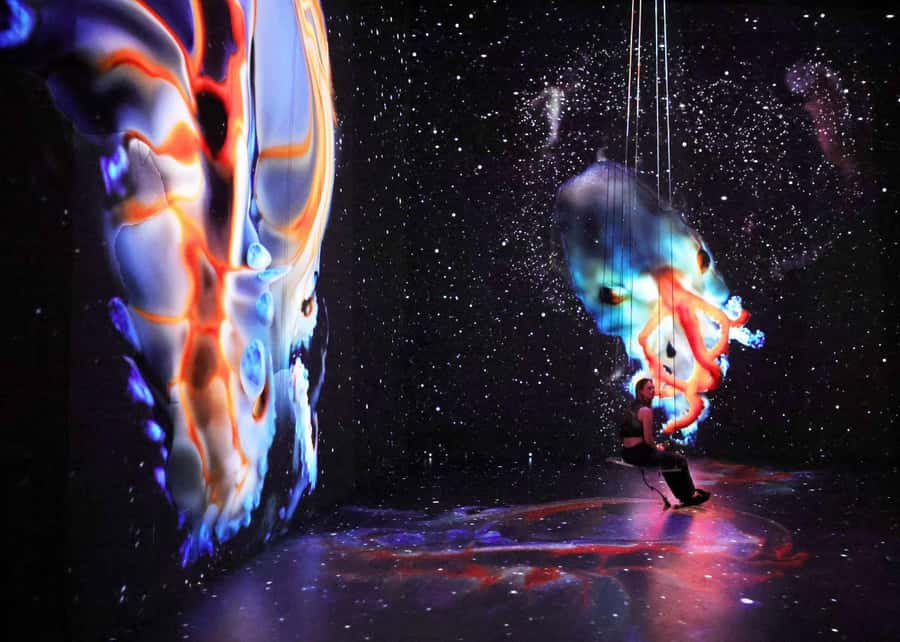
The interactive animal activity is likely to be a favorite for families. You draw your own animal, then see that creation brought into an interactive 3D video. The appeal is simple: your input changes what appears on screen.
That small act makes the visit feel personal. You are not only looking at a finished installation made by someone else. You contribute a rough sketch and then see technology give it movement and presence.
I would allow extra time here if you are visiting with children. Younger children may want to draw more than once, and adults may enjoy seeing how the simple drawing changes once it enters the digital display. The activity also gives the visit a clear break from rooms that ask you mainly to watch or listen.
The experience is still short, so do not expect a full workshop or a long creative session. It is a quick interactive moment within a larger route. Its value comes from the surprise of seeing your drawing appear, not from detailed instruction.
A few more museum visits around New York City worth comparing
- 9/11 Memorial, Ground Zero Tour with Optional 9/11 Museum Ticket
★ 5.0 · 6,381 reviews - 9/11 Memorial Museum Admission Ticket
★ 4.5 · 6,376 reviews - All-Access 9/11: Ground Zero Tour, Memorial and Museum, One World Observatory
★ 5.0 · 4,886 reviews - NYC: Intrepid Museum Entry Ticket
★ 4.7 · 4,687 reviews
Roy Nachum’s art and the question of context
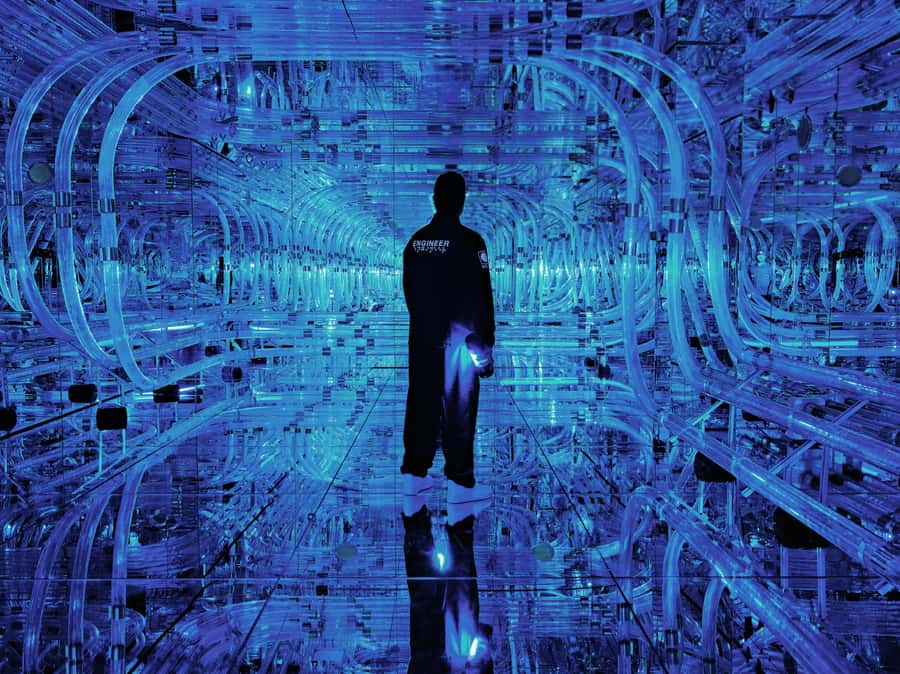
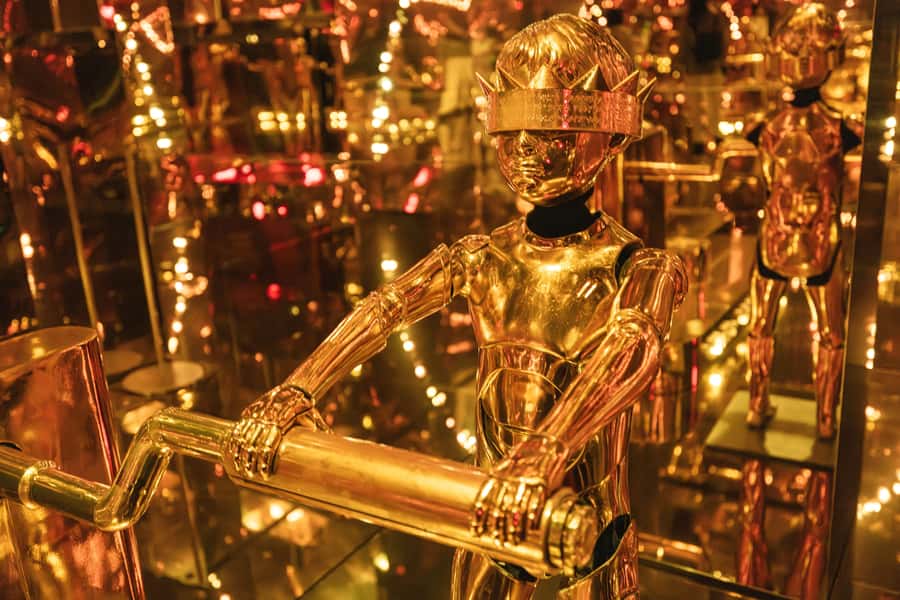
Mercer Labs also presents work by Roy Nachum, the designer associated with Rihanna’s Anti album. This gives the museum a stronger art and design connection than a simple digital attraction.
Nachum’s work is useful context for understanding the museum’s larger aim. Mercer Labs treats technology as a way to change how you encounter an image, rather than as decoration added after the fact. Video, sound, scale, and changing viewpoints can alter the way you read a piece.
A video presentation in one room explains the artist’s paintings. I found that kind of background important because it gives you a way into the work. Without it, some visitors may simply see a striking image and move on without knowing what they are meant to consider.
The balance between explanation and sensory effect is not perfect. Some rooms give you an obvious activity or visual surprise, while others may leave you wishing for more information. If you enjoy learning the story behind an artwork, you may want to spend extra time with the explanatory video and read any available text rather than racing toward the next room.
The 507,000-LED infinity room
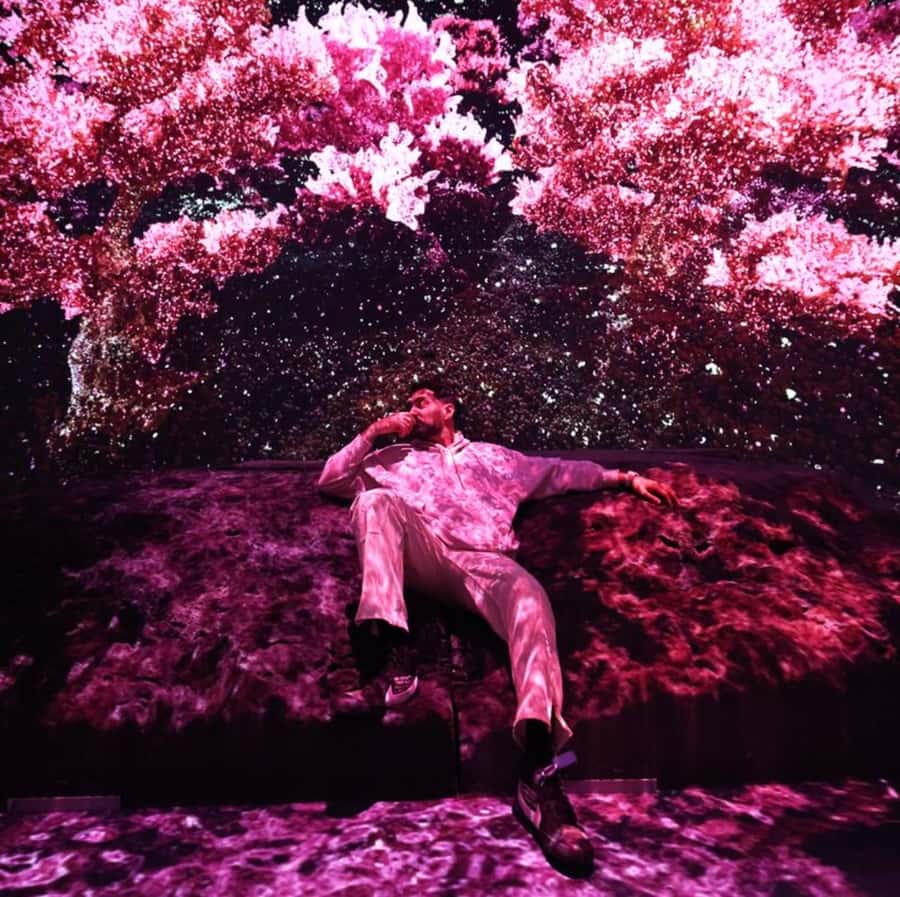
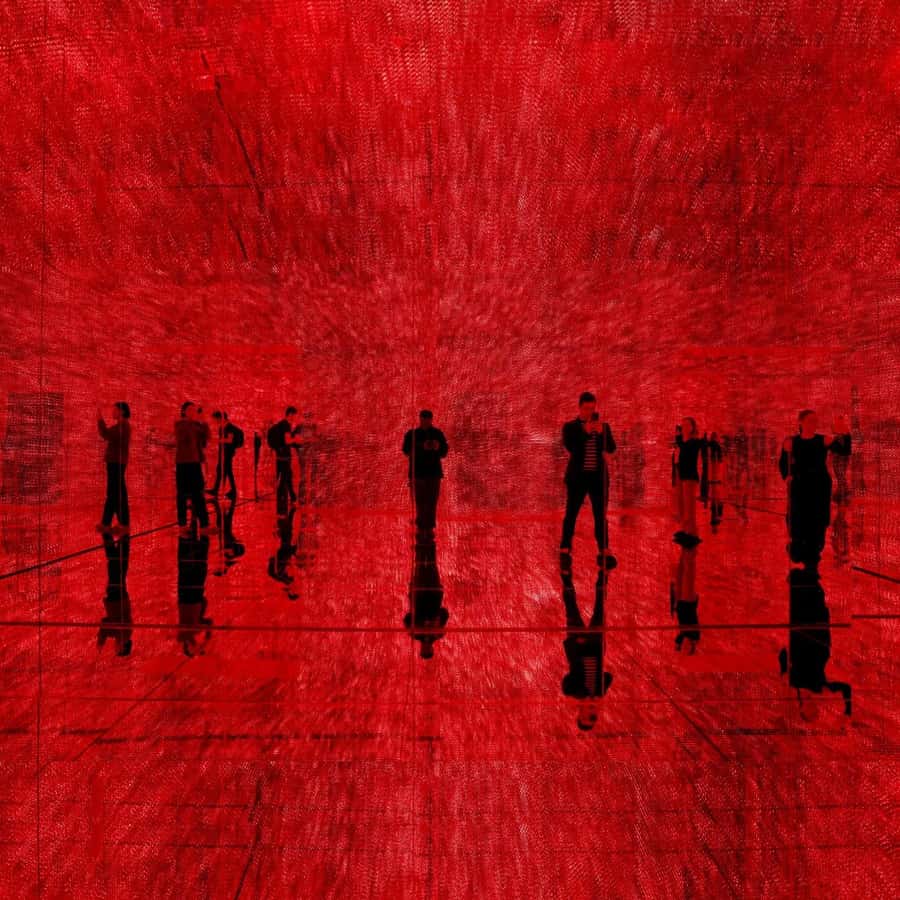
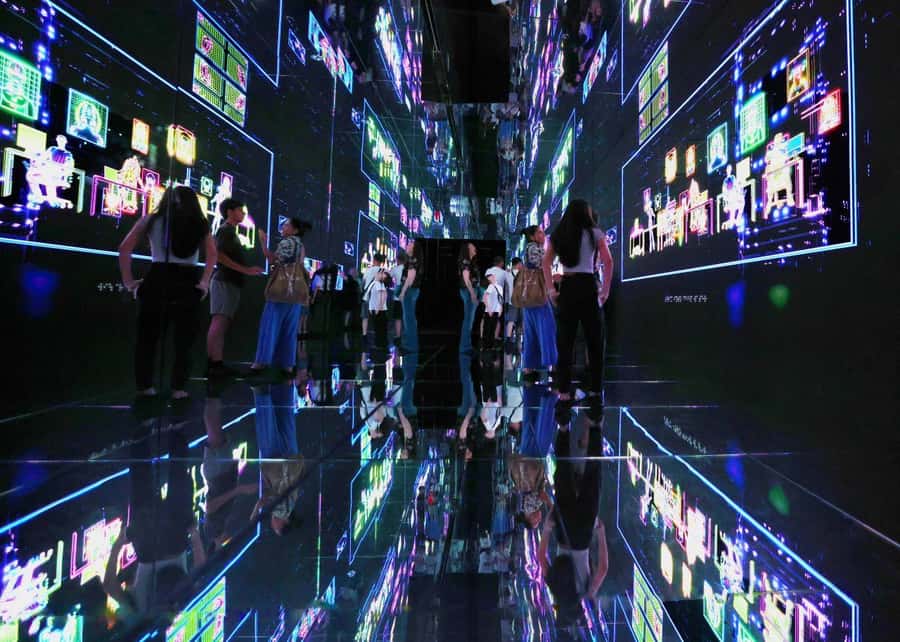
The infinity room is the visual centerpiece. With 507,000 LEDs and mirrored surfaces, it creates a seemingly endless field of light. This is the room most likely to make you stop and simply look.
The scale matters. A wall of LEDs can be impressive, but mirrors and repeated points of light change your sense of distance. The effect is less about a single image and more about being surrounded by a pattern that seems to continue beyond the room.
This is also one of the best places for photographs, though timing matters. Crowds can make it difficult to frame a clean image, and you may have to wait for a clear view. If photography is important to you, a quieter entry time will help.
Do not expect the infinity room to carry the whole visit by itself. It is the most obvious visual highlight, but the museum works best as a sequence of contrasts: bright light followed by deep sound, a large digital display followed by a personal drawing activity, and spectacle followed by a room that asks you to pay closer attention.
What the visit feels like with children
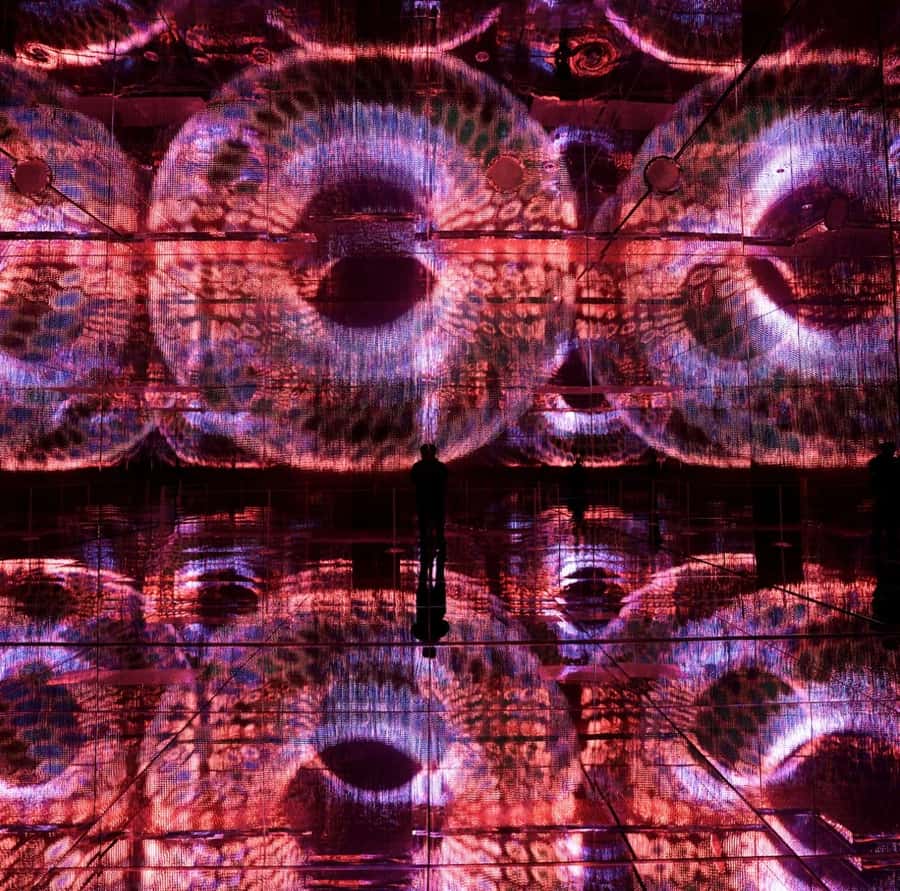
Mercer Labs is particularly well suited to families with school-age children. The interactive drawing activity gives younger visitors something direct to do, while the changing rooms keep the route from feeling like a long walk through a standard gallery.
Children aged seven and ten have enjoyed the experience alongside adults, and the installations can appeal across generations. You do not need to be an art specialist to appreciate a room that changes with your movement or surrounds you with sound.
The main family concern is noise. Loud children can affect rooms that depend on careful listening, especially the vibration and sound areas. The same issue can affect adults visiting without children, so consider going at a less crowded time if you want a calmer visit.
Strollers are not permitted inside the exhibition. Plan to leave yours behind before entering. Food and drinks are also not allowed, and there is no coat check, so avoid arriving with bulky items you do not want to carry through the rooms.
Crowds, photographs, and pacing
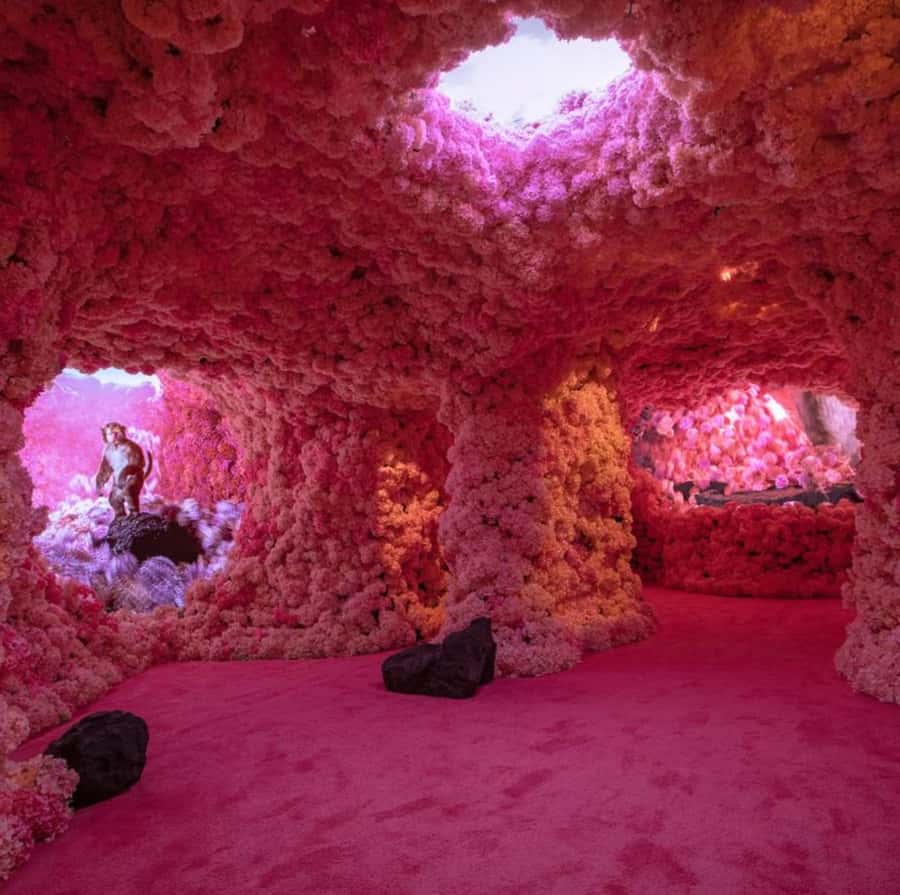
The experience can feel wonderfully open when several rooms are quiet. You may get a few installations largely to yourself, which gives the sensory effects more room to work. At busier times, the same rooms can feel cramped, and taking photographs becomes harder.
Crowds matter most in rooms that depend on personal space or a clear view. A large mirrored display loses some of its impact if you are waiting behind several people. Sound-based rooms also suffer when conversation rises around you.
I would not plan a tight connection immediately after your entry time. The stated visit length is 60 to 75 minutes, but you may need to wait briefly in a popular room or take longer with the pieces you enjoy. Last entry is available 75 minutes before closing, so arriving late in the day requires care.
The museum is fully wheelchair accessible and service animal friendly. Students need to show valid identification. The entrance is easy to locate at Church and Dey Streets, but the lack of stroller access and coat check is worth keeping in mind before you set out.
Is $56 a fair price?
At $56 per person, Mercer Labs is not a casual bargain. The visit is shorter than a full-day museum, and many people will finish in about an hour to 75 minutes. One useful way to judge the price is to compare it with what you want from the afternoon.
The cost makes more sense if you value new media, visual design, sound, and interactive art. You are paying for a purpose-built series of rooms with lighting, video, audio, mirrors, and digital systems working together. The experience is also easy to add between other downtown plans.
The price feels less convincing if you expect a large collection, extensive written information, or a traditional museum visit lasting several hours. Some visitors have considered the experience closer to $40 in value. That is a fair concern, especially if a room you hoped to see is unavailable or the museum is crowded.
I would book it when you want something playful and highly visual, particularly for a family or a couple looking for a change from New York’s historic sights. I would hesitate if you are watching your budget or prefer museums with a lot of art and background material for the price.
Flexible booking helps reduce the risk. You can cancel up to 24 hours in advance for a full refund, and the reserve-now, pay-later option lets you hold a place without paying immediately.
Who should book Mercer Labs?
I recommend Mercer Labs to:
- Families with children who like interactive screens, drawing, light, and sound.
- Couples looking for a colorful, photograph-friendly indoor activity.
- Design fans interested in Roy Nachum and the meeting point between art and technology.
- Visitors who want a compact downtown experience lasting about an hour.
- People who enjoy sensory installations more than traditional gallery labels.
I would be more cautious if you dislike loud audio, changing lights, crowds, or technology-led art. The museum also may not satisfy you if you want a detailed history of each work or a long, quiet visit among original paintings.
For the best experience, go in with the right expectation. This is a short, high-impact art attraction. Let each room work on you for a moment, but do not expect every installation to offer the same level of explanation or interaction.
Should you book Mercer Labs?
Book Mercer Labs if you want a highly visual New York activity that combines art, sound, digital play, and physical sensation in one compact visit. The 4D Sound gallery, personal animal drawing, Roy Nachum connection, and 507,000-LED infinity room give you more variety than a single projection show.
At $56, I would book during a quieter time and confirm that any must-see room, such as the chess installation, is open. Families and design-minded adults are likely to get the most from it. If price is your main concern, the limited visit length means you should choose Mercer Labs for its specific technology and sensory effects, not simply because you need another museum on your New York list.
FAQ
Where is Mercer Labs located?
The museum entrance is on the corner of Church Street and Dey Street in downtown New York. The closest subway station is Cortlandt Street Station.
How long does a visit to Mercer Labs take?
You should allow 60 to 75 minutes to enjoy the full experience. The last entry ticket is available 75 minutes before the museum closes.
What is included in the ticket?
The ticket includes entry to Mercer Labs, Museum of Art and Technology. Food and beverages are not included.
How much does Mercer Labs cost?
The listed price is $56 per person.
Is Mercer Labs wheelchair accessible?
Yes. The activity is fully ADA-accessible and service animal friendly.
Are strollers allowed inside Mercer Labs?
No. Strollers are not permitted into the exhibition.
Are food and drinks allowed?
No. Food and drinks are not allowed inside the museum. Glass objects, weapons, and sharp objects are also prohibited.
Can I cancel my booking?
Yes. You can cancel up to 24 hours in advance for a full refund. You can also reserve now and pay later.
Just added around New York City
- The Met Museum Guided Tour with Skip-the-Line Entry★ 4.4 · 149 reviews
- New York City: The Banksy Museum Entry Ticket★ 4.6 · 51 reviews
- NYC: Entry Ticket To The Banksy Museum★ 4.5 · 89 reviews
- Self-Guided Tour of the Museum at Eldridge Street★ 4.3 · 13 reviews
- New York: Private Tour of The Metropolitan Museum of Art★ 4.9 · 39 reviews
- NYC: Museum of the Moving Image Flexible Ticket★ 4.6 · 95 reviews
- NYC: Whitney Museum Ticket★ 4.2 · 315 reviews
- NYC: Museum of Sex Entry Ticket★ 4.2 · 179 reviews
Museum Tours in New York City, compared.


9/11 Memorial, Ground Zero Tour with Optional 9/11 Museum Ticket
Read our review →

All-Access 9/11: Ground Zero Tour, Memorial and Museum, One World Observatory
Read our review →

Browse the lists this tour appears in