
Review · NEW YORK CITY
New York City: Museum of Illusions Entry Ticket
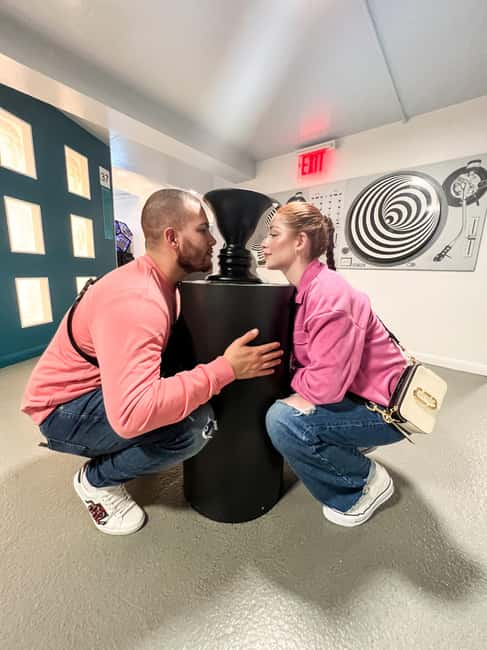
The Museum of Illusions turns a museum visit into a series of visual puzzles. You can appear to grow or shrink, defy gravity, step into a kaleidoscope, and watch holograms change as you move. I like the hands-on design and the fact that the exhibits work well for families, friends, and date nights.
I also like the mix of simple fun and basic science. You are not just looking at art behind glass; you are testing how your senses process a scene. The main consideration is value: at $35 per person, some visitors may find the museum small and the visit shorter than expected.
Key points to know before you go
- More than 50 interactive exhibits include illusion rooms, installations, holograms, and visual puzzles.
- The best moments are hands-on, with chances to alter your apparent size, challenge your balance, and step into a life-size kaleidoscope.
- The Chelsea location is easy to identify, at 77 8th Ave., near the corner of West 14th Street and 8th Avenue.
- Plan for a compact attraction, since several visitors found the museum smaller and shorter than expected.
- The $35 ticket is strongest for families and groups, where taking photos and trying exhibits together adds to the fun.
- Check operating times before setting out, since a reported closing-time change caused one family to arrive when the museum was not open.
What the Museum of Illusions actually offers

This is not a traditional museum with a long collection of paintings, objects, or historical displays. It is a chain of visual challenges arranged around the science of perception. Your job is to look, move, compare, and sometimes pose for a photograph.
The central idea is simple: your eyes collect information, but your brain decides what that information means. The museum uses tilted rooms, altered perspectives, mirrors, light, scale, and motion to make that process visible. You may know that an effect is a trick, yet your senses still react to it.
That makes the attraction easy to understand without a guide. No guide names are provided, and the visit is presented as a self-directed experience rather than a scheduled tour. You move from display to display at your own pace, trying each setup and reading the explanations where available.
The museum lists more than 50 exhibits. That is a healthy number, but it does not necessarily mean 50 large rooms. The total includes illusion rooms, installations, holograms, and smaller interactive displays. If you are expecting a huge museum that fills an entire afternoon, adjust your plans.
More Museum Tours in New York City
- NYC: Empire State Building Tickets – Observatory & Museum
★ 4.7 · 25,757 reviews - New York City: American Museum of Natural History Ticket
★ 4.5 · 15,447 reviews - NYC: Museum of Modern Art (MoMA) Entry Ticket
★ 4.6 · 12,540 reviews
Inside the illusion rooms and holograms

The illusion rooms are likely to be the main reason you buy a ticket. These are the displays that change your sense of size, direction, or balance. The attraction specifically promises chances to appear taller or shorter and to defy gravity.
The fun comes from the contrast between what you know and what you see. A tilted room can make an ordinary pose look impossible. A change in perspective can make one person appear much larger than another. You do not need special knowledge to enjoy these effects, but the science explanations give the displays more purpose than a simple photo backdrop.
The holograms add another kind of trick. They depend on light and viewpoint, so the image can appear to shift as you look from different positions. These exhibits are often quick to understand, which helps keep the visit moving, though they may not hold your attention as long as the larger rooms.
The life-size kaleidoscope is another notable feature. Instead of peering into a small toy, you step into a space made of repeated shapes and reflections. It is a good example of the museum’s approach: take a familiar illusion and make it large enough for you to enter.
You will want to take photos, especially in the rooms where scale and perspective are distorted. That is part of the attraction, not a side activity. Still, the ticket does not promise professional photography or a photographer, so you should be prepared to take pictures for one another.
How long your visit may feel
The ticket is valid for one day, with starting times shown when you check availability. That wording gives you a date and entry period, but it does not promise a full-day program. The experience has no long route through several floors or separate collections.
One French-language comment described the visit as not bad but a little short. Other feedback called the museum quite small and said there was not much to see. That pattern matters when you plan your day. I would treat this as a short Manhattan activity that can fit between meals, shopping, or another Chelsea stop, not as the main event of a full day.
The actual length will depend on how carefully you try the exhibits, how crowded the rooms are, and how much time you spend taking photos. A family with children may linger at each station. A pair of adults who move quickly may finish sooner.
The compact size can be a plus. You do not need to walk for hours, and younger children are less likely to tire before reaching the end. The drawback is that $35 can feel high if you have paid for a long museum visit and find yourself finished quickly.
The $35 ticket and the value question
Admission costs $35 per person and includes entry to the Museum of Illusions New York City. There are no listed extras such as a tour, meal, transport, or special show. You are paying for access to the exhibits and the chance to use them.
For a family or group, the price can make sense if everyone enjoys taking part. The exhibits are built for shared reactions. One person poses while another takes a picture, then you switch places. Friends can compare how they experience the same room, and children can test the displays instead of being told not to touch.
For a solo visitor, the value is less certain. The exhibits still work, but several depend on posing or comparing perspectives. A solo visit may be more satisfying if you enjoy the science of perception itself and are happy to move through the displays without needing a photo at every stop.
The overall rating supplied for the attraction is 3.1 out of 5 from 56 reviews. That is a middle-of-the-road result, and it matches the main concern: the concept is fun, but the venue may feel too small for the price. One Italian visitor considered it expensive for what felt like a room with pictures. You should take that criticism seriously if you are watching your New York budget.
More Museum of Illusions tickets:
- Prague: Museum of Fantastic Illusions Entry Ticket
★ 4.3 · 4,337 reviews - Madrid: Museum of Illusions Ticket
★ 4.1 · 1,909 reviews - Vienna: Museum of Illusions Vienna Admission Ticket
★ 4.0 · 1,392 reviews - Seville: Museum of Illusions Entry Ticket
★ 4.2 · 1,196 reviews
Who will enjoy this Chelsea stop most

I would put families with school-age children near the top of the list. The displays are visual, physical, and easy to grasp. A five-year-old may enjoy the colors, size tricks, and strange rooms, though the reported closure problem shows why you should confirm the hours before promising the visit to a young child.
Friend groups also have a clear reason to go. The museum gives you built-in photo opportunities and simple challenges that work better with two or more people. You can take turns posing, find the best angle, and compare what your eyes tell you.
It can suit a date night as well, especially if you want something lighter than a formal museum. The attraction gives you something to do together right away. It is less suitable if you want quiet galleries, major artworks, or a long cultural program.
For serious illusion enthusiasts, expectations need care. The museum introduces familiar optical effects in a friendly way, but the supplied information does not promise advanced demonstrations or a detailed lecture. Think playful science, not a specialist exhibition.
Getting there at 77 8th Avenue
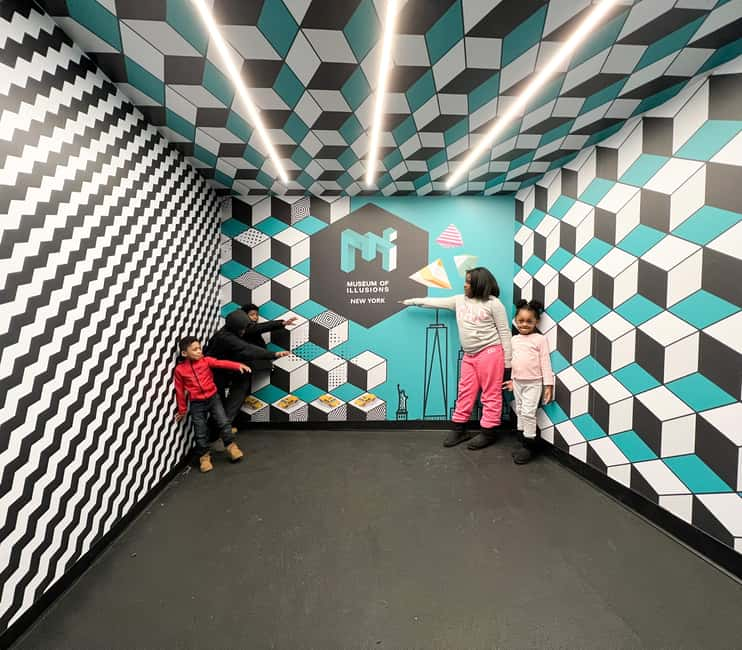
The museum is in Chelsea at 77 8th Ave. The building entrance is on the corner of West 14th Street and 8th Avenue. That location makes the attraction easy to pair with other plans in Manhattan, though no transport service is included with the ticket.
The address detail is important because the activity is not simply listed as a broad Chelsea meeting area. You need the corner entrance at West 14th Street and 8th Avenue. Check the entry information before leaving, particularly if you are using a phone map and approaching from another part of the neighborhood.
One serious practical issue appeared in the feedback: a family arrived to find a sign with changed closing times, but the booking platform had not informed them. Their visit was wasted, which was especially upsetting because they had brought an excited five-year-old.
I would confirm the current opening time directly before going, even if you already selected a starting time. This is especially important for a late visit or a tight schedule. The ticket is non-refundable, so an avoidable timing problem can become an expensive mistake.
Wheelchair access and family planning
The museum is listed as wheelchair accessible. That is useful for visitors who need step-free access, though the available information does not provide details about individual exhibit dimensions, seating, or accessible restroom facilities.
If you use a wheelchair, contact the venue before arrival if you need information about a particular room or installation. The general accessibility statement is positive, but it does not explain how every exhibit is arranged.
Families should think about the pace of the visit. The attraction is hands-on, but the supplied details do not identify a separate children’s program or age range. Young children can enjoy the visual effects, while older children may get more from the explanations about the brain and optical illusions.
Because the museum may be compact, you can combine it with another activity rather than building an entire day around it. That is probably the smartest way to manage the price and the possibility of a short visit.
How to make the most of the exhibits
Start by treating the museum as a place to test ideas, not just a row of photo spots. Look at an exhibit before using it, try to predict what will happen, and then compare that prediction with what your senses report.
Take turns with your companions. If everyone tries to pose at once, you may miss the effect or end up with poor photos. One person can read the explanation, one can participate, and one can take the picture.
Give the illusion rooms more time than the quickest holograms. The larger rooms are where the museum’s main promise of altered scale and gravity comes through most clearly. The smaller displays help fill out the collection, but they may not feel as substantial.
Keep the price in mind as you move through the museum. If you are finished quickly, you will want to judge the ticket by the quality of the interactive moments rather than by the number of minutes spent inside. For some families, a few memorable photos and shared laughs will justify the cost. For others, the short visit will make the ticket feel steep.
Should you book the Museum of Illusions New York?
Book it if you want a playful, photo-friendly stop in Chelsea and you are visiting with family, friends, or a date. The best part is the chance to test more than 50 visual and sensory displays rather than simply look at objects. The life-size kaleidoscope, holograms, altered-scale rooms, and gravity tricks give the visit a clear theme.
Think twice if you expect a large museum or a full afternoon indoors. The venue can feel small, and the experience may be shorter than you hope. At $35, the ticket works best when the group will actively try the exhibits and share the fun.
Most important, verify the current opening time before you go. The non-refundable policy leaves little room for an unexpected schedule change. With that check made, the Museum of Illusions can be a lively short stop, but it should not be sold to yourself as a major New York museum visit.
FAQ
Where is the Museum of Illusions New York located?
It is at 77 8th Ave. in Chelsea, with the building entrance on the corner of West 14th Street and 8th Avenue.
How much does admission cost?
The listed price is $35 per person.
What does the ticket include?
The ticket includes entry to the Museum of Illusions New York City.
How many exhibits are there?
The museum offers more than 50 interactive exhibits, including illusion rooms, installations, and holograms.
How long is the ticket valid?
The ticket is valid for one day. You should check availability for the available starting times.
Is the museum wheelchair accessible?
Yes. The museum is listed as wheelchair accessible.
Can I cancel the ticket for a refund?
No. This activity is non-refundable.
Is this a guided tour?
The provided information describes entry to the museum and does not name a guide or include a guided tour. You should expect to explore the exhibits independently.
Just added around New York City
- The Met Museum Guided Tour with Skip-the-Line Entry★ 4.4 · 149 reviews
- New York City: The Banksy Museum Entry Ticket★ 4.6 · 51 reviews
- NYC: Entry Ticket To The Banksy Museum★ 4.5 · 89 reviews
- Self-Guided Tour of the Museum at Eldridge Street★ 4.3 · 13 reviews
- New York: Private Tour of The Metropolitan Museum of Art★ 4.9 · 39 reviews
- NYC: Museum of Sex Entry Ticket★ 4.2 · 179 reviews
- NYC: Museum of the Moving Image Flexible Ticket★ 4.6 · 95 reviews
- NYC: Whitney Museum Ticket★ 4.2 · 315 reviews
Museum Tours in New York City, compared.



9/11 Memorial, Ground Zero Tour with Optional 9/11 Museum Ticket
Read our review →

All-Access 9/11: Ground Zero Tour, Memorial and Museum, One World Observatory
Read our review →


Browse the lists this tour appears in