

Review · CANADA
Montreal: Museum of Illusions Entry Ticket
The most fun part of Montreal’s Museum of Illusions is discovering how quickly your eyes can fool your brain. One minute you are standing in a room, and the next, the floor seems tilted, a tunnel appears endless, or your sense of balance starts to wobble.
I like the mix of hands-on rooms and quieter displays such as holograms and stereograms. I also like the self-paced format, since you can stop for photos, puzzles, or a second look without being pushed along. The main caution is simple: people with vertigo may find several exhibits uncomfortable.
Key points to know
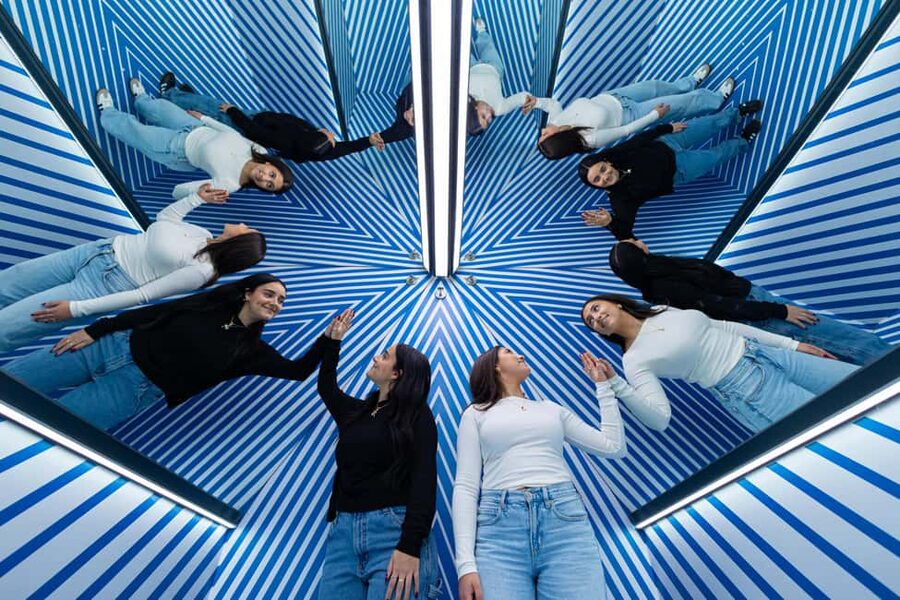
- More than 70 exhibits: Expect optical tricks, puzzles, holograms, stereograms, and rooms built around perspective and balance.
- The tilted room: A quick but effective test of your footing and visual judgment.
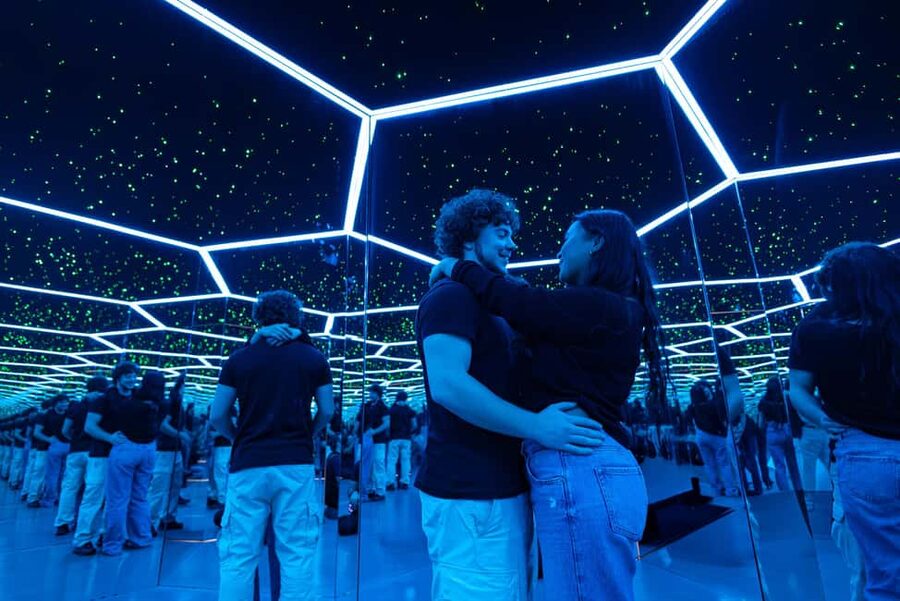
- The infinity tunnel: A strong photo stop that makes a compact space seem to stretch away forever.
- The vortex tunnel: Prepare for a room that can make your body feel unsteady even when the floor is solid.
- Best with company: Many displays are more fun when someone can take your photo or compare what each of you sees.
- One-hour visit: The $25 admission can be good value for a short indoor activity, especially when you take time with each exhibit.
Montreal’s Museum of Illusions puts your senses on trial
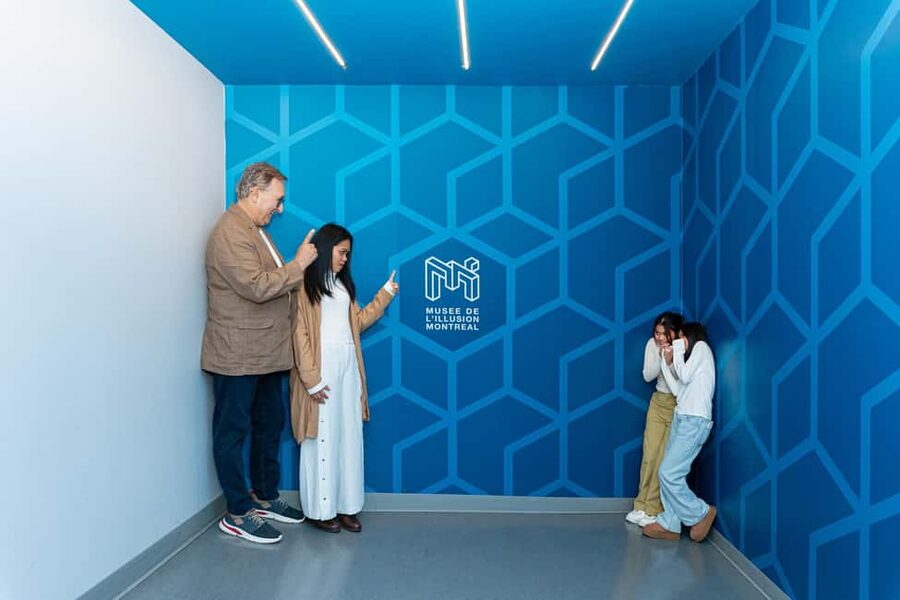
This is not a conventional museum where you quietly study objects behind glass. It is an interactive hour built around a simple idea: your eyes collect information, but your brain has to interpret it, and that interpretation can go wrong.
You move from one exhibit to the next, testing light, reflection, scale, perspective, and motion. Some displays ask you to look closely. Others ask you to step inside, find your balance, or pose for a photo that makes the scene appear impossible.
I like that the attraction does not require specialist knowledge. You can enjoy it as a playful stop with children, as a date activity, or as a break from more serious sightseeing. At the same time, the exhibits offer enough explanation to show why the tricks work, so you are not only taking pictures and moving on.
The visit lasts about one hour. That is long enough to see the main displays without making the experience feel like a full afternoon commitment. If you race through, it may feel short. If you read the explanations and repeat the more interactive rooms, the timing makes more sense.
More Museum of Illusions tickets:
- Toronto: Museum of Illusions Entry Ticket
★ 4.0 · 31 reviews - Prague: Museum of Fantastic Illusions Entry Ticket
★ 4.3 · 4,337 reviews - Madrid: Museum of Illusions Ticket
★ 4.1 · 1,909 reviews
Start with light, reflection, and changing perspective
The opening displays introduce the basic tools used throughout the museum. Light can alter what you see, reflections can multiply or hide an image, and perspective can change the apparent size or position of an object.
Holograms are among the more intriguing stops. They seem to show images with depth or movement, even though the display itself does not behave like a normal three-dimensional object. I recommend slowing down here rather than treating the holograms as quick snapshots.
Stereograms ask you to look in a particular way to find a hidden image or depth effect. They can take a little patience. If your first attempt does not work, do not assume the display is broken. Adjust your focus and give your eyes a moment to settle.
These quieter exhibits help balance the more physical rooms. You can stand still, compare what you see with your companion, and think about how your brain fills in missing information. The science is presented as part of the fun, not as a long classroom lecture.
The tilted room tests your footing
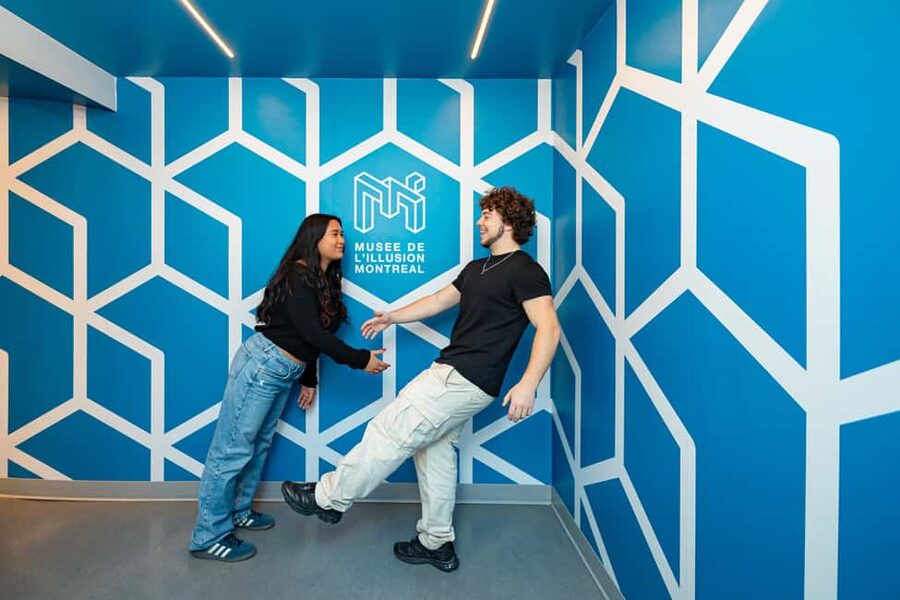
The tilted room is one of the clearest examples of the museum’s approach. The room looks familiar, but its angles interfere with your sense of balance and proportion.
You may feel as if your body is leaning even when you are trying to stand straight. The effect comes from the conflict between what your eyes report and what your inner sense of balance expects. It is a small room with a surprisingly strong result.
This is also one of the easiest places to take a playful photo. A companion can frame the shot while you try to stand naturally, or you can compare how each person reacts. The room works best when you give yourself time to look around instead of rushing to the exit.
If you are prone to dizziness, this exhibit may be more trouble than fun. The same warning applies to several other parts of the attraction, particularly the vortex tunnel. People with vertigo should skip the experience or ask themselves if the possible discomfort is worth it.
The infinity tunnel makes a compact space feel endless
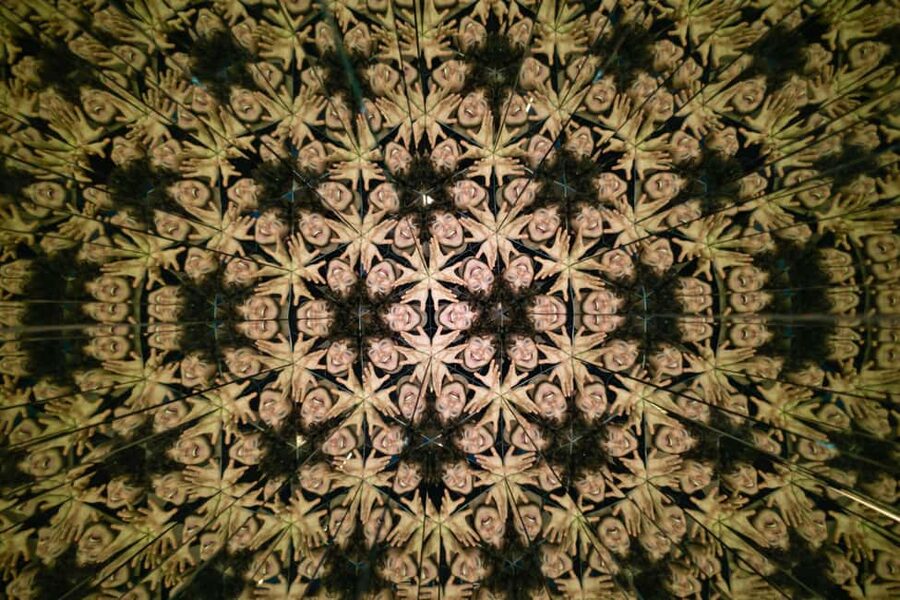
The infinity tunnel uses light and reflection to create a much larger visual effect than the physical space can provide. Repeated points of light seem to stretch away, giving the impression of an endless passage.
It is a good example of why the museum works better as an interactive attraction than as a row of static displays. You are not just looking at the tunnel from outside. You are reacting to the effect and trying to work out where the real walls and reflections begin.
This is another strong photo stop. Bring a camera or phone, and plan to take more than one image. The angle, lighting, and position of the person inside the tunnel can change the result.
I would not judge the attraction by the size of any single room. The appeal comes from the trick your brain performs, not from grand sets or elaborate scenery. The infinity tunnel makes that point neatly.
A few more museum visits around Canada worth comparing
- Toronto: Royal Ontario Museum Admission Ticket
★ 4.6 · 1,237 reviews - Toronto: Art Gallery of Ontario General Admission Ticket
★ 4.6 · 251 reviews - Toronto: Bata Shoe Museum Entrance Ticket
★ 4.7 · 133 reviews - Quebec City: MNBAQ National Fine Arts Museum Entry Ticket
★ 4.6 · 63 reviews
The vortex tunnel can upset your balance

The vortex tunnel is likely to be the most physically challenging part of the visit. The room is designed to make you feel as if the space is moving or rotating, even though the walkway is stable.
You may find yourself reaching for support or walking more slowly. That reaction is part of the effect, but it also explains why the museum advises against visiting if you have vertigo.
For people who enjoy sensory attractions, the vortex tunnel is a memorable stop. For others, it can be uncomfortable rather than amusing. You do not need to force yourself through every exhibit to get value from the ticket, so treat this one as optional if you already feel unsteady.
The best approach is to enter with a clear head, move carefully, and give yourself time afterward before heading to the next display. The attraction is meant to challenge your perception, not your stomach.
Puzzles and photo rooms give the visit a social side
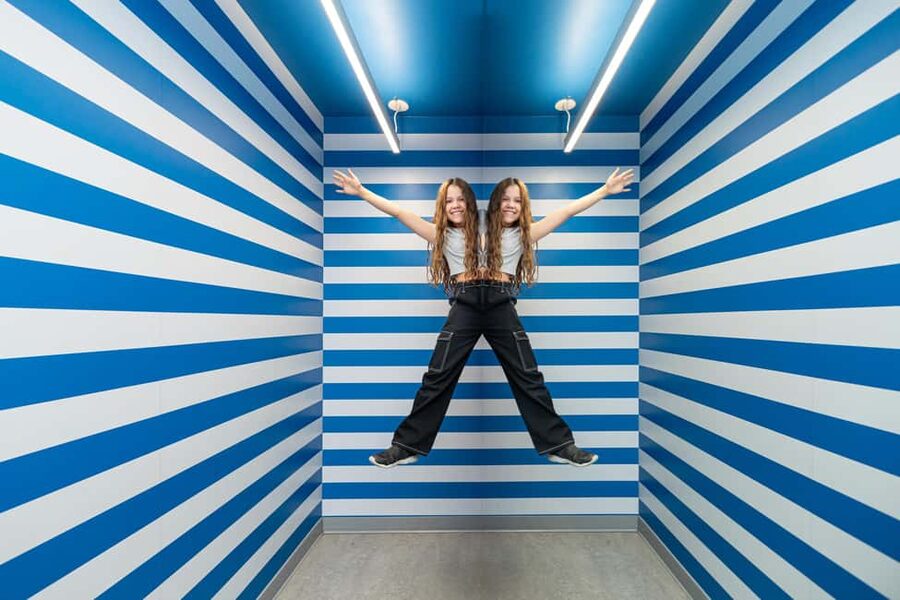
The museum includes puzzles along with its optical displays. These create a useful change of pace because you are asked to solve something rather than simply observe an effect.
I especially like the social element. Some illusions make more sense when you explain them to someone else. Others are fun because one person can pose while another takes the picture, then you switch roles.
One recent booking described the visit as more enjoyable with another person, particularly because some effects work better in a video or become clearer when you compare what each person sees. That is practical advice. You can visit alone, but the attraction is better suited to friends, couples, and families who want to share the reactions.
The photo opportunities are not an extra detail here. They are part of how many of the rooms work. Bring a camera, and wear comfortable shoes so you can move around, pause, and repeat a display without fuss.
How the one-hour format affects the value
Admission costs $25 per person. I see that as a fair price if you want a compact indoor activity with a clear beginning and end, especially when you use the rooms rather than simply walking past them.
The value is less convincing if you expect a traditional museum with long explanations, rare objects, or hours of quiet viewing. This is a hands-on attraction. You are paying for the chance to test the displays, take pictures, and share the experience.
The one-hour duration helps if your Montreal schedule is tight. You can fit the visit between larger plans without giving up half a day. It also makes the attraction easier to recommend for families, since younger visitors may enjoy a focused hour more than a long museum visit.
To get the most from the price, allow time for the quieter hologram and stereogram displays. The large rooms attract attention, but the smaller exhibits explain the central idea: perception is not always a direct record of reality.
Who will enjoy this attraction most
I would recommend the Museum of Illusions to families with children, couples, groups of friends, and anyone who likes playful science. It is especially useful on a day when you want something indoors and interactive rather than another standard sightseeing stop.
It also works well for people who enjoy photography. The tilted room, infinity tunnel, and other mind-bending spaces give you clear chances to create unusual pictures without needing special equipment beyond a camera or phone.
The visit may be less satisfying for someone who prefers a large art collection, detailed historical displays, or a guided tour with a fixed narrative. There is an English-speaking host or greeter, but the experience itself is self-paced, so you should not expect a guide to lead you from room to room with a long explanation.
The small group limit of four participants keeps the booking intimate. That fits the format, since some displays require space for people to pose, move, or take pictures. It also means the attraction suits a small party better than a large school-style outing.
The museum is wheelchair accessible, which makes the attraction easier to consider for visitors who need step-free access. The available information does not give further details about each exhibit, so if you need specific access arrangements, confirm them before booking.
Practical tips for a smoother visit
Wear comfortable shoes. The visit is short, but you will be moving between displays, stopping to look closely, and possibly repeating rooms for photos.
Bring a camera. A phone is enough for most pictures, and video can help with some effects that are difficult to understand in a single still image.
Go with at least one other person if you can. A companion can take pictures, help you compare the illusions, and make the puzzles more enjoyable. If you visit alone, you can still explore at your own pace, but some of the photo-based fun will be harder.
Do not feel obliged to complete every room. If the vortex tunnel or tilted room makes you uncomfortable, move on to the holograms, stereograms, and puzzles. You can still have a full visit without testing every physical effect.
The attraction is suitable for all ages, but adults should keep the vertigo warning in mind for themselves and their children. The experience is playful, yet the sensory tricks can feel real enough to cause discomfort.
You can cancel up to 24 hours before the visit for a full refund. The reserve-now, pay-later option also helps if your Montreal plans are not settled, since you can hold a spot without paying immediately.
Should you book the Museum of Illusions?
Book it if you want a short, playful Montreal activity with hands-on displays and strong photo potential. At $25, it offers reasonable value when you take your time, read the explanations, and share the rooms with another person.
I would choose it for a family afternoon, a casual date, or a break between larger attractions. I would skip it if you have vertigo, dislike balance-based effects, or want a conventional museum with substantial historical or artistic content.
The best match is someone curious about how the brain interprets what the eyes see. Bring comfortable shoes, bring your camera, and visit with company if possible. That is when the tilted room, infinity tunnel, holograms, and puzzles make the most sense.
FAQ
How long does the Museum of Illusions visit last?
The visit lasts about one hour. You can explore the exhibits at your own pace during that time.
How much does admission cost?
Admission costs $25 per person.
What is included in the ticket?
The ticket includes entry to the Museum of Illusions.
Is the visit guided?
The visit is self-paced. An English-speaking host or greeter is available.
How many exhibits are there?
The museum has more than 70 exhibits featuring optical illusions, holograms, stereograms, puzzles, and interactive rooms.
Is the museum wheelchair accessible?
Yes, the Museum of Illusions is wheelchair accessible.
Is the attraction suitable for children?
Yes, the experience is described as ideal for all ages.
Should I bring a camera?
Yes. A camera is recommended because many of the exhibits create photo-friendly scenes.
Can people with vertigo visit?
The attraction is not suitable for people with vertigo, particularly because some rooms affect your sense of balance.
Just added around Canada
- Toronto: Bata Shoe Museum Entrance Ticket★ 4.7 · 133 reviews
- Toronto: Museum of Illusions Entry Ticket★ 4.0 · 31 reviews
- Toronto: Royal Ontario Museum Special Exhibits Voucher★ 4.7 · 65 reviews
- Sydney: Highland Village & Bell Museum Cruise Excursion★ 4.7 · 20 reviews
- Royal B.C. Museum in Victoria: Full-Day Admission Ticket★ 4.3 · 17 reviews
- Quebec City: MNBAQ National Fine Arts Museum Entry Ticket★ 4.6 · 63 reviews
- Ottawa: Canadian War Museum Admission★ 4.7 · 232 reviews
- Ottawa: Canadian Museum of Nature Admission★ 4.6 · 226 reviews
Museum Tours in Canada, compared.
Art Gallery of Ontario General Admission Ticket
Read our review →


Calgary: 3.5-Hour Bus City Tour with Gasoline Alley Museum
Read our review →Browse the lists this tour appears in