
Review · THE USA
Miami: Paradox Museum Entry Ticket
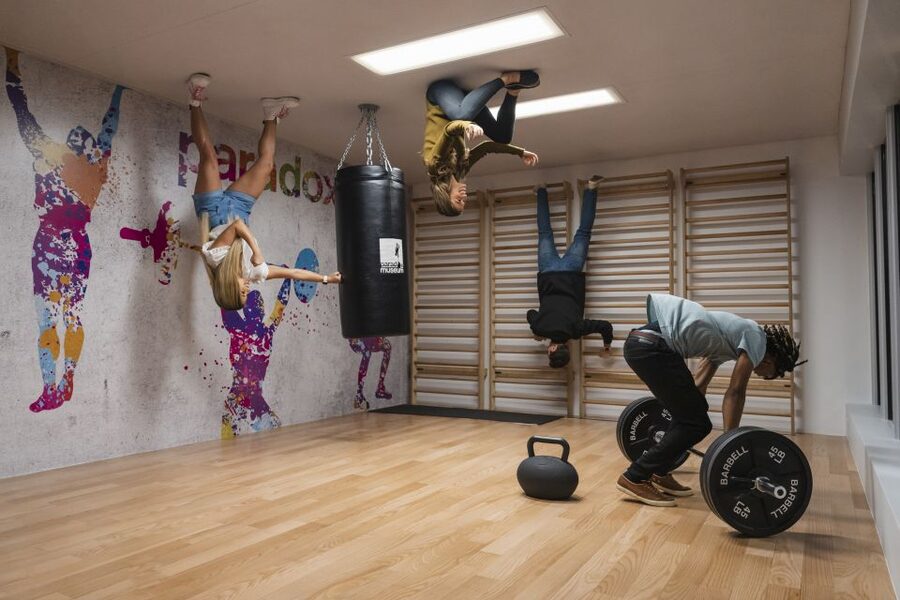
The Reverse Room lets you pose on a ceiling while the camera turns your strange position into a convincing photo. I like that this is not a sit-and-watch attraction: you test your balance in the Paradox Tunnel, vanish against a Camouflage Wall, and play with perspective at every turn. I also like the helpful staff, who take time to suggest poses and retake photos until you get one worth keeping.
The main drawback is value. At $32 per person, the visit is not a cheap way to spend an hour and a half, especially if you have a large family. Some people may also find there are fewer photo setups than expected, so this works best if you enjoy trying the exhibits rather than simply collecting pictures.
Key points
- Over 70 optical illusions: Expect a hands-on museum where your eyes, balance, and camera often disagree.
- Wynwood location: The museum sits in the heart of Miami’s Wynwood area, making it easy to pair with other local stops.
- Photo-friendly exhibits: The Reverse Room, Camouflage Wall, Paradox Tunnel, and Paradox Carousel give you plenty of reasons to pose.
- Helpful English-speaking staff: The team can take photos, suggest ideas, and help you get the effect right.
- About 1.5 hours inside: This is a compact attraction, not an all-day museum.
- Family and group appeal: It suits children, adults, corporate outings, family reunions, and anyone willing to act a little silly.
A Museum Built for Your Camera
Paradox Museum Miami is less a traditional museum than a playground for perception. You walk from one illusion-based exhibit to another, testing what you see and how your body reacts. The experience is built around roughly 70 interactive displays, so you are expected to pose, move, balance, laugh, and take photos.
That makes it a strong choice for a rainy afternoon, a family outing, or a break from Miami’s outdoor heat. You do not need a background in science to enjoy it. The basic lesson is simple: your eyes can be fooled, your sense of balance can be nudged off course, and a carefully designed room can make an ordinary photo look impossible.
I like attractions that give you something to do, and this one keeps the hands busy. You are not just reading a plaque and moving on. You try the setup, find the right position, and often take several pictures before the effect looks convincing.
The tone is playful rather than serious. If your group enjoys silly poses, physical comedy, and quick experiments, you will probably settle into it fast. If you prefer quiet galleries and long explanations, the museum may feel light.
A few more museum visits around the USA worth comparing
- NYC: 9/11 Memorial & Museum Timed-Entry Ticket
★ 4.8 · 31,428 reviews - NYC: Empire State Building Tickets – Observatory & Museum
★ 4.7 · 25,757 reviews - New York City: American Museum of Natural History Ticket
★ 4.5 · 15,447 reviews
Starting in Wynwood
The museum is in the heart of Wynwood, a Miami area known for large-scale street art and colorful walls. The location gives you a useful way to build a larger outing around the ticket. You can visit the museum, then continue exploring the surrounding area rather than treating the attraction as your entire day.
Check in at the front door. The ticket includes access to all exhibition areas, and you can skip the ticket line with the booked entry. An English-speaking host or greeter is available to help you get started and explain how the exhibits work.
The attraction is wheelchair accessible. Strollers can be stored when you enter, which is useful for families with young children. Unaccompanied minors are not allowed, so children need to visit with an adult.
You cannot bring food or drinks into the museum. Smoking and vaping are also prohibited, and pets are not allowed except for assistance dogs. These rules are easy to manage, but plan to finish snacks and drinks before entering.
The Reverse Room and the First Big Illusion
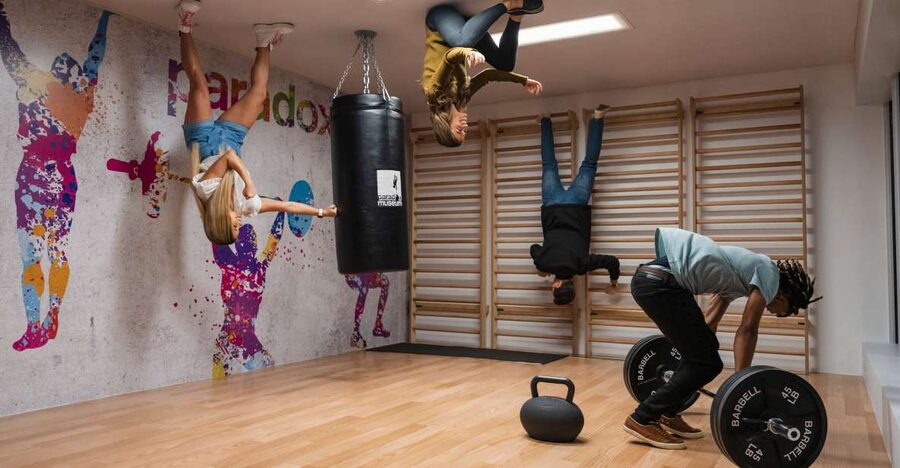
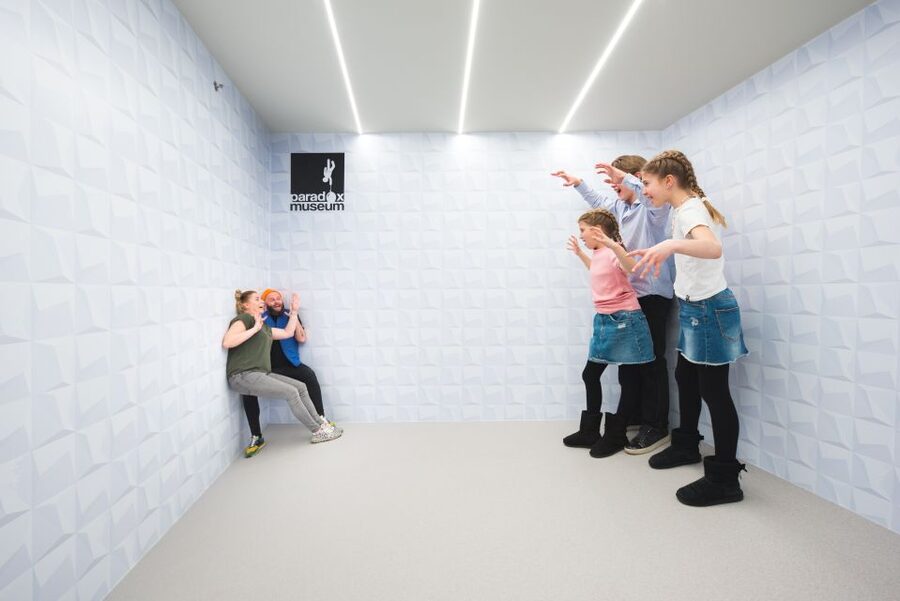
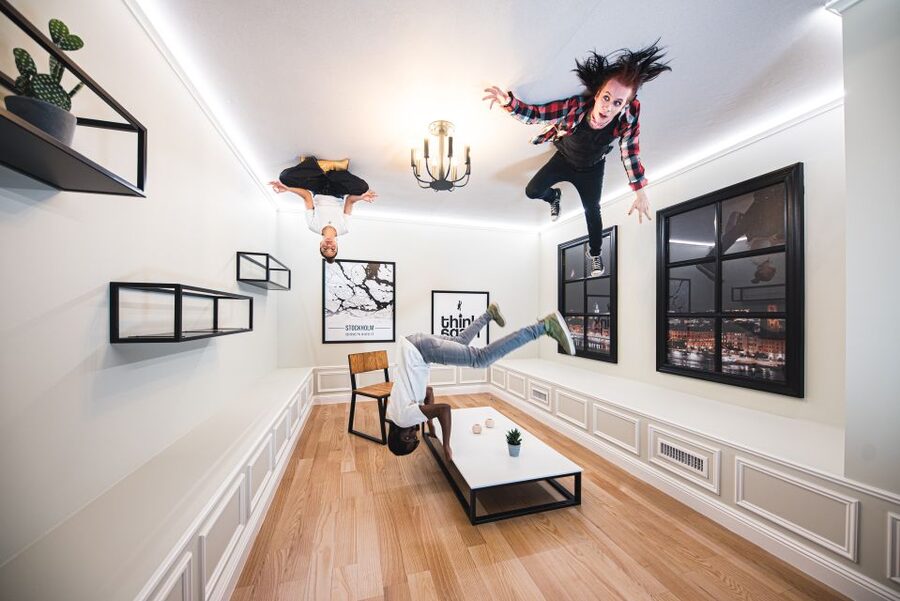
The Reverse Room is one of the clearest examples of what makes this place work. You position yourself so that the finished image looks as if you are walking or standing on the ceiling. The room is designed for the camera, so the best result comes from following the staff’s advice about where to stand and how to pose.
This is also a good early stop because it teaches you the basic rhythm of the museum: look at the setup, try the pose, take a photo, then adjust. You may need more than one attempt to make the illusion read clearly. That is part of the fun, but it also means you should not rush from one exhibit to the next.
Staff assistance matters here. The team is known for helping visitors get better photos and offering ideas when a pose does not quite work. You can ask for another picture instead of settling for a blurry or poorly framed result.
The Reverse Room is especially good for families because everyone can take a turn. Children often understand the visual trick quickly, while adults tend to spend longer trying to make the image look natural. Either way, it gives your group an immediate shared laugh.
The Camouflage Wall and the Art of Disappearing
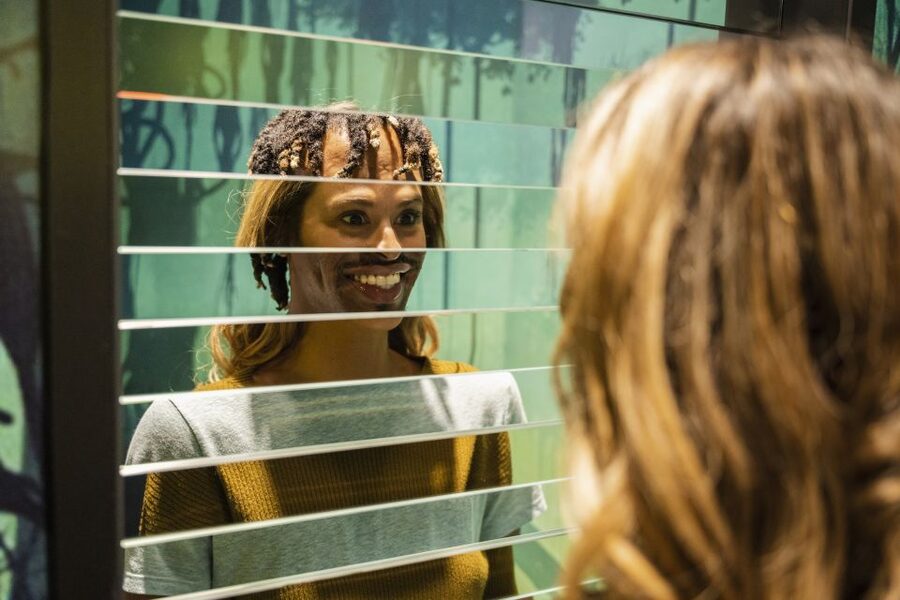
The Camouflage Wall plays with color, pattern, and placement. The idea is to position yourself so part of your body seems to disappear into the wall. This exhibit rewards patience more than speed, since a few inches of movement can change the effect in the final picture.
I would let the person taking the photo step back far enough to show the full setup. Close-up pictures can lose the joke. You want the image to show both the wall and the person blending into it.
This is one of the exhibits that makes the museum more than a collection of funny rooms. It gives you a simple visual lesson about how the brain groups shapes and colors. You do not need a long lecture to understand the point. The picture makes the trick clear.
The Camouflage Wall is also a useful stop for groups where not everyone wants to jump or spin. You can take part with a simple pose. That variety helps keep the visit comfortable for grandparents, younger children, and anyone who prefers not to use the more physical displays.
Same city, a completely different collection:
- NYC: Museum of Modern Art (MoMA) Entry Ticket
★ 4.6 · 12,540 reviews - 9/11 Memorial, Ground Zero Tour with Optional 9/11 Museum Ticket
★ 5.0 · 6,381 reviews - 9/11 Memorial Museum Admission Ticket
★ 4.5 · 6,376 reviews - All-Access 9/11: Ground Zero Tour, Memorial and Museum, One World Observatory
★ 5.0 · 4,886 reviews
Losing Your Balance in the Paradox Tunnel
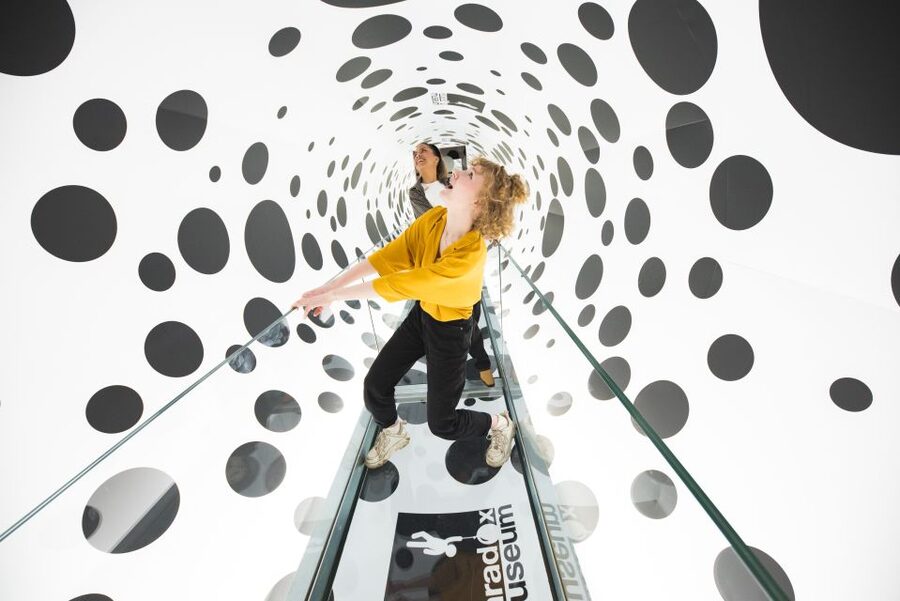
The Paradox Tunnel is one of the more physical exhibits. Rotating tubes create the sensation that the floor and walls are shifting, making it harder to keep your balance. You are not simply observing an optical trick. Your body reacts to the changing visual signals.
Take your time here. Hold onto the available support as needed, watch your footing, and do not feel pressured to move quickly. The point is to experience the odd sensation, not to prove that you can cross the tunnel without wobbling.
This exhibit shows why the museum works well for children and adults together. Kids may focus on the challenge of getting through, while adults notice how strongly the eyes can influence balance. It is playful, but it also gives you a clear sense of how perception affects movement.
If anyone in your group is sensitive to spinning or balance-based effects, this is a good place to be cautious. The museum is wheelchair accessible, but the experience of each exhibit can vary depending on your mobility and comfort. You can enjoy the museum without trying every physical display.
The Paradox Carousel and Moving Perspective

The Paradox Carousel uses spinning horses to play with your sense of motion and scale. The moving design creates another kind of visual confusion, different from the fixed rooms and walls. You may find yourself watching the movement first, then looking at the scene through your camera to see how the effect changes in a photograph.
The Carousel is a fun break between exhibits that require close posing. It also gives you a chance to experiment with video. The museum encourages photos and videos, and moving displays often make better short clips than still images.
Keep your camera ready, but do not spend the entire visit staring at the screen. The illusion is easier to understand when you first look at it directly. After that, use your phone to capture the pose or movement you want to share.
Why Staff Help Makes a Difference
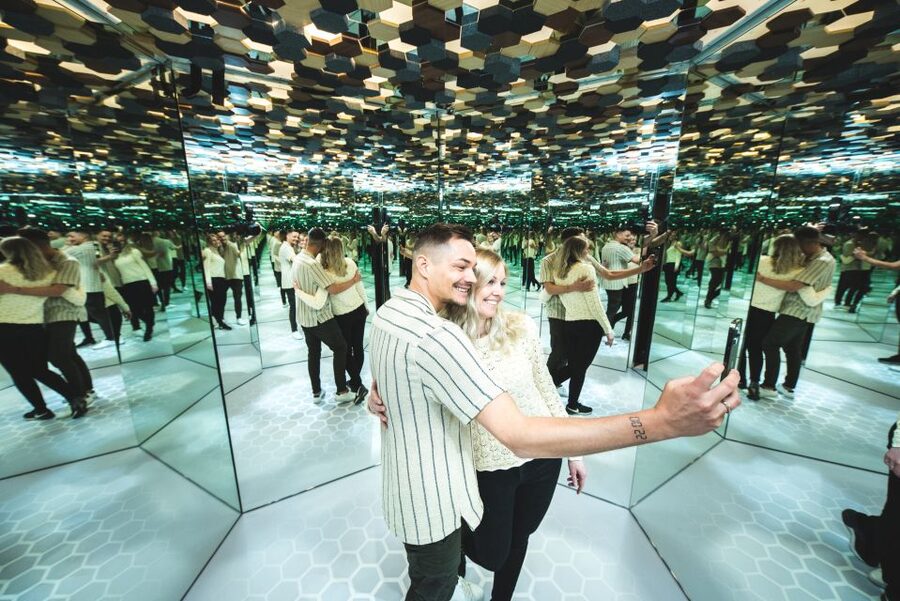
A photo-based attraction can be frustrating if you have to ask a stranger to take every picture. Here, the staff can help you frame the shot, suggest a pose, and take multiple attempts when needed. That practical service is one of the strongest reasons to visit with a group.
The team is described as friendly and eager to help, and that matters more than it might at a standard museum. Many exhibits only work when the camera is in the right place. Staff guidance saves you from leaving with a collection of crooked or confusing pictures.
You should still expect to take some responsibility. Think about what kind of photo you want, listen to the suggestions, and be ready to try again. The best results come when you treat the staff as creative partners rather than simply handing over your phone.
The photo help also makes the attraction suitable for couples and small groups. You do not need one person to sit out of every picture. Ask the staff to take the photo, then switch roles when you reach the next exhibit.
How Long the Visit Really Takes
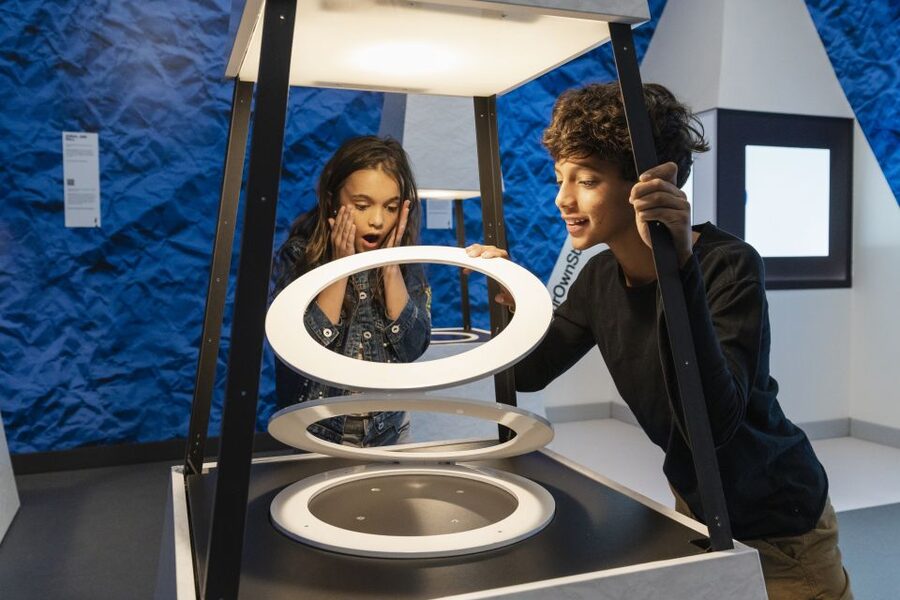
Plan on about 1.5 hours inside. That is enough time to see the exhibition areas, try the major displays, and take a reasonable number of photos without racing.
Your exact timing depends on your group. A family with children may move quickly through some exhibits, then spend several minutes repeating a favorite pose. A group of adults may stop longer to set up photos and videos. If you are visiting mainly for pictures, allow extra patience for retakes.
The short duration is both a benefit and a limitation. It fits neatly into a day of sightseeing and does not demand a full morning or afternoon. You can add it to a Wynwood visit without giving up other Miami plans.
At the same time, $32 per person feels more reasonable when you use the entire visit and take part in the exhibits. If you walk through quickly in under an hour, the price may feel high. I would book it for people who enjoy active participation, not for someone looking for a large collection of traditional displays.
Is $32 a Fair Price?
The ticket costs $32 per person and includes the Paradox Experience and access to all exhibition areas. There is no separate charge listed for the major rooms, so you can move through the displays without choosing only a few.
For a solo visitor, the price may be difficult to justify unless you especially enjoy optical illusions and photography. The attraction is more valuable for a family, couple, or group that can laugh together and create pictures. Shared entertainment carries more weight when everyone takes turns in the exhibits.
I would compare the cost with the kind of day you want. If you need a compact indoor activity with lots of interaction, the ticket can fit well. If you are looking for several hours of cultural material or a large science museum, this is probably not the right match.
The price also includes staff assistance, which is important. You are not left to figure out every camera angle alone. Still, the museum has a finite number of displays and a typical visit lasts 1.5 hours, so keep your expectations realistic.
Best For Families, Couples, and Group Outings
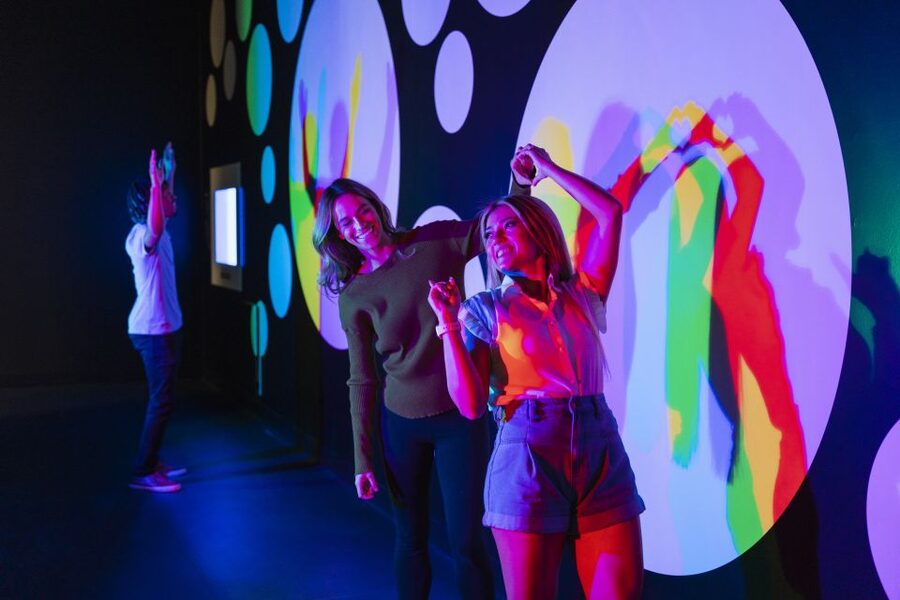
Families are a natural fit. The exhibits are easy to understand, children can take part in many of them, and the humor comes from seeing familiar people in strange positions. The museum also gives adults something to do, which helps prevent the outing from becoming a child-only activity.
Couples can have fun here too, especially if both people are comfortable looking silly in front of a camera. The Reverse Room and Camouflage Wall offer simple shared photos, while the Tunnel and Carousel add movement.
The museum also works for corporate team building and family reunions. The activities give a group an easy subject to talk about, and people can split up briefly before meeting at the next display. It is a better choice for a playful group than for a formal business event.
I would be cautious about bringing anyone who dislikes photos, spinning effects, or physical balance challenges. You can skip exhibits, but the whole experience is built around participation. The museum is most enjoyable when you are willing to test the displays instead of standing back.
Booking, Timing, and Practical Details
You can reserve a place and pay later, which helps if your Miami schedule is still changing. Free cancellation is available up to 24 hours before the visit for a full refund. Check the available starting times when you book because the ticket is valid for one day rather than for an open-ended period.
Arrive at the front door for check-in. Since the museum has a set entry process, having your booking ready should make the start simple. Wear something you can move comfortably in, especially if you want to try the Paradox Tunnel or take energetic photos.
Keep food and drinks outside, and leave smoking and vaping for later. Assistance dogs are allowed, but other pets are not. Store your stroller at entry if you need to bring one for the journey through Wynwood.
Should You Book the Paradox Museum Miami?
Book it if you want a short, playful stop with hands-on illusions, strong photo opportunities, and staff who help you get the camera angles right. It is especially suitable for families, couples, and groups that enjoy laughing at themselves.
Think twice if you want a long museum visit or feel $32 is too much for roughly 1.5 hours. The value depends heavily on your willingness to pose, repeat shots, and take part in the physical displays.
My advice is simple: pair it with time in Wynwood, visit with at least one other person, and treat the ticket as interactive entertainment rather than a conventional museum admission. That is when the Reverse Room, Camouflage Wall, Tunnel, and Carousel make the strongest case for the price.
FAQ
How long does the Paradox Museum Miami visit take?
The typical time spent inside is about 1.5 hours.
How much does admission cost?
The listed price is $32 per person.
What is included with the ticket?
The ticket includes entry to the Paradox Experience and access to all exhibition areas.
Is the museum wheelchair accessible?
Yes, Paradox Museum Miami is wheelchair accessible.
Can I bring a stroller?
Yes. Strollers can be stored at the time of entry.
Are food, drinks, pets, or smoking allowed?
Food and drinks are not allowed inside. Smoking and vaping are prohibited, and pets are not allowed except for assistance dogs.
Can I cancel my booking?
Yes. You can cancel up to 24 hours in advance for a full refund. You can also reserve now and pay later.
Just added around the USA
- Museum of Ice Cream Austin★ 3.5 · 85 reviews
- Admission to Richard Nixon Presidential Library and Museum Ticket★ 5.0 · 123 reviews
- The Turquoise Museum Curator’s Tour★ 5.0 · 12 reviews
- Turquoise Museum Visit★ 4.5 · 194 reviews
- Orlando: Titanic Artifact Exhibition Ticket★ 4.5 · 246 reviews
- The St. Augustine Old Jail Museum Guided Tour★ 4.6 · 68 reviews
- San Diego: San Diego Natural History Museum Ticket★ 4.7 · 33 reviews
- The Museum of Fine Arts, Houston Entry Ticket★ 4.6 · 82 reviews
Museum Tours in the USA, compared.



9/11 Memorial, Ground Zero Tour with Optional 9/11 Museum Ticket
Read our review →

All-Access 9/11: Ground Zero Tour, Memorial and Museum, One World Observatory
Read our review →

Browse the lists this tour appears in