

Review · LISBON
Lisbon: Luz Stadium Tour & SL Benfica Museum Entry
Luz Stadium is more than a football ground. It is Benfica’s emotional headquarters, where you can walk beside the pitch, see the visitor changing room, enter the press room, and follow the club’s story through trophies, photographs, and interactive displays. The stadium route and the Cosme Damião Museum make this a full visit rather than a quick peek at the stands.
I like the generous range of access, especially the pitch-side views and the chance to walk through the tunnel. I also like the thoughtful extras: a Benfica scarf is included, and the penalty simulator gives children and adults something playful to do after the serious football history.
The main thing to check before booking is the tour format. From July to September, the stadium section is self-guided, while at other times a live guide may lead the group. You also see the visitor changing room rather than the home dressing room, and match schedules or concerts can close parts of the stadium.
Key points to know before you go
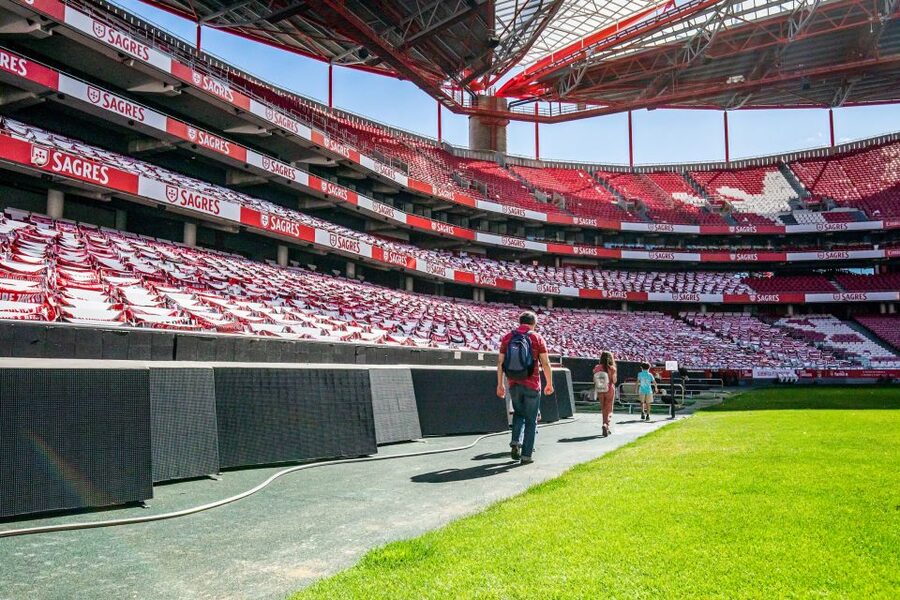
- Pitch-side access: Walk through the tunnel and get close views of the field, one of the best photo moments.
- A strong museum pairing: The three-floor Cosme Damião Museum covers Benfica, Lisbon, Portugal, and figures from art, science, and public life.
- Interactive football fun: Try the VR-style simulator, touch displays, and penalty-kick game.
- A real club welcome: Each ticket includes a Benfica scarf, with some bookings also receiving a fridge magnet.
- Changing seasonal format: July through September visits are self-guided, with staff positioned around the route.
- Match-day restrictions: Stadium access is not available on match days, and European fixtures also affect the two days before and the day after.
Starting at Door 17 beside Eusébio
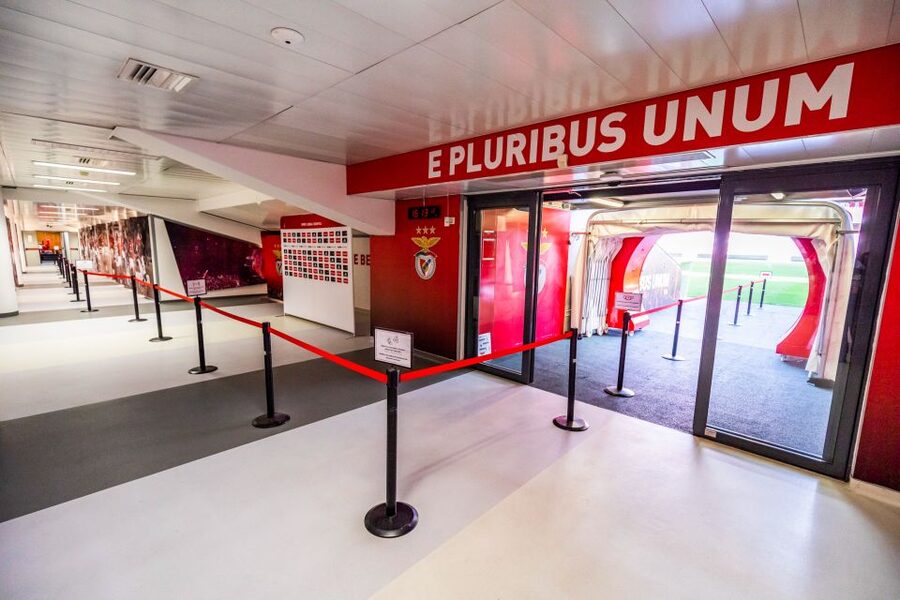
Your visit begins at Door 17, located just after the statue of Eusébio. This detail matters because the stadium is large, and heading to another entrance first can waste time. Have your booking voucher ready for redemption there.
The first section introduces the stadium through models and displays. You get a sense of how Luz Stadium fits into Benfica’s world before heading into the main route. This is a useful start for first-time visitors because the stadium is not simply a bowl of seats. It is a working club space with its own rooms, rituals, and public image.
At several points, staff can help with questions. Live tours are offered in English and Portuguese. The quality of the visit can depend on the guide, but the strongest guides bring plenty of personality. Francisca, Anastasia, João Pedro, Adriana, Rachel, and other named guides have been praised for making the football details clear and helping with photographs.
If you are visiting alone, do not be shy about asking for a picture. Staff have helped solo visitors take photos, especially at the pitch and in the stands.
More Museum Tours in Lisbon
- Lisbon: National Tile Museum Entry Ticket
★ 4.6 · 868 reviews - Lisbon: MAAT Gallery and MAAT Central Entry Tickets
★ 4.0 · 559 reviews - Lisbon: Banksy Museum Permanent Exhibition Entry Ticket
★ 4.7 · 506 reviews
From the Sagres Stand to panoramic stadium views
The Sagres Stand gives you a chance to take in the shape of Luz Stadium from inside. You can sit in the seats, look across the pitch, and understand the scale of the ground better than you would from an exterior visit.
The panoramic views are one of the simple pleasures here. You are not getting a high city lookout, but you do get a broad view over the field, seating bowl, and stadium structure. Bring your camera, since the pitch-side and seating areas provide some of the best photo opportunities of the visit.
The route also includes stadium models and a Benfica Campus model. These displays help place Luz Stadium within the wider club, rather than treating it as an isolated attraction. For football fans, that wider setting adds meaning. For companions who are less interested in the sport, the models give the visit a clear visual rhythm.
A concert or renovation can change the experience. One visit took place while a concert setup was underway, and another found some areas closed during seasonal work. These interruptions do not always ruin the tour, but you should understand that access can vary.
The press room, Hall of Fame, and visitor changing room
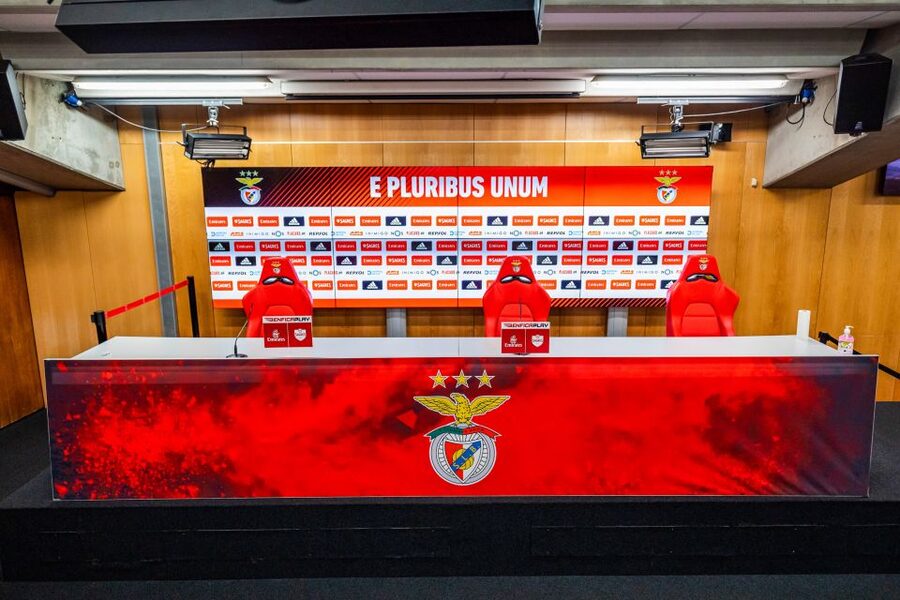
The press conference room is one of the more revealing stops. This is where the public side of football happens, with media appearances, post-match questions, and carefully chosen words. It gives you a look at the club’s communication machine rather than only its trophies.
Next comes the Hall of Fame, where the focus turns to people and achievement. Benfica’s identity is closely tied to its famous players and generations of supporters, so this section helps explain the pride you see throughout the stadium.
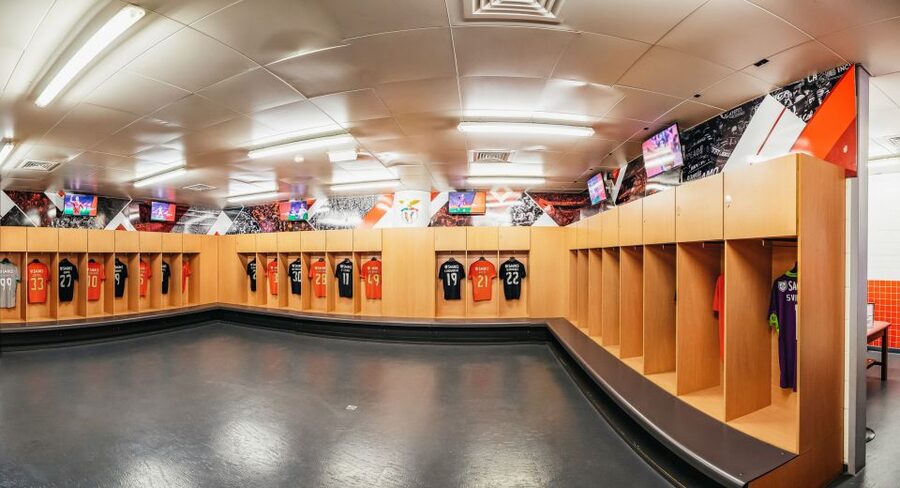
The visitor changing room is also included. It is worth seeing, but you should set your expectations correctly: the home dressing room is not always open, and several visitors specifically wished they could enter it. At this price, the range of access remains good, but this is the clearest limitation of the stadium section.
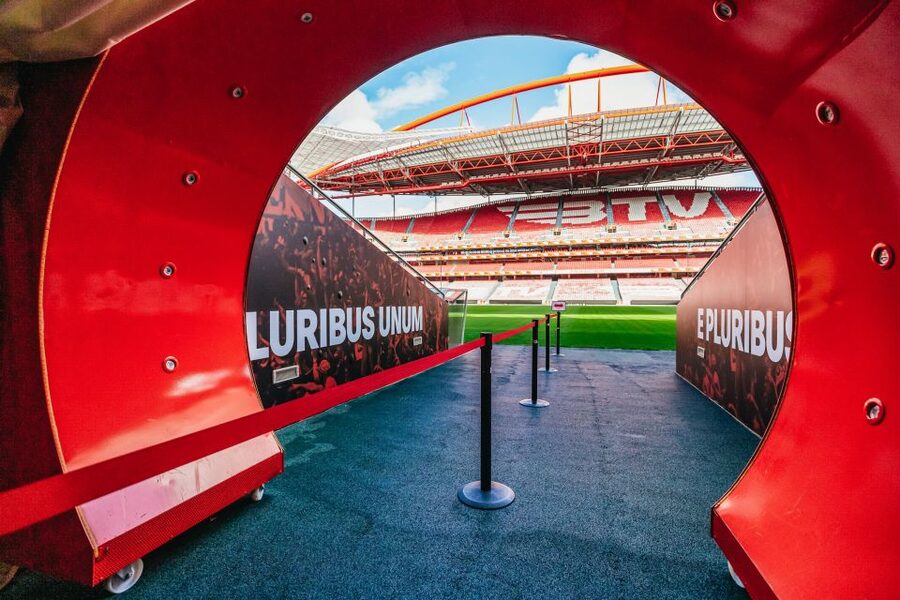
The route continues through the tunnel, a small space with a big effect. You follow the same path players use toward the pitch, which makes the arrival at field level feel more dramatic than simply walking down a corridor.
Pitch-side photos and the Benfica eagles
The pitch is the emotional center of the stadium route. You can get close to the field, look back toward the seats, and picture the scale of a match from the players’ point of view. The view from pitch level is repeatedly one of the strongest parts of the experience, and it is easy to see why.
You will also see the Benfica eagles. They are part of the club’s identity and a memorable point for children, but this is also the part of the visit that may trouble some people. One visitor raised concerns about the birds remaining on perches for long periods. If animal welfare is important to you, treat this as a point to consider rather than an unquestioned highlight.
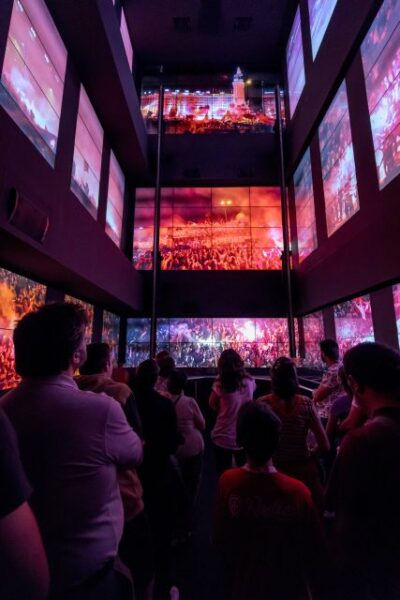
After the eagles, the route reaches the new interactive stadium experience. The exact presentation can vary, but it is designed to stir club pride through sound, images, and football atmosphere. It is more theatrical than the museum’s historical displays, and younger visitors often enjoy the change of pace.
The stadium tour ends at the club store. The included scarf is a useful souvenir rather than a token paper giveaway, and it adds value for families or anyone who wants a visible Benfica memento without paying extra for one.
A few more museum visits around Portugal worth comparing
- Porto: Cálem Cellar Tour, Interactive Museum & Wine Tasting
★ 4.5 · 4,113 reviews - FC Porto: Museum & Tour
★ 4.6 · 3,807 reviews - Porto: The Wine Experience, Best Wine Museum in the World
★ 4.7 · 621 reviews - Lisbon: Belem, Jeronimos Monastery, and Coach Museum Tour
★ 4.8 · 478 reviews
The Cosme Damião Museum across three floors
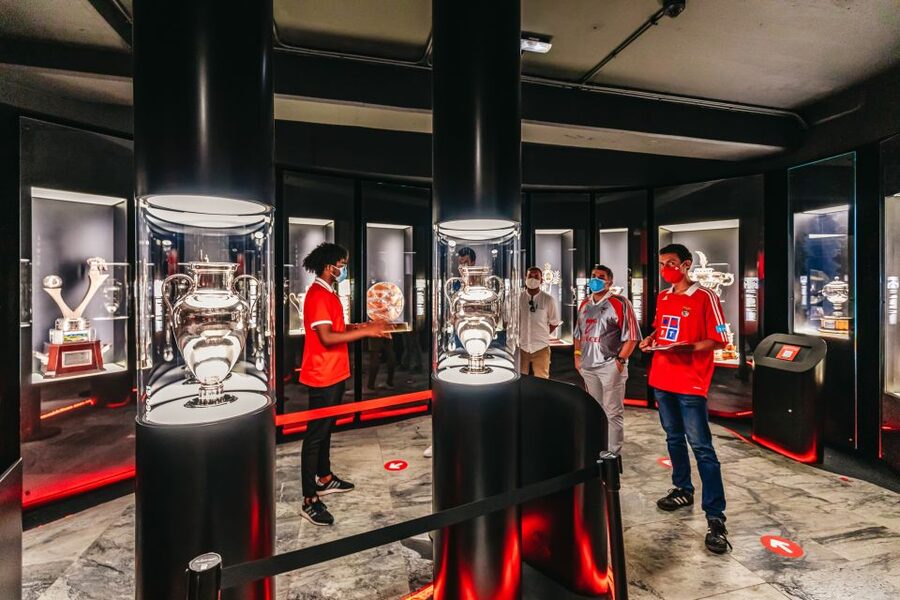
The museum is next to the stadium, and I would not rush through it. It spreads 29 themed areas over three floors, with material covering Benfica’s people, teams, sports, trophies, and major moments.
You can move at your own pace through much of the museum. QR codes provide extra content, while support points have staff available to explain displays or answer questions. This arrangement works well for mixed groups. You can stop for every panel if you love club history, or keep moving if you mainly came for the stadium.
The museum also reaches beyond football. Its displays connect Benfica with Lisbon, Portugal, and the wider world. Figures linked with the experience include King Carlos, Albert Einstein, Fernando Pessoa, and Júlio Pomar. That broader cultural angle gives the museum more variety than a room filled only with shirts and cups.
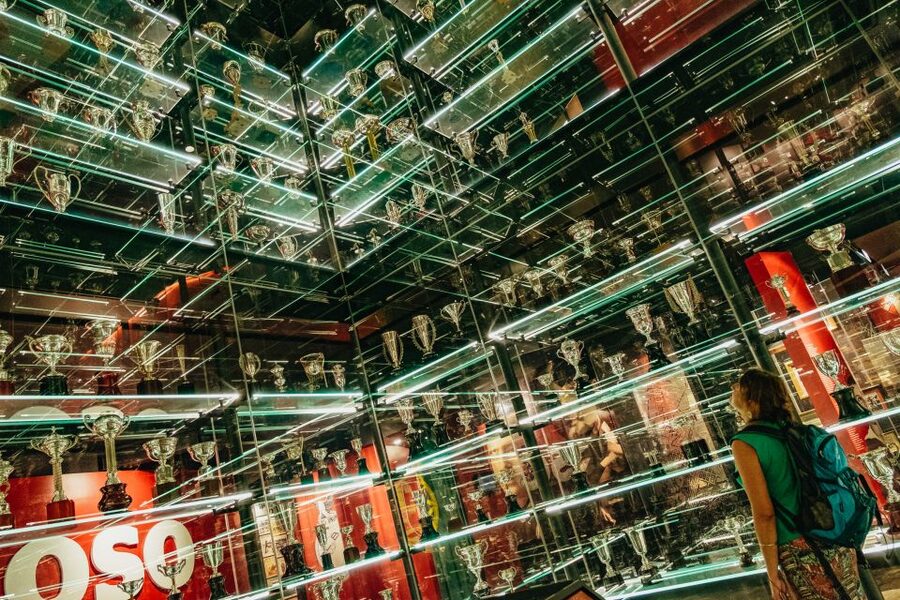
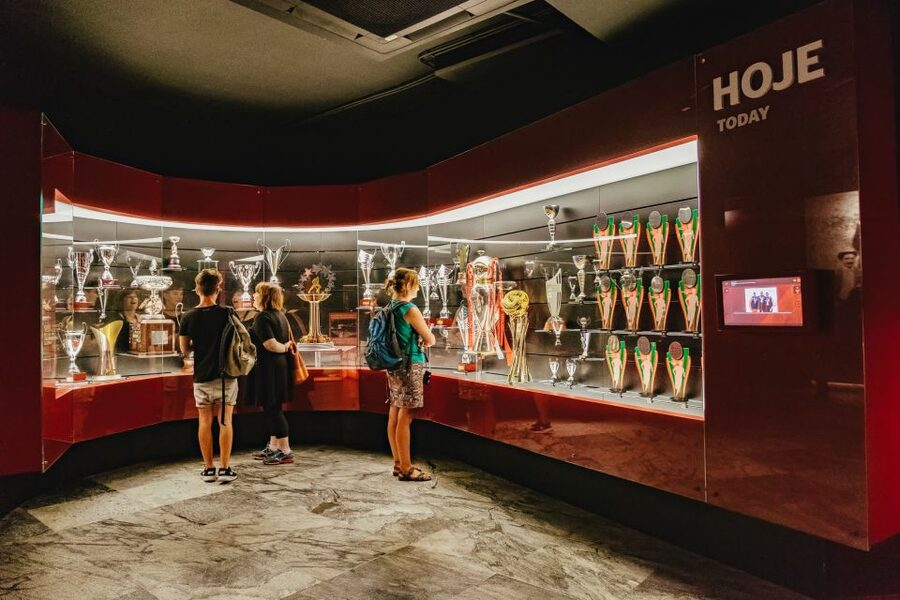
The trophy displays are a major draw. You get a clear sense of how the club’s achievements have accumulated across generations. The museum is especially worthwhile if you already know a little about Benfica, but it also gives newcomers enough context to follow the story.
The presentation is highly visual. Informative touch surfaces and other interactive displays keep the museum from feeling like a long line of glass cases. A striking representation of Eusébio is another memorable feature, and it provides a natural pause for photographs and reflection.
The simulator and penalty-kick finale
The museum ends on a lighter note. The penalty-kick simulator gives you a chance to test your football nerve, with enough fun for children, teenagers, and adults who claim they are only participating for the family.
There is also a simulator designed to capture the spirit of Benfica. These activities help balance the serious displays. Two hours of trophies, dates, and club figures could feel heavy, but the interactive sections keep the visit moving.
Families should allow extra time here. One child spent close to an hour in the play area, which shows how easily the museum can become more than a quick stop for younger visitors. If you are traveling with children, the stadium access may attract them first, but the interactive finish may be what they remember most.
Solo visitors can enjoy the museum at their own rhythm. Couples and groups can split up for a while and meet again later, since the museum is not tied to the same guided pace as the stadium route.
Guided visits and the summer self-guided format
The experience can feel different depending on the season. From July through September, the stadium tour is self-guided. Signs and instructions mark the route, and staff are available at different points. This gives you more freedom for photos and lets you linger in the stands or at the pitch.
Outside that summer period, a guide may lead the stadium group. This format adds stories, explanations, and the chance to ask questions as you go. Guides such as Anastasia, Francisca, and João Pedro have been singled out for their friendly manner and football knowledge.
There is a small tradeoff. A guided group means you cannot always move at your own speed, so allow about two hours for the full stadium and museum visit. The museum itself can take longer if you read every display.
The language options are English and Portuguese. If you are the only English speaker in a Portuguese-speaking group, the guide may need to explain points in both languages. That can take a little longer, but staff have handled this thoughtfully.
Is $31 good value?
At $31 per person, I consider this a solid value for a football fan. You receive the stadium route, the Cosme Damião Museum, the interactive experience, and a scarf. The visit also gives you enough time to see major stadium areas rather than just entering the seating bowl.
The value is strongest if you use the full visit. A quick walk through the stadium alone would not justify the price as easily, but pairing it with the museum gives you a substantial half-day activity. If you read the museum displays carefully, you could spend longer than the advertised 150 minutes.
Families get a particularly good deal from the combination of physical access and interactive activities. The scarf gives children something tangible to take home, and the penalty simulator keeps the final part lively.
The value is less certain for someone with little interest in football. The Lisbon and Portugal displays add cultural range, but Benfica remains the center of the story. If you want a general city museum, choose another attraction. If you want to understand one of Lisbon’s biggest sporting institutions, the price is fair.
Timing, access, and important restrictions

Plan to spend around two hours, with the option to stay longer in the museum. The listed duration can extend up to a day because the museum portion is taken at your own pace and availability varies by starting time.
The attraction is wheelchair accessible. Food and drinks are not included, and there is no hotel pickup or drop-off. You make your own way to the stadium and begin at Door 17.
Check the football calendar before booking. The stadium cannot be visited on match days. European matches also close the stadium for visits during the two days before and the day after the game.
Concerts and renovation work can also affect access. If a particular room matters to you, especially the home changing room, accept that it may not be available. The core route can still be worthwhile, but the exact experience is not identical every day.
Free cancellation is available up to 24 hours before the visit, and you can reserve now and pay later. Those terms help if your Lisbon schedule is still changing, but the football calendar remains the key practical issue.
Who should book the Luz Stadium experience?
I would book this for Benfica supporters, football families, and anyone curious about how a major Lisbon club connects sport with local identity. It also works well for a rainy or very hot day because much of the experience is indoors.
You should book it if pitch-side photographs, the tunnel, the press room, club trophies, and interactive football displays sound appealing. The scarf is a nice extra, and the museum gives the visit more substance than a basic stadium walk.
I would hesitate only if you expect access to every player area or want a purely self-directed visit outside summer. The home dressing room may be closed, and live tour groups follow a set pace.
For most football fans, though, this is an easy yes. Book around the match schedule, go straight to Door 17, allow at least two hours, and leave time for the museum’s interactive finish. You will come away with a better feel for Benfica’s place in Lisbon, plus a scarf to prove you were paying attention.
FAQ
Where does the Luz Stadium tour begin?
Redeem your booking voucher at Door 17 of the stadium. The entrance is just after the statue of Eusébio.
How long should I allow for the experience?
Allow about 150 minutes, or roughly two and a half hours, for the stadium and museum. You can spend longer in the museum if you want to read the displays in detail.
Is the stadium tour guided?
Live tours are available in English and Portuguese. From July through September, the stadium section is self-guided, with signs and staff support along the route.
What areas of the stadium can I see?
The route includes stadium models, the Sagres Stand, the Benfica Campus model, Eagle Hall, the press conference room, Hall of Fame, visitor changing room, tunnel, pitch, eagles, and the interactive stadium experience.
Can I visit on a football match day?
No. The stadium cannot be visited on match days. European matches also prevent visits during the two days before and the day after the match.
Is a Benfica scarf included?
Yes. One souvenir scarf is included with each ticket.
Is the experience wheelchair accessible?
Yes, the activity is wheelchair accessible.
Just added around Portugal
- Museum Heist Escape Game★ 5.0 · 28 reviews
- Tavira Total Tuk Tuk Tour: Tavira Tour & Tuna Museum Visit★ 4.9 · 21 reviews
- Lisbon: Benfica Museum Tour with Souvenir Scarf★ 4.8 · 27 reviews
- Madeira: Signature Wine Tasting, Skywalk & Nature Expedition★ 4.7 · 49 reviews
- Porto: Cork Museum: Immersive and Perfect for Families★ 4.2 · 54 reviews
- Porto: Taylor’s Port Cellar Tour & WOW Museum Pack★ 4.7 · 24 reviews
- Porto: National Museum Soares dos Reis E-Ticket & City Tour★ 4.0 · 18 reviews
- Portimao: 3D Fun Art Museum Entry Ticket★ 4.7 · 106 reviews
Museum Tours in Lisbon, compared.

Banksy Museum Permanent Exhibition Entry Ticket
Read our review →
Belem, Jeronimos Monastery, and Coach Museum Tour
Read our review →

Paint your tile and create your unique piece in an art gallery in Lisbon
Read our review →Browse the lists this tour appears in