
Review · THE USA
Los Angeles: La Brea Tar Pits Museum Ticket
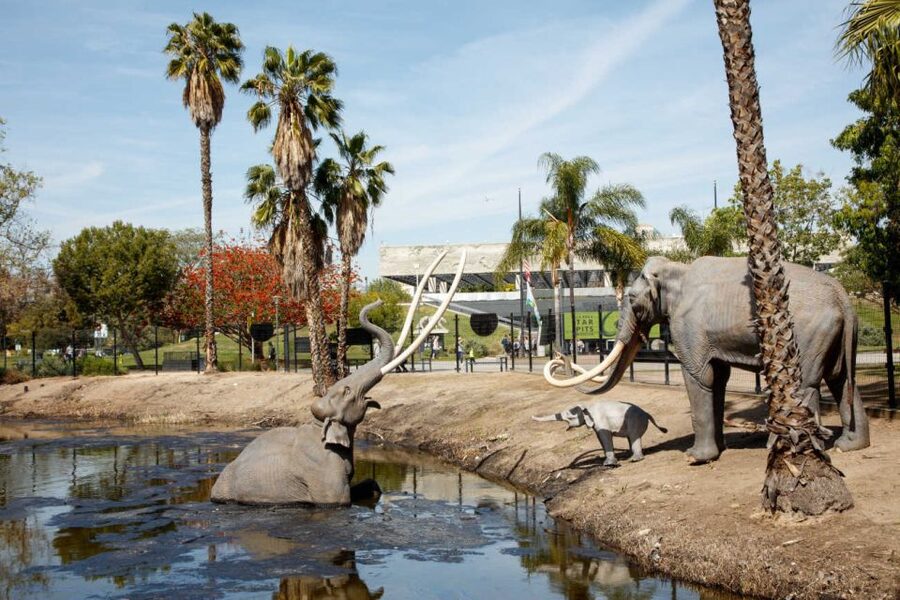
At La Brea Tar Pits, the Ice Age is not locked away in a distant national park. It is bubbling up through the ground on Wilshire Boulevard, with mammoths, saber-toothed cats, dire wolves, and more preserved beneath Los Angeles. I like the rare chance to watch science still happening at an active urban excavation site, and I like that the museum shows the work behind the displays in its Fossil Lab.
The $18 admission is a fair deal if you enjoy natural history and plan to spend time both indoors and outside. The main drawback is that much of the outdoor area is free, so you may feel the ticket is less useful if you only want to see the tar pits and gardens. The museum is also likely to appeal most to families, children, and anyone with a real interest in geology, biology, or ancient animals.
Key things to know before you go
- Tar still bubbles from the ground: See active tar pits in the middle of Los Angeles, not a recreated exhibit.
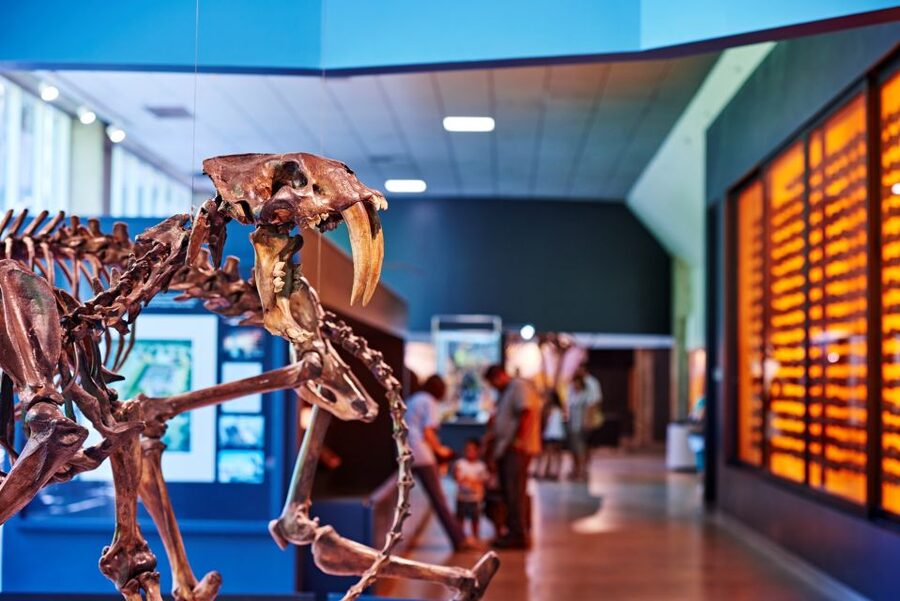
- Over a million fossils: The museum displays Ice Age remains from mammoths, saber-toothed cats, dire wolves, and other animals and plants.
- Watch scientists at work: The Fossil Lab lets you see fossils being cleaned and studied.
- Pit 91 is included: General admission includes access to this active excavation area, subject to the site’s current arrangements.
- Reserve the free Excavator Tour early: You can request a timed place after arrival, but space is limited and not guaranteed.
- Add-ons cost extra: Ice Age Encounters and the 3D Film are not part of the $18 admission.
Why La Brea feels different from a normal museum
Most natural-history museums ask you to imagine the work that produced their collections. At La Brea, you can see that work in progress. The ground itself is part of the exhibit, and the evidence is still being recovered from the site.
The tar pits formed a natural trap for animals during the Pleistocene, the period commonly called the Ice Age. Asphalt rose through cracks in the earth, attracting animals and preserving bones, plants, and other remains over time. You do not need to be an expert to grasp the basic story. The pits make the process visible in a way that a glass case alone cannot.
That setting gives the visit a useful sense of place. You are not looking at unrelated fossils brought together from around the world. You are seeing remains found at this particular spot in Los Angeles, then learning how scientists identify, clean, and preserve them.
I also appreciate the contrast between the site and its surroundings. La Brea sits on Wilshire Boulevard, next to major cultural attractions including LACMA. You can move from city traffic and art museums to bubbling asphalt and Ice Age fossils within minutes.
A few more museum visits around the USA worth comparing
- NYC: 9/11 Memorial & Museum Timed-Entry Ticket
★ 4.8 · 31,428 reviews - NYC: Empire State Building Tickets – Observatory & Museum
★ 4.7 · 25,757 reviews - New York City: American Museum of Natural History Ticket
★ 4.5 · 15,447 reviews
Starting outside at the bubbling tar pits
Begin outdoors if the weather is comfortable. The pits are the most unusual part of the experience, since you can see tar still moving in the ground rather than simply reading about an extinct process.
Do not expect a giant lake of flowing asphalt. The appeal is subtler and stranger: dark tar, trapped gases, and slow bubbling in a public park setting. The effect makes the ancient story feel current. La Brea is not only a place where scientists once found fossils. It remains an active site where the ground continues to behave in the same basic way.
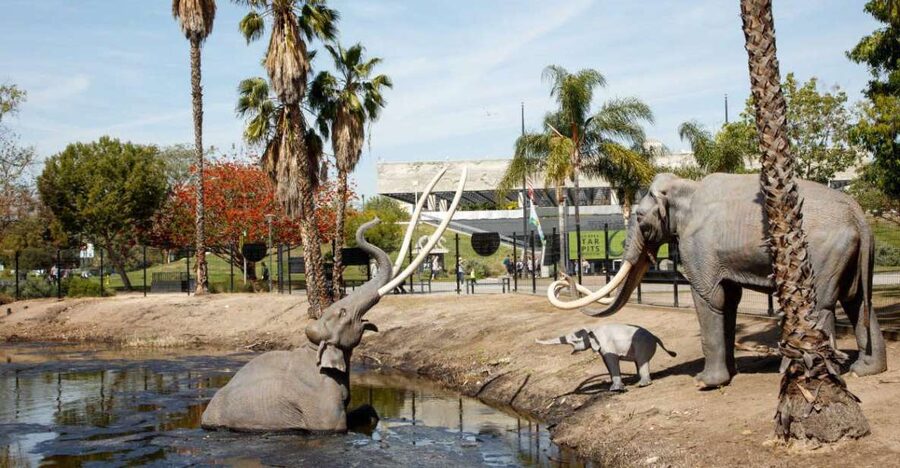
The outdoor area is also where you get your first sense of scale. The museum exhibits can organize the story neatly, but the pits remind you that this was a real hazard for animals. A large mammoth or predator could be preserved because it became stuck, and smaller creatures may have been drawn to the struggle and met the same fate.
You can visit the outdoor areas without paying for the museum, so this is an important value point. If you have only a short time, seeing the tar pits and Pleistocene Gardens may be enough for a quick stop. If you want the fossil displays, excavation context, and working lab, the ticket becomes much more worthwhile.
Pit 91 and the active excavation story
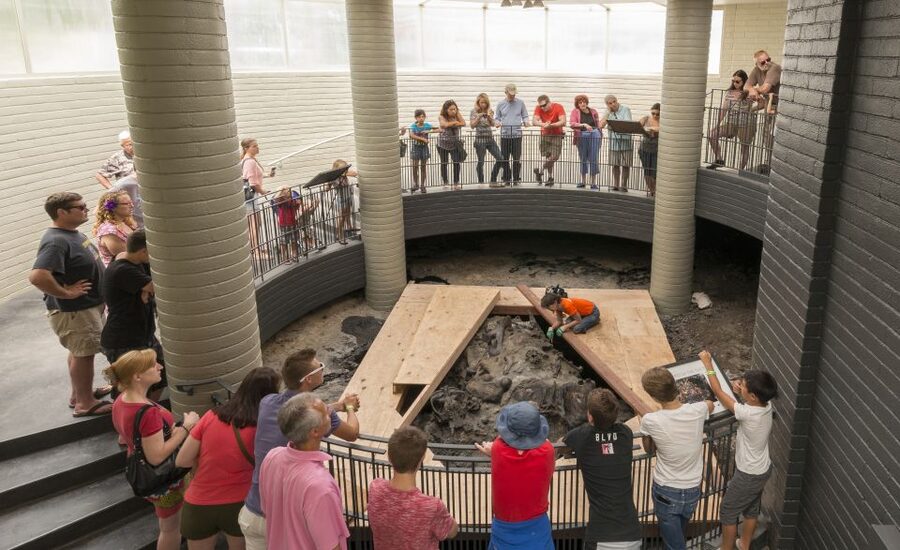
Pit 91 access is included with general admission. This is one of the strongest reasons to go inside rather than treating La Brea as a quick roadside curiosity.
At an active excavation area, the main attraction is not a polished final display. You are looking at a place where discoveries can still be made, recorded, and interpreted. That helps explain why paleontology takes time. A fossil is not simply pulled from the ground and placed in a case. Its location, condition, and connection to other remains all matter.
The free Excavator Tour can add useful context. You make a timed reservation after arriving, and space is limited, so ask about it early. A visit around 10:30 in the morning has been suggested as a good time for catching a free tour, but the schedule can vary and a place is not guaranteed.
This is also a good place to keep expectations realistic. An excavation site may not produce a dramatic find while you are there. Its value comes from seeing the actual setting and learning how a site is studied over time. If you prefer fast-moving entertainment, the museum displays may hold your attention better. If you like process and discovery, Pit 91 adds real substance.
Inside the museum: mammoths, predators, and evidence
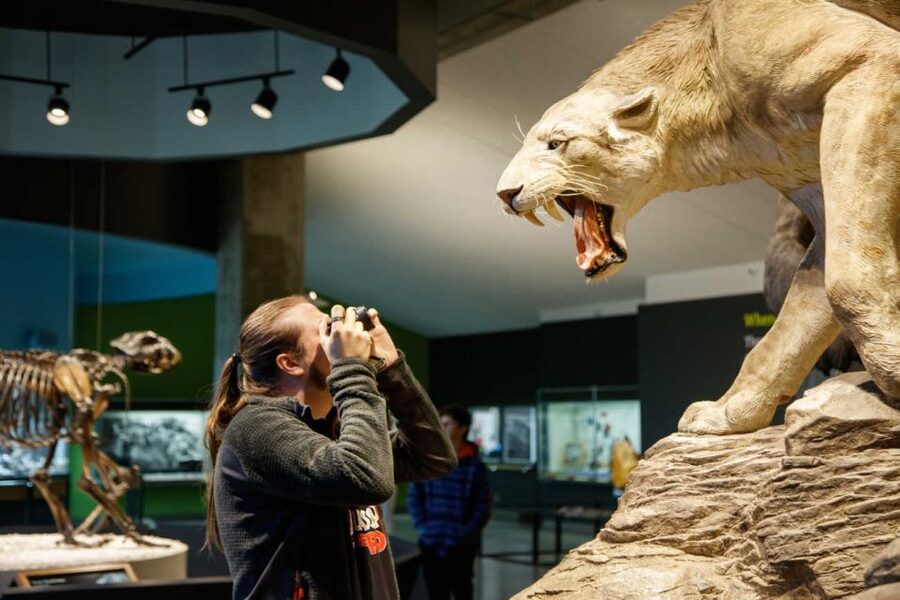
The museum presents the major discoveries from La Brea in a clear way, with fossils and displays focused on the animals and plants found here. Mammoths and saber-toothed cats naturally draw the eye, but the wider collection matters because it shows a whole Ice Age environment rather than only a parade of giant predators.
Dire wolves are another memorable part of the collection. Their remains help connect the museum to animals that are familiar from popular culture but often misunderstood. The displays give you a chance to consider what actually lived in the region and how those animals interacted with the tar pits.
I would allow enough time to read the explanations instead of rushing straight to the largest skeletons. The museum is not huge, but it is packed with material. One earlier visitor described it as a small museum with excellent displays, which is a fair way to think about it. You are not signing up for an all-day institution with dozens of halls. You are visiting a focused museum that makes one site its subject.
Children often respond well to the large animals and the basic survival story. Adults who enjoy geology, biology, archaeology, or local history will find more to consider in the details. The museum’s strength is that it works at both levels. A child can remember the saber-toothed cat, while an adult can think about preservation, excavation, and how scientists reconstruct an extinct ecosystem.
Same city, a completely different collection:
- NYC: Museum of Modern Art (MoMA) Entry Ticket
★ 4.6 · 12,540 reviews - 9/11 Memorial, Ground Zero Tour with Optional 9/11 Museum Ticket
★ 5.0 · 6,381 reviews - 9/11 Memorial Museum Admission Ticket
★ 4.5 · 6,376 reviews - All-Access 9/11: Ground Zero Tour, Memorial and Museum, One World Observatory
★ 5.0 · 4,886 reviews
The Fossil Lab puts the science in view
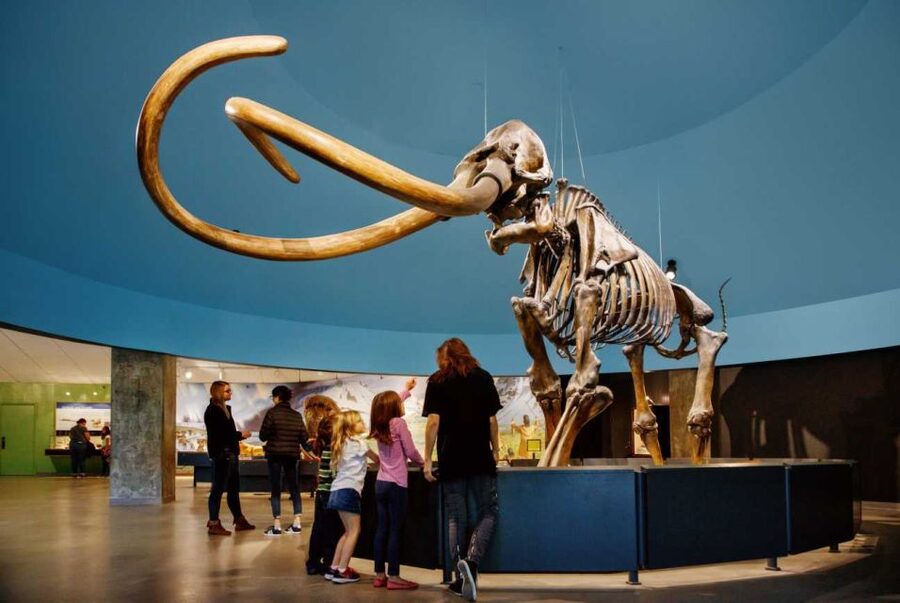
The Fossil Lab is one of the most valuable parts of the museum because it shows what happens after a fossil comes out of the ground. Scientists clean and study the remains in view of the public.
This is where the visit moves beyond a collection of impressive bones. You see that the work can be careful and methodical. Fossils need cleaning, identification, and preservation before they can tell a useful story. The lab helps you understand why museums need trained staff and why new discoveries do not instantly become finished exhibits.
I like this part for another reason: it gives children a practical picture of science. Instead of presenting science as a set of facts on a wall, the museum shows people handling evidence and asking questions. That makes the visit more useful for school-age children than a display of skeletons alone.
Staff and volunteers have earned strong praise for explaining the material and answering questions. You may find the experience especially rewarding if you arrive with a few questions of your own, such as how a fossil is cleaned or how scientists know which animal it came from.
Pleistocene Gardens and the outdoor break
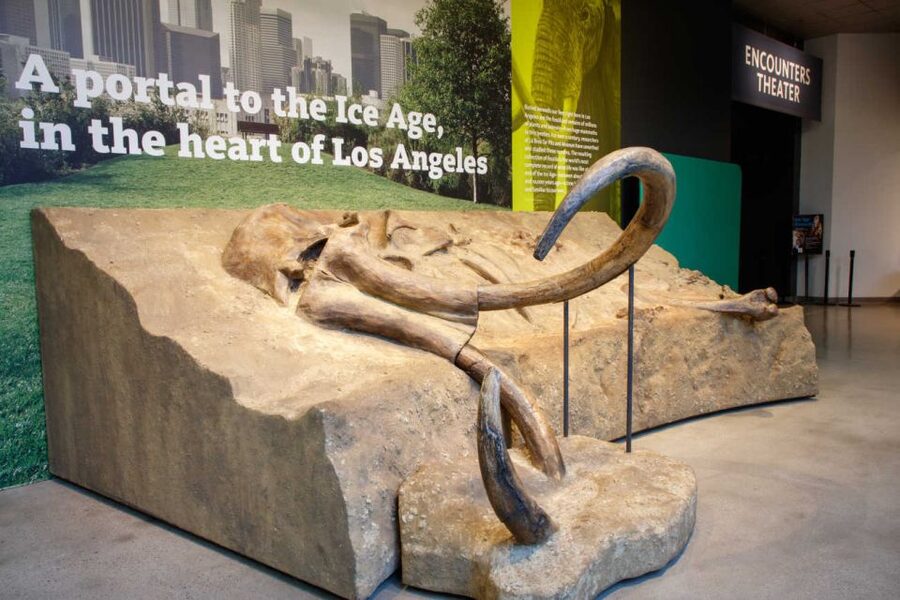
The Pleistocene Gardens are included with admission and provide a quieter way to think about the Ice Age setting. Plants matter here because fossils are not only about animals. Vegetation helps show what the environment may have supported and gives the outdoor portion a more relaxed pace.
The gardens also make it easier to plan a longer visit. The site has enough open space for a pause, and one family-oriented suggestion is to bring lunch and a rug for a picnic nearby. Keep in mind that the museum ticket does not turn the entire outdoor area into a private attraction. You are paying mainly for the indoor museum and included features such as Pit 91 and the gardens.
Los Angeles can be hot, so bring water and plan your outdoor stops sensibly. One guide was praised for keeping people in the shade during a hot outing, but you should still expect some walking and time outside. If the day is warm, visit the pits and garden earlier, then spend the middle of the day inside.
What the $18 ticket includes, and what it does not
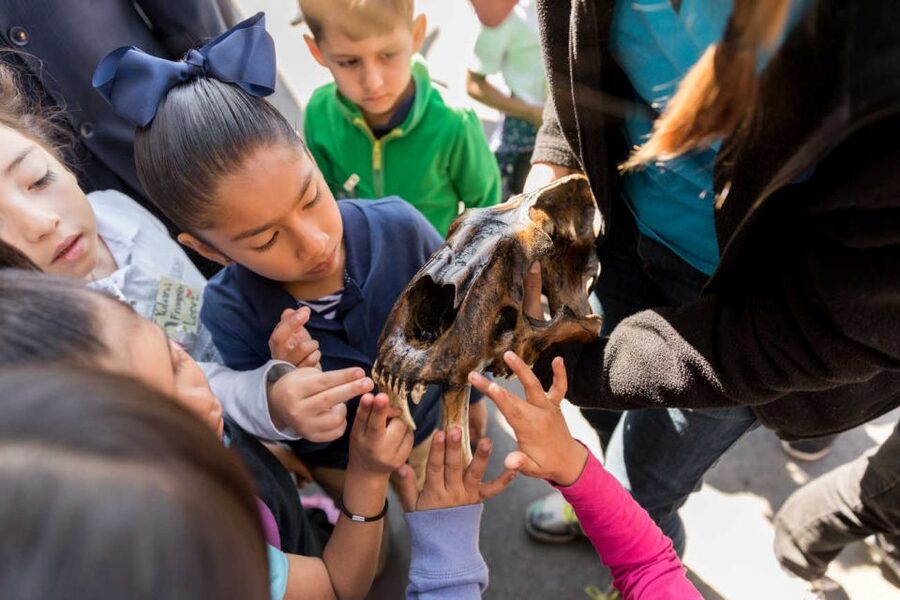
The current price is $18 per person. For that cost, you receive general admission to the museum, Pit 91 access, the Pleistocene Gardens, and Atrium access.
The ticket does not include parking. There is an on-site parking lot for an additional fee, and parking cost has caught some people by surprise. If you are driving, factor that charge into the total before deciding that the admission price is all you will spend.
The Ice Age Encounters show and 3D Film also require separate add-on tickets, available on site. I would not treat these as essential to the visit. The main experience is the museum, tar pits, excavation area, and Fossil Lab. The add-ons may suit families who want more screen-based or scheduled entertainment, but you can have a worthwhile visit without them.
The $18 ticket cannot be applied toward a museum membership. If you are a local planning several visits, compare membership options separately rather than expecting this admission to count toward one.
How long to plan and how to fit it into Los Angeles
The ticket is valid for one day, and the museum is open daily from 9:30 a.m. to 5 p.m., except for possible holiday closures. Check the official website before setting out, especially around holidays.
A short visit focused on the outdoor pits and main exhibits will take less time than a careful visit with the Fossil Lab, Pit 91, gardens, and free Excavator Tour. I would plan your schedule around the tour first if it matters to you, since timed spaces are limited. Then you can fit in the indoor exhibits and outdoor areas at your own pace.
La Brea works well as part of a museum day because it is next to LACMA. You could visit both institutions, but do not assume you will see every section of both in one rushed afternoon. The tar pits are an easy fit with nearby cultural attractions, and the open grounds make the site less tiring for families than an indoor-only museum.
For the smoothest visit, arrive near opening, ask about the Excavator Tour, see the outdoor pits before the day gets hot, and then spend time in the museum and Fossil Lab. A late-morning arrival can also work, but you may find tour spaces already taken.
Who will enjoy La Brea most

I would recommend this experience to families with children, school-age learners, science fans, and anyone who has wondered how Los Angeles became linked with Ice Age fossils. The displays are approachable, and the large animals give younger children an immediate reason to pay attention.
It also suits adults who enjoy geology, biology, or local history. The museum is not only about extinct creatures. It explains a site that is still being excavated, still producing information, and still visibly shaped by tar.
You may be less satisfied if you want a large museum with many unrelated galleries, or if you only have time for the outdoor area. Since the pits and some open-air features can be seen without museum admission, a ticket makes the most sense when you plan to enter the museum and use the included excavation access.
Practical booking advice
You can cancel up to 24 hours before the visit for a full refund, and the reserve-now, pay-later option allows you to hold plans without paying immediately. Infants from ages 0 to 2 receive a ticket upon arrival.
Check the opening schedule before you go, allow extra money for parking if you drive, and ask for the free Excavator Tour as soon as you arrive. Also note that current safety rules apply to everyone entering the museum and may affect how parts of the visit operate.
Should you book the La Brea Tar Pits Museum ticket?
Book it if you want more than a quick look at bubbling tar. The museum gives the site meaning, the Fossil Lab shows the human work behind the discoveries, and Pit 91 connects the displays to an active excavation.
At $18, the ticket offers solid value for families and curious adults who will spend a few hours exploring. I would skip it only if your Los Angeles schedule is tight and you plan to see the outdoor pits for free without entering the museum. For most people interested in ancient animals, science, or unusual city attractions, La Brea is an easy place to justify.
FAQ
Where is the La Brea Tar Pits Museum?
The meeting point is the Page Museum at La Brea Tar Pits, 5801 Wilshire Boulevard, Los Angeles, California 90036.
How much does general admission cost?
General admission costs $18 per person.
What does the ticket include?
The ticket includes general admission to the museum, Pit 91 access, the Pleistocene Gardens, and Atrium Access.
Are the Ice Age Encounters show and 3D Film included?
No. Ice Age Encounters and the 3D Film require separate add-on tickets that can be purchased on site.
Can I see tar bubbling at La Brea?
Yes. The site has active tar pits where tar is still bubbling from the ground.
Is parking included?
No. Parking is available in an on-site lot for an additional fee.
Is the Excavator Tour included?
Yes. The Excavator Tour is free with general admission, but you must make a timed reservation after arrival. Space is limited and not guaranteed.
What are the opening hours?
The museum is open daily from 9:30 a.m. to 5 p.m., with possible closures on holidays. Check the website before visiting.
Just added around the USA
- Museum of Ice Cream Austin★ 3.5 · 85 reviews
- Admission to Richard Nixon Presidential Library and Museum Ticket★ 5.0 · 123 reviews
- The Turquoise Museum Curator’s Tour★ 5.0 · 12 reviews
- Turquoise Museum Visit★ 4.5 · 194 reviews
- Orlando: Titanic Artifact Exhibition Ticket★ 4.5 · 246 reviews
- The St. Augustine Old Jail Museum Guided Tour★ 4.6 · 68 reviews
- San Diego: San Diego Natural History Museum Ticket★ 4.7 · 33 reviews
- The Museum of Fine Arts, Houston Entry Ticket★ 4.6 · 82 reviews
Museum Tours in the USA, compared.



9/11 Memorial, Ground Zero Tour with Optional 9/11 Museum Ticket
Read our review →

All-Access 9/11: Ground Zero Tour, Memorial and Museum, One World Observatory
Read our review →

Browse the lists this tour appears in