
Review · THE USA
Anchorage Museum General Admission Ticket
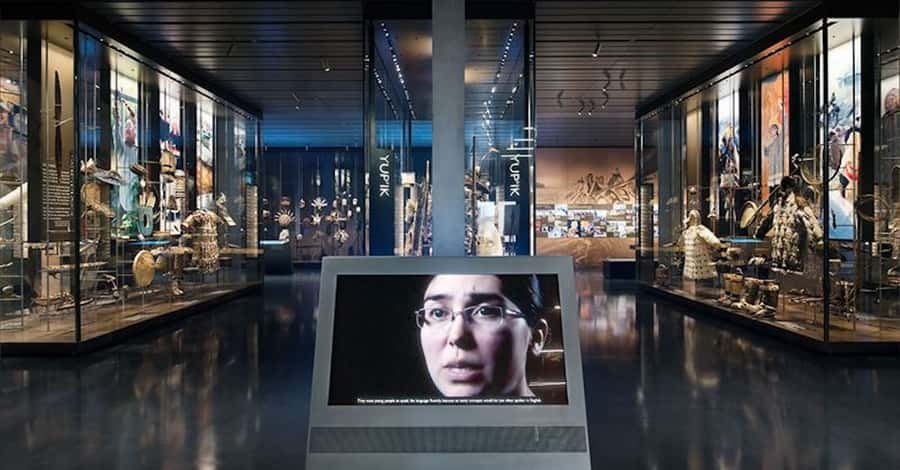
The most memorable part of the Anchorage Museum is its close look at Alaska Native cultures through more than 600 objects from the Smithsonian Institution. You can study a Tlingit war helmet, an Iñupiaq feast bowl, and other carefully explained pieces through touch screens that connect objects with oral histories and archival images.
I like the freedom of a self-guided visit, since you can give five minutes to a display or stay with it much longer. I also like the mix of serious cultural material and hands-on science, including marine life tanks and the Discovery Center. The main drawback is that the $25 ticket does not include the Thomas Planetarium, so astronomy fans need to pay extra at check-in.
Key points to know before you go
- Smithsonian objects with Alaskan Native guidance: The Arctic Studies Center presents more than 600 objects selected and interpreted with help from Alaskan Native advisers.
- A full day of museum access: Your admission is valid for one day from first activation, giving you time to explore at your own pace.
- More than history displays: Art and design, science, marine life, astronomy, and Indigenous culture all share the museum.
- Hands-on learning for families: The Discovery Center adds interactive science activities to the quieter galleries.
- Planetarium access costs extra: Ask at check-in about Thomas Planetarium tickets, with dome-screen films, 3D graphics, and surround sound.
- Easy downtown location: Find the museum at 625 C Street in Anchorage, with a heated underground garage available at certain times.
Starting at 625 C Street in Anchorage

The Anchorage Museum sits at 625 C Street, a practical downtown location for a day indoors. That matters in Alaska, where weather can change quickly and a museum visit gives you a reliable way to add culture and science to your schedule.
You do not join a guided group here. Your $25 admission provides a self-guided visit, so you can choose the order and pace that suit you. Families may want to head first toward the Discovery Center, while history-minded visitors can begin with the Arctic Studies Center.
The ticket is valid for one day from first activation. That is useful if you want to make the museum part of a wider Anchorage day rather than rush through every gallery in one short visit.
Parking is available in the museum’s heated and secured underground garage on weekends and evenings. Handicap parking is available in the garage every day during both daytime and evening hours. Standard parking costs $5 for up to two hours, $8 for two to four hours, $12 for four to six hours, and $15 for six to ten hours.
A few more museum visits around the USA worth comparing
- NYC: 9/11 Memorial & Museum Timed-Entry Ticket
★ 4.8 · 31,428 reviews - NYC: Empire State Building Tickets – Observatory & Museum
★ 4.7 · 25,757 reviews - New York City: American Museum of Natural History Ticket
★ 4.5 · 15,447 reviews
The Arctic Studies Center and 600 Indigenous objects
For many people, the Arctic Studies Center will be the heart of the museum. Its main exhibition, Living Our Cultures, Sharing Our Heritage: The First Peoples of Alaska, presents more than 600 objects from the Smithsonian’s collections.
The exhibition covers Indigenous cultures across Alaska. Instead of treating the objects as isolated relics, the displays give you ways to understand their use and meaning. Alaskan Native advisers helped select and interpret the collection, an important detail because cultural objects deserve more than a short label and a date.
You might spend time with an 1893 Tlingit war helmet from the southeast village of Taku. You can also see a 1935 Iñupiaq feast bowl from Wales, on Alaska’s northwest coast. These objects give the exhibition a strong sense of place. They are tied to particular communities, materials, and traditions rather than presented as anonymous examples of a distant past.
The touch screens add another layer. You can zoom in on photographs and scroll through related information, including oral histories and archival images. I like this feature because it lets you investigate an object at your own speed. If a particular piece catches your eye, you are not limited to the first label you read.
Allow time here. A quick pass will show you the range of the collection, but the digital material rewards a slower visit. You may find that one object leads to a story about a community, a historical event, or a traditional practice.
Art, design, and the wider story of the North

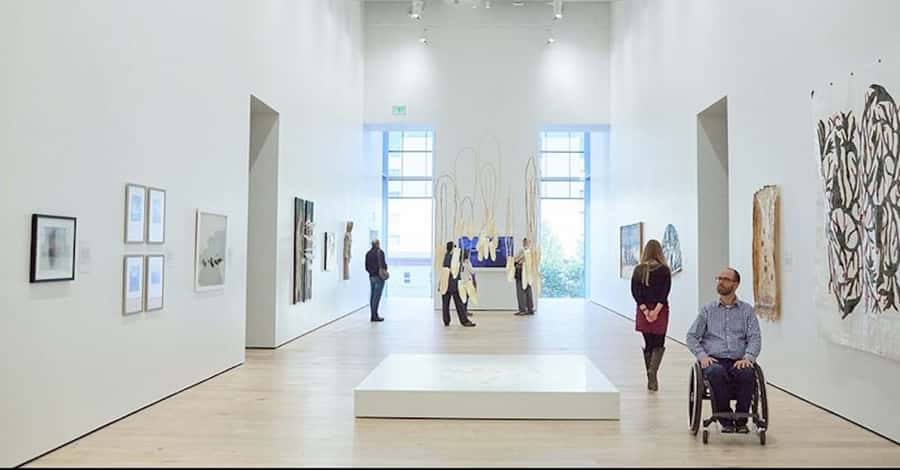
The museum also covers art and design, history, science, and culture from across the North. The broad subject range is useful if your interests are mixed. You can move from material culture to modern artistic work, then shift into science without changing museums.
That variety also means the experience is not arranged around one narrow theme. You are not simply looking at old objects in glass cases. The museum uses different types of displays to explain how people live in, study, and represent Alaska and the wider northern region.
Because the admission lasts one day, you can decide how much attention to give each area. I would avoid trying to absorb every label in one sweep. Choose a few sections that matter most to you, then use the other galleries as a change of pace.
The self-guided format works particularly well here. A guide is not included, and no guide names are provided, but that also means you are not tied to a group schedule. You can pause for a detailed reading, move along when a display is less interesting, or take a break before returning to another section.
Science displays, marine life tanks, and the Discovery Center

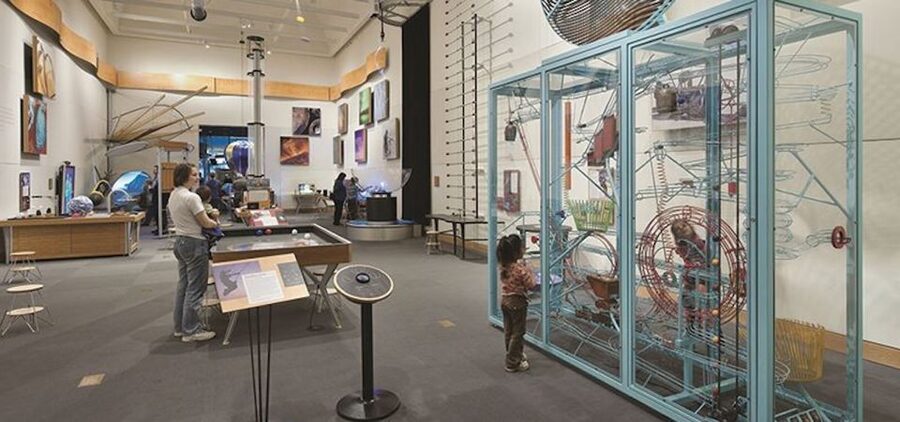
The science side keeps the museum from feeling like a purely historical visit. The Discovery Center offers hands-on science, which can be a welcome change after time spent reading labels and studying artifacts.
This area is especially useful for families, but adults who enjoy practical demonstrations should not skip it. Interactive exhibits help turn broad scientific ideas into something you can test or observe. The supplied information does not give a complete list of demonstrations, so you should think of the Discovery Center as a place for hands-on learning rather than plan around one particular activity.
Marine life tanks add a visual break. They bring living northern environments into the museum and give you something to watch while moving between galleries. The tanks are also helpful if your group has mixed interests. One person can spend time with a cultural display while another looks at marine life.
The combination of science, tanks, and interactive activities gives the museum a good rhythm. You can alternate between quiet concentration and more active learning. That makes the day easier to manage with children, though the $25 admission offers better value when you spend several hours inside rather than making a very short stop.
Same city, a completely different collection:
- NYC: Museum of Modern Art (MoMA) Entry Ticket
★ 4.6 · 12,540 reviews - 9/11 Memorial, Ground Zero Tour with Optional 9/11 Museum Ticket
★ 5.0 · 6,381 reviews - 9/11 Memorial Museum Admission Ticket
★ 4.5 · 6,376 reviews - All-Access 9/11: Ground Zero Tour, Memorial and Museum, One World Observatory
★ 5.0 · 4,886 reviews
Adding the Thomas Planetarium
Planetarium admission is not part of the general ticket. You can ask about Thomas Planetarium tickets when you check in, so astronomy fans should decide at the entrance if they want to add the experience.
The planetarium uses a dome screen, 3D graphics, and surround sound to present astronomy and the solar system. It also offers interactive astronomy demonstrations, educational programs, and films. This gives the museum visit a more theatrical finish than the standard galleries provide.
The extra cost is easiest to justify if you have a strong interest in space or want a more structured program within your self-guided day. It may also appeal to children who need a change from museum displays. If your main reason for visiting is the Indigenous collection, you can skip it and still have a full museum experience.
Because planetarium tickets are handled at check-in, ask about available programs before settling into the galleries. The supplied information does not specify show times, prices, or the length of individual programs, so check those details on arrival.
How much time should you allow?
The ticket is valid for one day, but the ideal visit length depends on how closely you read and how much time you spend at the interactive areas. A quick visit can give you a general look at the building and its main subjects. A longer visit makes more sense if you want to use the touch screens, study the Smithsonian objects, spend time in the Discovery Center, and add the planetarium.
I would plan the museum as a substantial stop rather than a brief filler between other activities. The range of exhibits is the main reason. You have art, design, history, Indigenous culture, science, marine life, and astronomy available in one place.
You also need to account for your own pace. The museum is self-guided, so there is no fixed route and no group departure time. That flexibility is valuable, but it puts the responsibility on you to manage energy and attention.
Is the $25 admission good value?
At $25 per person, the ticket is reasonable if you use the museum as a full-day cultural stop. The value comes from the range of material included in general admission, especially the Arctic Studies Center, the interactive history gallery, the Discovery Center, and the marine life displays.
The ticket is less compelling if you only have time for a quick walk through one section. In that case, you may not make full use of the one-day validity. The museum is at its best when you give it several hours and let the self-guided format work in your favor.
The planetarium changes the calculation. Since it is an extra purchase, you should treat it as an optional add-on rather than assume it is included. If your group has different interests, this is useful because some people can choose the astronomy program while others focus on the main galleries.
The strongest value is for people who want more than a single subject. You can learn about Indigenous cultures, see objects connected to specific Alaskan communities, handle interactive science material, and watch marine life without buying separate admissions for each area.
Who will enjoy this museum most?
I would recommend this experience to first-time visitors who want a broad introduction to Alaska. It gives you cultural context that can make the rest of your time in the state more meaningful, especially if you plan to see rural communities, Indigenous cultural sites, or northern wildlife.
Families are also well served by the mix of quiet exhibits, tanks, hands-on science, and optional planetarium programming. The museum gives adults serious historical and cultural material while offering younger visitors things to do with their hands and eyes.
It suits independent explorers who dislike fixed tours. You can take your time with the displays, skip sections that do not interest you, and return to the most important objects. The trade-off is that nobody is walking you through the museum or answering questions as you go.
Art and design enthusiasts should find enough variety to justify the ticket, while science fans have the Discovery Center, marine life, and planetarium. If your only goal is a highly focused guided history tour, this may feel too broad and too self-directed.
Practical details that affect your visit
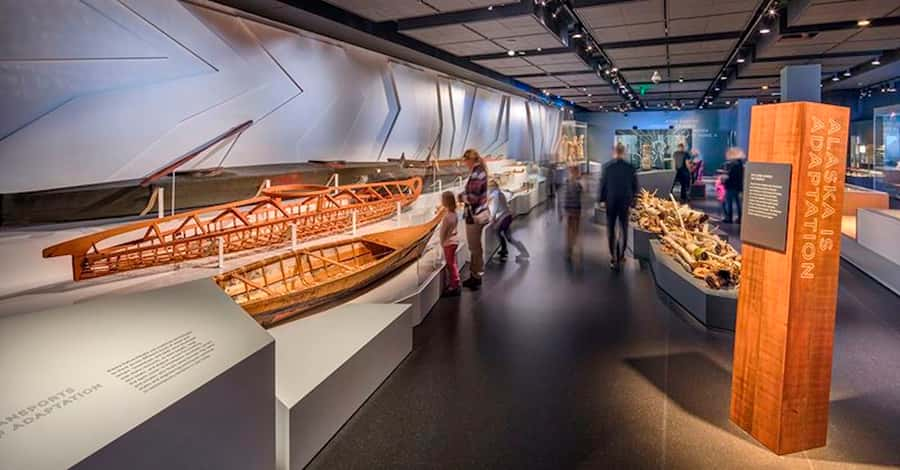
The meeting point is the Anchorage Museum at 625 C Street, Anchorage, Alaska 99501. The location coordinates are 61.215893, -149.884700 if you are using a map application.
General admission includes the museum entry and a self-guided tour. It does not include a guide or the Thomas Planetarium ticket. The experience is wheelchair accessible.
You can cancel up to 24 hours in advance for a full refund. A reserve-now, pay-later option is also available, which can help if your Anchorage schedule depends on weather or changing plans.
The published booking information lists a one-day validity from first activation. That means you should activate the ticket when you are ready to make the museum part of your day, not far ahead of your intended visit.
Should you book the Anchorage Museum?
Book it if you want a flexible, indoor Anchorage experience with genuine cultural depth and plenty of variety. The Smithsonian collection is the main reason to come, while the Discovery Center, marine life tanks, interactive history displays, and optional planetarium help keep the day from feeling too solemn or narrowly focused.
Skip it if you only have a short amount of time and want a guided tour with a fixed story. This is a self-guided museum, and the planetarium costs extra. For everyone else, $25 is a fair price for a full day of Alaska’s art, science, history, and Indigenous cultures, especially when you take time with the touch-screen stories and the objects linked to real Alaskan communities.
FAQ
Where is the Anchorage Museum located?
The museum is at 625 C Street, Anchorage, Alaska 99501, USA.
How much does general admission cost?
General admission costs $25 per person.
How long is the ticket valid?
The ticket is valid for one day from the time you first activate it.
Is the visit guided?
No. General admission includes a self-guided visit, and a tour guide is not included.
Is the Thomas Planetarium included?
No. A planetarium ticket is not included in general admission. You can ask about purchasing one when you check in.
What can I see at the Arctic Studies Center?
The center’s main exhibition, Living Our Cultures, Sharing Our Heritage: The First Peoples of Alaska, includes more than 600 objects from the Smithsonian’s collections. Examples include an 1893 Tlingit war helmet from Taku and a 1935 Iñupiaq feast bowl from Wales.
Does the museum have interactive exhibits?
Yes. The museum has touch screens in the Arctic Studies Center, a hands-on Discovery Center, an interactive history gallery, and interactive astronomy demonstrations in the planetarium.
Is the museum wheelchair accessible?
Yes. The experience is wheelchair accessible.
Is parking available?
Public parking is available in the museum’s heated and secured underground garage on weekends and evenings. Handicap parking is available every day during daytime and evening hours. Parking costs $5 for zero to two hours, $8 for two to four hours, $12 for four to six hours, and $15 for six to ten hours.
Just added around the USA
- Museum of Ice Cream Austin★ 3.5 · 85 reviews
- Admission to Richard Nixon Presidential Library and Museum Ticket★ 5.0 · 123 reviews
- The Turquoise Museum Curator’s Tour★ 5.0 · 12 reviews
- Turquoise Museum Visit★ 4.5 · 194 reviews
- Orlando: Titanic Artifact Exhibition Ticket★ 4.5 · 246 reviews
- The St. Augustine Old Jail Museum Guided Tour★ 4.6 · 68 reviews
- San Diego: San Diego Natural History Museum Ticket★ 4.7 · 33 reviews
- The Museum of Fine Arts, Houston Entry Ticket★ 4.6 · 82 reviews
Museum Tours in the USA, compared.



9/11 Memorial, Ground Zero Tour with Optional 9/11 Museum Ticket
Read our review →

All-Access 9/11: Ground Zero Tour, Memorial and Museum, One World Observatory
Read our review →

Browse the lists this tour appears in