
Review · GERMANY
Hamburg: Ticket for the Paradox Museum
Hamburg’s Paradox Museum turns science into a hands-on playground. In 14 colorful rooms, you can appear tiny or giant, lose your sense of direction in a mirror room, and test how easily your eyes and brain can be fooled. I especially like the Zero Gravity Room and the chance to photograph nearly every illusion as you go.
I also like that the museum works for a wide age range. A family group with children from toddler age through the early teens can find something to enjoy, and adults do not need a technical background to take part. The main consideration is length: at 60 to 90 minutes, this is a focused indoor attraction rather than a full-day museum, and the $27 price feels strongest when you enjoy the interactive, photo-friendly format.
Key points at a glance

- More than 50 hands-on exhibits: Test optical, physical, and mathematical ideas by taking part instead of only looking.
- Fourteen colorful rooms: The 1,300-square-meter museum gives the visit a clear rhythm, with a fresh illusion or challenge around each corner.
- The Zero Gravity Room: Create the feeling of floating and let the room challenge your sense of balance and weight.
- Helpful photo guidance: Staff in the hallways can point you toward the best angles and photo spots.
- Hamburg art meets science: Works by local artists add a creative layer beyond standard illusion displays.
- Easy family outing: The playful format appeals across generations, though some exhibits may suit older children better than very young ones.
Alter Wall sets the scene for a compact indoor adventure
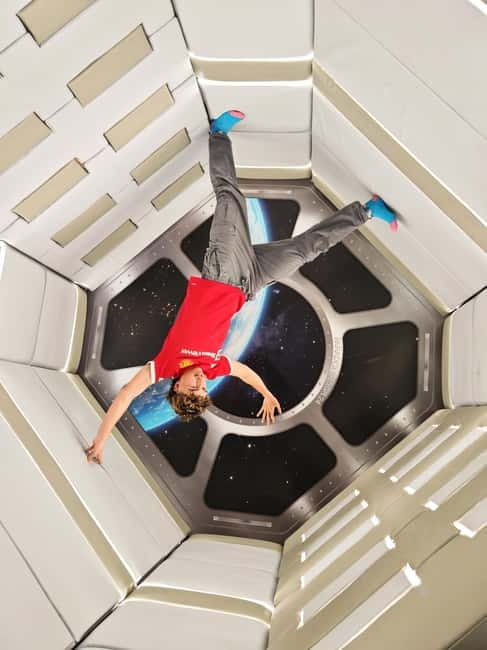
The Paradox Museum Hamburg opened at the end of 2024 on Alter Wall, in the heart of Hamburg. That central setting makes it a practical stop when you want an indoor activity in the middle of a city day.
Once you reach reception, have your ticket validated before entering. The museum covers 1,300 square meters, which is large enough to feel varied but still manageable within the stated 60 to 90 minutes.
I would plan on about an hour and a half if you want time to try the exhibits properly and take photographs. You can move through more quickly, but rushing defeats the point. Many displays work best when you pause, try a different position, and look at the result on your phone.
The museum is not built around a formal guided tour. Instead, you make your own way through the rooms, with staff in the hallways available to help you find good photo positions. That arrangement suits the subject. You can spend extra time at an exhibit that catches your attention and move on when an effect has run its course.
A few more museum visits around Germany worth comparing
- Berlin: Jewish Museum Berlin Entrance Ticket
★ 4.5 · 8,393 reviews - Berlin: DDR Museum Tickets
★ 4.3 · 3,443 reviews - Berlin: Natural History Museum Entrance Ticket
★ 4.6 · 3,382 reviews
Optical illusions that make you question your eyes
The basic idea here is simple: your eyes report one thing, while your brain tries to make sense of another. The museum uses that gap for playful experiments rather than a quiet gallery visit.
The mirror rooms are a good example. Reflections can make a room appear larger, more crowded, or less stable than it really is. Even walking in a straight line can become a challenge when your usual visual reference points are confused.
That makes these exhibits fun for photographs, but the photo is only part of the activity. You first need to work out where to stand and how the illusion changes from one position to the next. The best pictures usually come from treating the exhibit as a small puzzle, not from simply pointing your camera and pressing the button.
You may also find yourself appearing much larger or smaller than expected. These scale-based effects are especially easy for children to understand because the result is immediate. Adults can enjoy the same trick, though you may spend more time wondering why your brain accepted the false image so quickly.
The museum also uses mathematical ideas. You do not need to solve equations or follow a lecture. Instead, the concepts appear through visual patterns, altered proportions, and physical arrangements that let you test the result with your own body.
The Zero Gravity Room brings the most physical fun
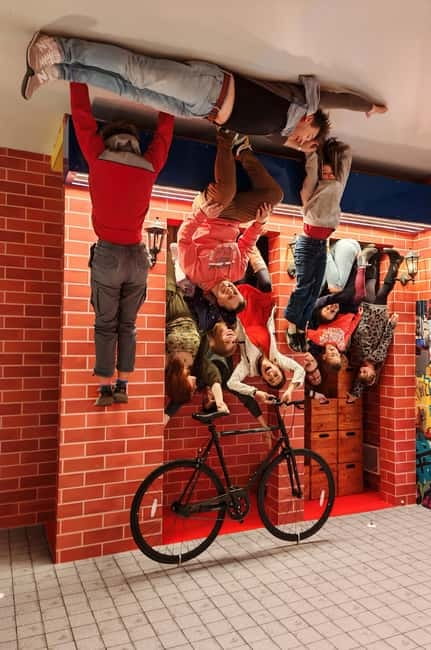
The Zero Gravity Room is one of the clearest examples of the museum’s approach. It gives you the sensation of weightlessness, even though you remain safely on the ground.
This exhibit works because it changes your normal physical reference points. Your body may feel as if it is floating, while your eyes try to insist that the room is ordinary. The effect is especially good for photographs because the pose can suggest movement or suspension.
I would give this room a little time rather than stepping in and out. Try the suggested position, look at the result, then adjust your posture or camera angle. Staff can help with the best spot for a picture, which matters in exhibits where a few steps can change the entire image.
The room also shows why this museum works well for families. Children can respond to the sensation right away, while adults can think about the physical and visual tricks behind it. Since the displays are interactive, different age groups can enjoy the same room for different reasons.
Very young children may not understand every illusion, but they can still react to unusual spaces, reflections, and changing scale. Older children and teenagers are more likely to experiment with poses and photographs.
Fourteen rooms keep the visit moving
The 14-room layout gives the museum a natural pace. Rather than placing every idea in one large hall, it breaks the visit into smaller scenes. Each room can reset your expectations before the next exhibit changes them again.
That variety is useful if you are visiting with a mixed-age group. One person might enjoy a physical effect, another might prefer a mirror-based photograph, and someone else might pay closer attention to the art and science displays.
The color and design also help the museum feel playful rather than academic. You are not expected to stand silently and read long labels. The point is to act, look, compare, and try again.
Still, the short format has a limit. At $27 per person, you are paying for a concentrated interactive attraction rather than a large traditional museum with hours of collections to explore. If you prefer historical objects, long explanations, or quiet galleries, this may not be the best match.
For someone who enjoys taking part, the price is easier to justify. The ticket includes access to more than 50 exhibits, and the experience is designed to keep you active for roughly 60 to 90 minutes.
Same city, a completely different collection:
- Berlin: Neues Museum Entry Ticket
★ 4.6 · 3,261 reviews - Berlin: Museum Island Multiple Museum Entry Ticket
★ 4.4 · 2,861 reviews - Cologne: Chocolate Museum Entrance Ticket
★ 4.4 · 2,790 reviews - Dresden: Church of Our Lady Guided Tour of Gallery
★ 4.7 · 2,421 reviews
Hamburg artists add a local creative touch
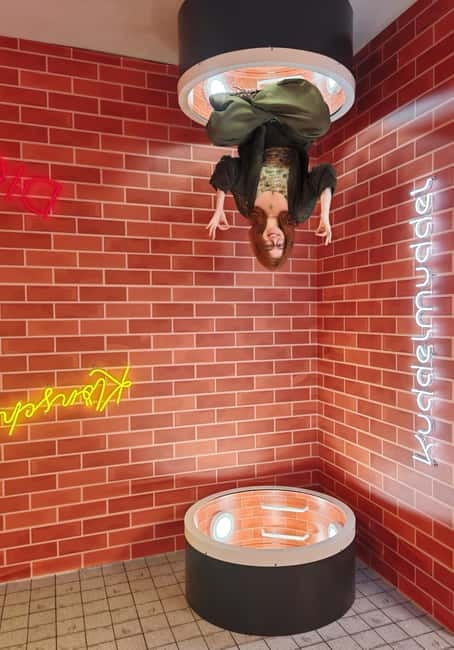
The museum is not only a collection of imported visual tricks. It also includes works by Hamburg artists that bring art and science together.
That local element gives the attraction more character. The exhibits still focus on perception, physics, and mathematics, but the artistic side encourages you to think about how an idea is presented. A scientific principle can become a room, an image, or a physical setup that invites a personal response.
Because the available information does not identify each artist or describe every work in detail, you should treat this part as an extra layer rather than the main reason to buy a ticket. The strongest reason to come is the interactive exhibit sequence. The Hamburg art connection makes the visit feel less like a collection of standard party tricks.
Changing special exhibitions and workshops are also planned from 2025 onward. If you return to Hamburg later, it is worth checking what has changed before booking. These additions could give repeat visitors a reason to come back, though specific themes and schedules are not provided here.
A strong choice for families and mixed-age groups
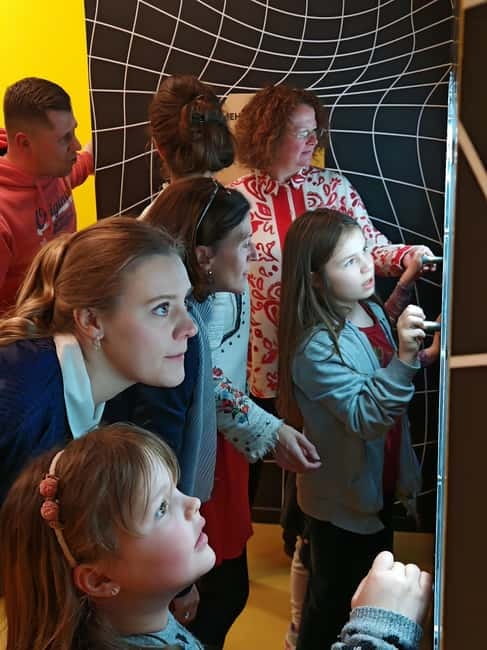
The museum has a useful quality for family planning: nobody needs to enjoy exactly the same thing. Children can focus on the physical surprises, teenagers can create photographs for social media, and adults can pay attention to the science behind the illusion.
A family outing that includes children around 7, 10, and 13 can work particularly well because the exhibits invite different levels of participation. The attraction has also proved popular across several generations in one family group, including children and adults together.
That does not mean every room will suit every age equally. A toddler may enjoy the colors and movement but may not understand why a reflection behaves strangely. Older children will get more from the mathematical and physical ideas, especially if you encourage them to predict what will happen before trying an exhibit.
If you are visiting with a group, agree early that everyone will have time for photographs. The social-media element is part of the appeal, but it can also slow the pace. A person who wants one quick snapshot and someone who wants to test five poses may have different ideas about how long each room should take.
The staff can help you find good photo spots, which saves time and reduces the trial and error. Bring a charged smartphone or camera, since many exhibits are made to be remembered through images.
Practical details that affect your visit
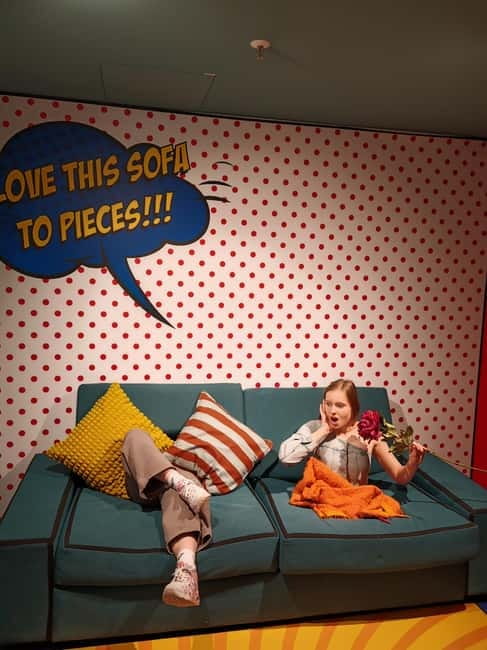
The listed duration is 1.5 hours, with the museum describing the active visit as about 60 to 90 minutes. That is enough time for a satisfying indoor stop, but you should not expect a full morning or afternoon unless you move very slowly.
The ticket price is $27 per person. I see this as fair for people who value interaction, unusual photographs, and a compact experience in a central Hamburg location. It is less attractive if you plan to spend only 20 minutes inside or if you prefer conventional museum collections.
Only card payments are accepted on site, so do not count on paying with cash. Bring your credit card and a charged smartphone. You can also visit the boutique after the exhibits, where you may buy gifts, books, games, T-shirts, umbrellas, and other souvenirs.
The museum is wheelchair accessible. Some content is shown in its original language, so language needs may vary by exhibit. The supplied information does not specify the amount of written explanation or whether every display is translated.
You can cancel up to 24 hours before the activity for a full refund. A reserve-now, pay-later option is also available, which helps if your Hamburg schedule may change.
What the experience does especially well
The strongest point is the museum’s ability to turn abstract ideas into something you can test with your own body. You are not simply told that perception can be unreliable. You see it happen when a mirror room makes walking difficult or a room creates the feeling of floating.
The second strength is the photo value. Many indoor attractions offer a few picture stops, but here the camera is part of the visit. Staff can guide you to the best positions, and the room designs make it easy to create unusual images without special equipment.
The third strength is its broad age appeal. A recent family outing with three children and several adults showed how well the concept can cross generations. The group included children around 7, 10, and 13, and the format gave each age group a way to join in.
The main weakness is that the visit may feel brief for the price. You are paying for design, interaction, and the chance to make photographs, not for a large collection that takes half a day. The museum is best seen as a lively city activity that fits between other plans.
Should you book Hamburg’s Paradox Museum?
Book it if you want a playful indoor stop with optical illusions, physical experiments, and photograph-friendly rooms. It is a particularly good fit for families, teenagers, mixed-age groups, art lovers, and anyone who enjoys testing perception instead of only reading about it.
Think twice if you want a traditional museum, detailed historical context, or a long visit for your admission fee. The experience is compact and active, with the best value coming from trying each exhibit and taking time to create good photographs.
For most people, I would allow the full 90 minutes, bring a charged phone, and treat the museum as a focused break in central Hamburg. The Zero Gravity Room, mirror rooms, colorful design, and Hamburg art connection give you plenty to remember after you leave.
FAQ
How long does a visit to the Paradox Museum Hamburg take?
The visit lasts about 60 to 90 minutes, with a listed duration of 1.5 hours.
How much does admission cost?
The ticket price is $27 per person.
Where is the Paradox Museum Hamburg located?
The museum is on Alter Wall in the heart of Hamburg, in Northern Germany.
How many exhibits are inside?
The museum has more than 50 interactive exhibits spread across 14 rooms.
Is the museum suitable for children?
Yes. The interactive format is designed for kids, teenagers, and adults, and it can work well for families with children of different ages.
Is the museum wheelchair accessible?
Yes, the Paradox Museum Hamburg is wheelchair accessible.
Can I take photographs inside?
Yes. Photography is encouraged as part of the experience, and staff in the hallways can help you find suitable photo spots.
What should I bring?
Bring a camera or charged smartphone, along with a credit card. Only card payments are accepted on site.
Can I cancel my booking?
Yes. You can cancel up to 24 hours in advance for a full refund. A reserve-now, pay-later option is also available.
Just added around Germany
- Stuttgart: Stuttgart Wine Museum Wine Tasting★ 4.7 · 55 reviews
- Stuttgart: Museum of Illusions Entry Ticket★ 4.2 · 507 reviews
- Stein: Public guided tour of the “Old Mine” museum★ 4.5 · 18 reviews
- Speyer: Technik Museum Speyer Ticket with an IMAX Dome Film★ 4.7 · 360 reviews
- Berlin: Bode Museum Ticket★ 4.5 · 214 reviews
- Munich Private Walking Tour with BMW Museum & Welt Entry★ 4.2 · 19 reviews
- Munich: Residenz Palace, Museum and Treasury Private Tour★ 4.9 · 15 reviews
- Munich: WOW Museum – Room for Illusions Ticket★ 3.5 · 14 reviews
Museum Tours in Germany, compared.


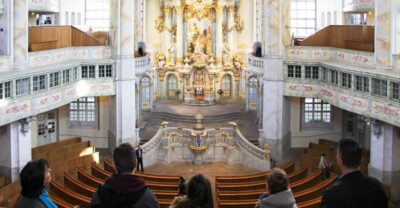
Dresden: Church of Our Lady Guided Tour of Gallery
Read our review →
Skip-the-Line: Berlin Wall Museum at Checkpoint Charlie
Read our review →Browse the lists this tour appears in