
Review · SPAIN
Valencia: Principe Felipe Science Museum Entry Ticket
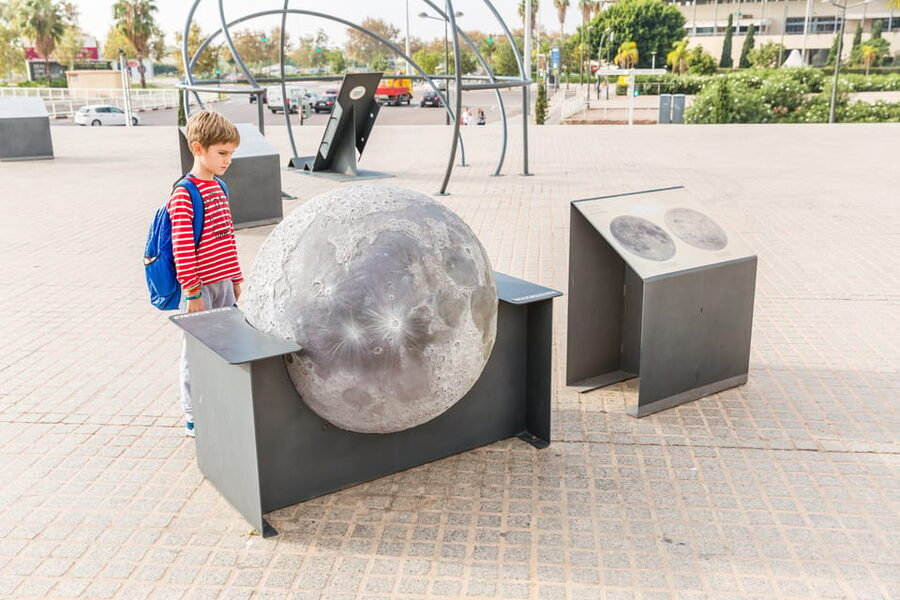
The most entertaining thing here is that the Principe Felipe Science Museum invites you to touch the exhibits. This is not a museum of glass cases and stern signs. You test, move, feel, and think your way through science inside Santiago Calatrava’s whale-skeleton building at Valencia’s City of Arts and Sciences.
I like the Electricity Theatre, where an eccentric inventor demonstrates the forces that make your hair stand on end. I also like the huge range of subjects, from climate change and biometrics to space and technology. The main drawback is that the museum can feel broad rather than tightly focused, and guided tours and extra activities cost more.
Key points to know before you go
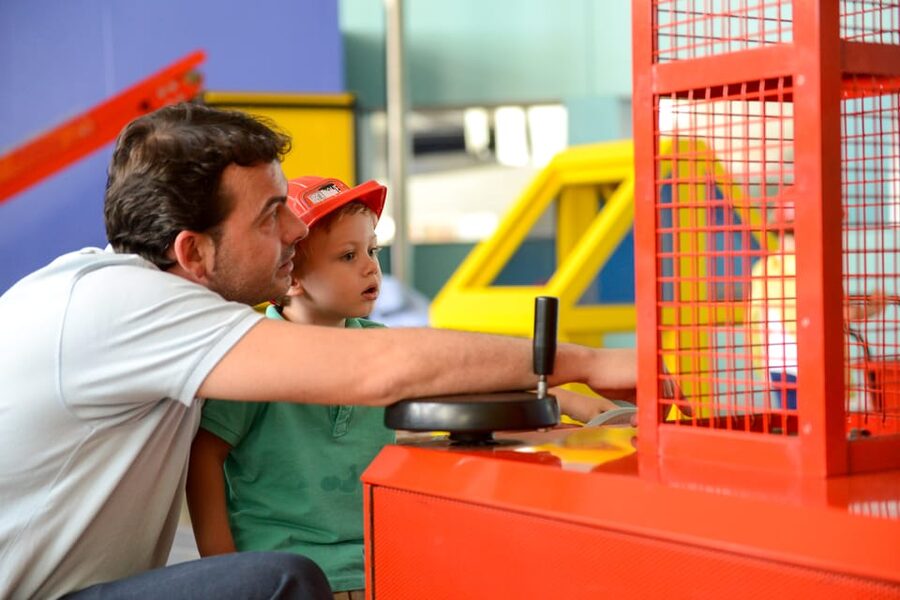
- Touch is encouraged: The museum’s motto allows you to touch, feel, and think, making it especially useful for families with school-age children and teenagers.
- The Electricity Theatre is a highlight: A live demonstration explains electricity in a fun, physical way for an audience of up to 50 people.
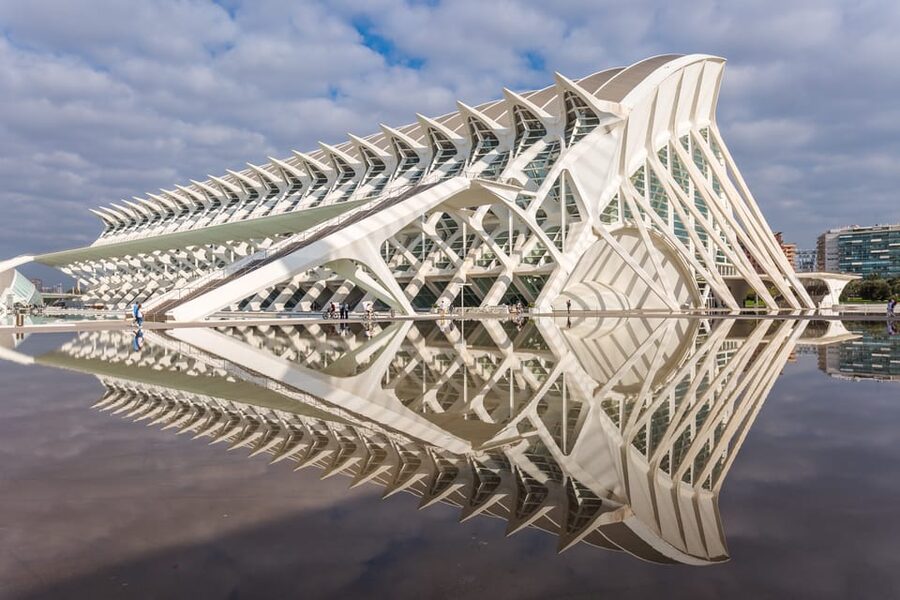
- The building is part of the experience: Calatrava’s whale-skeleton design gives you striking views and plenty of photo opportunities before and after your visit.
- Your ticket lasts all day: You receive access to every exhibition floor, so you can spend a few hours or make the museum a main part of your day.
- Leonardo da Vinci is featured in 2025: The special exhibition includes more than 50 large-scale machines, projections, sound, and links between Renaissance ideas and modern technology.
- The price is family-friendly: At the listed price of $11 per person, admission offers good value if you plan to stay several hours.
Entering Valencia’s whale-skeleton science museum
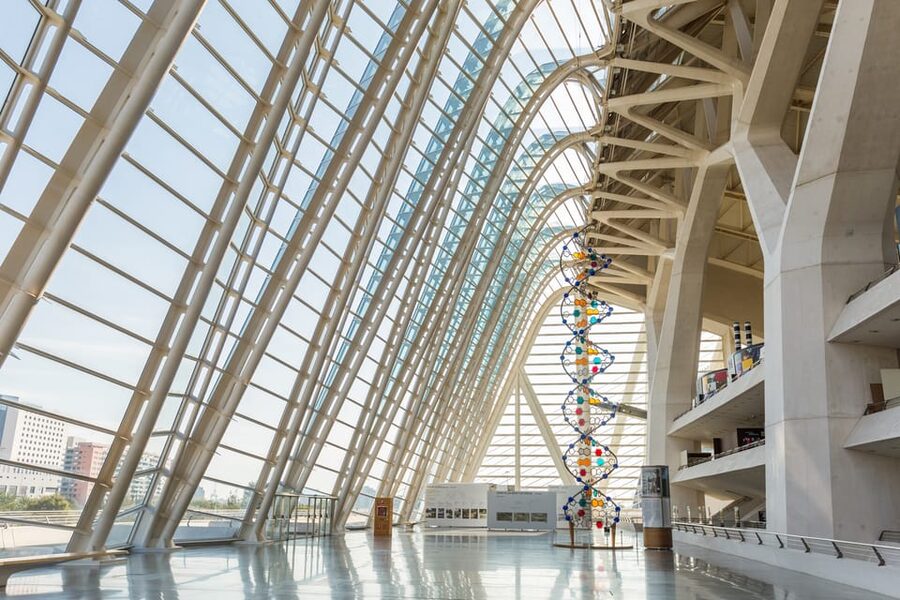
The Principe Felipe Science Museum sits in the City of Arts and Sciences, a few minutes from central Valencia. The setting matters. You are not simply walking into a box-shaped museum. The building, designed by Santiago Calatrava, curves overhead like a giant whale skeleton, with bright open spaces and dramatic structural lines.
I would allow a little time to look around outside before entering. The complex is one of Valencia’s most recognizable modern sights, and the architecture gives the visit a strong sense of place. You can take memorable photographs around the building, then head to the entrance and present your voucher.
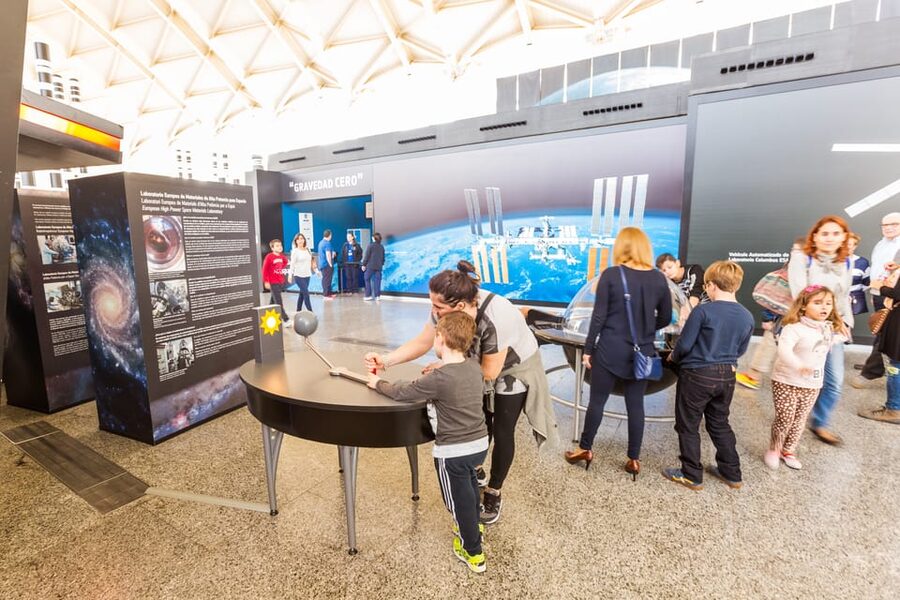
The museum’s guiding idea is simple: forbidden not to touch, not to feel, and not to think. That tells you what sort of visit to expect. The museum wants you to test ideas with your hands, not just read about them on a wall.
This approach works best when you give yourself permission to slow down. You may spend several minutes with one working display, then move on to another section that deals with a completely different subject. The result is less like following a fixed route and more like building your own day of experiments.
More science museums in Spain:
- Valencia: Oceanogràfic, Hemisfèric & Science Museum Combo
★ 4.4 · 2,959 reviews - NYC: Empire State Building Tickets – Observatory & Museum
★ 4.7 · 25,757 reviews - All-Access 9/11: Ground Zero Tour, Memorial and Museum, One World Observatory
★ 5.0 · 4,886 reviews
What your full-day ticket includes
The admission ticket is valid for one day and includes access to all exhibition floors. There is no guide leading you from room to room, so you can set your own pace and return to areas that interest you.
That flexibility is useful for families. Younger children may want to move quickly between hands-on displays, while older children and adults may prefer to read the explanations and spend longer on the technical ideas. You do not have to keep everyone together in a fixed group.
The museum covers more than 40,000 square meters of gallery space. That is a lot of ground, and it explains why some people spend around four hours here while others use most of the day. If you are planning to see other parts of the City of Arts and Sciences, you can make this a half-day stop. If science interests you, the ticket gives you room to stay longer without rushing.
The admission does not include guided tours or complementary activities. That is worth noting when you compare the price with other museum visits. The basic ticket gets you into the exhibition floors, but special add-ons may require separate payment.
Electricity Theatre: the liveliest demonstration
The Electricity Theatre is one of the museum’s most memorable features. It takes place in front of an auditorium with seating for up to 50 people, where a slightly eccentric inventor demonstrates the physical principles of electricity.
The presentation works because it makes an invisible force visible and physical. Instead of treating electricity as a dry school lesson, the demonstration gives you something to watch and feel. Hair literally standing on end is a much stronger lesson than a paragraph in a textbook.
This is also a good stop for families with older children and teenagers. Younger children may enjoy the spectacle, while teenagers can connect it to the science behind circuits, charge, and electrical forces. The available information does not provide a fixed schedule for this demonstration, so check the museum’s current program when you arrive if it is a priority.
I would not plan your whole visit around one presentation. The museum has enough other material to keep the day worthwhile, and the show is best treated as one important part of a wider visit.
Climate change, biometrics, and everyday technology
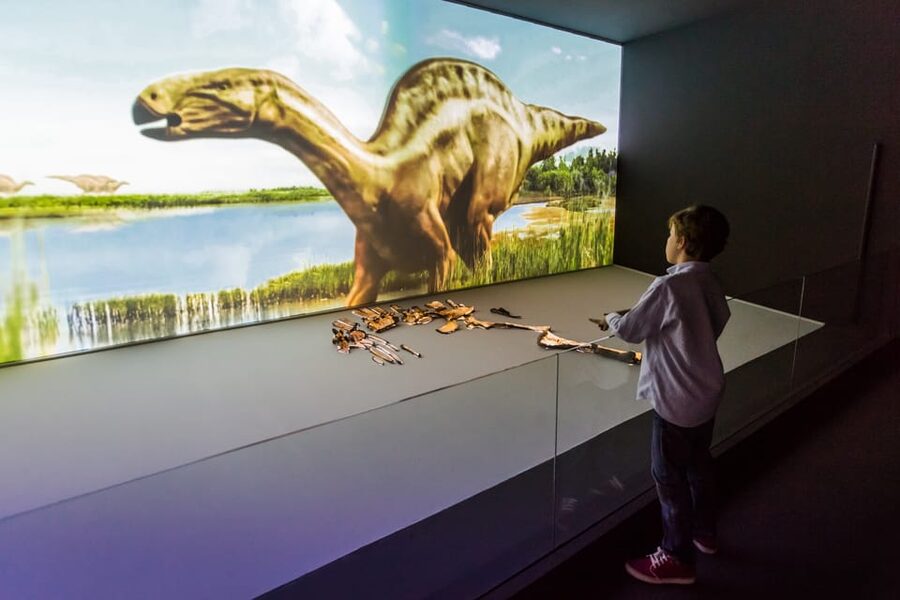
The galleries explain subjects that can feel difficult in school or in the news. Climate change, surveillance technology, and biometrics are presented in accessible language, with interactive elements that help connect the ideas to daily life.
The biometrics material is especially relevant because it links science to things you may already use, such as systems that identify or measure people. Surveillance technology gives you a chance to think about how technology observes and records information. These are not only abstract science topics. They raise practical questions about privacy, identity, and how modern systems work.
Climate change is another useful section because the subject can seem overwhelming when presented only through statistics. Interactive displays give you something to examine directly. I like this kind of presentation for families because it creates openings for conversation instead of asking children to absorb a long lecture.
The museum does not appear to follow one narrow theme. That is part of its appeal, but it is also the main weakness. If you want a tightly organized story from beginning to end, the many subjects may feel scattered. If you enjoy choosing your own route, the variety keeps the visit fresh.
A few more museum visits around Spain worth comparing
- Madrid: Prado Museum Entry Ticket
★ 4.6 · 20,699 reviews - Barcelona: FC Barcelona Museum “Barça Immersive Tour” Ticket
★ 4.4 · 10,944 reviews - Madrid: Reina Sofía Museum Entrance Ticket
★ 4.5 · 8,788 reviews - Barcelona: Park Güell and Gaudí House Museum Entry Ticket
★ 4.5 · 6,326 reviews
Space and science for different ages
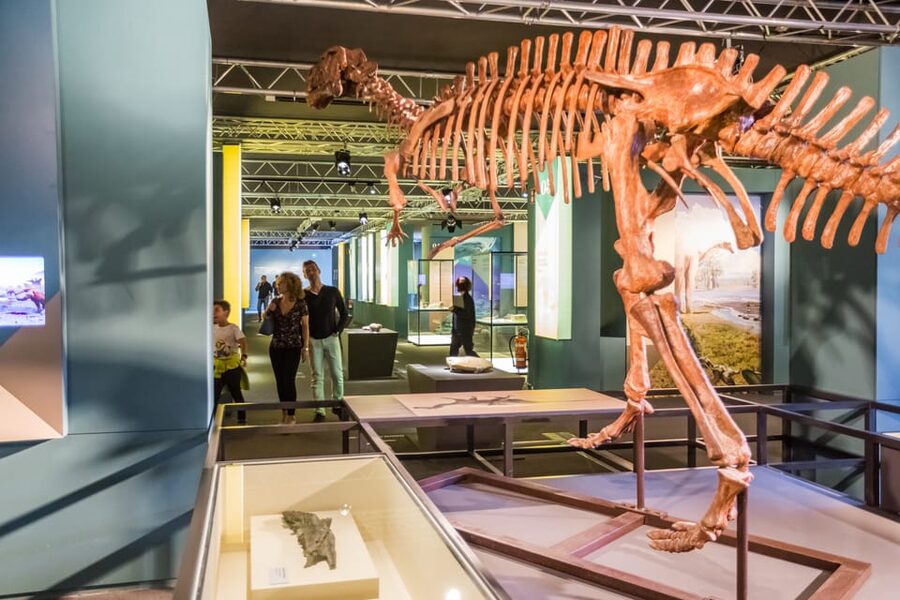
The museum is aimed at a wide audience. Children can learn through movement and touch, while adults can spend more time thinking about the scientific principles behind each exhibit.
The hands-on design is particularly helpful for children who learn better by doing. You may find that a child who ignores a written explanation suddenly pays attention when an exhibit lets them operate a mechanism or see a result immediately.
Older children and teenagers are likely to get the most from the sections on technology, biometrics, climate change, and space. The museum also works for adults who enjoy science but do not want a formal lecture. You can read as much or as little as you like.
For very young children, the visit may depend on attention span. Children from 0 to 3 enter without charge, while reduced admission applies to children aged 4 to 12. The material is broad enough for a family visit, but not every display will suit every age.
I would choose this museum over a quiet, object-based museum when your group needs activity. It is also a good rainy-day or very hot-weather plan, since Valencia’s summer heat can make outdoor sightseeing tiring.
The Leonardo da Vinci exhibition in 2025
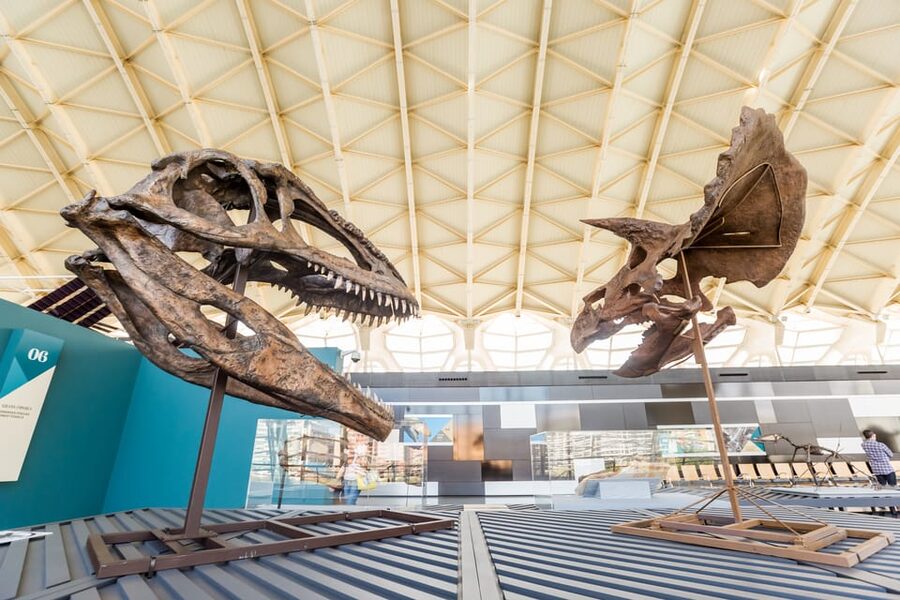
In 2025, the museum adds Leonardo da Vinci. 500 Years of Genius. The exhibition was created with the Leonardo da Vinci Museum in Rome and connects his artistic work with his ideas in science, engineering, and invention.
The display includes more than 50 large-scale machines made by Italian artisans. These machines give you a more direct sense of how Leonardo’s sketches could become working forms. You can look at his ideas not only as drawings from the Renaissance, but also as early attempts to solve problems in movement, construction, flight, and mechanics.
The exhibition also uses SENSORY4 technology, combining moving images, surround sound, and high-definition projections. This gives the material a more theatrical presentation than a standard display of documents and models.
I would consider this an important reason to visit in 2025, especially if you are interested in the connection between art and engineering. Keep in mind that the supplied ticket information confirms the exhibition for 2025, but does not state whether any part requires a separate timed reservation. Check the current conditions before booking if Leonardo is your main reason for going.
How long should you spend inside?
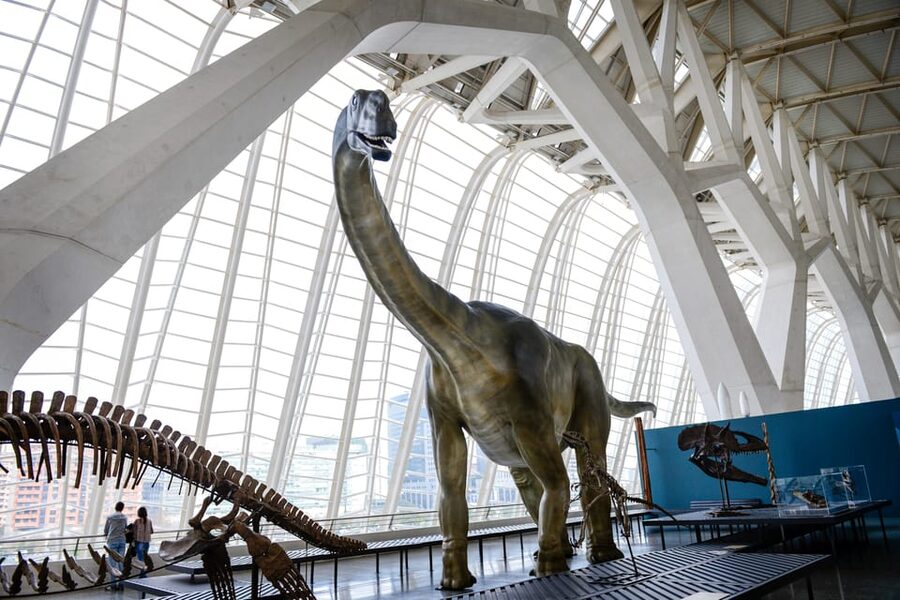
The ticket is valid for one day, but you do not need to stay from opening until closing to get value from it. Around four hours is a sensible target if you want to see a good range of exhibits without racing.
A half-day visit also fits neatly with a walk around the rest of the City of Arts and Sciences. One practical plan is to visit the museum during the morning or afternoon, then spend time outside taking photographs of the buildings.
If you want to examine the climate, technology, biometrics, and space sections carefully, allow more time. Families may also need extra time because hands-on exhibits slow the pace in a good way. You can let children return to displays that caught their attention instead of hurrying them along.
The seasonal hours affect how easily the museum fits into your day:
- From January 7 to March 21 and October 16 to December 23, hours are 10 AM to 6 PM Monday through Thursday, and 10 AM to 7 PM Friday through Sunday.
- From January 2 to January 6, March 25 to June 23, September 11 to October 15, and December 26 to December 30, hours are 10 AM to 7 PM.
- From June 24 to September 10, hours are 10 AM to 9 PM.
The long summer hours are useful, but summer in Valencia can be tough. An indoor museum visit during the hottest part of the day makes practical sense, especially if you are traveling with children.
Price, discounts, and what you really receive
At the listed price of $11 per person, this is strong value for a major museum with a full day of access. The value improves if you stay for several hours and use the ticket to explore more than one exhibition floor.
You are paying for admission, not a guided lesson. That keeps the price down, but it also means you need to read the displays and choose your own route. If you want a personal explanation of the science, this ticket alone does not provide it.
Children aged 4 to 12 qualify for a reduced rate, and children from 0 to 3 enter free. Students with an EURO 26 card can receive a discount, but the discount is available only when tickets are bought at the kiosk. That makes the online voucher convenient, while the kiosk may be cheaper for eligible students.
The activity is non-refundable, so check your date and opening hours before you commit. The museum is wheelchair accessible, which is useful for visitors who need step-free access, though the ticket information does not describe specific facilities inside.
Using the voucher and planning your arrival
The meeting point is the entrance to the City of Arts and Sciences. Present your voucher there. A simple scan at the entrance is all that is needed according to the booking instructions.
Since the complex is only a few minutes from downtown Valencia, it is easy to combine with central sightseeing. Give yourself enough time to find the correct entrance because the City of Arts and Sciences contains several major attractions and large modern buildings.
I would download or keep the voucher ready before you arrive. That avoids searching for it while standing at the entrance. If you are buying a student ticket at the kiosk, bring the EURO 26 card needed for the discount.
There is no transport service or meeting with a guide included. You make your own way to the museum and explore independently once inside.
Who will get the most from this museum?
I recommend it most strongly to families with children aged roughly 4 and up, especially older children and teenagers who enjoy touching things, trying mechanisms, and asking how systems work.
It also suits adults who like science, technology, architecture, or unusual museums. The mix of climate change, biometrics, electricity, space, and Leonardo da Vinci gives you several ways into the visit.
It may be less satisfying if you want a quiet art museum, a short list of famous objects, or a highly structured guided tour. The museum asks you to participate, and its many themes can feel uneven if you prefer one clear subject.
The architecture gives couples and solo visitors a reason to come even if science is not their main interest. You can enjoy the building, take photographs, and spend a shorter time inside. But the $11 price works best when you actually use the full exhibition space.
Should you book the Principe Felipe Science Museum?
Yes, I would book it if you want an active family attraction in Valencia or need a break from outdoor sightseeing. The hands-on exhibits, the Electricity Theatre, and the striking City of Arts and Sciences setting give the visit more character than a standard indoor museum.
I would be more selective if you have limited time or prefer guided interpretation. In that case, plan for at least four hours so the admission feels worthwhile, and check the current program if the Electricity Theatre or the 2025 Leonardo da Vinci exhibition is your main reason for going.
For $11 per person, with reduced child admission and free entry for children aged 0 to 3, it is an easy-value choice for families. Bring your voucher, plan around the seasonal hours, and leave time to enjoy the architecture outside.
FAQ
How much does admission to the Principe Felipe Science Museum cost?
The listed price is $11 per person. Reduced admission applies to children aged 4 to 12, and children from 0 to 3 enter free.
How long is the ticket valid?
The ticket is valid for one day. It includes access to all exhibition floors.
What are the museum’s opening hours?
During the low season, from January 7 to March 21 and October 16 to December 23, the museum is open from 10 AM to 6 PM Monday through Thursday and from 10 AM to 7 PM Friday through Sunday. Medium-season hours are 10 AM to 7 PM. During the high season, from June 24 to September 10, hours are 10 AM to 9 PM.
Is the museum wheelchair accessible?
Yes, the activity is wheelchair accessible.
Are guided tours included?
No. Guided tours and complementary activities are not included in the admission ticket.
Can students receive a discount?
Yes. The discount applies to EURO 26 cardholders, but it is available only for tickets purchased at the kiosk.
Just added around Spain
- Girona, Figueres, Dalí Museum and Cadaqués Tour from Barcelona★ 4.5 · 36 reviews
- Dali Museum and Costa Brava Small Group Day Trip from Barcelona★ 5.0 · 77 reviews
- Football Club Barcelona Museum Immersive Tour Guided Visit★ 3.5 · 52 reviews
- Erotic Museum Admission Ticket with Audioguide★ 5.0 · 527 reviews
- Madrid by High-Speed Train with Prado Museum Private Tour★ 4.0 · 33 reviews
- Guitar Legends Hall: Entrance to the Immersive Rock Museum★ 5.0 · 25 reviews
- White Rabbit Museum: The Best Immersive Experience in Catalonia★ 5.0 · 538 reviews
- Private Dali Museum, Besalú & Girona Tour from Barcelona★ 5.0 · 15 reviews
Museum Tours in Spain, compared.

Park Güell and Gaudí House Museum Entry Ticket
Read our review →
Puro Flamenco Show with Optional Museum Ticket
Read our review →
Moco Museum Barcelona: Modern & Contemporary Art
Read our review →
Girona & Dali Museum Small Group Tour with Pick-up from Barcelona
Read our review →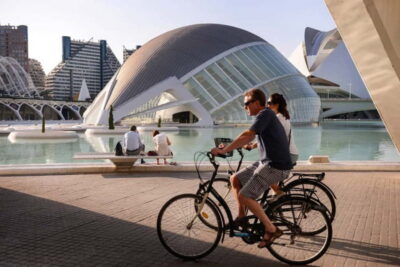
Valencia: Oceanogràfic, Hemisfèric & Science Museum Combo
Read our review →Browse the lists this tour appears in