
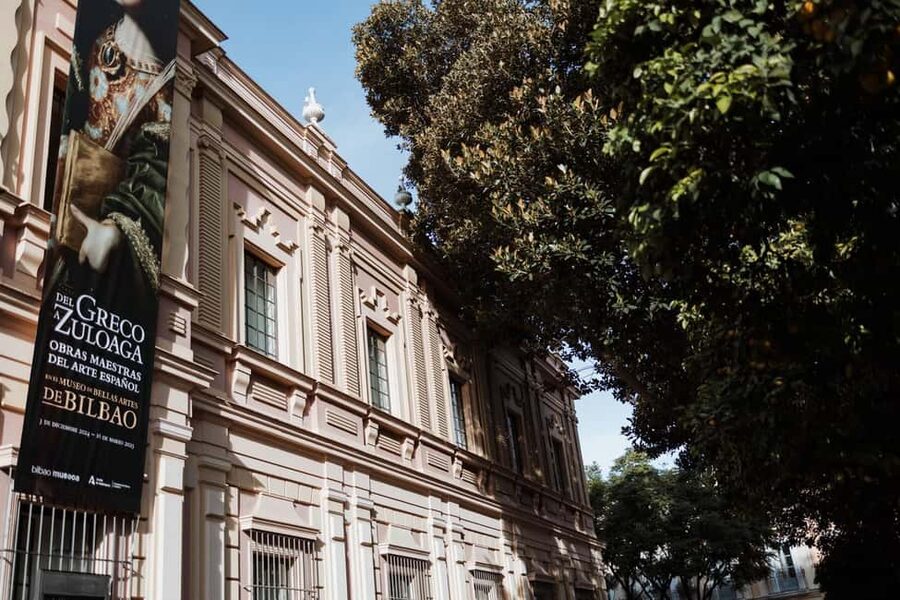
Review · SPAIN
Seville: Museum of Fine Arts Guided Tour
Seville’s Museum of Fine Arts is more than a picture gallery. It occupies the former Convent of La Merced, where quiet cloisters, grand courtyards, and painted halls give the art a fitting home. Inside, you move from Gothic religious works to Renaissance sculpture, Baroque painting, and scenes of everyday Sevillian life.
I like the small groups of up to eight, which make it easier to ask questions and hear the guide. I also like the historical storytelling, especially when guide Julio connects a painting’s symbols and style to Seville’s wider story. The main consideration is time: two hours gives you a strong introduction, not a slow look at every room.
Key points
- Former convent setting: See the Claustro de los Bojes and Claustro Mayor alongside paintings and sculpture.
- Strong art-historical context: Guides explain artists, symbols, religious themes, and the period behind each work.
- Murillo receives special attention: The dedicated room helps you understand one of Seville’s best-known painters.
- Small-group format: With a maximum of eight people, the tour feels more personal than a large museum walk.
- Good choice for first-time visitors: You get a clear route through major works without having to plan your own selection.
- Useful practical setup: The tour lasts two hours, includes admission, and uses an express security check.
Why this museum visit feels different
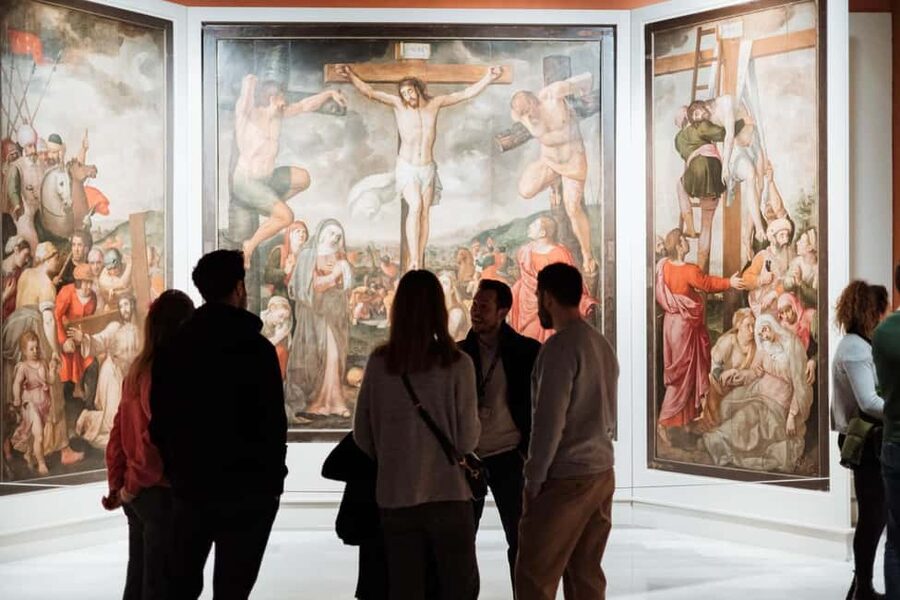
Many art museums ask you to focus on the paintings first and the building second. Here, the building is part of the experience from the moment you enter. The Museum of Fine Arts occupies the old Convent of La Merced, a religious complex shaped by Renaissance and Baroque design.
That setting changes the mood. You are not simply walking through a series of white exhibition rooms. You pass through elegant halls and peaceful cloisters, then pause before paintings that were created for churches, convents, and religious communities. The architecture gives the collection a sense of place.
I especially like the way this helps you understand Seville’s art. The museum is not an isolated collection of famous names. Its works reflect the city’s religious life, artistic workshops, patrons, and changing taste across several centuries.
The tour also gives you a route through the collection. That matters because a large museum can quickly become a blur of names and dates. With a guide selecting key works, you spend your energy looking rather than wondering where to begin.
A few more museum visits around Spain worth comparing
- Barcelona: Picasso Museum Skip-the-Line Guided Tour
★ 4.5 · 3,355 reviews - Madrid: Prado Museum Guided Tour with Skip-the-Line Ticket
★ 4.5 · 2,018 reviews - Madrid: Prado Museum Guided Tour With Fast Access
★ 4.8 · 1,785 reviews
Meeting at Plaza del Museo
The meeting point is at the Asociación Amigos del Museo de Bellas Artes, at Plaza del Museo beside the statue of Murillo. Look for a blue umbrella or a name tag reading Sevilla Guías & Tours.
This is a useful arrangement because you meet directly outside the museum rather than having to find a separate office across town. Still, give yourself enough time to reach the square. The tour starts from this point and returns there after the museum visit.
Transportation is not included, so you arrange your own way to Plaza del Museo. Food and drinks are also not part of the tour, though a two-hour museum visit is short enough that most people can plan it between meals.
The guide speaks English or Spanish. Julio is the guide most often associated with this experience, and his approach is well suited to mixed groups. He has led tours for people with a serious interest in art as well as visitors starting from scratch. Lorraine has also guided the visit, with an engaging style and clear explanations.
Through the Claustro de los Bojes and Claustro Mayor
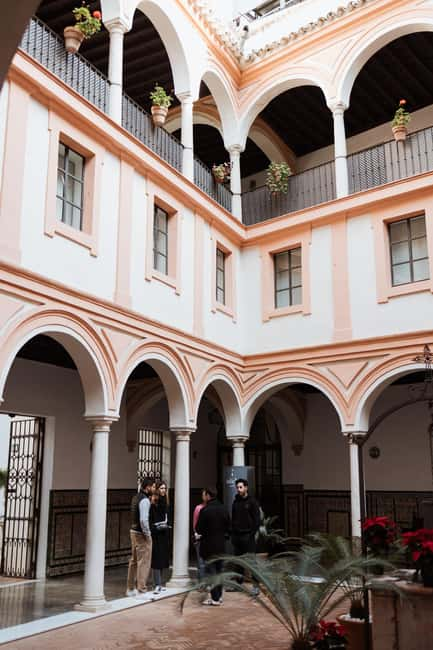
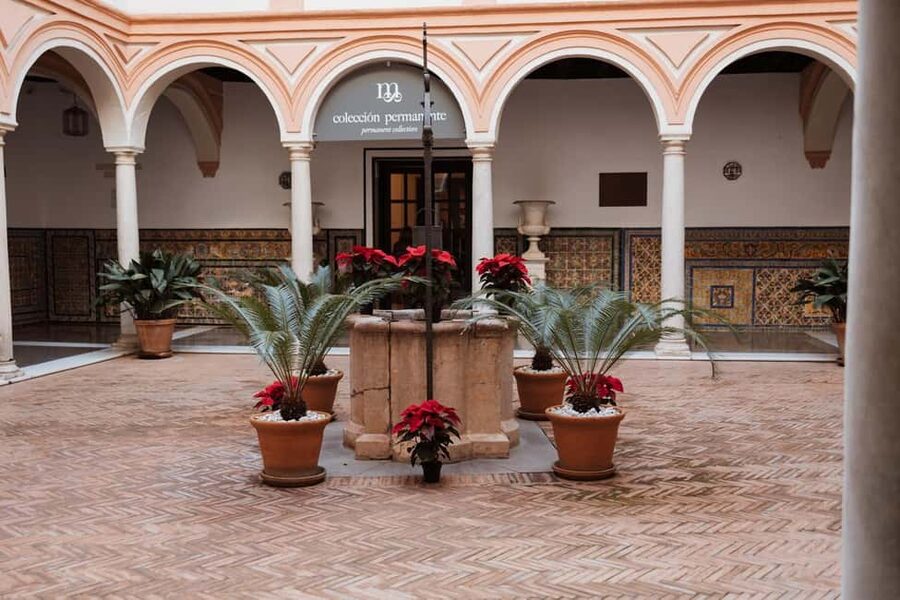
The opening section takes you through the former convent and its cloisters. The Claustro de los Bojes and Claustro Mayor are not just passageways between galleries. They help explain the original purpose of the site and give you a calm pause before the painted rooms.
I find this part valuable because it sets up the rest of the tour. You see how a religious complex was arranged, then learn why so much of the collection centers on faith, saints, biblical stories, and church commissions.
The architecture also provides welcome breathing room. Art museums can feel crowded with information, but a cloister gives your eyes a break. You can look at columns, arches, and open spaces before returning to the artwork.
A drawback is that the tour’s focus remains on selected highlights. You will not have time to study every architectural detail or examine every gallery at length. If the building itself is your main interest, plan to stay after the guided portion.
Gothic beginnings and Renaissance change
The collection covers Gothic works from Seville and other parts of Andalusia. These pieces help you see how artistic ideas changed over time, particularly as artists moved toward more natural figures, stronger space, and greater attention to the human body.
The guide’s role is important here. Without context, older religious art can seem formal or remote. With an explanation of the subject, symbols, and intended setting, the works become easier to read.
The tour then moves toward the Renaissance, including Pietro Torrigiano’s Saint Jerome Penitent. This sculpture is one of the particularly useful stops because it shows the changing interest in anatomy and emotional expression. Rather than simply naming the artist, the guide explains what makes the work important and how it fits the period.
You do not need a background in art to follow this section. Julio has been praised for explaining difficult ideas at an easy pace and for adjusting his talk to the group. If you already know a fair amount about European painting, you can ask more detailed questions about symbolism, technique, and historical setting.
Same city, a completely different collection:
- Madrid: Prado Museum Entry Ticket
★ 4.6 · 20,699 reviews - Barcelona: FC Barcelona Museum “Barça Immersive Tour” Ticket
★ 4.4 · 10,944 reviews - Madrid: Reina Sofía Museum Entrance Ticket
★ 4.5 · 8,788 reviews - Barcelona: Park Güell and Gaudí House Museum Entry Ticket
★ 4.5 · 6,326 reviews
Murillo and the Sevillian Baroque
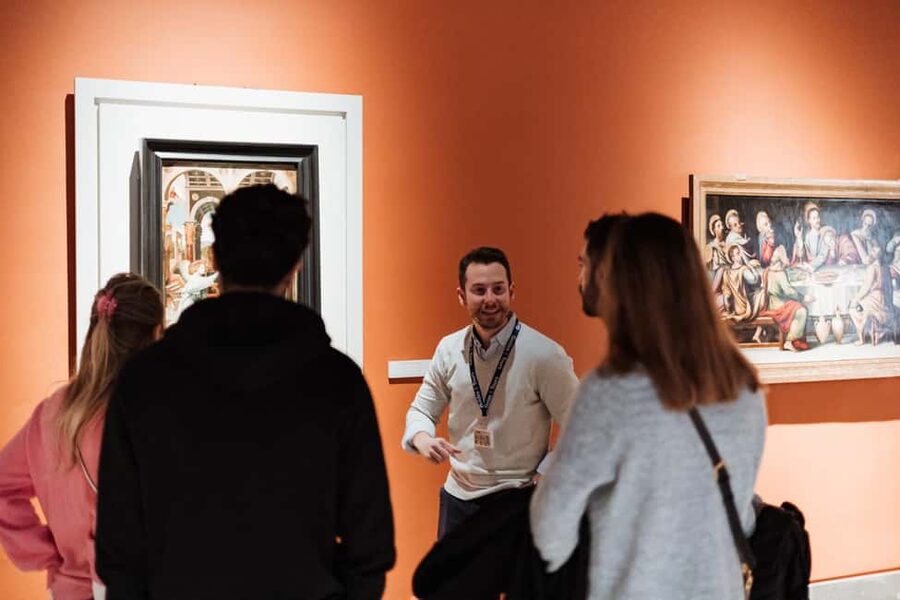
The tour gives special attention to Bartolomé Esteban Murillo, one of Seville’s most closely linked artists. The dedicated Murillo room brings together selected works and gives the visit a clear center.
This is where the guide can help you move beyond a quick impression of attractive religious paintings. Murillo’s work connects to Seville’s religious institutions, public devotion, and changing artistic taste. A guide can point out details you might otherwise pass without noticing and explain how the pictures were meant to affect the people who saw them.
Julio’s strength, according to the information available for this tour, is linking individual paintings to the history of Seville. He discusses the period, the artist, the setting, and the visual clues within the work. That method makes the art easier to remember because each piece has a story around it.
The Baroque section is also a good place to ask questions. The group limit makes conversation possible, rather than leaving you to wait until the end of a large lecture. You can ask why a particular subject mattered, how a symbol should be read, or how the work relates to other artists in the museum.
A guided look at symbolism and storytelling
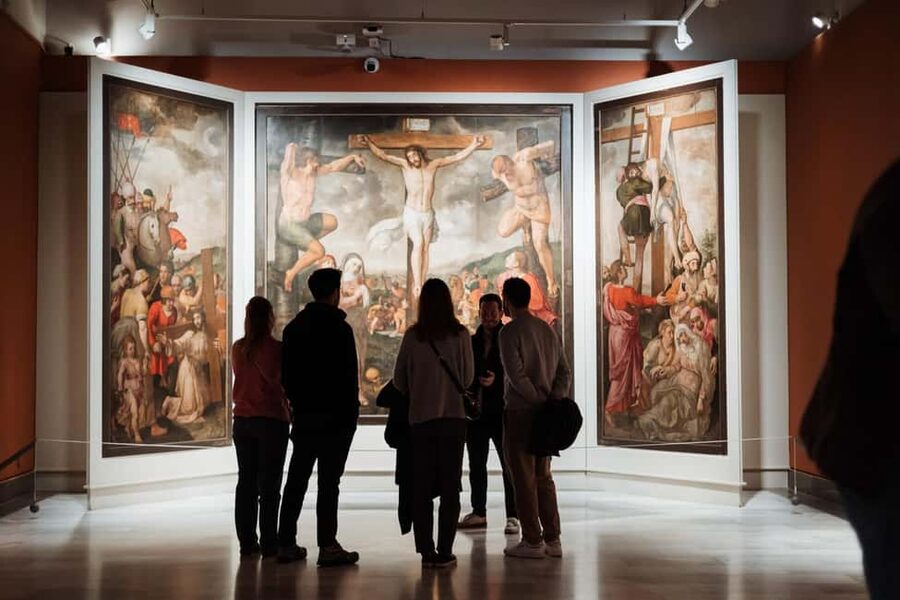
The best reason to choose a guide is not simply to hear dates. It is to understand what you are looking at.
A painted saint, for example, may carry symbols that identify the figure or communicate a particular lesson. A religious scene may reflect the needs of the institution that commissioned it. A dramatic Baroque composition may be designed to stir an emotional response. These details are easy to miss if you only read a short label.
The strongest part of Julio’s style is the connection between visual details and human stories. He explains the artists and the period while keeping the focus on the artwork in front of you. Past participants have described his explanations as clear enough for beginners but substantial enough for people with more interest in art history.
That balance is important. A museum guide can talk too much and turn the visit into a classroom lecture. Here, the reported approach is more conversational. The guide answers questions, handles practical issues calmly, and offers additional suggestions about Seville when asked.
You should still expect a guided overview rather than a private art lesson. Two hours passes quickly, particularly when the group has questions. The tour aims to give you a framework for understanding the museum, not to cover every artist or room.
What two hours allows you to see
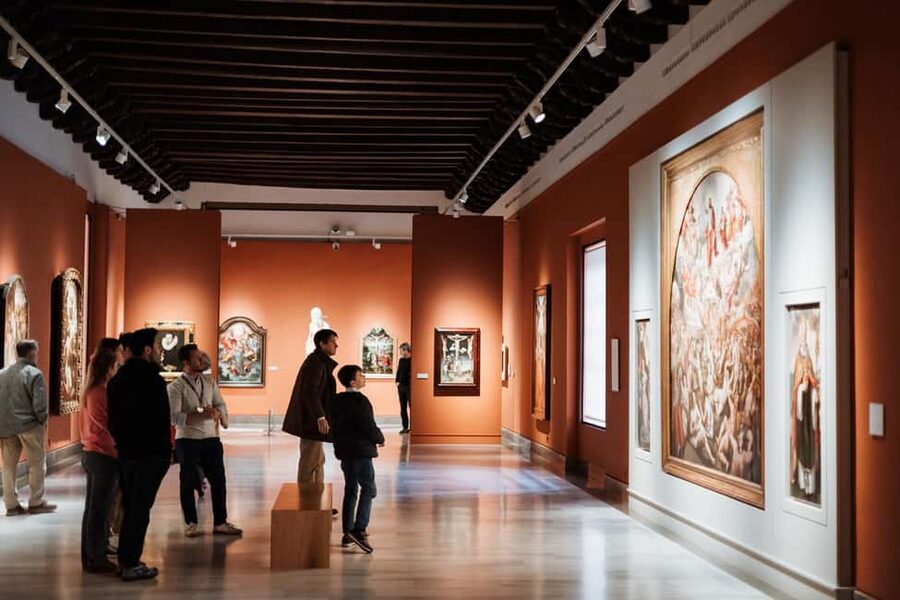
The route includes the convent architecture, the cloisters, Gothic works, Renaissance pieces, Baroque masterpieces, the Murillo room, and works by other Sevillian artists. That is a lot for a two-hour visit, so the pace is purposeful.
You will stop for selected paintings and sculptures rather than walk slowly past every item. This is a good fit if you want the major themes and a clear introduction. It is less ideal if you prefer to spend twenty minutes with one painting before moving on.
One useful feature is that you may remain in the museum after the guided tour. This turns the two-hour visit into a starting point. After the guide leaves, you can return to a favorite room or see works that were not part of the main route.
I recommend noting the names of any paintings that catch your eye during the tour. Then, after the group portion ends, you can find those works again and look at them without needing to keep up with the group.
The value of a $23 museum tour
At $23 per person, this is a sensible price for visitors who want more than admission alone. Your ticket to the Museum of Fine Arts is included, as is a licensed English or Spanish-speaking guide. The small group also matters because it gives you a better chance to hear and participate.
An audio guide might cost less, if one is available, but it cannot adjust its explanation to your interests. This tour can pause when a question comes up, explain a confusing symbol, or change its level for a group with little art background.
The value is strongest if you are new to Spanish art or have limited time in Seville. A two-hour guided route gives you a solid foundation without requiring you to study the collection beforehand.
The value is weaker if you already know the museum well or prefer complete independence. You may feel the fixed pace is restrictive, especially during the Murillo section. In that case, the ability to stay afterward helps balance the schedule.
The booking terms also make the cost easier to manage. You can reserve and pay later, and cancellation is free up to 24 hours before the tour for a full refund. Availability depends on the starting time you select.
Small group, hearing aids, and access
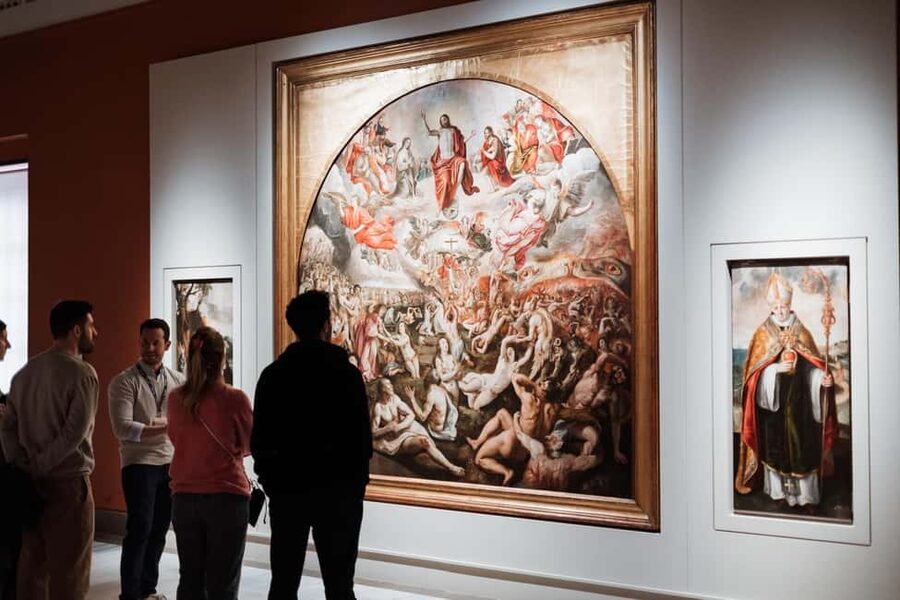
The group is limited to eight participants. That is a useful middle ground. You get the social feel of a shared visit without the crowd of a large coach group.
One earlier tour used an earpiece, which can make a real difference in a museum. You do not need to gather tightly around the guide or strain to catch every sentence in a large room. The exact equipment may vary, but the small group itself should help with hearing and questions.
The experience is listed as wheelchair accessible. Pets are not allowed.
The tour is offered in English and Spanish, so check that you choose the language you need. Since the visit includes several centuries of art and a former convent with cloisters, wear something comfortable for standing and walking, even though the total duration is only two hours.
Who will get the most from this tour
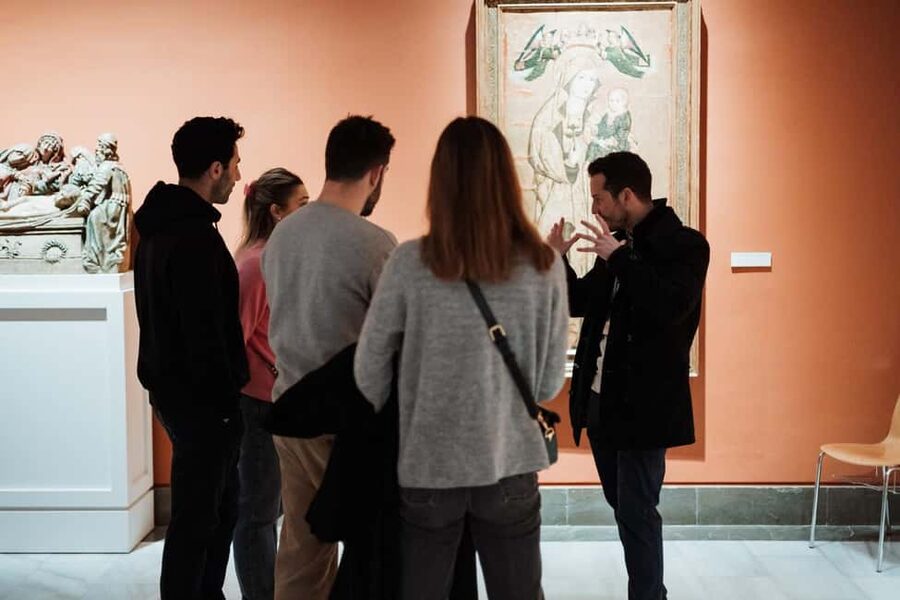
I would choose this experience if you want to understand Seville through its art rather than simply collect a few photographs. It suits first-time museum visitors, couples, families with older children, and anyone who likes history explained in plain language.
It is also a good choice if you usually find art museums hard to enter without a plan. The guide gives you a starting point, identifies important works, and explains why they matter.
Art students and experienced museum visitors may enjoy it too, particularly if they ask questions. Julio’s background in history and his attention to iconography give the tour enough substance for people who want more than surface facts.
I would be less likely to recommend it to someone who wants to see every room at their own pace. The two-hour structure is focused and selective. You can stay afterward, but the guided portion itself is not designed as an open-ended wander.
Practical plan for the rest of your visit
Schedule the tour when you can remain in the museum afterward. The guided route should give you a list of rooms and artists to revisit, and that extra time lets you slow down.
Because the meeting point is at Plaza del Museo, you can also make the museum part of a wider walk through Seville’s historic center. Keep your plans before the tour light enough to arrive on time. The guide begins outside the museum, so a late arrival could mean missing the opening explanation.
If you are deciding between visiting alone and booking the guide, ask yourself how much context you want. The collection has enough visual appeal for a self-guided visit, but the links between Gothic, Renaissance, Baroque, Murillo, and Sevillian society are harder to build on your own.
Should you book the Museum of Fine Arts tour?
Book it if you want a focused introduction to Seville’s art, prefer a small group, and value a guide who can explain symbols and historical setting. At $23, the included admission and two hours of personal interpretation make it a fair deal.
Skip it if your main goal is a long, quiet visit with no fixed route. For everyone else, this is a practical way to make sense of one of Seville’s most rewarding cultural stops. The building gives you atmosphere, the collection gives you range, and a strong guide such as Julio can turn a room full of paintings into a story you remember.
FAQ
Where does the Museum of Fine Arts tour meet?
Meet at Plaza del Museo beside the statue of Murillo, at the Asociación Amigos del Museo de Bellas Artes. The guide carries a blue umbrella or wears a name tag reading Sevilla Guías & Tours.
How long does the guided visit last?
The guided tour lasts two hours. Afterward, you may remain in the museum and continue looking around at your own pace.
What languages are available?
The tour is offered in English or Spanish with a live guide.
Is admission to the museum included?
Yes. Entrance to the Museum of Fine Arts of Seville is included in the tour price.
How large is the group?
The tour is limited to eight participants, making it a small-group experience.
Is the museum tour wheelchair accessible?
Yes, the activity is listed as wheelchair accessible. Pets are not allowed.
Just added around Spain
- Girona, Figueres, Dalí Museum and Cadaqués Tour from Barcelona★ 4.5 · 36 reviews
- Dali Museum and Costa Brava Small Group Day Trip from Barcelona★ 5.0 · 77 reviews
- Football Club Barcelona Museum Immersive Tour Guided Visit★ 3.5 · 52 reviews
- Erotic Museum Admission Ticket with Audioguide★ 5.0 · 527 reviews
- Madrid by High-Speed Train with Prado Museum Private Tour★ 4.0 · 33 reviews
- Guitar Legends Hall: Entrance to the Immersive Rock Museum★ 5.0 · 25 reviews
- White Rabbit Museum: The Best Immersive Experience in Catalonia★ 5.0 · 538 reviews
- Private Dali Museum, Besalú & Girona Tour from Barcelona★ 5.0 · 15 reviews
Museum Tours in Spain, compared.
Park Güell and Gaudí House Museum Entry Ticket
Read our review →
Puro Flamenco Show with Optional Museum Ticket
Read our review →
Moco Museum Barcelona: Modern & Contemporary Art
Read our review →
Girona & Dali Museum Small Group Tour with Pick-up from Barcelona
Read our review →
Valencia: Oceanogràfic, Hemisfèric & Science Museum Combo
Read our review →Browse the lists this tour appears in