
Review · PARIS
Paris: Rodin Museum Guided Tour with skip-the-line tickets
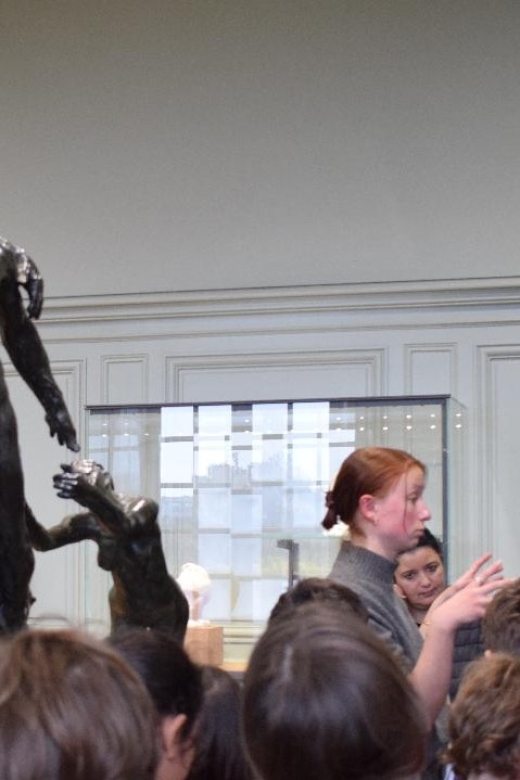
The best reason to choose this tour is the way it connects Rodin’s sculptures to the ideas swirling around late-19th-century Paris. You do not simply walk past The Thinker or The Kiss. You get help seeing how Rodin’s rough surfaces, dramatic poses, and unfinished forms changed sculpture.
I like the small group of up to nine and the two-hour length. I also like that the tour includes both the galleries and the French gardens, where more of Rodin’s work appears against the old building and open sky. The main drawback is the price, $116 per person, which is a serious spend for two hours and does not include temporary exhibitions.
Key points to know before booking
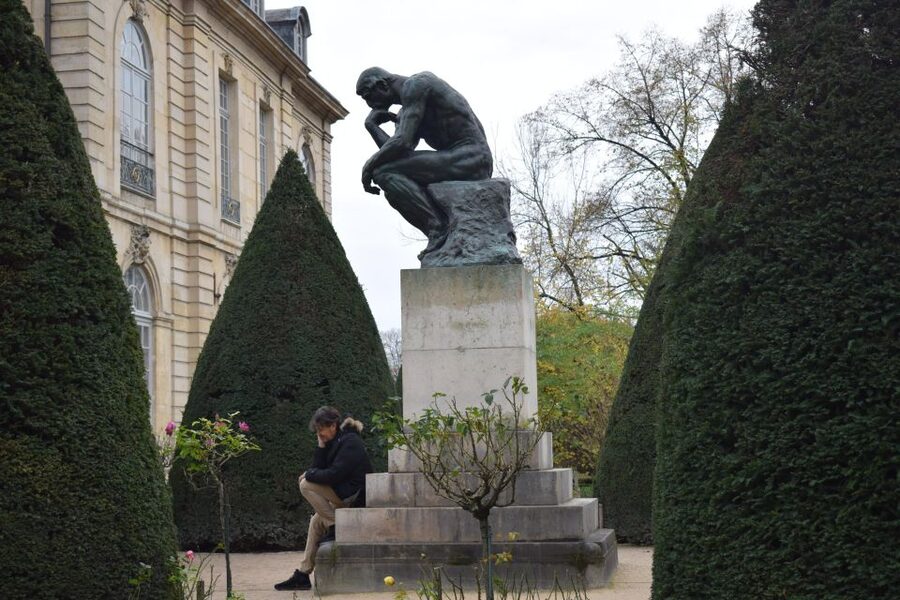
- Rodin’s major works are explained in context: Expect The Thinker, The Kiss, The Gates of Hell, The Philosopher, Balzac, and less familiar pieces.
- The group stays small: The tour is limited to nine people, making it easier to ask questions and discuss your reactions.
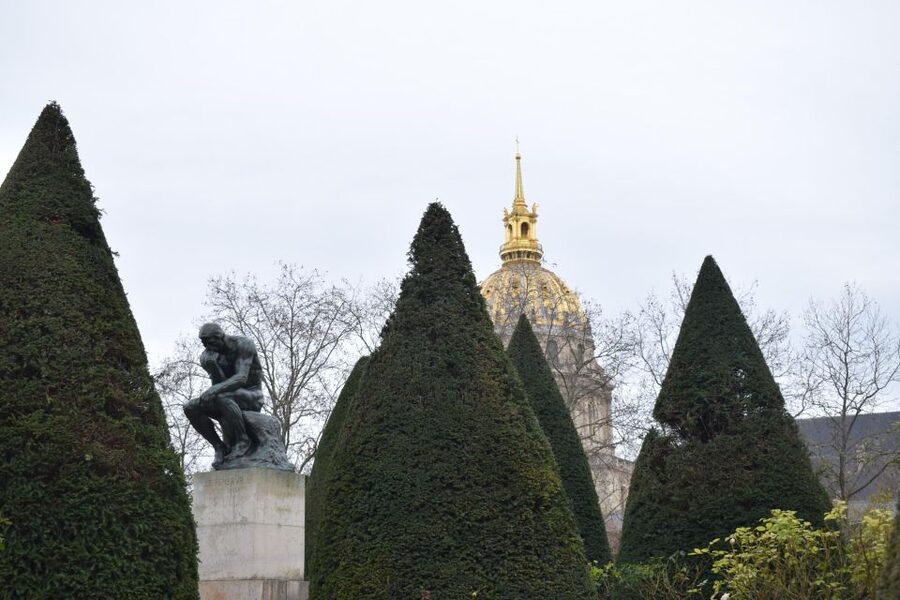
- The gardens are part of the experience: You will see additional sculptures and gain different views of Rodin’s work outdoors.
- The guides bring an art background: Blerta Meraj has led tours as an artist, while Vincent has an art history background.
- Skip-the-line entry saves time: Your museum admission is included, though temporary exhibitions are not.
- Plan for walking: Comfortable shoes are sensible, and large bags, luggage, and umbrellas are not allowed.
Why Rodin makes a good guided museum visit
The Rodin Museum rewards a slower look. A quick visit can leave you with a few famous images: The Thinker, The Kiss, and perhaps The Gates of Hell. A good guide helps you see the choices behind those images.
Rodin worked during a period when artists were questioning older rules about beauty, finish, and public monuments. His figures often look caught in motion or thought rather than polished into perfect, calm shapes. The surface may show the hand of the maker. A body may seem to emerge from stone instead of being fully released from it.
That approach can be puzzling if you expect sculpture to look smooth and complete. Your guide explains how Rodin’s work helped push sculpture toward modern art. The political, artistic, and philosophical changes of the late 1800s become part of the visit rather than distant background information.
I especially like this format for people who know Rodin mainly through postcards. The tour gives you a way to connect several works instead of treating each sculpture as an isolated masterpiece. You begin to notice repeated ideas: bodies twisting under strain, figures carrying emotional weight, and forms that seem to grow out of the material.
The experience is conducted in English, with a live guide. Guides such as Blerta Meraj and Vincent have been praised for clear explanations, humor, and an ability to keep the discussion moving without turning the visit into a dry lecture. Blerta is also an artist, which can add a practical view of technique. Vincent’s background in art history suits visitors who want more historical context.
More Museum Tours in Paris
- Paris: Louvre Museum Timed-Entrance Ticket
★ 4.6 · 71,977 reviews - Paris: Orsay Museum Entry Ticket
★ 4.7 · 25,647 reviews - Louvre Museum Masterpieces Guided Tour with Access
★ 4.5 · 12,023 reviews
Meeting at 77 Rue de Varenne
The tour begins in front of the museum at 77 Rue de Varenne, 75007 Paris. Look for a guide holding a sign marked Connecting France.
This is a useful meeting point because you begin at the museum itself, not at a separate office or hotel pickup location. There is no pickup or drop-off service, so you need to make your own way to the address and allow enough time to find the guide.
Bring a passport or other identification. Comfortable shoes are a good idea because the two-hour visit covers indoor galleries and outdoor paths. Luggage, large bags, and umbrellas are not allowed, so this is not a convenient stop if you are between hotels or carrying a full day bag.
The group is limited to eight people in the activity description and to nine participants in the booking details. Either way, expect a small party rather than a large crowd. That matters in a museum. You can usually hear the guide more easily, and there is a better chance to ask about a sculpture that catches your eye.
Starting with Rodin’s world inside the museum
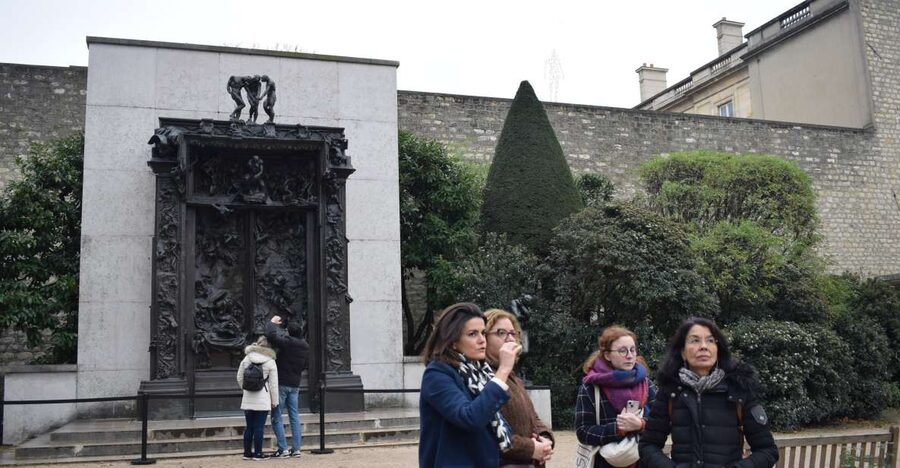
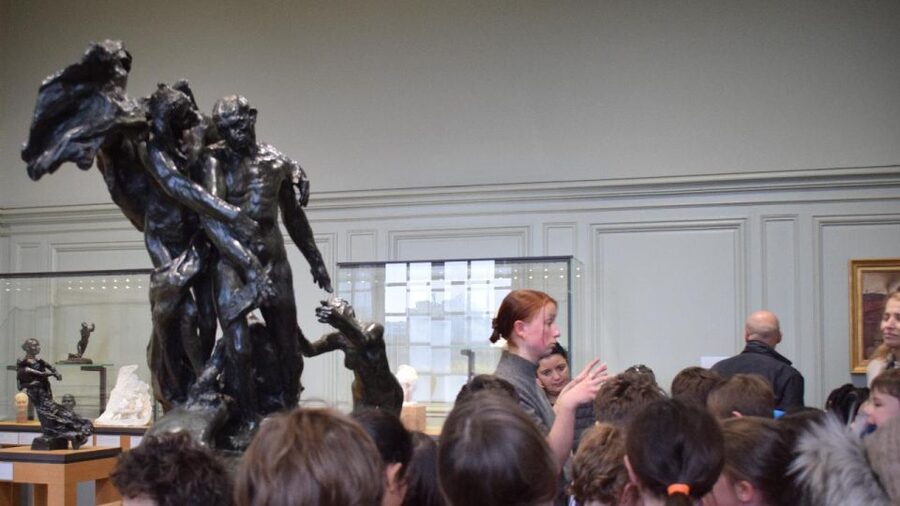
Once inside, the guide frames Rodin’s career and his place in modern sculpture. The point is not to rush through every room. It is to spend time with selected works and understand why they matter.
The tour includes famous pieces such as The Thinker, The Kiss, and The Gates of Hell. You can also expect attention to The Philosopher, Balzac, and works that are less familiar. This mix is important. The famous sculptures give you the images you came to see, while the quieter pieces help explain Rodin’s working methods and changing ideas.
The Thinker is often treated as a symbol of thought itself, but a guide can help you look more closely at the body. Rodin’s figure is not simply seated in a neat pose. The tension in the arms, back, and legs gives the act of thinking a physical force. You may leave with a more active reading of a work you thought you already knew.
The Kiss offers a different mood. Its polished surfaces and intertwined bodies can seem direct and romantic, yet its composition also rewards close attention. A guide can point out how the figures occupy the space and how the sculpture changes as you move around it.
The Gates of Hell gives the tour a larger frame. It brings together many figures and ideas, and several forms associated with Rodin appear in related versions elsewhere. This is the kind of work that benefits from explanation. Without context, it can seem crowded and hard to read. With guidance, you can begin to understand how Rodin returned to certain figures, gestures, and themes.
The studio perspective and Rodin’s working methods
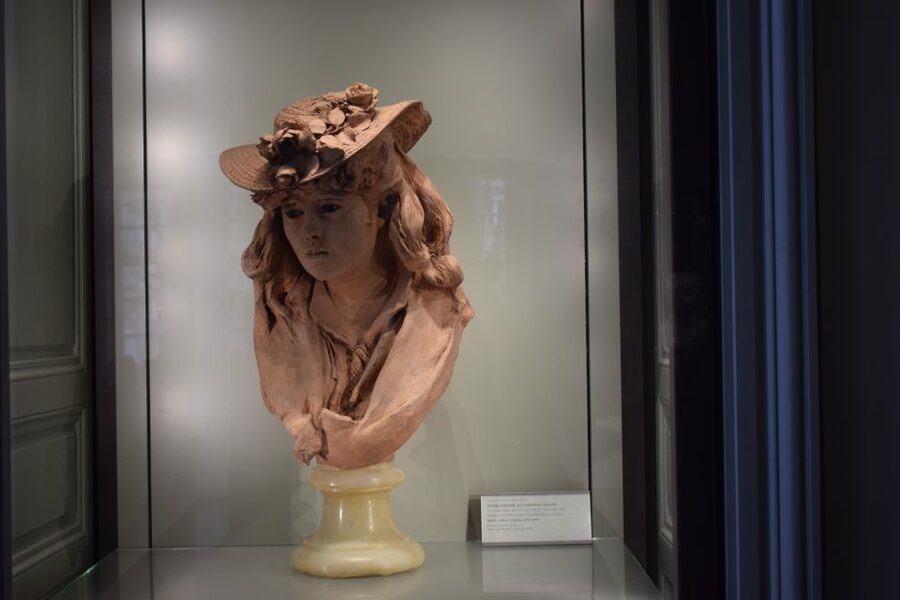
One of the most useful parts of the visit is the attention to Rodin’s studio practice. You get an insider’s view of his avant-garde approach and the techniques behind his sculptures.
The word studio matters here because Rodin’s art was not only about finished public monuments. His process involved experiments, variations, fragments, and repeated forms. A guide can help you see why a smaller study or an incomplete-looking figure deserves attention beside a famous final work.
This is also where an artist guide such as Blerta can be especially helpful. You can ask practical questions about shape, texture, balance, and the way a sculpture controls your eye. Her approach has included asking visitors for their own interpretations, then building on those responses. That makes the visit feel like a conversation rather than a one-way speech.
The small group supports this style. With up to nine people, the guide can pause for questions and draw different readings from the group. If you prefer to walk silently and take photographs, a guided tour may feel more structured than an independent visit. If you want a stronger understanding of technique and meaning, the structure is a benefit.
More skip-the-line museum tickets in Paris:
- Louvre Museum: Skip-the-Line Small Group Guided Tour
★ 4.6 · 4,268 reviews - Paris: Skip-the-Line Louvre Museum & Mona Lisa Guided Tour
★ 4.6 · 1,442 reviews - Paris: Musée d’Orsay Skip-the-Line Tour with Expert Guide
★ 4.5 · 1,145 reviews - Louvre Museum Skip the Line Entry with Introduction to Mona Lisa
★ 3.0 · 576 reviews
Balzac, The Philosopher, and the less familiar works
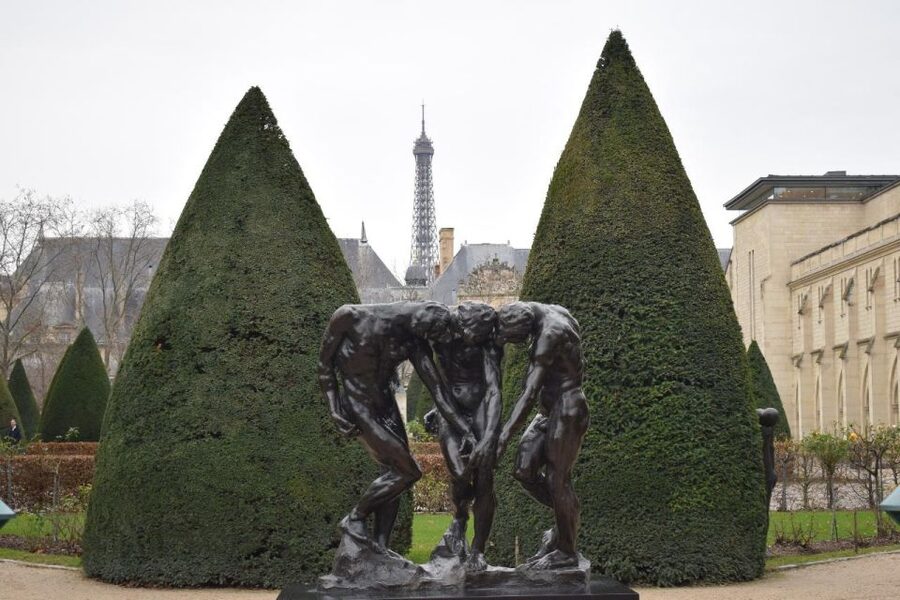
The tour does not stop with the three famous names. Works such as Balzac and The Philosopher show other sides of Rodin’s practice.
Balzac is particularly useful for understanding Rodin’s willingness to challenge expectations. The sculpture was tied to a major public commission and caused controversy because it did not present the writer in a conventional, flattering way. The guide uses works like this to show how Rodin’s artistic decisions could collide with public taste.
The Philosopher helps broaden the picture again. You are not just seeing heroic figures or romantic couples. Rodin explored thought, character, age, movement, and psychological strain in many forms. The less familiar pieces keep the tour from becoming a checklist of famous objects.
This wider selection is one reason I would choose a guided visit over a quick self-guided stop. You might otherwise spend most of your time finding the works you recognize. A guide directs your attention toward connections that are easy to miss, including repeated poses, related studies, and differences in finish.
The pace also seems well judged for a two-hour museum visit. Guides have been praised for allowing time to look before adding more explanation. That balance matters. You need enough silence to study the work, but you also need a clear thread to keep the visit from becoming a series of disconnected stops.
The building and its rococo character
The museum’s architecture receives its own part of the tour. The building has a rococo style, and the guide points out how its design shapes the atmosphere of the visit.
This is more than a quick comment about decoration. The rooms and details create a contrast with Rodin’s forceful, modern sculpture. The setting has an older French character, while the art often pushes against established ideas of finish and beauty.
I like this architectural pause because it prevents the museum from feeling like a neutral container. You become more aware of how the sculptures sit within the rooms, how the surfaces catch light, and how the building frames your route.
The tour does not treat architecture as a separate subject that competes with Rodin. Instead, it helps you read the museum as a complete place. You see the art, the rooms, and the outdoor setting as parts of one visit.
Finishing in the French gardens
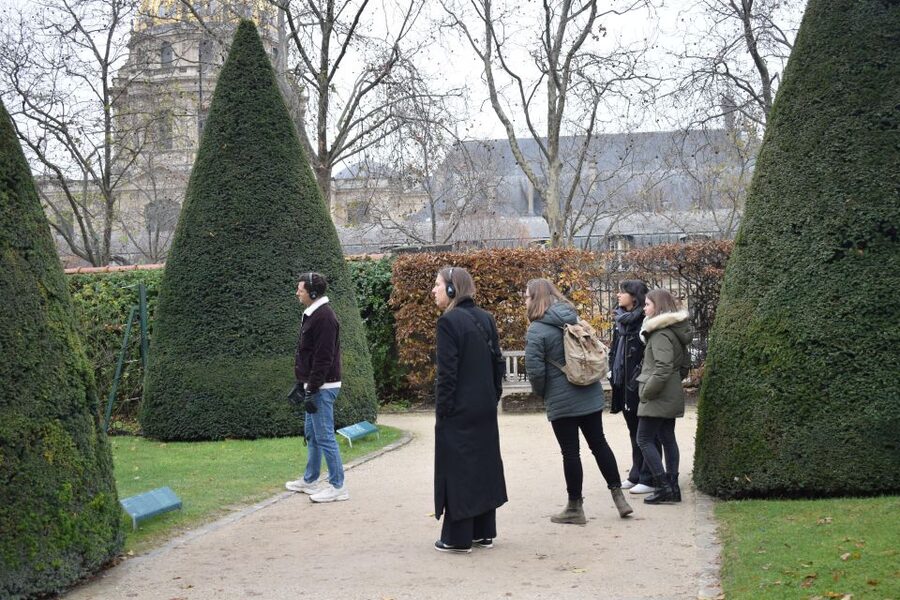
After the indoor collections, the guide takes you through the French gardens. This is a welcome change of pace after the galleries and gives you a chance to see Rodin’s work from farther away.
Outdoor sculpture behaves differently. You can walk around it without the same limits as an indoor room, and daylight changes the way you see the surface. The gardens also offer broader views of the museum and new angles on the figures.
Additional works by Rodin are placed in the garden, so this is not just a short break at the end. It extends the tour’s main idea: sculpture changes according to its surroundings. A figure that felt heavy or enclosed indoors may look more open outside. A work that seemed small in a gallery can gain presence against the garden.
The garden portion is also practical for families and mixed-interest groups. Someone who is tiring of museum rooms may reconnect with the visit outdoors. Still, you should expect walking on outdoor paths, and the activity is not recommended for people with mobility impairments or wheelchair users. Wheelchair tours are described as available only on request, so contact the provider before booking if accessibility is important.
Is $116 a fair price for two hours?
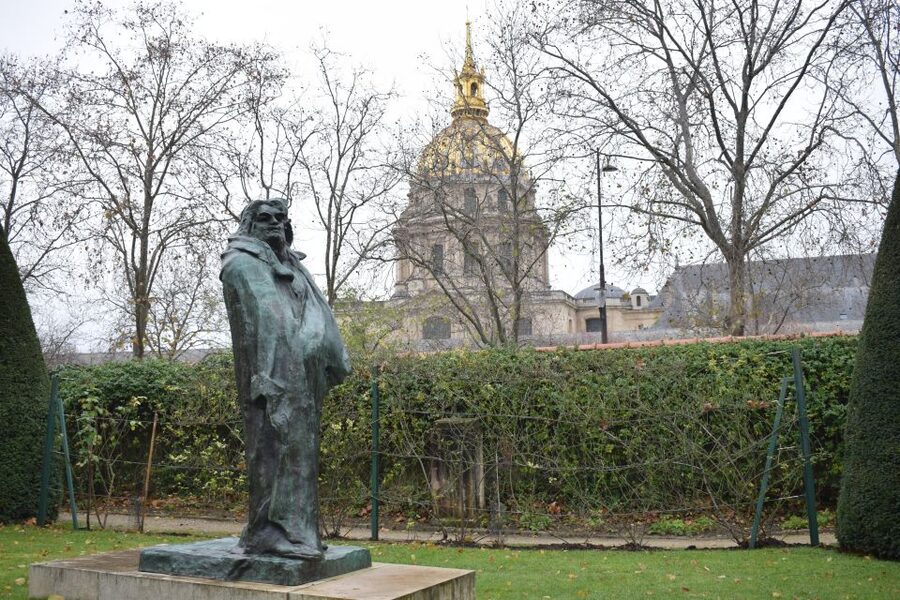
At $116 per person, this is not a budget museum entry. You are paying for skip-the-line admission, a professional English-speaking guide, a small group, and two hours covering both the galleries and gardens.
The value depends on how you like to visit museums. If you are comfortable reading labels and finding the major works on your own, the price may feel high. The museum admission alone is not the whole value calculation, and the tour does not include temporary exhibitions, food, drinks, or personal purchases.
I think the price makes more sense for a first visit to Paris, a visitor with limited museum time, or anyone who wants art explained in plain language. A guide can help you avoid wandering past important works and can tie Rodin’s career together in a way that takes much longer to discover alone.
It is also a strong choice if you are traveling with teenagers or family members who might lose interest in a silent museum. One guide, Blerta, was praised for keeping jet-lagged teens engaged through a mix of explanation and time to look. That kind of pacing can make the difference between a worthwhile stop and a difficult one.
The best value comes when you take part. Ask questions, share what you see, and give yourself time to look closely. If you only want a quick photograph of The Thinker, this tour is more than you need.
Who should book this Rodin tour?
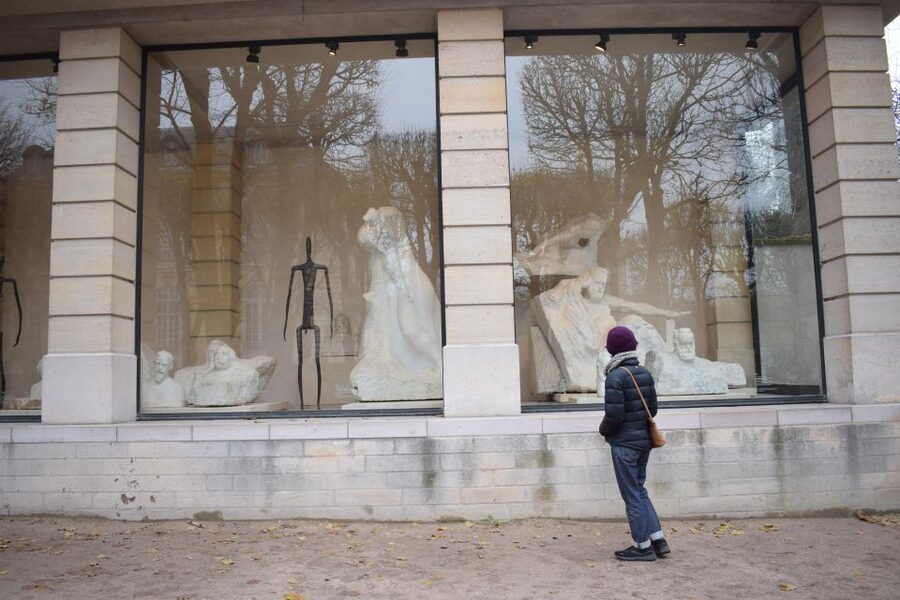
I would choose this experience if you want a focused introduction to Rodin and prefer discussion to reading wall panels. It suits art lovers, first-time museum visitors, and anyone curious about how modern sculpture developed.
It also works well for people who like human stories around art. The tour covers Rodin’s ideas, methods, connections, and the intellectual climate around his work. Guides have been described as funny, personable, enthusiastic, and able to explain complex material in accessible English.
You may want to skip it if you prefer complete independence, need a wheelchair-accessible visit, or mainly want access to a temporary exhibition. The temporary exhibitions are not included, and the activity specifically notes that it is not suitable for wheelchair users or people with mobility impairments.
Booking is flexible: you can reserve now and pay later, and cancellation is allowed up to 24 hours in advance for a full refund. Check the available start times before committing, since the tour lasts two hours and the schedule can affect the rest of your museum day.
My take: a focused choice for art-minded visitors
I recommend this tour for anyone who wants Rodin to make more sense than he would on a fast, self-guided walk. The strongest features are the small group, the balance between galleries and gardens, and guides such as Blerta and Vincent who bring both art knowledge and personality.
The price is the main question. At $116, you should book only if guided interpretation is important to you. For that kind of visitor, the tour offers a clear route through Rodin’s major works, his studio methods, the rococo building, and the garden sculptures in two well-used hours.
FAQ
Where does the Rodin Museum tour meet?
The meeting point is in front of the museum at 77 Rue de Varenne, 75007, Paris. The guide holds a sign marked Connecting France.
How long does the tour last?
The guided museum and garden tour lasts two hours.
What language is the tour in?
The tour is conducted in English with a live guide.
How many people can join the group?
The activity is designed as a small group limited to nine participants. The included details also describe it as a semi-private tour for up to eight people.
Which Rodin works are included?
The tour discusses major works including The Thinker, The Kiss, The Gates of Hell, The Philosopher, and Balzac, along with other famous and lesser-known sculptures.
Are the gardens included?
Yes. The tour includes a walk through the French gardens, where you will see additional works by Rodin and different views of the museum.
Are temporary exhibitions included?
No. Access to temporary exhibitions is not included in the tour.
Is the tour suitable for wheelchair users?
The activity is listed as not suitable for wheelchair users or people with mobility impairments. Wheelchair tours are available only on request, so you should contact the provider before booking.
What should I bring, and what is not allowed?
Bring a passport or ID card and wear comfortable shoes. Luggage, large bags, and umbrellas are not allowed.
Just added around Paris
- Rodin Museum Masterpieces – Guided Tour up to 8 guests★ 4.9 · 13 reviews
- Invalides Museum – WWI & WWII – Guided Tour up to 8 guests★ 5.0 · 32 reviews
- Skip the Line Guided Tour of Louvre Museum Highlights★ 5.0 · 49 reviews
- Paris: Louvre Museum Highlights Small-Group Guided Tour★ 4.8 · 157 reviews
- From Paris: Private Trip to Giverny, Monet’s House & Museum★ 4.5 · 13 reviews
- Paris: Street Art Open-Air Museum Bike Tour★ 4.8 · 51 reviews
- Paris: Rodin Museum Ticket & Optional Digital AudioGuide App★ 4.7 · 56 reviews
- Paris: The Rodin Museum and Seine River Cruise★ 4.6 · 45 reviews
Museum Tours in Paris, compared.

Louvre Museum Masterpieces Guided Tour with Access
Read our review →
Louvre Museum Entry Ticket With Host and River Cruise
Read our review →
Les Invalides: Napoleon’s Tomb & Army Museum Entry
Read our review →
Mona Lisa & Louvre Masterpieces Tour with Reserved Access
Read our review →
Louvre Museum – Exclusive Guided Tour (Entry Included)
Read our review →
Louvre Museum Hosted Entry and Mona Lisa Audioguide
Read our review →Browse the lists this tour appears in