
Review · PARIS
Paris: Paradox Museum Entrance Tickets
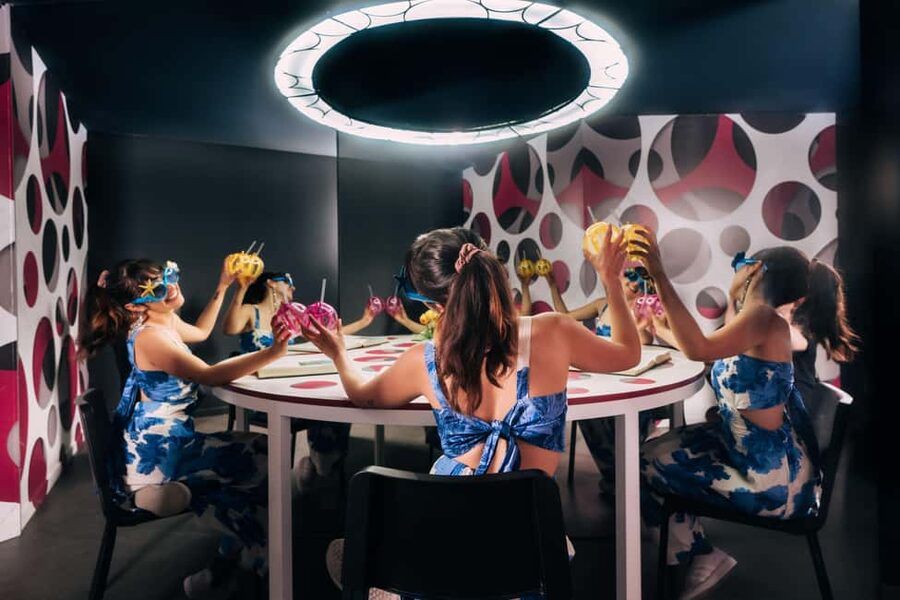
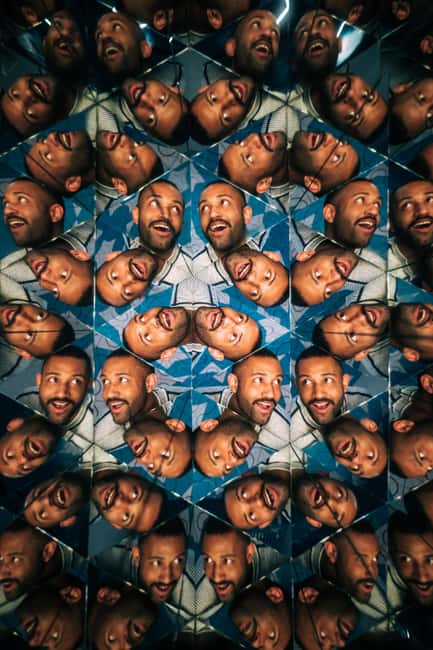
The cleverest part of Paradox Museum Paris is that it turns you into part of the exhibit. You may appear to shrink, lose your balance, or defy the laws of perspective, all while standing in carefully designed rooms. I like the marked photo points, which show you where to stand for the best picture, and the clear explanations that reveal the science behind each trick.
I also like that this is an easy, all-ages experience with enough hands-on fun for children and enough visual puzzles to keep adults interested. The main drawback is the pace: when the museum is busy, you may wait at popular exhibits for your turn and for someone to take a photo.
Key points to know before you go

- Ninety optical illusions: Follow a one-way route through the museum’s large collection of paradox-based exhibits.
- Built for photos: Marked shooting spots help you frame the illusion correctly, though staff are not stationed at every display.
- About 84 to 90 minutes: The advertised duration is 84 minutes, while the typical visit takes around 90 minutes.
- Good for families: Children, teenagers, adults, and older visitors can all take part, with several reviews praising the family appeal.
- English and French support: Hosts and staff can assist in both languages, explain the displays, and help with group pictures when available.
- Plan around the closing time: Last entry is at 6 p.m., two hours before the museum closes.
What the Paradox Museum Paris experience is really like
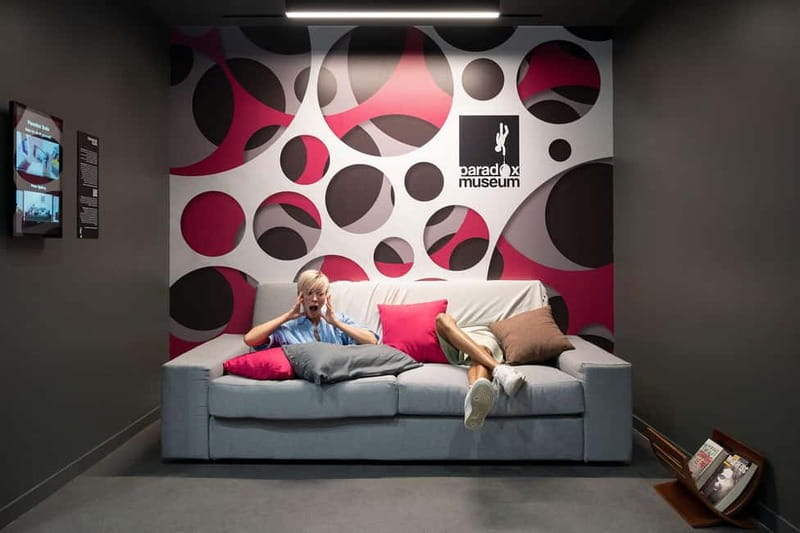
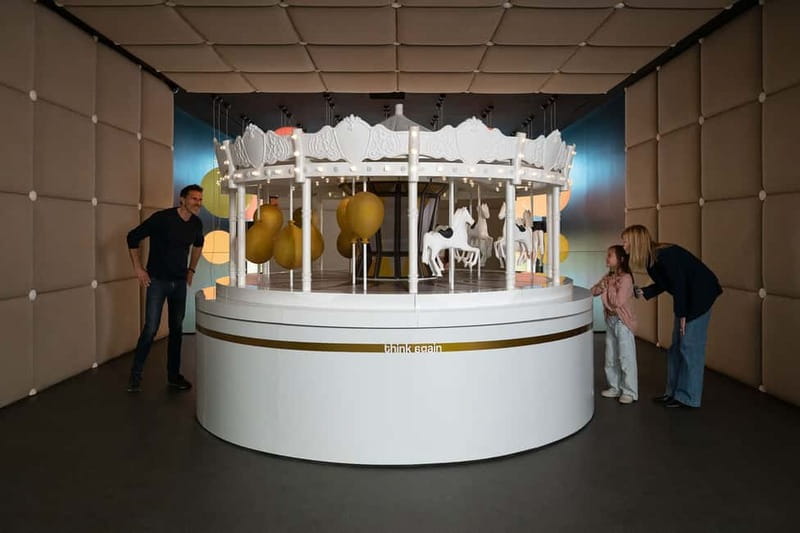
This is not a traditional museum where you quietly study objects behind glass. It is a series of rooms and installations designed to make you test your eyes, body, and assumptions. You walk through the exhibits, follow instructions, try the suggested pose, and then check the result in your camera.
The museum presents about 90 optical illusions in a one-way flow system. That matters because you do not need to work out where to go next. Follow the signs from one display to the next, and you will move through the collection in a set order.
You should allow roughly 84 minutes, though the average visit is closer to 90 minutes according to the timing provided. Your actual pace depends on the crowd. If every room is quiet, you can move along at a good clip. If several families are waiting for the same photo opportunity, the visit can take longer.
The route is intended to be experienced rather than simply viewed. You might be asked to stand in a particular spot, look at an image from a certain angle, or pose so that the camera creates the illusion. The best results come from following the instructions instead of rushing through.
More Museum Tours in Paris
- Paris: Louvre Museum Timed-Entrance Ticket
★ 4.6 · 71,977 reviews - Paris: Orsay Museum Entry Ticket
★ 4.7 · 25,647 reviews - Louvre Museum Masterpieces Guided Tour with Access
★ 4.5 · 12,023 reviews
Ninety exhibits that turn you into the subject
The central idea is simple: you are part of the trick. Rather than looking at a finished illusion from a distance, you interact with it and see how the image changes when you shift position.
Each exhibit includes information about what to do and what is happening. The explanations help connect the fun with basic ideas about perception, perspective, and the way your brain interprets visual information. QR codes offer extra material if you want to spend more time on the science.
That educational layer gives the museum more purpose than a collection of odd photo backdrops. Children can enjoy the visual jokes first, then learn why their eyes and brain reach the wrong conclusion. Adults may find themselves lingering over the explanations after the first photo has been taken.
The displays also work well for mixed-age groups. A seven-year-old can enjoy the surprise of an impossible-looking image, while a parent or grandparent can take part without needing special knowledge. One review specifically praised the museum as suitable for older visitors, including a couple in their sixties.
Still, this is not a guided science lesson. The written descriptions and QR codes do much of the explaining. If you want a staff member beside every installation, you may find the experience less smooth during a busy period. Staff are available to answer questions, but they are not posted at every exhibit.
Why the marked photo spots matter
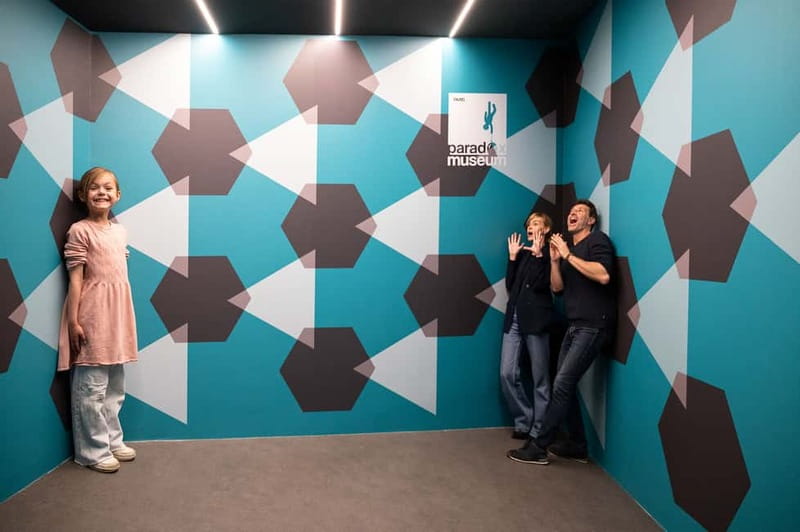
A clever illusion can produce a disappointing picture if you stand in the wrong place. Paradox Museum Paris marks the recommended photo positions, so you know where to put the camera and where your subject should stand.
This is especially useful for families and groups. Many of the installations are designed to create a visual joke that only works from one angle. The marked points save you from guessing and help you get the intended effect without taking ten nearly identical pictures.
The museum staff can help with group photos, but that help is not guaranteed at every display. One visitor found that going alone could become a hassle because staff were not always nearby. If you are visiting by yourself, be prepared for the possibility that you will need to use a phone stand, ask another visitor, or take a self-timer shot.
For couples and families, the photo setup is easier. You can take turns, and the person waiting can usually read the exhibit information or watch the next group try the illusion.
Bring enough phone storage and check your battery before entering. That is practical advice for any photo-focused attraction, but it matters here because the point of many displays is to leave with pictures that show the illusion clearly.
Moving through the museum without a guide

The experience begins with check-in, then you follow signs through the museum’s maze. The route is arranged in one direction, which reduces confusion and keeps the exhibits in a logical sequence.
You are not assigned a named guide for a walking tour. Instead, the host or greeter support is available in English and French, with staff on hand to help with questions and photos when possible. The format gives you freedom to spend more time at the displays that catch your attention.
That freedom is useful, but it also means you need to manage your own pace. If you want to read every description and scan the QR codes, you will need more time than someone focused mainly on pictures. On the other hand, a visitor who wants a quick burst of fun can move through more rapidly.
The one-way layout also has a downside during peak periods. Since you generally progress in order, you cannot easily skip ahead and return later without interrupting the flow. If a popular installation is occupied, you may need to wait.
For the best chance of a calmer visit, choose a time when the museum is not crowded. A Sunday afternoon can be fairly comfortable, but conditions vary. When several groups arrive together, the wait for activities and photos can add up.
A few more museum visits around Paris worth comparing
- Paris: Louvre Museum Entry Ticket With Host and River Cruise
★ 4.6 · 9,926 reviews - Paris: Grévin Wax Museum Ticket
★ 4.5 · 4,654 reviews - Paris: Orsay Museum Entry Ticket and Digital Audio Guide App
★ 4.4 · 3,170 reviews - Louvre Museum and Seine River Cruise Tickets by e-mail
★ 3.0 · 1,315 reviews
Is $34 a fair price?
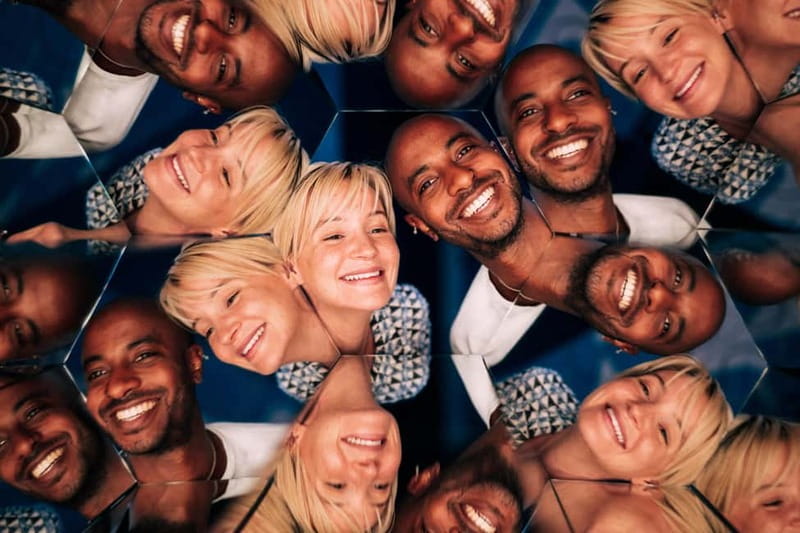
At $34 per person, this is not a bargain attraction in the same category as a free gallery or a quick street-side photo stop. The value depends on how much you take part.
If you simply walk through and glance at the displays, the visit may feel short for the price. If you try the exhibits, take photos, read the explanations, and spend close to 90 minutes inside, the cost makes more sense. Families can also share the fun of posing and solving the visual tricks rather than paying for a passive attraction.
The ticket includes entry to the exhibits, the museum store, and the café. The shop is part of the experience, but purchases are not included in the ticket price. It offers games, clothing, accessories, and souvenirs with a paradox theme. One parent found the gift shop reasonably priced, which is useful if you want a small reminder without facing only luxury-level prices.
The price also has to be judged against the type of visit you want. This is a photo-friendly interactive attraction, not a major art collection or a history museum. It suits a free afternoon, a rainy-day plan, or a break from more demanding sightseeing.
I would consider it better value for a family or small group than for a solo visitor. With several people taking turns in the installations, you get more from the interactive design. A solo visitor can still enjoy the puzzles, but taking the intended photos may be more awkward.
Who will enjoy the 84-minute visit most
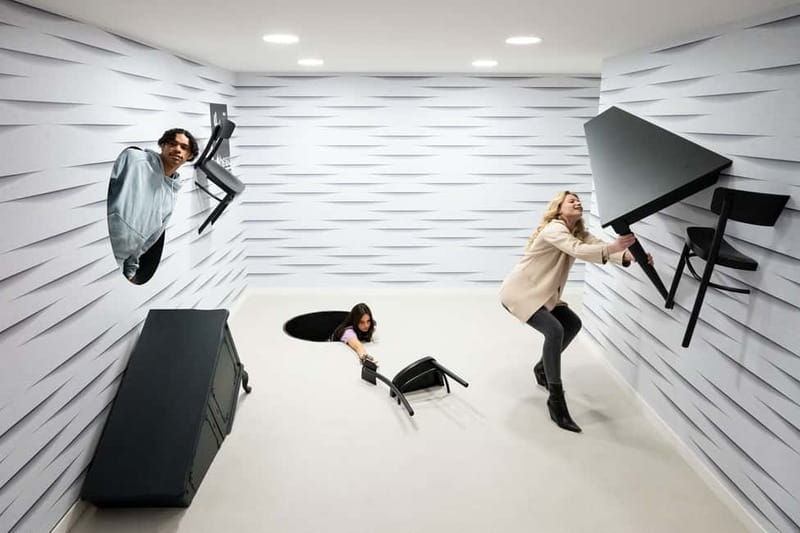
Families are the clearest match. Children can move, pose, and react to the visual effects, while adults can read the explanations and help frame the pictures. The experience does not depend on long attention spans or detailed historical knowledge.
Teenagers and young adults should also find plenty to do, especially if they enjoy taking photos and short videos. The museum gives you ready-made scenes for playful images without requiring elaborate planning.
Older visitors are not left out. The exhibits are visual and interactive, and the attraction has been described as clean, friendly, and enjoyable for people in their sixties. You can take the route at your own speed, stopping at displays as needed.
It can also work for couples and friends who want something lighter than another formal museum. The main pleasure comes from seeing how the picture turns out, then comparing the result with the real room around you.
The attraction is not suitable for people with epilepsy. You should take that warning seriously because an optical-illusion museum may use visual effects that can be uncomfortable or unsafe for some visitors.
The museum is wheelchair accessible, which makes the route more practical for visitors with mobility needs. The provided information does not give detailed measurements or describe every exhibit’s access arrangements, so you may want to confirm any specific requirements before booking.
The boutique and café at the end
The Paradox Boutique gives the visit a natural finish. After working through the illusions, you can browse games, clothes, accessories, and souvenirs that continue the same theme.
This is a better stop than a generic museum shop because the merchandise connects to what you have just seen. A paradox-themed game can extend the experience at home, while a small accessory or clothing item can serve as a more personal reminder than a standard postcard.
The café is also included as part of the available museum facilities. The information provided does not specify the menu or prices, so treat it as a convenient extra rather than planning your entire meal around it.
One reviewer particularly liked the candy shop area and found the museum clean and friendly. That makes the end of the route useful for families, especially if children want a small treat after the exhibits.
Timing, language, and practical details
The ticket offers free cancellation up to 24 hours before the scheduled visit, and you can reserve now while paying later. That is helpful in Paris, where weather, train delays, and changing plans can easily affect a day.
Last entry is at 6 p.m., two hours before closing. Do not arrive at the last minute if you want time for all 90 exhibits, the explanations, the photos, and the boutique. An early enough arrival also gives you a better chance of avoiding a rushed final section.
The activity is available with English and French host support. The signs, exhibit descriptions, and QR codes are part of the self-guided format, while staff can help with questions and photos when they are free.
The group format is limited to 10 participants. That does not mean every exhibit will be empty, since several small groups may be moving through the museum at the same time, but it keeps the organized entry portion manageable.
The duration is listed as 84 minutes, with about 90 minutes given as the average time through the displays. Allow extra time if you want to browse the shop or café afterward.
My verdict: should you book it?
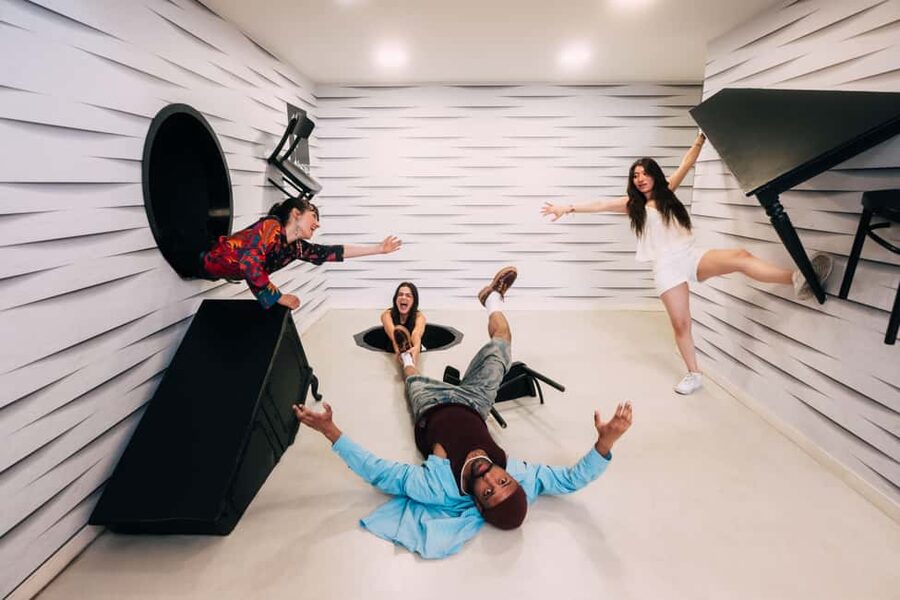
Book the Paradox Museum Paris if you want a hands-on, camera-ready attraction that works for children, adults, and older family members. The 90 illusions offer more substance than a single photo installation, and the explanations give the visit an educational side.
I would especially choose it for a family afternoon, a rainy-day plan, or a group that wants a break from churches, monuments, and formal galleries. The strongest reasons to go are the number of exhibits, the marked photo points, the friendly staff support, and the chance to enjoy the experience together.
I would hesitate if you dislike waiting for photos, prefer quiet museums, or expect a fully guided tour. Staff are helpful, but they are not stationed at every exhibit, and a busy period can slow the route.
At $34, the ticket is worthwhile when you plan to interact with the displays and spend around 90 minutes inside. If you only want a fast look, the cost may feel high. For most families and groups who enjoy visual puzzles and silly photos, it is a cheerful and easy addition to a Paris schedule.
FAQ
How long does a visit to Paradox Museum Paris take?
The activity duration is listed as 84 minutes, and the average time to go through all 90 exhibits is around 90 minutes. You may need extra time for the boutique or café.
How many exhibits are at Paradox Museum Paris?
The museum has 90 optical-illusion exhibits based on paradoxes.
Is the experience guided?
The visit follows a self-guided, one-way route through the museum. Hosts and staff provide support in English and French, explain displays, answer questions, and help with group photos when available.
Can I take photos inside the museum?
Yes. The exhibits are designed for photos and videos, and marked photo points show you where to stand for the intended camera angle.
Is the museum suitable for children?
Yes. The interactive format is designed for visitors of all ages, and the experience is particularly suitable for families. A review also described it as enjoyable for a seven-year-old child.
Is Paradox Museum Paris wheelchair accessible?
Yes. The activity information states that the museum is wheelchair accessible.
When is the last entry?
Last entry is at 6 p.m., two hours before closing. People with epilepsy should not book this experience.
Just added around Paris
- Rodin Museum Masterpieces – Guided Tour up to 8 guests★ 4.9 · 13 reviews
- Invalides Museum – WWI & WWII – Guided Tour up to 8 guests★ 5.0 · 32 reviews
- Skip the Line Guided Tour of Louvre Museum Highlights★ 5.0 · 49 reviews
- Paris: Louvre Museum Highlights Small-Group Guided Tour★ 4.8 · 157 reviews
- From Paris: Private Trip to Giverny, Monet’s House & Museum★ 4.5 · 13 reviews
- Paris: Street Art Open-Air Museum Bike Tour★ 4.8 · 51 reviews
- Paris: Rodin Museum Ticket & Optional Digital AudioGuide App★ 4.7 · 56 reviews
- Paris: The Rodin Museum and Seine River Cruise★ 4.6 · 45 reviews
Museum Tours in Paris, compared.
Louvre Museum Masterpieces Guided Tour with Access
Read our review →
Louvre Museum Entry Ticket With Host and River Cruise
Read our review →
Les Invalides: Napoleon’s Tomb & Army Museum Entry
Read our review →
Mona Lisa & Louvre Masterpieces Tour with Reserved Access
Read our review →
Louvre Museum – Exclusive Guided Tour (Entry Included)
Read our review →
Louvre Museum Hosted Entry and Mona Lisa Audioguide
Read our review →Browse the lists this tour appears in