
Review · ITALY
Paestum: 2-Hour Greek Temples & Archaeological Museum
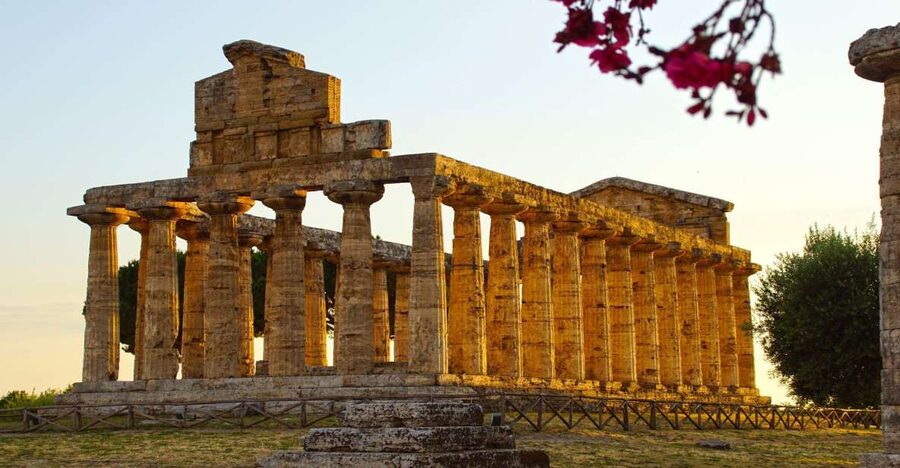
Paestum gives you something rare in Italy: three remarkably preserved Greek temples set among the remains of an ancient city. The columns are tall, clean-lined, and easy to understand from ground level. A certified archaeologist guide helps connect the temples to the Roman forum, markets, city walls, and amphitheater.
I like the private-group format and the included skip-the-line tickets. I also like that the visit ends in the National Archaeological Museum, where the Tomb of the Diver adds a human touch to all those grand stone buildings. The main point to check is the timing: the experience is sold as two hours, but the detailed plan lists two hours at the park plus 30 minutes in the museum.
- Temple of Hera II: Begin beside one of the best-preserved Greek temples in Italy.
- Three Doric temples: Compare the Temple of Neptune, Temple of Ceres, and basilica in one compact site.
- Roman Paestum: See the forum, comitium, amphitheater, markets, and city walls after the Greek monuments.
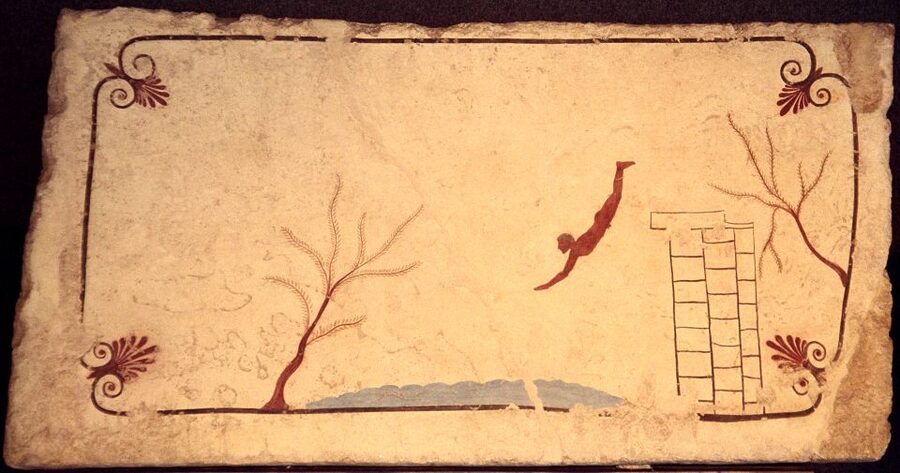
- Tomb of the Diver: Visit the museum’s best-known work, a painted Greek tomb from the local area.
- Private guided visit: Ask questions freely and choose the pace within the scheduled tour.
- Simple meeting point: Find the guide at the Neptune Temple entrance, holding a sign with your name.
Why Paestum Is Worth the Detour
Paestum sits in Campania, in the northern part of the Cilento region, not far from the Sele River and the Tyrrhenian coast. Its ancient Greek name was Poseidonia. Later, the Romans took control and developed the city as Paestum.
That change of ownership is what makes the site so rewarding. You are not looking at isolated temples in an empty field. You are walking through a Greek city that later became Roman, with political, commercial, and public spaces still marked out across the ruins.
The temples get most of the attention, and rightly so. Yet the Roman remains help you read Paestum as a working town. The forum, comitium, markets, amphitheater, and walls show how public life changed after the Roman period began.
I find Paestum easier to appreciate with a guide because the site can first seem like a collection of impressive stones. The guide can explain what you are seeing, point out Greek and Roman layers, and help you compare the buildings instead of simply moving from one photo stop to the next.
Meeting at the Neptune Temple
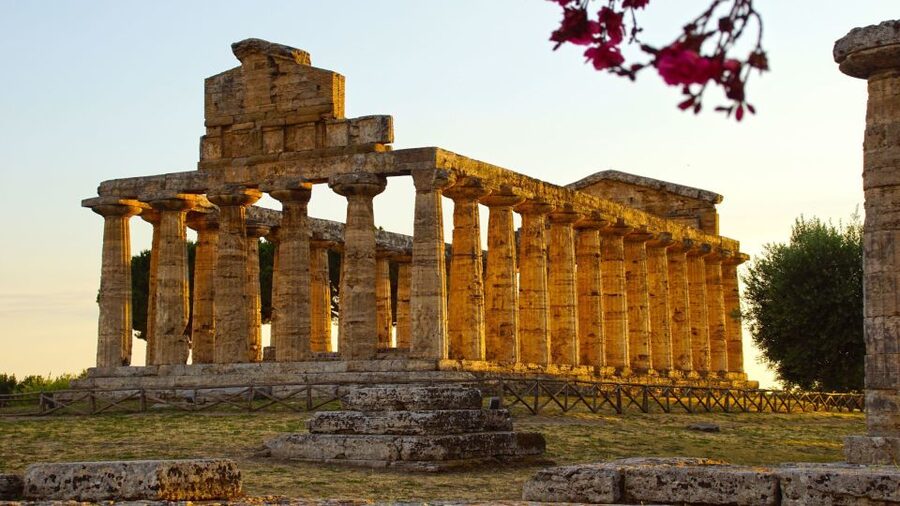
Your guide meets you at the entrance of the Neptune Temple, holding a sign with your name. This is a useful arrangement because the meeting point is specific and tied to one of the main monuments. You do not need to search the whole archaeological park for a person carrying a generic tour sign.
The experience includes a certified archaeologist guide and admission tickets. Since the tour is private, you have a more direct way to ask about the temples, the city plan, and the museum objects. The listed languages are English, Italian, Spanish, French, and German.
You should plan your arrival around the named meeting point rather than assume the guide will collect you from your hotel. Hotel pickup and drop-off are not included. Food and drinks are also not included, so handle those separately before or after the visit.
More archaeological museums in Italy:
- Milan: Cathedral, Archeological Area and Museum Ticket
★ 4.5 · 1,093 reviews - Naples: National Archaeological Museum Ticket & Audio App
★ 4.4 · 617 reviews - Naples: National Archaeological Museum of Naples Guided Tour
★ 4.8 · 498 reviews
Temple of Hera II and the Greek Sacred Area
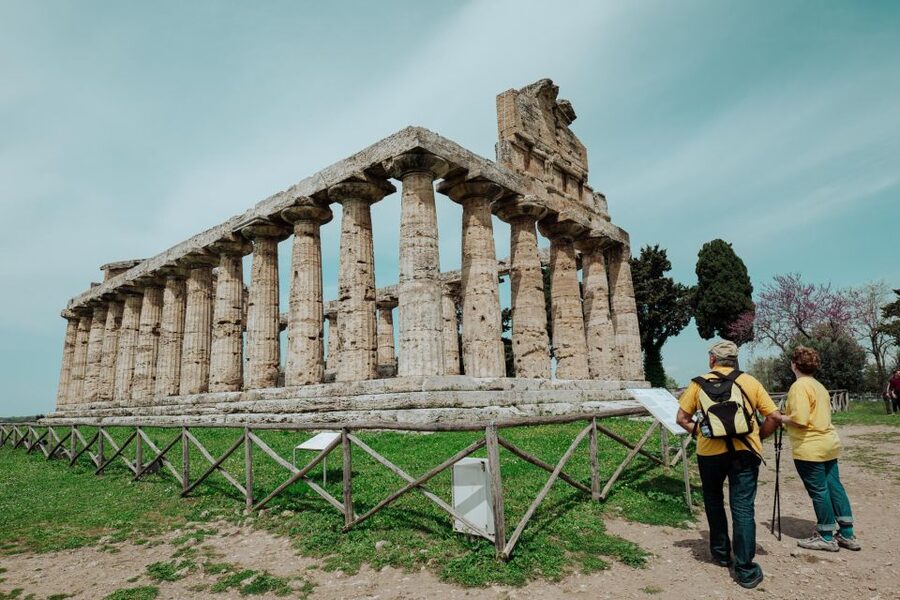
The opening stop is the Temple of Hera II, sometimes identified in older descriptions as the Temple of Neptune. It is a strong place to begin because the building gives you an immediate sense of Greek architectural scale.
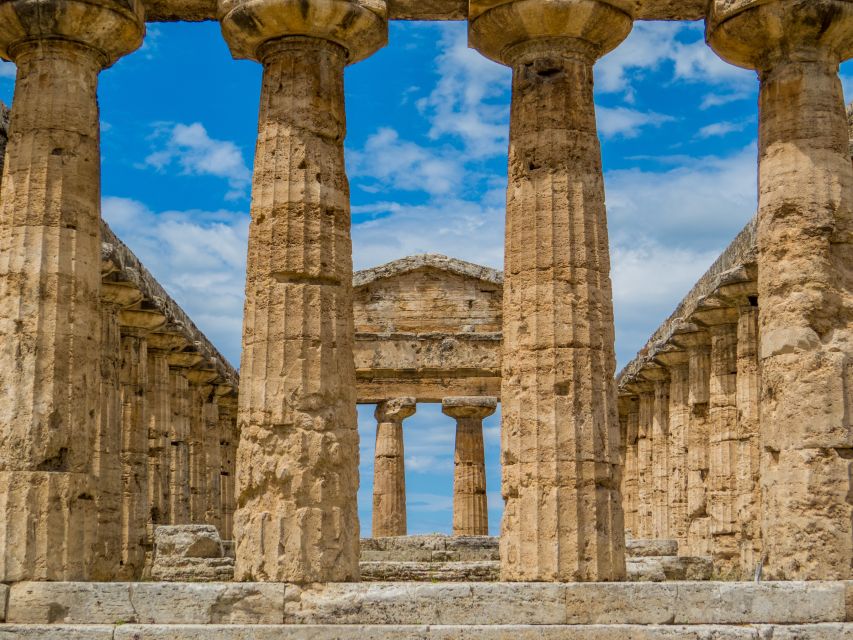
The temple is Doric, with a sturdy rhythm of columns and a broad, balanced form. The attraction here is not decoration piled onto every surface. It is proportion, repetition, and the way the structure still reads clearly after more than two thousand years.
From the first temple, the guide can give you a useful visual lesson in Greek design. Look at the column spacing, the heavy capitals, and the strong horizontal lines. The surviving structure helps you understand why later buildings, including the Parthenon in Athens, became such powerful models.
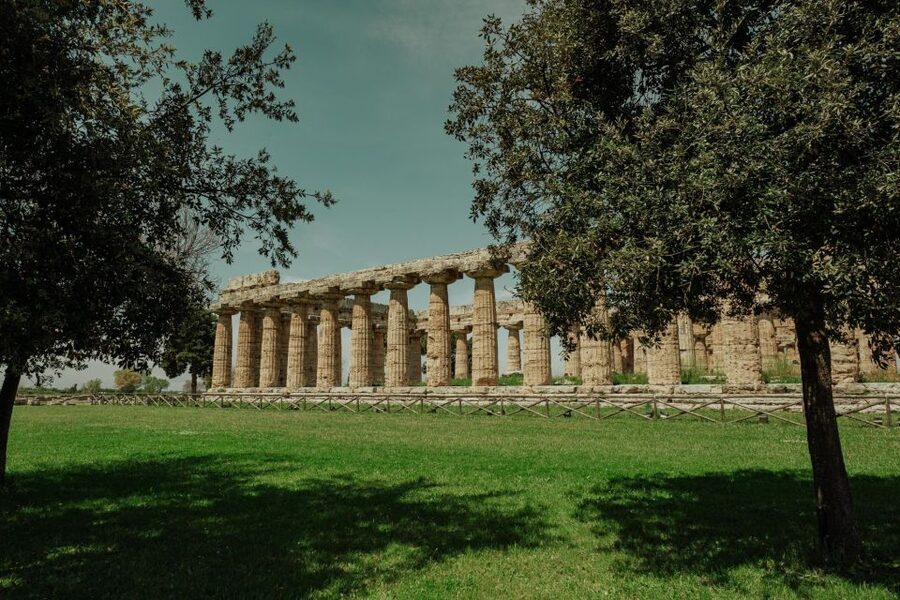
The site includes three major Greek temples dating to the sixth century B.C. You will see the Temple of Neptune, the Temple of Ceres, and the basilica. Names can vary in archaeological writing, so listen closely to the guide’s explanation of how these buildings are identified.
The Temple of Ceres is smaller than the largest temple, but comparing the three is part of the fun. You can see how a similar Doric language works at different scales. The basilica is especially interesting because its traditional name can mislead modern visitors. It is not a Christian basilica in the usual sense, but a Greek civic or religious building identified through its form and remains.
Reading the Ruins Beyond the Temples
Once you have seen the temples, the tour turns toward the city itself. This is where the archaeological park becomes more than a sequence of famous monuments.
The Roman forum marks the political heart of the later city. The comitium, or political assembly hall, gives you a glimpse of how public decisions and civic identity were organized. The amphitheater points to public entertainment, while the markets reveal the everyday commercial side of Paestum.
The city walls help frame the whole settlement. They also make clear that Paestum was a planned, defended urban center rather than a loose group of religious buildings.
A two-hour walking visit is enough to cover the main sights with direction, but it is not a leisurely study of every stone. If you like to stop for long photographs or read every sign, the schedule may feel brisk. A private guide helps by keeping the route focused, but you should still expect a highlights visit rather than a full archaeological survey.
The terrain is not suitable for people with mobility impairments or wheelchair users according to the activity information. That is an important practical limit. The tour involves walking through an archaeological park, and the service is not presented as an accessible route.
The National Archaeological Museum and the Tomb of the Diver
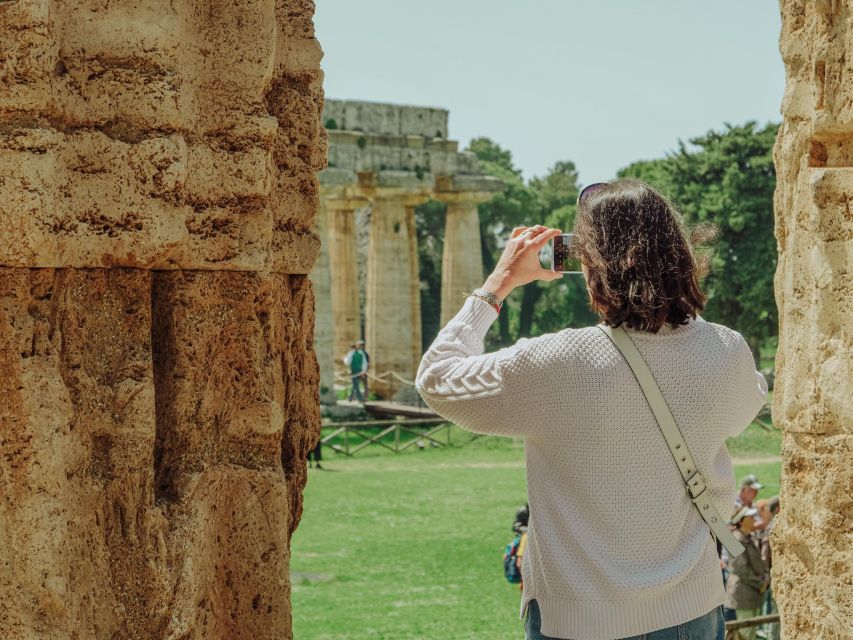
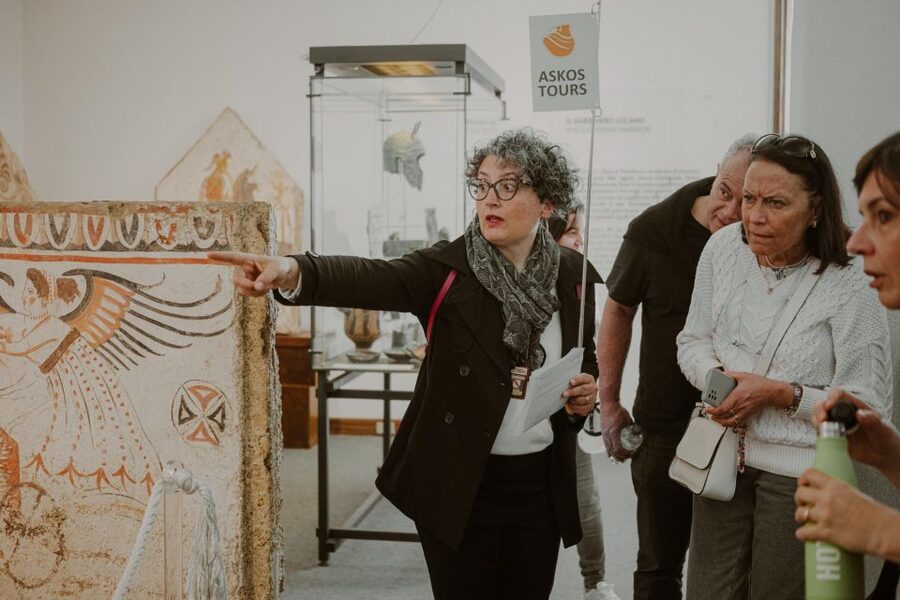
After the outdoor ruins, you visit the National Archaeological Museum of Paestum. The museum displays local Greek art from the seventh century B.C. onward and provides the smaller human details that the temples cannot.
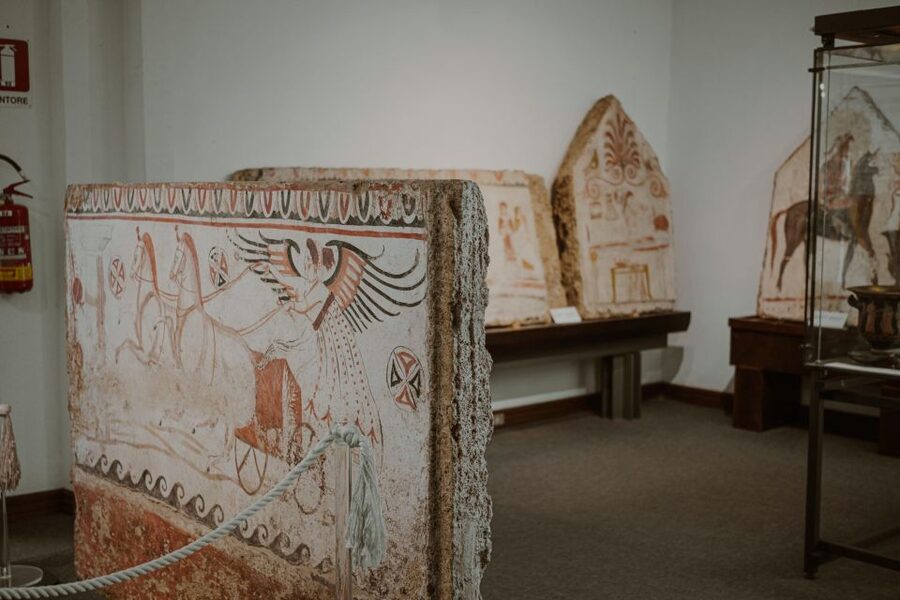
The museum’s major attraction is the Tomb of the Diver. This painted tomb is widely treated as Paestum’s signature museum object, and it gives the visit a different mood. The temples show public power and religious architecture. The tomb offers a personal image connected with death, ritual, and the passage into another state.
The painted scene is especially memorable because it is intimate in scale. After spending time among massive columns and walls, you shift to an object made for a burial context. That change helps balance the tour. Paestum is not only about grand buildings; it is also about the people and beliefs behind them.
The museum visit is listed as a 30-minute guided stop. That is enough to see the main collection and focus on the Tomb of the Diver, but it may not satisfy you if ancient art is your main interest. You can ask the guide to spend extra attention on the pieces that matter most to you, although the total schedule may limit how long you have.
A few more museum visits around Italy worth comparing
- Vatican Museums & Sistine Chapel Express 2-Hour Guided Tour
★ 4.5 · 1,037 reviews - Naples Archaeological Museum 2-Hour Guided Private Tour
★ 5.0 · 51 reviews - Florence: 2-Hour Private Guided Visit to the Uffizi Gallery
★ 4.8 · 15 reviews - Naples: Capodimonte Museum 2-Hour Guided Private Tour
★ 4.5 · 15 reviews
How the Two-Hour Schedule Works
The experience is advertised as a two-hour tour, with the archaeological park and museum included. The detailed stop plan lists a two-hour guided visit in the park and a 30-minute guided visit in the museum, so the exact total deserves confirmation when you choose a starting time.
That timing matters. If the full visit lasts two and a half hours, you need to allow for it when arranging a train, car, lunch, or another activity. If two hours is the true total, the outdoor portion will need to move at a fairly efficient pace.
The itinerary begins and ends at the Temple of Hera II meeting area, although the guide meets you at the Neptune Temple entrance. Read the meeting instructions carefully so you do not wait at the wrong temple. The activity ends back at the meeting point, and no transportation is included.
Starting times depend on availability. Since Paestum can be warm and much of the tour is outdoors, a cooler available time may make the walk more comfortable. The provided information does not specify shade, rest areas, or seasonal conditions, so do not assume the route will offer protection from the sun.
Is $189.75 Per Person a Fair Price?
At $189.75 per person, this is not a budget admission visit. You are paying for a private-group format, a certified archaeologist guide, guided time at both the archaeological park and museum, included entry tickets, and the convenience of skipping the ticket line.
The price makes the most sense for two situations. First, it can work well if you want a focused explanation of Paestum but do not want to research the site in advance. Second, it may be good value for a small private group that can share the cost while keeping the guide’s attention within the group.
The value is weaker if you only want to stroll among the temples independently. Paestum’s major monuments are visible without a guide, and a visitor who prefers a slow, self-directed visit may not need this level of service.
The museum is an important part of the price calculation. A basic ruins visit would leave out the Tomb of the Diver and the local Greek artworks. Here, the outdoor and indoor collections work together, giving you both architecture and art in one booking.
The 4.8 rating from 19 reviews suggests a strong overall response, but the sample is small. I would treat that score as a useful signal rather than a guarantee that the pace, meeting arrangement, or private format will suit everyone.
Who Will Enjoy This Paestum Tour Most?
I would recommend this experience to you if you want historical context without spending a full day on a large guided program. The route concentrates on the essential monuments, and the archaeologist guide can explain the Greek and Roman periods as you walk.
It also suits first-time visitors who want to see the three temples and the museum in one organized visit. Paestum is simple to admire but harder to interpret on your own, especially when the ruins shift from Greek to Roman use.
A private group is useful if your party has different levels of interest. You can ask about architecture, politics, religion, or funerary art without waiting for a large group to move on.
I would think twice if you have mobility limitations, use a wheelchair, or need a very slow walking pace. The activity is specifically not suitable for wheelchair users or people with mobility impairments.
I would also reconsider if you want several hours to sketch, photograph, or study individual artifacts. The route is designed around the major sights, not an open-ended museum and ruins day.
Practical Details Before You Book
The guide speaks English, Italian, Spanish, French, or German, depending on the language selected and availability. The tour is for a private group, which gives you a more personal format than a standard shared excursion.
Skip-the-line tickets are included. That saves you from handling the ticket purchase separately, though it does not remove the need to reach the meeting point on time.
Cancellation is free up to 24 hours before the activity for a full refund. You can also reserve now and pay later, which helps if your Campania schedule is still changing.
Bring comfortable footwear suitable for walking through an archaeological park. The supplied information does not state that food, drinks, hotel transfers, or special equipment are provided, so plan those needs yourself.
Should You Book It?
Book this Paestum tour if you want the three Greek temples explained by a certified archaeologist, prefer a private group, and value having the museum and Tomb of the Diver included. The combination gives you a clear two-part visit: monumental architecture outside, then art and burial culture inside.
The main caution is the schedule and price. Confirm the actual total duration, then decide if $189.75 per person fits your priorities. If you want context, convenience, and a tightly focused visit, this is a strong choice. If you want maximum freedom or the lowest possible cost, buy entry on your own and explore at a slower pace.
FAQ
How long does the Paestum tour last?
The experience is advertised as two hours. The detailed plan lists two hours at the archaeological park and 30 minutes at the National Archaeological Museum, so confirm the exact total when checking available times.
Where does the tour begin?
The guide meets you at the entrance of the Neptune Temple with a sign showing your name.
Where does the tour end?
The activity ends back at the meeting point near the Temple of Hera II.
What sites are included in the archaeological park visit?
The guided walk includes Paestum’s three Greek temples, city walls, Roman forum, comitium, amphitheater, markets, and other ruins.
Is the National Archaeological Museum included?
Yes. The tour includes a guided visit to the National Archaeological Museum of Paestum.
What is the main highlight of the museum?
The museum’s main highlight is the Tomb of the Diver. It also displays local Greek artworks dating from the seventh century B.C.
Is a guide included?
Yes. A certified archaeologist provides guidance and assistance for the entire tour.
What languages are available?
The listed guide languages are English, Italian, Spanish, French, and German.
Are the entrance tickets included?
Yes. Skip-the-line tickets and all taxes are included.
Is hotel transportation included?
No. Hotel pickup and drop-off are not included. Food and drinks are also not included.
Can wheelchair users join this tour?
No. The activity is listed as unsuitable for wheelchair users and people with mobility impairments.
Can I cancel for a refund?
Yes. You can cancel up to 24 hours in advance for a full refund. You can also reserve now and pay later.
Just added around Italy
- Oil museum and oil mill in Tuscany: tour and tasting★ 5.0 · 16 reviews
- Enchanted Castle of Sciacca – Museum Tickets★ 3.5 · 63 reviews
- Torino: FIAT Historic Museum and Lingotto District Tour★ 4.9 · 14 reviews
- Torino: The Car Museum Skip-The-Line Tour★ 4.7 · 22 reviews
- Timed Entry Ticket to the Uffizi Gallery★ 4.5 · 498 reviews
- Florence: Accademia Gallery Entry Ticket with Audio Guide★ 4.1 · 88 reviews
- Vatican City: Sistine Chapel, Museums, Basilica Private Tour★ 4.8 · 158 reviews
- Rome: Capitoline Museums and Centrale Montemartini Tickets★ 4.4 · 328 reviews
Museum Tours in Italy, compared.

Vatican: Museums & Sistine Chapel Entrance Ticket
Read our review →
Vatican Museums, Sistine Chapel & St. Peter’s Basilica Tour
Read our review →
Vatican Museums, Sistine Chapel & St Peter’s Basilica Guided Tour
Read our review →
Skip-The-Line Uffizi Gallery Timed Entry Ticket
Read our review →
Vatican Museums, Sistine Chapel and Basilica Tour
Read our review →
Vatican Museums & Sistine Chapel Skip-the-Line Entry Ticket
Read our review →
Vatican Museums, Sistine Chapel & Basilica Tour
Read our review →
Browse the lists this tour appears in