
Review · NAPLES
Naples: Capodimonte Museum 2-Hour Guided Private Tour
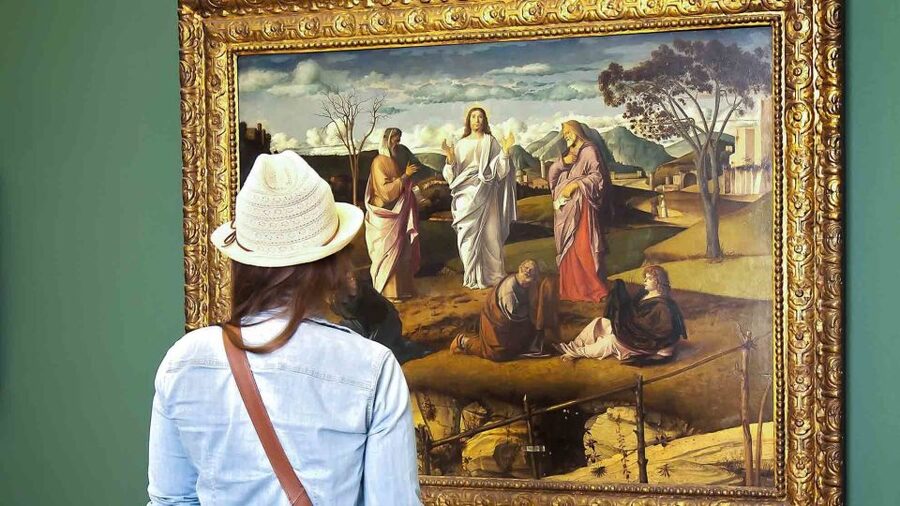
Capodimonte is where Naples’ art story gets grand, royal, and wonderfully concentrated. Inside the former Bourbon hunting lodge, you’ll move from Farnese masterpieces by Titian, Botticelli, and Bellini to royal porcelain and 18th-century apartments. The setting matters as much as the pictures: this is an old palace, not a bare white gallery.
I like the private format, since your guide can spend time on the works that catch your eye instead of giving a fixed speech to a crowd. I also like the strong historical thread, especially the link between the Farnese family, the Bourbon rulers, and Naples. The main drawback is the short two-hour limit: Capodimonte is large, so you’ll get the key rooms rather than a full museum visit.
Key points at a glance
- Farnese masterpieces: See major works by Titian, Botticelli, Bellini, Brueghel, Parmigianino, and Correggio.
- Sacred art with context: Study paintings by Carracci, Lotto, Masaccio, and El Greco with a guide who explains their meaning and place in art history.
- Royal apartments: Walk through old Bourbon rooms with 18th-century furniture, porcelain, and majolica.
- Private two-hour visit: Ask questions freely and shape the conversation around the works that interest you most.
- Central meeting point inside the museum grounds: Meet at Porta Grande, where your guide will hold a sign with your name.
- Useful flexibility: Cancellation is free up to 24 hours before the tour, and you can reserve now and pay later.
Why Capodimonte deserves two focused hours

Many Naples art visits happen in churches, chapels, or busy city museums. Capodimonte offers something different. You’re visiting a former Bourbon palace on a hilltop site that served as a summer residence and hunting lodge for the kings of the Two Sicilies.
That royal setting gives the museum a sense of occasion. You are not only looking at paintings on walls. You are seeing how powerful families gathered, protected, and displayed art. The Farnese and Borbone collections form the heart of the visit, and together they make Capodimonte one of the most important art collections in southern Italy.
I like this tour for people who want a clear route through a large museum. Without a guide, you could spend a long time deciding which galleries matter most. In two hours, your guide takes you to the main sections and builds a story around the major works.
You should still arrive with realistic expectations. This is an introduction to Capodimonte, not an exhaustive study of every room. If you want to inspect each painting at length or spend time with the modern collection, plan to return on your own if your schedule allows.
More Museum Tours in Naples
- Naples: National Archaeological Museum Tour & Digital Guide
★ 4.2 · 177 reviews - Naples: National Archaeological Museum audio guide
★ 4.0 · 155 reviews - Capodimonte Museum in Naples
★ 4.0 · 115 reviews
Meeting at Porta Grande
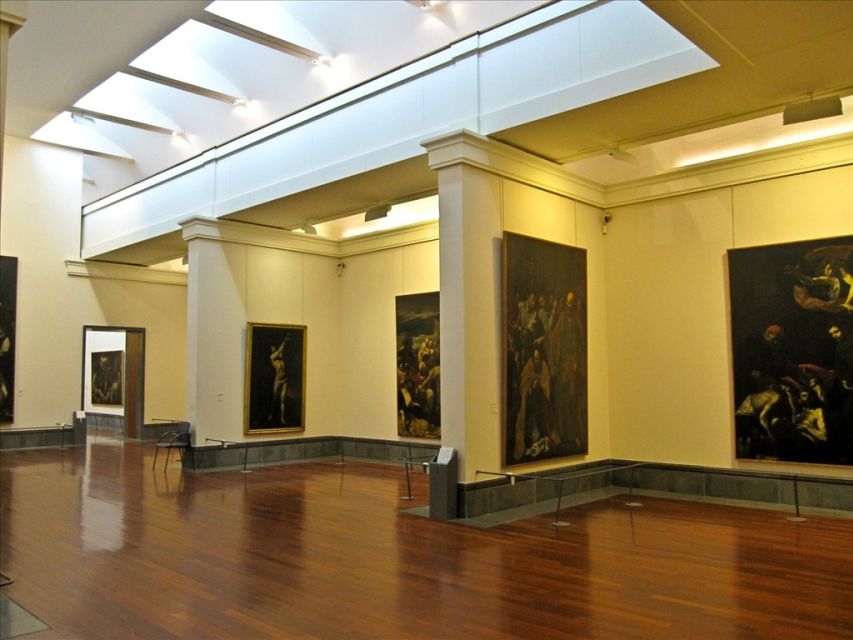
Your meeting point is the museum entrance called Porta Grande. The guide will hold a sign with your name, which makes the start simple, especially if you are arriving with family or a small private party.
The tour ends back at the meeting point. That makes it easy to continue your Naples day from the museum, although the experience itself does not include transportation to or from Capodimonte.
Check the starting time when you book. The tour lasts two hours, but the available departure times can change. The museum is closed on Wednesdays, so do not build this visit into a Wednesday itinerary.
The tour is offered in English, Italian, French, Spanish, and German. Since this is a private group, you can ask for explanations at your own pace. That is particularly useful in an art museum, where a single question about a face, gesture, symbol, or technique can lead to a much better understanding of the picture.
The Farnese collection and the best-known paintings
The Farnese collection is the main reason to book this visit. It contains works gathered by one of Italy’s most powerful families and later connected to the royal collections of Naples.
Expect to see art by Tiziano, better known in English as Titian, along with Botticelli, Bellini, Brueghel, Parmigianino, and Correggio. These names cover several different moods and approaches, from delicate religious scenes to forceful color and theatrical composition.
A guide adds real value here. Rather than simply identifying a painter, the tour can connect each work to its period, subject, and wider artistic setting. The strongest part of the experience is likely to be the way the guide links one painting to another, and then places both within the history of Naples and its ruling families.
One named guide associated with this experience is Lorenzo. His approach includes an overview of Naples, the museum, and the Bourbon family before moving through the principal works. If Lorenzo leads your visit, you can expect detailed answers and a broad historical explanation alongside the art.
The collection is especially useful for visitors who know a few famous Italian names but want help seeing how they fit together. You do not need to arrive as an art specialist. The guide’s job is to explain why a work matters, not simply to recite its title and date.
Sacred paintings by Masaccio, Carracci, Lotto, and Titian

Religious art makes up an important part of the visit. You may see sacred paintings by Carracci, Lotto, and Titian, along with Masaccio’s depiction of the Crucifixion and Carracci’s Mystic Marriage of St. Catherine.
These subjects can seem familiar at first glance. The useful part of a guided visit is learning to look past the basic story. Your guide can point out how the painter handles the figures, the emotional tone, the arrangement of the scene, and the details that help explain the religious meaning.
The Carracci works offer a chance to consider the balance between devotion and polished artistic design. Masaccio’s Crucifixion brings an earlier artistic voice into the route. Titian adds another point of comparison, especially in the use of color and the treatment of sacred figures.
You might also see drawings by Michelangelo, as well as works by El Greco. A drawing and a finished painting ask you to look in different ways, and the guide can help you notice the difference between a preparatory study and a completed public work.
The feedback about the guides places special emphasis on art knowledge, ancient history, and historical connections. That matters here. Capodimonte is most rewarding when the guide explains not only what you are seeing, but why it belongs in this particular collection.
A few more museum visits around Naples worth comparing
- Naples Archaeological Museum 2-Hour Guided Private Tour
★ 5.0 · 51 reviews - Vatican Museums & Sistine Chapel Express 2-Hour Guided Tour
★ 4.5 · 1,037 reviews - Dallas: 2-Hour JFK Assassination Tour without Museum
★ 4.7 · 48 reviews - Dallas: 2-Hour JFK Assassination Tour without Museum
★ 4.9 · 45 reviews
The old Bourbon apartments
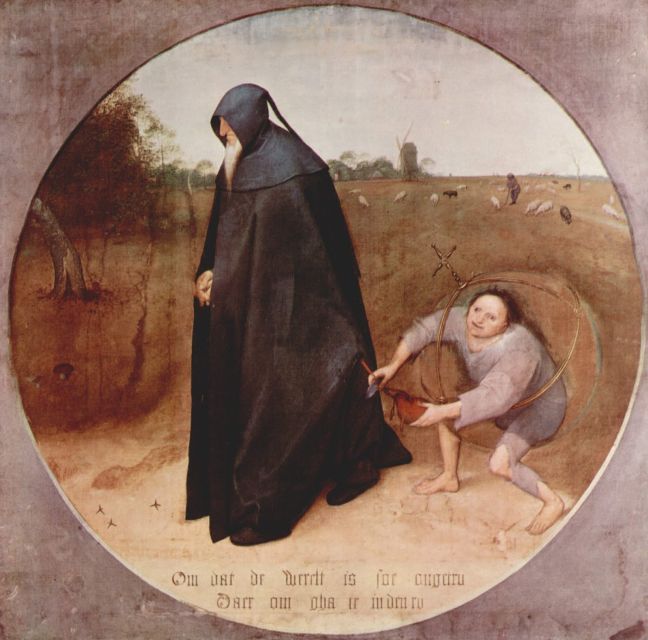
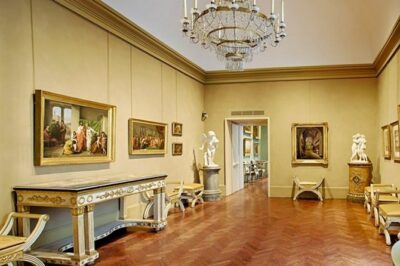
The tour is not limited to framed paintings. You’ll also enter the old apartments, where the museum presents 18th-century furniture and objects connected with the royal household.
This shift from canvas to rooms helps you picture the museum as a palace that once served a living court. The furniture gives scale and atmosphere to the royal story, while the rooms show how decorative arts fit into daily life and ceremony.
I like this part because it breaks up the painting-heavy route. After studying religious scenes and portraits, you get a change of pace with furniture, decoration, and palace interiors. It also makes the Bourbon collection easier to understand. These rulers did not collect only paintings. They created surroundings designed to display status, taste, and power.
The old apartments may appeal most to anyone interested in interiors, royal life, or decorative arts. If you care only about famous painters, you may prefer to keep the guide focused on the picture galleries. In a private tour, you can say so.
Royal porcelain and Neapolitan majolica
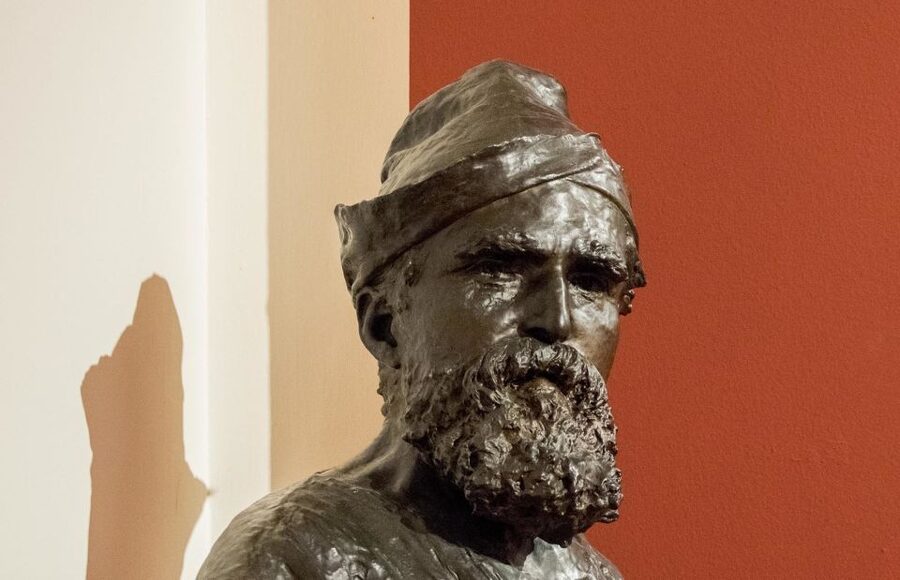
The porcelain collection adds a distinctly royal note to the visit. You’ll see examples of royal porcelain and majolica, including pieces connected with the old Bourbon residence.
Porcelain can be easy to rush past in a museum filled with major paintings. I recommend giving it a few minutes. These objects show another side of court culture, where craftsmanship and presentation mattered as much as practical use.
The inclusion of majolica also helps broaden your view of Neapolitan art. Capodimonte is not simply a place for Italian paintings. It holds decorative works that show how art entered dining rooms, apartments, ceremonies, and private life.
A guide can help you connect these objects to the palace setting rather than treating them as a separate display. That connection is one of the reasons a private tour can be more useful than a quick self-guided walk through the rooms.
Michelangelo, El Greco, and the wider collection
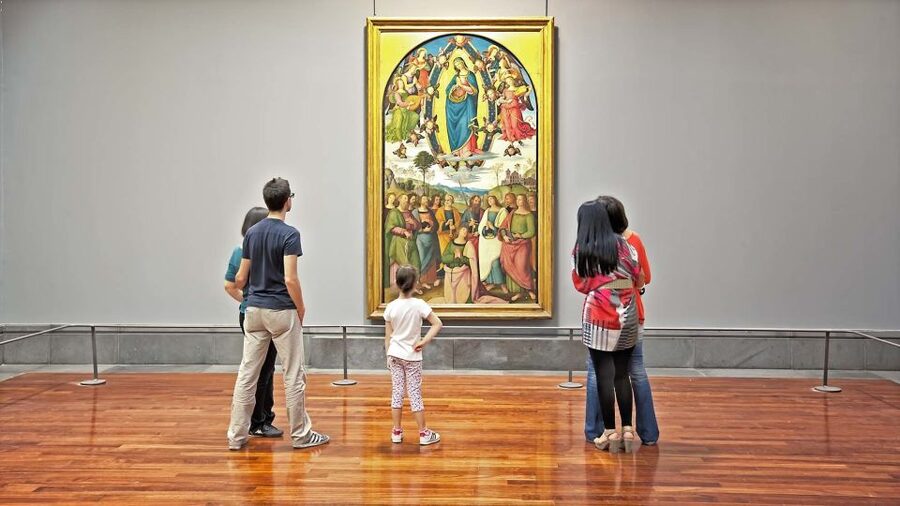
Capodimonte’s range is one of its pleasures. Alongside Italian masters, you’ll encounter European art, including works by El Greco and Brueghel.
The collection also includes drawings by Michelangelo. Even a brief look at such works can add another layer to the visit, since drawings reveal an artist’s planning, hand, and working process in a direct way.
You may find the variety easier to appreciate with a guide who can keep the route from becoming a list of famous names. The best explanations connect artists across time and place. A painting by El Greco, for example, can take on more meaning when you understand how different artists approached religious emotion and the human figure.
The tour is designed to cover the major sections, so the guide will make choices. That is helpful if your visit is limited to two hours, but it also means you should speak up about your interests. Tell the guide if you care most about Renaissance painting, Bourbon history, porcelain, or modern art.
The third floor and contemporary art

The third floor adds a modern counterpoint to the historic collections. There you’ll find contemporary art by significant artists from the international art scene.
This section may surprise visitors who expect Capodimonte to be entirely focused on old masters and royal rooms. It shows that the museum continues to expand its idea of what belongs in an art collection.
The contemporary galleries may receive less attention than the Farnese paintings during a two-hour route. That is understandable, since the historic works are the main draw. Still, ask your guide how much time can be given to the third floor if modern art matters to you.
I see this as a useful final contrast. After rooms filled with sacred art, dynastic collections, and royal decoration, contemporary works can change the pace and give you a different way to think about the museum.
What the private format adds
The price is about $195.42 per person, which places this firmly in the premium museum-tour category. The value depends on how much you want from the visit.
You are paying for a private group, a live guide, and skip-the-line admission. That can make sense for a couple, family, or small group that wants direct attention and does not want to spend time waiting at the ticket line. The cost is harder to justify if you prefer wandering alone or already know the collection well.
The private format also gives you room to ask questions. The strongest guide feedback centers on detailed explanations, connections with other collections, and the ability to relate art to ancient history and Naples itself. That kind of conversation is the main reason to choose this over a simple admission ticket.
Skip-the-line access is another practical benefit, but it does not turn two hours into a full-day museum visit. Think of the tour as a carefully chosen introduction. You pay for direction and interpretation, not unlimited time with every gallery.
Who will get the most from this visit
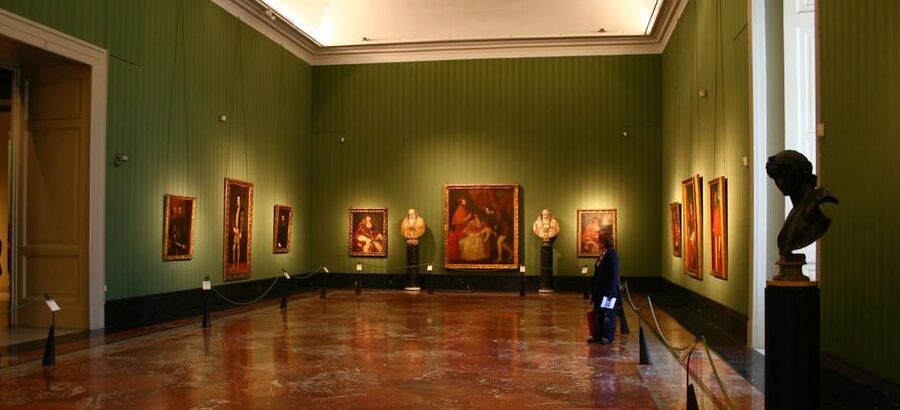
I would recommend this tour to you if you want to see major Italian art but prefer help making sense of it. It suits first-time visitors to Capodimonte, couples who enjoy museums, families with limited time, and anyone curious about the Farnese and Bourbon collections.
It also works well for people who want Naples beyond the usual historic center. The museum gives you a royal and artistic side of the city that is quite different from street life, churches, and archaeological sites.
Art students and serious enthusiasts may appreciate the private format but should ask the guide to spend longer on selected works. Two hours will not be enough for a detailed study of the entire museum.
The accessibility information needs checking before you book. The supplied details describe the activity as wheelchair accessible in one place, but also say it is not suitable for wheelchair users elsewhere. Contact the operator and confirm the current route and museum access if this affects your plans.
How to prepare for the two-hour route
Do not try to study the entire collection before arriving. Instead, choose two or three priorities. You might focus on the Farnese paintings, the Bourbon apartments, or the porcelain and majolica.
Bring the names of any artists you particularly want to see. Botticelli, Titian, Michelangelo, Carracci, Masaccio, El Greco, Brueghel, Parmigianino, and Correggio are all connected with the museum’s collections, but the guide will decide how much time each receives.
Arrive at Porta Grande with enough time to find the entrance and identify your guide. Since the guide will hold a sign with your name, the meeting should be straightforward, but a calm start helps when your museum time is fixed.
Plan for the museum to be closed on Wednesdays. Cancellation is free up to 24 hours in advance, and the reserve-now, pay-later option gives you some flexibility while you arrange your Naples schedule.
Should you book the Capodimonte private tour?
Book it if you want a focused introduction to one of Naples’ major art collections, especially if the Farnese and Bourbon stories appeal to you. The guide’s art and historical explanations are the strongest part of the experience, and the private setting lets you ask questions without holding up a larger group.
Skip it if you want to spend several hours lingering over every painting, or if you are comfortable planning your own museum route. The two-hour format is efficient, but it is selective.
For most first-time visitors who value context, this is a sensible way to meet Capodimonte. You’ll see important Italian and European works, enter the old royal apartments, and get a clear sense of why this palace collection matters to Naples.
FAQ
How long is the Capodimonte Museum tour?
The tour lasts two hours. Starting times vary, so check availability when booking.
Where do I meet the guide?
Meet your guide at Porta Grande, the entrance of the Capodimonte Museum. The guide will hold a sign with your name.
Where does the tour end?
The activity ends back at the meeting point.
Which languages are available?
The live guide service is available in English, Italian, French, Spanish, and German.
Is admission included?
Yes. The tour includes skip-the-line admission fees.
Is the museum open every day?
No. The museum is closed on Wednesdays.
Can I cancel the tour for a full refund?
Yes. You can cancel up to 24 hours in advance for a full refund. You can also reserve now and pay later.
Just added around Naples
- Naples: City and Lapis Museum Tour with an Archaeologist★ 4.5 · 29 reviews
- Naples: Città della Scienza Interactive Museum Entry Ticket★ 4.1 · 32 reviews
- Naples: San Gennaro Experience With Filangieri Museum Option★ 4.3 · 55 reviews
- Naples: Chapel & Museum of San Gennaro Guided Tour★ 4.5 · 35 reviews
- Naples: LAPIS Museum Guided Visit in Italian★ 4.7 · 46 reviews
- Naples: Capodimonte Museum small group tour★ 4.8 · 51 reviews
- Naples: 3-Days Pass w/ Pompeii, Museums & Transport Included★ 4.4 · 13 reviews
- Naples: 7 Days Pass – Pompeii, Museums & Transport Included★ 3.7 · 17 reviews
Museum Tours in Naples, compared.
National Archaeological Museum Tour & Digital Guide
Read our review →

San Gennaro Experience With Filangieri Museum Option
Read our review →
Naples Archaeological Museum 2-Hour Guided Private Tour
Read our review →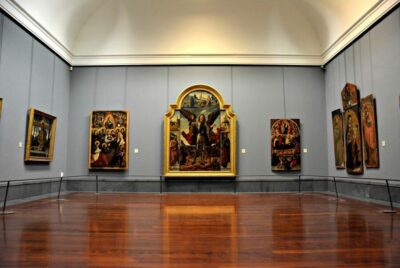

Maradona Museum: The first museum dedicated to Diego Armando Maradona
Read our review →Browse the lists this tour appears in