
Review · MILAN
Milan: Leonardo3 The World of Leonardo Museum Entry Ticket
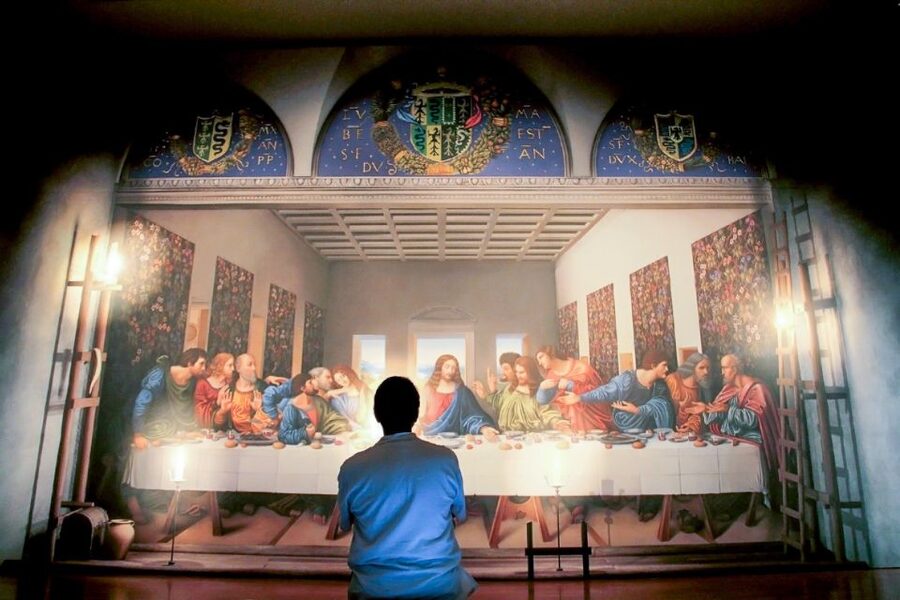
Leonardo3 turns Leonardo da Vinci’s untidy notebooks into working machines you can see, study, and operate. More than 200 interactive reconstructions cover flying, warfare, canals, anatomy, music, and theater, while digital displays show how researchers interpreted his coded sketches. I especially like the working mechanical dragonfly and the detailed digital restoration of The Last Supper. The museum is also a smart choice when you cannot get a ticket to the original fresco.
I like the hands-on approach, which gives children a reason to stay with the science instead of merely walking past glass cases. I also like the multilingual audioguide, since it adds context to drawings that can otherwise feel crowded or hard to understand. The main drawback is the compact space. At busy times, several displays can feel packed together, and some areas offer Italian text without an English equivalent.
Key points to know before you go
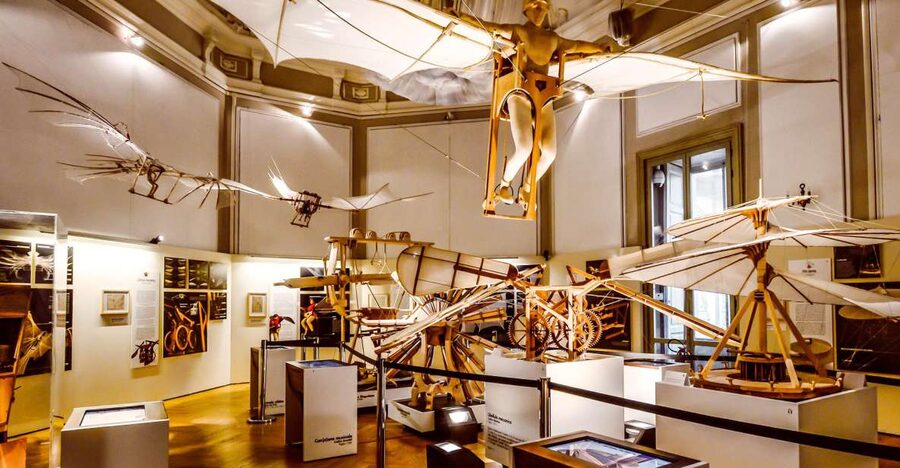
- Leonardo’s sketches become working machines: See full-size and smaller reconstructions based on his manuscripts, including flight devices, military inventions, and a mechanical dragonfly.
- The Last Supper gets a digital second look: Explore a restored digital version of the famous Milan fresco, with extra detail that is difficult to see in person.
- Interactive screens explain the engineering: Build virtual versions of machines and follow the logic behind Leonardo’s designs.
- Children have real things to do: A workshop lets kids assemble a self-supporting wooden bridge and print an inventor’s certificate.
- The audioguide is worth considering: It is available in English, Italian, Russian, German, French, Spanish, Portuguese, and Chinese.
- The location is easy to combine with sightseeing: Enter through the Galleria Vittorio Emanuele II from Piazza della Scala, right in central Milan.
What Leonardo3 adds to a Milan visit
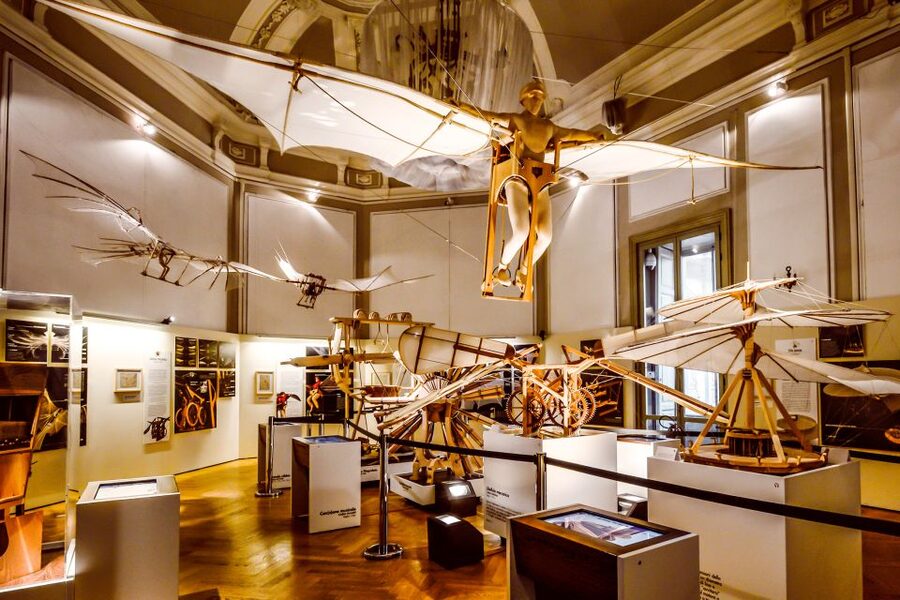
Leonardo3 is not a traditional art museum filled with original paintings. It is an interpretation center built around models, animations, touchscreens, and digital restoration. That difference matters. You are not simply looking at Leonardo’s notes. You are seeing how a sketch might become a machine.
Leonardo left behind thousands of pages of ideas, but many are small, reversed, incomplete, or difficult to read. The exhibition takes those notes and presents them in a form that makes sense to a modern visitor. A drawing of a gear system becomes a moving model. A study of flight becomes a three-dimensional reconstruction. A page from a codex becomes something you can examine on a large screen.
I find this approach especially useful if you know Leonardo mainly as the painter of the Mona Lisa and The Last Supper. The exhibition presents him as an engineer, anatomist, stage designer, military inventor, architect, and observer of nature. Some ideas were practical. Others were speculative. The museum does not need every design to have worked perfectly, because the process of testing an idea is part of the story.
The entrance price is listed at about $18 per person. For Milan, that is a fair price if you spend around one and a half to two hours inside and take time with the interactive stations. You can rush through in about an hour, but that misses much of the point. If you read the explanations, use the screens, and listen to the audioguide, plan closer to two or three hours.
More Museum Tours in Milan
- Milan: La Scala Theater & Museum Guided Experience
★ 4.1 · 2,931 reviews - Milan: “Museo Teatrale Alla Scala” Guided Tour
★ 4.6 · 2,513 reviews - Milan: Entrance Ticket to La Scala Theatre Museum
★ 4.3 · 2,098 reviews
Finding the museum inside the Galleria
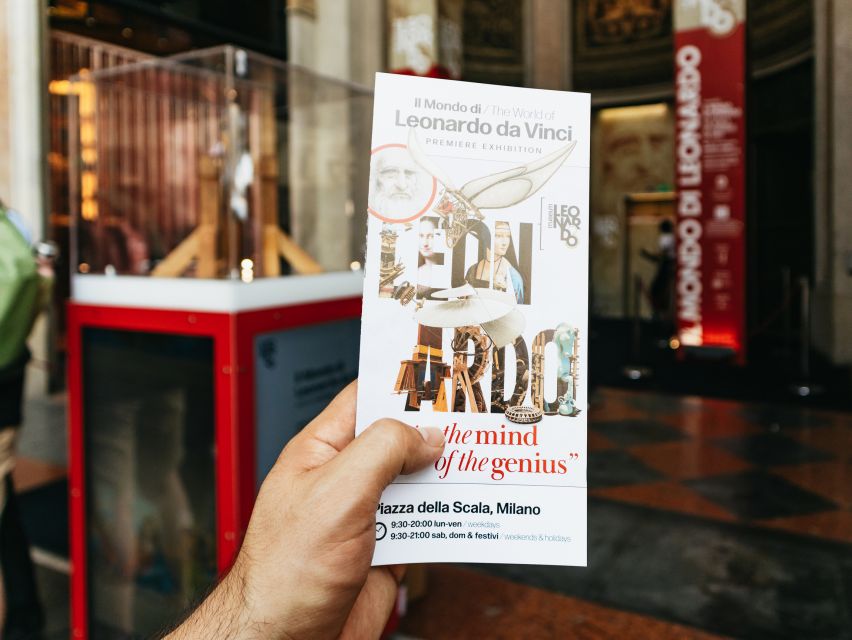
The museum is located inside the Galleria Vittorio Emanuele II, near Piazza della Scala. That puts it in one of Milan’s most convenient sightseeing areas, close to the Duomo and La Scala opera house.
The entry point can be easy to miss if you search only by map pin. Go through the Galleria from Piazza della Scala and look for the museum entrance and ticket office inside the arcade. Have your voucher ready to show at the ticket office.
This central location makes Leonardo3 useful on a day built around Milan’s historic center. You can visit before or after the Duomo, stop for coffee in the Galleria, and continue to La Scala without arranging separate transport. Transportation to the museum is not included, but most visitors planning a central Milan day will not need a special transfer.
The museum is wheelchair accessible. Food and drinks are not allowed inside, and cameras are also prohibited, so leave both outside the exhibition areas.
The first rooms: from codex pages to moving machines
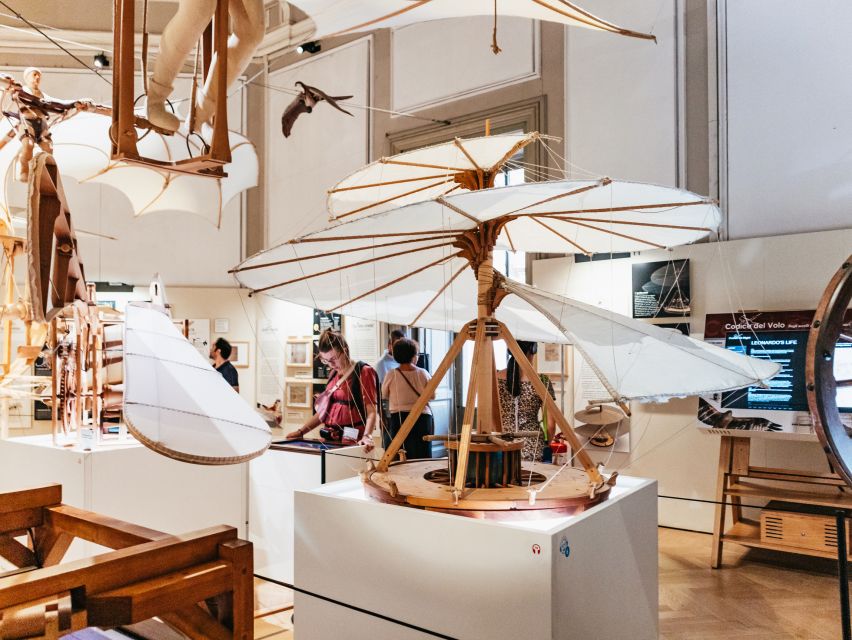
The strongest part of Leonardo3 is the way it connects a manuscript page to a physical object. Leonardo’s drawings can look abstract at first. Once a reconstruction moves, the idea becomes much clearer.
Expect displays covering machines for civil and military use, systems of gears, mechanical devices, and designs connected with water and transport. The models show how Leonardo studied motion, force, balance, and repetition. Digital screens beside many inventions let you assemble or operate a virtual version, which is often more useful than a long wall panel.
The exhibition also shows how researchers worked from Leonardo’s notes. This is important because the models are interpretations, not original sixteenth-century machines. The displays do not give you Leonardo’s actual inventions in the way a museum might show an original object. Instead, they offer informed reconstructions based on his drawings and written observations.
That distinction makes the exhibition more interesting, not less. You can see where a design seems sound and where it may have remained an idea. Several displays explain how the machine was intended to work, or why certain parts may not have functioned as Leonardo imagined.
War machines, canals, and practical engineering
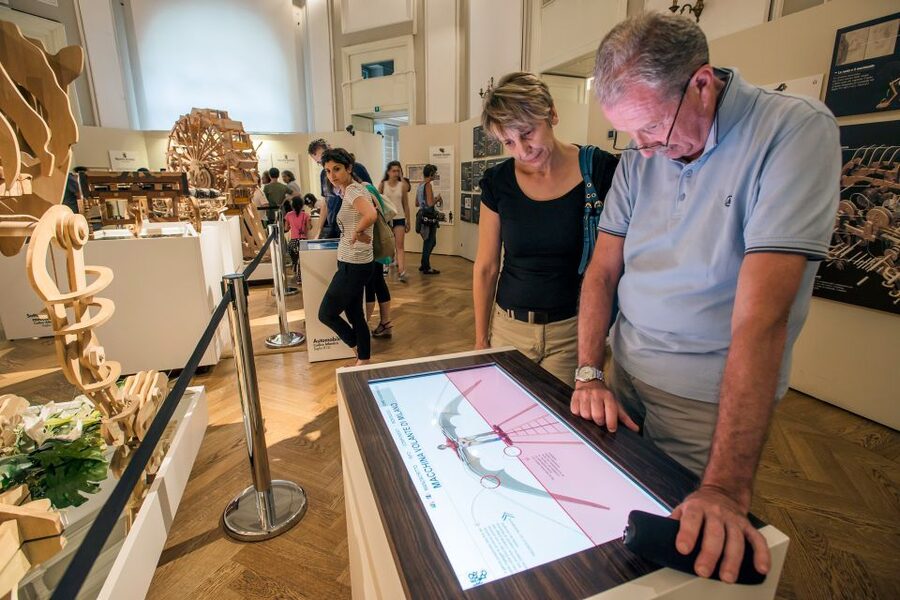
Leonardo’s notebooks include weapons and defensive systems, and Leonardo3 gives these ideas plenty of room. You may see reconstructions linked to crossbows, armored vehicles, machine guns, and submarine concepts.
These displays need some context. Leonardo worked in a divided Italy where rulers needed military engineers as much as painters. His designs for weapons were part of his search for employment and protection, not just private experiments. The museum helps connect the inventions to the needs of the cities and courts that supported him.
The water engineering displays offer a different picture. Leonardo studied canals, locks, and systems for moving water through cities and countryside. These machines show his interest in practical problems: how to control water, move goods, and improve urban life.
I find this section useful because it moves the image of Leonardo away from the lone dreamer. He was also a problem solver looking at transport, defense, production, and city planning. Some displays suggest ideas that feel surprisingly modern, though you should resist treating Leonardo as if he had already invented every later technology. The exhibition is strongest when it explains the reasoning behind the ideas rather than making grand claims.
A few more museum visits around Milan worth comparing
- Milan: La Scala Theater and Museum Tour with Entry Tickets
★ 4.7 · 1,722 reviews - Casa Milan: Museum Entry Ticket
★ 4.6 · 969 reviews - Milan: Entrance Ticket to La Scala Theatre Museum
★ 4.4 · 759 reviews - Milan: Ticket to the Museum of Senses with SenseKit included
★ 3.9 · 507 reviews
Flight, motion, and the mechanical dragonfly
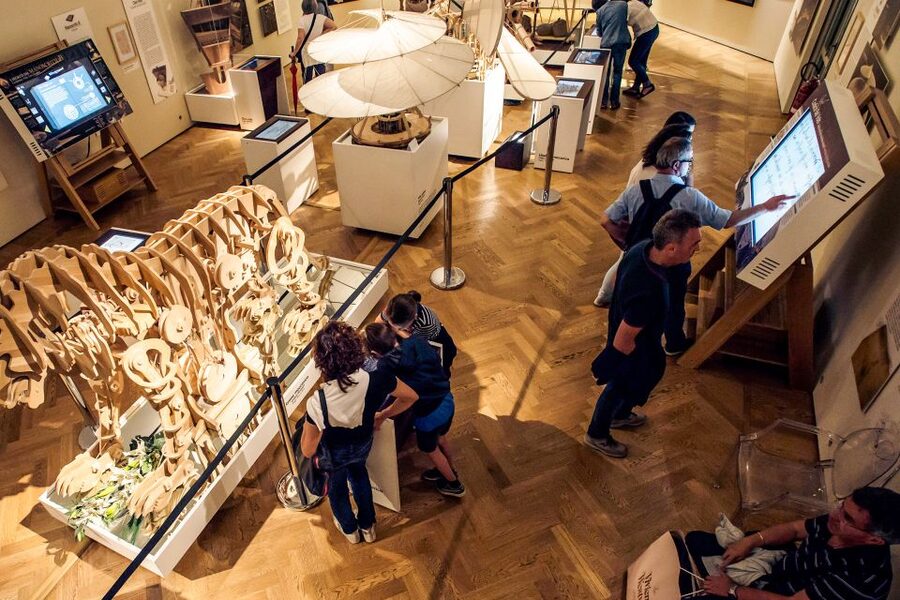
Leonardo’s flying machines are among the most popular displays, and they are easy to understand even if you are not interested in engineering. He studied birds, wings, air, and the movement needed to leave the ground. The reconstructions let you see the scale and structure of his ideas.
The mechanical dragonfly is a particularly memorable model. It gives the room a sense of movement and helps explain how Leonardo looked to nature for mechanical solutions. You can compare the light structure of a flying device with the strength and weight needed to make it work.
The space around the flying machines is limited. Larger models can be harder to view when several people gather around them, and some displays would benefit from more room. If flight is your main interest, arrive early or take your time when the room is quieter.
The interactive screens add real value here. Instead of only seeing a wooden frame and fabric wings, you can examine the parts, rotate the design, and follow the intended action. This is the sort of exhibit that works well for children, but adults who enjoy design and mechanics will find plenty to study too.
The Last Supper in digital form
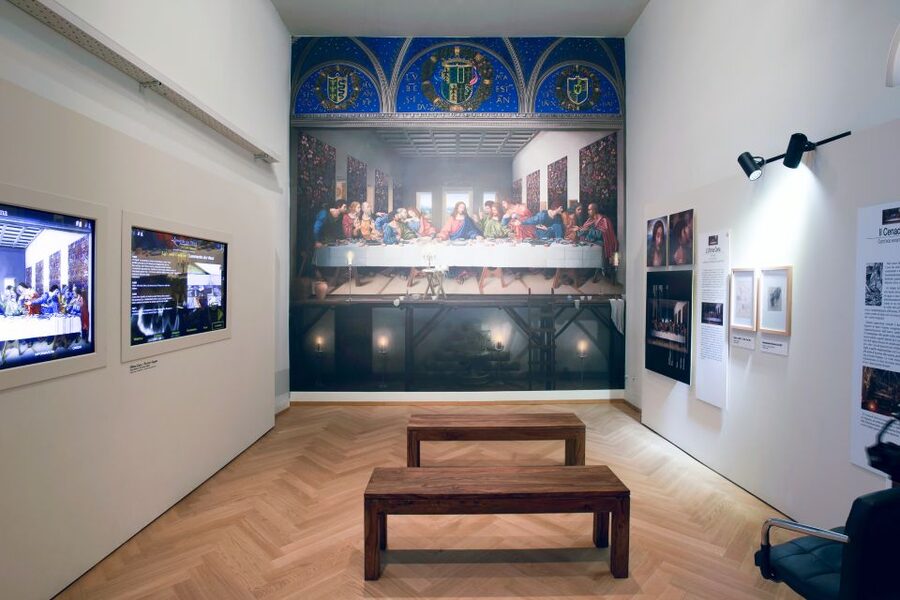
You will not see the original Last Supper here. Leonardo’s famous fresco is in the convent of Santa Maria delle Grazie, where entry requires a separate timed reservation. Leonardo3 offers a different experience: a digital restoration that lets you examine the painting and its setting in a more flexible way.
The digital version is valuable because the original work is fragile and the viewing conditions are controlled. At the museum, you can look closely at details, follow the restoration, and consider how the figures and architecture fit together. The presentation also includes a reconstructed setting that gives a sense of the room around the painting.
I would not treat this as a replacement for Santa Maria delle Grazie if seeing the original is important to you. A digital reconstruction cannot offer the same physical presence, age, or location. It can, however, help you understand the composition, especially if you cannot secure an official ticket to the fresco.
The Last Supper area is also a good pause after the machines. It shifts the focus from mechanics to painting, perspective, restoration, and the limits of digital reconstruction. Some visitors may find the computer-generated elements less emotionally convincing than the original work. That is a fair reaction. The value here is close study and explanation, not atmosphere.
Anatomy, art, and Leonardo’s wider interests
Leonardo’s studies of the human body reveal the same habit seen in his engineering: watch closely, record carefully, and test what you think you know. The exhibition includes material linked to anatomy, including an animated presentation that helps explain his studies.
There are also sections devoted to his art, including references to the Vitruvian Man, the Mona Lisa, and Lady with an Ermine. These displays help place his paintings beside his scientific interests. For Leonardo, art and observation were closely linked. Understanding muscles, proportion, movement, and light improved both his drawings and his machines.
If you come mainly for inventions, the art section may feel less exciting. If you already know Leonardo’s paintings, it gives useful background without pretending that the museum holds the originals. The greatest strength of the exhibition is the connection between disciplines. You see the same person studying a bird’s wing, a human hand, a canal, and a painted figure with the same careful attention.
A hands-on stop for families
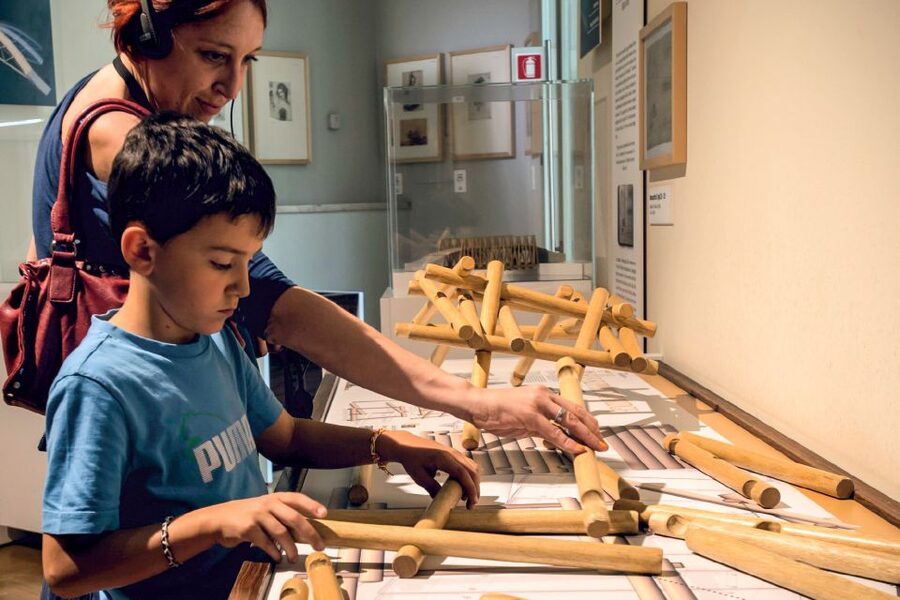
Leonardo3 works unusually well for families because the activities are not added as an afterthought. Children can interact with virtual models, assemble a self-supporting bridge from wooden parts, and print an inventor’s certificate in the workshop area.
The bridge activity is especially useful because it turns balance and structure into a physical puzzle. A child who ignores a written explanation may still understand why the pieces hold together, or why they fall apart. The museum suits children from about five years old upward, with older children and teenagers likely to get more from the engineering displays.
The space can feel tight when families gather around a popular station. You may need to wait for access, especially at busy times. That is one reason I would avoid planning the visit as a quick fifteen-minute stop.
Adults also have plenty to do. The interactive features are not only children’s games. Screens allow you to inspect mechanisms, test movement, and see how a machine was assembled. If you are visiting without children, the workshop still adds a welcome change from reading panels.
Using the audioguide well
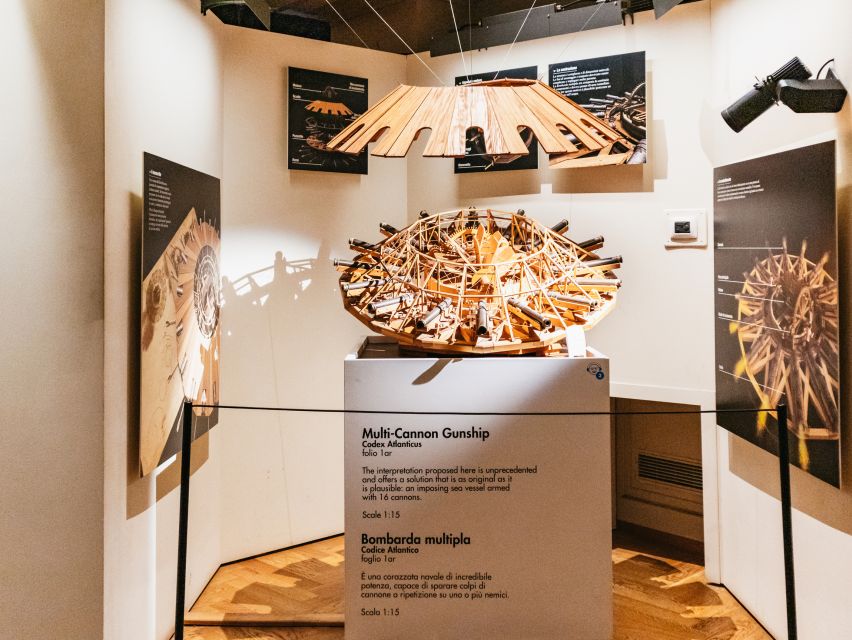
Choose the audioguide if you want more than a quick look at the models. It explains Leonardo’s ideas and gives you a clearer path through displays that might otherwise seem crowded or technical.
Audio is available in Italian, English, Russian, German, French, Spanish, Portuguese, and Chinese. The interactive experiences themselves are in English and Italian. This makes the audioguide particularly useful for visitors who do not read Italian.
Not every display has audio, and some labels may be in Italian only. The touchscreens often provide English and Italian options, but do not expect every piece of text to appear in every language. I would use the audio for the main inventions, then spend extra time with the screens that interest you most.
You do not need to listen to every track. Pick the machines that catch your eye, then use the digital displays to see how they work. This keeps the visit active instead of turning it into a long listening session.
How long to stay and when to visit
The official ticket is valid for one day, with available starting times shown when you check dates. The ticket is not a guided tour, so you can set your own pace once inside.
For a quick visit, allow about one hour. That gives you time to see the major models and the Last Supper display, but not much time for the interactive stations. I would plan one and a half to two hours for a normal visit, or two to three hours if you use the audioguide and read carefully.
The exhibition occupies a compact space, so arriving early can make a difference. Several popular screens and models are easier to use when the rooms are less crowded. If you are combining Leonardo3 with the Duomo, La Scala, and the Galleria, leave enough time between timed bookings. The museum is central, but a crowded room can slow your progress.
The bookshop offers a 10 percent discount on books when you show your voucher at the counter. Souvenirs are not included in the ticket, but the discount can be useful if you want a book rather than a small keepsake.
Who should book Leonardo3?
I would recommend Leonardo3 to anyone curious about how ideas become machines. It is especially good for families, science fans, visitors who enjoy design, and people who want more than another room of paintings.
It is also useful if you could not get into Santa Maria delle Grazie. The digital Last Supper does not replace the original, but it gives you a thoughtful way to study the image and its restoration.
You may be less impressed if you want original Leonardo objects, a large airy museum, or a quiet art experience. The reconstructions are based on research and interpretation, and the compact layout can make the exhibits feel close together. Some English coverage is uneven, so the audioguide is a sensible addition.
One practical point deserves attention: recent information associated with the museum has raised concern that the exhibition could be threatened with closure to make room for a luxury retail chain. The exact situation can change, so check the museum’s current status before building your day around it. If it is open, visiting supports a small, unusual cultural attraction in a prime part of Milan.
Should you book it?
Book Leonardo3 if you want to see Leonardo’s ideas brought into motion rather than simply read about them. The working models, digital codex pages, interactive engineering screens, and restored Last Supper offer plenty for a two-hour visit.
At about $18, the ticket is good value when you use the exhibits properly. Add the audioguide if you want clearer explanations, especially if you do not read Italian. Skip it only if your Milan schedule is extremely tight or if you prefer original art over reconstructed machines.
FAQ
Where is Leonardo3 located?
Leonardo3 is inside the Galleria Vittorio Emanuele II in Milan, with entry through the Galleria from Piazza della Scala.
How much does admission cost?
The listed price is about $18 per person.
How long should I allow for the visit?
Allow at least one hour for a quick look. Two hours is a better plan if you want to use the interactive screens and listen to the audioguide, while some visitors spend two to three hours.
Is the audioguide included?
The audioguide is included when you select the ticket option that includes it.
Which languages are available for the audioguide?
The audioguide is available in Italian, English, Russian, German, French, Spanish, Portuguese, and Chinese.
Are the interactive displays available in English?
All interactive experiences are available in English and Italian. Some displays may have Italian text without English translation.
Is the museum suitable for children?
Yes. Children can use interactive displays, assemble a self-supporting wooden bridge, and print an inventor’s certificate. The activities are suited to children from about five years old upward.
Can I see the original Last Supper here?
No. Leonardo3 presents a digital restoration and reconstructed setting of The Last Supper. The original fresco is elsewhere in Milan.
Is the museum wheelchair accessible?
Yes, the museum is wheelchair accessible.
Can I bring food, drinks, or a camera inside?
Food and drinks are not allowed, and cameras are also prohibited inside the museum.
Do I receive a discount at the bookshop?
Yes. Showing your voucher at the bookshop gives you a 10 percent discount on books.
Just added around Milan
- Milan: Ticket to the Museum of Senses with SenseKit included★ 3.9 · 507 reviews
- Milan: San Siro Stadium and Museum Official Guided Tour★ 4.4 · 273 reviews
- Milan: Skip-the-Line Duomo & La Scala Museum Guided Tour★ 4.3 · 195 reviews
- Milan: Natural History Museum Entry Ticket & Audio Guide★ 4.2 · 25 reviews
- Milan: Leonardo da Vinci Galleries Guided Tour+Museum Ticket★ 4.5 · 78 reviews
- Milan: Museum of the 900 Entry Ticket with Audio Guide★ 4.4 · 72 reviews
- Milan: Pinacoteca Art Gallery and Brera District Guided Tour★ 4.8 · 326 reviews
- La Scala Theatre and Museum guided experience★ 4.5 · 664 reviews
Museum Tours in Milan, compared.
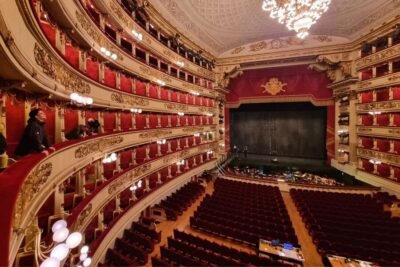
La Scala Theater and Museum Tour with Entry Tickets
Read our review →
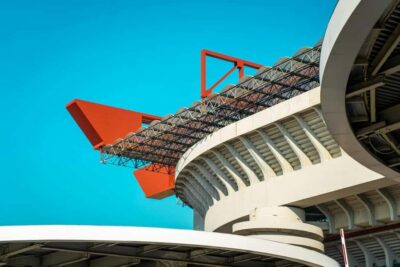
San Siro Stadium and Museum Official Guided Tour
Read our review →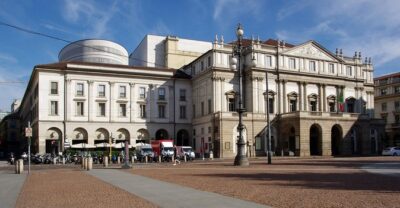
Browse the lists this tour appears in