
Review · LONDON
London: British Museum + Guided Tour + Priority Entry
The Rosetta Stone, Egyptian mummies, Parthenon sculptures, Assyrian lion hunt reliefs, and Lewis Chessmen make this an impressive first look at the British Museum. In 80 minutes, a guide such as Strabo or Martina helps you find the major pieces without wandering the vast galleries in a daze.
I like the focused route and the chance to ask questions as you go. I also like that you can remain in the museum after the tour and revisit the objects at your own pace. The main drawback is simple: 80 minutes can only cover a small slice of a museum this large, and the $33 price may feel high if you only want entry.
Key points at a glance
- Rosetta Stone first: See the object that helped scholars read Egyptian hieroglyphs.
- Major ancient-world highlights: The route includes Egyptian mummies, Parthenon sculptures, Assyrian reliefs, and Lewis Chessmen.
- Guide-led, not audio-led: English-speaking guides such as Strabo and Martina explain the objects and answer questions in person.
- An efficient first visit: The 80-minute format gives you a clear introduction without trying to cover every gallery.
- Stay afterward: Once the guided portion ends, you can continue exploring the collection on your own.
- Easy meeting point: Meet outside the Montague Place entrance, by the two stone lions.
Why an 80-minute British Museum tour makes sense
The British Museum can be hard to approach. Its collection stretches across continents and thousands of years, so a first-time visitor may spend more time finding the famous pieces than understanding them. This tour gives you a firm route and a human voice to connect the objects.
I see the format as an introduction rather than a full museum visit. You are not signing up for every gallery. You are choosing a brisk path through some of the institution’s most important objects, with enough explanation to make them more than attractive things behind glass.
The guide-led format is the real product. The museum houses the objects, but your guide supplies the order, context, and occasional story that helps them make sense. Strabo is praised for a calm, easygoing manner and a strong grasp of the museum. Martina is described as warm, engaging, and especially good at keeping younger visitors involved.
The small-group feel can vary, but some departures have been notably intimate. That matters here. A compact group makes it easier to hear, ask questions, and adjust the pace. One guide also uses a more personal approach without headsets, which some people will prefer to the detached sound of an audio system.
More Museum Tours in London
- Tower of London and Crown Jewels Exhibition Ticket
★ 4.5 · 6,677 reviews - London: Chelsea Football Club Stadium and Museum Tour
★ 4.8 · 4,576 reviews - Chelsea FC Stadium Tours and Museum
★ 5.0 · 1,908 reviews
Finding the Montague Place meeting point
You meet outside the Montague Place entrance by the two stone lions. The British Museum has two entrances, so this detail matters. Do not simply head for the first doorway you see and hope to spot the group inside.
Give yourself enough time to locate Montague Place and the lions before the start. The meeting point is outdoors, and a little preparation keeps the first minutes from becoming a small London treasure hunt of their own.
The guide operates in English. If you contact the guide through WhatsApp because you are unsure of the meeting spot, help may be available. Still, I would treat that as a backup rather than a plan. Arriving early is the smarter choice.
The advertised service includes priority entry. That can be useful when queues build, but the value is not identical on every date. One booking noted that museum admission was free to the public that day, so the $33 fee should be judged mainly by the guided service, the route, and the time saved, not simply by the ticket itself.
The Rosetta Stone and the start of the story
The tour begins with the Rosetta Stone, one of the museum’s essential stops. This dark stone slab is famous because it carries the same text in three scripts, including Egyptian hieroglyphs and Greek. Comparing the versions gave scholars the key to reading hieroglyphs.
That makes it a good opening object. You are not only looking at an ancient stone. You are looking at a tool that changed the study of ancient Egypt. A guide can point out why the inscriptions mattered and how the stone turned a long-standing mystery into a readable language.
Expect this area to attract attention. The Rosetta Stone is one of the museum’s best-known objects, so your guide’s explanation is particularly useful. Instead of taking a quick photograph and moving on, you get a reason to pause.
Photography is allowed inside the museum, but flash photography is prohibited. Keep your camera ready without using the flash, and remember that the tour moves at a set pace. You can return later if you want a longer look.
Egyptian mummies, coffins, and life after death
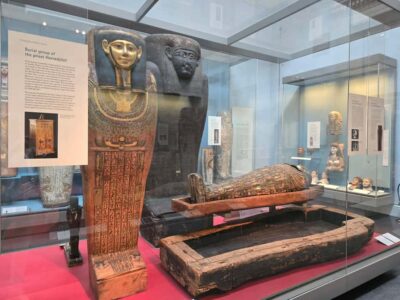
The Egyptian section shifts the focus from writing to belief. You will see mummies and coffins while learning about Egyptian ideas concerning life after death, along with the rituals and techniques linked to mummification.
This part can be absorbing because it brings together objects, belief, and practical skill. A coffin is not merely a decorated container, and a mummy is not simply an old body. Together, they show how Egyptians prepared for death and imagined what came next.
The museum’s Egyptian holdings are extensive, so the guide has to make choices. That is one reason the 80-minute limit can work in your favor. You get a coherent introduction rather than a long march past dozens of objects with little explanation.
If Egypt is your main interest, you may wish to stay after the tour and spend more time here. The guided route gives you a starting point, then the rest of the museum remains available for your own exploration. The same advice applies if you want to read every label or examine details closely.
More British Museum tours:
- London: British Museum Guided Tour
★ 4.3 · 1,182 reviews - British Museum London Guided Tour Semi-Private 8ppl Max
★ 5.0 · 984 reviews - London: British Museum Guided Tour with Entrance Tickets
★ 4.9 · 748 reviews - London: Tour of the British Museum
★ 4.1 · 678 reviews
Parthenon sculptures and the questions they raise
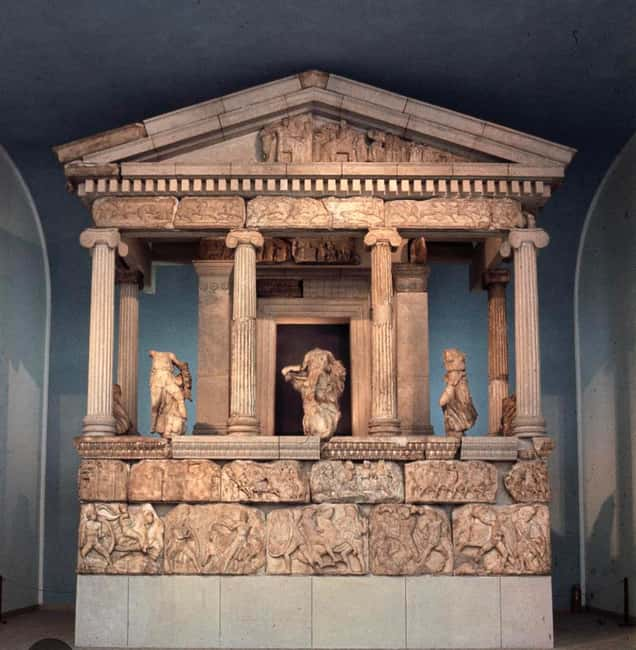
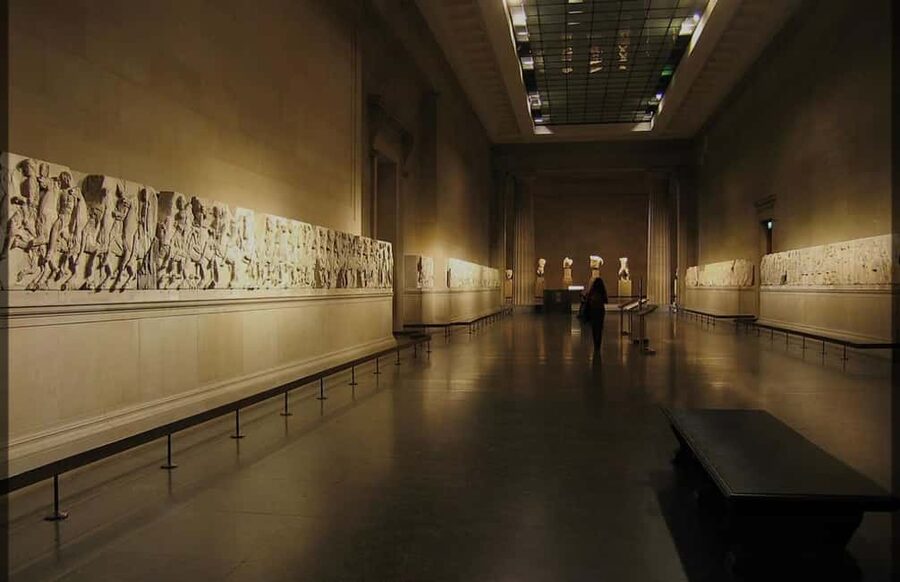
The Parthenon sculptures, also called the Elgin Marbles, bring ancient Greece into the route. Dating from the 5th century BCE, these sculptures show scenes linked to Greek mythology and offer a sense of the scale and artistic ambition of the Parthenon.
They are visually powerful, but they also bring modern questions about ownership and cultural heritage. The information provided for this tour emphasizes their artistic and historical importance, so your guide can help you read the scenes and understand their place in ancient Greek culture.
Do not expect a full debate on every political and legal issue surrounding the sculptures within an 80-minute visit. The practical value of the stop is that you see the pieces in person and receive a compact explanation of what they depict.
I like this part of the route because it follows Egypt with a different idea of power and beauty. The Egyptian objects speak strongly about death and belief. The Parthenon sculptures show public art, myth, and civic ambition on a grand scale.
Assyrian lion hunts and royal power
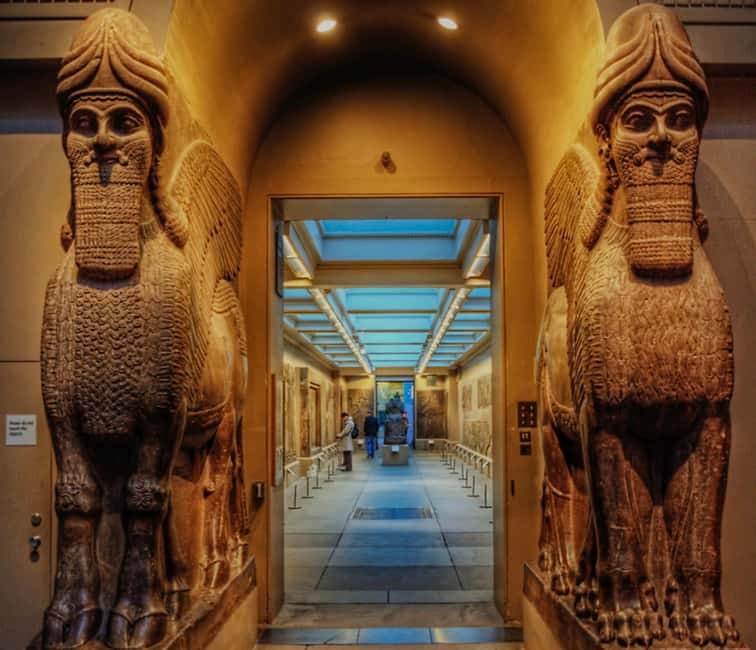
The Assyrian lion hunt reliefs offer one of the tour’s most vivid stops. These detailed carvings show royal power and the artistic skill of the ancient Assyrian Empire.
A guide can help you notice the small details in the stone. The reliefs are not just broad scenes of hunting. They communicate control, strength, and the role of the ruler. Once you know what to look for, the carved figures become easier to read.
This is also a useful reminder that museums are full of objects designed to send a message. The reliefs were made in an imperial setting, where art helped present the ruler as powerful and capable. That idea links the Assyrian gallery to the Egyptian and Greek sections, even though the objects come from different places and periods.
The stop is visually strong and does not require specialist knowledge to appreciate. That makes it a good choice for families and mixed groups. Children can follow the animals and action, while adults can focus on the political meaning behind the scene.
The Lewis Chessmen and a medieval change of pace
The Lewis Chessmen provide a welcome shift away from huge stone reliefs and monumental sculpture. These intricately carved medieval chess pieces were discovered on the Isle of Lewis in Scotland and are linked to Viking culture.
Their small size and expressive faces make them easy to remember. They feel more personal than the grand imperial objects seen earlier, yet they still open a window onto trade, craft, leisure, and social life in the medieval North Atlantic world.
This stop is particularly useful if you are visiting with children or anyone who prefers objects with a human scale. The pieces invite questions. Who owned them? How were they used? Why were they hidden or left behind? The available tour information promises a look at their history and significance, while the guide can add the connecting story.
The chessmen also help keep the route varied. You move from an Egyptian stone, to human remains and coffins, to Greek sculpture, Assyrian carvings, and then a set of medieval game pieces. That variety is one of the strongest reasons to choose a guided highlights tour.
What the guides add to the objects
The guide quality matters more than any priority-entry label. A poor route through a great museum still feels flat. Here, the named guides associated with the experience include Strabo and Martina, and the strongest feedback points to clear explanations, humor, patience, and a willingness to answer questions.
Strabo is described as calm and familiar with the museum. That can be valuable when the galleries feel busy or confusing. Martina is noted for keeping the mood friendly and making room for a curious 11-year-old’s questions, which is a good sign for families.
The style is not identical every time. Some guides may move freely through the major areas, while others may follow a tighter sequence. One person appreciated the guide’s quirky insights, while another felt that more museum sections could have been included. That is a fair warning: the experience depends partly on who leads your departure and what your group wants to discuss.
I would ask questions as you go. The tour seems best suited to interaction rather than silent listening. If you want more detail on Egypt, the Parthenon, Assyria, or the chessmen, say so early. Your guide may be able to shape the emphasis within the fixed time.
Is $33 good value?
At $33 per person, this is not the cheapest way to enter a museum, especially since admission may be free to the public on some days. You are paying for a live English-language guide, a planned route, and stated priority entry.
The price makes more sense if you have limited time in London. An 80-minute visit can give you the museum’s main landmarks, then leave you free to stay and continue alone. The guided introduction may also help you decide which galleries deserve a longer second look.
The value is weaker if you already know the museum well, prefer to wander without a plan, or want to spend an entire day reading labels at your own pace. In that case, you may prefer public admission and independent exploration, if available on your date.
For a first visit, I think the strongest case is convenience. You do not need to map out the Rosetta Stone, Egyptian galleries, Assyrian reliefs, Parthenon sculptures, and Lewis Chessmen yourself. You arrive, follow a clear path, and leave with a practical sense of what to revisit.
Accessibility and practical habits inside
The museum is wheelchair accessible, though some areas may be harder to navigate. If you use a wheelchair, the tour is still presented as an option, but you should be prepared for occasional navigation challenges within a large historic building.
Food and drinks are not allowed in the exhibition rooms. Have anything you need before entering the galleries or wait until you have left the display areas.
Photography is permitted, but flash photography is not. A phone or camera is useful for remembering details, though I would not let photographs replace looking carefully at the objects.
After the tour, visit the gift shop if you want books, souvenirs, or replicas. It is a practical final stop, especially if you want a museum book to help you remember the objects or a small reproduction of one of the major pieces.
Who should book this experience?
I would recommend this tour to a first-time British Museum visitor, a family that wants a clear route, or anyone with only part of a day in London. It also suits you if the museum’s scale feels intimidating and you want someone to explain the main objects in plain English.
The tour works well for mixed-age groups because the objects vary so much. Mummies, lions, mythological sculptures, and chess pieces offer different ways into the subject. The guides also appear comfortable answering questions from younger visitors and adults.
You may want to skip it if you have already studied the museum’s major galleries, dislike guided groups, or want to spend long stretches with one collection. The tour is an overview, not a specialist examination of ancient Egypt, Greece, Assyria, or medieval Scotland.
Should you book the British Museum guided tour?
Book it if you want structure, a live English-speaking guide, and the major highlights in 80 minutes. Strabo and Martina are names to hope for, based on the guide experience attached to this activity, but the exact guide may vary.
Before paying, check the date and consider the museum admission situation. If public entry is free, make sure the guided route and time savings are worth the extra $33 for you. For a first visit with limited time, I think that trade can be sensible. For a repeat visit, independent wandering may offer better value.
FAQ
How long does the British Museum guided tour last?
The guided tour lasts 80 minutes.
What language is the tour conducted in?
The live tour guide speaks English.
Where do I meet the guide?
Meet outside the Montague Place entrance by the two stone lions.
Which objects are included in the tour?
The route includes the Rosetta Stone, Egyptian mummies and coffins, the Parthenon sculptures, Assyrian lion hunt reliefs, and the Lewis Chessmen.
Can I stay in the museum after the guided tour?
Yes. After the guided portion, you can continue exploring the collection at your own pace.
Is the British Museum accessible by wheelchair?
The museum is wheelchair accessible, although some areas may be challenging to navigate.
Can I take photographs inside?
Photography is allowed, but flash photography is prohibited.
Can I bring food and drinks into the galleries?
No. Food and drinks are not allowed inside the exhibition rooms.
Can I cancel the booking for a refund?
You can cancel up to 24 hours in advance for a full refund. You can also reserve now and pay later, according to the booking terms.
Just added around London
- Westminster and National Gallery 3.5-Hour Tour in Italian★ 4.9 · 28 reviews
- British Museum & Camden Town – Private Tour in Italian★ 4.8 · 26 reviews
- London: British Museum Highlights Guided Small Group Tour★ 4.9 · 113 reviews
- London: Westminster Abbey & Jubilee Galleries Guided Tour★ 4.9 · 56 reviews
- London: Sherlock Holmes Museum & Westminster Walking Tour★ 4.4 · 13 reviews
- London: Royal Museums Greenwich Day Pass★ 4.5 · 309 reviews
- London: Tickets for Moco Modern & Contemporary Art Museum★ 4.7 · 391 reviews
- London: Twist Museum Ticket★ 4.4 · 66 reviews
Museum Tours in London, compared.

Tower of London and Crown Jewels Exhibition Ticket
Read our review →
Chelsea Football Club Stadium and Museum Tour
Read our review →


Official tickets: Moco Modern & Contemporary Art Museum
Read our review →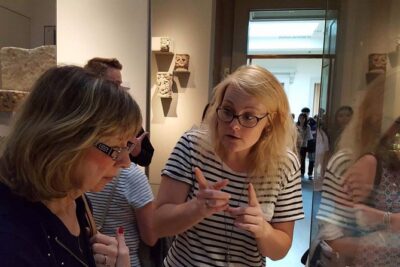
British Museum London Guided Tour Semi-Private 8ppl Max
Read our review →
British Museum Guided Tour with Entrance Tickets
Read our review →Browse the lists this tour appears in