
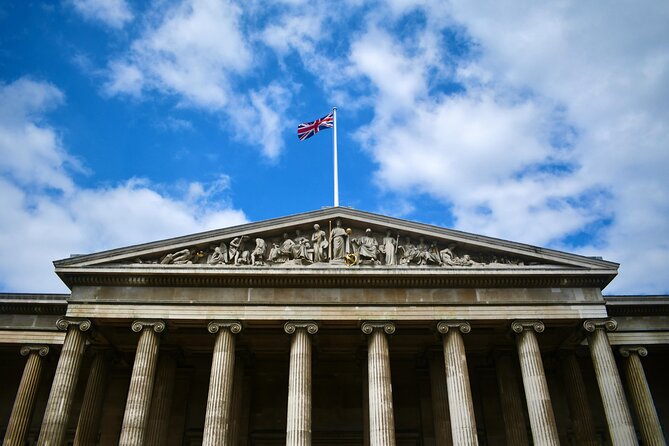
Review · LONDON
London: British Museum Guided Tour
The British Museum can feel like a city of galleries, and this two-hour guided tour gives you a sensible route through its biggest stories. You may examine Mesopotamian objects, ancient Egyptian works, Greek sculpture, the Rosetta Stone, the Elgin Marbles, and details of the Rosalila Temple without spending your first hour simply finding your way.
I like the small group limit of 10, which leaves room for questions and discussion. I also like the guide flexibility: Wesley has adjusted a tour to suit individual interests, while Diana has helped shape visits for returning museum-goers. The main caution is that galleries can close, as one January booking found, and two hours cannot cover this enormous museum.
Key points to know
- A focused route through major civilizations: Expect Mesopotamia, Egypt, Greece, and other key collections rather than every room in the museum.
- Guides who can shape the conversation: Diana, Wesley, and Vincent are named guides connected with particularly strong feedback.
- A small group capped at 10 people: The format supports questions and a more personal pace.
- Two hours is useful but limited: You get an introduction to major objects, not a complete museum tour.
- Museum entry is included: Food, drinks, and hotel transportation are not.
- Easy central meeting point: Meet your guide in front of Starbucks, directly across from the museum entrance.
Why a guide helps inside the British Museum
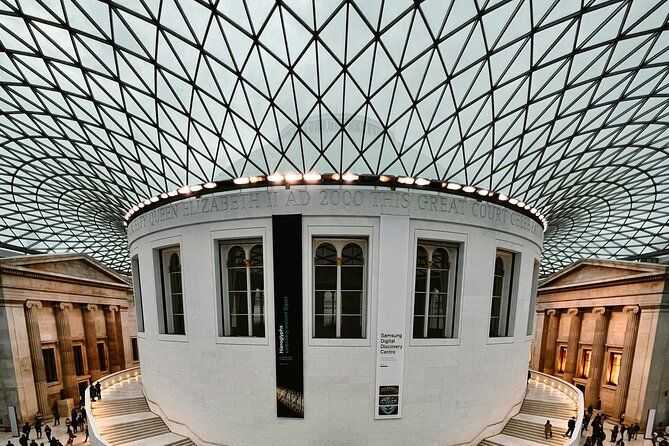
The British Museum is free to enter in general, but that does not make it easy to understand. Its collection spans continents and thousands of years, with objects often presented in rooms that can feel disconnected if you do not know the larger story.
I like guided tours here because the best objects need context. A carved stone, broken statue, or small clay tablet may not seem important at first glance. A good guide explains who made it, what it was used for, and how it connects to another culture or period.
That is the purpose of this experience. Instead of treating the museum as a checklist of famous objects, you follow an English-speaking guide through selected rooms and discuss what you are seeing. The guide is not simply pointing out labels. The aim is to connect archaeology, art, belief, politics, and daily life.
The small-group setup matters. With no more than 10 people, you have a better chance to ask why an object matters or request more time in a certain room. The tour is also more conversational than a large group walk, where questions can get lost.
More Museum Tours in London
- Tower of London and Crown Jewels Exhibition Ticket
★ 4.5 · 6,677 reviews - London: Chelsea Football Club Stadium and Museum Tour
★ 4.8 · 4,576 reviews - Chelsea FC Stadium Tours and Museum
★ 5.0 · 1,908 reviews
Meeting your guide near the main entrance
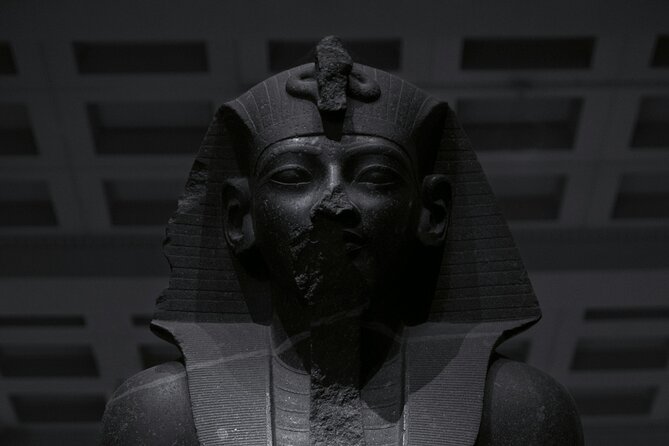
You meet in front of Starbucks, just across from the British Museum entrance. That is a clear landmark, but give yourself enough time to locate the exact meeting spot and identify the guide before the tour begins.
The experience does not include hotel pickup or drop-off, so you make your own way to the museum. Food and drinks are also not included. Plan around the two-hour visit rather than expecting a full-day museum outing.
Once the group gathers, the guide leads you into the museum and begins setting the museum’s collections in order. The supplied information does not promise a fixed route through every room, so the exact sequence can vary. That is useful if you have a particular interest, but it also means you should ask early if a certain object matters most to you.
The meeting point is especially handy for first-time visitors who might otherwise wander around the museum entrance looking for a tour group. You should still check the starting time when booking, since the available departure times can change.
Mesopotamia and the early cities
Mesopotamia is one of the main themes promised on the tour. This is the region between the Tigris and Euphrates rivers, often linked with the earliest cities, writing systems, and organized states.
A guide can make this section easier to grasp. Rather than treating each tablet, relief, or carved object as an isolated display, you can discuss how these pieces show people recording information, organizing power, worshipping gods, and telling stories.
This part should appeal to you if you enjoy the beginnings of urban life and written records. The phrase cradle of civilization can sound grand, but the objects give it substance. They show how early societies managed trade, religion, government, and memory.
The value here is not just seeing old things. It is learning to read small physical clues. A mark on clay or an image cut into stone can reveal how a society worked. Your guide’s job is to make those clues readable without burying you in dates.
The tour description specifically emphasizes lively discussion, so ask questions if you want more detail on a particular artifact. The small group makes that practical. You are not limited to listening while the guide delivers a speech and moves on.
Ancient Egypt and the Rosetta Stone
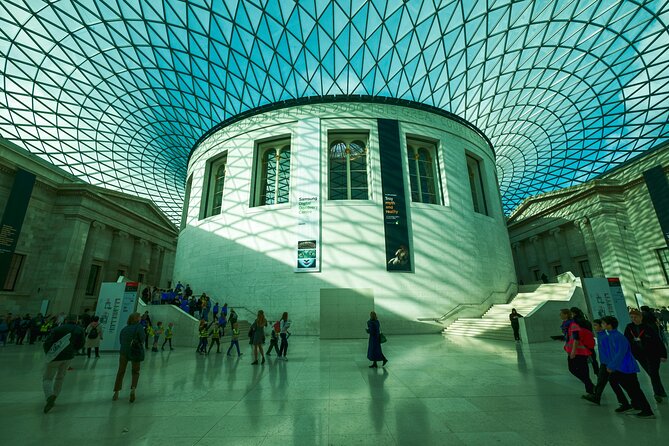
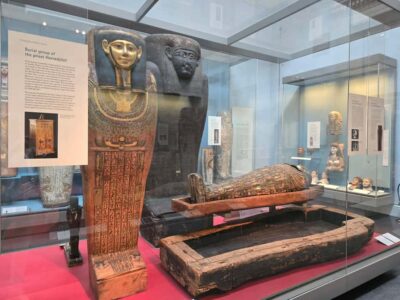
Ancient Egypt is another major part of the visit. The collection includes famous material, and the Rosetta Stone is the best-known example.
The Rosetta Stone is important because its inscriptions helped scholars compare different scripts and improve their understanding of ancient Egyptian writing. Seeing it in person is one thing, but hearing why the object changed the study of Egypt gives the stop real weight.
The guide can also place Egyptian objects beside the wider museum story. You may discuss religion, symbols, rulers, writing, and the way museum collections bring objects from different periods and places into one building.
Do not expect to study every Egyptian gallery in two hours. The tour is designed as an introduction to selected highlights. If Egypt is your main reason for booking, tell the guide near the start. The available information indicates that guides can adapt to interests, though no particular route is guaranteed.
Diana is one guide specifically praised for explaining material clearly and adjusting the visit to suit the group. Wesley has also been singled out for shaping a visit around personal interests. Those details suggest that the quality of the experience depends heavily on the guide you receive, but they also point to the benefit of speaking up about what you want to see.
More British Museum tours:
- London: British Museum Guided Tour
★ 4.3 · 1,182 reviews - British Museum London Guided Tour Semi-Private 8ppl Max
★ 5.0 · 984 reviews - London: British Museum Guided Tour with Entrance Tickets
★ 4.9 · 748 reviews - London: Tour of the British Museum
★ 4.1 · 678 reviews
Greek sculpture and the Elgin Marbles
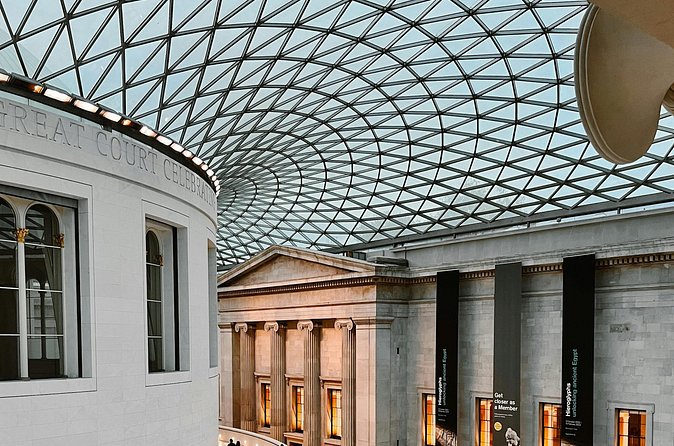
Greek art brings a different set of questions. The Elgin Marbles are among the museum’s most discussed objects, not only for their artistic quality but also because their ownership and removal from the Parthenon remain sensitive subjects.
A useful guide should give you more than a quick look at carved figures. You can ask about the original setting, the role of sculpture in Greek temples, and why these objects have caused debate far beyond the museum walls.
The supplied information promises historical context and different points of view. That is important here. You do not need to arrive with a fixed opinion. You need a guide who can explain the artistic and political issues in plain language and allow questions.
This stop may be one of the tour’s strongest moments if you like art with a complicated story. It also shows why a guided visit can be more useful than simply taking photographs. The visual details matter, but the circumstances behind the objects matter too.
As with the Egyptian galleries, the two-hour limit requires choices. The guide may spend more or less time here depending on the group’s interests and the route available that day.
The Rosalila Temple and less familiar highlights
The experience also refers to the Rosalila Temple and its intricate details. That gives the tour some range beyond the British Museum’s most famous names.
A stop like this can help you avoid a famous-object-only visit. You may find that a less familiar building fragment or decorative detail explains a culture in a more direct way than a celebrated masterpiece. The guide can point out design features that you might otherwise pass without notice.
The exact presentation of the Rosalila Temple is not described in detail, so you should think of it as one possible highlight within a wider route, not a guaranteed extended stop. The same applies to other collections from the museum’s large holdings.
That uncertainty is not necessarily a weakness. A flexible route allows the guide to respond to the group. But if you have a strict must-see list, ask about it at the start and understand that the guide may have to balance your wishes with gallery access and the interests of other group members.
A conversation, not just a procession
The strongest part of this tour is the chance to engage with the guide. You are encouraged to ask questions and discuss the objects rather than simply follow from one display to the next.
That format suits you if you want an explanation of how historians interpret evidence. It also works well if your group has mixed interests. One person can ask about religious practice, another about warfare, and another about art. The guide’s role is to connect those questions to the objects in front of you.
Diana has been praised for specialist knowledge and for being flexible about what the group should see. Wesley has been noted for adapting the tour to personal interests. Vincent has also received a short but positive comment about his expertise. These names are useful to remember, though you cannot assume which guide you will receive.
One important distinction: a live guide can make a museum visit clearer, but the experience remains a group tour. You may not get a private lecture on every object you prefer. The guide must keep the group moving and fit several civilizations into two hours.
The small group helps reduce that problem. A maximum of 10 people is large enough for different questions but much more manageable than a crowded group. If your booking turns out to have only two people, as happened for one couple, the discussion can become especially personal. That is possible, not promised.
What two hours can realistically cover
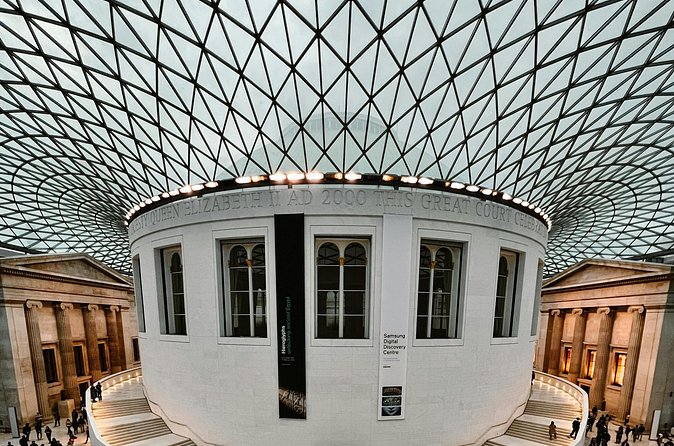
Two hours is a good length for a first orientation. It is long enough to move through several major collections without turning the visit into an exhausting marathon.
It is not long enough to understand the entire British Museum. The museum’s scope is simply too large, and the tour description does not claim otherwise. You should see this as a guided introduction that helps you decide where to spend more time afterward.
A practical approach is to arrive with one broad priority. You might choose Mesopotamia, Egypt, Greek sculpture, or the major objects. Then let the guide add the wider connections. Trying to demand every famous item can make the tour feel rushed.
The two-hour format also suits a London itinerary with several stops. You get a clear cultural experience without giving up an entire day. Afterward, you can continue exploring independently if you want more time in a particular gallery, though the included service itself ends after two hours.
Gallery access can affect the route. One booking found that large sections were closed, which reduced the number of available displays. The guide was still praised in that account, but the closure made the visit less satisfying. This is the most important practical limitation to keep in mind.
Is the $90 price fair?
At $90 per person, this is not the cheapest way to enter the British Museum, especially since general museum admission is not normally the main cost visitors expect at this institution. You are paying for the live guide, the planned route, the small group, and the chance to ask questions.
The price makes more sense if you value interpretation and structure. If you arrive with no plan and feel overwhelmed by the museum’s size, a well-run two-hour tour can save time and help you understand why the major objects matter.
It is less convincing for you if you already know the collections well, prefer to read labels alone, or want several hours with one department. You may be better served by entering independently and setting your own pace.
The small group improves the value compared with a large crowd. So does the possibility of a guide adapting the visit, especially if you have already seen the museum once. The strongest personal feedback points to exactly that benefit: returning visitors can ask for a different focus rather than repeat a basic introduction.
Still, the price does not guarantee every named object, a private group, or access to every gallery. Closures can change the experience, and the quality depends on the assigned guide. That makes the cancellation option useful: you can cancel up to 24 hours in advance for a full refund if your plans change, and you can reserve now and pay later.
Who will get the most from this tour?
I would choose this experience if you are visiting the British Museum for the first time and want a clear starting point. It is also a good match if you enjoy asking questions, want help comparing civilizations, or find large museums tiring to plan on your own.
It suits couples and small parties especially well, since the group limit leaves room for a more direct exchange with the guide. It can also work for repeat visitors who want a specialist focus, provided you discuss your interests at the beginning.
Families may appreciate the stories and discussion, but no child-specific format is stated, so you should not assume the tour is designed for young children. The museum does not permit pets.
I would hesitate to book if your main goal is a slow, detailed study of one collection. Two hours moves quickly, and the guide has to divide attention among several areas. I would also reconsider if you need a guaranteed route through particular galleries, since closures and group interests can affect the plan.
Final call on the British Museum guided tour
Book this tour if you want the museum’s famous objects explained in relation to Mesopotamia, Egypt, Greece, and other cultures, rather than simply photographed. The strongest reasons are the small group, the discussion-based format, and the possibility of a guide such as Diana or Wesley adjusting the visit around your interests.
Skip it if you prefer complete independence or plan to spend most of the day in one department. At $90, the value comes from expert interpretation and saved planning time, not from entry alone.
For most first-time visitors, two focused hours can turn a confusing collection into a readable story. Just keep your expectations sensible, arrive ready to name your priorities, and remember that a temporary gallery closure can change the route.
FAQ
Where does the tour meet?
The guide meets you in front of Starbucks, directly across from the British Museum entrance.
How long does the tour last?
The guided visit lasts two hours.
What language is the tour conducted in?
The live tour guide speaks English.
How large is the group?
The group is limited to 10 participants.
Is museum admission included?
Yes, museum entry is included in the activity price.
Are food and drinks included?
No. Food and drinks are not included.
Is hotel pickup and drop-off provided?
No. Hotel pickup and drop-off are not included.
Can I cancel for a refund?
Yes. You can cancel up to 24 hours in advance for a full refund.
Are pets allowed?
No. Pets are not allowed on the tour.
Just added around London
- Westminster and National Gallery 3.5-Hour Tour in Italian★ 4.9 · 28 reviews
- British Museum & Camden Town – Private Tour in Italian★ 4.8 · 26 reviews
- London: British Museum Highlights Guided Small Group Tour★ 4.9 · 113 reviews
- London: Westminster Abbey & Jubilee Galleries Guided Tour★ 4.9 · 56 reviews
- London: Sherlock Holmes Museum & Westminster Walking Tour★ 4.4 · 13 reviews
- London: Royal Museums Greenwich Day Pass★ 4.5 · 309 reviews
- London: Tickets for Moco Modern & Contemporary Art Museum★ 4.7 · 391 reviews
- London: The Courtauld Gallery at Somerset House Entry Ticket★ 4.6 · 126 reviews
Museum Tours in London, compared.
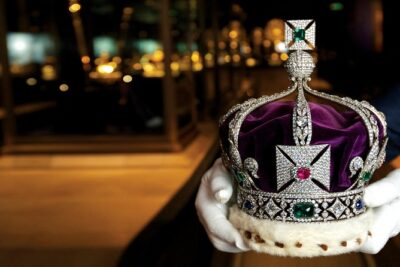
Tower of London and Crown Jewels Exhibition Ticket
Read our review →
Chelsea Football Club Stadium and Museum Tour
Read our review →


Official tickets: Moco Modern & Contemporary Art Museum
Read our review →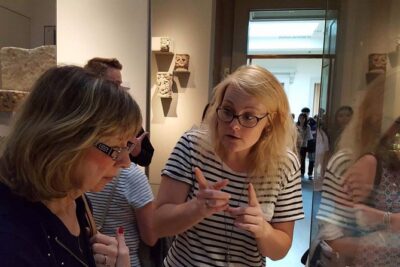
British Museum London Guided Tour Semi-Private 8ppl Max
Read our review →
British Museum Guided Tour with Entrance Tickets
Read our review →Browse the lists this tour appears in