
Review · LONDON
London: 2-Hour Guided Tour of the British Museum
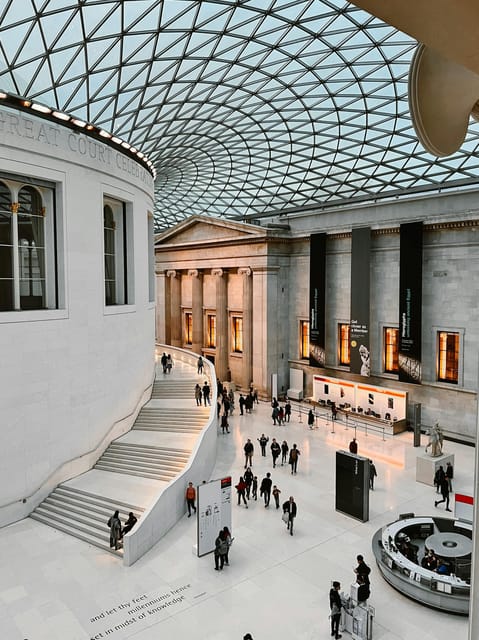
The Rosetta Stone is the natural star of this British Museum tour, but the two-hour route also takes you from Egyptian pharaohs to Roman statues, the Parthenon sculptures, Sutton Hoo, and a Moai from Easter Island. It is a fast trip through many of humanity’s most important objects.
I like the focused route, which helps you see major pieces without wandering the museum’s huge halls for hours. I also like the chance to ask a live guide about difficult subjects, including the disputed removal of the Elgin Marbles. The main caution is the language setup: a French booking may become bilingual, which can reduce time for each explanation.
Key points at a glance
- See the Rosetta Stone up close: Learn how one ancient object helped scholars read Egyptian hieroglyphics.
- Compare Greek and Roman art: Study Parthenon sculptures, Roman mosaics, statues, and inscriptions in one compact visit.
- Meet Sutton Hoo and Hoa Hakananai’a: Two striking displays offer very different views of early England and distant Pacific culture.
- Choose your tour language carefully: English, French, and Italian are offered, but bilingual guiding may mean shorter explanations.
- Get a guided overview in two hours: The route is useful if you want the museum’s headline objects without spending a full day inside.
- Check the ticket wording before paying: Some booking information says entry is not included, while other instructions say tickets are provided.
Why two hours can work at the British Museum
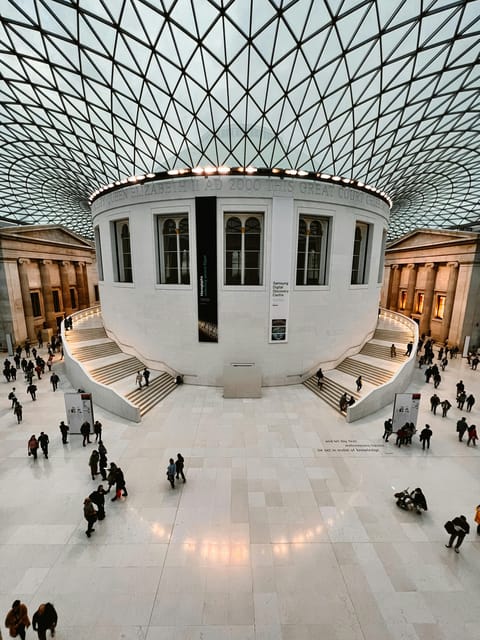
The British Museum is far too large to understand in one short visit. Its galleries cover thousands of years and many parts of the world, so a first-time visitor can easily spend an hour simply trying to decide where to begin.
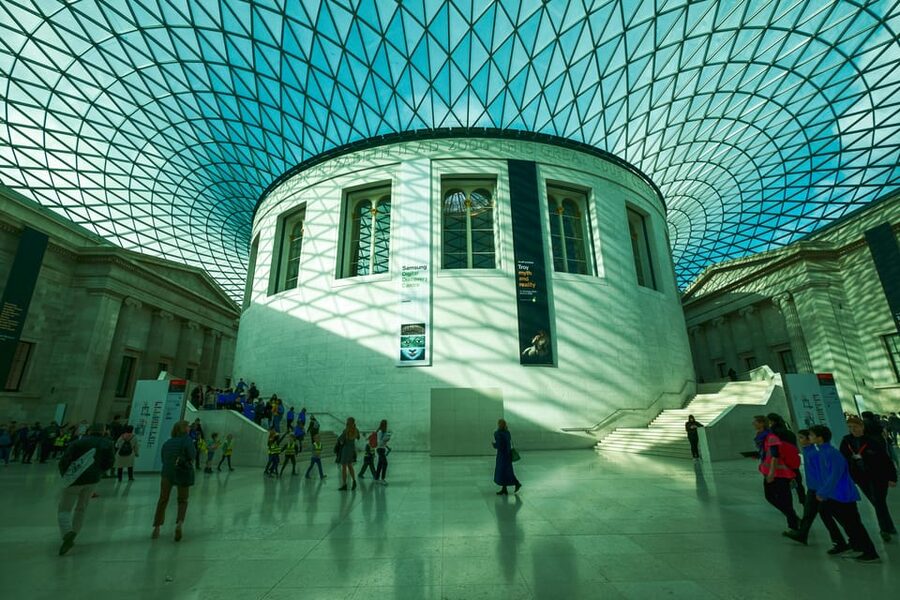
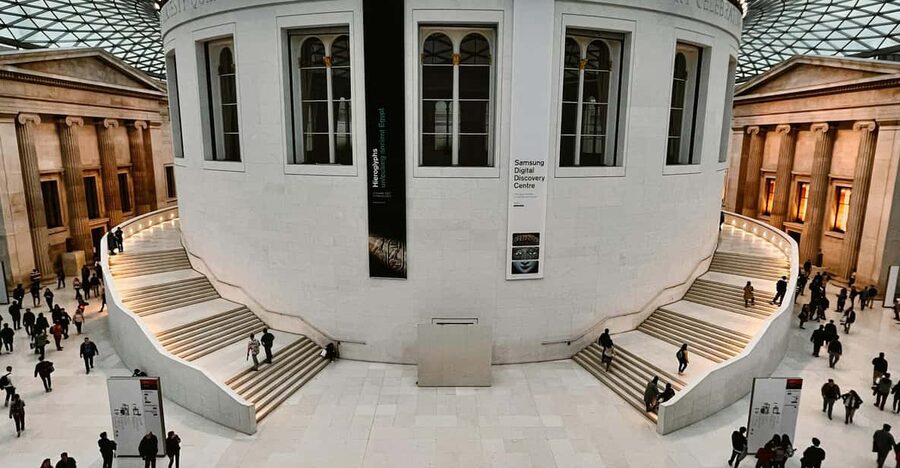
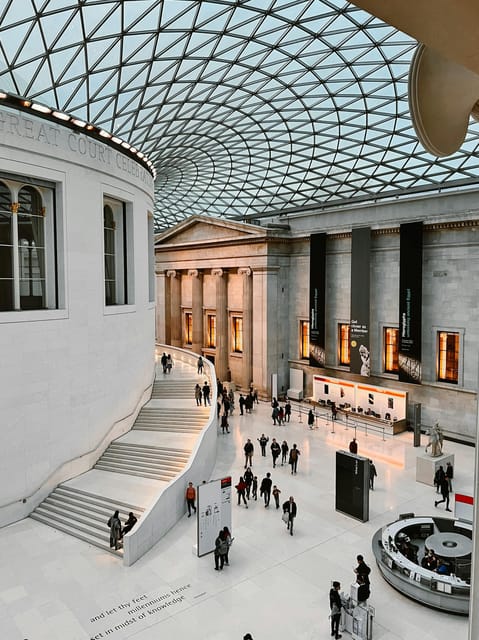
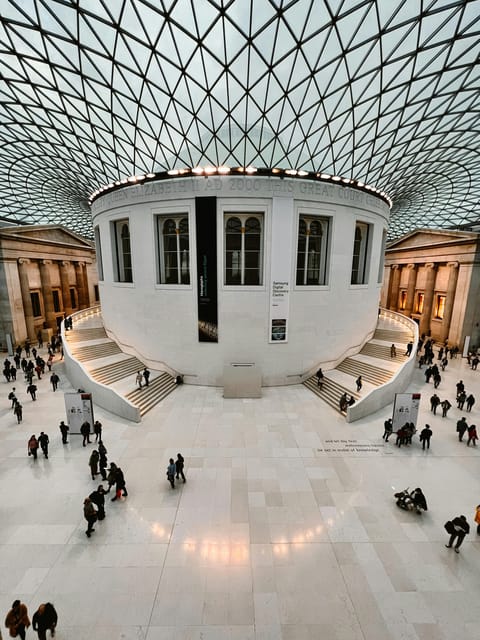
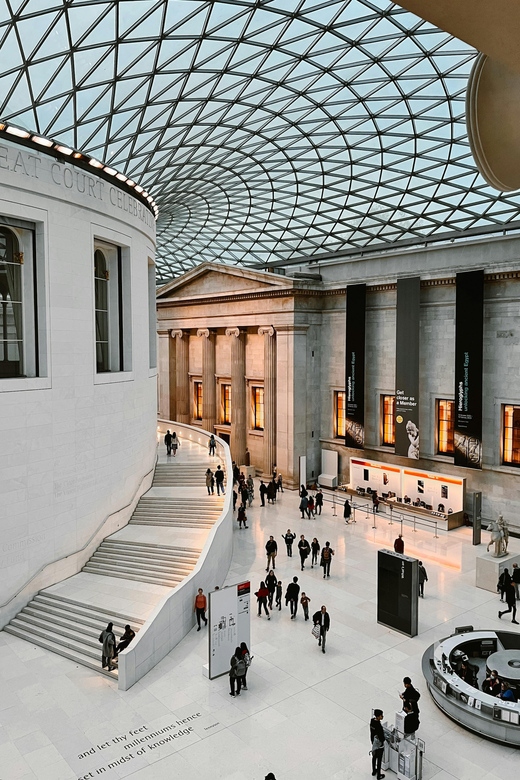
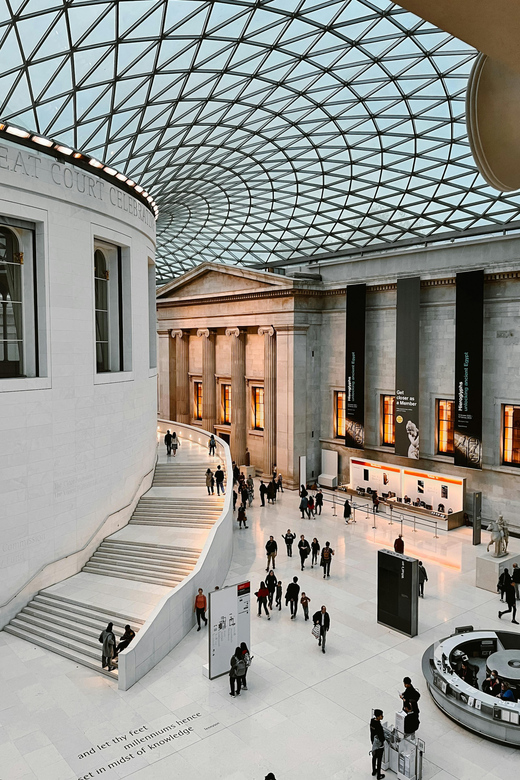
This tour solves that problem with a planned route. You meet your guide inside, after the security check, near the portals on the stairs by the pillars. From there, the guide takes you to selected objects rather than asking you to read every label in every room.
That approach suits you if you want the museum’s major sights with context. A good guide can explain not only what an object is, but why it matters, how it was used, and what questions surround its display today.
Two hours is enough for an introduction, not a complete museum visit. You will see highlights, listen to explanations, and leave with a better sense of the collection. You will not have time to study every gallery or return to favorite objects at leisure.
The tour is listed at $64 per person. That is not cheap for two hours in a public museum, especially since the museum itself is generally free to enter. The value comes from the guide, the route, and the time saved. If you would otherwise wander past the Rosetta Stone, Parthenon sculptures, and Sutton Hoo without understanding them, the cost may be reasonable. If you enjoy reading labels at your own pace, you may prefer an unguided visit.
More Museum Tours in London
- Tower of London and Crown Jewels Exhibition Ticket
★ 4.5 · 6,677 reviews - London: Chelsea Football Club Stadium and Museum Tour
★ 4.8 · 4,576 reviews - Chelsea FC Stadium Tours and Museum
★ 5.0 · 1,908 reviews
Starting with Egypt and the Rosetta Stone
The tour begins with ancient Egypt, a smart choice because the galleries offer some of the museum’s clearest links between an object and a major breakthrough in scholarship.
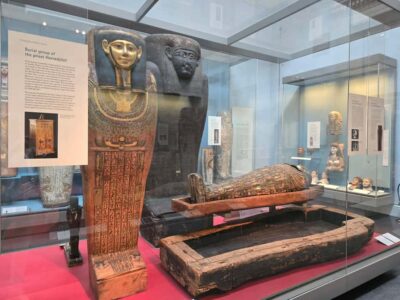
The Rosetta Stone is the key stop. Its importance comes from the inscriptions written in different scripts, which helped scholars work out Egyptian hieroglyphics. Your guide can turn what might look like a large, dark stone into a story about language, translation, and the recovery of a lost writing system.
You can also expect references to pharaohs and Egyptian religious life. The exact objects covered may depend on the guide and the pace of the group, but the focus is on showing how Egyptian artifacts reveal ideas about power, death, worship, and daily life.
This is one place where a guide adds real value. Without context, ancient Egyptian objects can become a blur of statues, symbols, and cases. A short explanation can help you recognize the difference between royal imagery, religious figures, and writing used for public or sacred purposes.
The drawback is time. The Egyptian collection alone could fill a morning. If this is the part of the museum you care about most, tell your guide at the beginning. A tailor-made route is promised, but two hours still requires choices.
Greek sculpture and the Elgin Marbles
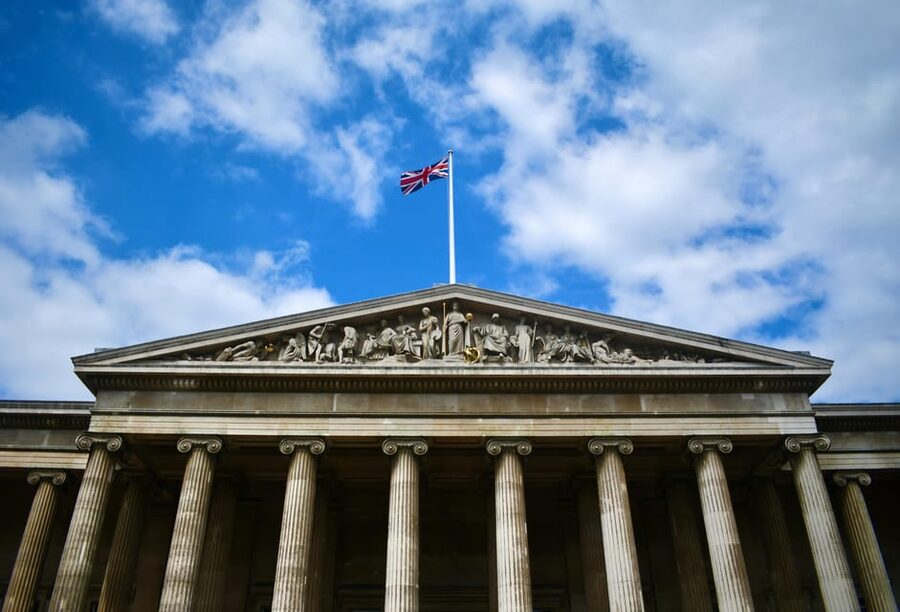
From Egypt, the route moves into ancient Greece, where art, architecture, and philosophy take center stage. The Parthenon sculptures are the major attraction here.
These marble works once formed part of the Parthenon in Athens. In the museum, they let you study the skill of Greek sculptors and the way they represented gods, heroes, movement, and the human body. A guide can point out details that are easy to miss when you simply walk past the room.
This part of the visit also brings up the Elgin Marbles controversy. Their presence in London remains a sensitive issue, since Greece has long sought their return. The subject is useful on a museum tour because it connects ancient art with modern questions about ownership, removal, national identity, and the responsibilities of major museums.
You should expect a balanced explanation rather than a simple story of heroic collectors or rightful owners. Ask questions if the guide leaves room for them. The topic is one of the most important parts of the British Museum experience because it asks who gets to display the world’s cultural property.
The Greek section may also include marble inscriptions connected with public life and ideas that influenced Western thought. You will not receive a full course in ancient philosophy in a few minutes, but the objects can help connect writing, civic life, art, and political power.
Roman mosaics, statues, and engineering
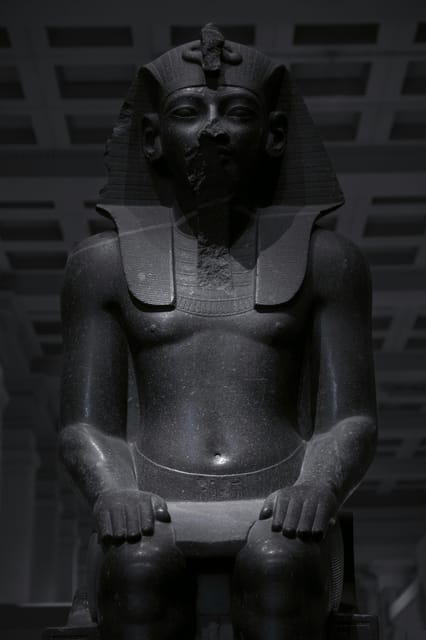
The Roman section changes the mood. Greek displays often emphasize ideal forms and philosophy, while Roman objects can show a practical empire built through government, military power, roads, buildings, and engineering.
Expect mosaics, statues, and images of gods and heroes. The mosaics are especially useful because they show how decoration could also express status, belief, and stories from mythology. Roman sculpture often borrowed from Greek models, but it also developed a strong interest in portraits and public image.
Your guide may point out how Roman emperors used art to shape the way people saw them. A statue was not simply decoration. It could project strength, divine approval, military success, or family legitimacy.
This portion works best as a comparison with the Greek galleries. You can look for changes in style and purpose rather than treating each statue as an isolated object. The guide’s job is to help you make those connections quickly.
The Roman stop is also a reminder that the museum tour is selective. You will see representative objects, not every major Roman piece. If you have a special interest in Roman history, ask ahead of time how much time the route gives this section.
More British Museum tours:
- London: British Museum Guided Tour
★ 4.3 · 1,182 reviews - British Museum London Guided Tour Semi-Private 8ppl Max
★ 5.0 · 984 reviews - London: British Museum Guided Tour with Entrance Tickets
★ 4.9 · 748 reviews - London: Tour of the British Museum
★ 4.1 · 678 reviews
Sutton Hoo and early English life
Sutton Hoo offers a sharp change from Mediterranean art. The finds come from an Anglo-Saxon burial site and provide clues about early English life, power, trade, belief, and craftsmanship.
The famous treasure is often associated with the image of a helmet, but the wider importance lies in the range of objects found together. Burial goods can reveal social rank and connections between communities. They also show that early England was linked to wider networks of exchange and influence.
A guide can help you see Sutton Hoo as more than a collection of beautiful metalwork. The objects raise questions about who was buried, how the burial was organized, and what material goods meant to the people who placed them there.
This is a particularly good stop for visitors who want something connected to Britain itself. After Egypt, Greece, and Rome, Sutton Hoo brings the story closer to the country you are visiting. It also shows that early English culture was not isolated or simple.
Allow yourself a moment to look at the workmanship. Gold, garnet, and patterned surfaces can be easy to rush past when the tour is moving quickly. If this section interests you, ask the guide to pause for the main burial objects and their historical setting.
Hoa Hakananai’a and the wider world
The Moai known as Hoa Hakananai’a gives the tour a powerful change of scale. This Easter Island figure represents a distant culture and carries a spiritual meaning that is very different from the royal tombs of Egypt or the civic monuments of Greece and Rome.
The piece is valuable here because it widens the story. A museum route focused only on Europe and the Mediterranean would give a narrow view of human achievement. Hoa Hakananai’a brings Pacific culture into the same conversation, while also reminding you that sacred objects can be removed from the communities that made them.
Look closely at the figure’s shape and surface rather than expecting a room full of similar pieces. The Moai is a single, memorable object, and the guide’s explanation can help you understand its cultural role.
As with the Elgin Marbles, questions of ownership and display may arise. The information provided for this tour does not promise a detailed discussion of those issues, so ask if the subject matters to you. The time available may limit how far the guide can go.
The final section broadens the route again with artifacts from around the world. This gives you a sense of the museum’s scale, but it can also feel quick. The tour is designed to give you a strong sampling of human cultures, not a full study of each one.
The guide makes the difference
A live guide is the main reason to pay for this experience. The objects are already in a public museum, but the guide gives you a route, a story, and a chance to ask questions.
Filomena is one guide specifically praised by name, and the feedback describes her as friendly and informative. That suggests the personal side of the visit can be a real strength. Still, guide quality and style can vary by date and language, so you should not assume Filomena will lead every departure.
The tour is offered in English, French, and Italian. Check the language when you book and confirm it again if the arrangement matters to you. One French booking became a bilingual tour, with the guide repeating explanations in two languages. That can be friendly and inclusive, but it also means you may hear less detail and see fewer objects.
If you are booking in French or Italian, ask whether the entire tour will be in that language or shared with English speakers. This is the most important practical question for language-sensitive visitors.
The tour is described as tailor-made, which suggests some flexibility. Even so, a two-hour route cannot satisfy every interest. Tell the guide if Egypt, Greece, Rome, Sutton Hoo, or Pacific culture matters most to you. A clear preference may help the guide manage the limited time.
Price, timing, and what you receive
At $64 per person, this is a paid guided experience in a museum where entry is generally not the main expense. You are paying for instruction and direction rather than access alone.
That makes the tour best for you if you value a clear introduction, have limited time in London, or want help understanding famous objects. It is less attractive if you already know the museum well or prefer unhurried independent visits.
The stated duration is two hours. Wear comfortable shoes, since you will be on your feet and moving between galleries. The museum is wheelchair accessible, and the activity is described as wheelchair accessible as well.
There is a confusing detail in the booking information. One section says the entry ticket is not included, while the meeting instructions say tickets will be sent by WhatsApp one hour before the tour, and another note says the activity includes entry tickets. I would confirm this point before payment so you know exactly what the $64 covers.
You meet after passing the security check, not outside the gates. The precise meeting point is in front of the British Museum portals, on the stairs near the pillars. Tickets are sent through WhatsApp, or by email if you do not use WhatsApp.
The tour includes an express security check, but that does not mean you should arrive at the last second. Give yourself time to find the entrance and meeting point inside the security area.
Free cancellation is available up to 24 hours before the tour for a full refund. You can also reserve now and pay later, which helps if your London schedule is still changing.
Who should book this British Museum tour?
I would choose this tour for a first visit when I wanted the museum’s key objects explained without spending half a day planning a route. It also suits families and adults who prefer stories and comparisons over long label reading, though the two-hour pace may be demanding for very young children.
It is a strong match for visitors interested in ancient Egypt, Greek sculpture, Roman culture, or the history of Britain. The addition of Hoa Hakananai’a makes the route broader than a standard Europe-only art tour.
I would think twice if I wanted a quiet, detailed study of one collection. The route covers a lot of ground, and the main objects are spread across different parts of the museum. You may leave wanting to return for a slower look.
Language is another deciding factor. English speakers appear to have the simplest arrangement, while French and Italian speakers should confirm whether the guide will speak only their chosen language or repeat the tour bilingually.
Should you book it?
Book this tour if you want a brisk, guided introduction to the British Museum’s major objects and appreciate the chance to ask questions. The Rosetta Stone, Parthenon sculptures, Roman works, Sutton Hoo treasures, and Hoa Hakananai’a make a strong two-hour selection.
The $64 price is fair only if you value the guide and time saved. Confirm the entry-ticket arrangement, arrive at the correct meeting point, and check the language format before booking. If those details suit you, this is a practical way to get your bearings before returning to explore the museum on your own.
FAQ
How long is the British Museum guided tour?
The tour lasts two hours.
What objects and collections does the tour cover?
The route includes ancient Egyptian artifacts and the Rosetta Stone, ancient Greek works including the Parthenon sculptures, Roman mosaics and statues, Sutton Hoo treasures, Hoa Hakananai’a from Easter Island, and other objects from around the world.
What languages are available?
The live guide service is offered in English, French, and Italian.
Can the tour be bilingual?
Yes. A French tour may be conducted bilingually, so confirm the language arrangement before booking if you want the full tour in one language.
Where do I meet the guide?
Meet after passing the security check, in front of the British Museum portals on the stairs near the pillars. The meeting point is not outside the gates.
How do I receive the entry tickets?
The tickets are scheduled to be sent through WhatsApp one hour before the tour. If you do not use WhatsApp, you can contact the provider by email to receive them.
Is museum entry included in the price?
The booking information gives conflicting details. One section says entry is not included, while other instructions say tickets are provided and the activity includes entry tickets. Confirm this point with the provider before booking.
Can I cancel for a full refund?
Yes. You can cancel up to 24 hours in advance for a full refund.
More 2-Hour Experiences in London
- London: 2-Hour Guided Tour of the British Museum and History
★ 4.3 · 22 reviews - Vatican Museums & Sistine Chapel Express 2-Hour Guided Tour
★ 4.5 · 1,037 reviews - Naples Archaeological Museum 2-Hour Guided Private Tour
★ 5.0 · 51 reviews - Dallas: 2-Hour JFK Assassination Tour without Museum
★ 4.7 · 48 reviews
Just added around London
- Westminster and National Gallery 3.5-Hour Tour in Italian★ 4.9 · 28 reviews
- British Museum & Camden Town – Private Tour in Italian★ 4.8 · 26 reviews
- London: British Museum Highlights Guided Small Group Tour★ 4.9 · 113 reviews
- London: Westminster Abbey & Jubilee Galleries Guided Tour★ 4.9 · 56 reviews
- London: Sherlock Holmes Museum & Westminster Walking Tour★ 4.4 · 13 reviews
- London: Royal Museums Greenwich Day Pass★ 4.5 · 309 reviews
- London: Tickets for Moco Modern & Contemporary Art Museum★ 4.7 · 391 reviews
- London: The Courtauld Gallery at Somerset House Entry Ticket★ 4.6 · 126 reviews
Museum Tours in London, compared.
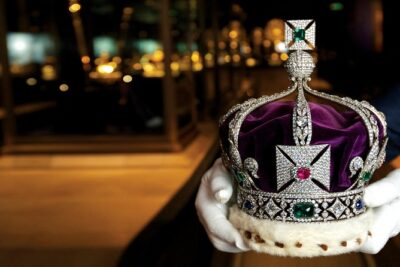
Tower of London and Crown Jewels Exhibition Ticket
Read our review →
Chelsea Football Club Stadium and Museum Tour
Read our review →


Official tickets: Moco Modern & Contemporary Art Museum
Read our review →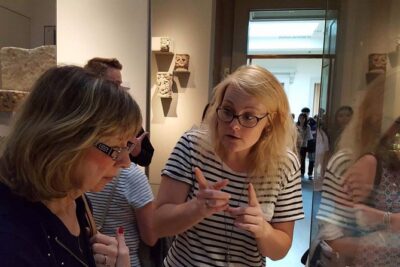
British Museum London Guided Tour Semi-Private 8ppl Max
Read our review →
British Museum Guided Tour with Entrance Tickets
Read our review →Browse the lists this tour appears in