
Review · SPAIN
Fuerteventura: Tickets to Salt, Cheese and Windmill Museums
Fuerteventura’s salt pans, goat cheese, and windmills tell a more useful story of island life than a quick stop at a viewpoint. This self-guided ticket links three museums where you can see how people made food, salt, and flour from what the island offered. Traditional salt production and Majorero cheese are the main draws.
I like the freedom to visit the centers in any order and spread them across your holiday. I also like the price: at $14 per person, you pay less than $5 per site, with a full year to use the ticket after your first visit. The main catch is simple: transport is not included, and the three centers are spread across central and eastern Fuerteventura.
Key points at a glance
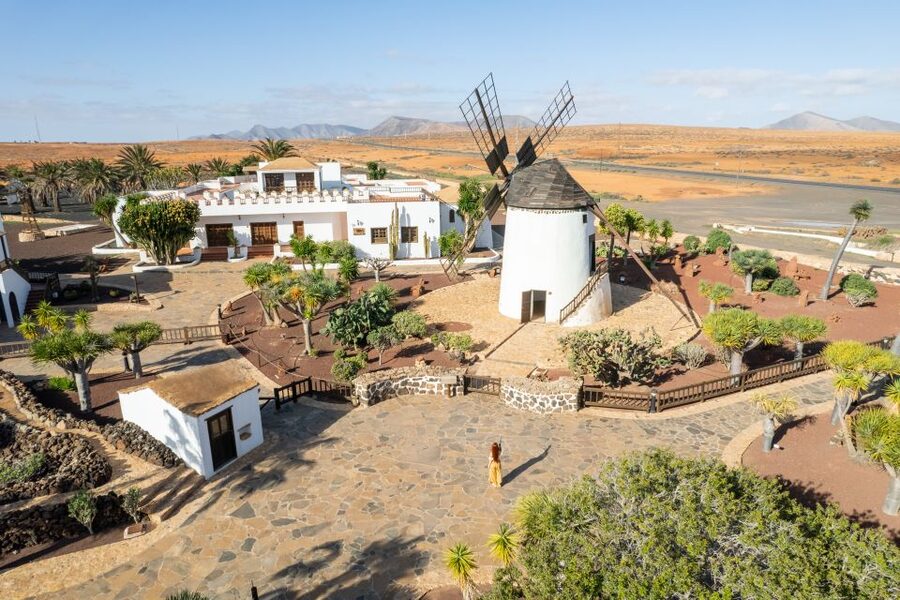
- Three parts of Majorera culture: See traditional salt making, goat-cheese production, and the windmills once used to grind grain.
- A flexible 365-day ticket: Visit each center once, in any order, and do not feel pressured to fit everything into one day.
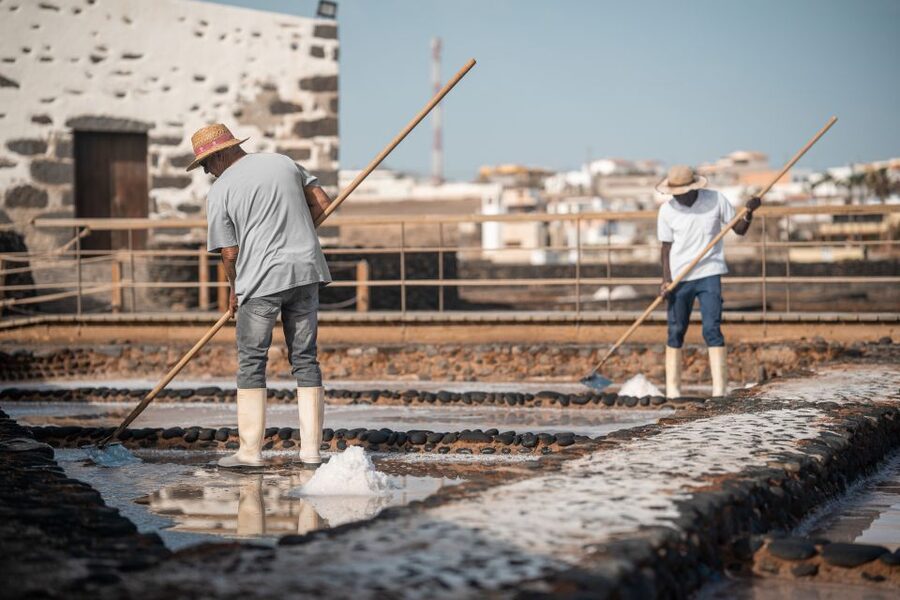
- A real working salt site: Salinas del Carmen remains an active protected salt-producing area, not just a display behind glass.
- A cheese museum with plenty to see: Allow about 90 minutes for the museum, windmill, and cactus garden.
- Gofio is part of the experience: The Windmill Interpretation Center includes a taste of kneaded gofio, a classic Canarian preparation.
- Plan around opening days: The Windmill Interpretation Center is closed on Sundays and Mondays.
Three museums that explain how Fuerteventura fed itself
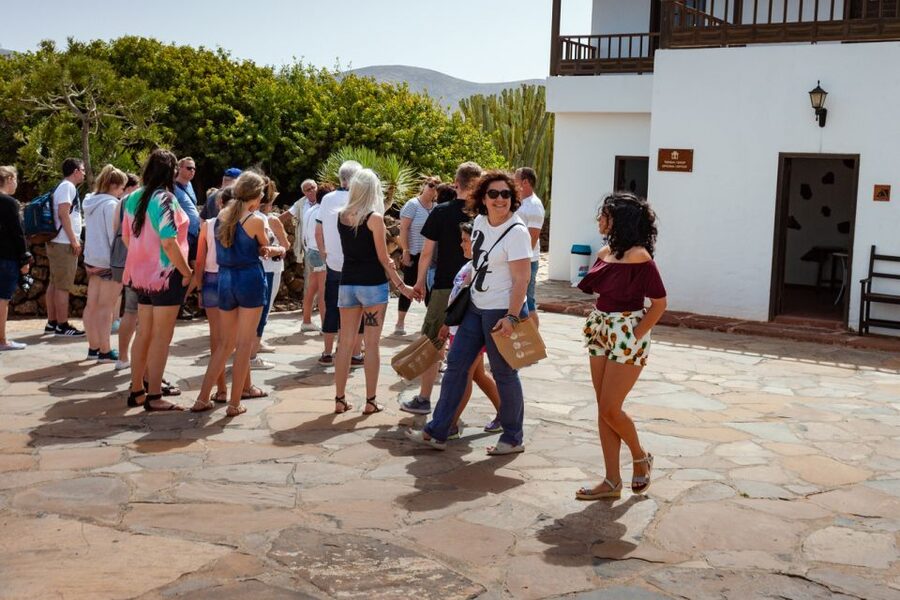
This is not a guided bus tour with a fixed route. You receive entry to three cultural centers and make your own way between them. That arrangement suits you if you have a rental car, motorbike, or bicycle and prefer to set your own pace.
The three sites cover different parts of island life. Salt came from the sea, cheese from goats, and flour from grain ground by wind. Together, they give you a clear picture of practical Majorera culture, especially how local people used limited natural resources.
The museums are not huge. That is part of their appeal. You can spend a morning or a full day on the set, depending on how carefully you read, explore the outdoor areas, and pause for the food-related displays. I would not book this expecting a large modern museum complex. Think of it as three focused stops with plenty of local character.
A few more museum visits around Spain worth comparing
- Paris: Living Cheese Museum Guided Tour with Cheese Tasting
★ 4.8 · 182 reviews - Edam: Edam Cheese Museum Entry Ticket
★ 4.7 · 33 reviews
Salinas del Carmen: where salt is still made
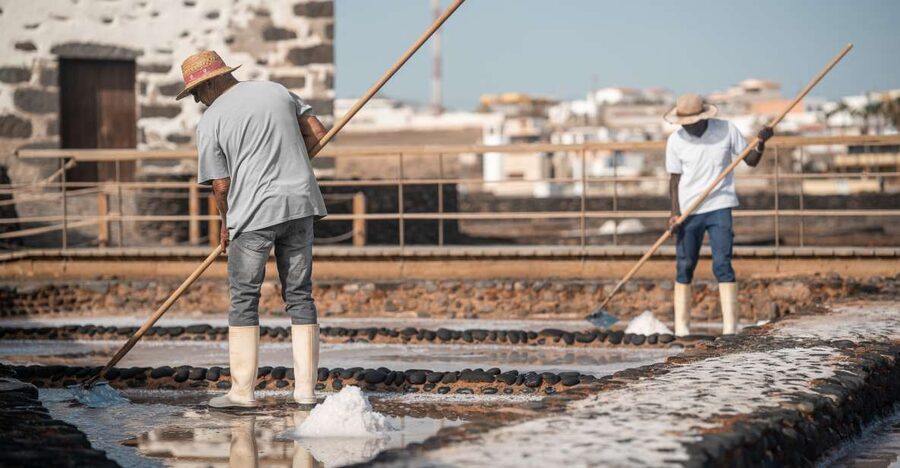
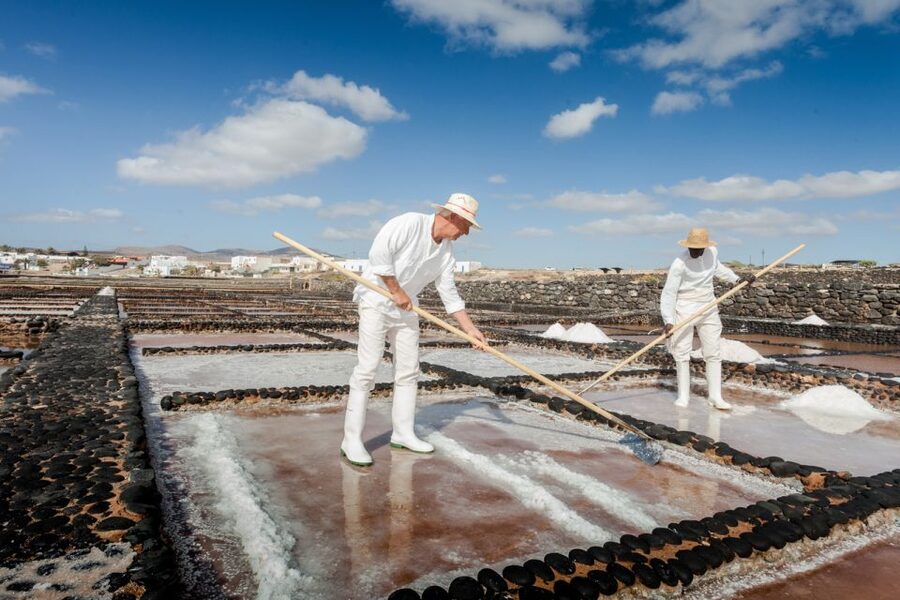
Start at the Salinas del Carmen if you want the most direct connection between the museum and its subject. The saltworks are still alive and protected, so you are not only looking at old equipment or photographs. You can see the setting and the traditional methods that continue to shape the product.
The purity of the seawater and the care taken with older techniques are central to the story. The visit connects salt to Fuerteventura’s coast in a very physical way. You are looking at shallow salt pans, working areas, and the wider process rather than simply reading that salt was important.
Allow about an hour if you want to see both the indoor and outdoor areas. The exterior matters here. If you rush through the building and skip the salt pans, you miss much of what makes this stop worthwhile.
The museum works well for families and for anyone interested in food production. It is also one of the more accessible stops in the group. The Salinas del Carmen museum is accessible, though you should still come at least an hour before closing so you have time to see the site properly.
Majorero Cheese Museum: the island’s goat-cheese story
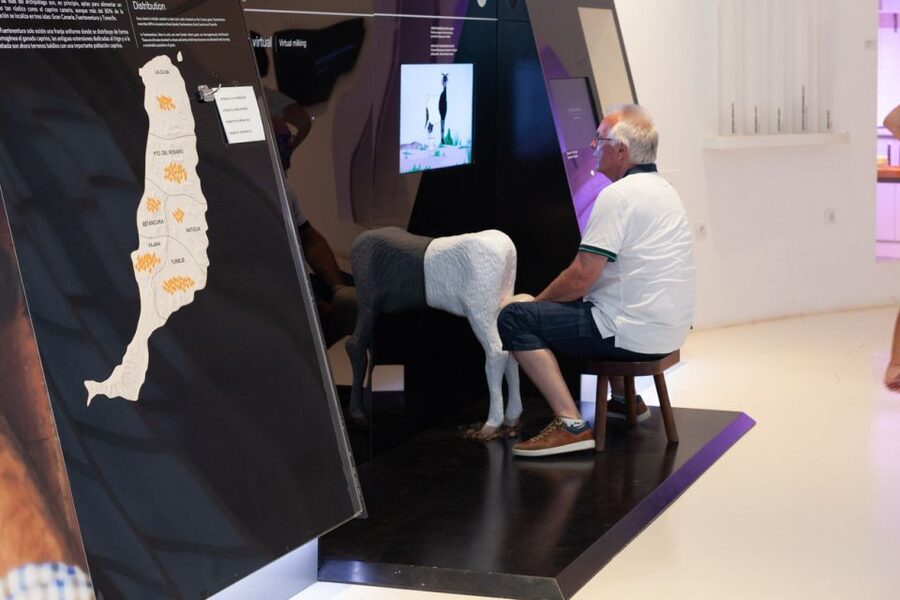
The Majorero Cheese Museum is the largest of the three stops in terms of how much there is to see. Set aside around an hour and a half for the museum, the windmill, and the cactus garden. You can move faster, but the site rewards a slower visit.
Majorero cheese comes from the island’s distinctive goat-raising tradition. The museum explains the conditions behind the cheese and the work involved in making it. Its focus is not just on tasting a finished product. You also get the story of the animals, local methods, and the role goat cheese played in island food.
The cheese is award-winning and often described as one of the world’s finest goat cheeses. The useful point for you is that the museum gives that reputation some context. You can see why goat farming became so important in a dry island environment where other forms of agriculture were harder.
The windmill adds another layer to the stop. You can connect cheese production with the broader question of how people processed food. The cactus garden also gives the site more variety, so this is not a single-room museum visit.
I would schedule this stop when you have enough time to read and look around. If you are trying to complete all three centers in a short afternoon, this is the one most likely to feel rushed.
Windmills and kneaded gofio at the interpretation center
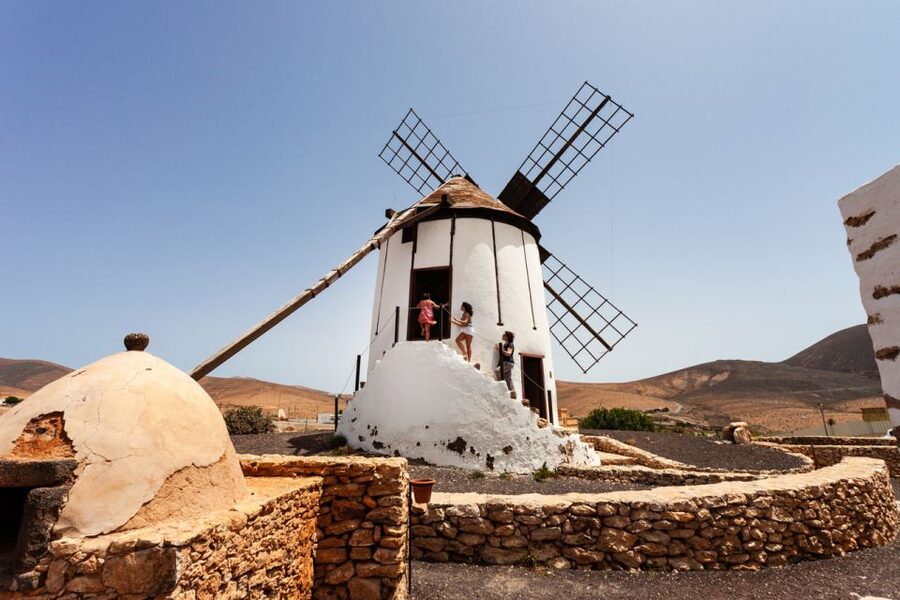
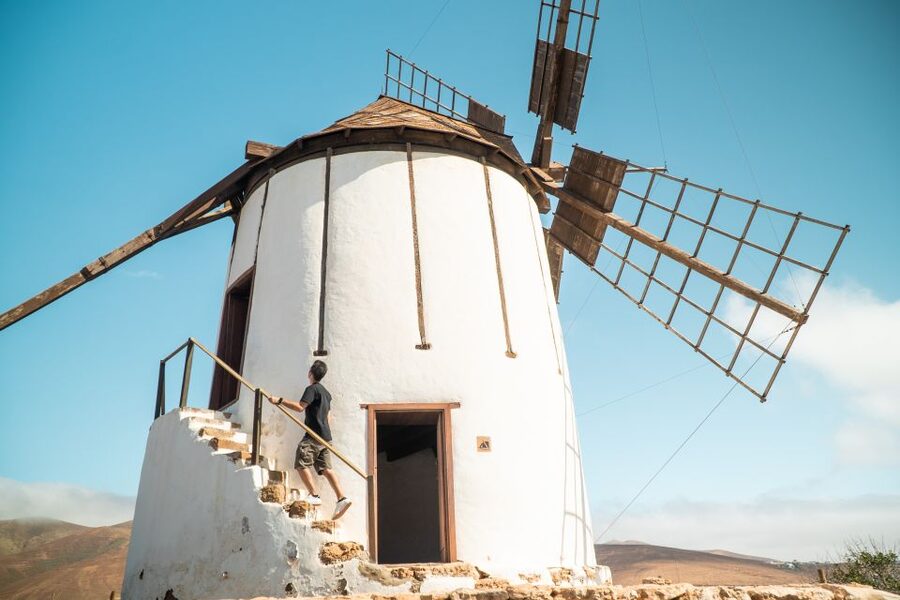
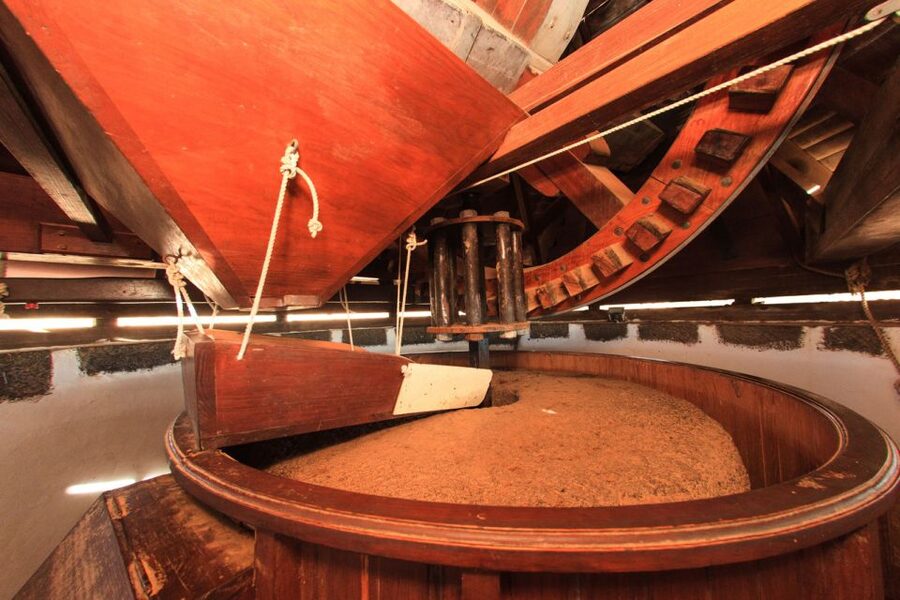
The Centro de Interpretación de los Molinos is the smallest stop, and its visit takes about 40 minutes. Its subject is simple but important: how windmills were used to grind grain, especially grain intended for gofio.
Gofio is a traditional Canarian food made from ground grain. Here, the experience goes beyond an explanation of the machinery because you can taste kneaded gofio. That small food element helps turn an agricultural lesson into something you can understand with your own senses.
The center is useful if you want a short, focused stop between larger sights. It explains how the windmills worked and why they mattered before modern machinery changed food production. You can also compare its windmill with the one at the Cheese Museum.
There is one practical limitation. The center has steps and stairs, and the windmill itself is not accessible to people with reduced mobility. The windmill at the Cheese Museum also cannot be entered by people with reduced mobility, although the Museo de las Salinas and Museo del Queso are accessible.
The Interpretation Center is closed on Sundays and Mondays. Check your route carefully before setting out, since the flexible ticket does not help if you arrive on a closed day.
Same city, a completely different collection:
- Madrid: Prado Museum Entry Ticket
★ 4.6 · 20,699 reviews - Barcelona: FC Barcelona Museum “Barça Immersive Tour” Ticket
★ 4.4 · 10,944 reviews - Madrid: Reina Sofía Museum Entrance Ticket
★ 4.5 · 8,788 reviews - Barcelona: Park Güell and Gaudí House Museum Entry Ticket
★ 4.5 · 6,326 reviews
How to arrange the three stops by car or bicycle
The Salinas del Carmen are in Antigua on the east coast. The Cheese Museum and the Windmill Interpretation Center are in the middle of the island, roughly 10 minutes apart. The salt pans and the other two centers are about 20 minutes apart by car.
Those distances make the set easy to combine with a wider day of sightseeing, but you need your own transport. No transfer, shuttle, or organized guide is included. You can use a car, motorbike, or bicycle, with the car being the simplest option if you want to see all three without worrying about time.
You do not have to visit them on the same day. The ticket allows one visit to each center during the 365 days after your first activation. This is a major advantage if your holiday plans change or if you are staying on Fuerteventura long enough to spread the sites across several days.
A sensible plan is to visit the Cheese Museum and the Windmill Interpretation Center together because they are close. You can then visit Salinas del Carmen on a separate coastal outing, or add it before or after other stops near Antigua.
Show your voucher at each center. You can begin with whichever location works best for your route. Since each site has its own opening hours, leave a buffer and arrive at least one hour before closing.
What the $14 price really gets you
At $14 per person, this is a low-cost cultural add-on. Divided across three sites, the ticket works out to roughly $4.67 per center. That is good value if you plan to visit all three rather than using the ticket for only one stop.
The 365-day validity improves the value further. You are not forced into a packed museum day, and you can return to the remaining sites if weather, transport, or your energy level changes. The ticket is especially practical for a longer stay on the island.
The value is weaker if you have limited time and can reach only one center. In that case, the Salt Museum or the Cheese Museum may be the better individual choice depending on your interests. The set makes most sense when you already have transport and want a cultural thread linking several parts of Fuerteventura.
You can also reserve now and pay later, which keeps the booking flexible. Cancellation is available up to 24 hours before the visit for a full refund. Those conditions matter less than the transport issue, though. The ticket is affordable, but getting to the sites remains your responsibility.
Language, staff, and the self-guided format
Spanish and English are supported. The experience is primarily self-guided, so you should expect to move through the exhibits at your own pace rather than follow a named guide or a fixed group.
Recent service at the centers has included staff who can speak French, which may help French-speaking visitors, but I would not treat that as guaranteed at every visit. The stated languages are Spanish and English.
The self-guided format gives you control. You can spend extra time on the salt-making process, linger in the cactus garden, or move quickly through the windmill displays. It also means you need to pay attention to signs and opening hours because there is no tour leader organizing the day for you.
This format suits independent visitors who like short museum stops. It is less suitable if you want a guide to explain every detail, provide island-wide transport, or keep a group moving from one location to the next.
Accessibility and timing details to keep in mind
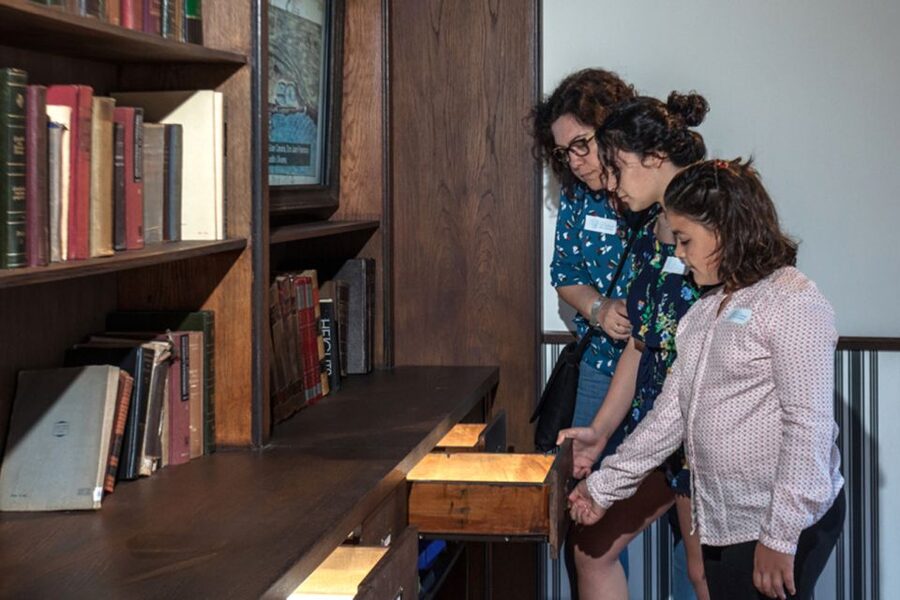
The Museo de las Salinas and the Museo del Queso are accessible. The Windmill Interpretation Center has steps and stairs, and access to both windmills, one at the Cheese Museum and one at the interpretation center, is not suitable for people with reduced mobility.
That distinction matters because the buildings may be accessible while the windmill structures are not. If you use a wheelchair or have difficulty with stairs, plan around the accessible parts and confirm your needs before setting out.
Give yourself more time than the bare minimum if you enjoy reading displays. The Interpretation Center takes about 40 minutes, the Salt Museum about one hour, and the Cheese Museum around 90 minutes. That adds up to roughly three hours before driving between sites.
You can make the day shorter by skipping some outdoor areas, but I would not try to squeeze all three into a tight schedule. The charm is in the steady rhythm of the stops: salt, cheese, then grain and gofio.
Who will enjoy this combination most
I recommend this ticket to you if you have your own transport and want more than beaches and scenic drives. It is a good fit for families, food lovers, people interested in traditional crafts, and anyone who likes museums that connect directly with the places around them.
It also works well for repeat visitors to Fuerteventura. If you have already seen the major coastal sights, these centers give you a clearer sense of how people lived and worked on the island.
The combination may not suit you if you want a long guided experience, a single central meeting point, or a full-day tour with transport included. Cyclists can reach the centers, but the distances and timing need careful planning. The ticket itself is flexible, but your route still needs thought.
Should you book the salt, cheese, and windmill ticket?
Book it if you can visit all three centers and appreciate practical local history. The price is modest, the 365-day validity is generous, and each stop offers something different: working salt pans, Majorero goat cheese, and a taste of kneaded gofio.
I would make the Cheese Museum and nearby Windmill Interpretation Center the core of one outing, then give Salinas del Carmen its own hour when you are near the east coast. Skip the package only if you lack transport, have no interest in food and rural traditions, or want a guided tour rather than independent museum visits.
FAQ
How long is the ticket valid?
The ticket is valid for 365 days from the first activation. You can visit each of the three centers once during that period.
Do I need to visit all three centers on the same day?
No. You can visit the centers on different days and in any order during the ticket’s validity period.
What is included in the ticket?
Entry to the Salt Museum Salinas del Carmen, the Museo del Queso Majorero, and the Centro de Interpretación de los Molinos is included.
Is transportation included?
No. You arrange your own transportation to the centers. They are accessible by car, motorbike, or bicycle.
How far apart are the locations?
The Cheese Museum and the Windmill Interpretation Center are about 10 minutes apart. Salinas del Carmen and the other two centers are about 20 minutes apart by car.
How long should I spend at each museum?
The Windmill Interpretation Center takes about 40 minutes. The Salt Museum takes about one hour if you see both the interior and exterior. Allow around 90 minutes for the Cheese Museum, windmill, and cactus garden.
Is the experience accessible to people with reduced mobility?
The Salt Museum and Cheese Museum are accessible. The Windmill Interpretation Center has steps and stairs, and the windmills at the Cheese Museum and Windmill Interpretation Center are not accessible to people with reduced mobility.
Is the Windmill Interpretation Center open every day?
No. It is closed on Sundays and Mondays. You should also arrive at least one hour before the center’s closing time.
What languages are available?
The stated languages are Spanish and English. French-speaking staff may be available at some visits, but French is not listed as a guaranteed language.
Just added around Spain
- Girona, Figueres, Dalí Museum and Cadaqués Tour from Barcelona★ 4.5 · 36 reviews
- Football Club Barcelona Museum Immersive Tour Guided Visit★ 3.5 · 52 reviews
- Erotic Museum Admission Ticket with Audioguide★ 5.0 · 527 reviews
- Dali Museum and Costa Brava Small Group Day Trip from Barcelona★ 5.0 · 77 reviews
- Madrid by High-Speed Train with Prado Museum Private Tour★ 4.0 · 33 reviews
- Guitar Legends Hall: Entrance to the Immersive Rock Museum★ 5.0 · 25 reviews
- White Rabbit Museum: The Best Immersive Experience in Catalonia★ 5.0 · 538 reviews
- Private tour: Dali Museum in Figueres and Púbol Tour with Hotel pick-up★ 5.0 · 12 reviews
Museum Tours in Spain, compared.
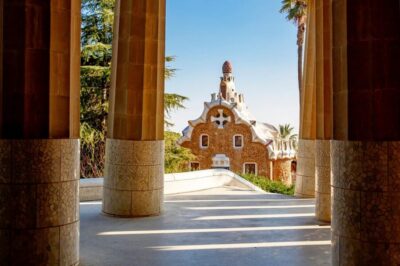
Park Güell and Gaudí House Museum Entry Ticket
Read our review →
Puro Flamenco Show with Optional Museum Ticket
Read our review →
Moco Museum Barcelona: Modern & Contemporary Art
Read our review →
Girona & Dali Museum Small Group Tour with Pick-up from Barcelona
Read our review →
Valencia: Oceanogràfic, Hemisfèric & Science Museum Combo
Read our review →Browse the lists this tour appears in