
Review · SPAIN
Cartagena : Roman Theatre Museum Entry Ticket
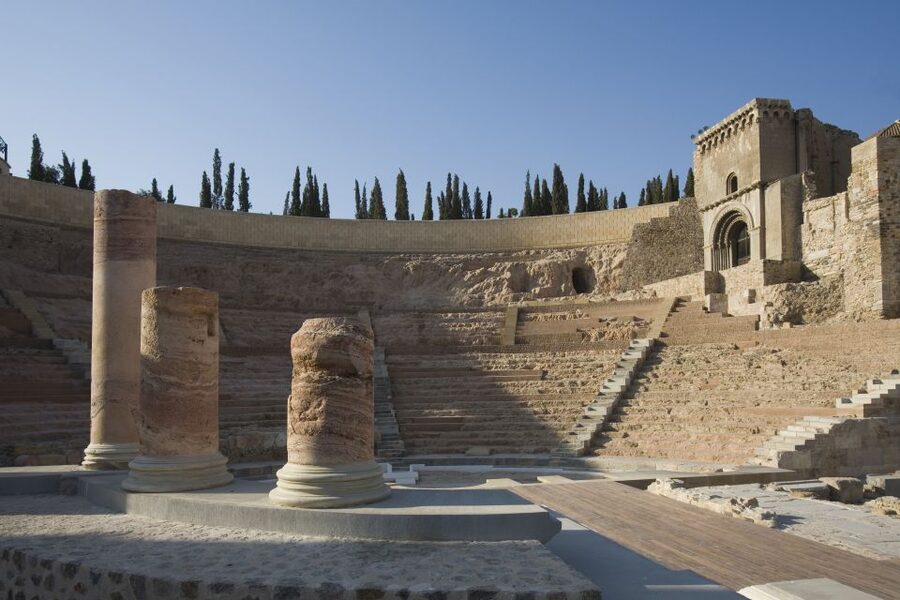
Cartagena’s Roman Theatre is a surprise hidden beneath the modern city: a vast Roman performance space that once held about 7,000 spectators. Your visit begins in Rafael Moneo’s carefully designed museum, then carries you through the site’s story until the theater itself appears.
I like the clear museum-to-ruins route and the modest $8 price, which makes this one of Cartagena’s better-value historic stops. The audio guide is also worth considering, especially if Roman archaeology is new to you. The main caution is physical access: some open steps lack handrails, and wheelchairs or pushchairs may not reach the lowest stage area.
Key points to know before you go
- The theater held around 7,000 people: This was a major public building, not a small neighborhood venue.
- The museum comes first: You enter the theater site through Rafael Moneo’s museum, not directly from the street.
- The Passageway of History sets the scene: It explains how the theater was buried, built over, and eventually found again.
- A Roman house lies beneath the theater story: You can see mosaic flooring from a house destroyed during construction.
- The optional audio guide earns its small extra cost: It is available in Spanish, English, French, German, and Russian.
- Allow time for steps and open areas: The upper viewing points are easier to manage than the route down toward the stage.
Starting with Cartagena’s buried Roman theater
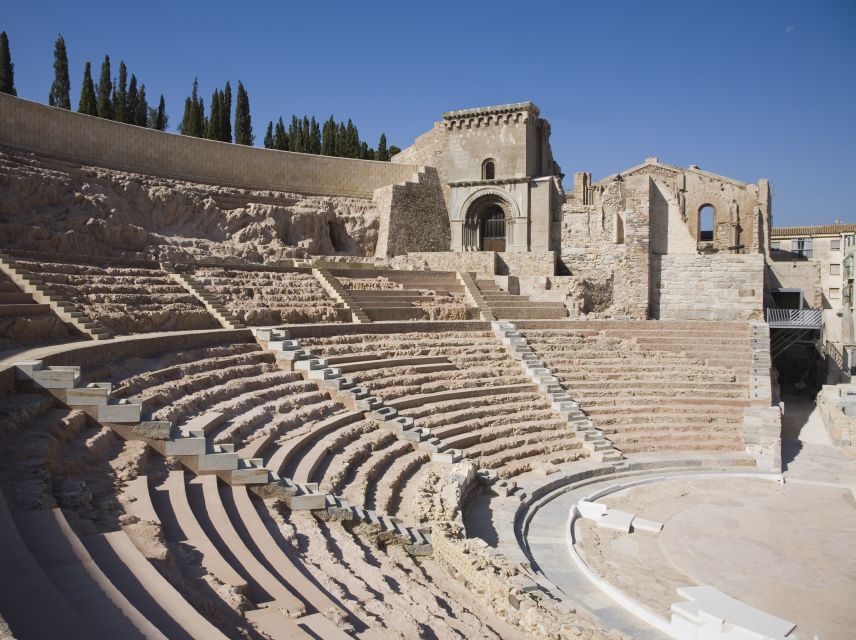
The most interesting part of this visit is the theater’s long disappearance. Cartagena did not simply preserve a Roman monument in plain sight. The theater was buried and covered by later layers of the city, then revealed through archaeological work.
That gives the museum a useful purpose. Instead of dropping you beside a pile of ancient stones and asking you to guess what you are seeing, it explains the process that brought the site back into view. You learn how the theater developed from the 1st century B.C., how the city changed around it, and why such a large building could vanish from everyday view.
I like this beginning because it gives you a story to follow. The ruins become more meaningful when you understand that the visit is not only about Roman construction. It is also about excavation, urban change, and the decisions that preserved the site.
The museum was designed by Rafael Moneo, one of Spain’s best-known architects. His building frames the archaeological material rather than trying to compete with it. The route leads you gradually toward the theater, so the final reveal has more weight than an immediate entrance into the ruins would provide.
A few more museum visits around Spain worth comparing
- Madrid: Prado Museum Entry Ticket
★ 4.6 · 20,699 reviews - Barcelona: FC Barcelona Museum “Barça Immersive Tour” Ticket
★ 4.4 · 10,944 reviews - Madrid: Reina Sofía Museum Entrance Ticket
★ 4.5 · 8,788 reviews
The Passageway of History and the museum route
The museum’s Passageway of History is the natural starting point. Here, the site’s development is presented in stages, beginning with the theater’s Roman origins and moving through its burial and rediscovery.
You can expect a self-paced visit rather than a tightly timed guided walk. This suits people who like to stop at displays, read at their own speed, or let children take the lead for a while. Families have found the format easy to manage, and the museum gives younger visitors a reason to look closely before reaching the open-air ruins.
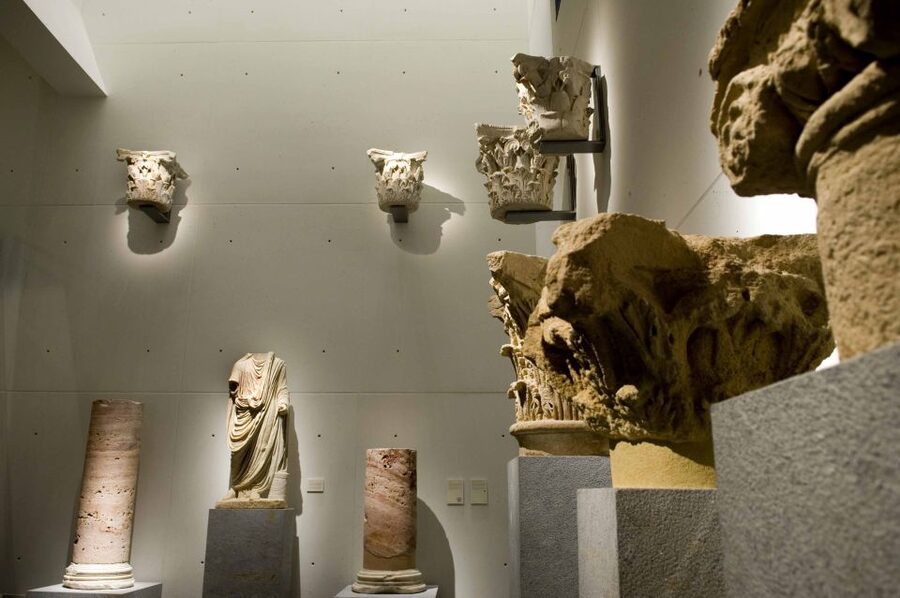
The exhibits focus on archaeological finds from the Roman period. They help explain the theater as a working building, not merely an old structure. You learn how performances took place and how Roman entertainment connected with public life and political power.
That political angle is important. Roman theater was not just an evening out. Public performances, architecture, and artistic display could help communicate the values and authority of the Roman world. The museum gives you enough context to see the theater as part of Cartagena’s civic life.
The museum is spread across several levels. Lifts and escalators make much of the route easier, although the outdoor section has different limitations. If you have reduced mobility, do not assume that every part of the original theater can be reached simply because the museum itself is accessible.
The mosaic house beneath the theater
One of the site’s most intriguing details is the remains of a Roman house with mosaic tiles. The house was destroyed when the theater was built, leaving a physical record of the city that came before the monumental project.
This is a small feature compared with the theater, but it helps you picture Roman Cartagena as a lived-in city. Large public buildings did not appear in empty spaces. They replaced homes, streets, and earlier arrangements, often as part of a wider political or urban plan.
I find details like this more useful than a long list of dates. A mosaic floor gives you something concrete to look at, while the destruction of the house raises practical questions about who gained space, who lost it, and how Roman cities changed.
Take your time here if you are interested in archaeology. The theater is the headline attraction, but the house helps explain the cost of creating it.
Entering the 7,000-seat theater
The route eventually brings you out to the Roman Theatre itself. This is the moment when the scale of the project becomes clear. With room for roughly 7,000 spectators, it was one of the largest Roman theaters in Spain.
You can walk around the preserved remains and look across the seating and performance areas. The upper viewing area is generally the easiest place to understand the layout, particularly if you are visiting with a child or someone who finds uneven steps difficult.
The stage area is reached by open steps. Some of these steps have no handrails, so the descent may not suit everyone. A wheelchair or pushchair may need to remain at the top rather than continue down to the lowest section. This is not a minor detail if full access matters to you, and the site’s original form limits what can be added without changing its character.
The reward for making your way down is a closer view of the theater’s structure. From above, you understand the overall shape. From lower down, you get a better sense of how the seating, stage, and audience areas related to one another.
On a very hot day, the outdoor section can feel exposed, especially for young children. There is no mention of a refreshment stand inside the site, and food and drinks are not allowed. Carry your planning for water and a break around the visit rather than expecting to buy refreshments once inside.
Same city, a completely different collection:
- Barcelona: Park Güell and Gaudí House Museum Entry Ticket
★ 4.5 · 6,326 reviews - Seville: Puro Flamenco Show with Optional Museum Ticket
★ 4.8 · 6,088 reviews - Barcelona: Picasso Museum Skip-the-Line Guided Tour
★ 4.5 · 3,355 reviews - Moco Museum Barcelona: Modern & Contemporary Art
★ 4.6 · 3,229 reviews
Why the audio guide is worth considering
The audio guide is optional, and I would lean toward adding it unless you already know a fair amount about Roman theaters. The ruins are visually impressive, but without explanation, some of the stonework can be hard to interpret.
It is available in Spanish, English, French, German, and Russian. The guide lets you move at your own pace, which works better here than a rushed commentary delivered to a large group. You can pause near the museum displays, continue when ready, and spend more time at the sections that interest you.
The audio material is especially useful for understanding how performances worked and why the theater mattered politically. It also helps connect the museum exhibits with the open-air remains.
A guided city visit is a separate experience. One booking reference mentions a more than two-hour city tour led by Bruno, who answered questions and discussed Cartagena across different eras. That is not the standard museum entry, so do not book this ticket expecting Bruno or a full city walking tour. If you want the museum and theater alone, the self-paced ticket is the right format.
Finding the entrance without wasting time
The entrance can be confusing. The museum is the way into the theater, and directions may bring you close to the exit rather than the correct door. Look for the museum entrance and remember that you need to pass through the museum before reaching the theater ruins.
Clearer signs would help. Build in a few extra minutes to get oriented, particularly if you are arriving for a fixed opening time or visiting Cartagena on a busy day.
Your voucher is required, and a screenshot of the QR code is not accepted. Bring the valid voucher itself in the format requested at booking. This is one of those small practical points that can turn an easy visit into an avoidable delay.
The ticket is valid for one day, with starting times dependent on availability. The museum closes at 2:00 p.m. on Sundays, so a Sunday visit needs an early start. That shortened schedule matters if you are combining the theater with other Cartagena sights.
Is $8 good value?
At $8 per person, this is an easy recommendation for most people interested in Cartagena’s past. The ticket covers both the museum and the Roman theater, so you are not paying only to look at ruins from a viewing platform.
The museum adds real value. It explains the archaeology, shows Roman finds, introduces the theater’s performance function, and gives you the story of its burial and rediscovery. Without that first section, the outdoor remains would be harder to read.
The audio guide may cost more depending on the option you choose, but it is the add-on I would prioritize. A cheap entry ticket with little context is not always a good deal. Here, even the basic admission provides a structured route, while the audio guide improves your understanding.
The price is also reasonable for families. Children can move through the museum at their own pace, then see a large ancient building rather than only small artifacts in glass cases. On a hot day, though, plan the timing carefully because the outdoor part may be tiring for younger children.
Access, comfort, and who should take care
The museum is wheelchair accessible, and lifts or escalators serve various indoor levels. The theater itself is less straightforward. Open steps and a lack of handrails can prevent some visitors from reaching the stage area.
If you use a wheelchair, an electric wheelchair is not allowed. Assistance dogs are permitted, but other pets are not. Food and drinks, alcohol, drugs, and explosive substances are also prohibited.
I would treat the site as partly accessible rather than fully step-free. You can still gain a useful view from the upper area, but ask about the exact route if reaching the lower theater is essential to your visit.
Wear shoes that feel secure on steps and uneven surfaces. The supplied information does not specify a required dress code or special equipment, but the access concerns make sensible footwear more important than style.
How long to allow for the visit
The ticket is valid for one day, but no fixed visit duration is given. I would avoid squeezing it into a tiny gap between other plans. The museum has several floors, archaeological displays, and historical explanations before you reach the theater.
A short visit can show you the main highlights, but you will get more from it if you allow time for the Passageway of History, the Roman house mosaic, the performance displays, and the outdoor theater. The pace is up to you, which makes the experience flexible but also means you need to manage your own schedule.
The site can work well as part of a wider day in Cartagena. If another activity is canceled, such as a harbor boat trip, you may find you have extra time to spend here. The museum and theater can fill that gap without requiring a full-day commitment.
Who will enjoy this most?
I would recommend this experience to:
- People who want a clear introduction to Roman Cartagena
- Families looking for a historic site with a visual payoff
- Architecture fans interested in Rafael Moneo’s museum design
- Anyone who prefers self-paced sightseeing
- Visitors who want a substantial attraction at a modest price
- People willing to use an audio guide for added context
It may be less suitable if you need every section to be step-free, dislike museums before outdoor sights, or have only a few minutes in the city. The theater is impressive, but its impact depends on giving the museum enough time to explain what you are seeing.
Should you book the Roman Theatre Museum ticket?
Yes, if you have an interest in Roman Spain and at least an hour or two to spare in Cartagena. The combination of museum, mosaic house, archaeological explanation, and large theater gives you much more than a quick look at ancient stonework.
Book ahead if your schedule is tight, since buying at the entrance can mean long lines. Choose the audio guide if you want the political and theatrical context explained in your language.
Think carefully about mobility and the Sunday closing time. If those points work for you, this is one of Cartagena’s strongest low-cost cultural stops, with a memorable reveal at the end of the museum route.
FAQ
What does the ticket include?
The ticket includes entry to the Roman Theatre Museum and the Roman Theatre archaeological site. An audio guide is included only if you select that option.
How much does the experience cost?
The listed price is $8 per person. The final cost may differ if you add the optional audio guide.
In which languages is the audio guide available?
The audio guide is available in Spanish, English, French, German, and Russian.
Is the Roman Theatre Museum wheelchair accessible?
The museum is wheelchair accessible, with lifts or escalators serving several indoor levels. Some open steps at the theater do not have handrails, and wheelchairs or pushchairs may not reach the lower stage area. Electric wheelchairs are not allowed.
Does the museum open all day on Sundays?
No. The Roman Theatre Museum closes at 2:00 p.m. on Sundays.
Can I use a screenshot of my QR voucher?
No. A valid voucher is mandatory, and a screenshot of the QR code is not accepted.
Just added around Spain
- Girona, Figueres, Dalí Museum and Cadaqués Tour from Barcelona★ 4.5 · 36 reviews
- Football Club Barcelona Museum Immersive Tour Guided Visit★ 3.5 · 52 reviews
- Erotic Museum Admission Ticket with Audioguide★ 5.0 · 527 reviews
- Dali Museum and Costa Brava Small Group Day Trip from Barcelona★ 5.0 · 77 reviews
- Madrid by High-Speed Train with Prado Museum Private Tour★ 4.0 · 33 reviews
- Guitar Legends Hall: Entrance to the Immersive Rock Museum★ 5.0 · 25 reviews
- White Rabbit Museum: The Best Immersive Experience in Catalonia★ 5.0 · 538 reviews
- Private Dali Museum, Besalú & Girona Tour from Barcelona★ 5.0 · 15 reviews
Museum Tours in Spain, compared.

Park Güell and Gaudí House Museum Entry Ticket
Read our review →
Puro Flamenco Show with Optional Museum Ticket
Read our review →
Moco Museum Barcelona: Modern & Contemporary Art
Read our review →
Girona & Dali Museum Small Group Tour with Pick-up from Barcelona
Read our review →
Valencia: Oceanogràfic, Hemisfèric & Science Museum Combo
Read our review →Browse the lists this tour appears in