
Review · SPAIN
Cartagena: Punic Wall, Roman Theatre & Roman Forum Museums
Cartagena’s story is written under its streets. This ticket takes you from the third-century BC Punic Wall to a Roman theatre with room for 7,000 people, then through the Forum district where senators, priests, merchants, and bathers once moved through Carthago Nova. It is a good way to connect the city’s major archaeological sites rather than seeing each one in isolation.
I like the 15-day validity, which lets you spread the visits around your time in Cartagena, and I like the mix of large monuments and smaller details, such as cart tracks, marble flooring, painted walls, and the sanctuary of Isis. The main drawback is that this is an entry package, not a live guided tour. If you want a guide explaining every layer as you go, you will need to rely on the optional audio guide or arrange help separately.
Key points to know before you go
- Three major sites in one ticket: Visit the Punic Wall, Roman Theatre Museum, and Roman Forum Museum.
- Start at the Punic Wall: Exchange your voucher at the Interpretation Center reception desk before visiting the other sites.
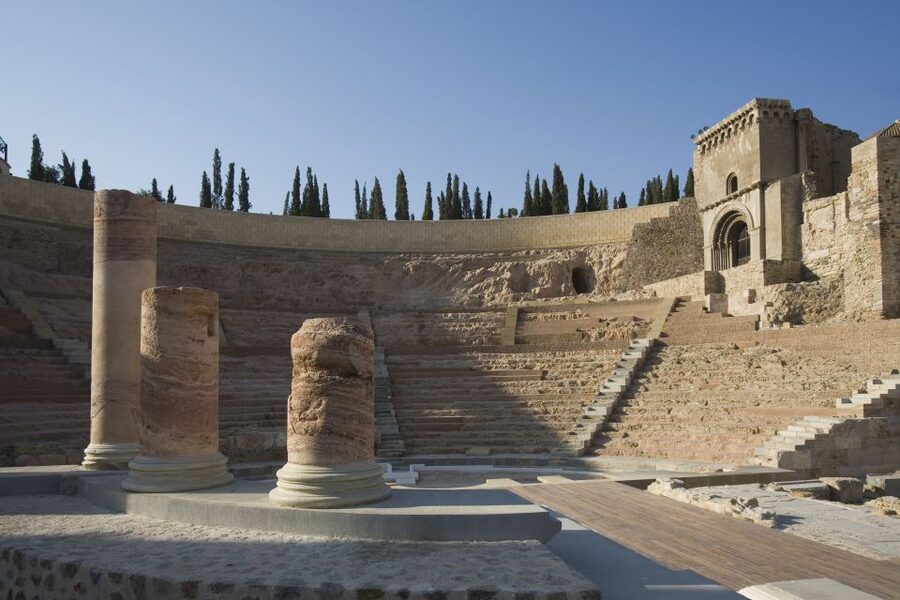
- A large Roman theatre: The restored theatre could seat about 7,000 people and ranks among the largest in Roman Hispania.
- Molinete’s Roman remains: See the Curia, Colonial Forum, Sanctuary of Isis, roads, baths, and Atrium Building.
- Flexible 15-day validity: You do not need to force all three visits into one afternoon.
- Self-guided format: An audio guide is optional in Spanish, English, or French, while live guides are not included.
Begin with Cartagena’s Punic Wall
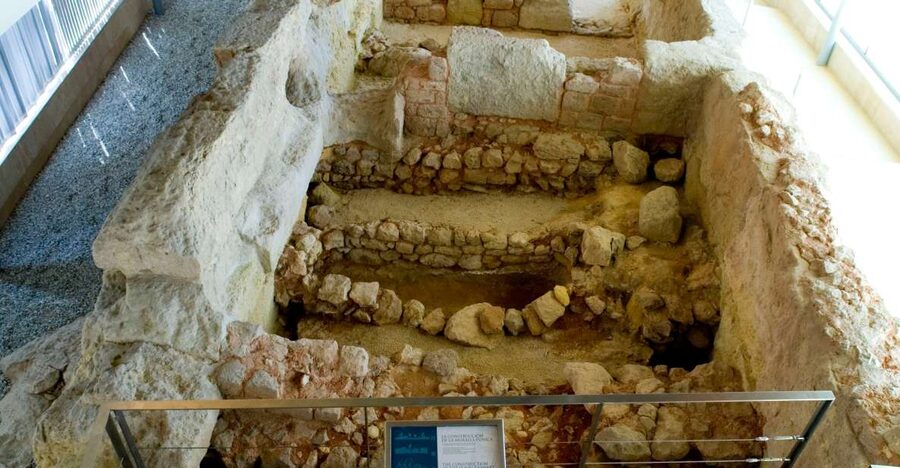
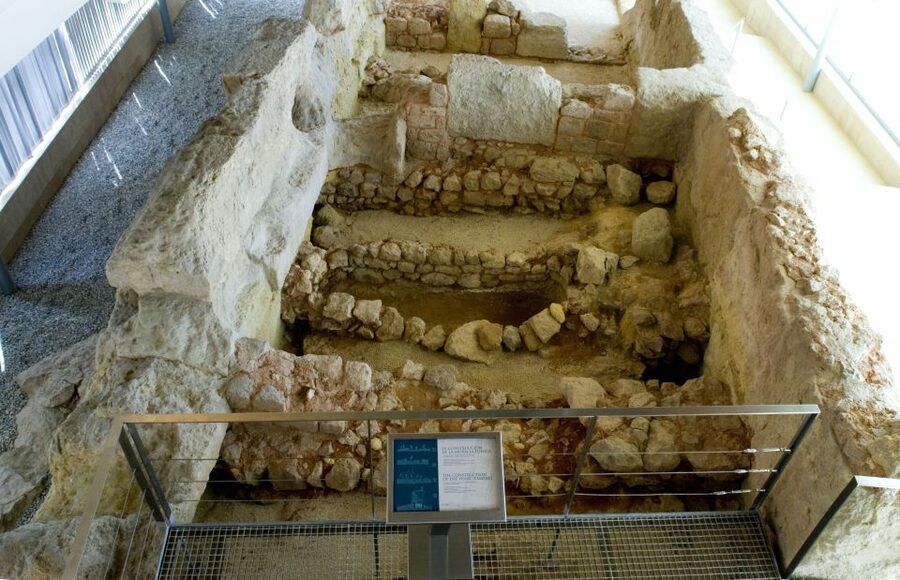
The Punic Wall is the right place to start because it reaches furthest back in Cartagena’s recorded story. These remains date from the third century BC, when the Carthaginians established Qart Hadast, the city that later became Roman Carthago Nova.
You begin by exchanging your voucher at the reception desk in the Interpretation Center of the Punic Wall. Bring the original voucher. A screenshot is not accepted, and every visitor must change the voucher at the museum reception desk.
The wall gives the ancient city a military setting. It helps you picture Cartagena during the period of Carthaginian control and the conflict that brought Rome into Spain. The Second Punic War was not a small local quarrel. It was part of the wider struggle between Carthage and Rome, with Cartagena serving as an important Carthaginian base.
The reference to Hannibal adds a personal face to this period, but the site itself is more useful for understanding the city’s position and defenses than for presenting a single dramatic story. Take time to look at how the wall was built and how the remains fit into the modern city around them.
This stop also sets a helpful scale for the rest of the visit. You are not starting with the later Roman city and working backward. Instead, you see the earlier foundation first, then follow Cartagena’s change under Rome.
A few more museum visits around Spain worth comparing
- Madrid: Prado Museum Entry Ticket
★ 4.6 · 20,699 reviews - Barcelona: FC Barcelona Museum “Barça Immersive Tour” Ticket
★ 4.4 · 10,944 reviews - Madrid: Reina Sofía Museum Entrance Ticket
★ 4.5 · 8,788 reviews
The Roman Theatre Museum leads you underground
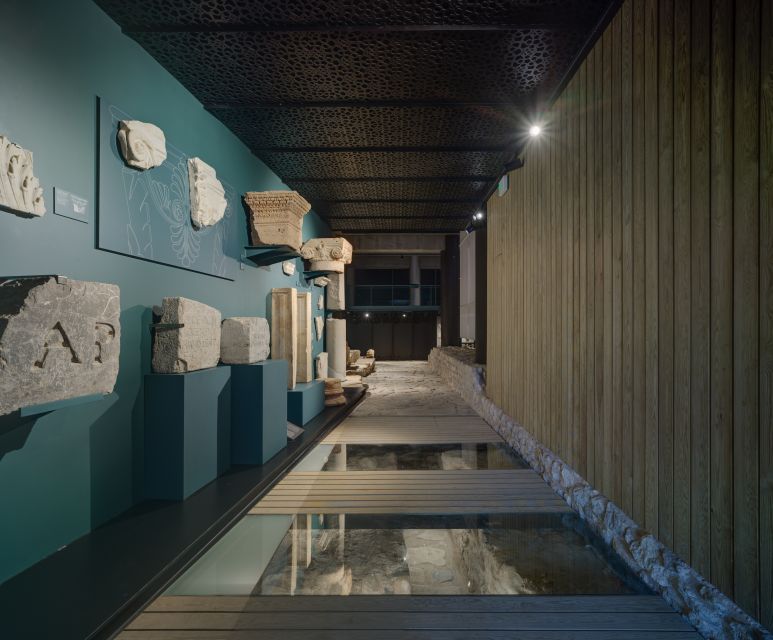
The Roman Theatre Museum begins in the Palacio de Riquelme, beside Cartagena’s Town Hall Square. The building is not simply a ticket hall. Architect Rafael Moneo designed the museum route so that you move through a history-themed passageway beneath the street before reaching the main exhibition areas.
That transition matters. The theatre was found below later buildings, so the route gives you a physical sense of how Cartagena’s modern streets sit above earlier layers. You are not looking at a free-standing ruin in an empty field. The ancient theatre is part of a city that kept building, changing, and covering its past.
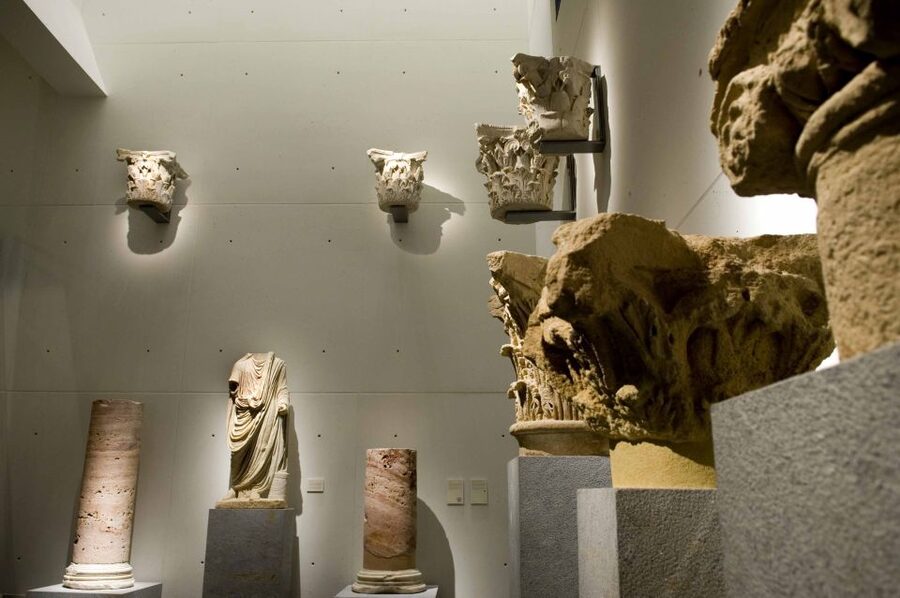
Inside the museum, you see selected pieces from the excavations and learn about the theatre’s architecture, art, and role in Roman life. The displays give context before you reach the monument itself. That is useful because a large ruin can be impressive but confusing if you do not know what you are looking at.
The final section brings you to the Roman Theatre. With seating for about 7,000, it was one of the largest theatres in Roman Hispania. The scale is the key point here. You can stand in the remains and understand that this was not a small neighborhood performance space. It was a major public building in a Roman city of real importance.
The theatre is likely to be the visual centerpiece of your visit. It has the size to make an immediate impression, while the museum helps explain the details that a quick look from outside would miss. I would allow enough time to read the displays instead of treating the museum as a corridor to the seats.
One practical point is worth keeping in mind: you will not have a live guide included. A visitor who expects spoken commentary at each stop may find the visit less satisfying. The optional audio guide is available in Spanish, English, and French, and it may be the better choice if you want more explanation than the objects and panels provide.
Walk through the Roman Forum and Molinete
The Roman Forum Museum is located in the Cerro del Molinete area and works well as the final stop. It takes the Roman story beyond one grand monument and shows how the city functioned day to day.
Begin in the museum, where the displays trace the long history of Molinete from the present back to ancient Carthago Nova. This introduction is important because the archaeological park is not just one building. It is a group of remains from different parts of public, religious, and private life.
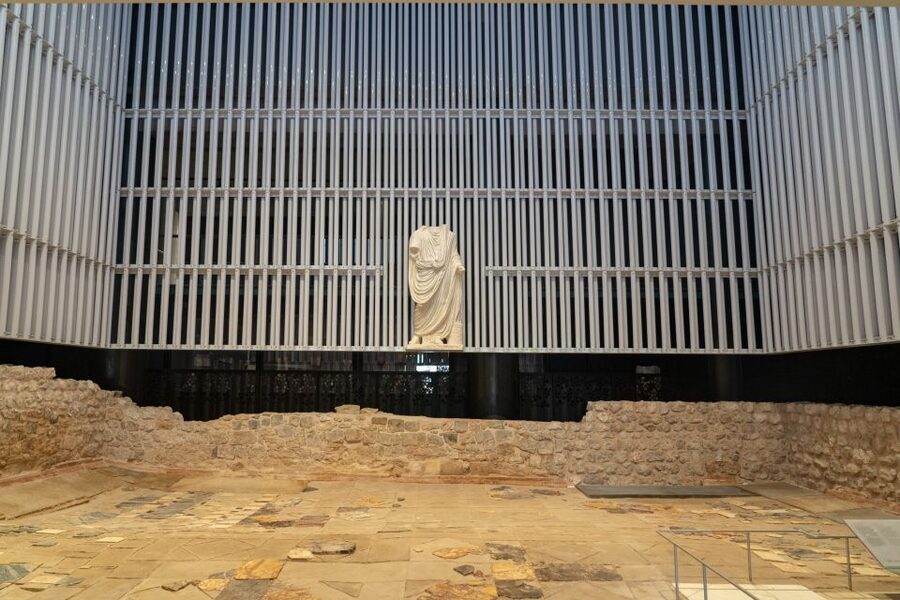
The route then moves outdoors through the archaeological park. The remains include the Curia, or local senate, with a marble pavement that was richly decorated. This is where the city’s political business took place, and the floor gives you a sense of the care and expense put into public interiors.
Next comes the Colonial Forum, the city’s central public area. Its arrangement reflected a Roman idea of order, with levels and spaces that expressed the relationship between the divine and human worlds. You do not need to know every Roman title to understand the basic message: public space was carefully arranged to show status, power, and religious importance.
The Sanctuary of Isis adds another layer. Here, mystery cults connected with Egyptian gods were celebrated. It is a useful reminder that Roman cities were not culturally simple. Roman rule brought its own traditions, but religious practice could also include gods and rituals from far beyond Italy.
As you walk, look for the old roads and their cart tracks. These marks are easy to skip, yet they may be among the most relatable details on the site. A monumental forum tells you about the city’s public face. A worn road tells you that carts, workers, officials, and ordinary business once passed through the same space.
The port’s thermal baths are another highlight, especially the entrance portico and its original flooring. The baths were practical places for washing and social life, but their design also showed Roman taste and status. The surviving floor helps you picture a finished building rather than a pile of foundations.
The last stop is the Atrium Building. Its tall walls and painted decorations give the route a more intimate ending after the open public areas. The wall paintings and banquet setting point toward private life and entertainment among wealthier residents.
This part of the visit rewards patience. The Forum area has more separate remains than the theatre, so it can feel less immediately clear. If you rush, you may remember only a series of foundations. If you pause at the Curia, roads, baths, and Atrium Building, the site becomes a walk through the working parts of Roman Cartagena.
Why the three-site combination works
The ticket has a clear historical progression. The Punic Wall introduces Carthaginian Qart Hadast. The Roman Theatre shows the city as a place of large public spectacles. The Molinete site fills in the political, religious, commercial, and domestic parts of Roman life.
That range is the main reason to choose the combination. A single monument can leave you with a striking image but an incomplete understanding. Here, you see defense, entertainment, government, religion, roads, bathing, and private decoration across three sites.
The order is not necessarily rigid. The voucher is valid for 15 days, so you can check opening times and divide the visits across your stay. This is useful in Cartagena, where forcing several museums into one block can make the smaller details blur together.
The flexibility also makes the ticket more practical for families, visitors with limited energy, and anyone fitting archaeology around other plans. You can visit the theatre when you are near Town Hall Square, then return to the Molinete area later instead of crossing the city repeatedly in one rushed outing.
Same city, a completely different collection:
- Barcelona: Park Güell and Gaudí House Museum Entry Ticket
★ 4.5 · 6,326 reviews - Seville: Puro Flamenco Show with Optional Museum Ticket
★ 4.8 · 6,088 reviews - Barcelona: Picasso Museum Skip-the-Line Guided Tour
★ 4.5 · 3,355 reviews - Moco Museum Barcelona: Modern & Contemporary Art
★ 4.6 · 3,229 reviews
What the $18 price really covers
At $18 per person, the package offers reasonable value if you intend to visit all three sites. You are paying for entry to the Punic Wall, Roman Theatre Museum, and Roman Forum Museum, not for transport, hotel pickup, or a private guide.
The value is strongest for visitors who already want to see Cartagena’s major archaeological attractions. Buying separate admissions may be less convenient, while this option puts the three main sites under one booking and gives you a longer window to use it.
The price is less convincing if you plan to see only the theatre. In that case, a single-site ticket may make more sense, if available for your chosen date. The package earns its keep through the Forum and Punic Wall, so plan to visit all three before booking.
The optional audio guide affects the final cost and the feel of the visit. Without it, you are exploring independently. With it, you can add commentary in Spanish, English, or French, but you still will not have a live guide walking with you.
Timing, access, and simple practical advice
The stated duration is 15 days, which refers to the ticket’s validity rather than a 15-day guided program. Check the opening times for all three museums before setting your schedule. The sites may not share identical hours, and the ticket is not a fast-pass entry.
You need to exchange the voucher at the Punic Wall reception desk, even if you plan to visit another location first. Do not rely on a phone screenshot. Bring your passport or ID card, and keep the original voucher available.
Large bags and luggage are not allowed, and food and drinks are also prohibited. Assistance dogs are allowed, while other pets are not. The sites are wheelchair accessible, which makes the package easier to consider for visitors who need step-free access, though you should still check the current route conditions when arranging your day.
There is no hotel pickup or drop-off, and transportation is not included. You make your own way between the locations. That is not a major issue for an independent visit, but it does mean you should leave room in your schedule for walking through Cartagena.
The host or greeter languages are Spanish and English. The optional audio guide adds French to the available languages. No guide names are provided, and no live guide is included, so do not book this expecting a small escorted group.
Who will get the most from this ticket
I would choose this package if you enjoy history but prefer to set your own pace. You can spend longer at the theatre, move quickly through the museum displays, or save the Forum for another day without losing the whole ticket.
It also suits anyone who wants more than a single Roman monument. The Punic Wall gives you the pre-Roman setting, while the Forum shows the city as a working place. That range gives you a better picture of Cartagena than the theatre alone.
Families may appreciate the shorter, varied visits, though younger children may not care equally about every display. The theatre offers the clearest visual payoff, while roads, baths, and the Atrium Building may need more explanation to hold their attention.
I would hesitate if you need a personal guide, a tightly timed tour, or transport between sites. The self-guided format requires you to manage the voucher exchange, opening times, and route yourself. A higher rating is not a guarantee that the format will suit everyone, especially since one booking specifically noted the lack of a guided element and another found expectations were higher than the actual visit.
Should you book the Cartagena archaeological combo?
Book it if you want a flexible, low-cost way to see Cartagena’s main ancient sites and you are comfortable exploring without a live guide. The best parts are the theatre’s size, the Punic Wall’s early date, and the Forum’s unusual range of remains, from senate flooring to Egyptian religious space and painted walls.
Skip it if you only want one quick attraction or if you expect a fully narrated tour with transportation. For most independent visitors, though, the $18 price is fair, especially when you use the 15-day validity to visit all three sites without rushing.
FAQ
What sites are included in the ticket?
The ticket includes entry to the Punic Wall, the Roman Theatre Museum, and the Roman Forum Museum.
Where do I exchange the voucher?
You must exchange the voucher at the reception desk in the Interpretation Center of the Punic Wall.
Can I use a screenshot of the voucher?
No. A voucher screenshot is not valid. You must present the required voucher and exchange it at the museum reception desk.
How long is the ticket valid?
The ticket is valid for 15 days. This is the validity period for visiting the included sites, not a 15-day guided tour.
Is a live guide included?
No. A live guide is not included. An audio guide can be selected as an optional extra.
Which audio guide languages are available?
The optional audio guide is available in Spanish, English, and French.
Is transportation included?
No. Hotel pickup, hotel drop-off, and transportation between the sites are not included.
Is the experience wheelchair accessible?
Yes. The activity is listed as wheelchair accessible.
What should I bring, and what is not allowed?
Bring your passport or ID card and your valid voucher. Food, drinks, luggage, and large bags are not allowed. Pets are prohibited, except for assistance dogs.
Just added around Spain
- Girona, Figueres, Dalí Museum and Cadaqués Tour from Barcelona★ 4.5 · 36 reviews
- Erotic Museum Admission Ticket with Audioguide★ 5.0 · 527 reviews
- Dali Museum and Costa Brava Small Group Day Trip from Barcelona★ 5.0 · 77 reviews
- Football Club Barcelona Museum Immersive Tour Guided Visit★ 3.5 · 52 reviews
- Madrid by High-Speed Train with Prado Museum Private Tour★ 4.0 · 33 reviews
- Guitar Legends Hall: Entrance to the Immersive Rock Museum★ 5.0 · 25 reviews
- White Rabbit Museum: The Best Immersive Experience in Catalonia★ 5.0 · 538 reviews
- Private Dali Museum, Besalú & Girona Tour from Barcelona★ 5.0 · 15 reviews
Museum Tours in Spain, compared.
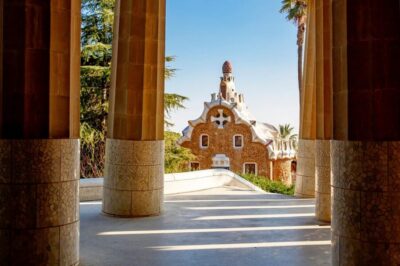
Park Güell and Gaudí House Museum Entry Ticket
Read our review →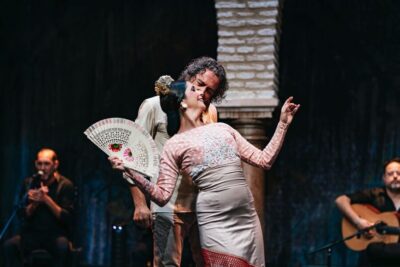
Puro Flamenco Show with Optional Museum Ticket
Read our review →
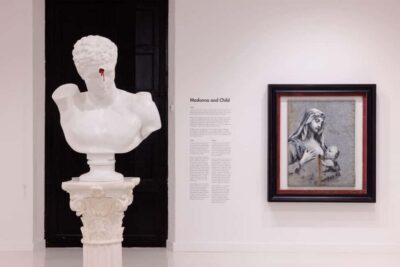
Moco Museum Barcelona: Modern & Contemporary Art
Read our review →
Girona & Dali Museum Small Group Tour with Pick-up from Barcelona
Read our review →
Valencia: Oceanogràfic, Hemisfèric & Science Museum Combo
Read our review →Browse the lists this tour appears in