
Review · WARSAW
Warsaw: POLIN Museum of the History of Polish Jews Ticket
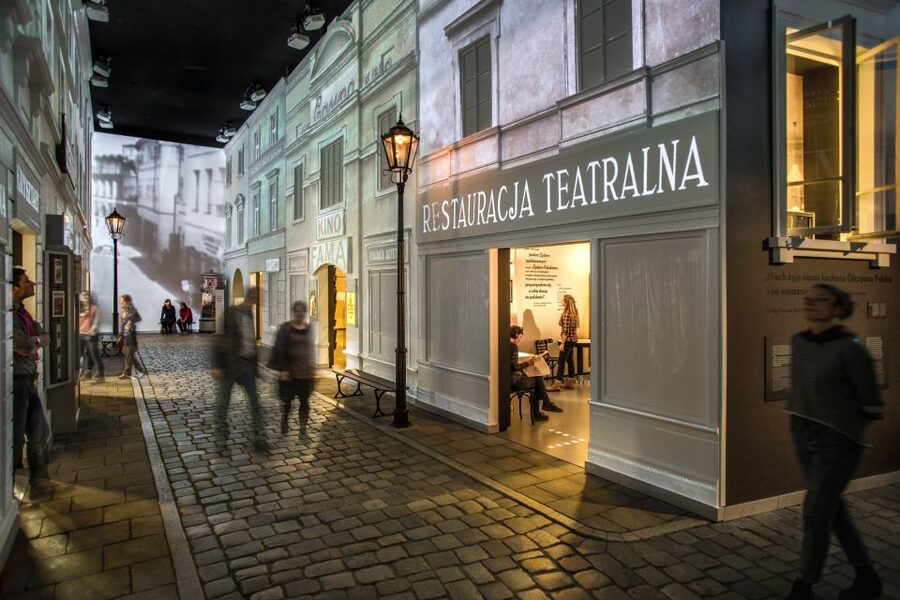
The most important thing to understand about POLIN Museum is that it is not simply a Holocaust museum. Its eight galleries trace roughly 1,000 years of Jewish life in Poland, including community life, work, faith, politics, family, and culture before the catastrophe of the Second World War. The Holocaust is central, but it is not allowed to erase everything that came before it.
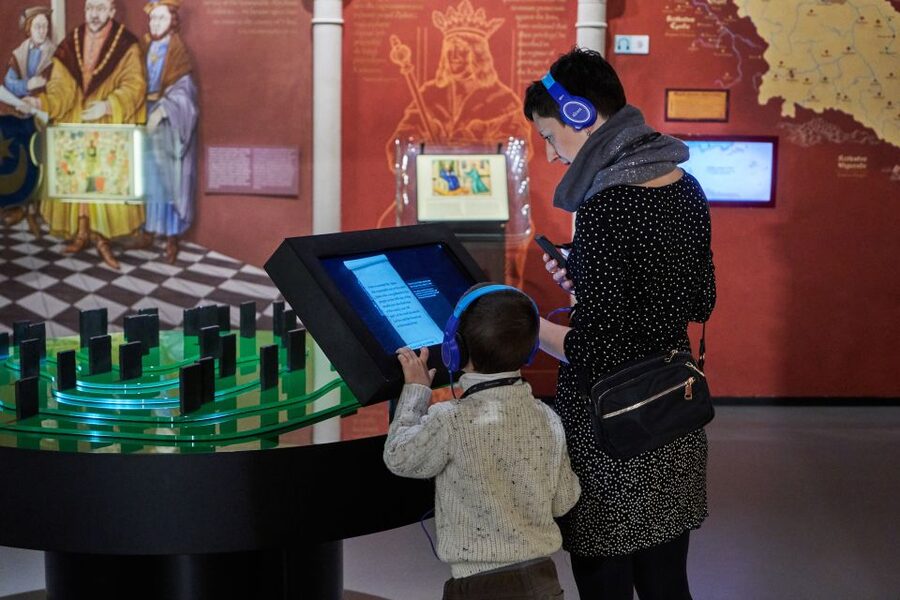
I like the museum’s interactive design, which uses artifacts, paintings, sound, and large installations instead of asking you to read endless rows of labels. I also like the excellent location-based audio guide, which provides the right narration as you move through the galleries. The main caution is time: two hours gives you an outline, while three to six hours lets you read, listen, pause, and think without rushing.
Key points to know before you go
- Eight historical galleries take you from the first Jewish communities in Poland to Jewish life today.
- An automatic audio guide helps explain the displays in Polish or English and is included with admission.
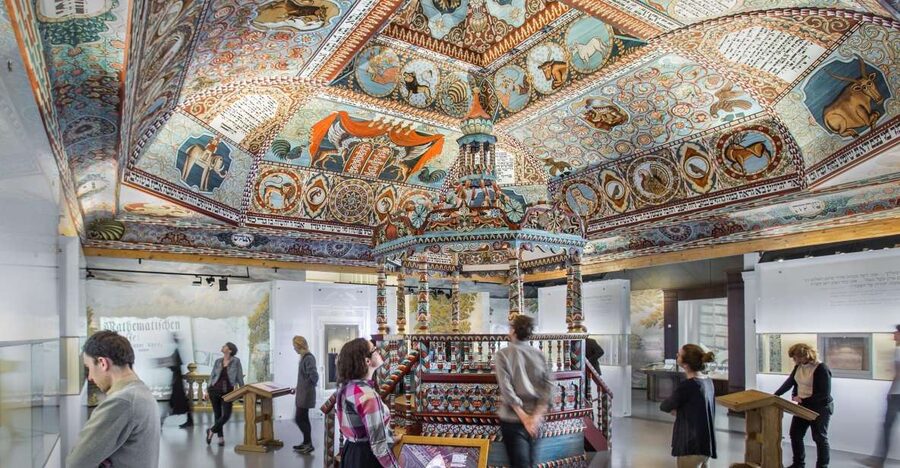
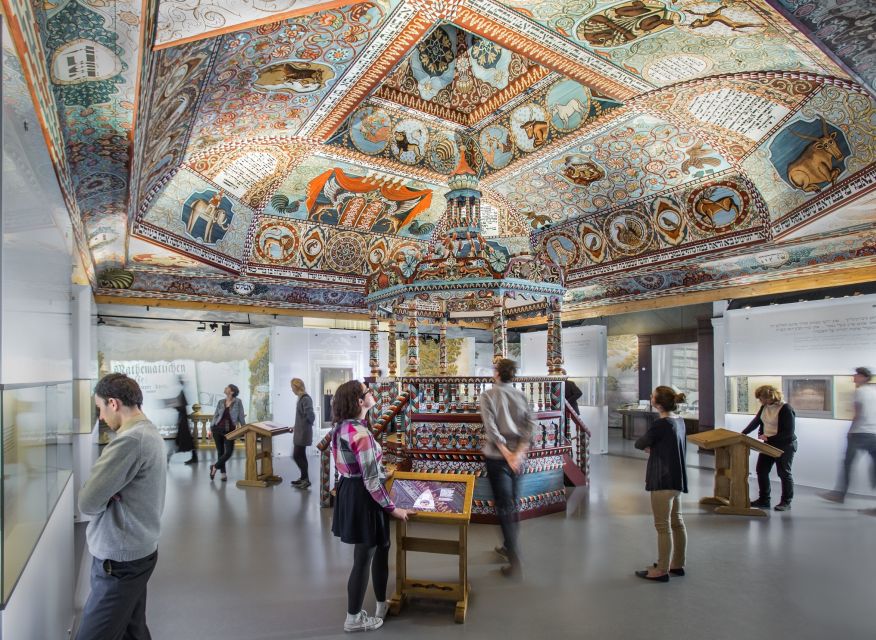
- The reconstructed synagogue ceiling is one of the museum’s most memorable visual features.
- The Holocaust section is powerful, but the museum places it within the longer story of Jewish life and achievement.
- You can leave for lunch and return the same day, a useful option during a long visit.
- Allow at least three hours, and consider four to six hours if you want to read and listen to most of the material.
Why POLIN begins long before the Holocaust
If your knowledge of Polish Jewish history begins in the 1930s, POLIN gives you a much larger picture. The first galleries explain how Jewish communities formed in Poland, how they organized themselves, and how Jewish people became part of Polish economic, religious, and social life.
This opening section matters because it gives the later galleries proper weight. You are not looking at the destruction of an anonymous population. You are learning about communities with their own schools, leaders, customs, businesses, political arguments, and family traditions.
The displays use objects and reconstructed settings to make distant periods easier to picture. You might stop to examine a document, a painting, or a physical object, then move to an audio or touch-based display that adds another layer. I found this approach more useful than a simple parade of dates because it connects major events with ordinary daily life.
The early history requires patience. There is a great deal of information about the medieval and early modern periods, and the amount can feel heavy if you try to absorb every label. If your main interest is the Second World War, you can move at a quicker pace here. Still, I recommend giving these galleries more than a passing glance. The museum’s main purpose is to show what was lost, and you cannot understand that loss without first seeing what existed.
More Museum Tours in Warsaw
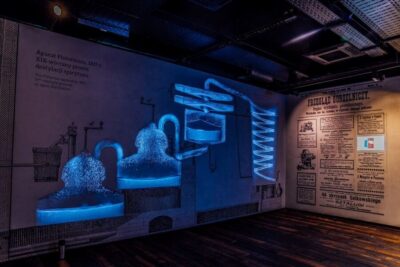
- Warsaw: Polish Vodka Museum Tour with Tasting
★ 4.6 · 788 reviews - Warsaw: Museum of Life Under Communism Entry Ticket
★ 4.5 · 178 reviews - Warsaw: Ghetto, Jewish Cemetery & POLIN Museum Private Tour
★ 4.8 · 132 reviews
The first galleries: community, faith, and daily life
The early galleries focus on settlement and community formation. They explain how Jewish people lived in Poland, how communities governed themselves, and how religion shaped both public and private life.
Look for the way the museum presents Jewish life as varied rather than uniform. The history includes religious practice, education, trade, family life, and relations with the surrounding Polish population. The point is not to reduce the subject to one fixed identity. Jewish life changed from one period and place to another.
The museum also gives space to individual Jewish figures and their role in Polish society. This is helpful if you prefer history told through people rather than institutions. Personal stories make it easier to see how Jewish citizens contributed to intellectual, cultural, economic, and political life.
You may find that the earliest galleries take longer than expected. The displays are inviting, but there is a lot to read. I suggest choosing the subjects that interest you most instead of trying to memorize everything. The audio guide can help you keep a steady pace, though some people find that listening and reading wall text at the same time is difficult.
The reconstructed synagogue ceiling
One of the museum’s most striking features is the reconstructed painted ceiling of a wooden synagogue. It provides a visual break from the text-heavy parts of the exhibition and shows the beauty and imagination of Jewish religious art in Poland.
This is not just a decorative stop. The ceiling helps you picture the buildings, rituals, and shared spaces that supported Jewish communities. It also reminds you that much of this architectural heritage was destroyed during the war.
Take a moment here rather than treating it as a quick photo stop. The museum’s strength is its ability to connect an object or reconstruction with the larger story around it. The ceiling works because it feels like part of a living world, not an isolated museum piece.
Jewish life during change and modernization
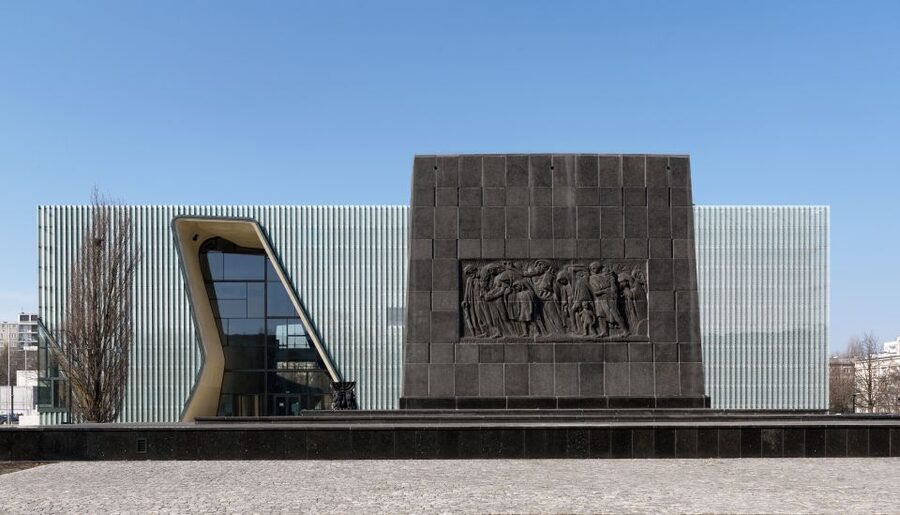
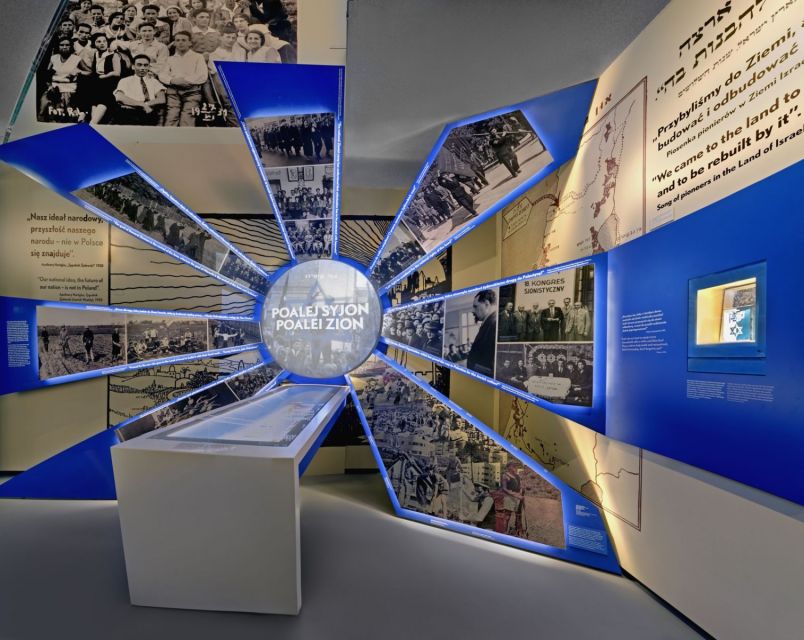
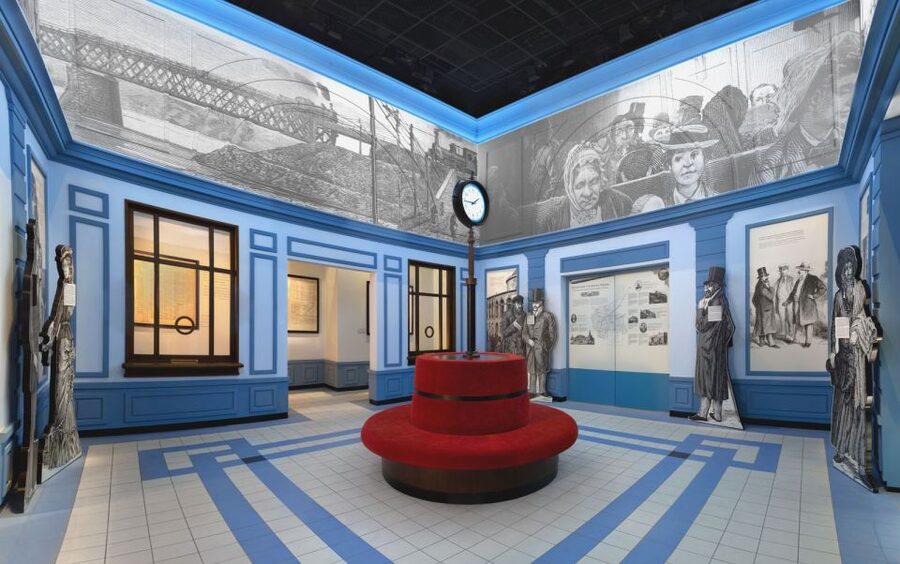
As you move forward, the museum follows Jewish communities through periods of political change, industrial growth, urbanization, and modernization. Jewish people faced new opportunities and new pressures, and the galleries show that there was no single answer to questions about religion, identity, language, and political involvement.
This section is especially useful for understanding Jewish life as an active, changing culture. Some people sought greater integration into wider society. Others defended older customs or developed new political movements. The museum presents these debates as real disagreements rather than a neat march toward one final outcome.
I liked this part because it shows people making choices within difficult circumstances. It also places Jewish history inside the wider history of Poland. Policies, borders, migration, work, and urban growth all affected Jewish communities.
There is a practical issue here: the museum’s material is extensive. If you listen to every audio segment and read every panel, you could spend most of a day inside. That is not a complaint, but you should plan your visit around your energy. Comfortable shoes help, and the many seating areas make it easier to stop before museum fatigue takes over.
A few more museum visits around Poland worth comparing
- New York City: American Museum of Natural History Ticket
★ 4.5 · 15,447 reviews - Venice: St. Mark Basilica Ticket, Audioguide+History Gallery
★ 3.9 · 4,780 reviews - Berlin: Natural History Museum Entrance Ticket
★ 4.6 · 3,382 reviews - Paris: Louvre Museum Entry with History of Mona Lisa
★ 3.9 · 2,823 reviews
The Holocaust section and the destruction of Jewish Poland
The Holocaust galleries are emotionally demanding, even though the museum generally presents the material in a controlled and direct way. You will see how Nazi persecution destroyed Jewish communities in Poland and how the war altered the country’s political, social, and religious life.
The power of this section comes partly from what you have already seen. You know that the people described here had families, traditions, work, neighborhoods, and long-established communities. The Holocaust is therefore shown as the destruction of a living society, not merely as a sequence of military and political events.
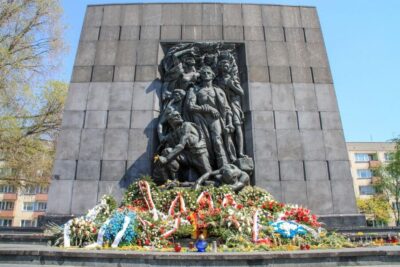
This is an important stop for anyone visiting Warsaw’s former Jewish district or the nearby Warsaw Ghetto Uprising monument. The museum gives historical meaning to places that can otherwise be difficult to understand. It also provides useful context if you have visited Auschwitz-Birkenau, since POLIN tells the story of Jewish life before and beyond the camp experience.
Expect to need a pause after this section. The subject is painful, and you should not feel obliged to hurry through it. Seating is available in parts of the museum, and the option to leave for lunch and return later can be helpful on a long day.
Some people may want more survivor testimony or more emphasis on particular wartime events. The museum has a broad historical task, so it cannot give equal space to every personal story. If you are looking for a specialist Holocaust museum alone, this is a wider experience. If you want to understand the Holocaust within 1,000 years of Jewish life in Poland, that wider view is one of its main strengths.
After 1945: survival, memory, and renewal
The story does not end in 1945. Later displays examine what happened to Jewish life after the war, including the difficult question of how culture, memory, and community could continue after such enormous destruction.
This final part is valuable because it avoids treating Jewish history in Poland as something that ended with the Holocaust. It shows the challenges of rebuilding identity and remembering the past while living in a changed political and social world.
The museum also points toward the revival of Jewish culture after the Second World War. The word revival should not make this sound simple or complete. The postwar story includes loss, silence, memory, and renewed interest. POLIN lets you consider how the past remains part of present-day Poland.
Give this section enough time. It can be tempting to spend all your energy in the earlier galleries and then rush through the final material. If you have three hours, keep an eye on the clock so that you do not miss the postwar story.
How the audio guide works
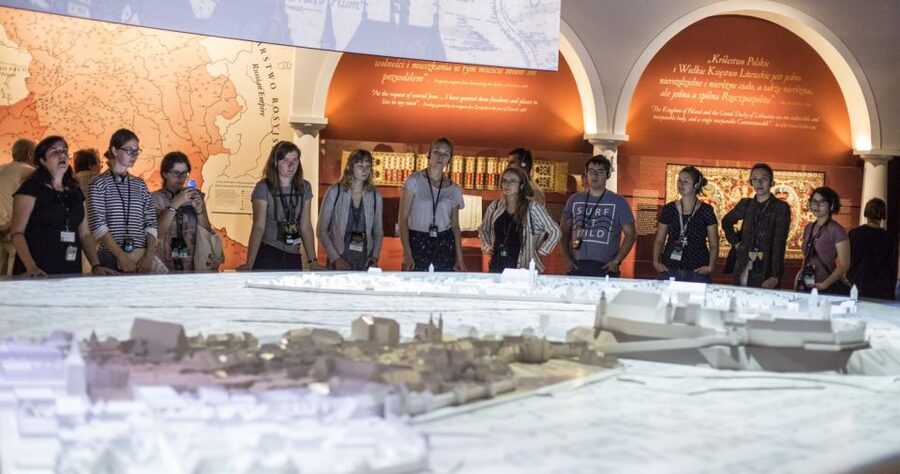
The included audio guide is one of the best practical features of the visit. It provides clear narration in Polish or English and is designed to help you follow the exhibition without a live guide. It also uses your location in the museum to present the appropriate material as you move around.
That makes it easy to visit independently. You can pause, continue, or skip sections based on your interest. The audio is particularly useful when a display contains complex political or religious background that is hard to absorb from a short label.
There is a tradeoff. POLIN combines spoken narration with a large amount of written material, and listening while reading can become tiring. I suggest using the audio guide as your main explanation, then reading the panels that genuinely interest you. If you try to absorb every word in both formats, the visit will take much longer.
There is no live guided tour included with this ticket. If you prefer asking questions as you go, you may find the self-guided format less satisfying. For independent visitors, families with different interests, or anyone who likes to control the pace, the audio system works well.
How long should you plan?
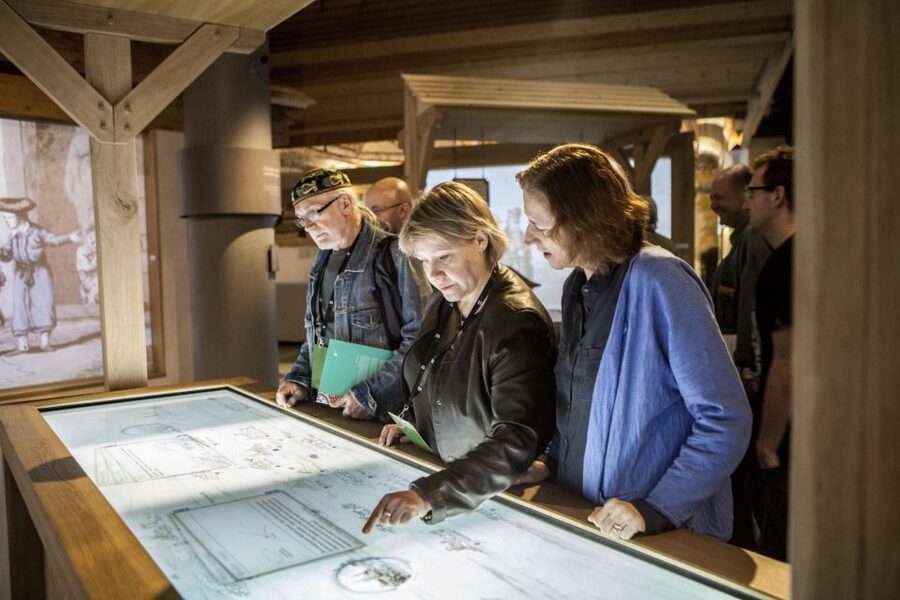
The official estimate for the main exhibition is about two hours, but I would treat that as the shortest useful visit. Two hours lets you move through the main story and listen to selected sections. It does not leave much time for careful reading or long pauses.
For most people, three to four hours is a better plan. That gives you room to explore the galleries, use the audio guide, stop at the synagogue ceiling, and spend thoughtful time in the Holocaust and postwar sections.
History enthusiasts could easily spend five or six hours inside. You may also find temporary exhibitions available during your visit, and these add time. The one-day ticket allows you to leave for lunch and return on the same day, which turns the museum into a flexible half-day or full-day activity.
Admission closes two hours before the museum itself closes, so do not arrive late in the afternoon expecting to see everything. Check the opening schedule before setting out, especially since the museum is closed on Tuesdays.
Food, comfort, and practical details
A long visit is easier because the museum has seating areas and a restaurant with informal cafeteria-style service. The food is a useful reason to take a break rather than trying to push through all eight galleries at once.
You will need to pass electronic security screening before entering the main exhibition. Oversize luggage is not allowed, so travel light. Children aged seven or younger may enter free, while children aged twelve or younger must be supervised by an adult at all times.
The museum is wheelchair accessible. The exhibition includes lower-level areas, and one account noted that some ceilings can feel low there. School groups may also make parts of the museum noisier at busy times, so a quieter visit may require some flexibility.
Your voucher is presented at the museum entrance. The ticket is valid for one day, and cancellation is available up to 24 hours in advance for a full refund. You can also reserve now and pay later, which is useful when your Warsaw plans are still shifting.
Is the $12 ticket good value?
At $12 per person, I consider this a strong value for Warsaw. The ticket includes the permanent exhibition, any available temporary exhibition, and the audio guide. If you spend three or four hours inside, the cost compares well with many shorter sightseeing activities.
The real value comes from the amount of material you can explore at your own pace. You are not paying for a quick room of objects. You are paying for a large historical presentation with reconstructed spaces, multimedia displays, artifacts, paintings, and audio explanations.
The price is less important if you only have 60 to 90 minutes. In that case, you will see only part of what the museum offers, and the visit may feel rushed. If your schedule allows a half-day, the ticket becomes much easier to justify.
Who will get the most from POLIN?
I recommend POLIN to anyone interested in Warsaw, Polish history, Jewish history, religion, migration, the Second World War, or museum design. It works for first-time visitors and for people who already know something about the Holocaust but want a fuller account of the society that existed before it.
Families can use the interactive elements to keep younger visitors involved, though the subject becomes emotionally difficult in the wartime galleries. Adults should decide how much detail is suitable for each child.
The museum is also useful before visiting the Warsaw Ghetto Uprising monument or Auschwitz-Birkenau. It does not replace those places, but it gives them context. You understand the scale of the loss more clearly after seeing the centuries of community life that preceded it.
You may want to choose another activity if you dislike museums with a lot of written and recorded information, or if you have only a short time in Warsaw. The audio guide is very good, but the visit remains substantial. This is not a quick photo stop.
Should you book the POLIN Museum ticket?
Yes, if you can set aside at least three hours and want more than a narrow Holocaust narrative. POLIN presents Jewish life in Poland as a long, changing story, then shows how the Holocaust shattered that world and how memory and culture continued afterward.
Book it for a morning or early afternoon, arrive with light luggage, and use the audio guide selectively. Plan a food break if you expect to stay several hours. At $12, it is one of Warsaw’s better cultural values, provided you give the museum enough time to do its work.
FAQ
Where is the POLIN Museum located?
The POLIN Museum of the History of Polish Jews is in Warsaw, in Poland’s Mazovia Province. Present your voucher at the museum entrance.
What does the ticket include?
The ticket includes access to the permanent exhibition, access to a temporary exhibition if one is available, and an audio guide.
Is a live guide included?
No. A guided tour is not included. The ticket provides an audio guide, with Polish and English listed as the available languages.
How long does the museum visit take?
The estimated time for the main exhibition is two hours. To see the galleries at a more relaxed pace, plan around three to four hours. Some people may want five or six hours.
Can I leave the museum and return?
Yes. You can leave for lunch and return on the same day, as long as your ticket remains valid for that day.
Can I enter at any time?
The ticket is valid for one day, and you may enter at your convenience during opening hours. Admission closes two hours before the museum closes.
Is the museum open every day?
No. The museum is closed on Tuesdays.
Is POLIN Museum wheelchair accessible?
Yes. The activity information states that the museum is wheelchair accessible.
Are children allowed to enter?
Yes. Children aged seven or younger may enter free of charge. Children aged twelve or younger must be supervised by an adult at all times.
Can I bring oversize luggage?
No. Oversize luggage is not allowed. You must also pass electronic scanning before entering the main exhibition.
Just added around Poland
- Schindler’s Factory Skip-the-line Museum Ticket★ 4.9 · 15 reviews
- Schindler’s Factory Museum Guided Tour – Krakow★ 4.5 · 15 reviews
- Krakow: Schindler’s Factory Museum Guided Tour★ 4.1 · 86 reviews
- Schindler’s Factory Museum in Krakow – Guided Tour★ 4.3 · 33 reviews
- Krakow: Rynek Underground Museum Skip-the-line Guided Tour★ 4.7 · 138 reviews
- Krakow: Vodka Factory Museum Entry Ticket and Tasting★ 4.3 · 75 reviews
- Krakow: Rynek Underground Museum Guided Tour & Stories★ 4.8 · 26 reviews
- Krakow: Skip-the-Line Rynek Underground Museum Guided Tour★ 4.7 · 26 reviews
Museum Tours in Warsaw, compared.
Ghetto, Jewish Cemetery & POLIN Museum Private Tour
Read our review →

Chopin Tour in Warsaw with Skip-the-line Museum & Concert
Read our review →Browse the lists this tour appears in