
Review · WARSAW
Warsaw: Ghetto, Jewish Cemetery & POLIN Museum Private Tour
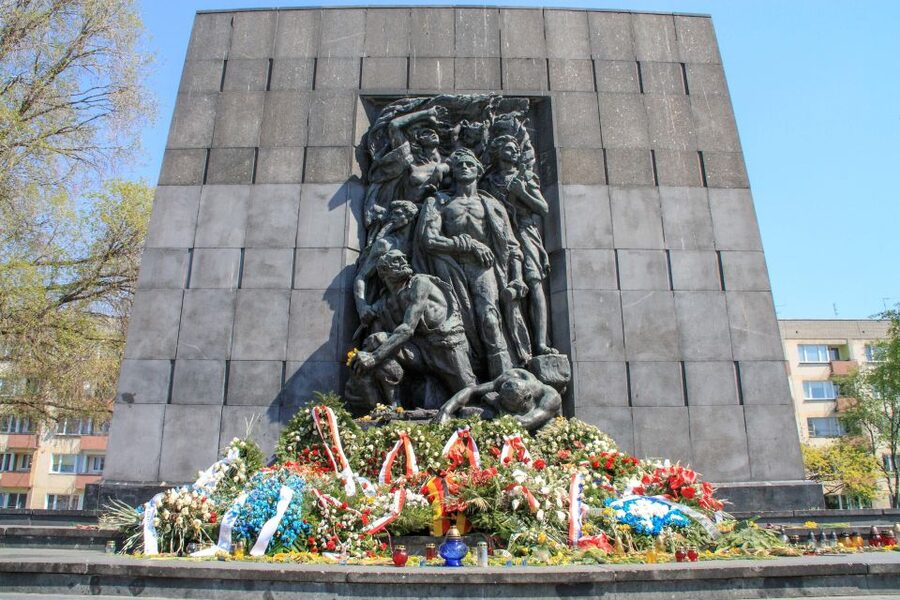
Warsaw’s former Jewish ghetto survives in fragments: a boundary marker here, a monument there, and streets where whole neighborhoods once stood. This private tour connects those pieces into a clear story, from daily hunger and disease to the 1943 uprising and the deportations from Umschlagplatz. The Mila 18 resistance site and the Ghetto Heroes Monument give the walk its strongest emotional weight.
I like the private format, since you can ask direct questions and request more detail in your own language. I also like the choice of three tour lengths: the two-hour walk covers the key ghetto sites, while the five-hour version adds both the Jewish Cemetery and the POLIN Museum.
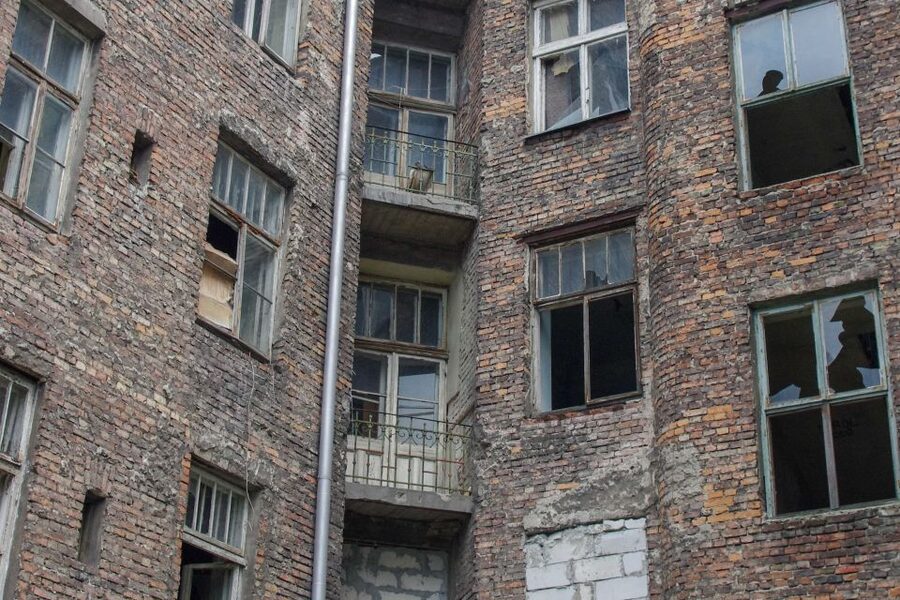
The main consideration is that much of the original ghetto was destroyed, so this is not a tour of preserved wartime buildings. You need to pay close attention to photographs, maps, boundary markers, and the guide’s explanation to picture what once filled these streets.
Key points to know before booking
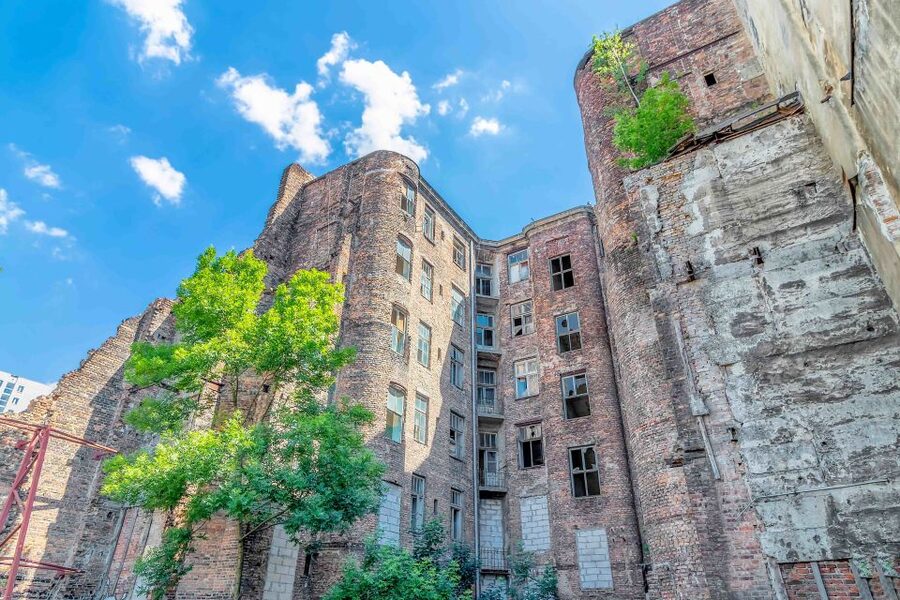
- Mila 18 brings the uprising into focus: The former bunker site helps explain how Jewish resistance groups fought back in 1943.
- Umschlagplatz gives the tour a hard ending: This monument marks the departure point for Jews sent to Treblinka.
- The two-hour option is the essential walking route: It covers the former ghetto, the boundary markers, the Ghetto Heroes Monument, Mila 18, and Umschlagplatz.
- The Jewish Cemetery adds names and individual lives: The three-hour option includes graves of religious leaders, political activists, cultural figures, and unnamed victims.
- POLIN changes the scale of the story: The five-hour tour adds the museum’s exhibitions on Polish Jewish life before, during, and after the war.
- The guide’s language matters: Tours are offered in English, Spanish, French, German, Italian, Polish, and Russian.
Starting near the Field Cathedral
The meeting point is beside the anchor monument in front of the main entrance to the Field Cathedral of the Polish Army at Długa 13/15. This is near Warsaw’s Old Town, but it is not a hotel pickup for most visitors, so check the location before setting out.
Pickup is available only from accommodations within 1.5 kilometers of the meeting point. If your hotel is farther away, plan to meet the guide at the cathedral. You should also check your email the day before, since the tour provider sends important meeting information there.
The tour is private, which makes the starting point easier to manage than a large group gathering. You are not waiting for a busload of people or trying to hear a guide across a crowd. The walk still deals with grave subjects, but a small group lets you pause when a question comes up.
More Museum Tours in Warsaw
- Warsaw: POLIN Museum of the History of Polish Jews Ticket
★ 4.7 · 1,142 reviews - Warsaw: Polish Vodka Museum Tour with Tasting
★ 4.6 · 788 reviews - Warsaw: Museum of Life Under Communism Entry Ticket
★ 4.5 · 178 reviews
The two-hour route through the former ghetto
The shortest option is the best fit if you have limited time or want a focused introduction to wartime Warsaw. Your guide takes you through the area of the former ghetto and explains what happened after German occupation divided and confined Warsaw’s Jewish population.
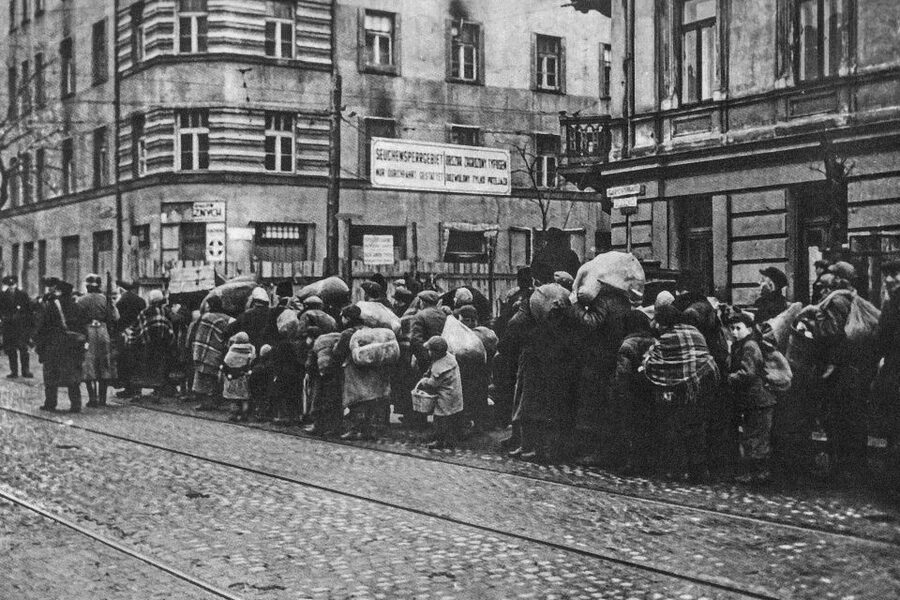
More than 400,000 Jews from Warsaw and nearby areas were imprisoned in the ghetto. The scale is difficult to grasp from modern streets alone, since war damage and postwar rebuilding removed much of the original fabric. This is why the guide’s use of old photographs and street references matters so much.
You will see traces of the ghetto boundary markers. These are modest physical reminders, but they help show how confinement was imposed onto an existing city. Your guide explains the conditions inside the walls, including hunger, disease, overcrowding, and death, while also making room for stories of people who lived there.
The tour also addresses the difference between passive suffering and organized resistance. Life in the ghetto was shaped by starvation and terror, but Jewish people also formed underground groups, created cultural networks, and prepared to fight when deportations and destruction intensified.
The Ghetto Heroes Monument and Mila 18
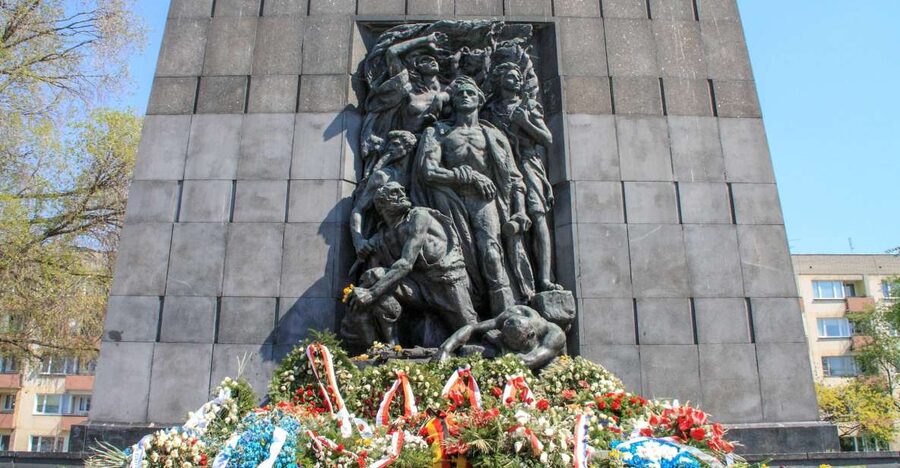
The Ghetto Heroes Monument is one of the central stops. It commemorates the Warsaw Ghetto Uprising of 1943, when Jewish resistance fighters took up arms against German forces despite having very limited weapons and little hope of survival.
The monument is especially useful with a guide because its meaning is easy to miss if you simply walk past it. Your guide can connect the memorial to the people who fought, the civilians trapped in the ghetto, and the wider Nazi plan to destroy Jewish communities across occupied Poland.
The route also includes the Anielewicz Mound at Mila 18. This was the site of a hidden shelter used by Jewish resistance members. The name refers to Mordechai Anielewicz, a leader of the uprising. The mound is not a dramatic ruin, and that is part of the challenge. You are looking at a place where a major act of resistance occurred, but the physical evidence is restrained.
A private guide can slow down here and answer questions about the uprising. That personal pace is one of the strongest reasons to choose this experience over a quick self-guided circuit of monuments.
Umschlagplatz and the deportations
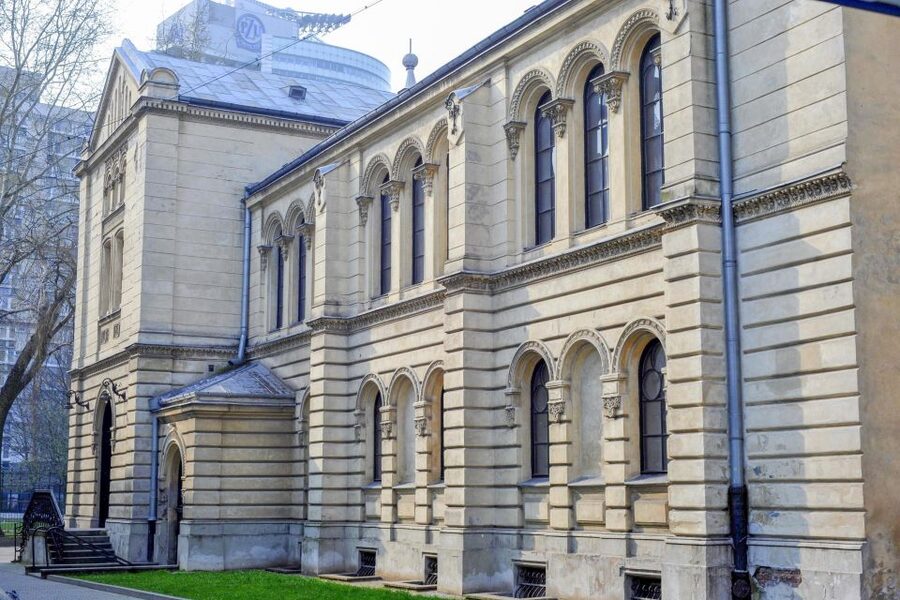
The walking route ends at the Umschlagplatz Monument. This marks the place where Jews were assembled and sent away by train to Treblinka Camp. More than 300,000 Jewish people died at Treblinka.
This stop gives the two-hour tour a clear final point. Earlier sections explain confinement and resistance. Umschlagplatz confronts you with the machinery of deportation and mass murder.
The site is important, but it is not a full museum visit. You will not get the same volume of documents, objects, and personal testimony that a museum can provide. Instead, the monument works as a place of remembrance, with the guide supplying the historical link between the ghetto, deportation trains, and the Holocaust.
I would choose the two-hour route if you want the essential wartime story without committing most of a day. Allow yourself a little extra time afterward before scheduling something light, since the subject matter is intense and the final stop is emotionally demanding.
More private museum tours in Poland:
- Krakow: Skip-the-line Oskar Schindler’s Museum Private Tour
★ 4.7 · 34 reviews - Gdansk: Private Communism Tour with Solidarity Center Museum
★ 5.0 · 28 reviews - Gdansk Private WWII Tour with Museum of the Second World War
★ 4.9 · 22 reviews - PRIVATE EPHESUS TOUR FOR CRUISERS: On-time Return and Skip-Line
★ 5.0 · 5,807 reviews
Adding the Jewish Cemetery in Muranow
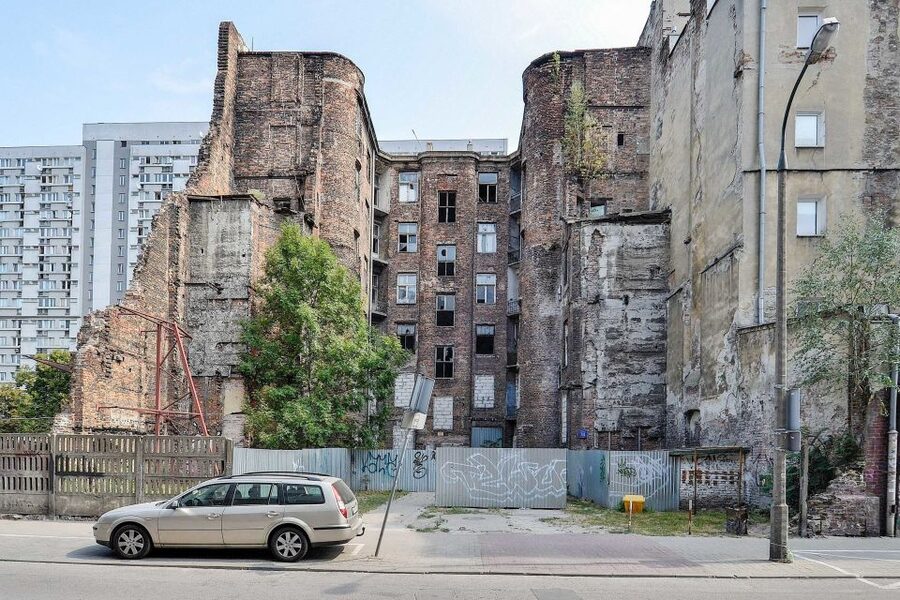
The three-hour option includes the old Jewish Cemetery in Muranow, established in 1809. It is one of the largest Jewish cemeteries in Europe, with more than 200,000 people buried there.
This changes the focus of the experience. The ghetto walk deals mainly with confinement, resistance, and murder. The cemetery reminds you that Jewish life in Warsaw existed for generations before the war. It also gives you a more personal sense of the people and institutions that shaped the city.
Your guide can point out graves connected with spiritual leaders, political activists, and important figures in Jewish culture. You will also see graves of people whose names and stories were not preserved in the same way, including victims of World War II.
The cemetery is outside the central area, so the three-hour and five-hour options include a one-way public transport ticket. This is useful because it avoids a long walk between the main ghetto sites and the cemetery. The cemetery entry fee and transport are included in those longer options, but not in the two-hour tour.
Keep in mind that the cemetery is not just another sightseeing stop. It is a place of mourning and remembrance, so respectful behavior is essential. The guide’s presence helps explain what you are seeing, especially if you do not read Hebrew or are unfamiliar with Jewish cemetery customs.
Why the five-hour POLIN option makes sense
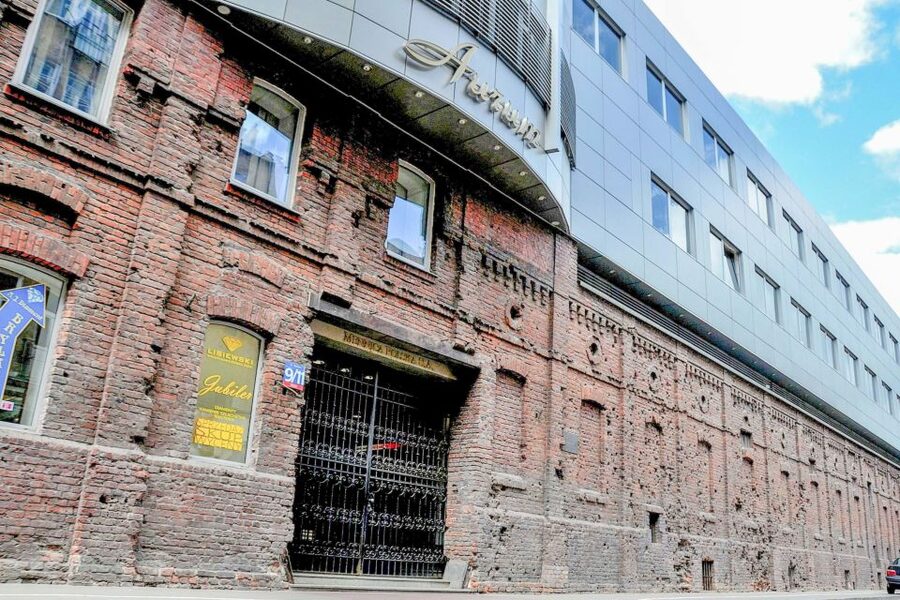
The five-hour tour combines the former ghetto, the Jewish Cemetery, and the POLIN Museum of the History of Polish Jews. If you want to understand Jewish life in Poland beyond the years of Nazi occupation, this is the strongest choice.
The museum covers Polish Jewish history before, during, and after the war. That wider frame is vital. A tour focused only on 1939 to 1945 can unintentionally make Jewish history seem as if it began and ended with the Holocaust. POLIN places the tragedy within centuries of community life, religious practice, politics, culture, and daily experience.
The museum’s main exhibition, current temporary exhibition, and Heritage Gallery are included with the five-hour option. Skip-the-line tickets let you avoid the ticket office queue, but they do not let you bypass entrance or security checks.
Plan your attention carefully. The five-hour package includes several major sites, but a museum of this scale can easily absorb more time than expected. One French-speaking participant stayed for more than three hours because the displays were so detailed and easy to follow. That is a useful warning: if you want to read everything at POLIN, you may prefer to visit it separately rather than squeeze it into a tightly timed tour.
The best use of the five-hour format is to let the guide establish the wartime setting first, then use POLIN to widen your view. You will have a stronger sense of what was destroyed because you have already seen the former ghetto streets and memorials.
Guides, languages, and the private format
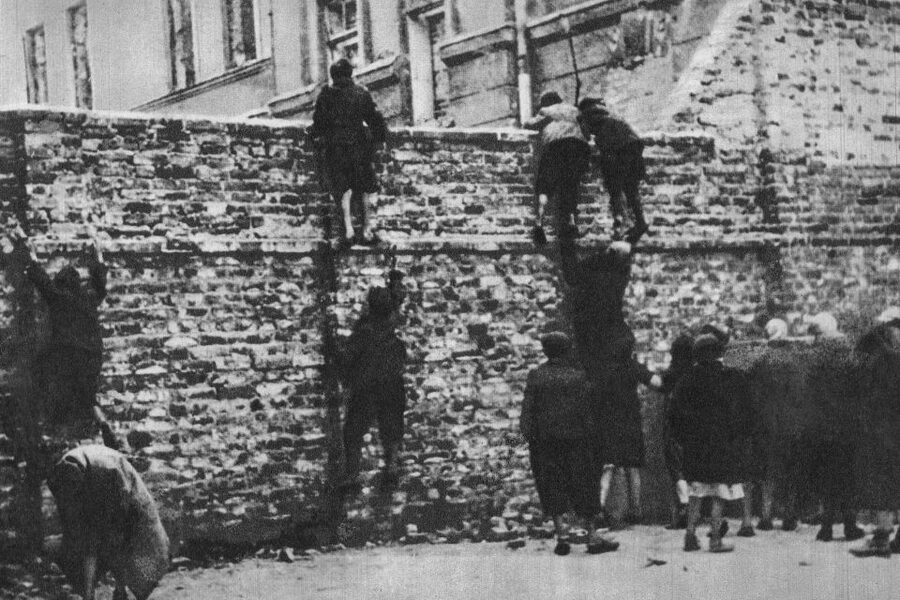
The tour is offered in English, Spanish, French, German, Italian, Polish, and Russian. Language quality matters here. This is a subject filled with names, dates, political terms, and difficult ideas, so clear speech is more important than a polished sightseeing routine.
The guide feedback points to strong language ability and flexible explanations. Iwona, for example, has been praised for clear and understandable German. Another guide made a point of using photographs and street lines to show places that no longer exist, then responded to questions as the walk developed.
That is the kind of guiding this subject needs. A list of dates is not enough. You want someone who can explain how the ghetto changed, why certain memorials are located where they are, and how the uprising fits into the larger story of the occupation.
Because the group is private, you can ask for more detail on the topics that matter most to you. You can also avoid being locked into a one-size-fits-all pace. Still, the exact guide is assigned by the operator, so do not book on the assumption that a particular person will lead your tour.
Is $112 per person good value?
At $112 per person, this is not the cheapest way to see Warsaw’s Jewish heritage. The price makes more sense if you are booking for a small private group and want a guide in a specific language.
The two-hour option gives you a concentrated walking tour with personal commentary. The three-hour version adds cemetery entry and public transport, while the five-hour package includes those elements plus POLIN Museum admission and skip-the-line access to the ticket office.
The value comes from interpretation, not from the number of included objects. Many of the ghetto’s buildings are gone, so you are paying for the guide’s ability to connect surviving markers, memorials, photographs, and street plans. If you simply want to see the monuments, a self-guided route will cost less. If you want the sites explained in a coherent sequence, the private format earns its price more easily.
For most people, the three-hour option is the practical middle ground. It gives you the key ghetto story and the cemetery without committing to the long museum visit. Choose five hours if POLIN is a priority and you prefer to combine the major Jewish-history sites in one booking.
Practical advice for choosing your tour length
Choose the two-hour tour if:
- You want the main former ghetto route.
- You are short on time.
- You mainly want the Ghetto Heroes Monument, Mila 18, boundary markers, and Umschlagplatz.
- You plan to visit POLIN on another day.
Choose the three-hour tour if:
- You want the ghetto walk plus the old Jewish Cemetery.
- You prefer memorial sites and historical places to a large museum.
- You want public transport arranged for the cemetery connection.
Choose the five-hour tour if:
- You want the broadest treatment of Polish Jewish history.
- You prefer one private booking for the ghetto, cemetery, and POLIN.
- You are prepared to spend several hours with serious museum material.
- You want skip-the-line access at the museum ticket office.
Wear comfortable shoes, since the core experience is on foot. The cemetery transfer uses public transport, and the guide provides a one-way ticket for the three-hour and five-hour options.
Who should book this Warsaw tour?
I recommend it most strongly to first-time visitors who want historical context rather than a quick photo stop. It also suits families with older children, students, and anyone who prefers asking questions instead of following a large group.
The subject is difficult, and the tour does not soften the facts about hunger, disease, deportation, and death. That seriousness is appropriate. If you are looking for a light sightseeing activity, choose something else for that part of your day.
The five-hour option suits people who want a full Jewish-history program. The two-hour route is better for a short city break or a first introduction. The three-hour version is ideal if the cemetery matters to you but you would rather explore POLIN at your own pace.
Should you book it?
Book this tour if you want the former Warsaw Ghetto explained as a connected story, not just a series of memorials. The private guide, language choice, photographs, and flexible questions are especially valuable because so little of the original ghetto remains.
Choose the three-hour option for the best balance of time and substance. Choose five hours when POLIN is high on your list and you want the museum tied directly to the sites outside. Skip the experience only if you prefer independent reading, need a very light activity, or already plan a separate, detailed visit to every location.
FAQ
Where does the tour meet?
You meet your guide beside the anchor monument in front of the main entrance to the Field Cathedral of the Polish Army at Długa 13/15, 00-238 Warsaw.
Is hotel pickup available?
Pickup is available only from accommodations within 1.5 kilometers of the designated meeting point. You must provide your address when booking.
What languages are available?
The tour is available in Spanish, English, French, German, Italian, Polish, and Russian.
What does the two-hour tour include?
The two-hour walking tour covers the former Warsaw Ghetto, boundary markers, the Ghetto Heroes Monument, the Anielewicz Mound at Mila 18, and the Umschlagplatz Monument.
Is the Jewish Cemetery included in every option?
No. The old Jewish Cemetery is included only in the three-hour and five-hour options. Those options also include the cemetery entry fee and a one-way public transport ticket.
Are POLIN Museum tickets included?
Skip-the-line tickets to POLIN are included only in the five-hour tour. The two-hour and three-hour options do not include museum tickets.
Can the POLIN ticket skip all lines?
The ticket lets you skip the line at the museum ticket office. It does not skip entrance or security checks.
Is the tour private?
Yes. The tour is for a private group, with a licensed guide fluent in the language selected at booking.
Just added around Poland
- Schindler’s Factory Skip-the-line Museum Ticket★ 4.9 · 15 reviews
- Schindler’s Factory Museum Guided Tour – Krakow★ 4.5 · 15 reviews
- Krakow: Schindler’s Factory Museum Guided Tour★ 4.1 · 86 reviews
- Schindler’s Factory Museum in Krakow – Guided Tour★ 4.3 · 33 reviews
- Krakow: Rynek Underground Museum Skip-the-line Guided Tour★ 4.7 · 138 reviews
- Krakow: Vodka Factory Museum Entry Ticket and Tasting★ 4.3 · 75 reviews
- Krakow: Rynek Underground Museum Guided Tour & Stories★ 4.8 · 26 reviews
- Krakow: Skip-the-Line Rynek Underground Museum Guided Tour★ 4.7 · 26 reviews
Museum Tours in Warsaw, compared.
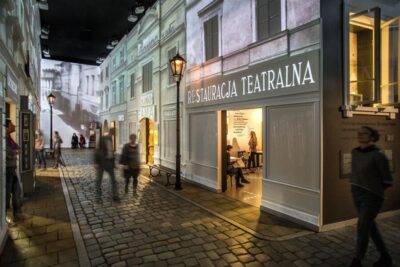
POLIN Museum of the History of Polish Jews Ticket
Read our review →

Chopin Tour in Warsaw with Skip-the-line Museum & Concert
Read our review →Browse the lists this tour appears in