
Review · PALACE MUSEUM
SPLIT-PRIVATE Walking Tour of Diocletian’s Palace & Old Town
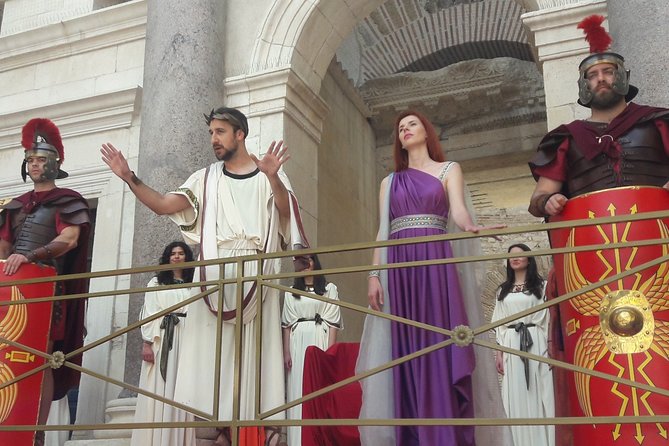
Diocletian’s Palace is not a fenced-off ruin. It is the center of modern Split, with cafés, shops, homes, churches, and narrow lanes built into a Roman imperial residence from AD 305. That makes this private walking tour a useful way to understand what you are seeing before the stones start to blur together.
I like the personal format, with only your group taking part, and the way the tour connects Roman remains to medieval Split and the living city of today. I also like the guide’s storytelling style, especially from Josko, Joško, or Joseph, whose explanations are frequently described as funny, clear, and easy to follow.
The main consideration is pace. Two hours is enough for a strong introduction, but not enough for every room, museum, and side street in depth. The tour also includes the palace cellars from the outside of the ticket price, so budget an extra €10 per person if you want to enter them.
Key points to know before booking
- The palace is part of the city: You walk through an active town rather than an isolated archaeological site.
- A private guide changes the pace: Your group can ask questions and spend more time on subjects that interest you.
- The cellars are the main paid sight: Entry to Diocletian’s Cellars costs €10 per person and is not included.
- You see more than Roman remains: The route includes medieval squares, the Riva harbor, the cathedral, and local Croatian symbols.
- The guide makes the difference: Josko and Joško are praised for humor, clear explanations, and strong knowledge of Split’s past.
- The price works best for groups: At $240 for up to 12 people, the per-person cost drops sharply as your party gets larger.
Why Diocletian’s Palace feels different from other Roman sites
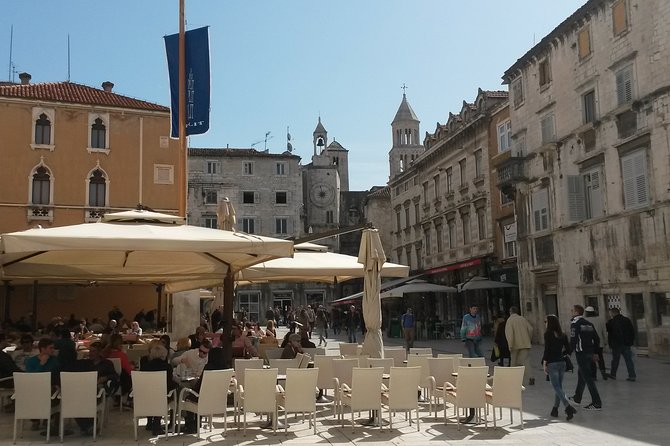
The first useful fact is also the easiest to miss: Diocletian’s Palace is not simply a palace anymore. Over roughly seventeen centuries, people built, worshiped, traded, lived, and worked inside its walls. The result is a Roman plan woven into the fabric of Split.
Your guide uses that mixture to explain the emperor, the palace, and the city that grew around them. The palace was built for Emperor Diocletian, who retired there after ruling the Roman Empire. Its original purpose was part imperial residence, part military compound, and part private retreat.
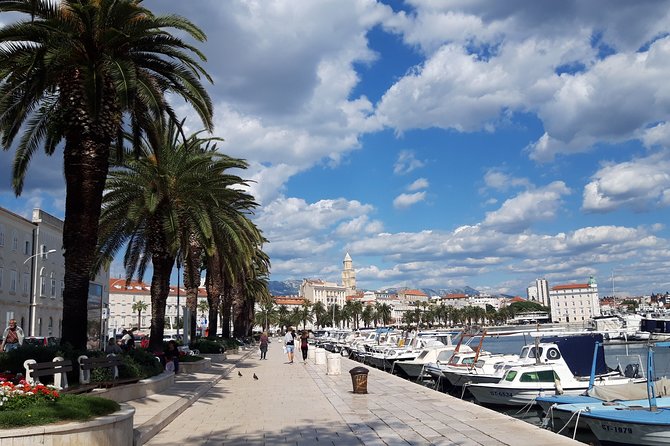
The route begins on the Riva promenade, Split’s waterfront. This is a practical meeting point because the tour starts and ends there, and it gives you a clear sense of where the old city sits beside the harbor.
From the Riva, you move toward the palace and its major entrances. The explanations are not limited to dates and names. You learn how later rulers, religious changes, and everyday residents altered the building over time.
That approach is especially helpful if you are visiting Split for the first time. The city center can feel like a maze of stone lanes, but the palace layout gives you an organizing idea. Once you understand the main gates, the Peristyle, and the emperor’s private section, the streets make much more sense.
More palace museums in Croatia:
- Istanbul: Topkapi Palace & Harem Museum Ticket & Audio Guide
★ 4.1 · 3,977 reviews - Venice’s Best: Basilica, Doge’s Palace, Gondola & History Gallery
★ 4.5 · 2,478 reviews - Royal Palace & Prado Museum Skip the Line Guided Tour
★ 4.5 · 1,347 reviews
The Peristyle and the imperial heart of Split
The Peristyle is the visual and historic center of the palace. This former imperial square is where the grand scale of Diocletian’s project becomes easiest to grasp.
The square once formed part of the approach to the emperor’s private quarters. Today it is an open urban space surrounded by ancient columns, later buildings, and some of Split’s most recognizable architecture.
Your guide will likely pause here to explain how the Roman design still controls movement through the center. This is one of the best places to ask questions because the surviving structure gives you something solid to look at while the story unfolds.
The palace tour also includes the Vestibule, the ceremonial entrance to Diocletian’s private residence. Its round form and tall opening help show the difference between public and private space in the original complex.
You will not spend long at every individual stop. The listed timing gives the Peristyle and Vestibule only a few minutes each, while the larger palace and Old Town sections receive more attention. That is sensible for a two-hour tour, but anyone wanting detailed architectural study should plan a separate visit.
Diocletian’s Cellars and the palace below ground
The Diocletian Palace Substructures are the most substantial paid part of the experience. Entry costs €10 per person and is not included in the tour price.
These lower rooms matter because they are among the best-preserved parts of the original palace. They also help you understand the building above. Roman engineers used the substructures to support and level the emperor’s apartments, so the lower spaces reflect the shape of rooms that once existed upstairs.
The cellars are not treated as a quick photo stop. Around 20 minutes of the route is set aside for them, which makes this one of the main teaching sections of the tour.
A useful tip is to decide in advance if you want to pay for entry. The advertised price covers the guide and the custom route, not admission to the museum area. If you skip the cellars, you can still see a great deal of the palace, but you will miss the clearest look at its original construction.
One important point: this is primarily an historical walking tour, not a broad sightseeing circuit with long stops at every attraction. The emphasis is on how the palace worked, how Split changed, and why the remains are still part of daily life.
From Roman Jupiter to the Cathedral of Saint Domnius
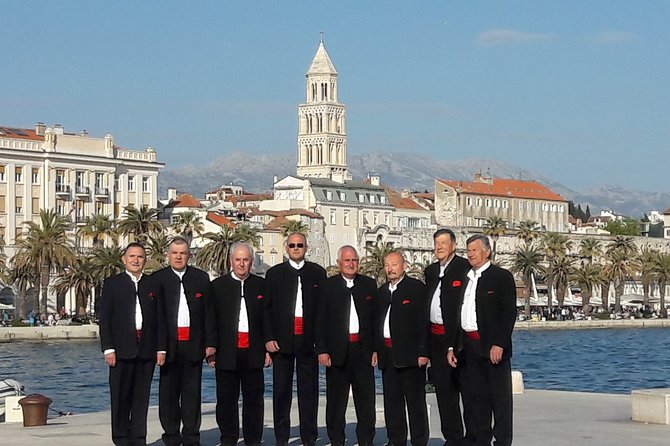
The Cathedral of Saint Domnius makes the palace’s later story visible. It occupies the former mausoleum of Diocletian, a striking reminder that the emperor’s burial place became a Christian cathedral.
The standard tour views the cathedral from outside. You can choose to enter, but admission costs €3.50 per person and is not included. Since the stop itself is listed as only about five minutes, the interior visit is best treated as an optional add-on rather than a central part of the walking tour.
The Temple of Jupiter provides another short but useful stop. This was once dedicated to Rome’s chief god and later became part of the Christian city. Entry inside costs €1.50 per person, while the exterior visit is included.
These two stops work well together. One shows a former mausoleum transformed into a cathedral. The other shows a Roman temple within the later city. You get a compact lesson in how Split reused earlier buildings instead of clearing them away.
The city clock adds a smaller detail with a nice local angle. You will see a 500-year-old 24-hour clock, a reminder that Split’s historic center is not made up only of imperial monuments. It also contains practical objects from later centuries.
A few more museum visits around Croatia worth comparing
- Acropolis monuments & Parthenon Walking Tour with Optional Acropolis Museum
★ 5.0 · 2,678 reviews - Frida Kahlo VIP [Museum Tickets Included] Walk, Markets & Churros
★ 5.0 · 982 reviews - French Quarter Walking Tour With Comp 1850 House Museum Admission
★ 5.0 · 781 reviews - Sydney Cricket Ground (SCG) and Museum Walking Tour
★ 4.9 · 616 reviews
Old Split through squares, markets, and local symbols
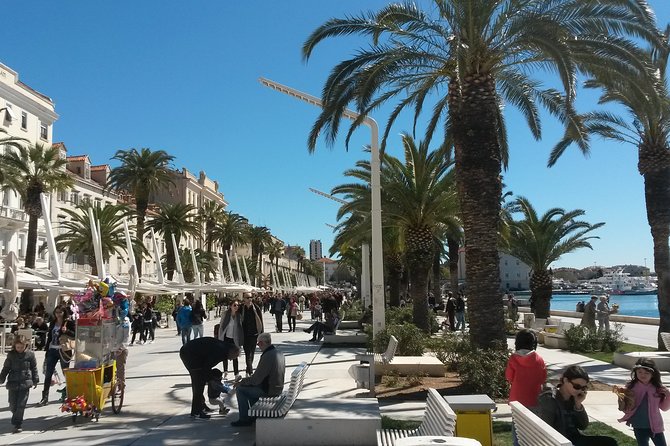
The tour leaves the palace’s Roman frame and moves into medieval and later Split. This is where the experience becomes more than a palace visit.
At Fruit’s Square, officially Trg Brace Radic, you see the former green market and a statue of Marko Marulić, often called the father of Croatian literature. The square gives your guide a chance to explain local culture as well as architecture.
Narodni Trg, or People’s Square, is the largest and liveliest piazza in the Old Town. It is a good contrast to the Peristyle. The Peristyle expresses imperial power, while People’s Square feels more connected to civic life and the later town.
The Golden Gate is the main and most elaborate entrance to Diocletian’s Palace. It is one of the route’s strongest visual stops, especially after you understand the palace plan. Your guide can explain how the gates controlled access and how the city developed beyond the original Roman walls.
The Grgur Ninski Statue introduces one of Croatia’s important historical figures. You will hear why Gregory of Nin matters in Croatian history, and you may have a chance to see the statue’s famous polished toe. The stop is brief, but it adds a national story to the Roman and medieval material.
These short stops are useful because they keep the tour from becoming a single long lecture about Diocletian. You move through different periods and see how Split’s identity grew in layers.
The guide’s storytelling style
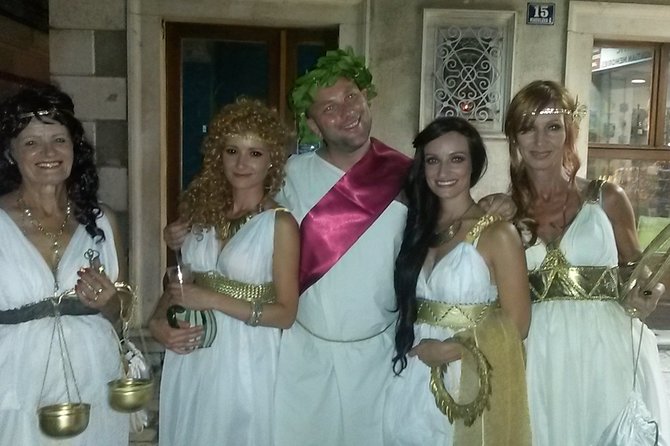
The strongest feature of this experience is the guide. Several guide names appear in the available information, including Josko, Joško, Joseph, and Josic, so the exact person assigned to your booking may vary.
The style associated with Josko and Joško is clear and lively. He explains a large amount of history in manageable pieces, adds humor, and takes questions rather than racing through a prepared speech. That matters in Split, where Roman, Christian, medieval, Venetian, and modern details can easily become a jumble.
Families should pay attention to this strength. The tour is reported to work well for children and teenagers because the guide uses stories and amusing details instead of relying only on dates. A 12-year-old or 14-year-old may not want a formal lecture, but a well-told palace story can hold attention.
The tour also suits history fans. A history teacher found the pace and structure strong, while experienced visitors described the guide as professional, friendly, and unusually engaging. You do not need specialist knowledge to enjoy it, but you will have room to ask more detailed questions if you already know the basics.
The private format gives you another advantage. You can ask about places to see after the tour, request more explanation of a period, or let the guide know if your group needs shade or a slower pace. One family appreciated that the guide adjusted the route and even helped take photographs.
What the $240 group price really means
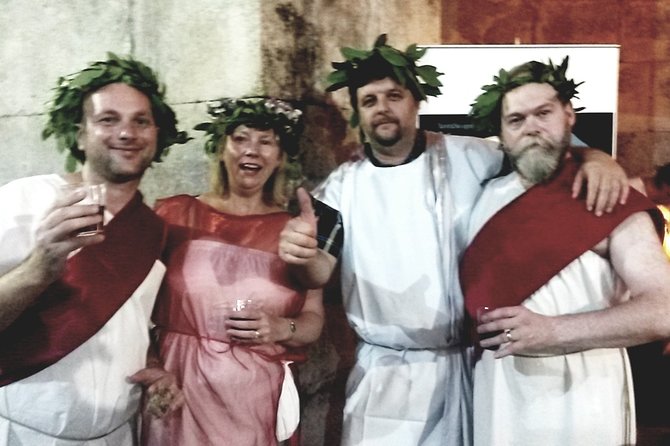
The price is $240 per group of up to 12 people. For a full group, that works out to $20 per person. For four people, it is $60 each, while a couple pays $120 each before optional admissions and gratuity.
That makes the tour most attractive for families, groups of friends, or cruise companions who can share the fixed cost. For two people, it is a significant expense compared with a group walking tour, but you are paying for a private licensed resident guide and a custom-designed route.
The cost does not include entry to the Diocletian Cellars, the cathedral interior, or the Temple of Jupiter. If you visit all three, the listed admissions total €15.50 per person, assuming the €10 cellar ticket and both optional entries are available at those prices.
Gratuity is also not included. Treat it as an optional extra based on the service you receive.
I would not book this for a quick photo walk only. I would book it if you want the palace explained properly and value the chance to ask questions without sharing the guide with a large public group.
Timing, meeting point, and practical details
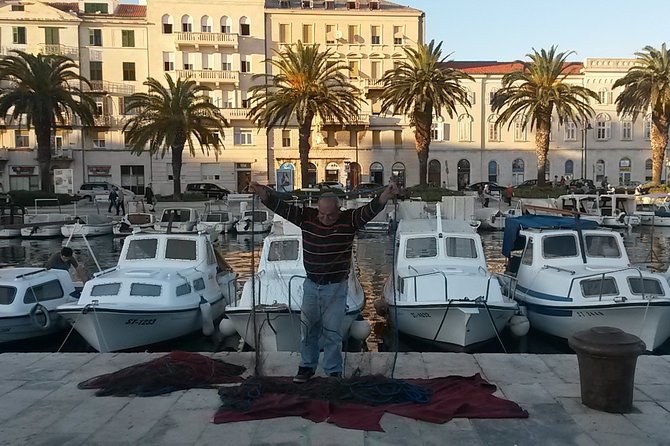
The tour lasts approximately two hours and begins at Obala Hrvatskog narodnog preporoda 22 on the Riva. It returns to the same meeting point.
Because the route uses old stone streets, comfortable shoes are a sensible choice. The experience is outdoors and requires good weather. If poor weather cancels it, you are offered another date or a full refund.
The tour is offered in English and includes a mobile ticket. Confirmation arrives at booking, and the meeting point is near public transportation.
Most people can participate, but the route is still a walking tour through a historic center. If you need a highly specific arrangement, ask before booking rather than assuming the private format includes every accommodation.
Free cancellation is available up to 24 hours before the start time. Changes or cancellations inside that window are not accepted for a refund. The experience also requires a minimum number of participants, and a cancellation for that reason brings an offer of another date or experience, or a full refund.
Who should book this Split walking tour
I would choose this tour early in a Split visit. The palace and Old Town are easier to enjoy after you understand the basic layout, and the guide can point out places you may want to return to on your own.
It is a particularly good fit for:
- Families who want history presented in a lively way
- First-time visitors needing a clear introduction to Split
- Small groups that can share the $240 price
- History fans interested in Roman architecture and later changes
- Cruise passengers wanting a focused walk from the waterfront
- Visitors who prefer questions and conversation over a large group format
It may be less suitable if you want extensive time inside every monument. The main tour is short, several stops last only five minutes, and optional admissions cost extra.
Should you book it?
Book this private Split tour if you want the city’s central story told by a local guide who can connect Diocletian’s AD 305 palace with modern streets, medieval squares, Croatian culture, and Christian landmarks.
The best value comes with four or more people, when the fixed group price becomes easier to justify. Add the cellar ticket if you want the fullest palace experience, and consider the cathedral and Temple of Jupiter only if you have time and interest in their interiors.
For a first day in Split, this is a strong choice. You will not see every corner of the Old Town, but you should leave with a much clearer sense of how the city fits together and why the palace remains its beating center.
FAQ
How long is the walking tour?
The tour lasts approximately two hours.
How much does the private tour cost?
The price is $240 per group, with up to 12 people included.
Is this a private tour?
Yes. Only your group participates.
What language is the tour offered in?
The tour is offered in English.
Where does the tour begin?
It begins at Obala Hrvatskog narodnog preporoda 22, 21000 Split, Croatia, on the Riva promenade.
Where does the tour end?
The tour ends back at the meeting point.
Is entry to Diocletian’s Cellars included?
No. Entry to the Diocletian’s Cellars museum area costs €10 per person and is not included.
Can I enter the Cathedral of Saint Domnius?
The tour views the cathedral from outside. You may optionally enter for an admission fee of €3.50 per person.
Can I enter the Temple of Jupiter?
The standard visit is from outside. Optional entry costs €1.50 per person.
Are gratuities included?
No. Gratuities for the guide are not included.
Can I cancel for a full refund?
Yes, if you cancel at least 24 hours before the experience start time. Cancellations made less than 24 hours in advance are not refunded.
What happens if bad weather cancels the tour?
You will be offered a different date or a full refund.
Just added around Croatia
- Toast to the Morning After: Zagreb Museum of Hangovers Visit★ 4.0 · 39 reviews
- Split: Blue Lagoon Underwater Museum Tour w/Lunch & Drinks★ 4.7 · 338 reviews
- Split: Olive museum Klis with Olive Oil Tasting★ 4.9 · 51 reviews
- Split: Museum of Illusions Entrance Ticket★ 4.2 · 254 reviews
- Split: Blue Line Sightseeing to Trogir, Klis & Olive Museum★ 4.3 · 197 reviews
- Split: Game of Thrones Museum Entrance Ticket★ 3.8 · 385 reviews
- Split: Underwater Museum, Trogir & Blue Lagoon Half-Day Tour★ 4.2 · 31 reviews
- Dubrovnik: Red History Museum Regular Ticket★ 4.6 · 134 reviews
Palace Museum Tours, compared.
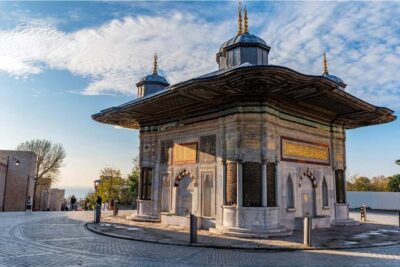
Topkapi Palace & Harem Museum Ticket & Audio Guide
Read our review →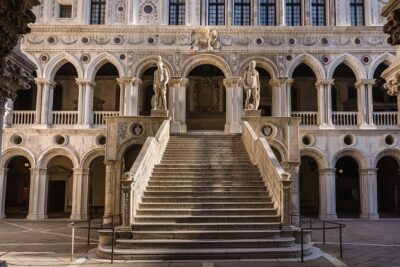
Venice’s Best: Basilica, Doge’s Palace, Gondola & History Gallery
Read our review →
Royal Palace & Prado Museum Skip the Line Guided Tour
Read our review →
City Pass with Museums including Doge’s Palace
Read our review →
Crete: Knossos Palace and Museum E-Tickets with Audio Guides
Read our review →
Venice Museum Pass & Doge’s Palace Entrance Ticket
Read our review →
Palace, Museum, Madrasa & Medina Highlights Tour
Read our review →Browse the lists this tour appears in