
Review · MEXICO CITY
Anthropology Museum Guided Tour
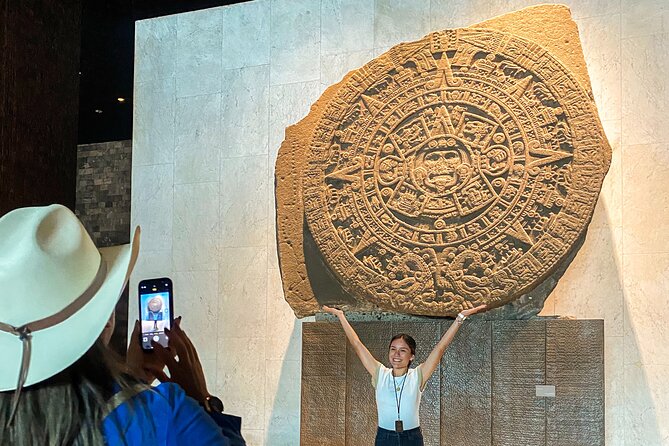
Mexico City’s National Museum of Anthropology is the kind of place that can leave you staring at magnificent objects without knowing what you’re seeing. This tour gives the collection a clear human story, from early Mesoamerican cultures to the Spanish conquest, with stops for the Stone of the Sun, giant Olmec heads, Maya treasures, and a model of Tenochtitlan.
I like that admission is included in the $39 price, and I like that a morning start leaves your afternoon open for Chapultepec, the castle, or another museum. The main caution is consistency: some guides, including Alan, Ligia, Leonardo, Alexa, and Antonio, have received excellent praise, while other sessions have suffered from delayed starts, hard-to-understand English, and groups that felt larger than expected.
Key points to know before booking
- The Stone of the Sun anchors the visit: You see Mexico’s famous Aztec monument with a guide who can explain its symbols and place in Mexica culture.
- The museum is much easier with a guide: Written explanations are limited in English, so good commentary can make a major difference.
- The tour covers major Mesoamerican cultures: Expect Aztec, Maya, Olmec, Teotihuacan, Toltec, and other pre-Columbian material.
- The standard group can reach 25 people: Headphones or audio equipment may be used, but the group size can affect how personal the tour feels.
- Punctuality matters: The group may leave without late arrivals, and catching up afterward may not be possible.
- Pack light: Food, drinks, and backpacks are not allowed inside. Only a handbag is permitted.
Why this museum deserves a guided first visit
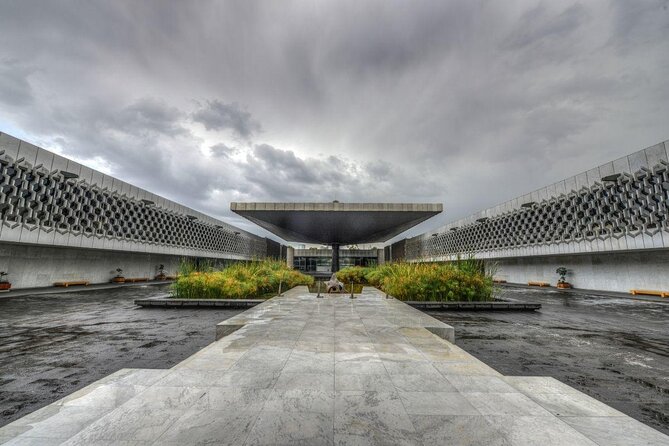
The National Museum of Anthropology is not a quick stop. Its permanent ground-floor galleries cover cultures from across present-day Mexico, along with areas that once belonged to Mexico and are now part of the southwestern United States.
That sweep is the museum’s great strength, but it can also be its problem. You are moving across centuries, regions, belief systems, and artistic traditions. Without a basic timeline, an Olmec head, a Maya tomb, and an Aztec sculpture can blur into one long parade of impressive stone.
A strong guide gives you that timeline. The best guides use maps, drawings, photographs, and simple comparisons to explain how different cities and cultures fit together. Alan has been praised for beginning with geography before moving into individual cultures. Alexa has been praised for using her own photos and drawings to explain how buildings were made. Gibran, also identified as Alex, reportedly used a binder of visual material to make difficult subjects easier to follow.
That kind of teaching is the real reason to book. You are not paying simply to walk through the doors. You are paying for someone to help you understand what deserves your attention and why.
More Museum Tours in Mexico City
- Xochimilco, Coyoacan and Frida Kahlo with Optional Lunch
★ 4.5 · 7,320 reviews - CDMX: Xochimilco, Coyoacan, Frida Kahlo Museum & Murals Tour
★ 4.4 · 3,025 reviews - Chapultepec Castle & Anthropology Museum Tour
★ 4.5 · 1,348 reviews
Starting at Reforma and entering Chapultepec
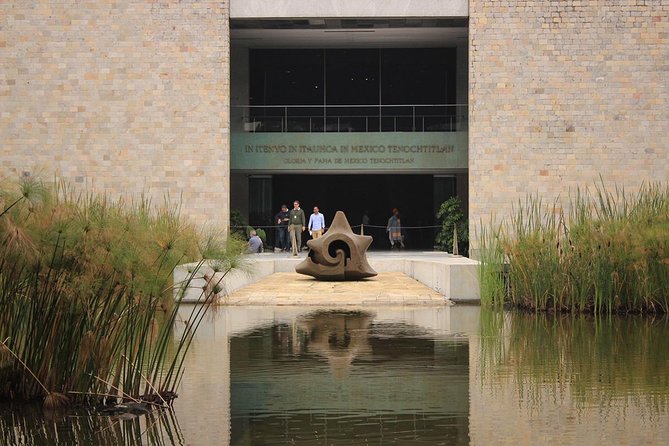
The meeting point is outside the Museo Nacional de Antropología on Avenida Paseo de la Reforma, in the Polanco section of Chapultepec. The museum is near public transportation, which makes this a practical stop if you are staying in central Mexico City or nearby neighborhoods.
The tour begins in the morning. That timing is useful for two reasons. First, you have the rest of the day available. Second, reaching the museum early may help you avoid some of the day’s heavier crowds, though you should not assume the entrance process will always be quick.
The start has been smooth for many people, but organization can vary. Some sessions have involved delays while tickets were checked or audio equipment was handed out. One particularly important point: arrive early and be ready at the exact meeting time. A group may leave after the scheduled start, and late arrivals may not be able to join it inside.
Mexico City traffic can be unpredictable, but that is not a safe reason to cut it close. The safest plan is to reach the museum with time to spare, locate the meeting area, and wait for the guide or tour staff.
The Stone of the Sun and the Mexica galleries
The Stone of the Sun is the museum’s most famous object and usually one of the first things people want to see. It is often called the Aztec Calendar, although that simple name does not explain the full meaning of the monument.
A guide can point out its imagery and explain how the Mexica understood time, gods, sacrifice, and the ordering of the universe. That context matters because the stone is visually dense. Without help, you may notice the central face and concentric rings but miss how the symbols relate to Mexica beliefs.
The surrounding galleries help place the Mexica, often called Aztec, civilization in relation to other cultures in the region. You may hear about Tenochtitlan, the capital built on an island in Lake Texcoco, and the Spanish conquest that reshaped the city and the country.
The museum also includes a model showing the location and layout of Tenochtitlan. This is one of the most useful displays for getting your bearings. Modern Mexico City now covers much of the former capital, so a physical model helps you picture the canals, temples, causeways, and urban scale of the city that once occupied this area.
A good guide should connect the model to the artifacts around you rather than treating it as a separate display. That connection is where the tour earns its keep. You begin to see the museum not as a warehouse of old objects, but as an explanation of a city and society that still shapes contemporary Mexico.
Olmec heads and the cultures before the Aztecs
The giant Olmec heads are among the museum’s most memorable objects. Found in the jungles of Tabasco and Veracruz, these massive carved faces raise immediate questions about how they were made, moved, and used.
Their size makes them easy to appreciate on your own. Their meaning is harder. The Olmec civilization predates the Mexica by many centuries, and a guide can help you understand why the heads matter in the longer story of Mesoamerica.
This is also where a clear sequence is important. A hurried explanation that jumps from Olmec to Teotihuacan to Maya to Mexica can leave you unsure which culture came first or where each one lived. The strongest guides establish dates and geography before discussing style, religion, trade, or political power.
The tour is especially helpful if you have little background in Mexican archaeology. You do not need to arrive with a stack of books. You do need to pay attention to the guide’s structure and ask questions when the story gets crowded.
More anthropology museums in Mexico:
- Mexico City: Anthropology Museum Guided Visit
★ 4.4 · 708 reviews - Mexico City: Chapultepec Castle and Anthropology Museum Tour
★ 4.5 · 637 reviews - Mexico City: Anthropology Museum Skip-the-Line Ticket
★ 4.4 · 502 reviews - Mexico City: Anthropology Museum Tour with Historian
★ 4.8 · 71 reviews
Maya treasures, tombs, and regional differences
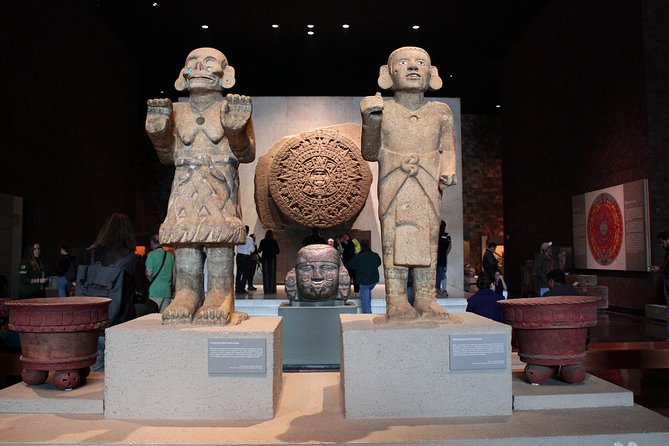
The Maya galleries offer another major focus, including treasures recovered from the Sacred Cenote at Chichen Itza and reconstructions of Maya tombs. These displays show that Mesoamerica was never one single culture with one shared style.
The Maya world covered a broad area, and Maya cities developed their own forms of architecture, writing, ritual, and political life. A guide can explain those differences while also showing links between Maya communities and other cultures in the region.
The tomb reconstructions are particularly useful because they give you a sense of how objects were placed and what they meant in a ritual setting. A label may identify an object, but a guide can explain why it was buried, who might have used it, and what the arrangement says about Maya beliefs.
This part of the museum can also expose a weakness in a group tour. If the guide gives everyone free time in a gallery and then explains objects that some people have already passed, the order can feel inefficient. I would listen carefully to the guide’s instructions and hold off on racing ahead. The best experience comes when you let the explanation shape what you look at.
Teotihuacan, Toltec, and the challenge of chronology
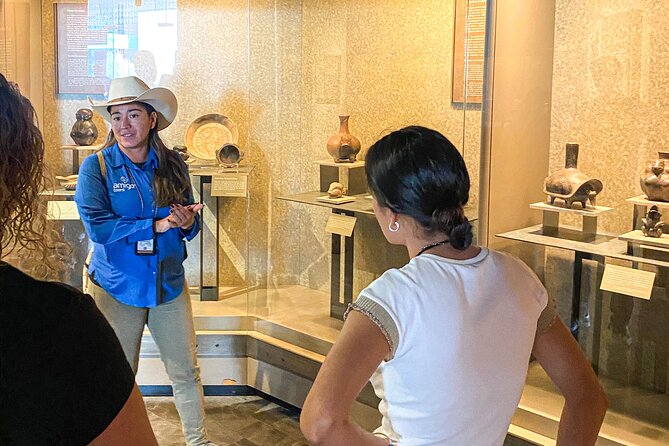
The museum’s permanent galleries include more than the most famous Aztec and Maya material. Teotihuacan, Toltec, and other pre-Columbian cultures help show how ideas, artistic forms, and political power developed across a long period.
This is where the quality of the guide matters most. Teotihuacan and Tenochtitlan are both essential to understanding central Mexico, but they were not the same city and did not belong to the same period. A clear map and timeline can prevent confusion.
The best guides begin with the broad picture, then move toward specific objects. Alan has been praised for using that method, starting with geography and then adding cultural detail. When the sequence works, you leave with a framework that helps you understand the rest of the museum, even after the tour ends.
The weaker version is a nonstop stream of facts. Some people have found certain English-language explanations difficult to follow, while others felt that guides did not pause enough for questions. If you are paired with a fast speaker or a large group, stay near the guide and ask for clarification when needed.
How the two-and-a-half-hour format works
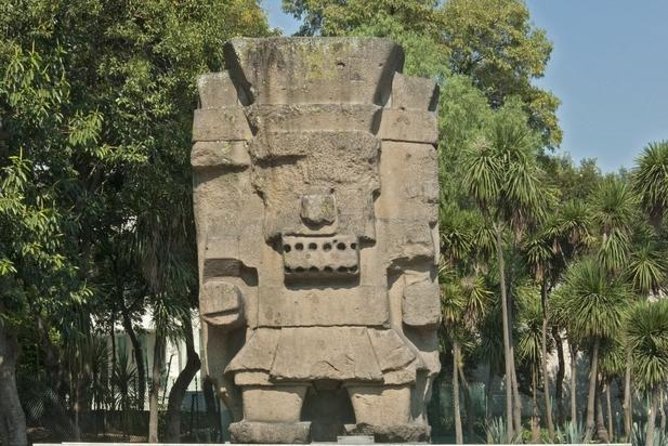
The advertised duration is about 2 hours and 30 minutes, all at the museum. That is enough time for a guided introduction to the main archaeological galleries, but not enough to study every room in detail.
Think of this as a foundation rather than a complete museum visit. You will see major highlights and learn how the collection fits together. Afterward, you may want to return to particular galleries on your own, especially if archaeology is a central interest.
Some guides have gone beyond the scheduled time when circumstances allowed. Alan and Gibran, also known as Alex, have received special praise for giving unusually detailed explanations and continuing past the planned finish. You should not count on extra time, but it is a welcome bonus when it happens.
The standard group may include up to 25 people. That is not a tiny group, and it can affect how easily you hear, ask questions, or see an object. A group of 10 can feel much more personal than a full group of 20 or more.
Audio equipment may be provided, but its usefulness depends on the guide, the room, and the equipment on the day. If you have trouble hearing, say so early rather than waiting until the tour is half over.
Guide quality is the biggest variable
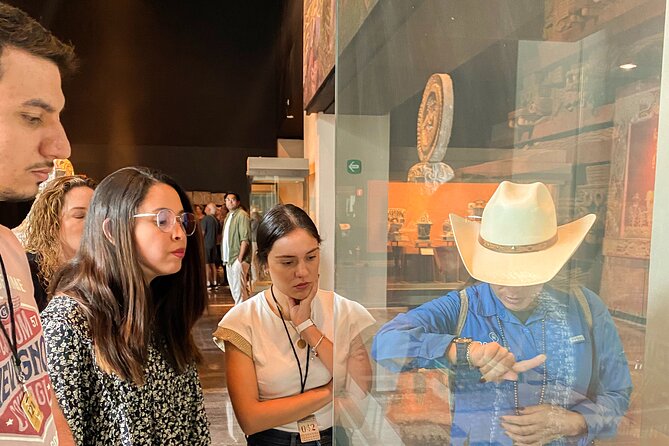
The most praised guides share several traits. They explain clearly, create a sensible timeline, welcome questions, and connect objects to the larger story of Mexico. Alan, Alexa, Ligia, Leonardo, Antonio, Lili, Hector, and Gibran or Alex have all been singled out for strong explanations, warmth, patience, or enthusiasm.
Ligia has been praised for answering questions in both English and Spanish. Leonardo has been praised for making the museum easy to navigate while tying together history and artifacts. Antonio has been praised for bringing the material to life with a clear progression.
But you cannot choose your guide when booking this experience. That is the central risk. A few sessions have been affected by unclear English, weak group interaction, slow ticket handling, or explanations that jumped between cultures without a clear thread.
The operator is Amigo Tours, and the tour is offered in English. That does not guarantee that every guide will have the same speaking style or level of fluency. If clear spoken English is essential for you, a private tour or a smaller specialist-led option may be worth comparing, even if it costs more.
Is $39 a fair price?
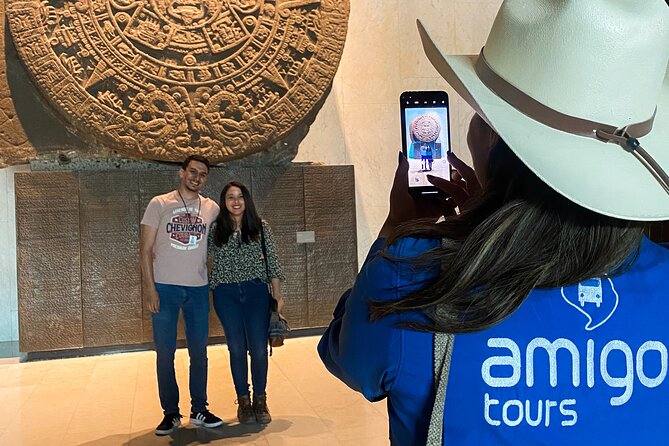
At $39 per person, the tour includes museum admission and a professional guide. That is a reasonable price if you want a structured introduction and do not want to work out the museum’s story alone.
The value is strongest for first-time visitors, people who do not read Spanish comfortably, and anyone who wants a broad overview of Mexican archaeology. One useful point is that only some museum information is available in English, so spoken guidance can fill a real gap.
The value drops if your group is crowded, the start is poorly managed, or the guide speaks in a way that you cannot easily follow. In that case, you may spend much of the 2.5 hours trying to keep up instead of understanding the objects.
A private guide can offer more flexibility, but this experience is still a practical middle ground for many people. You receive admission, a set route, and a chance to ask questions without paying the cost of a fully private service.
What to bring and what to leave behind
The museum does not allow food, drinks, or backpacks. Only a handbag is permitted, so pack lightly before leaving your hotel.
You do not need to bring food for the tour itself, since refreshments are not included and are not allowed inside. Plan to eat before or after the visit.
Comfortable shoes are sensible because the museum is large and the tour lasts about two and a half hours. That is practical advice based on the size and length of the visit, not a promise about the exact walking route.
The tour ends back at the museum meeting point. That makes it easy to continue around Chapultepec or head elsewhere in Mexico City after the morning session.
Who should book this museum tour?
I would recommend it most strongly to first-time visitors who want the essential story without spending hours trying to build it from scattered labels. It also suits families, couples, and solo visitors who enjoy asking questions and learning through a guide’s narrative.
History and archaeology fans will appreciate the major objects, but they may want more time than this tour provides. If you already know Mexican history well, you might prefer visiting independently and choosing only the galleries that interest you.
The tour is less suitable for anyone who dislikes group pacing or who needs guaranteed one-to-one attention. A maximum of 25 people leaves room for a lively session, but not always for a personal conversation at every stop.
Should you book it?
Yes, if you want an affordable English-language introduction to an enormous museum and you are willing to accept some variation in guide quality. The museum itself is essential, and the right guide can turn an overwhelming collection into a clear story.
Book it with three rules: arrive early, pack light, and keep your expectations centered on a guided overview rather than a complete examination of every gallery. If you need a small group, firm control over the guide, or highly polished English presentation, compare private options before paying.
For most first visits, the $39 admission-and-guide package is a sensible choice. Just remember that the museum is guaranteed to be outstanding, while the tour depends heavily on the person holding the microphone.
FAQ
Where does the Anthropology Museum Guided Tour begin?
It begins at the Museo Nacional de Antropología on Avenida Paseo de la Reforma in Polanco, within Chapultepec.
How long does the tour last?
The tour lasts approximately 2 hours and 30 minutes.
What is included in the price?
The price includes entrance to the National Museum of Anthropology and a professional English-speaking guide.
Is the tour offered in English?
Yes. The experience is offered in English.
How many people can join the group?
The group can include a maximum of 25 people.
What major objects are covered?
The visit includes major displays such as the Stone of the Sun, giant Olmec heads, Maya treasures, Maya tomb reconstructions, and a model of Tenochtitlan.
Can I bring a backpack, food, or drinks?
No. Food, drinks, and backpacks are not allowed inside. Only a handbag is permitted.
Does the tour include food or drinks?
No. Food and drinks are not included.
Can I cancel for a full refund?
Yes. You can cancel for a full refund up to 24 hours before the experience begins. Changes or cancellations made less than 24 hours before the start time are not accepted for a refund.
Just added around Mexico
- DeLuxe Cliff Divers+Sunset Exhibition byNight w/Different Options★ 5.0 · 64 reviews
- Historical Immersion 6Hrs San Diego Fort Museum Divers Lunch★ 5.0 · 15 reviews
- Riviera Maya: Frida Kahlo Museum Guided Tour 2025★ 4.1 · 54 reviews
- National Museum of Anthropology: a journey into Mexico’s past – English lang.★ 4.8 · 26 reviews
- Mexico City: Tequila and Mezcal Museum Tour with Tasting★ 4.8 · 301 reviews
- Mexico City tour & Anthropology Museum Tour★ 4.4 · 34 reviews
- Mexico City: MUCHO Museum of Chocolate Entrance Ticket★ 4.6 · 91 reviews
- Mexico City: National Museum of Anthropology Private Tour★ 4.4 · 12 reviews
Museum Tours in Mexico City, compared.

Chapultepec Castle & Anthropology Museum Tour
Read our review →![Frida Kahlo VIP [Museum Tickets Included] Bike, Markets & Churros](https://9.themuseumtraveler.com/wp-content/uploads/frida-kahlo-vip-museum-tickets-included-bike-markets-churros-400x267.jpg)
Frida Kahlo VIP [Museum Tickets Included] Bike, Markets & Churros
Read our review →![Frida Kahlo VIP [Museum Tickets Included] Walk, Markets & Churros](https://9.themuseumtraveler.com/wp-content/uploads/frida-kahlo-vip-museum-tickets-included-walk-markets-churros-400x267.jpg)
Frida Kahlo VIP [Museum Tickets Included] Walk, Markets & Churros
Read our review →
EXCLUSIVE TOUR Frida Kahlo Museum – SMALL GROUPS
Read our review →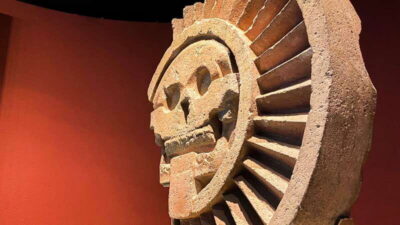
Frida Kahlo Museum Entry Ticket w/Digital Guide
Read our review →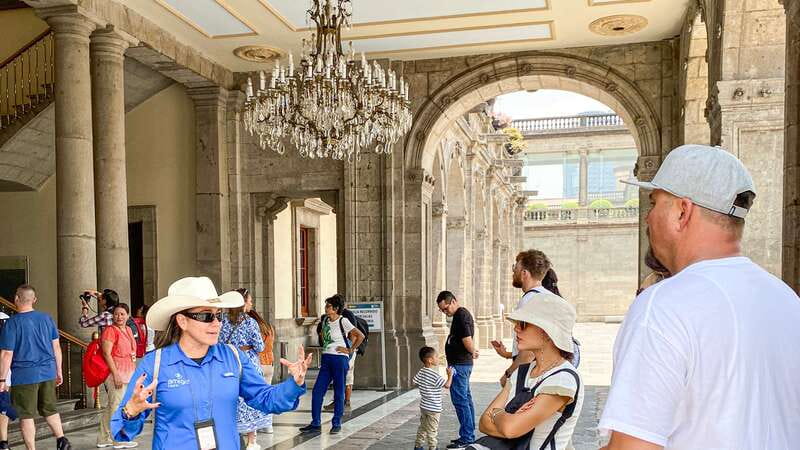
Chapultepec Castle and Anthropology Museum Tour
Read our review →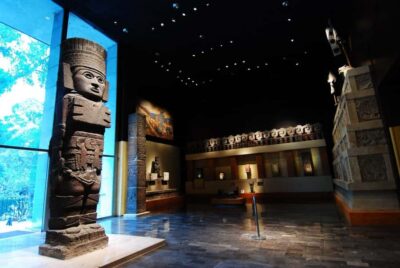
Browse the lists this tour appears in