
Review · MEXICO
Mexico City: Anthropology Museum Tour with Historian
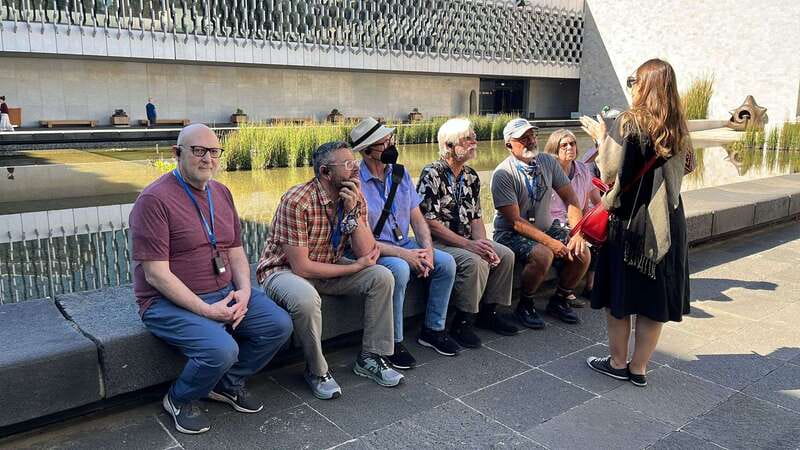
The best part of this Anthropology Museum tour is the way it connects objects that can otherwise feel scattered across a very large building. A colossal Olmec head, a Mexica chinampa model, Teotihuacán ceramics, and Maya writing become chapters in one long Mesoamerican story rather than isolated displays.
I like the academic level without the classroom stiffness. Guides Natalia and Hector have graduate-level backgrounds, and their strongest skill is turning difficult subjects into clear stories. I also like the use of visual aids, including slides and an iPad, which help you picture lost cities and understand symbols that are hard to read from a display case.
The main drawback is time. Three hours is enough for a carefully chosen route, not the whole museum. The tour can also run longer when questions flow, so leave space afterward if you want to explore more on your own.
Key points at a glance
- See the Sun Stone in context: Learn why the famous Aztec Calendar name is misleading and what the sculpture actually represents.
- Follow Mesoamerica across cultures: Compare shared ideas in farming, religion, art, language, textiles, and city building.
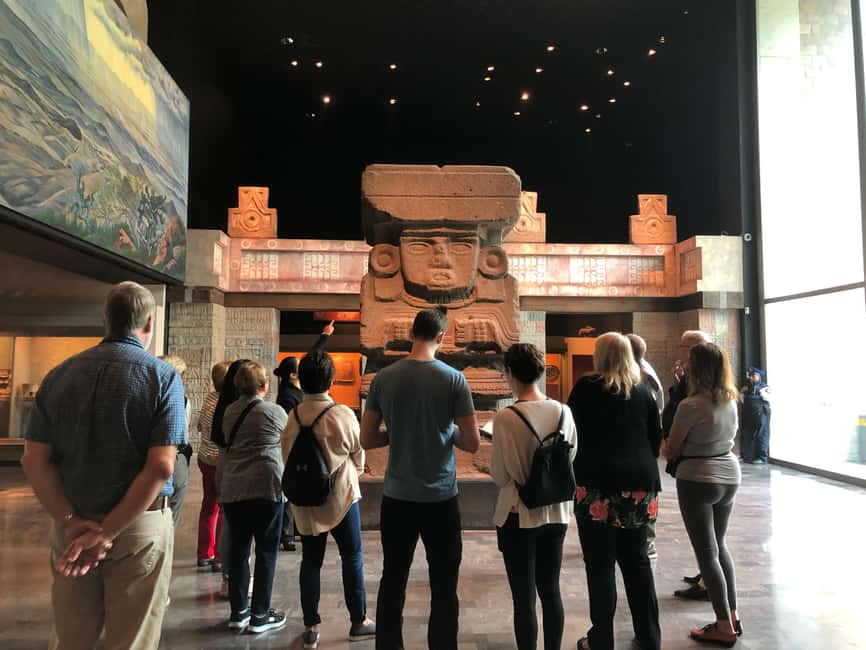
- Meet the Olmec colossal head: Explore the civilization’s influence on later Mesoamerican art and belief.
- Understand Teotihuacán differently: Study it as a city shaped by many peoples, not as the work of one simple culture.
- Finish with Maya writing and Pakal: Hear how Maya glyphs were deciphered before seeing the striking tomb replica.
- Keep the group small: The tour is limited to 10 people, with headsets available for larger groups.
Why this museum needs a guided route
Mexico City’s National Museum of Anthropology is not a quick stop. Its galleries cover major cultures and long stretches of time, and the sheer number of objects can leave you admiring beautiful things without knowing how they fit together.
That is where this tour earns its keep. Rather than treating every gallery as a separate room, the guide builds a chain of ideas. You learn how farming supported cities, how symbols traveled between peoples, how materials such as agave shaped daily life, and how later societies adapted older traditions.
I find this approach especially useful if you are new to Mexican history. You do not need to arrive knowing the difference between Olmec, Mexica, Maya, and Teotihuacán cultures. The guide supplies the framework, then uses selected objects to make it stick.
The group size matters, too. With no more than 10 participants, you have a realistic chance to ask questions. Several highly rated sessions with Natalia and Hector were praised for clear explanations, good English, humor, and the ability to handle follow-up questions. That is important in a museum where one object can lead to five more questions.
More anthropology museums in Mexico:
- Chapultepec Castle & Anthropology Museum Tour
★ 4.5 · 1,348 reviews - Anthropology Museum Guided Tour
★ 4.5 · 1,035 reviews - Mexico City: Anthropology Museum Guided Visit
★ 4.4 · 708 reviews
Starting with the museum’s bold architecture
The experience begins in the museum’s main lobby, near the ticket booth. Look for the guide carrying the Walk Mexico project logo. The museum ticket is included, and you do not need to arrange separate transportation or pickup.
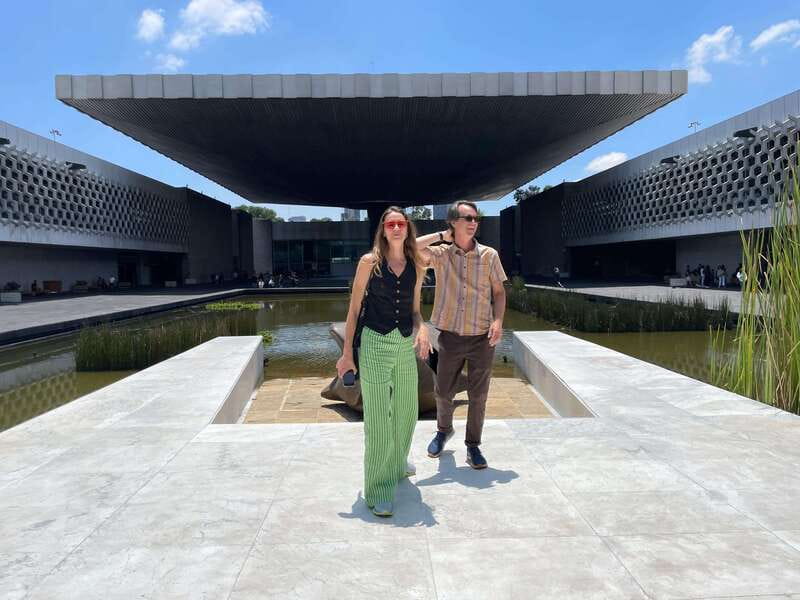
Before the galleries, the guide introduces the building itself. This is a smart opening because the museum was designed to do more than house artifacts. Architects and artists worked together to create a modern setting that refers to Mesoamerican forms, stories, and symbols.
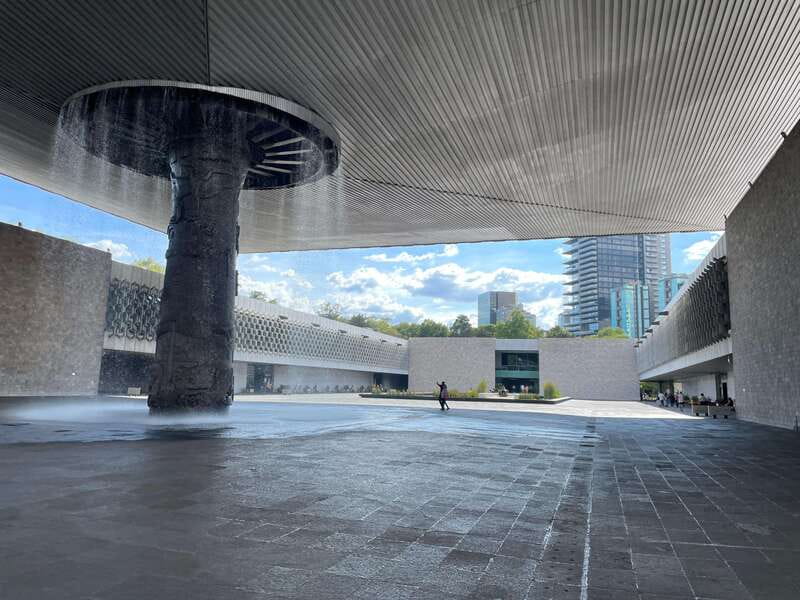
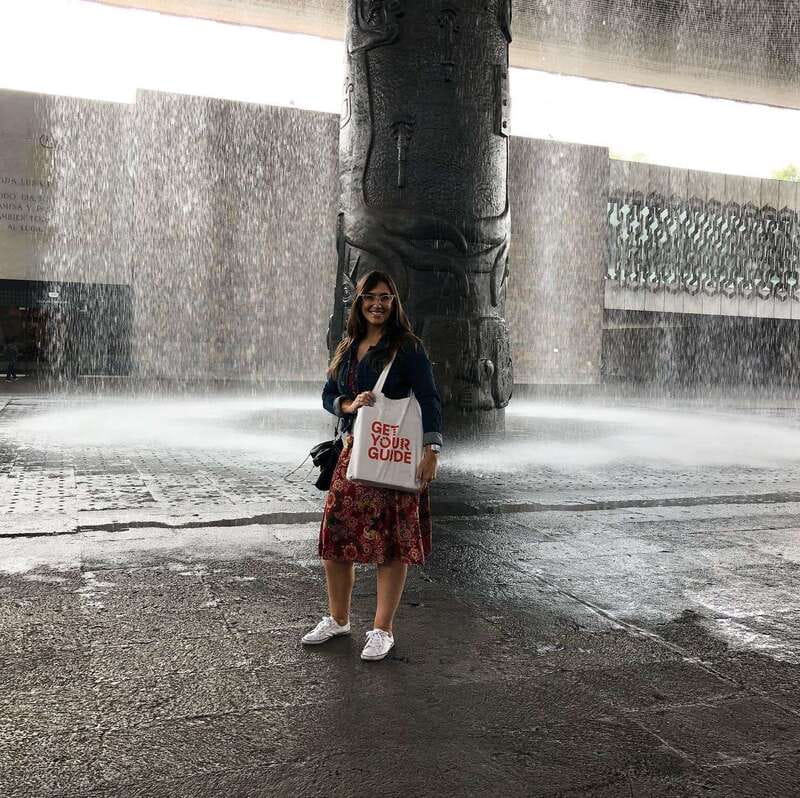
You will also visit the famous courtyard water feature. Its huge roof and falling water make it one of the museum’s most memorable spaces, but the point here is not just the photo opportunity. Your guide explains the symbolism behind the structure and how the building uses monumental design to honor the cultures inside.
This beginning gives you a useful habit for the rest of the visit: look at both the object and the way it is presented. The architecture is part of the museum’s argument about Mexico’s past.
What the word Mesoamerica really covers
One of the tour’s most useful early stops deals with the term Mesoamerica. Paul Kirchhoff used the word to describe a broad cultural region connected by recurring customs and ideas, even though it contained many distinct peoples and languages.
That distinction matters. Mesoamerica was not one empire or one nation. It was a zone in which communities shared certain agricultural systems, religious concepts, technologies, artistic habits, and forms of social organization.
The guide uses this section to give you a map for the rest of the visit. You begin to notice repeated themes without flattening every culture into the same story. The similarities are real, but so are the differences.
This is also where the tour moves beyond a parade of famous rulers and battles. You learn to ask practical questions: What did people grow? How did they move goods? What materials could they work with? How did they record belief and power?
Agave, looms, and the clever uses of ordinary materials
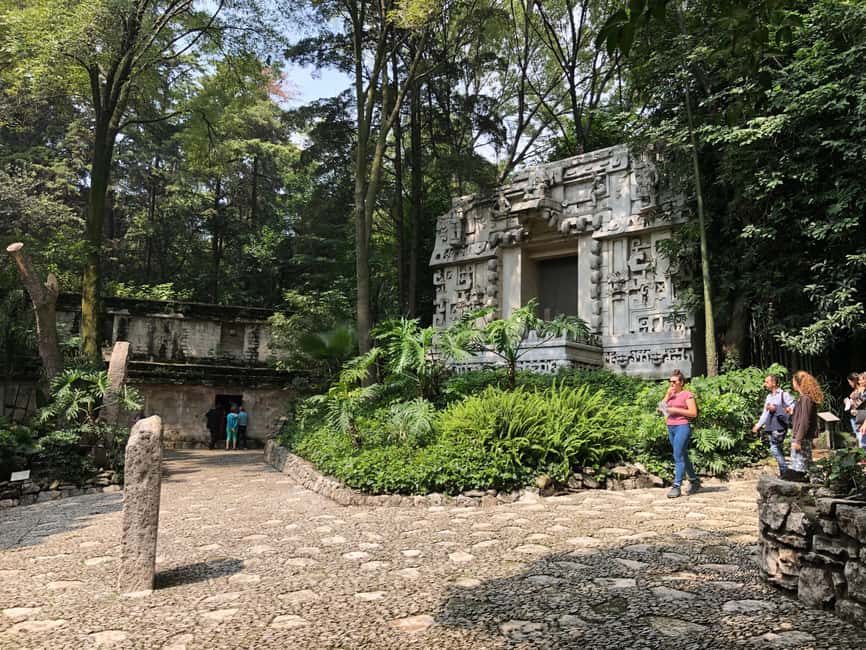
The textiles and material culture displays provide a welcome change from monumental stone sculpture. Here, the focus turns to the objects people wore, used, spun, wove, dyed, and carried.
Agave is a particularly good example. You learn that it supplied more than a drink. Its fibers could be used for textiles and practical tools, while other parts served household purposes. The museum’s looms, garments, and examples of spinning and weaving show how much skill went into materials that may look simple at first glance.
Natural pigments also get attention. The guide explains how organic color was produced and applied, helping you see textiles and ceremonial clothing as technical achievements rather than mere decoration.
I like this section because it puts daily life beside royal and religious art. It also gives families and visitors who are less interested in dynasties something concrete to follow. The question is not only who ruled, but how people made clothing, tools, colors, and objects for ritual use.
A few more museum visits around Mexico worth comparing
- Mexico City: Frida Kahlo Museum Entry Ticket w/Digital Guide
★ 4.5 · 683 reviews - Mexico City: Chapultepec Castle and Anthropology Museum Tour
★ 4.5 · 637 reviews - Mexico City: Anthropology Museum Skip-the-Line Ticket
★ 4.4 · 502 reviews - Mexico City: Tequila and Mezcal Museum Tour with Tasting
★ 4.8 · 301 reviews
Ritual clothing and the story of cultural exchange
The display of ceremonial clothing and ritual objects brings several themes together. Body decoration, costume, festival traditions, and artistic identity often reflect contact between communities over long periods.
Your guide explains cultural blending without suggesting that every tradition simply merged into one. Some ideas were shared, some were adapted, and some remained distinctive. That is a more useful way to understand Mesoamerican culture than treating each gallery as a sealed box.
This portion can be especially rewarding if you enjoy visual details. Clothing, painted surfaces, ornaments, and ceremonial objects communicate status and belief without written explanation. The guide helps you read those clues.
It is also a good place to ask questions. A small group makes it easier to pause over an object and ask why a certain shape, color, or material mattered.
The Olmec colossal head and the problem with mother cultures
The Olmec gallery includes one of the museum’s major crowd-pleasers: a colossal stone head. Its scale is startling, but the real value of the stop is the discussion around Olmec influence.
The Olmec are often called the mother culture of Mesoamerica. Your guide explains why that label became popular, while also helping you think carefully about what influence means. Later societies appear to share artistic styles, religious concepts, and visual habits with the Olmec, but that does not mean the Olmec directly created every later tradition.
The head itself invites questions about labor, stone transport, political power, and portraiture. Who was represented? Why make an image so large? What did the head communicate to people who saw it in its original setting?
This is one of the moments when a guide with an art history background adds real value. You are not only told what the sculpture is called. You are shown how to look at its scale, facial features, material, and intended effect.
Mexica Tenochtitlán, chinampas, and the so-called Aztec Calendar
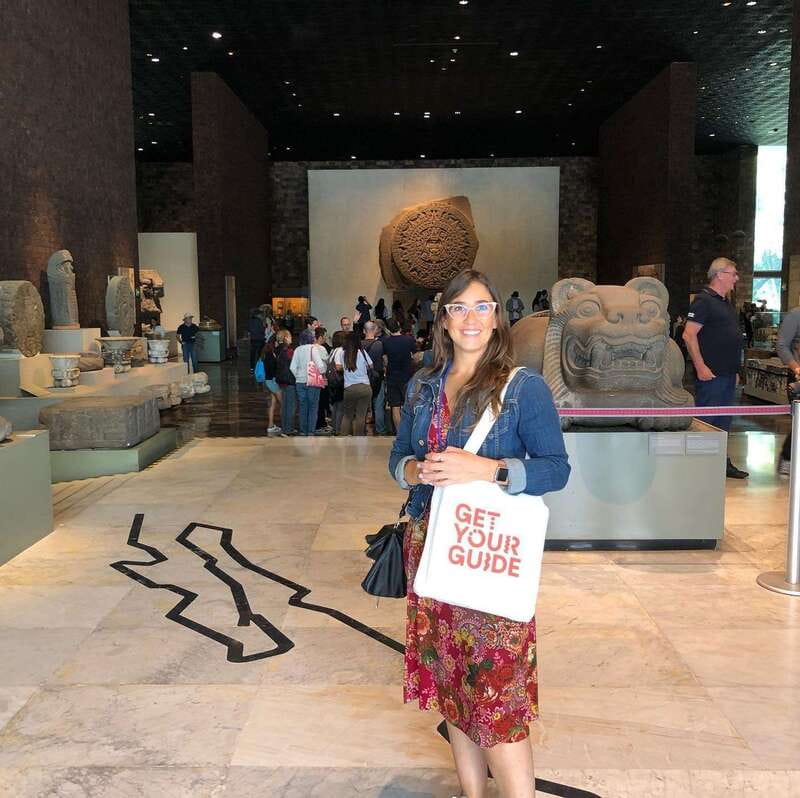
The Mexica gallery brings the story into the period most familiar to many visitors. The famous Sun Stone is the star here, although the popular name Aztec Calendar gives a misleading impression.
Your guide explains its actual name and meaning, and why the sculpture should not be treated as a simple calendar hanging on a wall. Its imagery relates to Mexica ideas about time, cosmic order, power, and sacrifice. You will gain more from the sculpture once you stop looking for a date grid and start reading its layered symbols.
The gallery also explores Tenochtitlán, the Mexica capital that once occupied the site beneath modern Mexico City. A detailed scale model shows how the city used causeways, bridges, aqueducts, and chinampas.
Chinampas are often called artificial islands, but the term does not fully express the engineering involved. The Mexica developed a highly organized hydraulic system that supported farming and urban life. Seeing the model helps you picture a city that is now largely hidden under colonial and modern streets.
This is a strong section for understanding Mexico City as a place built in layers. The modern capital did not replace an empty site. It grew over a sophisticated earlier city.
Teotihuacán as a city of many peoples
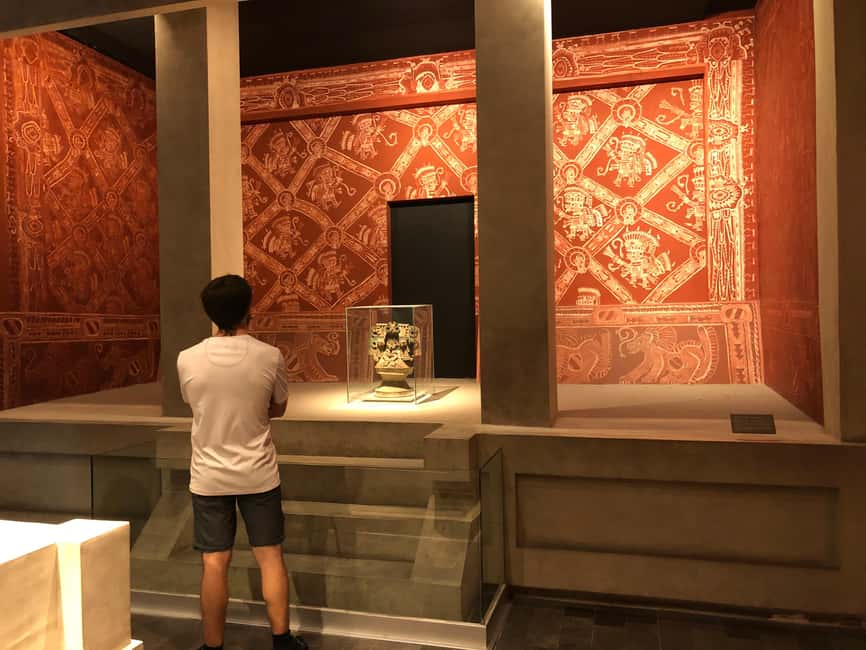
The Teotihuacán gallery shifts the focus from one ruling group to a large urban center shaped by different communities. The city was a major multicultural metropolis, and your guide presents the evidence for that more complicated picture.
You will see ceramics, obsidian objects, mural fragments, and colorful architectural replicas. These displays help explain the city’s scale and refinement, while the guide discusses theories about its rise and mysterious decline.
The most useful idea here is that Teotihuacán should not be reduced to its pyramids. The city was also a place of trade, craft production, migration, ritual, and cultural contact. Its people worked volcanic glass, painted walls, made detailed ceramics, and built a powerful urban center.
The guide can also explain what remains uncertain. Archaeology often gives us strong evidence without a single final answer. You will hear theories rather than a made-up certainty about why Teotihuacán changed and declined.
Maya writing, portraits, and the road to decipherment
The Maya gallery gives the tour a different kind of drama. The objects include ceramic portraits, painted vessels, and jade carvings, but the central story is written language.
The guide explains how Maya writing was deciphered through a long process involving colonial archives, lost manuscripts, and the work of a Russian soldier who served during the Second World War. That story shows how progress can come from an unlikely combination of surviving texts, patient comparison, and a sharp eye for patterns.
You will also see why Maya writing matters for understanding the culture. Glyphs record names, dates, ceremonies, political events, and ideas about the world. They are not just decorative marks.
This section rewards careful listening. The writing system can seem difficult at first, but the guide breaks the subject into manageable steps. If you are interested in languages, archaeology, or the way scholars reconstruct the past, this may be the intellectual high point of the tour.
Pakal’s tomb and a museum theft with a Christmas Eve ending
The tour finishes at a replica of Pakal’s tomb, one of the museum’s most dramatic spaces. The replica gives you a sense of the tomb’s design and symbolism without requiring a trip to the original site.
Pakal was a Maya ruler, and the tomb connects architecture, royal identity, death, and rebirth. The setting is more atmospheric than a typical display case, so it provides a memorable final image after the galleries’ many details.
You also hear the extraordinary story of the 1985 Christmas Eve museum heist. Pakal’s mask and other treasures were stolen, adding a modern crime story to the ancient objects. It is an unusual way to close the visit, and it reminds you that museum pieces can carry political, financial, and emotional value long after their original use has ended.
How much does $175 buy you?
At $175 per person, this is not a bargain museum entry. You are paying for the ticket, a three-hour guided route, and access to a graduate-trained art historian or historian rather than simply hiring a general escort.
The price makes the most sense if you value interpretation. The museum is large, and several people who took the tour found that a guide helped them avoid feeling lost. Natalia and Hector are particularly strong choices when available, based on their clear delivery, subject knowledge, humor, and ability to answer difficult questions.
The value also improves if you treat the tour as a first visit, not your entire museum day. After the guided route, you can stay and continue exploring, provided your schedule allows. The tour gives you a working map of the collection, which makes a later solo walk more productive.
It is less suitable if you prefer to move slowly through every case, take extensive photographs, or read every label. A guide-led route has a pace, and three hours can pass quickly.
Practical details before you book
The tour lasts three hours, though some sessions have run closer to four or more when the group had many questions. Do not schedule an important appointment immediately afterward if you want room for discussion.
English and Spanish tours are available. Headsets are supplied for large groups, though the maximum group size is 10. The experience is wheelchair accessible.
You meet at the museum’s main lobby near the ticket booth. Transportation, food, and drinks are not included, so plan your route to and from the museum separately.
Children must be accompanied by an adult. You can cancel up to 24 hours before the experience for a full refund, and the reserve-now, pay-later option gives you some flexibility while finalizing Mexico City plans.
Who will get the most from this tour?
I would recommend it most strongly to first-time visitors, history fans, and anyone who wants the museum’s cultures explained as connected parts of a larger region.
It is also a good choice for families with older children who ask questions and can stay focused for several hours. The visual material, city models, monumental sculpture, and stories of decipherment give the visit several entry points.
You may prefer to visit independently if you already know Mesoamerican history, want to spend a full day on a few galleries, or dislike a set route. Even then, a guided first pass can help you decide where to return.
Should you book it?
Book this tour if you want the museum to make sense, not just look impressive. The strongest feature is the guide’s ability to connect architecture, agriculture, writing, city planning, ritual, and art across several cultures.
The best practical plan is to reserve the three-hour tour early in your Mexico City stay, then keep time afterward for your own favorite galleries. If Natalia or Hector is leading the session, expect a particularly strong academic presentation delivered in a friendly, accessible way.
Skip it if $175 feels high for a museum visit or if you prefer complete independence. For most first-time visitors, though, the cost is justified by the scale of the museum and the quality of explanation. You will leave with more than a list of famous objects. You will understand how those objects relate.
FAQ
Where does the tour meet?
You meet your guide in the Anthropology Museum’s main lobby near the ticket booth. The guide waits with the Walk Mexico project logo.
How long does the tour last?
The stated duration is three hours. Some sessions may last longer when the group asks many questions.
What languages are available?
The tour is offered in English and Spanish.
Is the museum ticket included?
Yes. Your museum ticket is included in the tour price.
What is the maximum group size?
The small group is limited to 10 participants.
Are headsets provided?
Headsets are provided for large groups so you can hear the guide more easily.
Is the experience wheelchair accessible?
Yes, the activity is wheelchair accessible.
Does the tour include transportation?
No. Transportation, pickup, and drop-off are not included.
Can I cancel for a full refund?
Yes. You can cancel up to 24 hours in advance for a full refund.
Can children join the tour?
Yes, but an adult must always accompany children.
Just added around Mexico
- DeLuxe Cliff Divers+Sunset Exhibition byNight w/Different Options★ 5.0 · 64 reviews
- Historical Immersion 6Hrs San Diego Fort Museum Divers Lunch★ 5.0 · 15 reviews
- Riviera Maya: Frida Kahlo Museum Guided Tour 2025★ 4.1 · 54 reviews
- National Museum of Anthropology: a journey into Mexico’s past – English lang.★ 4.8 · 26 reviews
- Mexico City: Tequila and Mezcal Museum Tour with Tasting★ 4.8 · 301 reviews
- Mexico City tour & Anthropology Museum Tour★ 4.4 · 34 reviews
- Mexico City: MUCHO Museum of Chocolate Entrance Ticket★ 4.6 · 91 reviews
- Mexico City: National Museum of Anthropology Private Tour★ 4.4 · 12 reviews
Museum Tours in Mexico, compared.
Chapultepec Castle & Anthropology Museum Tour
Read our review →
Frida Kahlo VIP [Museum Tickets Included] Bike, Markets & Churros
Read our review →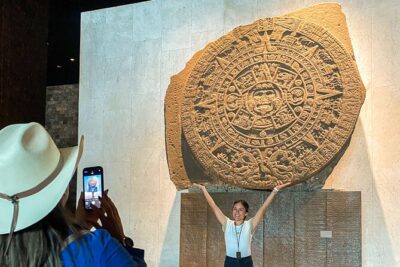
Frida Kahlo VIP [Museum Tickets Included] Walk, Markets & Churros
Read our review →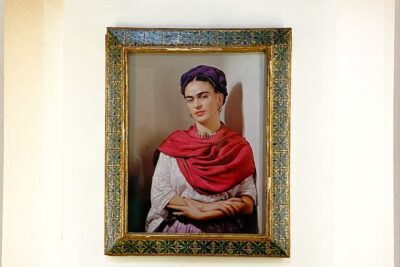
EXCLUSIVE TOUR Frida Kahlo Museum – SMALL GROUPS
Read our review →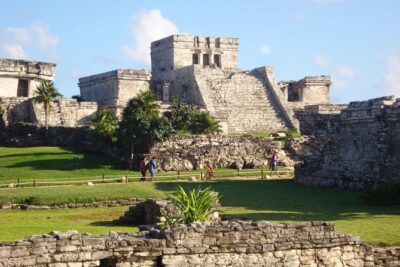
Coba Multun-Ha Cenote Tulum and Mayan Museum Small Group
Read our review →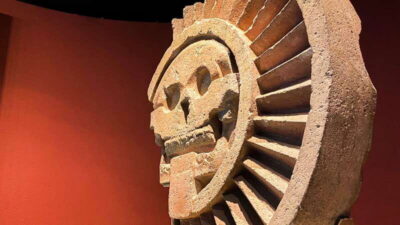
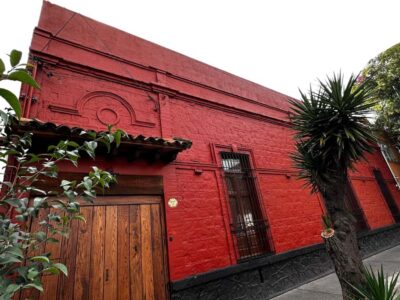
Frida Kahlo Museum Entry Ticket w/Digital Guide
Read our review →Browse the lists this tour appears in